
 AllSharing business

 26 December, 2025
 Joyride vs EazyRide: Moped Sharing Software Compared for 2026
Urban transportation is growing rapidly. Shared micromobility vehicles, such as mopeds, scooters, and e-bikes, are becoming increasingly popular, with the total global fleet projected to reach 34.3 million by 2029.
More people are choosing these vehicles, especially moped, for short trips, but managing a fleet comes with challenges. Operators need to track rides, maintain vehicles, and ensure a smooth experience for users. Handling this manually can be complicated and stressful.
Platforms like EazyRide and Joyride help solve these problems by providing digital tools to manage operations efficiently while keeping riders happy. In this blog, we will discuss how Joyride vs EazyRide moped sharing platforms compare, their key features, and which one may be the right fit for your fleet.
Overview
- EazyRide and Joyride both provide the foundational tools required for managing moped-sharing operations. This includes rider onboarding, fleet tracking, geofencing, and reporting.
- EazyRide is focused on white-label, brand-controlled operations, offering centralized dashboards and ready-to-deploy workflows ideal for location-based or franchise operators.
- Joyride is hardware‑agnostic and supports integration with various vehicle types, including e‑mopeds.
- The platforms differ in how they structure operational workflows and interface with vehicle data, reflecting their design priorities.
- Choosing between the two depends on how much flexibility you need for vehicle integration and operational structuring.
What Is Moped Sharing Software and What Does It Need to Handle?
Moped sharing software refers to the digital systems used by operators to manage, monitor, and control fleets of mopeds that are rented to users through a mobile application. The software does not own or operate the vehicles itself.
Instead, it provides the infrastructure that allows a business to run daily operations in a structured and scalable way. At a baseline level, any moped sharing platform must support the following functional requirements:
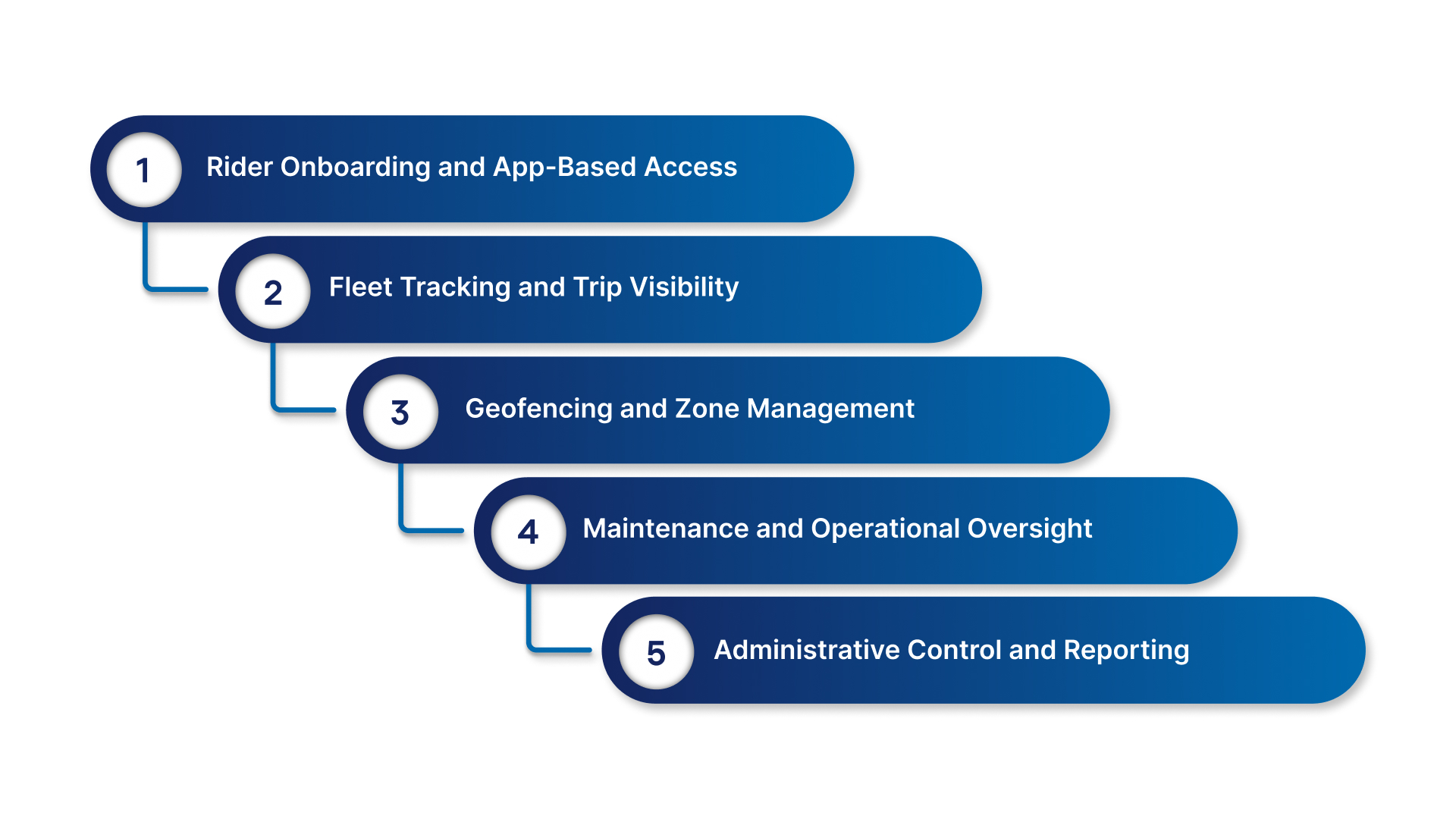
1. Rider Onboarding and App-Based Access
The software must allow riders to register, verify basic information, and access vehicles through a mobile application. This includes account creation, login authentication, and the ability to start and end rides digitally. The app acts as the primary interface between the user and the vehicle.
2. Fleet Tracking and Trip Visibility
Operators need continuous visibility into where vehicles are located and how they are being used. This includes tracking active trips, idle vehicles, and overall fleet distribution. The goal is to maintain awareness of fleet status without relying on manual checks.
Also Read: Scooter Fleet Business Guide for U.S. Operators Scaling in 2026
3. Geofencing and Zone Management
Moped sharing systems typically require the ability to define geographic zones. These may include service areas, restricted zones, or designated parking locations. The software must support setting and managing these zones to help enforce operational rules.
4. Maintenance and Operational Oversight
Operators need visibility into vehicle conditions and usage patterns to manage maintenance schedules. While the level of technical detail may vary, the system should support basic operational oversight, such as identifying inactive vehicles or those requiring attention.
5. Administrative Control and Reporting
A central admin interface is required to manage users, vehicles, pricing rules, and overall system activity. This includes access to reports that summarize usage, trips, and operational performance for decision-making purposes.
Both EazyRide and Joyride cover these foundational requirements. The difference lies not in whether these capabilities exist, but in how each platform structures them and who they are designed to serve.
Platform Overview of EazyRide and Joyride
Operators use both EazyRide and Joyride to manage moped-sharing services, but they differ in how their platforms are structured, deployed, and aligned with day-to-day operational needs. Let’s explore both the platforms thoroughly:
1. EazyRide: White-Label Fleet Management Platform
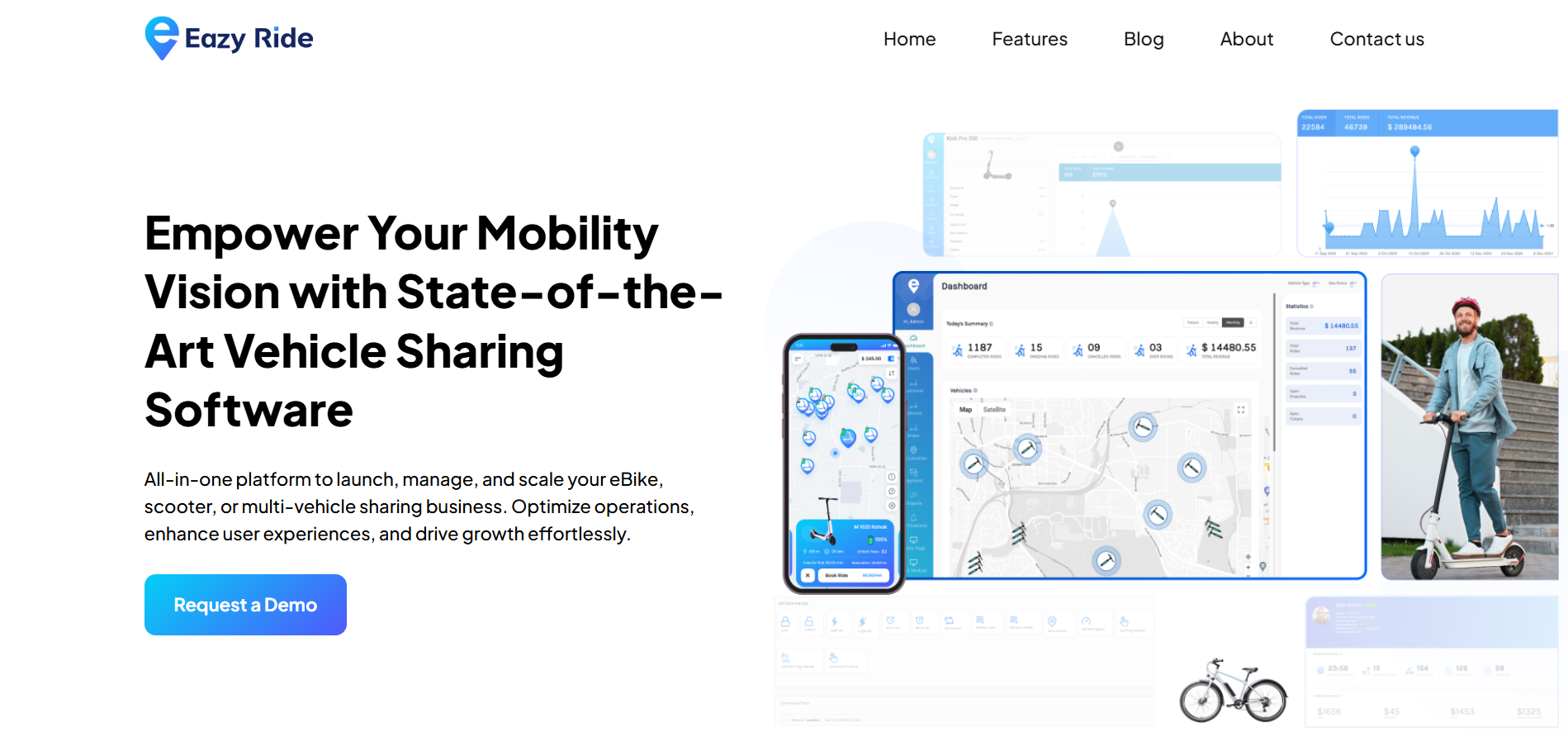
EazyRide is positioned as a white-label software platform that enables businesses to launch and manage their own vehicle-sharing operations under their own brand. The platform is designed to support multiple types of shared vehicles, including mopeds, e-bikes, and scooters. Its core offering includes a set of tools that allow operators to manage day-to-day fleet operations without building custom software.
Key components include:
- Branded rider mobile applications for iOS and Android, allowing end users to access vehicles through the operator’s own brand
- An administrative dashboard used to monitor trips, users, vehicles, and operational activity
- An operator-facing app intended for on-ground teams handling tasks such as fleet oversight and basic operational workflows
Overall, the platform is structured to help businesses manage operations, monitor activity, and run a branded service without developing or maintaining their own backend systems.
2. Joyride: Mobility Software Platform with Hardware Compatibility
Joyride is positioned as a mobility software platform designed to support a range of electric vehicle types, including mopeds. It provides a system for managing shared mobility operations across different vehicle categories.
The platform includes:
- Rider-facing applications for accessing and using vehicles
- A fleet management system for overseeing vehicle usage and operational data
- Compatibility with connected hardware, allowing integration with supported vehicle technologies
Joyride’s structure is intended for businesses that operate or plan to operate mixed fleets or require software that can integrate with different vehicle configurations across locations.
Having outlined how each platform is positioned, the next section examines their differences across the main functional areas relevant to moped-sharing businesses.
Core Comparison: EazyRide vs Joyride for Moped Sharing
Moped-sharing operations depend on more than just vehicle availability. Platform structure, operational control, and system flexibility directly affect scalability, reliability, and day-to-day execution. Below is a structured comparison of how EazyRide and Joyride support moped-sharing businesses in practice.
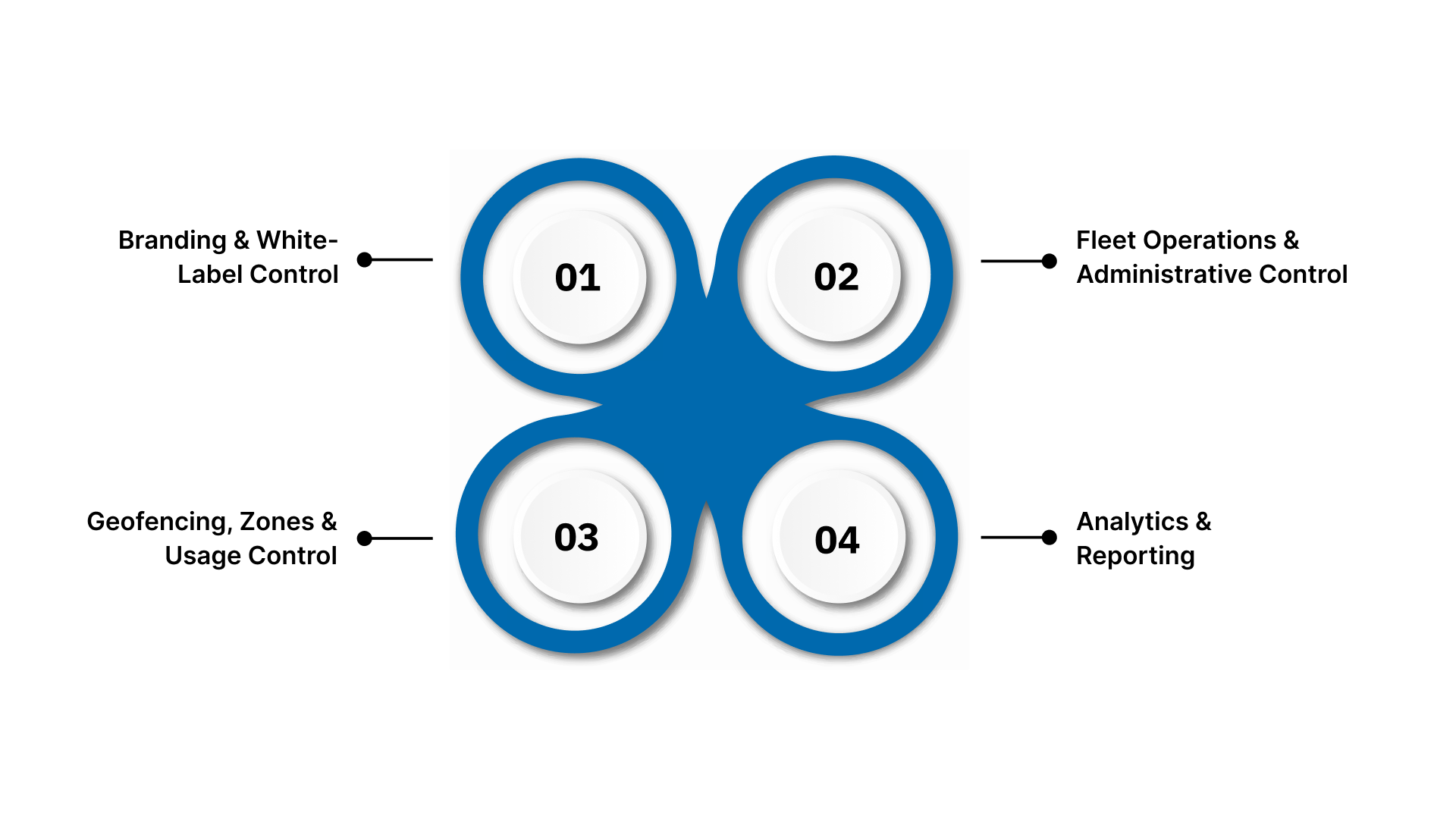
1. Branding & White-Label Control
Brand identity plays a key role in how riders and local partners perceive moped-sharing services. Both platforms support branded experiences, but their approach differs in execution and control.
- EazyRide: Provides a fully white-labeled setup, allowing operators to run moped-sharing services entirely under their own brand. Rider-facing mobile apps reflect the operator’s branding, while the backend remains managed through EazyRide’s system.
- Joyride: Offers customizable branding across its rider applications, enabling operators to tailor the visual identity while operating on Joyride’s shared platform framework.
2. Fleet Operations & Administrative Control
Effective fleet oversight is essential for maintaining vehicle availability and operational consistency across service areas. Here’s how both platforms fare:
- EazyRide: Designed around centralized operational control, EazyRide offers an admin dashboard that enables operators to monitor trips, vehicle status, and day-to-day fleet activity from a single interface.
- Joyride: Combines fleet management with connected vehicle data, allowing operators to view activity across different vehicle types within a unified management system.
3. Geofencing, Zones & Usage Control
Location-based controls are essential for maintaining compliance, safety, and operational efficiency in moped sharing. Both platforms have their own approach:
- EazyRide: Provides tools to create service zones, restricted areas, and operational boundaries through its admin interface, supporting controlled fleet movement.
- Joyride: Integrates geofencing features with vehicle connectivity, allowing zone rules to be applied in coordination with vehicle behavior.
4. Analytics & Reporting
Operational visibility depends on access to accurate and relevant data. Here’s what these platforms deliver:
- EazyRide: Delivers reporting focused on trips, vehicle utilization, and operational activity, helping operators monitor daily performance.
- Joyride: Combines reporting with vehicle connectivity data to provide insights into usage patterns and system activity.
Beyond operational features, deployment, setup, and ongoing support determine how smoothly operators can launch and manage their moped-sharing service.
Also Read: How to Start a Successful Micro Mobility Franchise
Deployment, Setup & Support
Deployment and ongoing support play an important role in how smoothly a moped-sharing platform operates after launch. Both EazyRide and Joyride provide the foundational infrastructure needed to deploy, manage, and support live operations, with differences mainly in implementation approach rather than capability.
1. Deployment
Both platforms are designed to support web-based management and mobile access for operators and riders.
- EazyRide: EazyRide offers web-based administrative access along with mobile applications for riders. The platform supports API access, allowing operators to integrate the system with existing tools or services as needed during deployment.
- Joyride: Joyride also provides web-based admin access and mobile applications for end users. API availability allows operators to connect the platform with external systems or customize integrations based on operational requirements.
2. Support & Training
Ongoing support and onboarding resources are essential for maintaining smooth day-to-day operations.
- EazyRide: Provides online support resources along with documentation to assist operators during setup and ongoing use. Support channels are designed to help with configuration, troubleshooting, and operational guidance.
- Joyride: Offers access to support resources, documentation, and training materials to help operators understand system features and manage their deployments effectively.
To visualize differences and strengths clearly, a side-by-side comparison table in the next section highlights how each platform supports moped-sharing operations.
Comparison Table: EazyRide vs Joyride for Moped Sharing
To clearly understand how EazyRide and Joyride differ in real-world moped-sharing operations, it helps to compare their capabilities side by side across core operational and platform criteria.
| Feature Category | EazyRide | Joyride |
|---|---|---|
| Platform Positioning | White-label fleet management platform built for branded moped operations | Mobility software platform designed to support multiple vehicle types |
| Branding & White-Labeling | Fully white-labeled rider apps under the operator’s brand | Customizable branding within a shared platform structure |
| Fleet Operations | Centralized admin dashboard for trip management, vehicle status, and daily operations | Fleet management combined with connected vehicle data across different mobility assets |
| Geofencing & Zone Control | Admin-defined service areas and restricted zones | Zone management integrated with vehicle connectivity systems |
| Analytics & Reporting | Operational reporting focused on trips, usage, and fleet activity | Reporting linked to vehicle data and system-level activity |
| Deployment Model | Web-based admin platform with mobile applications and API access | Web-based platform with mobile apps and integration support |
| Support & Documentation | Online support resources and operational documentation | Documentation and platform support for setup and ongoing use |
| Ideal Use Case | Operators seeking a fully branded, operations-first moped-sharing setup | Operators managing mixed or multi-vehicle mobility fleets |
With capabilities mapped out, operators can evaluate which platform aligns best with their operational priorities and growth strategies.
Which Platform Fits Your Moped-Sharing Model?
Choosing the right platform depends on how your moped-sharing business is structured and where you place the most operational focus. Both EazyRide and Joyride support shared mobility use cases, but they align with different operating priorities and levels of platform complexity.
- Choose EazyRide if: Your business focuses on running a branded moped-sharing service with strong day-to-day fleet control. EazyRide fits operators who want a ready-to-use system for managing vehicles, trips, and workflows without extensive technical setup. It works well for those prioritizing efficient execution and easy fleet oversight.
- Choose Joyride if: Your operations include multiple vehicle types or expansion across locations and hardware environments. Joyride suits businesses needing broader platform flexibility, hardware compatibility, and centralized oversight across diverse mobility assets. It supports operators managing complexity across fleets rather than just a single vehicle category.
To decide better which platform to choose, focus on some targeted questions and clarify the best fit for your fleet, growth plans, and business priorities.
Key Decision Questions for Operators
Before selecting a platform, operators can use the following questions to clarify which solution aligns best with their operational structure and long-term plans:
- Do you require full white-label control over the rider experience, or do you need flexibility across different vehicle hardware systems?
- Is your primary focus on simplified operational management, or on supporting multiple vehicle types within a single platform?
- Are you launching and scaling a single branded moped service, or managing several fleets across locations or vehicle categories?
- Do you prefer predefined software workflows that are ready to deploy, or deeper compatibility with various hardware and connectivity setups?
These considerations help frame which platform better supports your current model and future expansion.
Also Read: Fleet Tracking System Reviews 2025: Best GPS Platforms Rated
Conclusion
Selecting the right platform for your moped-sharing business comes down to operational focus, fleet complexity, and growth ambitions. Both EazyRide and Joyride cover essential requirements such as rider onboarding, fleet tracking, geofencing, and reporting, but each serves different operator priorities. Understanding your business model and operational needs is essential to making an informed choice.
EazyRide is particularly suited for operators seeking full white-label control, simplified fleet management, and ready-to-use operational workflows. Its centralized dashboards, rider profiles, trip tracking, and real-time visibility simplify daily operations, making it ideal for branded moped services or location-based rental businesses.
Experience how EazyRide can help you manage your fleet efficiently and scale your operations. Schedule a demo today to explore its features and see how it can power growth for your mobility business.
FAQs
1. Can EazyRide and Joyride handle multi-location moped operations?
EazyRide supports multi-location expansion through its white-label platform and centralized dashboards. Meanwhile, Joyride is designed to manage mixed fleets and vehicles across regions, making it suitable for operators scaling operations across multiple areas.
2. Do operators need technical expertise to launch moped-sharing on these platforms?
EazyRide provides ready-to-use software with minimal technical setup, enabling operators to launch quickly. Joyride supports integrations with connected vehicles and third‑party systems, allowing operators to configure as needed.
3. How do these platforms handle vehicle maintenance tracking?
Both platforms include tools for tracking maintenance schedules, inspections, and operational checks. Fleet managers can monitor vehicle status, plan servicing, and generate reports, ensuring mopeds remain safe, operational, and compliant with local regulations.
4. Are APIs available for integrating with third-party tools?
Yes, both platforms offer API access, allowing operators to integrate with payment gateways, analytics platforms, or operational systems. This supports seamless workflow automation and data sharing between the moped-sharing platform and external tools.
5. Can these platforms scale as the fleet grows?
EazyRide supports branded fleet expansion and operational scaling through centralized dashboards. Joyride accommodates operators managing multiple vehicle types and regions, providing flexibility for growth while maintaining oversight of fleet operations and performance.


