
 AllAnalytics and research

 29 August, 2025
 Electric Vehicle as a Service: Future Trends and Challenges
As cities around the world battle congestion, air pollution, and the growing need for sustainable transport solutions, electric vehicles (EVs) are emerging as a key player in the mobility revolution. One of the most promising trends in this space is the rise of electric vehicle as a service (EVaaS).
The global EV market is projected to surge from USD 988.70 billion in 2025 to approximately USD 2,529.10 billion by 2034, advancing at a solid compound annual growth rate (CAGR) of 11% from 2025 to 2034.
This innovative model offers businesses and consumers flexible, cost-effective access to electric vehicles without the need for ownership.
In this article, we’ll explore the future trends shaping electric vehicle as a service, along with the challenges businesses must overcome to make this model sustainable and scalable.
Key Takeaways
- Electric Vehicle as a Service (EVaaS) allows businesses and consumers to access electric vehicles on-demand without ownership, making it a cost-effective and flexible transportation solution.
- Key models include EV charging as a service, electric car subscriptions, battery as a service, and EVaaS for shared mobility, each offering unique benefits for different use cases.
- Advancements in battery technology, integration with shared mobility platforms, and government incentives are accelerating the growth of EVaaS and making electric vehicles more accessible.
- High initial investment, battery degradation, and regulatory uncertainty remain key obstacles, but solutions like financial partnerships and clearer policies can help overcome these hurdles.
- EVaaS contributes significantly to reducing carbon emissions, improving air quality, and fostering a sustainable future by making electric vehicles accessible to more users.
What is Electric Vehicle as a Service (EVaaS)?
Electric Vehicle as a Service (EVaaS) is a new mobility model that allows businesses and consumers to access electric vehicles for short- or long-term use without having to own the vehicles.
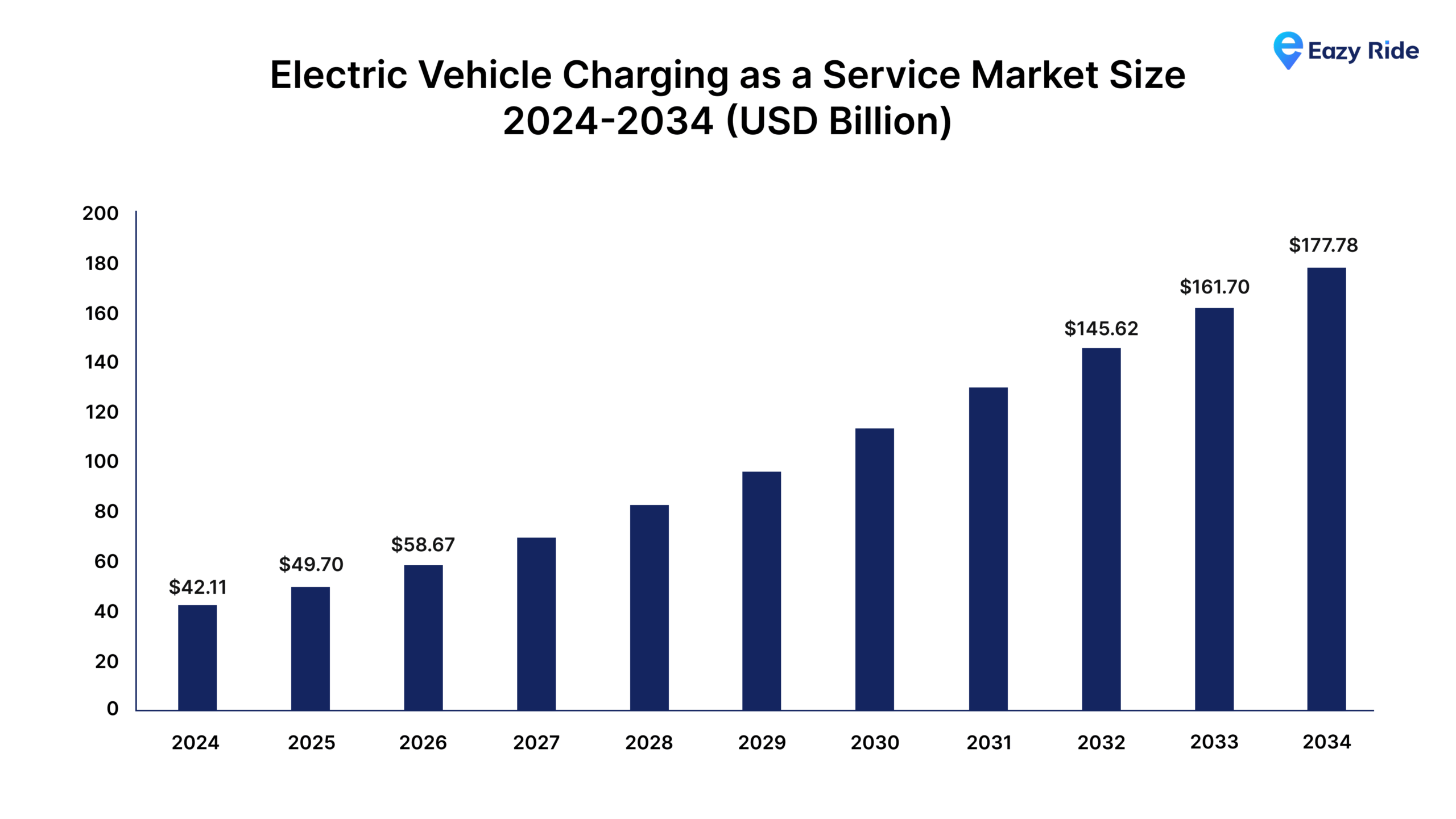
In this system, customers can use electric cars, bikes, or scooters on-demand through subscription or pay-per-use plans. The rise of EVaaS represents a key shift in how people and businesses view transportation—moving away from private car ownership toward more flexible, sustainable, and cost-effective options.
This model is particularly attractive in urban environments where traffic congestion, pollution, and the high cost of owning a car make traditional transportation solutions less viable. As cities move toward greener, more sustainable transport, electric vehicle as a service is positioned to play a pivotal role in meeting these goals.
Key aspects of EVaaS
- Subscription-based access: Instead of large upfront investments in purchasing EVs, subscribers pay a recurring fee (monthly or annually) for vehicle access and related services.
- Comprehensive solutions: EVaaS providers often handle everything from vehicle procurement and financing to maintenance, charging infrastructure installation, and ongoing management.
- Reduced financial burden: By eliminating significant upfront capital expenditures (CapEx) and shifting costs to a predictable operational expense (OpEx), EVaaS makes EVs more accessible and manageable financially.
- Flexibility and scalability: Businesses can easily adjust their fleet size or upgrade to newer EV models as needed, without being tied to long-term ownership commitments.
- Focus on core business: By outsourcing the complexities of EV fleet management and charging infrastructure, businesses can concentrate on their primary operations and achieve operational efficiency gains.
- Environmental benefits: EVaaS promotes EV adoption, contributing to reduced carbon emissions, improved air quality, and a smaller carbon footprint.
Now that we’ve established what EVaaS is, let’s take a closer look at the key types for businesses and consumers alike.
Types of Electric Vehicle as a Service (EVaaS)
Different kinds of Electric Vehicle as a Service (EVaaS) models cater to diverse needs within the electric vehicle ecosystem. These models provide solutions for everything from vehicle access to charging infrastructure and battery management, reducing upfront costs and streamlining operations.
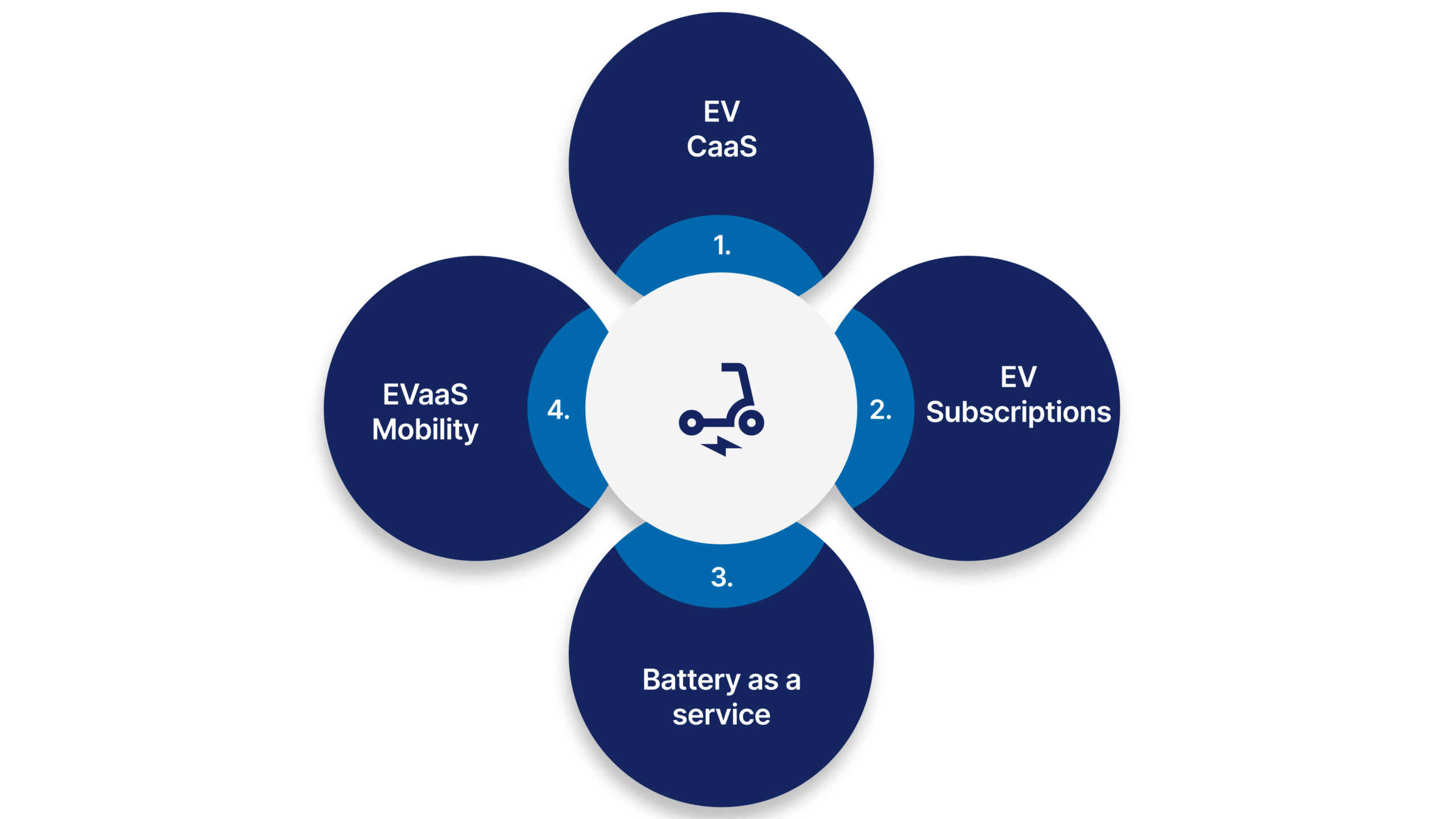
Here are the primary types of EVaaS:
1. EV charging as a service (EV CaaS)
This model focuses specifically on providing and managing EV charging infrastructure. Businesses and property owners can subscribe to an EV CaaS, where a third-party provider handles the planning, installation, operation, and maintenance of EV charging stations.
This eliminates the need for large upfront investments in hardware and ongoing operational management, bundling all costs into a predictable monthly or annual fee. EV CaaS benefits businesses like professional offices, retail stores, hotels, and even workplaces, by providing a value-added amenity for customers, employees, or tenants.
2. Electric car subscription models (for fleets and individuals)
This type of EVaaS allows individuals or businesses to access electric vehicles for a set period without the burdens of ownership. Subscribers pay a recurring fee that typically includes the vehicle, insurance, maintenance, and other bundled services.
- Fleet Subscriptions: Businesses can lease or subscribe to electric vehicles for their delivery or service fleets. This allows them to transition to EVs without large capital expenditures, while the service provider handles fleet management, maintenance, and potentially even charging solutions. This can help companies manage the complexities of charging schedules, routing, and vehicle storage that come with EV fleets.
- Individual Subscriptions: Car subscription services offer individuals the flexibility to drive different EV models on a month-to-month or short-term basis. This is ideal for those who value flexibility, want to test out an EV before committing to purchase, or want to avoid the hassle of ownership.
3. Battery as a service (BaaS)
BaaS separates the battery, which is often the most expensive component of an EV, from the vehicle itself. EV owners lease the battery on a subscription basis, paying a monthly fee for usage. This reduces the upfront purchase cost of the EV, making it more affordable.
BaaS often involves a network of battery swapping stations where users can exchange depleted batteries for fully charged ones in minutes. This addresses range anxiety and charging wait times, which are common concerns for potential EV adopters.
4. EVaaS for shared mobility
EVaaS plays a role in shared mobility services like car-sharing and e-scooter programs. By providing access to EVs and associated charging infrastructure, these services can make transportation more accessible and affordable, particularly in underserved communities. EV car-sharing programs, for instance, can reduce the need for individuals to own or lease a private car and spread vehicle access across multiple users.
These different types of EVaaS are all contributing to the growth and adoption of electric vehicles by making them more accessible, affordable, and convenient for both individuals and businesses.
Suggested read: Scooter Investments: A Smart Mobility Opportunity for Entrepreneurs.
With a solid understanding of the various types of EVaaS models, let’s explore the emerging trends driving this market forward.
Key Trends for Electric Vehicle as a Service (EVaaS)
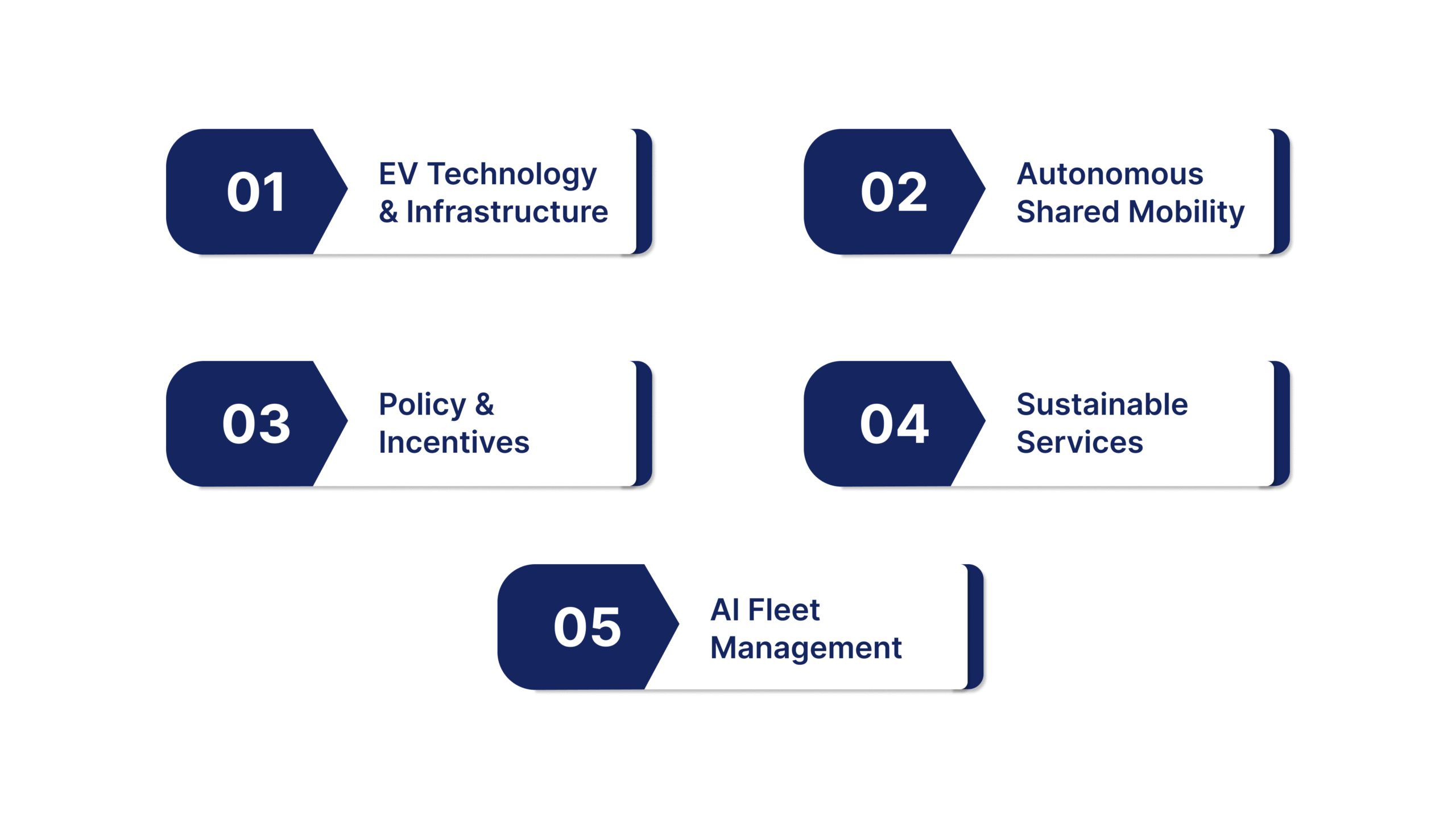
The electric vehicle (EV) industry is undergoing a significant transformation, with Electric Vehicle as a Service (EVaaS) emerging as a pivotal model for sustainable and efficient urban mobility. This paradigm shift is driven by advancements in technology, infrastructure, and consumer preferences. Here’s an in-depth look at the key trends shaping EVaaS in 2025 and beyond:
Advancements in EV technology and infrastructure
Innovations in battery technology and charging infrastructure are crucial in supporting the widespread adoption of EVs, enhancing range, reducing charging times, and ensuring the scalability of EVaaS models.
- Faster and longer-range EVs: Significant strides in battery technology are leading to EVs with longer ranges (exceeding 400 miles) and much faster charging capabilities (up to 80% in 10-20 minutes with ultra-fast chargers), addressing range anxiety and charging wait times.
- Expansion of charging infrastructure: Public and private investment is driving a rapid expansion of charging stations, with a focus on high-power DC fast charging along highways and in urban centers.
- Solid-state batteries: The commercialization of solid-state battery technology, expected to begin around 2025, promises even higher energy density, faster charging, and improved safety, potentially enabling EVs to achieve 600 miles of range with just 9 minutes of charging.
- Battery Innovations: The development of solid-state batteries and improvements in lithium-ion technology are enhancing energy density, reducing charging times, and extending vehicle range.
- Battery Swapping Initiatives: In China, CATL plans to build 40,000 battery-swapping stations by 2030, aiming to replace a third of the country’s gas stations with EV battery exchange points.
Integration of Autonomous and Shared Mobility Services
The convergence of autonomous driving and shared mobility solutions is reshaping the EVaaS landscape, making transportation more efficient, flexible, and sustainable.
- Robotaxi Deployments: Companies like Waymo and Tesla are expanding autonomous ride-hailing services. Waymo plans to launch its autonomous ride-hailing service in Dallas in 2026, while Tesla aims to allow owners to add their EVs to its self-driving taxi network starting in 2026.
- Shared EV Platforms: The rise of shared EV platforms is reducing the need for private car ownership, leading to decreased urban congestion and lower emissions.
- Fleet Management Solutions: Advanced fleet management software is enabling efficient operation of shared EVs, optimizing routes, and reducing operational costs.
Government Incentives and Policy Support
Government initiatives, including subsidies, tax incentives, and investments in infrastructure, are accelerating the adoption of EVs and supporting the growth of EVaaS by creating a favorable regulatory environment.
- Subsidies and Tax Incentives: Governments worldwide are offering subsidies, tax rebates, and incentives to encourage EV adoption and the development of EVaaS models.
- Infrastructure Investments: Significant investments are being made in EV charging infrastructure, including the installation of fast-charging stations and the development of battery-swapping networks.
- Regulatory Support: Policies are being implemented to support the growth of EVaaS, including regulations that promote shared mobility services and the integration of autonomous vehicles.
Consumer-Centric Services and Sustainability Focus
As the demand for convenience and sustainability rises, EVaaS providers are shifting focus towards flexible subscription models, enhanced user experiences, and eco-friendly services to meet evolving consumer preferences:
- Flexible Subscription Models: EVaaS providers are offering flexible subscription models that allow consumers to access EVs without the long-term commitment of ownership, catering to diverse mobility needs.
- Sustainability Initiatives: There is a growing emphasis on sustainability, with EVaaS providers adopting eco-friendly practices, such as using renewable energy sources for charging and implementing recycling programs for EV batteries.
- Enhanced User Experience: Technological advancements are enhancing the user experience, with features like mobile apps for vehicle access, real-time tracking, and personalized services becoming standard offerings.
Artificial Intelligence and Data Analytics for Fleet Management
The application of AI and data analytics is revolutionizing fleet management for EVaaS platforms. Fleet operators can use real-time data to improve vehicle allocation, predict maintenance, and monitor battery health.
- The application of AI optimizes fleet deployment and vehicle health monitoring. It predicts maintenance needs based on data from the vehicle’s sensors, reducing downtime and extending the lifecycle of the fleet.
- AI-driven insights also enable EVaaS platforms to optimize their pricing and deployment strategies, ensuring that vehicles are available when and where they are most needed.
These trends indicate a strong future for electric vehicle as a service models, driven by the increasing accessibility, affordability, and sustainability of electric vehicles and their supporting infrastructure.
Challenges Facing the Growth of Electric Vehicle as a Service
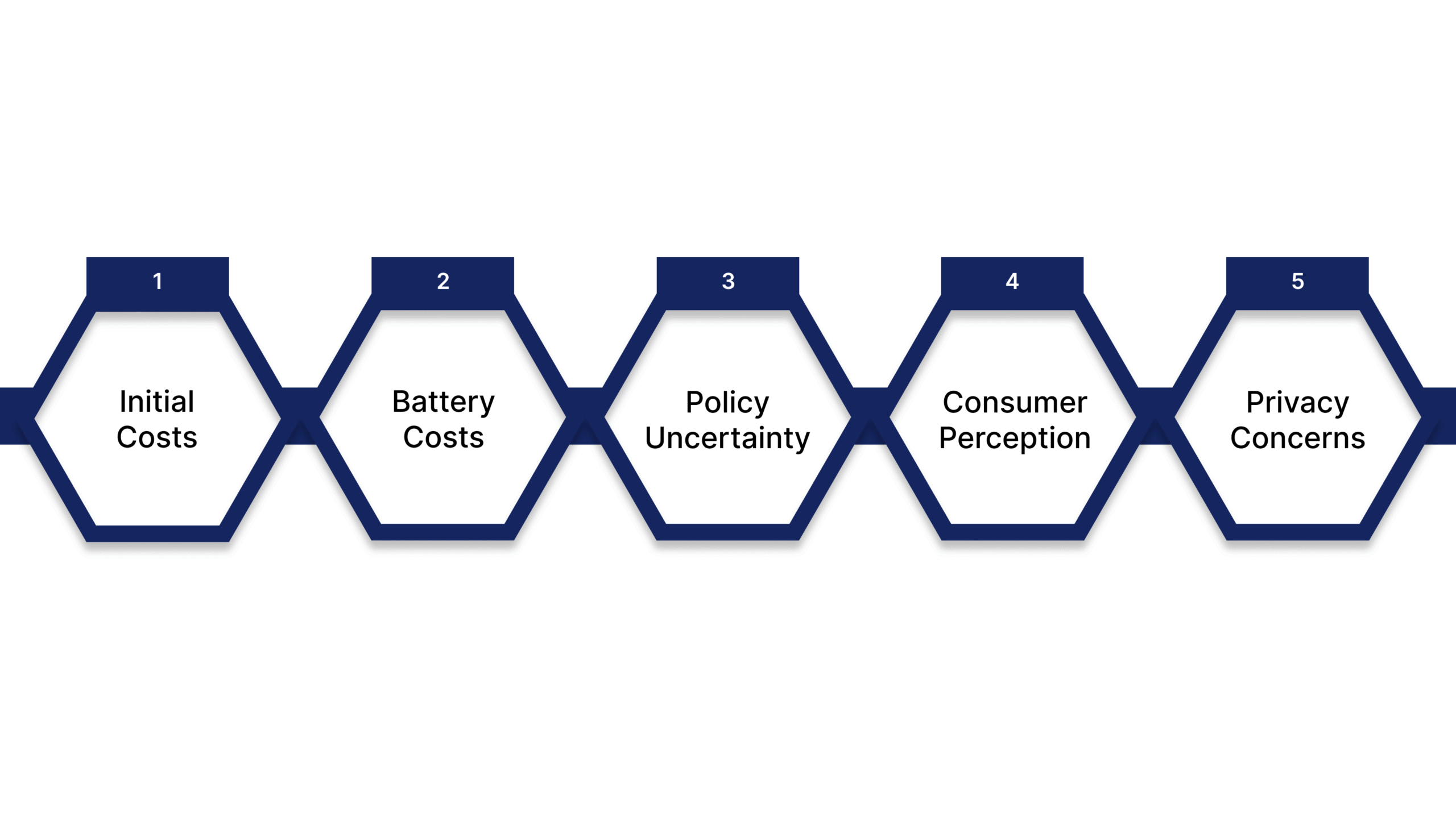
While the growth of Electric Vehicle as a Service (EVaaS) offers significant potential for sustainable urban mobility, several challenges must be addressed to unlock its full potential. Below are key obstacles hindering the widespread adoption and growth of EVaaS:
1. High Initial Investment Costs
- Upfront Capital Requirements: While operating EVaaS platforms can be cost-effective in the long run, the initial capital required to purchase electric vehicles and set up infrastructure remains high. This can deter small businesses and startups from entering the market.
- Cost of Fleet Maintenance: Although EVs have lower maintenance costs compared to traditional internal combustion engine vehicles, the expense of battery replacements and the technology needed to run fleets efficiently can still be significant.
- Solution: Partnerships with financial institutions for financing models, including leasing and subscription services, can alleviate the initial cost burden for EVaaS providers.
2. Battery Degradation and Replacement Costs
- Battery Lifespan Concerns: As EVs rely heavily on battery performance, the degradation of battery life over time can significantly reduce vehicle efficiency and range, especially in shared fleets that accumulate high mileage.
- High Replacement Costs: Replacing EV batteries is an expensive process, with costs ranging from $5,000 to $15,000 per battery pack, creating a long-term financial challenge for EVaaS operators.
- Solution: Ongoing advancements in battery technology, such as solid-state batteries, and innovations in battery recycling and reuse programs, can mitigate some of these costs in the future.
3. Regulatory and Policy Uncertainty
- Changing Regulations: The regulatory environment surrounding EVs and shared mobility services remains fluid, with varying policies on emissions, insurance requirements, and safety standards across regions. This unpredictability creates challenges for EVaaS operators trying to plan and scale their operations effectively.
- Inconsistent Incentives: Government incentives for EV adoption and EVaaS services can vary greatly depending on the location, creating inconsistency and confusion for businesses in understanding and accessing these benefits.
- Solution: Clearer, more uniform regulations and incentives across regions would encourage investment in EVaaS, providing a stable environment for both service providers and consumers.
4. Consumer Awareness and Perception
- Range Anxiety: One of the biggest challenges for consumers considering EVaaS is the fear of running out of battery power, especially in areas with limited charging stations. This leads to hesitation in adopting EV-based services.
- Skepticism Towards EV Technology: Despite the growing popularity of EVs, many consumers remain skeptical about their reliability, particularly in extreme weather conditions or when facing long journeys.
- Solution: Public awareness campaigns, coupled with real-time vehicle tracking and range optimization features in EVaaS apps, can help build consumer trust and alleviate concerns over range anxiety and vehicle reliability.
5. Data Privacy and Security Concerns
- Data Privacy: With the integration of IoT and telematics in EVaaS, a massive amount of personal and operational data is generated. This raises concerns about data privacy and the potential misuse of sensitive information.
- Cybersecurity Threats: As EVs and associated infrastructure become more connected, they become attractive targets for cyberattacks, which could disrupt services or lead to breaches of sensitive customer information.
- Solution: Strong data protection measures, along with compliance with international privacy standards such as GDPR, should be implemented. Additionally, investing in robust cybersecurity frameworks can help secure both user data and fleet operations.
Also Read: How to Build an Electric Scooter Rental App for Mobility Success.
While the path to success in EVaaS is filled with challenges, solutions like Eazyride’s platform are designed to help businesses overcome these hurdles and scale their services with ease.
Take the Leap into the Future of Urban Mobility with Eazyride
The rise of Electric Vehicle as a Service (EVaaS) presents exciting opportunities for businesses looking to provide sustainable and flexible transportation solutions. With the shift towards electric vehicles accelerating, Eazyride’s all-in-one, white-label platform is the perfect solution for launching and scaling your own shared mobility service.
Whether you’re an entrepreneur looking to enter the market or an established fleet operator seeking to optimize operations, Eazyride offers the tools and features needed to succeed.
Why Choose Eazyride?
- Rapid Deployment: Launch a fully functional electric vehicle service in just two weeks, with minimal technical expertise required.
- Comprehensive White-Label Solution: Customizable rider apps, admin dashboards, and fleet management tools to fit your branding and business model.
- Advanced Features: AI-driven analytics, real-time fleet management, geofencing, and group ride options to optimize operations.
- Flexible Business Models: Supports station-based, free-floating, and hybrid operational models to meet the unique needs of your business.
- Sustainability: Contribute to a greener future by providing on-demand electric vehicles that reduce emissions and promote eco-friendly transportation.
Conclusion
The future of electric vehicle as a service is bright, with numerous trends and innovations poised to transform the landscape of urban mobility. As the charging infrastructure expands, AI-driven fleet management becomes more advanced, and subscription models gain traction, the EVaaS market will continue to thrive. However, challenges such as high initial investments, battery limitations, and regulatory hurdles must be addressed for the model to reach its full potential.
For entrepreneurs and businesses looking to enter this space, adopting a platform like Eazyride can provide a seamless entry into the market, offering customizable solutions and advanced features like real-time fleet management and AI-driven analytics.
Ready to explore the potential of electric vehicles as a service in your city? Request a demo to accelerate the launch and scale your own shared mobility service in just two weeks.
FAQs
1. How does Electric Vehicle as a Service (EVaaS) differ from traditional car rental services?
EVaaS offers flexible, on-demand access to electric vehicles, with services typically including charging, maintenance, and fleet management. Unlike traditional car rentals, EVaaS is a subscription or pay-per-use model, making it more accessible and cost-effective.
2. What are the benefits of battery swapping in EVaaS?
Battery swapping reduces charging time and eliminates range anxiety, allowing EV users to quickly replace depleted batteries at designated stations. This model improves convenience and vehicle uptime.
3. Can businesses scale their EV fleets easily with EVaaS?
Yes, businesses can scale their fleets effortlessly with EVaaS models, as these platforms allow for flexible adjustments in fleet size without being tied to long-term ownership or heavy upfront investments.
4. What role does AI play in fleet management for EVaaS?
AI in fleet management helps optimize vehicle allocation, predict maintenance needs, and improve route planning, ensuring that the EV fleet operates efficiently and meets customer demand in real-time.
5. How do government incentives impact the growth of EVaaS?
Government incentives, such as tax rebates, subsidies for infrastructure development, and policy support, make EVs more affordable and encourage businesses to adopt EVaaS, contributing to the growth of the electric mobility market.


