
 AllMicro Mobility Model

 27 June, 2025
 Scooter Investments: A Smart Mobility Opportunity for Entrepreneurs
Traffic jams and city pollution are no longer just small problems. They’re major challenges for cities trying to stay efficient, clean, and comfortable to live in. With more pressure on roads and higher expectations from people, city planners and transport leaders need better, smarter ways to help people move around the city.
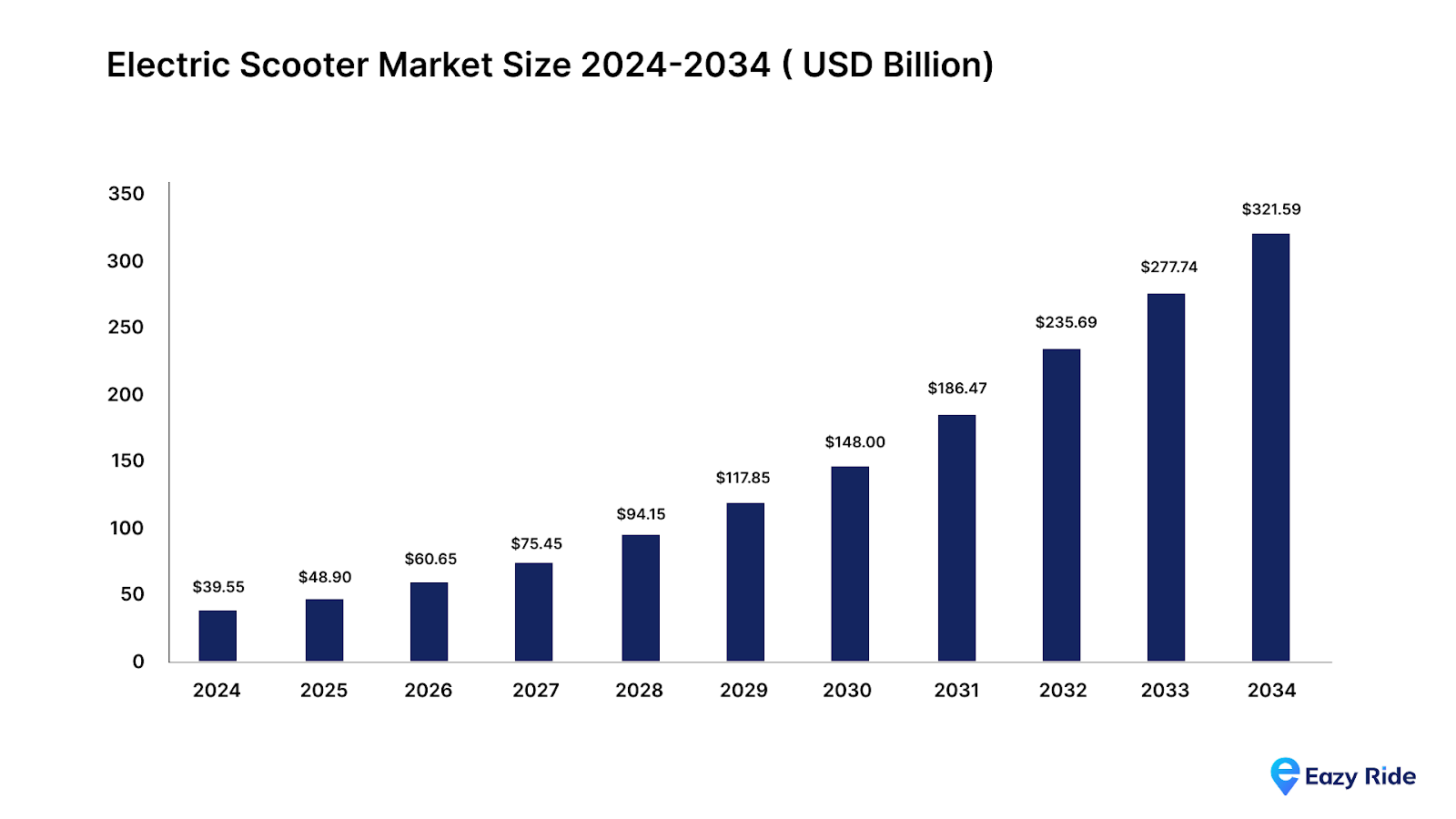
Scooter investment is emerging as a practical solution offering quick, affordable, and eco-friendly transportation for short trips. The global electric scooter market is projected to soar from $48.90 billion in 2025 to an impressive $321.59 billion by 2034, reflecting a compound annual growth rate (CAGR) of 23.28%. For entrepreneurs, this shift isn’t just about convenience; it’s a chance to tap into a booming market with real potential for recurring revenue and positive environmental impact.
Why Scooter Investments are Gaining Momentum?
As cities become more crowded and the demand for sustainable transportation solutions rises, electric scooters are emerging as a vital part of the urban mobility landscape.
The global scooter-sharing market is projected to reach $2.04bn by 2025. With low capital investment, high returns, and a clear alignment with environmental goals, scooter investments are not only profitable but also part of a growing trend toward eco-friendly transportation solutions.
Benefits for Entrepreneurs and Businesses
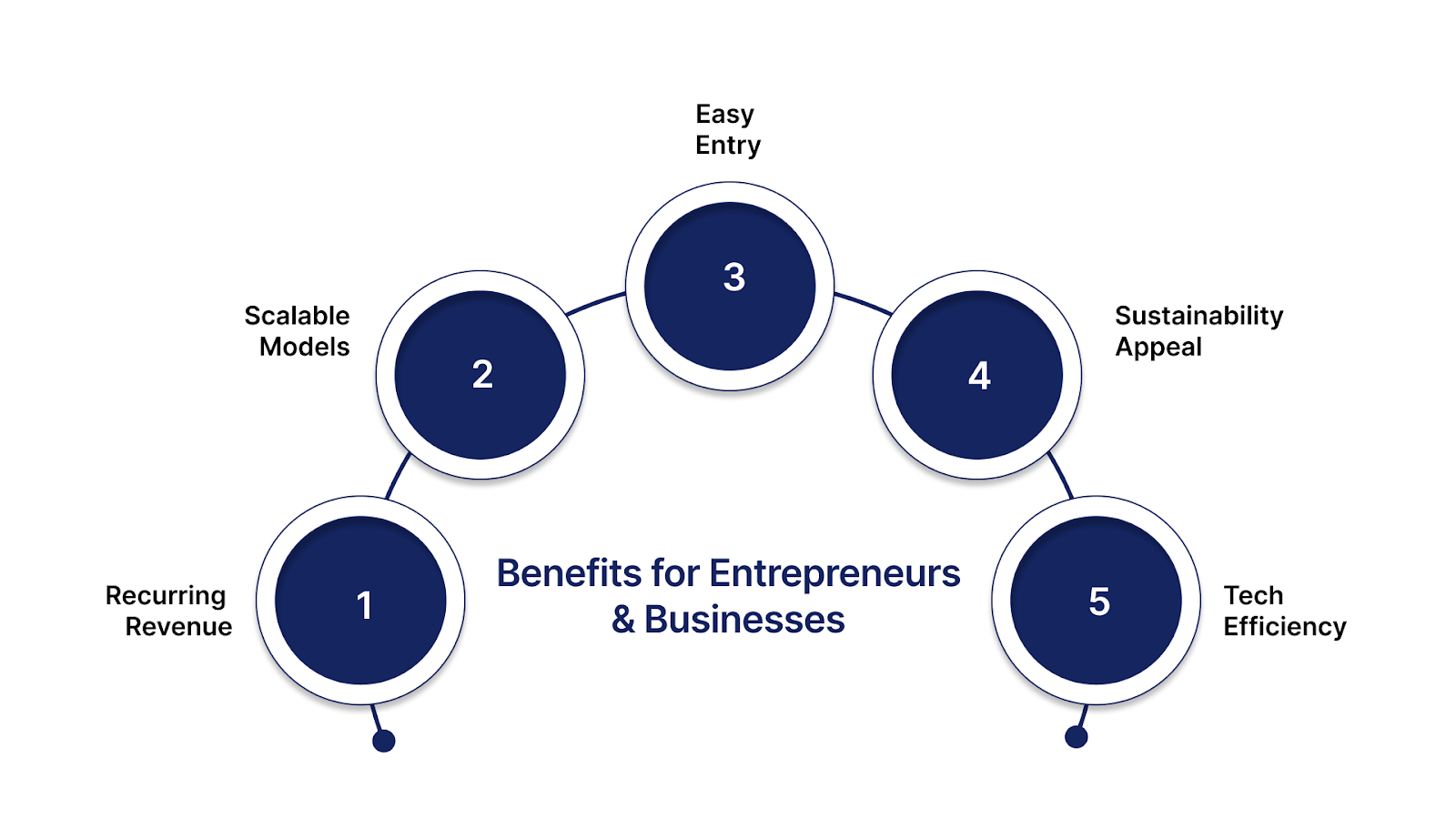
For entrepreneurs and organizations, scooter investments offer compelling advantages:
- Recurring Revenue: Shared mobility models generate steady income through ride fees, subscriptions, and leasing, providing predictable cash flow.
- Scalable Business Models: Operators can start small and expand rapidly as demand grows, adapting to new markets or specialized use cases like campuses, resorts, and delivery services.
- Low Entry Barriers: Compared to other transportation ventures, starting a scooter fleet requires relatively modest initial investment, especially with white-label and franchise options.
- Sustainability Appeal: Electric scooters align with city sustainability goals and attract environmentally conscious riders, enhancing brand reputation.
- Technology-Driven Efficiency: Modern platforms offer real-time tracking, predictive maintenance, and seamless payment integration, making operations more efficient and user-friendly.
As a result, scooter investments are not only profitable but also align with broader societal goals of reducing emissions and improving urban mobility.
Let’s explore the various ways entrepreneurs and investors can participate in this thriving market.
Types of Scooter Investment Opportunities
The U.S. scooter market is diversifying, offering investors and entrepreneurs a variety of pathways to capitalize on the nation’s growing appetite for affordable, sustainable urban mobility.
Fleet Ownership and Shared Mobility Businesses
One of the most popular investment models is launching a shared scooter fleet. Operators can choose from:
| Model | How It Works | Best For | Key Advantages |
|---|---|---|---|
| Station-Based (Docked) | Scooters are picked up and returned at fixed docking stations | Dense urban areas, campuses | Simplifies charging & maintenance, orderly |
| Free-Floating | Users can unlock/park scooters anywhere within a defined service area | Major cities, last-mile commuters | Maximum convenience, high fleet utilization |
| Hybrid | Combines docked and dockless features; flexible docking and parking options | Mixed-use zones, varied regulations | Adaptable to local needs, regulatory fit |
Franchise and White-Label Partnerships
For those seeking lower entry barriers, franchise and white-label partnerships are increasingly attractive. Entrepreneurs can use established technology platforms such as EazyRide to launch their own branded scooter services without developing proprietary software or hardware. This model is ideal for:
- Universities, resorts, and corporate campuses are aiming to offer exclusive mobility solutions.
- Local entrepreneurs wanting to tap into the micro-mobility trend with proven operational support.
Direct Leasing and Rental Services
Scooter investments are not limited to shared fleets. Operators can also target:
- Short-Term Rentals: Catering to tourists and event attendees who need easy, affordable transportation for a few hours or days.
- Long-Term Leasing: Appealing to delivery workers, students, or city residents who require daily mobility but prefer not to own a scooter.
Understanding the different models sets the stage for examining the specific factors that influence profitability and long-term returns in the scooter industry.
Key Factors Driving Returns on Scooter Investments
Scooter investments are being driven by a combination of market growth, evolving consumer preferences, and technological advancements that directly impact profitability and scalability for operators.
1. Strong Market Growth & Micro-Mobility Adoption
- U.S. scooter market revenue is projected to reach $165.35 million in 2025 and $191.55 million by 2030.
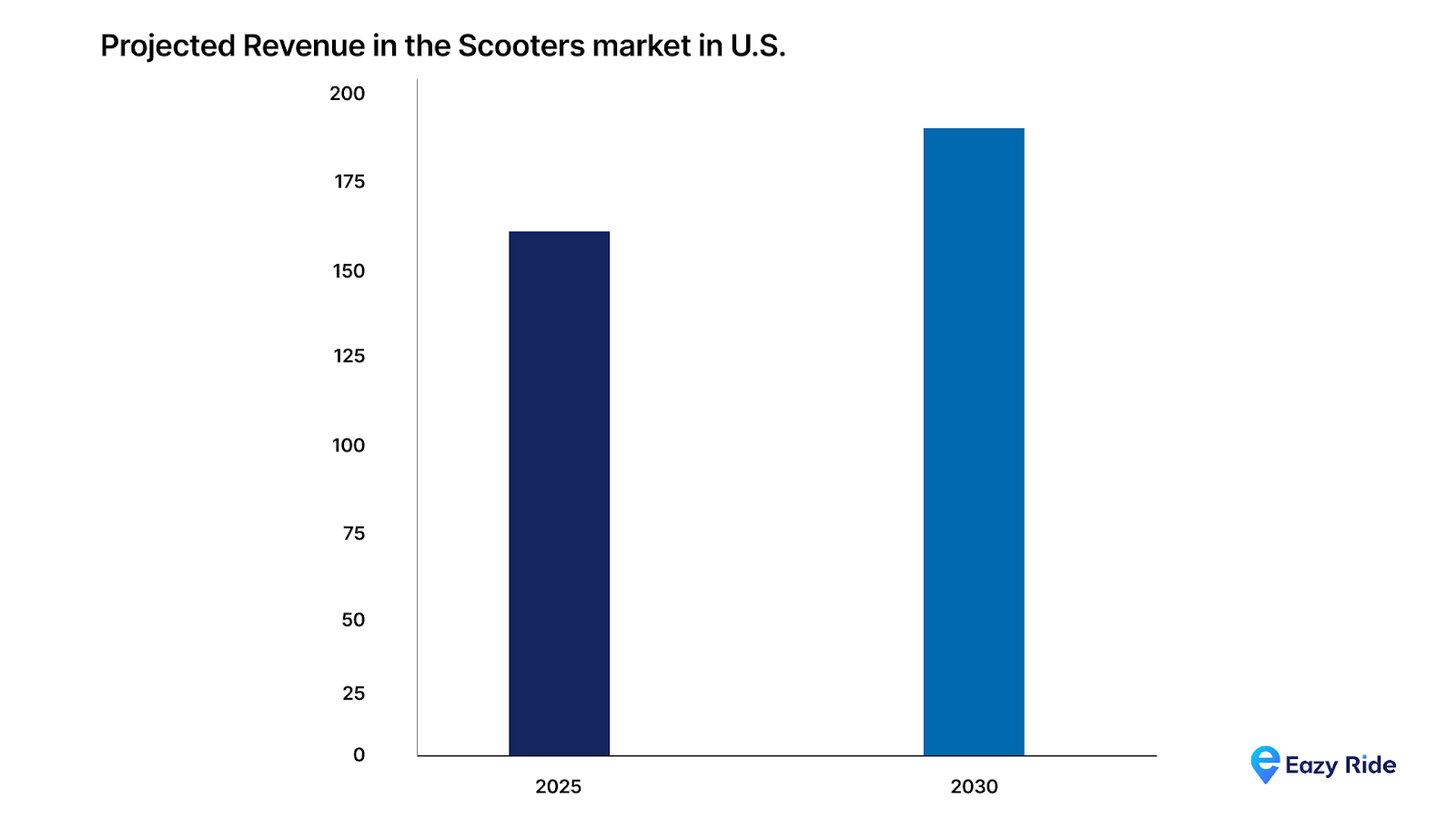
- The surge is fueled by the rising trend of micro-mobility, short-distance travel using lightweight vehicles like e-scooters. Which is transforming urban transportation and increasing demand for shared mobility solutions.
2. Expansion into New Markets & Use Cases
- Investments are moving beyond city centers to campuses, resorts, corporate parks, and logistics/delivery services.
- Diversification into these new segments provides additional revenue streams and reduces reliance on a single market.
3. Government Incentives & Policy Support
- Many U.S. cities and states like California, Maryland, offer tax rebates, purchase subsidies, and preferential parking for eco-friendly vehicles, including e-scooters.
- Local governments across the globe provide seed funding or infrastructure support for rental fleets, and are developing regulatory frameworks to encourage sthe tructured growth of shared mobility services.
- These incentives lower entry barriers and operating costs for new investors.
4. Technology & Operational Efficiency
- Advancements in smart connectivity, IoT-enabled fleet management, and battery technology are improving operational efficiency and profitability.
- Features like real-time tracking, predictive maintenance, and user-friendly mobile apps help maximize fleet utilization, minimize downtime, and enhance rider experience.
5. Recurring Revenue & Scalability
- Shared mobility investments generate recurring revenue through ride fees, subscriptions, and leasing models.
- This model allows operators to scale quickly, adapt to market trends, and optimize asset utilization for higher returns.
While these drivers highlight the potential for strong returns, it’s equally important to consider the challenges in the scooter investment landscape.
Key Challenges and Solutions in Scooter Investments
While scooter investments present strong growth prospects and recurring revenue potential, they also come with unique challenges that operators and entrepreneurs must navigate to achieve long-term success.
| Challenge | Solution |
|---|---|
| Safety Concerns and Accident Risks | Invest in safety education, enforce compliance, and collaborate with local authorities to promote safer riding practices. |
| Regulatory Uncertainty and Compliance | Engage proactively with policymakers and stay adaptable to evolving legal frameworks and compliance requirements. |
| Infrastructure Limitations | Work with city planners to advocate for better infrastructure or invest in smart parking and related solutions. |
| Theft, Vandalism, and Asset Losses | Implement fleet tracking, geofencing, and anti-theft technologies to protect assets and minimize losses. |
| Market Competition and Asset Utilization | Focus on optimizing fleet deployment, expanding service areas strategically, and leveraging data analytics for efficiency. |
Equipped with insights into both the hurdles and solutions of scooter investments, let’s look at actionable steps toward launching your own successful business in the electric scooter rental industry. Here’s a practical guide to get you started..
How to Start an Electric Scooter Rental Business with EazyRide
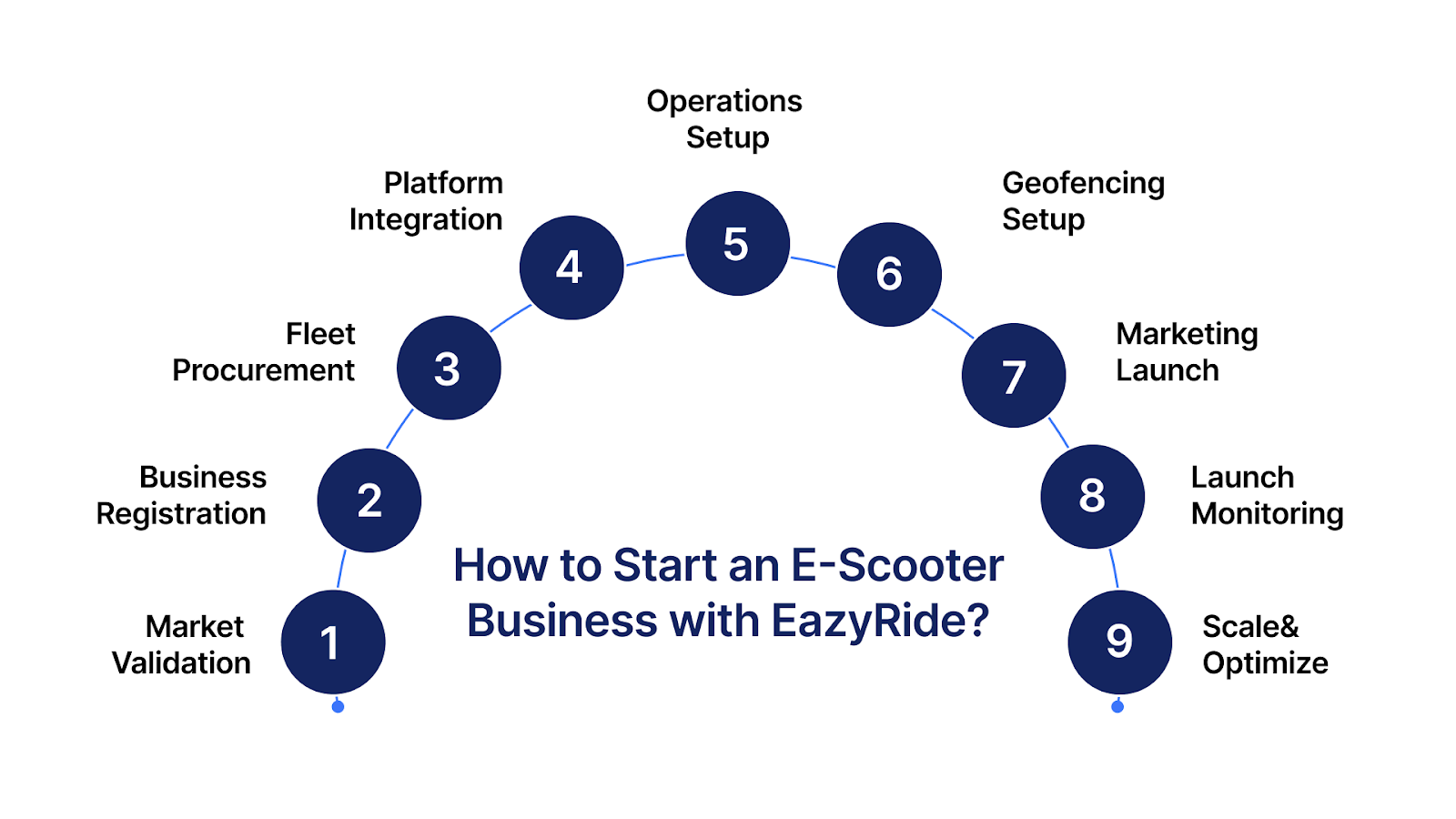
Launching a successful electric scooter rental business requires careful planning, regulatory compliance, and the right technology partner. Choosing a platform that simplifies the complexities of fleet management, rider experience, and operational logistics can make all the difference.
EazyRide offers a comprehensive solution designed to help entrepreneurs move from concept to operation quickly and efficiently, minimizing technical hurdles and accelerating your go-to-market timeline. Here’s a step-by-step guide based on industry best practices and EazyRide’s proven platform
Step 1. Conduct Market Research & Validate Your Idea
- Analyze local demand for scooter sharing, identify target users (e.g., commuters, tourists, campuses), and study competitors.
- Assess city infrastructure, regulations, and potential service areas to ensure a viable business environment.
Step 2. Obtain Permits and Register Your Business
- Contact local authorities to understand licensing, permits, and operational requirements for scooter sharing in your city.
- Register your business as a legal entity and secure necessary insurance coverage.
Step 3. Choose and Procure Your Scooter Fleet
- Select reliable, share-ready electric scooters with IoT connectivity for tracking and management.
- Consider initial fleet size based on market research and budget projections.
Step 4. Partner with EazyRide’s Platform
- Partner with EazyRide for a turnkey, white-label software solution that includes rider apps, admin dashboards, and fleet operator tools.
- Customize the platform with your branding, pricing, and operational preferences.
Step 5. Set Up Operations and Team
- Hire or assign staff for fleet maintenance, rebalancing, and customer support.
- Train your team on using EazyRide’s admin and operator apps for efficient daily management.
Step 6. Configure Geofencing
- Use EazyRide’s tools to set up service zones, parking areas, and speed restrictions in compliance with local rules.
Step 7. Launch Marketing and User Acquisition Campaigns
- Develop a marketing plan targeting your ideal customer segments through digital ads, partnerships, and local events.
- Use EazyRide’s in-app promotions and referral features to attract and retain riders.
Step 8. Test, Launch, and Monitor
- Conduct a soft launch or pilot test to gather user feedback and optimize operations.
- Officially launch your service, monitor performance using EazyRide’s analytics dashboard, and make data-driven improvements.
Step 9. Scale and Optimize
- Use real-time analytics and heatmaps to optimize fleet distribution and maximize utilization.
- Expand your fleet, service areas, or business models (e.g., delivery, campus, tourism) as demand grows.
Conclusion
Every city, campus, and business faces unique mobility challenges, but the path to smarter transportation can start with your decision today. Investing in scooters isn’t just about tapping into a growing market; it’s about shaping how people move and experience their environment.
Whether you’re an entrepreneur ready to launch a new venture, a facility manager seeking better last-mile solutions, or a business leader aiming to reduce your carbon footprint, the opportunity to make a measurable impact is within reach.
EazyRide stands out as a game-changing partner for anyone looking to enter or expand in the shared mobility space. With its rapid deployment, robust white-label technology, advanced analytics, and full suite of operational tools, EazyRide removes the traditional barriers to entry and empowers you to launch, manage, and scale your scooter investment business with confidence.
Schedule a personalized demo and discover how you can launch your own successful scooter investment business in just weeks.
FAQs
Is investing in scooter sharing profitable?
Yes, scooter sharing can be profitable, especially in urban areas with high demand for last-mile transportation. Profitability depends on factors such as fleet utilization, operational efficiency, local regulations, and market competition. According to industry data, shared mobility models generate recurring revenue and can scale quickly in the right environment.
What are the main costs involved in starting a scooter investment business?
Key costs include purchasing or leasing scooters, software/platform fees, insurance, permits, maintenance, charging infrastructure, and marketing. Initial investment varies based on fleet size and location, but many operators find that recurring revenue models help offset these costs over time.
How do I choose the right city or area for a scooter sharing business?
Look for cities with high population density, good weather, supportive regulations, and a lack of existing micro-mobility saturation. Conduct market research to identify unmet demand, commuter patterns, and potential partnerships with local businesses or institutions.
What are the biggest challenges in operating a scooter fleet?
Common challenges include theft and vandalism, regulatory changes, fleet maintenance, and ensuring high asset utilization. Operators must also stay compliant with local laws regarding parking, speed, and rider safety.
How do shared mobility investments compare to traditional retail scooter sales?
Shared mobility investments offer recurring revenue from ride fees and subscriptions, while traditional retail relies on one-time sales. Shared mobility also benefits from higher asset utilization and aligns with urban sustainability trends, making it an attractive option for long-term growth.


