
 AllMicro Mobility Model

 19 September, 2026
 The Complete Guide to Electric Vehicle (EV) Fleet Management
Electric vehicles now make up roughly one in five new cars sold worldwide, and commercial fleets are a big part of that shift toward mass adoption. For an operator, the appeal is simple: cheaper fuel, fewer moving parts, and a cleaner brand. The catch is that an EV fleet doesn’t run itself.
Charging windows, battery health, route range, and compliance reporting all turn into daily decisions. Get them right and each vehicle earns its keep on every mile. Get them wrong and you’re left with idle vehicles, missed jobs, and surprise repair bills. That gap is exactly what electric vehicle fleet management closes.
This guide covers what EV fleet management actually means, what an EV fleet is, the tools you need to run one, and how to choose software that scales, with real numbers instead of hype.
Key Takeaways
- EVs can cost about 40% less to maintain than gas.
- Smart charging keeps every vehicle ready to roll.
- Real-time data cuts unplanned fleet downtime early.
- One dashboard handles a full mixed EV fleet.
- Built-in reports keep the whole fleet audit-ready.
What Is Electric Vehicle Fleet Management?
Electric vehicle fleet management is the practice of running a group of EVs as one system: tracking each vehicle’s battery and energy use, scheduling charging, planning routes around range, handling maintenance, and reporting on emissions and compliance. It takes the fundamentals of traditional fleet management and adds the two things that make EVs different, charging and battery health.
Put plainly, it’s the difference between owning electric vehicles and actually operating them well. A logbook and a set of keys was enough for a diesel van. An EV fleet generates a constant stream of data, state of charge, charge cycles, energy per mile, that only pays off if something reads it and acts on it. The same fleet management strategies that cut cost for combustion fleets still apply. The energy and battery layer just sits on top.
What Is an EV Fleet?
An EV fleet is any group of electric vehicles a single business operates together. That covers the obvious cases, delivery vans, service cars, and buses, but it also covers the fastest-growing category: shared micromobility. Electric scooters, e-bikes, and mopeds are EV fleets too, and there are far more of them on the road than most guides admit.
The definition matters because it changes what “management” looks like. A fleet of 30 delivery vans returns to one depot each night. A fleet of 300 shared e-scooters is spread across a city, gets ridden by strangers, and needs geofencing, swappable batteries, and per-vehicle revenue tracking. Both are electric fleets. Both benefit from treating vehicles as a subscription-style asset, which is why the electric vehicle as a service model keeps gaining ground.
Why EV Fleets Pay Off for Operators
The financial case is the reason most operators start looking, so it’s worth being specific. Electric vehicles cost about 40% less per mile to maintain than comparable gas vehicles. Fewer moving parts means no oil changes, simpler drivetrains, and less time off the road.
Citation capsule. Electric vehicles cost roughly 40% less per mile to maintain than gas equivalents, and fleets that electrify can reach about a 9% lower total cost of ownership than diesel. Source: Yale e360 and RMI, 2024. Lower fuel and maintenance costs compound across every vehicle, every year.
Lower maintenance also means more uptime, and for a fleet, uptime is revenue. Predictable energy costs help too. Electricity prices move far less than diesel, so budgeting gets easier. When you model this across a vehicle’s life, the savings show up in total cost of ownership, not just the sticker price. Add tightening emissions rules from local and national government programs, and electrification stops being a sustainability line item and becomes an operations decision.
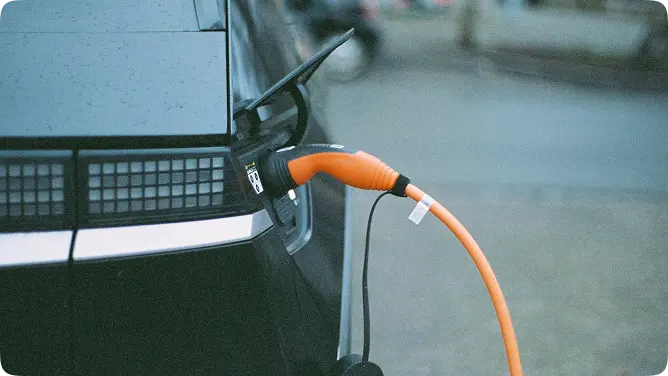
Photo by Jeffry Surianto on Pexels
What You Need to Manage an EV Fleet Effectively
Adding EVs to your lineup is the easy part. Running them well takes a handful of connected systems working together.
- EV fleet software. One place to see battery levels, charging status, usage, and maintenance across every vehicle.
- Telematics and IoT. Real-time location, battery health, and driver behavior. Good IoT fleet management turns raw sensor data into decisions you can act on.
- Charging management. Schedule charging to dodge peak rates and make sure vehicles are ready before the first shift.
- Predictive maintenance. AI-driven predictive maintenance flags a failing part before it strands a vehicle, instead of waiting for a fixed service interval.
- Compliance and reporting. Automatic logs for emissions, energy use, and city rules, so you’re audit-ready without the spreadsheet.
Miss one of these and the others get harder. Skip charging management and your predictive maintenance data won’t save you from a vehicle that’s flat at 7 a.m.
EV Fleet Software: The Features That Actually Matter
Not all fleet software handles EVs well. Plenty of tools bolt battery data onto a GPS tracker built for diesel. When you evaluate a platform, weigh it against the criteria below rather than a feature-count checklist.
| What to look for | Why it matters |
|---|---|
| Real EV telemetry (state of charge, charge cycles, state of health) | EVs fail and degrade differently than gas vehicles. GPS alone won’t warn you about range. |
| Charging and energy scheduling | Smart charging avoids peak rates and keeps vehicles ready without manual babysitting. |
| Utilization and efficiency analytics | Shows which vehicles or routes waste energy so you can redeploy or retire them. |
| Mixed-fleet and scale support | Most fleets grow gradually and run EV plus older vehicles. A rigid tool forces a costly migration later. |
| Reporting and compliance exports | Cities and grant programs increasingly require energy and emissions data on demand. |
The fastest way to test any of this: load 5 to 10 real vehicles into a demo, watch the dashboards for a week, and compare the projected savings against your current fuel, maintenance, and downtime costs. If the break-even is clear, the software is an efficiency tool. If it isn’t, it’s just another subscription.
Photo by Christina & Peter on Pexels
The Micromobility Angle Most EV Fleet Guides Miss
Here’s the part the car-focused guides skip entirely. Shared electric scooters, e-bikes, and mopeds are among the largest EV fleets running today, and they’re managed nothing like a van fleet. The vehicles live outside, get handled by the public, and each one has to earn its own revenue. That changes the software you need.
This is the problem EazyRide was built for. Operators launch e-scooter, e-bike, and moped fleets under their own brand and run all three vehicle types from one account, no second login for the bikes. From what we’ve seen working with operator clients, the details that matter most are the ones a car-fleet tool never has to think about:
- Geofencing that draws no-parking zones, slow zones, and service boundaries on the map. In deployments we’ve supported, operators report up to 40% fewer parking violations versus manual enforcement.
- Zone and pricing rule changes that push to every vehicle in real time, with no firmware update required.
- Hardware freedom: support for 10+ IoT hardware brands out of the box, so a manufacturer’s firmware update doesn’t break your fleet.
If your fleet is shared vehicles rather than company cars, the tooling lives in purpose-built products like scooter fleet management software and a real-time mobility dashboard for scooter fleets, not a repurposed truck tracker. The launch math is different too: instead of building an app and dashboard from scratch, most deployments go live in about 14 days from signing.
How to Choose the Right Setup for Your Fleet
Whether you run delivery vans or 300 shared scooters, the decision comes down to the same question: does the platform read what your EVs are actually telling it, and does it scale as you grow? Start with a demo on real data, model the break-even honestly, and confirm the reporting you’ll need for compliance before you sign anything.
The operators pulling ahead in 2026 aren’t the ones who bought the most vehicles. They’re the ones who treated the software as the core of the operation, not an afterthought. If you’re scoping an electric fleet or weighing a platform switch, a 30-minute fleet review will tell you more than a week of vendor calls. Book a free EazyRide demo and bring your real numbers.
FAQs
What is electric vehicle fleet management?
Electric vehicle fleet management is the practice of running EV fleets: tracking battery health, scheduling charging, planning routes, and handling maintenance from one connected system.
Is an EV fleet cheaper than diesel?
Often, yes. EVs cost about 40% less to maintain and can reach a lower total cost of ownership, though charging setup and usage patterns decide the real savings.
What is an EV fleet exactly?
An EV fleet is a group of electric vehicles a business operates together, from delivery vans and cars to shared e-scooters, e-bikes, and mopeds too.
How fast can I launch an EV fleet?
With ready-made software, fast. Most EazyRide deployments go live in about 14 days from signing, since operators skip building rider apps and dashboards from scratch.
What software do I need for EVs?
You need fleet software that reads EV telemetry: battery state of charge, charge cycles, and energy per mile, plus charging schedules, utilization analytics, and compliance reports.


