
 AllAnalytics and research

 26 December, 2025
 Efficient Fleet Management: Top Strategies and Best Practices
Managing a vehicle fleet efficiently has become more complex as shared mobility and rental businesses scale across cities and service types. Fleet operators today must balance vehicle availability, maintenance schedules, pricing, and on-ground operations, often while working with limited staff and tight margins. Relying on manual tracking or disconnected tools makes it harder to maintain control as fleets grow.
The shared mobility sector is expanding rapidly. The total number of shared bikes and scooters worldwide is projected to reach over 37.8 million vehicles by 2029, highlighting strong growth and demand for efficient fleet systems.
At the same time, digital fleet management tools are becoming essential for operational efficiency. Adoption of real-time tracking, telematics, and analytics has helped operators reduce maintenance costs and improve decision-making speed, with digital dashboards boosting productivity by 20–30% and AI-driven analytics reducing operational costs by around 12 % in some fleets.
In micro-mobility businesses, where vehicles are in constant use and downtime directly impacts revenue, having accurate, real-time visibility into fleet activity is crucial. Without it, businesses risk higher operational costs, poor rider experience, and slower expansion.
This guide breaks down the top strategies and best practices for efficient fleet management, focusing on practical approaches that help rental and shared mobility operators streamline operations, reduce manual work, and scale confidently using the right technology.
Key Takeaways:
- Efficient fleet management reduces operational costs, improves vehicle uptime, and helps rental and shared mobility businesses scale across multiple locations.
- Centralized dashboards and real-time tracking replace manual tools, giving operators full visibility into vehicles, trips, payments, and fleet performance.
- Preventive maintenance, data-driven rebalancing, and automated pricing significantly reduce downtime and improve overall vehicle utilization rates.
- Modern fleet management requires integrated tools, including branded rider apps, operator apps, analytics, and performance reporting systems.
- EazyRide enables businesses to launch and manage branded rental fleets quickly using a scalable, white-label fleet management platform.
What Is Fleet Management?
Fleet management is the process of overseeing and coordinating a group of vehicles used for business operations. In shared mobility and rental businesses, this includes managing vehicles, riders, trips, payments, maintenance, and daily on-ground activities across one or multiple locations.
For micro-mobility fleets such as e-bikes and e-scooters, fleet management requires continuous monitoring. Vehicles are constantly in motion, usage patterns change by time and location, and battery levels and maintenance needs must be addressed quickly to avoid downtime. Without a structured system, these moving parts become difficult to manage as the fleet grows.
Core components of fleet management include:
- Tracking vehicle location, status, and availability
- Monitoring trips, usage frequency, and rider behaviour
- Scheduling maintenance, repairs, and charging
- Managing pricing, payments, and subscriptions
- Reviewing performance data and operational reports
Many early-stage operators start with spreadsheets or manual tracking. While this may work for small fleets, it becomes inefficient and error-prone at scale. Software-based fleet management platforms centralize these activities into a single system, giving operators real-time visibility and better control over daily operations.
With the right fleet management setup, rental and shared mobility businesses can maintain vehicle uptime, improve operational efficiency, and scale without losing control of their fleet.
Explore how a single dashboard can replace spreadsheets and disconnected tools for fleet operations. Request a demo with EazyRide today.
Why Efficient Fleet Management Matters for Growing Fleets?
As fleets grow in size and expand into new locations, managing operations becomes significantly more complex. What works for a small number of vehicles often breaks down when operators need to oversee hundreds or thousands of assets across multiple zones.
Without the right systems in place, growing fleets often face higher costs, reduced vehicle availability, and inconsistent service quality. Efficient fleet management ensures that operational growth doesn’t come at the expense of profitability or customer experience.
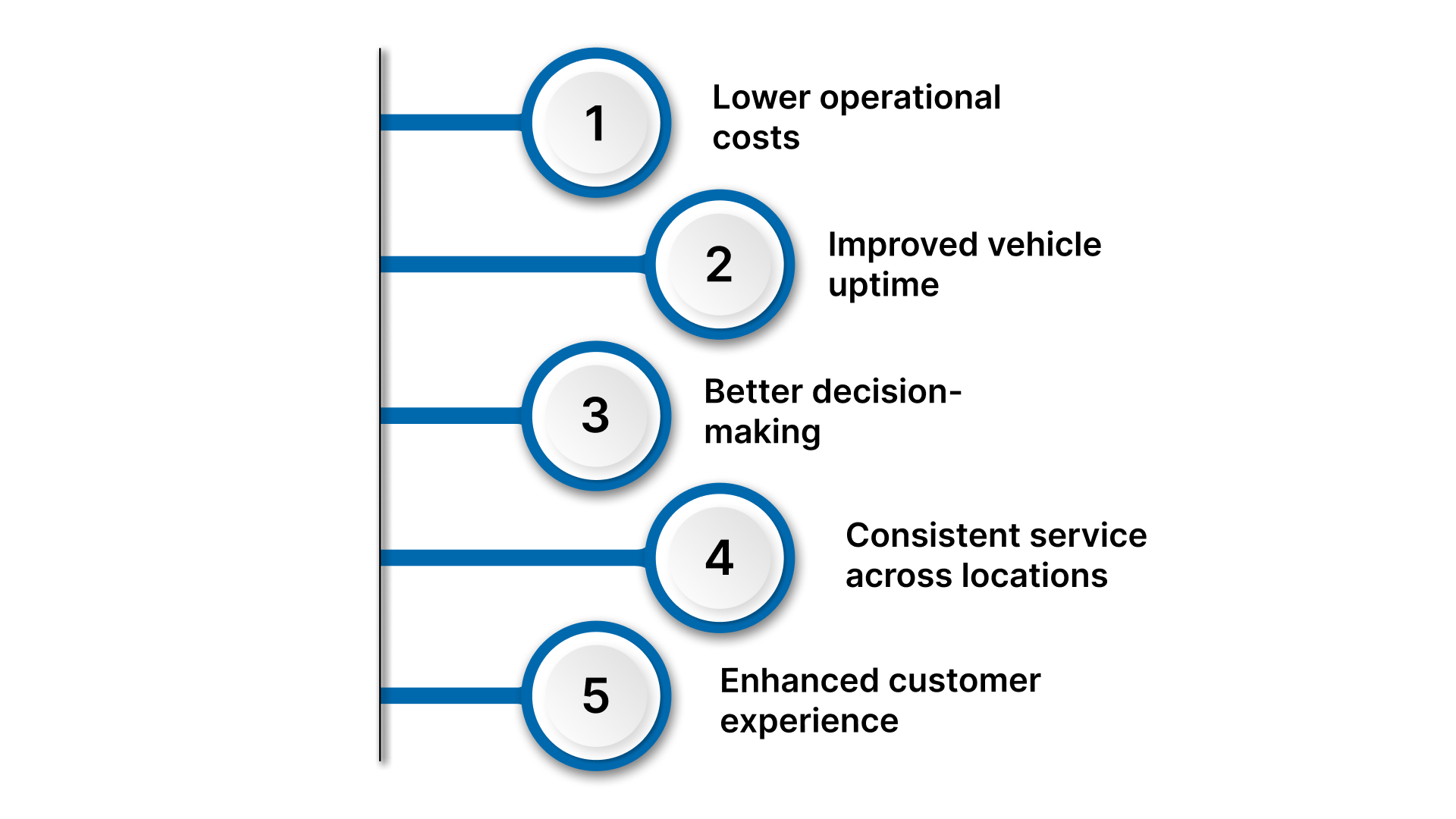
Key reasons efficient fleet management is critical for growing businesses include:
- Lower operational costs: Real-time insights help reduce unnecessary trips, optimize staffing, and prevent costly breakdowns through timely maintenance.
- Improved vehicle uptime: Proactive monitoring ensures vehicles are charged, serviced, and available when demand is highest.
- Better decision-making: Access to accurate usage and performance data allows operators to adjust pricing, fleet size, and deployment strategies quickly.
- Consistent service across locations: Centralized systems make it easier to standardize processes as businesses expand into new cities or service areas.
- Enhanced customer experience: Reliable vehicle availability and fewer service interruptions lead to higher rider satisfaction and repeat usage.
For rental and shared mobility businesses, efficient fleet management is a foundation for long-term growth. The right tools allow operators to scale confidently while maintaining control over costs, performance, and service quality.
Also Read: Fleet Tracking System Reviews 2025: Best GPS Platforms Rated
Common Fleet Management Challenges Businesses Face
Managing a shared mobility or rental fleet comes with several operational challenges, especially as the business grows. Identifying these challenges early helps operators put the right systems in place before inefficiencies scale.
Lack of Real-Time Vehicle Visibility
Without live tracking, fleet managers struggle to understand where vehicles are located or whether they’re available, in use, or offline. This makes it harder to respond quickly to issues and optimize deployment.
- Delayed response to breakdowns or low battery alerts
- Difficulty locating underused or misplaced vehicles
- Limited insight into demand patterns by location
Manual Operations and Disconnected Systems
Many businesses rely on spreadsheets, emails, or multiple tools to manage pricing, users, and reporting. This creates data silos and increases the risk of errors.
- Time-consuming reporting and reconciliation
- Inconsistent data across teams
- Higher chances of billing or usage inaccuracies
Maintenance and Battery Management Issues
Unplanned maintenance can take vehicles off the road unexpectedly, directly impacting revenue. Without structured workflows, maintenance often becomes reactive rather than preventive.
- Missed servicing schedules
- Increased vehicle downtime
- Shortened vehicle lifespan due to delayed repairs
Scaling Across Multiple Locations
As fleets expand into new cities or zones, operational complexity increases. Managing teams, vehicles, and rules across locations becomes difficult without centralized control.
- Inconsistent operational processes
- Difficulty managing regional pricing or zones
- Limited visibility into location-wise performance
These challenges are common across rental and micro-mobility businesses, but they’re not unavoidable. With the right fleet management strategies and software, operators can address these issues early and build a more efficient, scalable operation.
Top Strategies for Efficient Fleet Management
Efficient fleet management depends on clear ownership, repeatable workflows, and measurable outcomes. For rental and shared mobility businesses, the following strategies help reduce manual effort, improve vehicle availability, and maintain operational control as fleets scale.
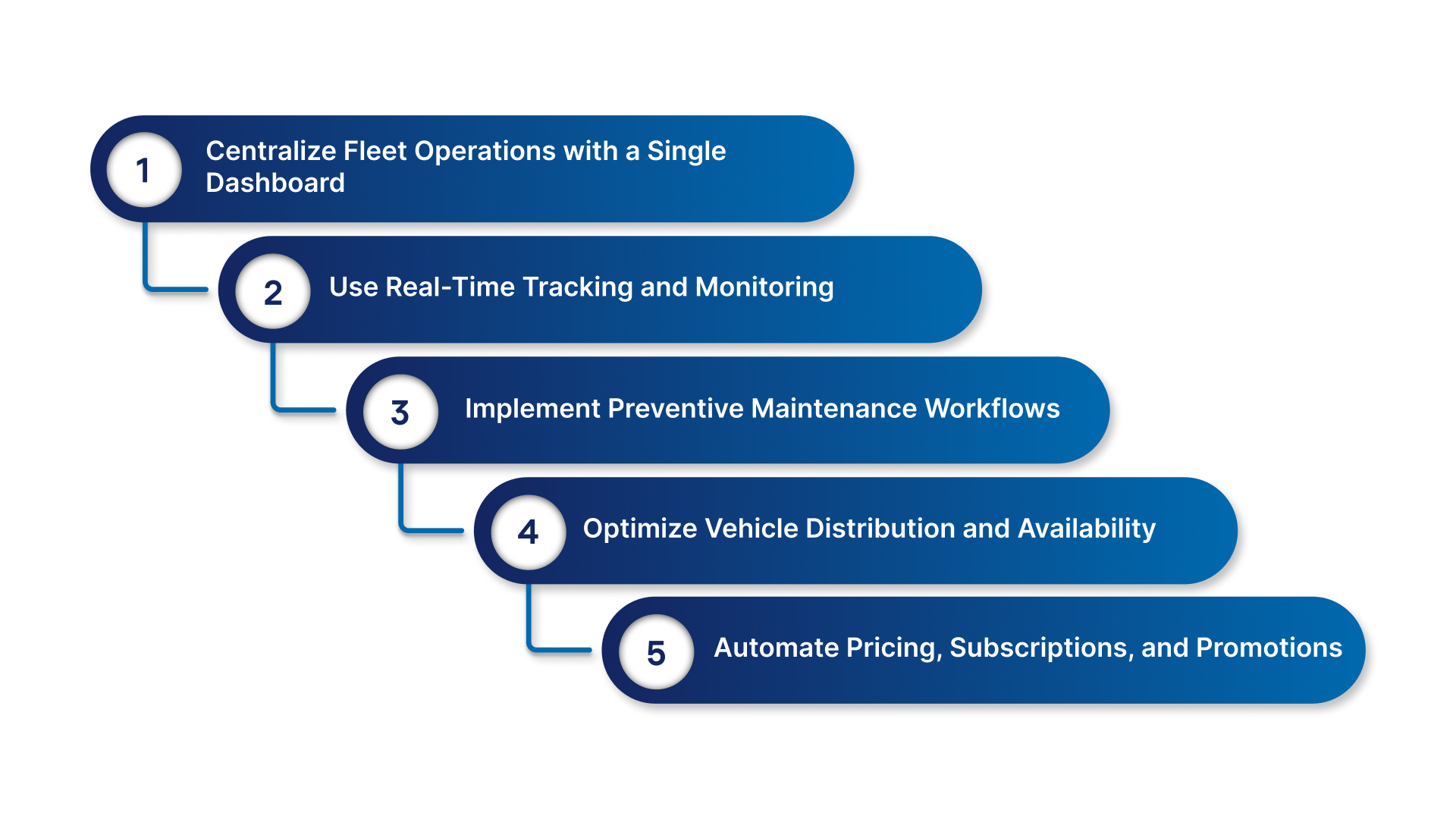
1. Centralize Fleet Operations with a Single Dashboard
Managing vehicles, trips, users, and payments across multiple tools creates data silos and slows decision-making. A centralized fleet dashboard serves as the operational command center.
How to implement:
- Integrate vehicle data, trip logs, user activity, and payments into one platform
- Define role-based access for ops leads, field teams, and finance
- Configure real-time alerts for exceptions (vehicle offline, payment failure, unusual usage)
Owner: Operations lead (with input from finance and customer support)
Cadence:
- Daily: Monitor fleet status, active trips, and exceptions
- Weekly: Review performance trends and operational bottlenecks
Success metrics:
- Reduction in manual reconciliations
- Faster issue resolution time
- Improved decision turnaround for ops planning
2. Use Real-Time Tracking and Monitoring
Real-time visibility into vehicle location, status, and health allows teams to act immediately instead of reacting after issues escalate.
How to implement:
- Enable GPS and telematics for location, battery, and usage tracking
- Set automated alerts for low battery, inactivity, or abnormal behavior
- Create escalation rules for breakdowns or safety issues
Owner: Operations lead (monitoring) and field team (execution)
Cadence:
- Continuous monitoring
- Daily review of alerts and exceptions
Success metrics:
- Faster response time to incidents
- Reduction in vehicle idle time
- Higher fleet utilization rates
3. Implement Preventive Maintenance Workflows
Reactive maintenance leads to unexpected downtime and higher repair costs. Preventive workflows help keep vehicles available and extend asset life.
How to implement:
- Define service intervals based on mileage, hours used, or battery cycles
- Automate maintenance alerts and service tickets
- Track maintenance history for each vehicle
Owner: Maintenance team (execution), ops lead (oversight)
Cadence:
- Weekly maintenance scheduling
- Monthly review of breakdown patterns and costs
Success metrics:
- Reduced unplanned downtime
- Lower repair costs per vehicle
- Improved vehicle availability rate
4. Optimize Vehicle Distribution and Availability
Demand fluctuates by location, day, and time. Data-driven rebalancing ensures vehicles are available where customers need them most.
How to implement:
- Analyze historical trip data to identify high-demand zones and peak hours
- Set rebalancing rules for minimum and maximum vehicle thresholds
- Assign field teams to reposition vehicles during low-demand windows
Owner: Operations lead (planning), field team (rebalancing)
Cadence:
- Daily demand monitoring
- Weekly optimization and zone review
Success metrics:
- Increased utilization per vehicle
- Reduced customer wait times
- Fewer lost bookings due to unavailability
5. Automate Pricing, Subscriptions, and Promotions
Manual pricing updates and billing processes slow down operations and increase error risk. Automation enables faster experimentation and scalable growth.
How to implement:
- Define pricing rules based on time, location, or demand
- Automate subscription billing and renewals
- Schedule promotions directly within the fleet platform
Owner: Operations lead (pricing rules), finance team (billing oversight)
Cadence:
- Monthly pricing and subscription review
- Campaign-based promotion evaluation
Success metrics:
- Reduced billing errors
- Faster launch of new pricing models
- Improved revenue per vehicle
By applying these strategies with clear ownership, regular cadence, and measurable KPIs, fleet operators can streamline daily operations, maximize vehicle availability, and build a foundation for sustainable, scalable growth.
Also Read: 8 Essential Fleet Management Features for Optimal Efficiency
Best Practices for Managing Shared Mobility and Rental Fleets
Beyond strategy, consistent execution is what keeps fleet operations running smoothly. Following proven best practices helps shared mobility and rental businesses maintain efficiency, reduce operational risk, and scale with confidence.
Best practices to follow for long-term fleet efficiency include:
- Standardize operational processes: Create clear procedures for maintenance, charging, rebalancing, and issue resolution, so teams operate consistently across locations.
- Train on-ground teams with the right tools: Operator apps and task-based workflows help field teams handle maintenance, battery swaps, and vehicle repositioning efficiently.
- Review performance data regularly: Monitor usage trends, downtime, and revenue metrics to identify inefficiencies and improve decision-making.
- Plan charging and maintenance infrastructure early: Ensure charging stations, spare batteries, and service schedules are aligned with fleet size and usage patterns.
- Prepare for multi-location operations: Use centralized systems to manage pricing, zones, and reporting as the business expands into new areas.
When these best practices are applied consistently, fleet management becomes more predictable and easier to scale. Businesses can maintain service quality while keeping operational complexity under control.
Tools Needed for Modern Fleet Management
Managing a growing vehicle fleet requires more than basic tracking tools. Modern fleet management relies on connected systems that give operators visibility, control, and actionable insights across every part of the operation. The right tools reduce manual work and help teams manage fleets efficiently at scale.
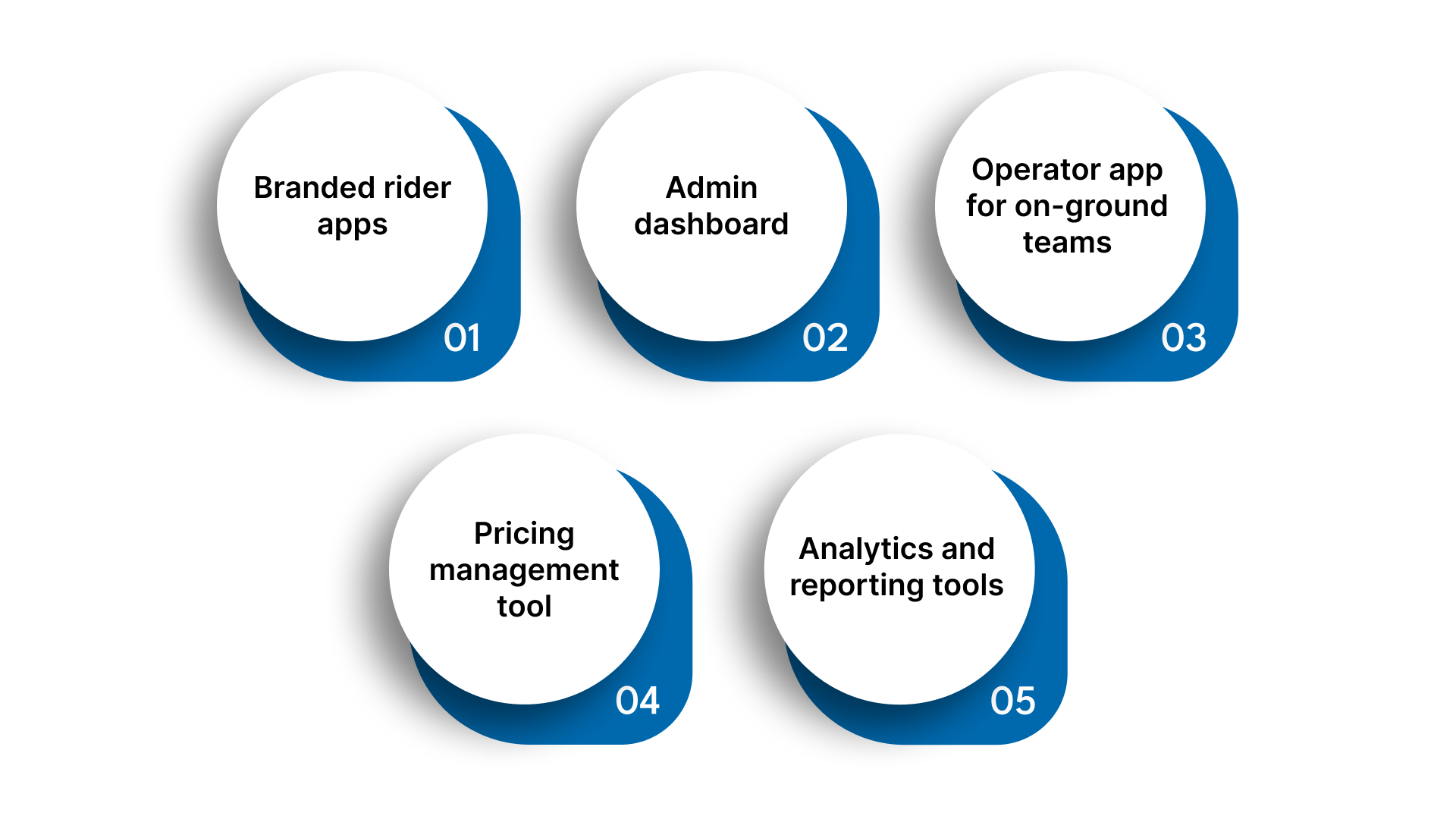
Essential tools for effective fleet management include:
- Branded rider apps: Enable customers to locate vehicles, start and end rides, make payments, and access support, all under the business’s own brand.
- Admin dashboard: Acts as the control center for tracking vehicles, trips, users, payments, and performance metrics across locations.
- Telematics and IoT layer: Provides real-time data from vehicles, including location accuracy, battery health, usage patterns, and fault signals.
- Operator app for on-ground teams: Helps field staff manage tasks such as charging, maintenance, inspections, and vehicle rebalancing efficiently.
- Ticketing and incident management workflows: Convert issues into structured tickets with ownership, SLAs, escalation rules, and resolution tracking.
- Pricing and promotion management tools: Allow operators to configure flexible pricing models, subscriptions, and discounts without manual intervention.
- Role-based access control and audit logs: Ensure each team member only accesses what they need, protecting against accidental changes, unauthorized actions, and revenue-impacting mistakes.
- Integrations and data exports: Connect fleet systems with payments, CRM/support tools, accounting software, and data warehouses.
- Analytics and reporting tools: Provide insights into usage patterns, peak demand, vehicle health, and revenue performance.
With these tools in place, fleet operators can move away from fragmented systems and manage their operations from a single, integrated platform, making it easier to scale while maintaining operational control.
Key Metrics to Track for Fleet Performance
Tracking the right metrics helps fleet operators understand how well their vehicles are performing and where operational improvements are needed. Without clear data, it becomes difficult to identify inefficiencies, control costs, or plan for growth.
By monitoring key performance indicators regularly, shared mobility and rental businesses can make informed decisions and optimize fleet operations.
Essential fleet performance metrics to track include:
- Vehicle utilization rate: Measures how often vehicles are in use versus idle, helping identify underused or over-deployed assets.
- Downtime and maintenance frequency: Tracks how long vehicles are unavailable due to repairs or charging, highlighting maintenance efficiency.
- Mean Time to Recover (MTTR): Measures the average time taken to restore a vehicle to service after breakdowns or low-battery incidents.
- Tasks completed per operator per shift: Evaluates on-ground team efficiency by tracking how many maintenance, charging, inspection, or rebalancing tasks each operator completes within a shift.
- Revenue per vehicle: Indicates how much income each vehicle generates, helping assess pricing and fleet size decisions.
- Peak usage times and locations: Identifies when and where demand is highest, supporting better vehicle distribution and rebalancing.
- Operational response time: Measures how quickly teams respond to issues such as breakdowns or low battery alerts.
Regularly reviewing these metrics allows operators to spot trends early, improve operational workflows, and ensure the fleet is aligned with business goals.
Also Read: Essential Elements of Fleet Safety Programs
How EazyRide Supports Efficient Fleet Management
EazyRide is built specifically for businesses that want to launch and manage vehicle-sharing or rental operations without developing software from scratch. The platform brings together all the tools needed to run a fleet efficiently while allowing businesses to operate fully under their own brand.
Instead of managing multiple systems, EazyRide provides a centralized platform that gives operators real-time visibility into fleet activity and day-to-day operations. This helps teams stay in control as fleets grow in size and expand into new locations.
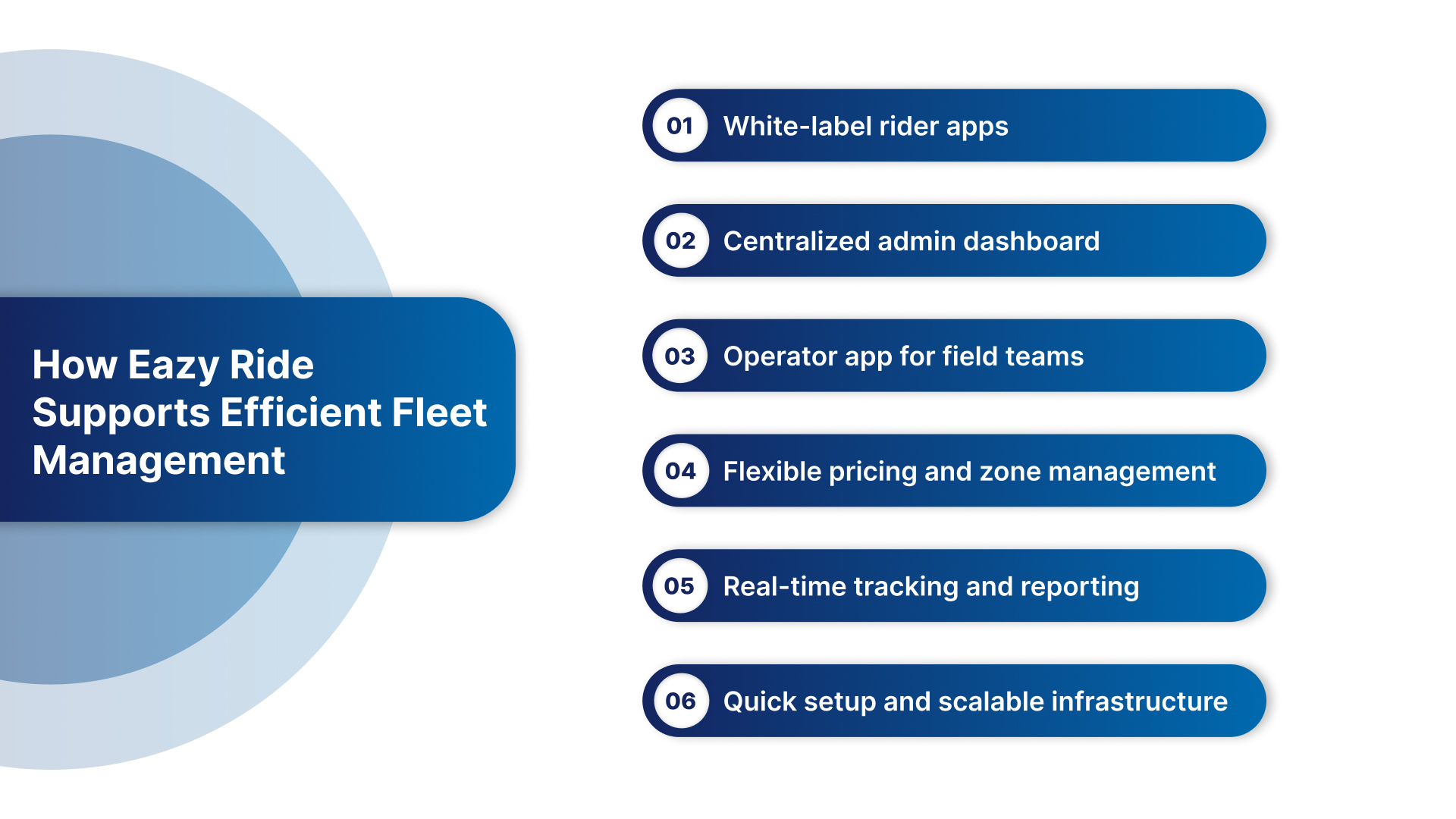
How EazyRide helps streamline fleet management:
- White-label rider apps: Launch fully branded iOS and Android apps for customers to find vehicles, start rides, and make payments seamlessly.
- Centralized admin dashboard: Monitor vehicles, trips, users, payments, and performance metrics from a single control panel.
- Operator app for field teams: Enable on-ground staff to manage charging, maintenance, inspections, and rebalancing through task-based workflows.
- Flexible pricing and zone management: Set custom pricing models, subscriptions, promotions, and define ride or parking zones using geofencing tools.
- Real-time tracking and reporting: Access live data on vehicle status, usage patterns, and operational performance to support faster decision-making.
- Quick setup and scalable infrastructure: Most businesses can launch within weeks and scale their fleet or expand to new regions without operational disruption.
Conclusion
Efficient fleet management is essential for rental and shared mobility businesses looking to operate smoothly and scale sustainably. As fleets grow, having clear visibility into vehicles, maintenance, pricing, and performance becomes critical to controlling costs and maintaining service quality.
By applying proven strategies, such as centralized operations, real-time tracking, preventive maintenance, and data-driven decision-making, businesses can reduce manual work and improve fleet uptime. Using the right tools further simplifies daily operations and prepares teams to manage expansion across new locations.
EazyRide brings these capabilities together in a single, white-label platform designed for fleet-based businesses. With branded apps, centralized control, and real-time insights, EazyRide helps operators launch faster, manage fleets efficiently, and grow with confidence.
Explore how EazyRide can support your fleet operations. Contact us to learn more about the platform today.
FAQs
1. What is the best way to manage a growing vehicle fleet?
The most effective approach is using a centralized fleet management platform that offers real-time tracking, maintenance scheduling, and performance reporting in one system.
2. How does fleet management software improve operational efficiency?
Fleet management software reduces manual work by automating tracking, maintenance alerts, pricing, and reporting, giving operators better visibility and control.
3. What metrics should fleet managers track regularly?
Key metrics include vehicle utilization rate, downtime, maintenance frequency, revenue per vehicle, and peak usage times and locations.
4. How long does it take to set up fleet management software?
With ready-made platforms like EazyRide, most businesses can configure and launch their fleet management system within a few weeks.
5. Can fleet management systems support multi-location operations?
Yes, modern fleet management platforms are designed to handle multi-city operations with centralized dashboards, location-based pricing, and zone management tools.


