
 ToutModèle de micromobilité

 23 November, 2026
Sustainable Transportation: Benefits, Freight Solutions and the Micro-Mobility Shift
Transportation produces about 28 percent of total U.S. greenhouse gas emissions, more than any other sector, according to the EPA. Worldwide, transport accounts for roughly a fifth of global CO2 output and close to three-quarters of that comes from cars, trucks and other road vehicles, according to Our World in Data.
Those numbers are why sustainable transportation has moved from a sustainability-report talking point to a real operating constraint for cities, fleets and the businesses that run them. This guide covers what sustainable transportation actually means, why it matters for your business, where freight and logistics still lag and how micro-mobility, the category EazyRide builds for, fits into the bigger picture.
Key Takeaways:
- Transport alone still emits a fifth of global CO2.
- E-scooters and e-bikes cut short car trips fast.
- Electric trucks hit only 4% of 2025 US sales.
- Poor rebalancing can erase scooter climate gains.
- Net-zero supply chains need better transport data.
In this guide:
- What sustainable transportation means and why it matters
- The benefits for businesses and cities
- Where freight, supply chains and urban logistics stand today
- The micro-mobility blind spot most guides skip
- How EazyRide fits into a sustainable fleet
What Is Sustainable Transportation?
Sustainable transportation is any way of moving people or goods that cuts environmental impact, eases congestion and supports healthier, more livable communities, without giving up access or mobility. In practice that includes electric vehicles, shared bikes and e-scooters, efficient public transit and freight systems designed around lower emissions rather than lowest cost alone.
For a mobility entrepreneur or city planner, the definition matters less than the systems behind it: zoning that puts homes near transit, infrastructure that makes walking and cycling safe and policy that rewards operators for cutting emissions instead of just moving more vehicles. A broader guide to sustainable transportation covers the full range of examples if you want the long version.
The market reflects how fast this has moved from a niche to a baseline expectation. Sustainable transportation systems were valued at $120.67 billion in 2023 and are projected to reach $311.2 billion by 2030, a 14.7% compound annual growth rate driven by urbanization, tighter emissions rules and consumer demand for cheaper, cleaner mobility.
Importance of Sustainable Transportation
Sustainable transportation matters because transportation touches almost every other system a city or business depends on: public health, economic development, land use and climate policy all move together with how people and goods get around. Transportation also accounts for nearly 30% of global energy demand, according to EBSCO research, which is one reason energy policy and transportation policy are increasingly treated as the same problem by city planners.
On the health and safety side, transportation choices shape air quality and road safety directly. A United Nations Sustainable Development Goals partnership modeled that doubling public transport’s global market share could avoid around 550 million tons of CO2 and cut urban traffic deaths by 15%, while also helping promote the kind of daily activity the World Health Organization recommends through more walking and cycling trips.
On the economic side, sustainable systems tend to cost less to run once they scale. Electric vehicles need less servicing. Shared micro-mobility replaces car trips that would otherwise need parking, fuel and maintenance. Cities that invest in this infrastructure also tend to see stronger local retail activity, since people on foot, bikes or scooters stop more often than people driving past at 30 miles an hour.
Top Benefits of Sustainable Transportation for Businesses and Cities
Choosing sustainable transportation delivers measurable advantages across cost, compliance, brand and community health. Here is where the benefits actually show up.
1. Cost Savings and Profitability
Electric vehicles, route optimization and alternative fuels cut fuel use and maintenance needs, which lowers operating expenses over time. Electric vehicles need less servicing and have fewer moving parts to replace, so maintenance costs drop across the vehicle’s lifespan.
2. Reduced Carbon Footprint and Regulatory Compliance
Switching to greener vehicles and logistics methods lowers a company’s emissions and keeps it ahead of tightening regulations. Transportation remains the single largest source of greenhouse gas emissions in the United States, so a cleaner fleet does more to cut a company’s footprint than almost any other operational change. Governments are responding with tax breaks, rebates and incentives for businesses that invest in sustainable transport.
3. Stronger Brand Image and Customer Loyalty
Demonstrating a real commitment to sustainability builds trust with customers, partners and investors. In PwC’s 2024 Voice of Consumer survey, more than 80% of consumers said they would pay more for sustainably produced or sourced goods. Businesses that lead on sustainability tend to pick up recognition and market opportunities that slower-moving competitors miss.
4. Operational Efficiency and Supply Chain Resilience
Route optimization, load management and better scheduling cut waste and delays, which makes operations more resilient to fuel price swings and other disruptions. The same systems that reduce emissions also tend to reduce the operational guesswork that causes missed deliveries and idle vehicles.
5. Social and Health Benefits
Fewer tailpipe emissions mean cleaner air, particularly in dense urban areas where exposure is highest. Daily mobility built around walking, cycling or micro-mobility also helps promote the 30 minutes of activity the World Health Organization recommends, which is linked to a meaningfully lower risk of obesity and heart disease.
What Is the Current State of Sustainability in the Transportation Industry?
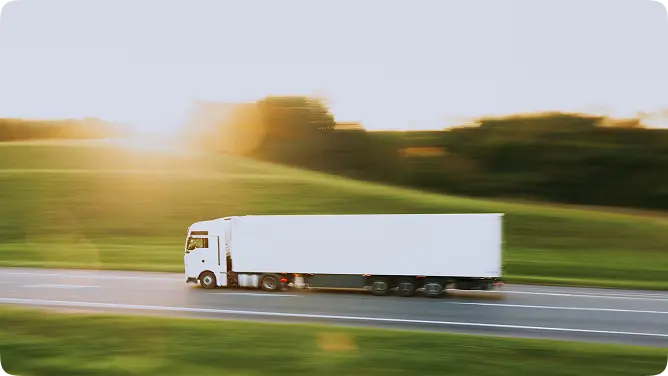
Passenger-side progress is real but uneven and freight is lagging behind it. Zero-emission trucks reached only a 4% share of new U.S. truck deployments in 2025, with roughly 72,000 cumulative zero-emission trucks on American roads, most of them concentrated in cargo vans and fixed-route fleets rather than heavy long-haul trucks. Freight still faces real infrastructure and policy challenges: charging networks, grid capacity and purchase costs all move slower than the sales targets attached to them.
Globally the picture looks stronger. BloombergNEF’s 2026 Commercial ZEV Factbook puts global electric truck sales up 75% in the first half of 2026 versus a year earlier, with medium- and heavy-duty electric trucks on track to pass 9% of global truck sales for the year. Policy, not technology, is still the main swing factor: markets with strong emissions standards or purchase incentives are pulling ahead, while markets without them are stalling.
Passenger mobility tells a cleaner story. The global micro-mobility market is projected to reach $166.8 billion by 2029 and mobility technology trends shaping U.S. cities show shared bikes, e-scooters and mopeds moving from pilot programs into permanent transit infrastructure in most major metro areas.
Decarbonization Efforts Reshaping Transportation
Decarbonization in transportation is happening on three fronts at once: the vehicles themselves, the energy that powers them and the systems that decide how many vehicle-miles a trip actually needs.
Vehicle electrification is the most visible lever. Battery costs keep falling and electric drivetrains need less maintenance, which is why cargo vans and short-route delivery fleets are electrifying faster than long-haul trucking. Energy-side efforts include cleaner grids and renewable charging contracts, which determine how much of an “electric” vehicle’s emissions reduction is real versus shifted upstream to a power plant.
The third front, reducing vehicle-miles through better routing, denser land use and mode-shifting to transit or micro-mobility, is the one sustainable transport strategies that work in 2026 tend to prioritize first, because it is usually the cheapest lever available and it compounds with every other decarbonization effort layered on top.
Policy continues to set the pace. Regions with binding emissions targets, like the EU’s heavy-duty CO2 standards, consistently show faster adoption curves than regions relying on incentives alone, which is worth factoring into any multi-year fleet investment plan.
Examples of Sustainable Freight and City Logistics Practices
Freight gets less attention than passenger EVs but it is where some of the clearest sustainability wins are showing up in cities right now.
Cargo bikes are the standout example. A University of Westminster study tracking more than 13,000 deliveries found cargo bikes moving parcels about 60% faster than vans on the same routes, with 90% less emissions than diesel delivery vans. Over the 98 days the study covered, the cargo bikes in the trial saved close to 3,900 kilograms of CO2 compared with the equivalent van route.
Consolidation centers and micro-hubs are the quieter win. Instead of a dozen delivery vans entering a downtown core from a dozen directions, goods get sorted at a hub on the edge of the city and finish the trip by cargo bike, e-moped or on foot. Logistics mobile apps coordinating that handoff in real time are what make the model work at scale rather than as a one-off pilot.
Rail and intermodal shipping round out the picture for longer hauls: moving freight by rail rather than truck for the middle leg of a journey, then switching to low-emission local delivery for the last mile, cuts emissions without asking any single mode to do the whole job.
Sustainable Urban Freight and the Last-Mile Problem
The last mile, the final leg from a depot or hub to a customer’s door, is disproportionately expensive and disproportionately dirty. It typically involves more stops, more idling and more traffic per package delivered than any other part of the supply chain.
Cities are responding with curb management, loading-zone reservations and micro-mobility delivery fleets built specifically for short urban hops. A Europe-wide study from EIT InnoEnergy modeled that e-cargo bikes could cut last-mile logistics emissions by up to 80% across Europe’s 100 largest cities when mixed into existing delivery fleets, without replacing vans entirely.
Moped and e-bike delivery fleets fit the same niche for businesses that need more range or cargo capacity than a bicycle but still want to avoid a full-size van. That is also where fleet software earns its keep: knowing which stops a moped can realistically cover before its next charge matters as much to emissions as the vehicle choice itself.
The Impact of Sustainable Transportation on Building Net-Zero Supply Chains
For most companies with a net-zero target, transportation is not a side issue. It is the biggest line item they do not directly control. Indirect, value-chain emissions, known as Scope 3, average about 75% of a company’s total carbon footprint, according to MIT’s sustainable supply chain research, with transportation and distribution sitting inside that category for almost every business that ships a physical product.
That is why net-zero commitments increasingly depend on data the company does not generate itself: carrier-level emissions reporting, route-level fuel use and real-time fleet utilization. Connected IoT data is what makes that kind of tracking possible at the level of detail regulators and auditors now expect, rather than the industry-average estimates most Scope 3 reporting still relies on.
In practice, the fastest net-zero progress comes from mode-shifting, moving freight to rail or low-emission local delivery where the infrastructure exists, paired with better data on the legs that still require a truck or van. Companies that only chase vehicle electrification without fixing the data and routing layer underneath it tend to plateau well short of their targets.
The Rebalancing Blind Spot: Why Micro-Mobility’s Climate Math Depends on the Software
Almost every sustainable transportation guide treats shared e-scooters and e-bikes as a clean win and moves on. That skips the part of the life cycle most likely to erase the benefit: collection, charging and rebalancing.
A widely cited 2019 study in Environmental Research Letters found that daily collection for charging accounted for as much as 43% of a shared e-scooter’s life-cycle climate impact in a typical operating model, nearly as large a share as manufacturing itself. A separate Lisbon case study found collection responsible for closer to 6% of impact, a gap the researchers tied mainly to how efficiently that city’s operator ran its collection routes.
That spread, 6% to 43%, is the real story. The climate benefit of a scooter or bike fleet is not fixed by the vehicle. It is decided by how well an operator schedules pickup, charging and redistribution, which makes it a software and operations problem more than a hardware one.
From what we have seen working with operator clients, the fleets that keep rebalancing trips low are the ones with real-time visibility into where vehicles actually sit idle, not just where the app last logged a drop-off. A field operator app that routes staff to the vehicles that need attention, instead of a fixed daily sweep of the whole service area, is what turns that visibility into fewer miles driven per vehicle collected.
Micro-mobility: The Engine Behind Sustainable Transportation
Micro-mobility, lightweight electric bikes, e-bikes and scooters built for short trips, has become one of the fastest-growing parts of sustainable transportation because it solves the first- and last-mile problem that keeps people in cars for trips under two miles.
How Micro-mobility Benefits Businesses and Cities
- Reduces congestion: fewer cars on the road frees up street space and parking.
- Cuts emissions: replacing short car trips with micro-mobility means less tailpipe pollution.
- Supports local economic activity: riders on bikes and scooters stop at more local businesses than drivers passing through.
- Improves public health and safety: more walking- and cycling-adjacent trips mean more daily activity and, with the right infrastructure, fewer serious road injuries.
- Extends public transit: micro-mobility closes the last-mile gap that keeps transit systems from reaching every rider.
The category is growing fast enough to matter at a system level. The global micro-mobility market is projected to reach $166.8 billion by 2029 and shared micro-mobility solutions built for cities and campuses are now standard infrastructure in most major metro areas rather than a pilot program.
How EazyRide Powers Sustainable Micro-Mobility
Running a sustainable micro-mobility fleet takes more than good vehicles. It takes a platform that keeps those vehicles where they are needed, charged, compliant and actually in use instead of idle.
EazyRide handles the operational side of that: real-time fleet tracking, geofencing and zonal controls and an admin dashboard that manages e-scooters, e-bikes and mopeds in one account instead of three disconnected systems. Zone rule changes push to every vehicle in real time, with no firmware update or truck roll required, which matters in cities that update parking and no-ride zones often. Operators using that geofencing report up to 40% fewer parking violations compared with manual enforcement, which keeps public space orderly and keeps city partners on side.
For operators running bike fleets specifically, EazyRide’s bike rental and bike sharing software covers booking, payments and fleet management under the operator’s own brand, so riders never see a third-party name on the app they use every day.
Scoping a 2026 launch or a fleet expansion? A 30-minute fleet review usually surfaces more than a week of vendor calls. Book a free EazyRide demo.
Conclusion
Sustainable transportation is no longer a side initiative. It touches cost, compliance, brand, public health and, increasingly, whether a company can credibly claim progress toward net zero. The clearest gains right now sit in micro-mobility and last-mile freight but only when the software behind the vehicles is doing its job: routing efficiently, rebalancing with real data and cutting the empty miles that quietly erase a fleet’s climate benefit.
If you are planning a micro-mobility launch or trying to make an existing fleet run cleaner, the vehicle is the easy part. The platform behind it decides whether the sustainability math actually works.
Schedule a demo with EazyRide to see what a platform built for this looks like in practice.
FAQs
1. What exactly counts as sustainable transportation?
Sustainable transportation means moving people and goods while cutting emissions and congestion, through electric vehicles, micro-mobility and efficient freight. It’s now central to city climate plans.
2. Why does freight make sustainability harder to achieve?
Freight is harder to decarbonize because electric trucks are still rare, just 4% of new US sales in 2025. Routes and fleet software close much of that gap.
3. Does rebalancing cancel out scooter savings?
Yes, in inefficient fleets rebalancing and charging can erase up to 43% of a shared e-scooter’s climate benefit, per peer-reviewed research. Smarter routing cuts that loss sharply.
4. Are there financial incentives for going sustainable?
Yes, many governments offer tax credits, grants and rebates for electric vehicles and micro-mobility fleets. These can offset a large share of upfront hardware and software costs.
5. How fast is the sustainable transportation market growing?
The global market is projected to reach $311 billion by 2030, up from about $121 billion in 2023, growing nearly 15% a year as cities push for cleaner mobility.


