
 AllMicro Mobility Model

 24 July, 2025
 How to Keep Lithium Batteries Safe in Shared Micro-Mobility Fleets?
Did you know that over 15,000 fire incidents have been linked to lithium-ion batteries over the years in mobility devices alone?
For mobility operators and founders scaling their fleets, battery safety is no longer just a maintenance issue; it’s a business-critical concern. Whether you’re running e-scooters across a city or bikes on a university campus, one overheating incident can disrupt operations and damage your brand.
We understand how stressful and high-stakes it can feel to manage battery safety when your team is stretched thin and every incident could mean lost revenue or reputational damage. Battery risks can weigh heavily on day-to-day operations.
To stay safe, compliant, and efficient in this fast-changing market, operators need clear, proactive safety strategies.
In this article, we’ll walk through practical battery safety tips that can help you stay ahead of issues, protect your assets, and keep your operations running smoothly.
The global lithium-ion battery market is projected to grow from USD 194.66 billion in 2025 to USD 426.37 billion by 2033, at a CAGR of 10.3%. This shows how more shared mobility fleets are using lithium batteries, making safety and proper handling more important than ever.

Source: MarketsandMarkets
Key Takeaways
- Overcharging, damaged cells, and poor ventilation are the top causes of lithium battery fires.
- Train all staff (internal and contractors) in emergency response and safe battery handling.
- Store batteries in cool, ventilated, fire-safe containers with clear labels.
- Use centralized battery tracking systems to monitor health, prevent risks, and stay compliant with U.S. laws.
Common Fire Risks with Lithium Batteries in Shared Fleets
Managing a shared fleet of e-bikes, scooters, or other micro-mobility vehicles means dealing with lithium-ion batteries daily. While these batteries are efficient and widely used, they also carry certain fire risks, especially in high-use environments.

Source: UL Solutions
This pie chart shows the lithium-ion battery incident reporting statistics, out of which there are approximately 15,621 incidents involving fire over all the years.
Here are the main risks operators should watch out for:
- Overcharging and Overvoltage: Charging a battery beyond its recommended voltage can cause overheating. This often results from a failed Battery Management System (BMS) or a charger that doesn’t shut off on time.
- Physical Damage to Batteries: Shared vehicles endure daily wear and tear, and damage, such as dents, cracks, or punctures, can expose internal components. This raises the risk of leaks, short circuits, or fires.
- Faulty or Misconfigured Battery Management Systems: A BMS monitors battery charge, temperature, and health. If it’s misconfigured or poorly maintained, it may miss warning signs such as overheating or cell imbalance.
- Charging in Unsafe Environments: Charging in hot, enclosed, or poorly ventilated areas can trap heat and stress the battery, increasing fire risk.
- Aging or Degraded Batteries: As batteries age, they lose capacity and become more prone to short circuits and thermal issues.
- Charging Batteries Too Close Together: Charging batteries without proper spacing can cause localized heat buildup, especially if one of the batteries is compromised. In worst-case scenarios, this can trigger thermal runaway across multiple units.
While these batteries are efficient and widely used, they also carry serious fire risks, especially in dense urban settings. For instance, the FDNY reported 268 lithium-ion battery fires in 2023, causing 18 deaths and 150 injuries across New York City.
Even with improved safety education and inspections, incidents remain high: 277 such fires were recorded in 2024, although fatalities dropped to 6 due to proactive outreach.
These figures show how micro-mobility fleets, especially in urban and transit-heavy areas, must implement rigorous charging, storage, and inspection protocols to keep both riders and communities safe.
Understanding these fire risks is only the first step. Now, it’s about knowing how to prevent them, especially when managing large-scale shared fleets.

How to Prevent Micro Mobility Device Lithium Battery Fires and Overheating?
Fires and overheating incidents don’t just put vehicles at risk; they can interrupt service, endanger users, and hurt your bottom line. The good news is that many of these risks are preventable with the right systems and habits in place.
Here are key strategies fleet operators can follow to keep lithium-ion batteries safe, stable, and efficient:
Optimize Charging Protocols to Prevent Overheating
Use chargers with built-in temperature sensors and auto shut-off features to prevent overcharging. When possible, opt for slower charging methods to reduce stress on batteries and limit heat buildup.
A study showed temperatures reached 350 °C in under 750 seconds in poorly ventilated setups during high-rate charging. So, always place charging setups in well-ventilated areas to allow natural heat dissipation.
Here’s a table showing safe vs. unsafe charging practices:
| Practice | Safe Approach | Risky Approach |
|---|---|---|
| Charger Type | Certified smart charger with auto shut-off | Third-party or uncertified chargers |
| Charging Area | Well-ventilated, cool, monitored | Enclosed, hot, or unattended space |
| Battery Spacing | Batteries are kept apart to prevent thermal buildup | Batteries stacked or bunched together |
| Charging Window | Between 20–80% charge | Full charge overnight or deep discharge |
Monitor Battery Health with a Reliable BMS
A Battery Management System (BMS) monitors charge, voltage, and heat in real time. A well-calibrated BMS monitors voltage, current, temperature, and overall battery health in real-time. Ensure each battery in your fleet is equipped with a reliable BMS, and connect these systems to a centralized dashboard for full visibility.
A connected dashboard can show alerts like ‘Voltage Drop in Cell 3’ or ‘Temperature Spike Detected’. This allows you to detect issues like temperature spikes, cell imbalances, or performance drops early before they escalate into operational problems.
Stick to a Regular Maintenance
Lithium-ion batteries naturally degrade with use, increasing the risk of thermal failure. That’s why monthly inspections are essential to catch visible signs of wear, like swelling, cracks, or leaks.
To prolong battery life, avoid full charges or deep discharges. Instead, use partial charging cycles and perform cell balancing to keep voltage levels consistent across cells.
Preventing battery fires isn’t just about systems. It’s also about what your ground teams do every day to keep operations safe and running smoothly.
Also Read: A Complete Guide to EV Route Planners for Mobility Businesses.
Daily Battery Safety Practices for Fleet Operations Teams
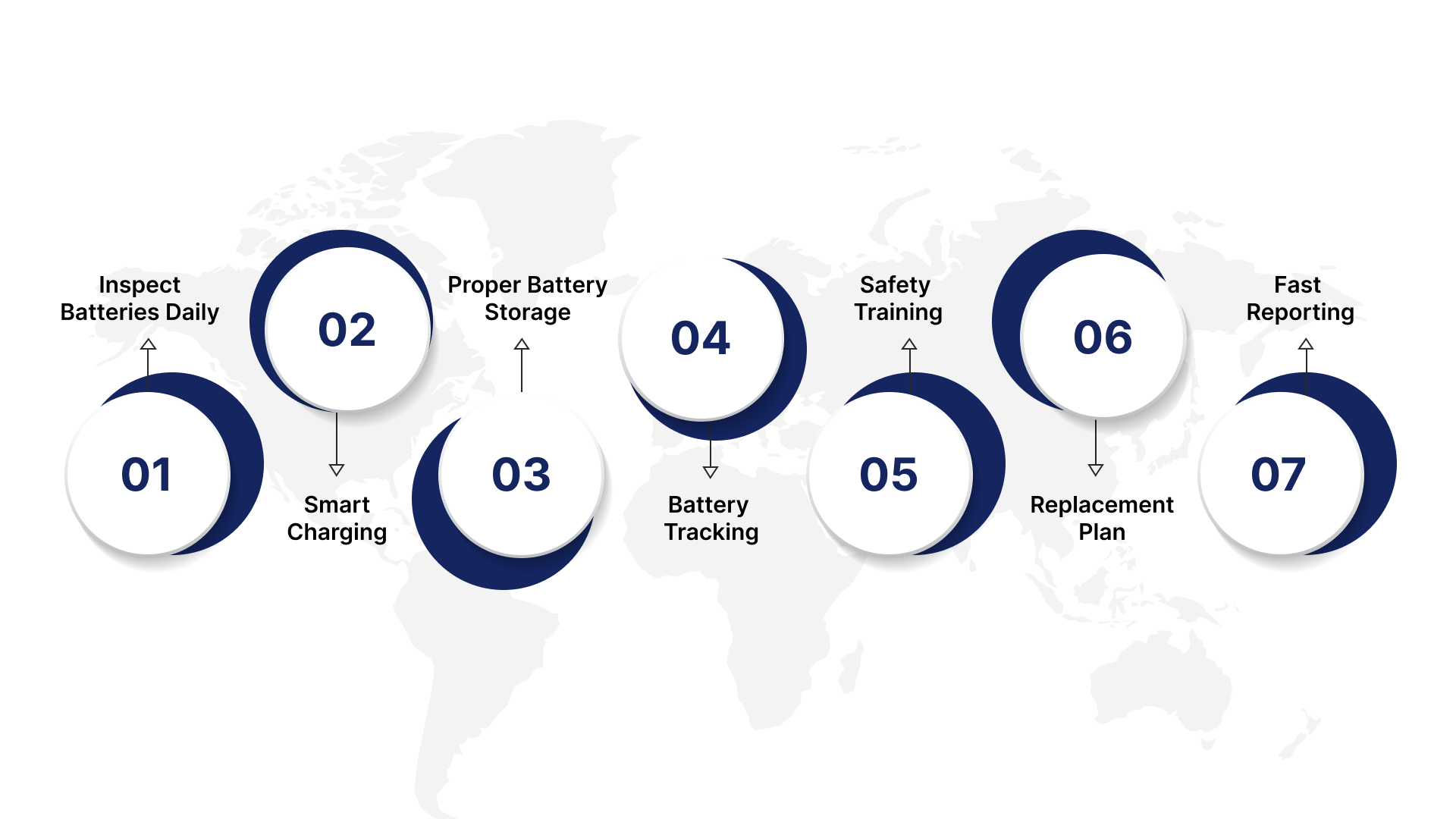
For mobility operators in the U.S., keeping lithium-ion batteries safe is a daily responsibility. The right battery management practices reduce the risk of fires or overheating.
Tourism rental businesses and large institutions like universities, real estate developers, or corporate campuses often manage high-volume battery fleets across multiple locations. For them, consistent safety routines are even more essential to reduce fire risks and stay compliant.
Additionally, they minimize unexpected downtime and ensure the safety of riders and staff members. Below are daily safety practices your operations team can follow to reduce risks and maintain a reliable, high-performing fleet:
Inspect Batteries Daily
Daily checks go a long way in preventing safety issues. Look for signs like swelling, cracks, corrosion, or leaks. At the start of each shift, inspect every vehicle’s battery for visible damage.
Keep the battery charged between 20% and 80% to avoid overheating and slow down wear, helping it last longer in daily fleet use.
If anything seems off, remove the vehicle from service and investigate further. Also, check terminals for loose connections or buildup, which can quietly degrade performance and safety if left unchecked.
Follow Smart Charging Protocols
Use smart chargers with auto shut-off and monitor temperatures during the charge cycle. Aim to keep the ambient temperature between 32°F and 77°F. Additionally, installing thermal sensors can help track heat levels in real-time and prevent issues before they escalate.
Plan for Timely Battery Replacement
Set a proactive replacement schedule based on age, cycle count, and capacity retention. Use a battery management system (BMS) or an IoT dashboard to monitor charge cycles. Most lithium-ion batteries degrade significantly after ~500–800 full cycles. Set alerts at a 70–80% threshold to pre-schedule replacements.
Also, follow manufacturer guidelines to determine when a battery is due for replacement; don’t wait for it to fail in the field.
Enable Fast Reporting and Clear Communication
Implement an easy-to-use system for reporting concerns like damaged casings, charging malfunctions, or overheating. Review reports regularly to identify recurring problems and improve overall safety protocols.
Strong daily routines lay the groundwork, but keeping everyone aligned on safety also depends on how well your team is trained to handle batteries the right way.
You Might Also Like: Micromobility and Its Role in Shaping Urban Transport.
Training Staff & Contractors on Safe Battery Handling

When your team is properly trained and aligned on best practices, it helps reduce the risk of accidents, keeps operations running smoothly, and extends battery life. In the long run, that means safer rides, fewer disruptions, and a more reliable fleet.
Below are essential practices to build a strong safety culture and standardized handling procedures for your entire workforce:
Train Internal Teams on Core Battery Safety Practices
Your internal teams are often the first to interact with batteries, whether charging, swapping, or inspecting. A well-structured training program should cover:
- How to identify early warning signs like swelling, leaks, or corrosion
- Safe charging habits, including temperature control and the use of smart chargers
- Emergency response procedures for overheating or fire situations
Align Contractors with Your Battery Safety Standards
Contractors involved in charging, swapping, or field maintenance must follow the same safety protocols as your core team. To ensure alignment:
- Provide clear onboarding that covers essential battery handling procedures, from transport to charging station use
- Share safety manuals and checklists
- Conduct periodic audits or check-ins to ensure compliance.
Prioritize Safe Battery Handling and Transport
Battery-related incidents often stem from improper handling during movement or transport. Training should include:
- Avoiding drops or impacts during handling
- Monitoring transport temperatures (ideally between 32°F and 77°F)
- Use padded, impact-resistant containers to protect batteries from shocks, drops, and fire risks during transport.
Standardize Battery Replacement Procedures
Replacing a battery may seem routine, but mishandling can cause short circuits or connection issues. Ensure your team:
- Follows a clear protocol: disconnect safely, inspect the battery and port, and connect the new unit securely
- Recognizes signs of battery degradation
- Understand proper recycling or disposal practices to avoid fire and environmental risks.
Encourage a Safety-First Culture with Clear Reporting Channels
Open communication is key to a proactive safety culture. Strengthen it by:
- Implementing an easy, real-time reporting system for overheating, charging issues, or near-miss incidents
- Allowing anonymous reporting to encourage participation
- Reviewing reports regularly to identify risks or trends
- Following up with periodic safety audits to improve procedures
Support Certification and Industry Compliance
Meeting industry standards improves both safety and trust. Support this by:
- Offering certification programs aligned with OSHA (Occupational Safety and Health Administration), NFPA (National Fire Protection Association Standard) 70E, or other relevant safety standards
- Including certification as part of onboarding and ongoing training
Even with proper training in place, safe handling doesn’t end there. How you store, dispose of, and recycle batteries also plays a significant role in ensuring your operations are compliant and risk-free.
Battery Disposal Rules You Must Follow in the U.S.
As lithium-ion batteries power more e-scooters, e-bikes, and electric mobility devices, responsible battery disposal is becoming a core part of fleet operations. Beyond protecting the environment, proper disposal helps mobility operators stay compliant with federal and state laws while avoiding costly penalties and reputational damage.
Here’s what you need to know about the environmental impact and regulatory responsibilities tied to battery disposal and how to stay ahead with best practices:
Understand the Environmental Impact of Lithium-Ion Batteries
Lithium-ion batteries contain hazardous metals like lithium, cobalt, and nickel. If discarded in landfills, they can leak toxic substances into the soil and water, causing long-term environmental damage. Improper disposal also raises the risk of fires.
To prevent this, always recycle expired or damaged batteries through certified facilities equipped to safely handle and recover valuable materials. Facilities such as municipal hazardous waste centers, battery manufacturer take-back programs, etc.
Follow Federal EPA Guidelines for Battery Disposal
The U.S. Environmental Protection Agency (EPA) classifies lithium-ion batteries as Universal Waste under the Resource Conservation and Recovery Act (RCRA). This allows for simplified collection and recycling when handled correctly.
Fleet operators must still follow strict labeling, storage, and transport requirements. Conduct regular audits to ensure your practices are both legal and traceable.
Comply with State-Specific Regulations
States like California and New York enforce additional rules beyond federal standards. For example, California requires lithium batteries to be recycled at DTSC-approved facilities and restricts landfill disposal, while New York mandates retail take-back programs for small batteries.
If your fleet operates across state lines, stay updated on local requirements. Working with compliance consultants or industry groups can help simplify multi-state adherence.
Store Batteries Safely Before Disposal
Storing used or damaged batteries improperly increases fire risk, especially if they’re exposed to heat, stacked, or placed near flammable materials. Use fire-resistant containers in cool, dry, well-ventilated areas.
Avoid stacking to prevent pressure damage, and designate a compliant storage zone to ensure safety until batteries are collected for recycling.
Keep Records for Compliance and Reporting
Detailed documentation of your battery disposal activities ensures audit readiness and supports sustainability efforts. Record battery types, quantities, storage timelines, disposal dates, recycling provider credentials, and transportation details. These records prove regulatory compliance and showcase your commitment to responsible operations.
Educate Customers and Promote Returns
Many users are unaware of how to dispose of lithium batteries safely. Offer them return options through designated drop-off points and encourage participation with small incentives, such as ride credits. This improves return rates and strengthens your brand’s reputation as an environmentally responsible operator.
Once batteries are properly sorted for disposal or reuse, the next challenge is moving them between locations without adding risk, especially during transport.

How to Transport Lithium Batteries Safely Between Sites?
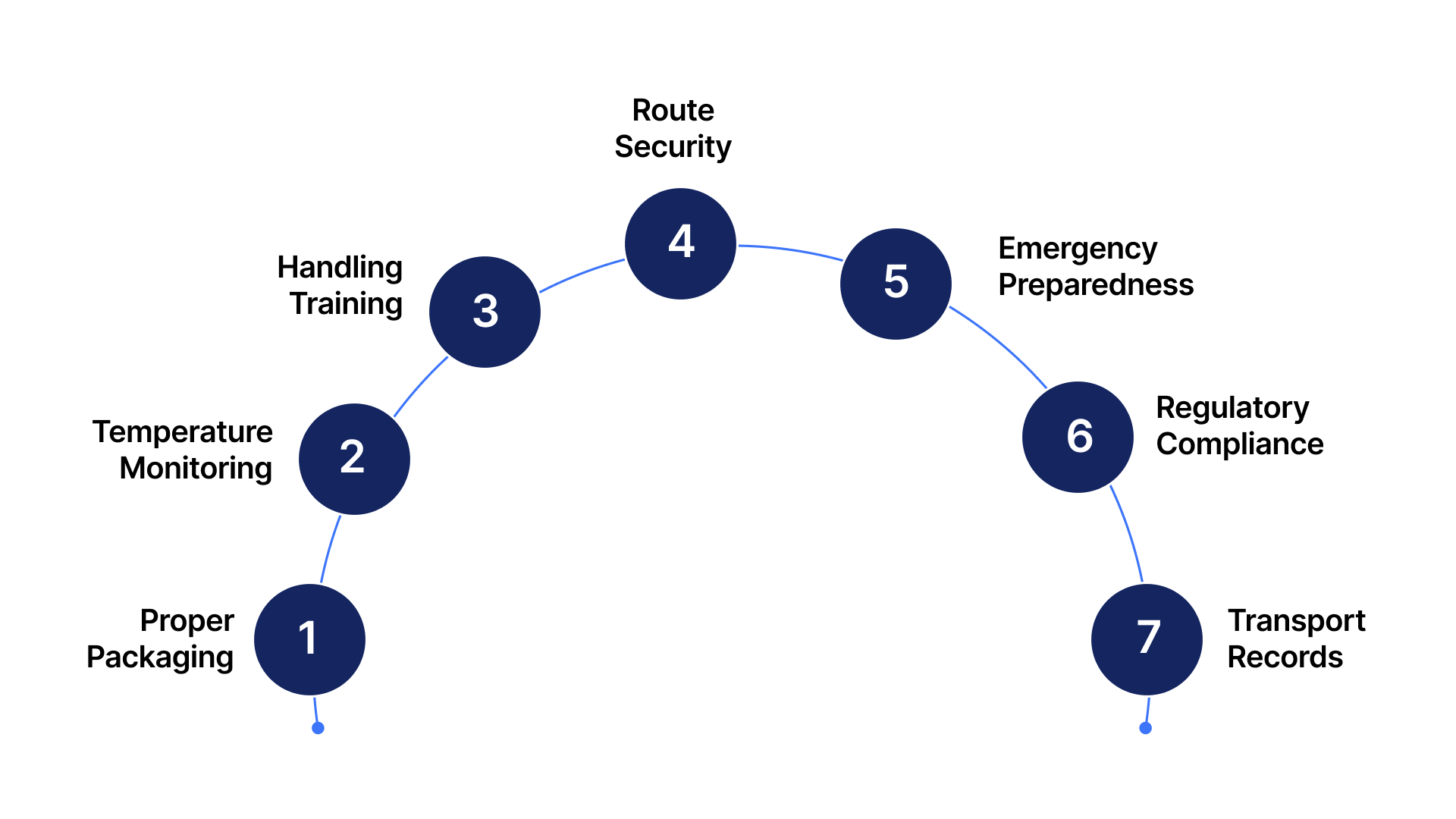
Moving lithium-ion batteries between warehouses, charging hubs, and stations is a routine but high-stakes part of fleet management. They carry certain safety risks during transport, such as physical damage, short circuits, or overheating.
That’s why it’s critical to follow safe handling and transportation protocols. Below are essential best practices and safety guidelines for transporting lithium-ion batteries safely across your operations:
- Use Proper Packaging and Securing Methods: Lithium-ion batteries should be packed in padded, insulated, and fire-resistant containers to prevent damage during transit. Clearly label all packages with hazard warnings and handling instructions to ensure safe movement and awareness.
- Monitor and Control Temperature During Transit: Always transport batteries in temperature-controlled environments between 32°F and 77°F to prevent instability. Use insulated containers or sensors to monitor conditions in real time, especially on long or hot routes.
- Be Ready for Emergencies: Equip all vehicles with lithium-rated fire extinguishers and ensure handlers know how to respond if a battery overheats or catches fire. A printed emergency guide should always be accessible in case of an incident.
- Secure Your Vehicles and Routes: Use shock-absorbing compartments and secure batteries tightly to prevent movement or imbalance in transit. Verify compliance with FAA(Federal Aviation Administration), DOT(Department of Transportation), or other regional transportation rules before shipping.
- Follow All Regulatory and Safety Standards: Stay up to date with safety regulations from agencies like DOT and OSHA if shipping by air. These cover packaging, labeling, documentation, and training for the safe and legal transportation of batteries.
- Keep Accurate Transportation Records: Maintain detailed logs for each shipment, including serial numbers, names of handling staff, and any incidents that may have occurred. These records help with audits, track patterns, and strengthen future safety protocols.
Even with careful handling and safe transport, things can still go wrong. Knowing how to respond when a battery overheats or catches fire can make all the difference.
Also Read: Scooter Investments: A Smart Mobility Opportunity for Entrepreneurs.
What to Do if a Battery Overheats or Catches Fire in Your Fleet?
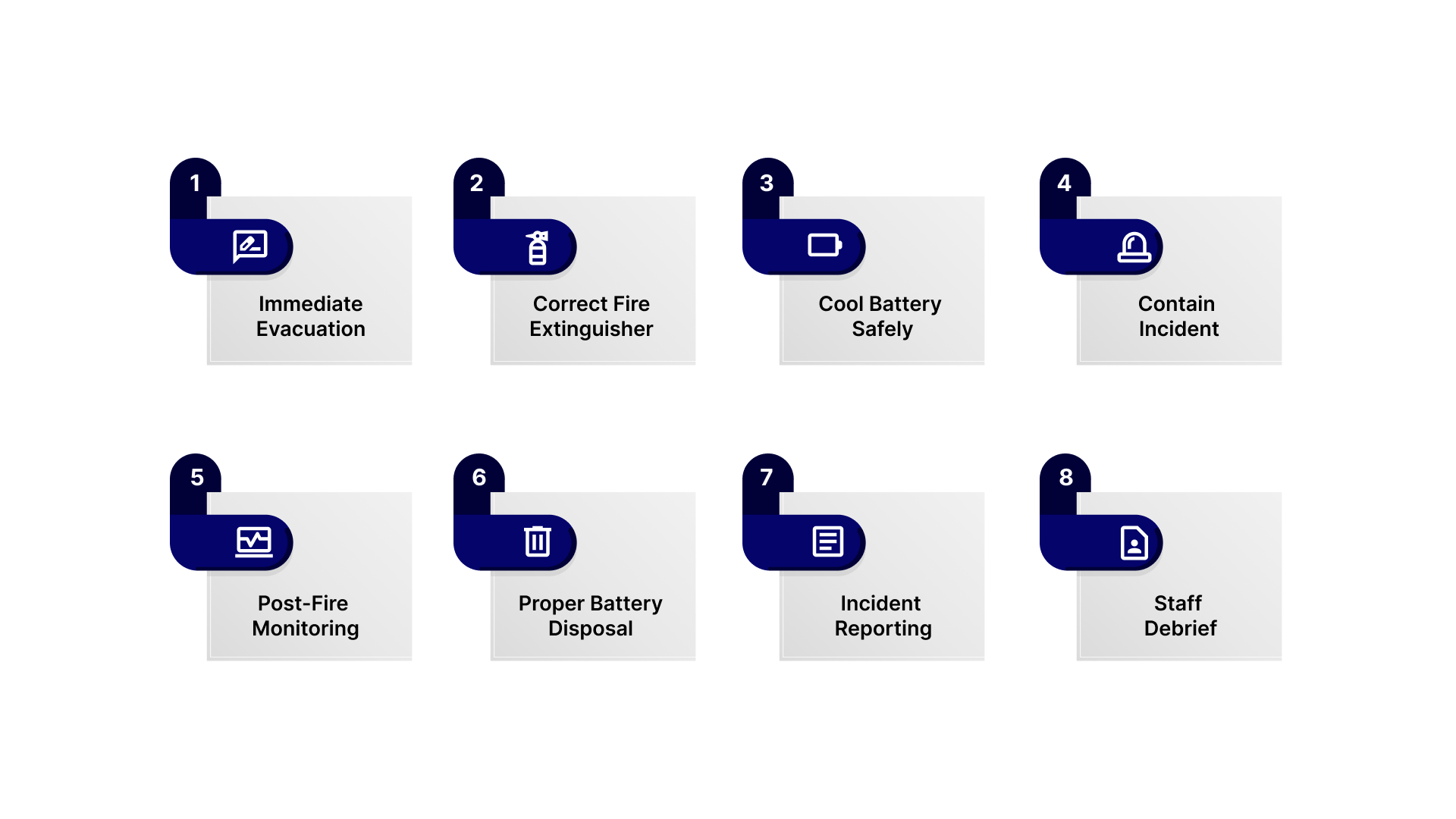
In high-volume fleet operations, where dozens or even hundreds of batteries are charged, swapped, and transported daily, the chances of overheating or fire incidents increase. That’s why it’s critical to have clear, well-rehearsed emergency protocols in place.
Here are the key steps every mobility operator should follow when responding to a lithium battery overheating or fire event:
Evacuate and Isolate the Area Immediately
At the first sign of overheating or smoke, prioritize safety by evacuating everyone in the vicinity. Lithium battery incidents can escalate fast, so move staff, vehicles, and bystanders to a safe distance.
Ensure evacuation routes are clearly marked and exits remain accessible. In indoor settings like warehouses or charging stations, activate fire doors or containment systems to isolate the hazard and limit further exposure.
Use the Correct Type of Fire Extinguisher
Not all extinguishers are suitable for battery fires. The preferred option is a Class D fire extinguisher, specifically made for combustible metals like lithium.
If flames appear, evacuate the area and use a Class D extinguisher with a sweeping motion to smother the fire. If unavailable, isolate the fire by shutting off power sources and using dry sand as a backup containment method.
Cool the Battery, If Conditions Are Safe
If the battery is overheating but hasn’t ignited, quick cooling may prevent ignition. If it’s safe, move the unit to a well-ventilated area away from flammable materials.
Use a misting spray or an air-based cooling system to lower the temperature. Never apply water directly to a burning lithium battery, as it can cause dangerous chemical reactions.
Contain the Incident to Prevent Spread
Once evacuation and initial response are complete, focus on containment. Relocate nearby batteries, vehicles, or combustible materials away from the affected area.
Use fire-resistant barriers or containment boxes if available. Indoors, turn off HVAC systems to prevent the spread of smoke and fumes, which can delay emergency response and endanger health.
Continue Monitoring After the Fire
Lithium batteries can reignite due to thermal runaway, even after the fire appears out. Use thermal cameras or temperature sensors to monitor the affected area for several hours. Watch for residual heat, smoke, or smoldering, and keep staff on-site during this period. Document any abnormal activity for follow-up.
Report the Incident and Maintain Documentation
Create a detailed incident report including the time, location, battery type, actions taken, personnel involved, and suspected causes. Maintain this documentation for regulatory compliance, insurance, and internal reviews. Also, share findings with relevant teams to support ongoing safety improvements.
Debrief Staff and Update Safety Protocols
Hold a structured debrief session post-incident. Review what happened, assess what worked well, and identify areas for improvement. Use insights to update training, revise emergency checklists, enhance signage, and strengthen your overall response plan. Treat each incident as a learning opportunity to boost team readiness and resilience.
Having a clear emergency response plan is only part of the equation. Staying compliant with U.S. safety standards is also important to protect your fleet and avoid regulatory trouble.
Meeting U.S. Safety Standards for Lithium Battery Fleets
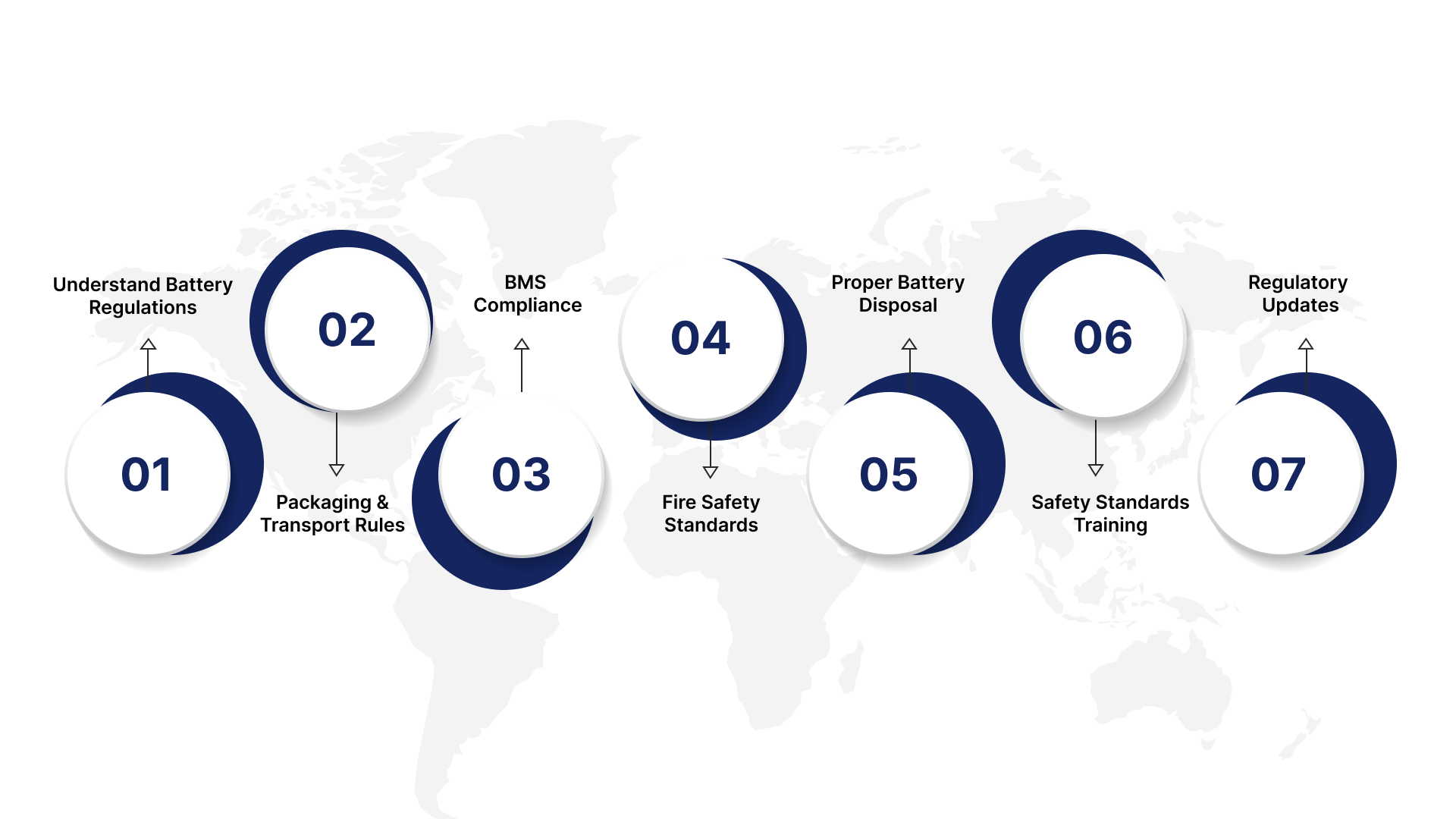
As a U.S. mobility operator, staying compliant with lithium battery safety standards isn’t just good practice; it’s essential. Ignoring these rules can result in costly fines, damaged brand reputation, and, in severe cases, forced shutdowns.
That’s why it’s critical for fleet operators to understand and follow the relevant federal and state regulations. Here’s a breakdown of the key areas where compliance matters and how to meet the standards that protect your fleet and your business:
Understand Federal and State-Level Battery Regulations
Several U.S. agencies oversee lithium battery safety:
- DOT (Department of Transportation) regulates how batteries are packaged, labeled, and transported.
- EPA (Environmental Protection Agency) governs battery disposal and recycling under the Resource Conservation and Recovery Act (RCRA).
- OSHA (Occupational Safety and Health Administration) ensures safe working conditions during battery handling and maintenance.
Keep your operations team informed about both federal and state-specific laws. Also, subscribe to industry newsletters, work with legal advisors, and regularly review updates on the DOT, EPA, and OSHA websites.
Ensure Battery Management System (BMS) Compliance
A Battery Management System (BMS) monitors key battery functions like voltage, temperature, and charge cycles. It’s essential for preventing incidents like overheating or overcharging.
Install BMS in all vehicles and ensure it complies with standards like ISO 26262 (automotive safety) or IEC 61508 (industrial safety). Conduct regular BMS audits to ensure settings are calibrated and functioning properly.
Meet Fire Safety and Facility Protection Standards
Lithium batteries can catch fire under certain conditions; therefore, fire prevention must be an integral part of your operations plan. The fire safety and facility protection standards include:
- NFPA 70E (National Fire Protection Association Standard 70E) provides electrical safety guidelines.
- UL 2580 (Underwriters Laboratories Standard 2580). a recognized standard for testing and certifying lithium battery safety.
Follow Proper Packaging and Labeling Rules
Whether you’re moving batteries between hubs or shipping them for recycling, proper handling during transit is critical. DOT requires that batteries be secured in protective packaging and clearly labeled with appropriate hazardous materials symbols. For this, use fire-resistant containers and ensure all packages have visible hazard labels.
Train Staff and Contractors on Safety Standards
Anyone handling, charging, or maintaining batteries must be trained on lithium battery safety, whether they’re employees or third-party contractors. Provide OSHA-compliant training that covers safe battery handling, charging, and storage protocols, fire prevention, and emergency response.
While these daily habits form the backbone of fleet safety, tech tools can make them easier and more consistent.
Stay Current on Industry Standards and Regulatory Updates
Battery technology and the laws that govern it are always evolving. What’s compliant today might not be enough tomorrow. So, stay plugged into the latest updates from IEC (International Electrotechnical Commission), UL (Underwriters Laboratories), and SAE (Society of Automotive Engineers).
Join webinars, attend industry conferences, and participate in working groups when possible. Keeping ahead of changes helps reduce risk and ensures long-term compliance.
While these daily habits form the backbone of fleet safety, tech tools can make them easier and more consistent.

Powering Safer Fleets with EazyRide
As micro-mobility fleets scale, battery safety becomes a daily operational priority. EazyRide equips fleet operators with the tools needed to manage lithium-ion batteries confidently, reducing risks and improving reliability.
Here are some key features that help you keep battery operations safe and efficient:
- Real-Time Vehicle Monitoring: Keep track of your vehicles and battery status remotely to ensure smooth operations and timely intervention.
- Predictive Maintenance Alerts: Identify performance issues early with data-driven insights that help reduce the risk of breakdowns and ensure rider safety.
- Centralized Dashboard: View all battery and vehicle data in one place, track usage history, and control who can access sensitive operations.
- Role-Based Access Control: Ensure that only authorized team members handle sensitive battery and maintenance operations.
With EazyRide, you can prevent downtime, protect riders and staff, and build a fleet that’s safe, scalable, and trusted.
Conclusion
If you’re managing a shared mobility fleet, battery safety isn’t just a checkbox; it’s a critical part of daily operations. One overheating incident can put your team, your riders, and your brand at serious risk.
Every step you take to improve safety today helps protect your fleet, boost operational efficiency, and build customer trust. By following strong safety protocols and staying compliant with regulations, you’re not just avoiding problems; you’re creating a service that’s reliable, sustainable, and built to last.
That’s where EazyRide comes in. Our platform gives you powerful tools like real-time battery monitoring, detailed health analytics, and smart maintenance schedules, all designed to help you manage your fleet safely and efficiently. With EazyRide, your batteries stay protected, your operations stay compliant, and your business stays on track.
Want to future-proof your fleet’s battery safety? Book a demo and see how smarter battery management can protect your operations.
You Might Also Like: How Telematics Empowers SMEs in Micro-Mobility.
FAQs
Q1. How should I store a micro-mobility battery safely?
A1. Store batteries in a cool, dry area away from direct sunlight, flammable materials, or heat sources. Use passive ventilation, like mesh cabinets, or active systems, like fans in enclosed hubs, to ensure airflow. Avoid extreme temperatures, and never leave batteries charging overnight or unattended.
Q2. What happens if you overcharge or fully drain a lithium battery?
A2. Overcharging or allowing a battery to drain fully can reduce its lifespan and increase the risk of overheating or failure. Stick to smart chargers and follow the manufacturer’s recommended charging practices.
Q3. Is it safe to use third-party chargers for my e-scooter or e-bike?
A3. No, because third-party or uncertified chargers can cause overcharging, short circuits, or even fires. Always use the charger that came with your device or one officially approved by the manufacturer.
Q4. Can I charge my device in the rain or when it’s wet?
A4. No, never charge a wet battery or plug in a charger with wet hands. Moisture can lead to electrical shorts, corrosion, or serious fire hazards.
Q5. How should used or damaged lithium batteries be disposed of?
A5. Do not throw them in the trash. Take old or damaged batteries to an authorized e-waste or battery recycling center and follow local disposal guidelines to ensure safety and environmental compliance.


