
 AllMicro Mobility Model

 1 July, 2025
 How Telematics Empowers SMEs in Micro-Mobility
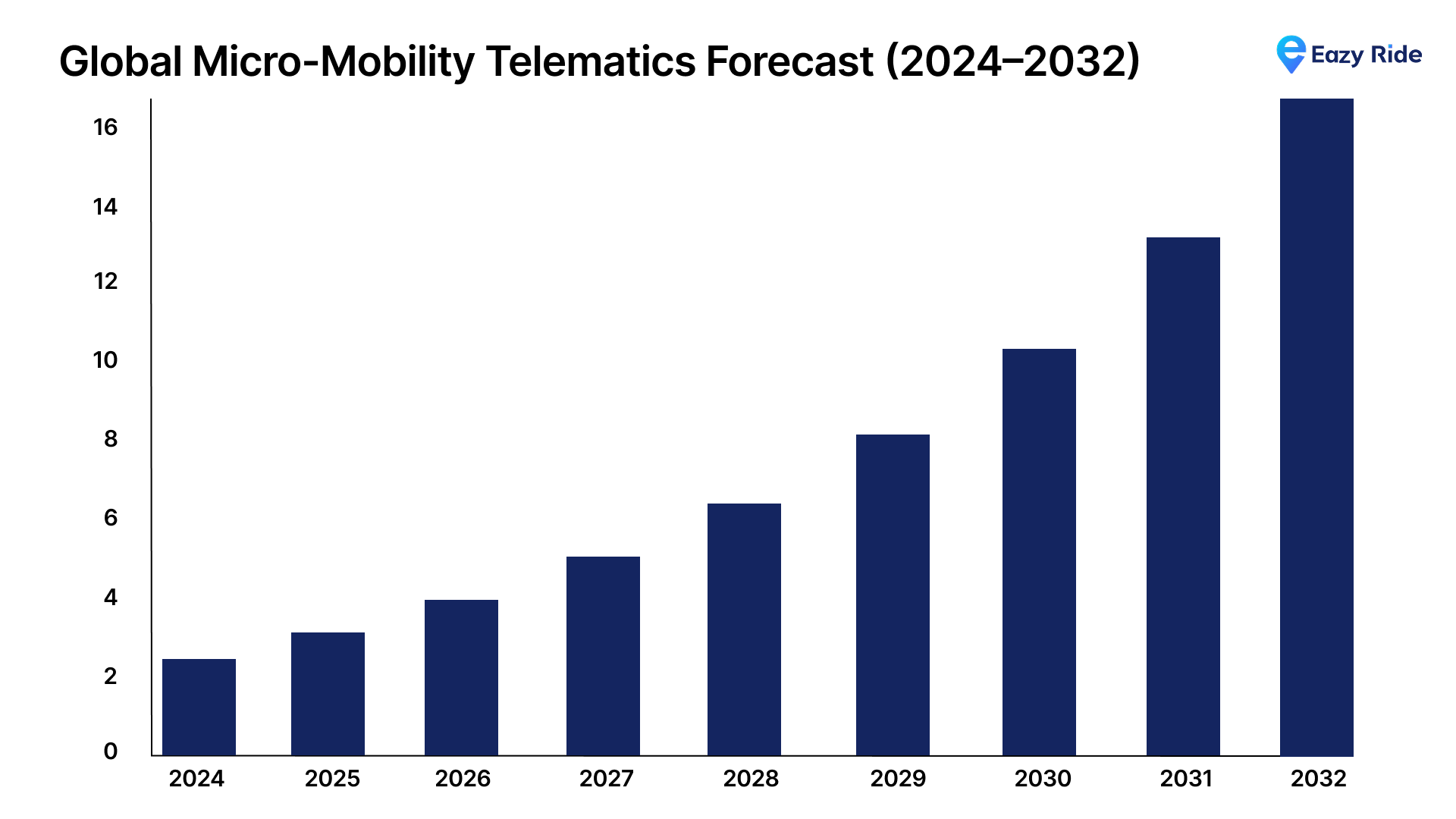
As the micro-mobility industry expands, small and medium-sized businesses (SMEs) are under growing pressure to remain efficient, competitive, and profitable. The global micro-mobility telematics market is expected to grow from $2.45 billion in 2024 to $16.72 billion by 2032, reflecting the rising importance of real-time fleet management and data-driven decision-making.
For SMEs in micro-mobility, utilizing telematics can offer significant advantages, including enhanced fleet monitoring, improved safety, and more efficient operations. Without it, businesses risk falling behind as the demand for smarter, more sustainable transportation solutions continues to grow. This guide will explore how telematics can help your business streamline operations and stay ahead in an evolving market.
KEY TAKEAWAYS:
- Integrated telematics gives SMEs real-time fleet tracking, predictive maintenance, and instant alerts from one dashboard.
- Features like geofencing and automated analytics help prevent theft, optimize routes, and ensure compliance.
- Choosing a platform with customizable dashboards, seamless integration, and user-friendly apps is crucial for scaling efficiently in the fast-growing micro-mobility market.
What Is Telematics? A Look at the Technology Powering Modern Micro-Mobility
Telematics is the technology that connects your fleet to real-time information, helping you make smarter decisions every day. For small and medium-sized mobility businesses, telematics refers to the use of devices and software to monitor vehicle location, usage patterns, battery health, and maintenance needs, all from a single, centralized dashboard.
Telematics solutions for micro-mobility typically combine GPS, IoT connectivity, and cloud-based analytics. This allows you to track your e-bikes, scooters, or bikes in real-time, optimize routes, monitor vehicle status, and even predict when maintenance is due. By leveraging these insights, you can minimize downtime, deter theft, and provide a more seamless experience for your riders.
Now that we understand what telematics is, let’s take a closer look at how this technology works in a micro-mobility environment.
How Telematics Works in Micro-Mobility
Telematics combines telecommunications and data processing technologies to provide real-time management and monitoring of your micro-mobility fleet, including e-bikes and scooters.
Key Components of a Telematics System:
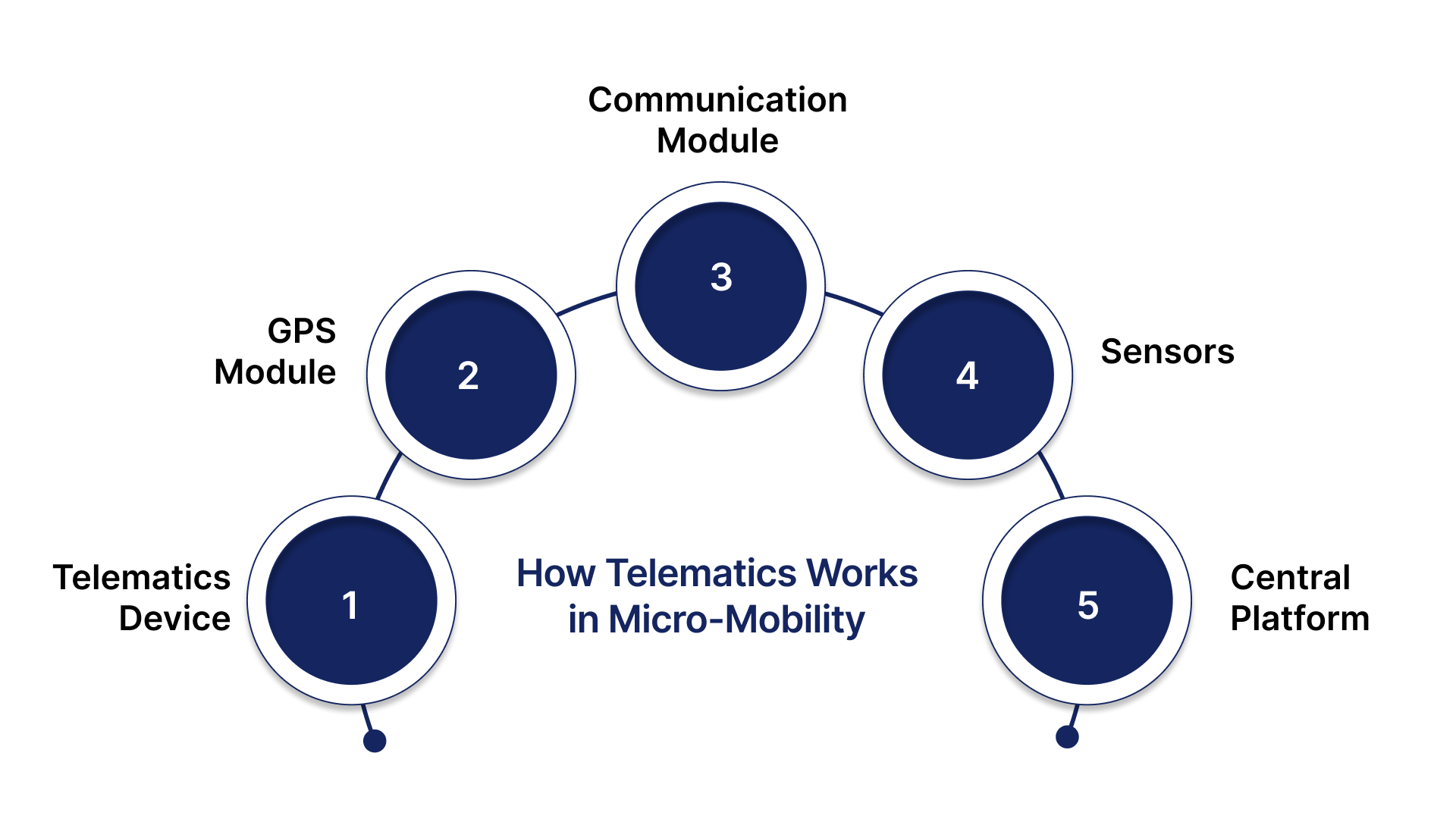
- Telematics Device: A small device (sometimes called a “black box”) is installed on each vehicle. This device collects data from the vehicle’s sensors and GPS.
- GPS Module: Tracks the exact location of each vehicle, allowing you to see where your bikes or scooters are at any time.
- Communication Module: Uses mobile networks (like 4G or 5G) to send the data from the vehicle to a central server or cloud system, even in areas with weak signals.
- Sensors: Monitor things like battery level, speed, sudden stops, and even how and where the vehicle is parked.
- Central Platform: All the data is sent to a dashboard or software platform, where you can view and analyze information about your entire fleet in one place.
How the System Works:
- The telematics device collects data from the vehicle’s GPS and sensors (location, battery, speed, etc.).
- This data is sent through mobile networks to a secure cloud server in real time.
- The central platform processes and displays this information on a dashboard, so you can track vehicles, set geofences, get alerts for maintenance, and monitor user behavior.
- You can use the data to make decisions like moving underused vehicles, scheduling maintenance, or sending alerts if a vehicle leaves a set zone.
While understanding how telematics collects and shares data is important, the real value comes when all these features work together in a single, integrated platform designed for micro-mobility businesses
The Role of Integrated Telematics in Micro-Mobility Platforms
As an SME, you need a system that integrates all your fleet data in real-time. That’s where integrated telematics in modern micro-mobility platforms helps. Instead of juggling separate tools for tracking, maintenance, and analytics, you can manage everything from one unified dashboard.
Integrated telematics combines GPS, IoT sensors, and cloud-based analytics to give you instant visibility into your entire fleet. You can monitor vehicle locations, battery status, and maintenance needs, all while accessing historical data to identify trends and make more informed decisions.
According to Berg Insight, the telematics penetration rate among leasing vehicles in Europe and North America is expected to reach 60% by 2028.
With this level of integration, you can:
- Respond quickly to issues before they disrupt your service
- Reduce manual work and administrative overhead
- Keep your vehicles where they’re needed most, using features like geofencing and automated alerts
By choosing a micro-mobility platform with built-in telematics, you set your business up for smoother operations and easier growth as your fleet expands.
This integration of telematics into your operations unlocks a range of practical advantages that directly impact your bottom line.
Core Benefits of Telematics-Driven Micro-Mobility for SMEs
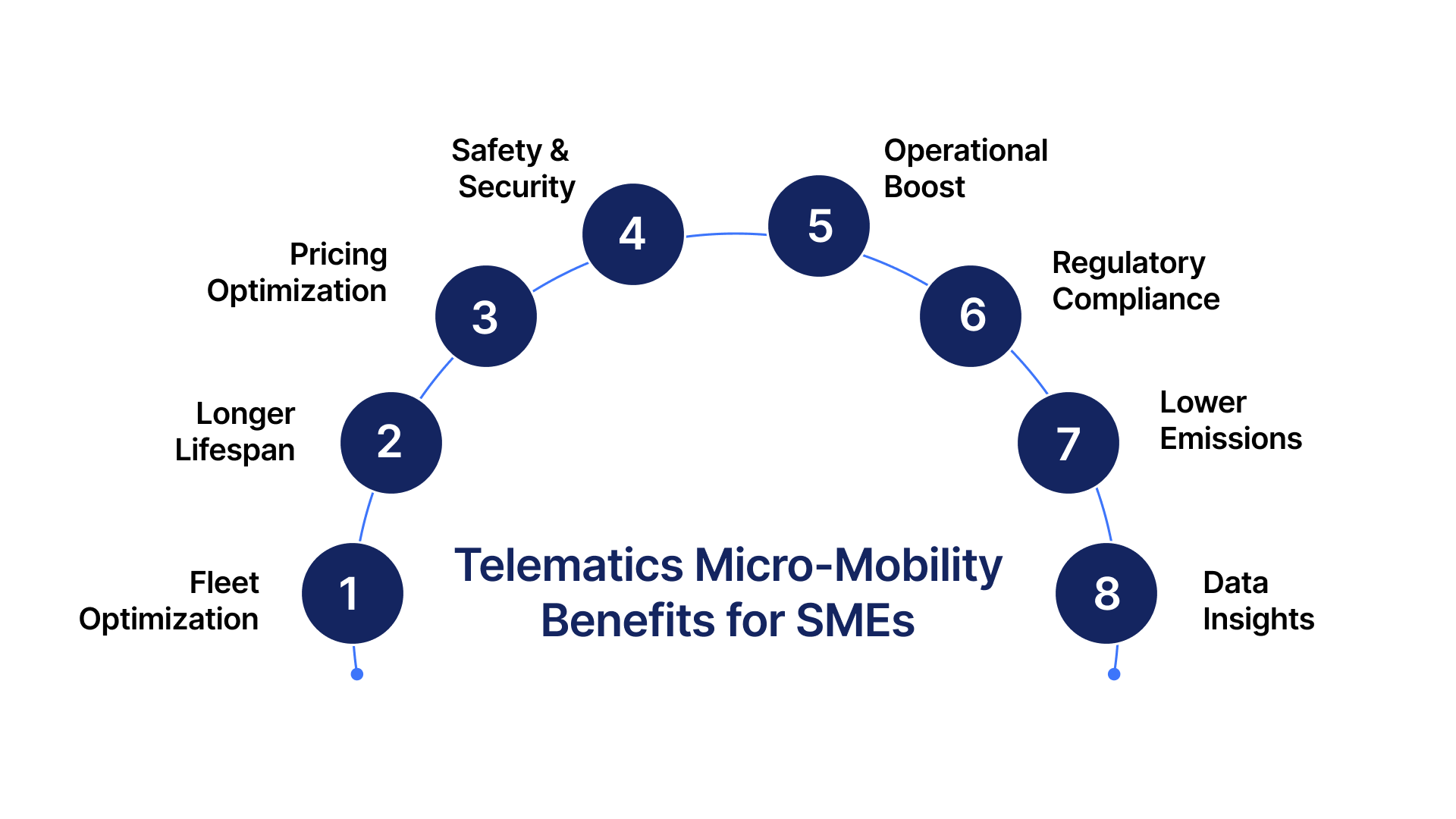
When you integrate telematics into your micro-mobility business, you unlock a wide range of benefits that go far beyond simple tracking. Here’s how these advanced features can make a real difference for your SME:
1. Optimized Fleet Management
Telematics provides real-time data on vehicle locations, usage patterns, and maintenance needs, enabling you to allocate resources efficiently and keep your fleet running smoothly.
2. Increased Vehicle Lifespan
By using predictive maintenance and remote diagnostics, you can address issues before they become costly breakdowns. This not only extends the life of your vehicles but also keeps your service reliable for users.
3. Dynamic Pricing and Revenue Optimization
Telematics enables you to implement dynamic pricing based on real-time demand and usage data. This helps you maximize revenue and incentivize safer riding behaviors by rewarding responsible users.
4. Improved Safety and Theft Prevention
With telematics, you can monitor rider behavior, set geofences, and receive instant alerts for unauthorized use or unusual activity. This proactive approach helps reduce accidents, prevent theft, and ensure compliance with local regulations.
5. Enhanced Operational Efficiency
Automated service diagnostics, route optimization, and real-time reporting make your operations more efficient. For small and medium fleets, this means you can compete with larger operators by running a leaner, more agile business.
6. Better Regulatory Compliance
Telematics solutions help you meet city and regulatory requirements by providing standardized reporting and transparent data sharing, making it easier to expand into new markets and maintain good relationships with local authorities.
7. Reduced Environmental Impact
By optimizing routes and encouraging shared rides, telematics helps you lower your fleet’s carbon footprint and contribute to more sustainable urban mobility. The growing adoption of telematics is playing a key role in reducing traffic congestion and emissions in cities worldwide.
8. Data-Driven Decision Making
Access to advanced analytics and reporting tools lets you identify usage trends, forecast demand, and make informed decisions about fleet expansion, pricing, and service improvements.
These benefits are becoming essential for SMEs that want to stay competitive and deliver a superior experience to their riders.
These advantages go beyond just features; they directly help address the real-world challenges that many small and medium-sized fleet operators face every day.
How Telematics Solves Common SME Fleet Challenges
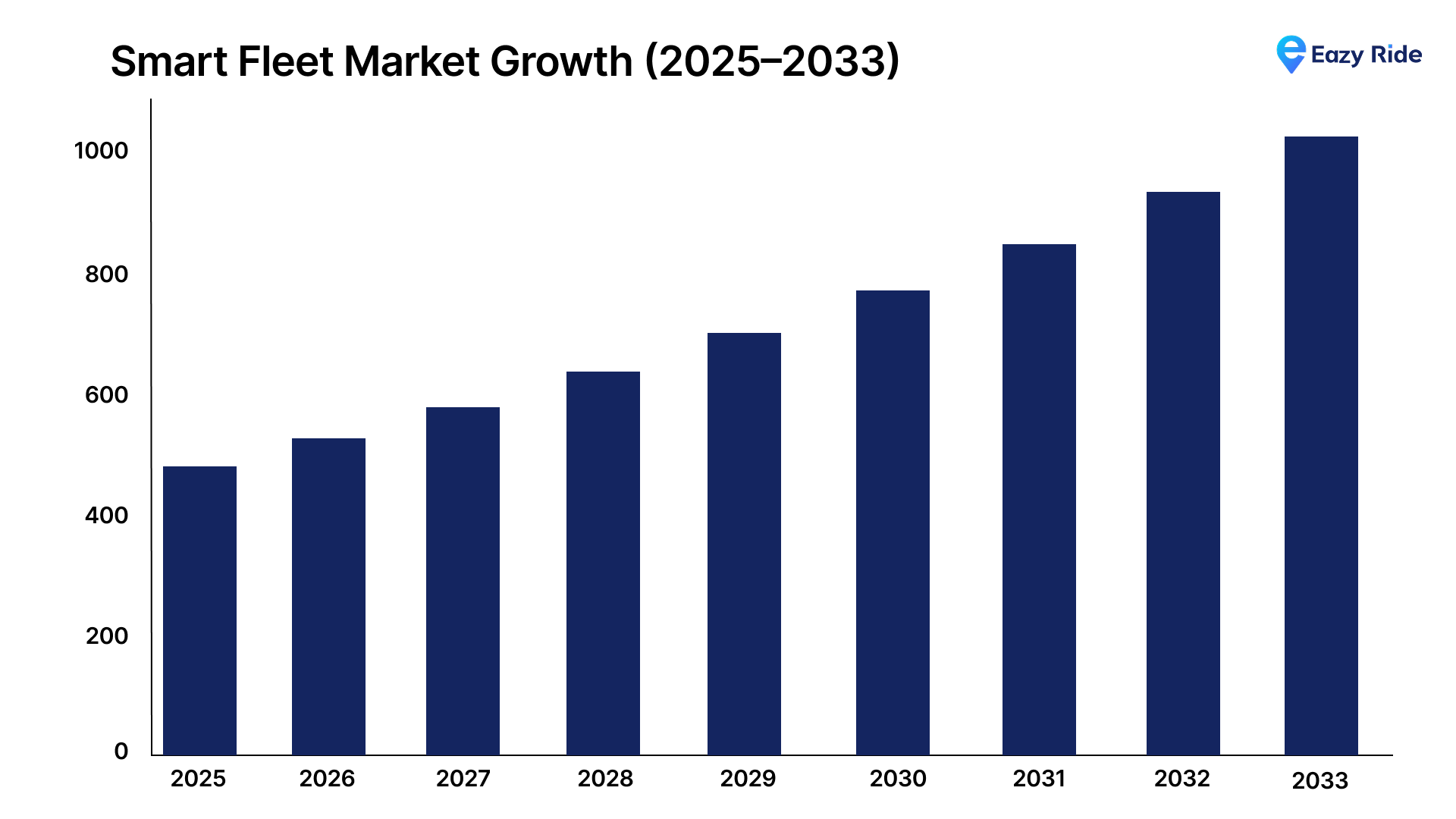
Managing a micro-mobility fleet as a small or medium business comes with its own set of hurdles—limited staff, tight budgets, and the constant need to keep vehicles available and in good condition. As the smart fleet management market is expected to more than double from $478.21 billion in 2025 to $1,026.72 billion by 2033, it’s clear that more operators are turning to technology to address these challenges in practical ways.
Telematics offers targeted solutions to address these pain points, enabling you to operate smarter and more competitively.
1. Maximizing Fleet Utilization
Telematics allows real-time tracking of each vehicle’s location, battery status, and usage, enabling optimal asset deployment to reduce idle time and increase utilization.
2. Reducing Administrative Overhead
Automated maintenance alerts, digital records, and usage analytics reduce manual tasks, freeing your team to concentrate on customer service and growth.
Technology integration, including app-based ride-sharing and IoT-powered fleet management, has been a key driver behind the market’s rapid expansion and operational efficiency gains.
3. Preventing Theft and Misuse
Geofencing and instant alerts help you detect unauthorized use or if a vehicle leaves a designated area. Advanced telematics solutions now offer anti-theft systems and real-time diagnostics, which have become standard features in smart, connected fleets.
4. Improving Service Reliability
Predictive maintenance powered by telematics means you can fix issues before they lead to breakdowns, keeping your fleet reliable and your riders satisfied. AI-based predictive maintenance is becoming a core feature in modern micro-mobility platforms, reducing downtime and improving user experience.
5. Adapting to Regulatory Demands
As cities tighten regulations and demand more data transparency from mobility providers, telematics systems make it easier to generate required reports and prove compliance. The integration of micro-mobility with Mobility-as-a-Service (MaaS) and public transit is also making it easier for SMEs to meet evolving urban mobility standards.
By using these telematics-driven solutions, you can address the operational challenges of running a small or medium-sized fleet, positioning your business for sustainable growth in the market.
With these solutions in mind, let’s explore what features you should prioritize when choosing a telematics platform for your business.
What to Look for in a Telematics-Enabled Micro-Mobility Solution
Choosing the right telematics solution is crucial for your SME’s success in the fast-growing micro-mobility market. With the global micro-mobility market projected to reach $91.2 billion by 2030, driven by the shift toward eco-friendly and connected transportation, your technology choices will directly impact your ability to compete and scale.
Here’s what you should prioritize when evaluating telematics-enabled micro-mobility platforms:
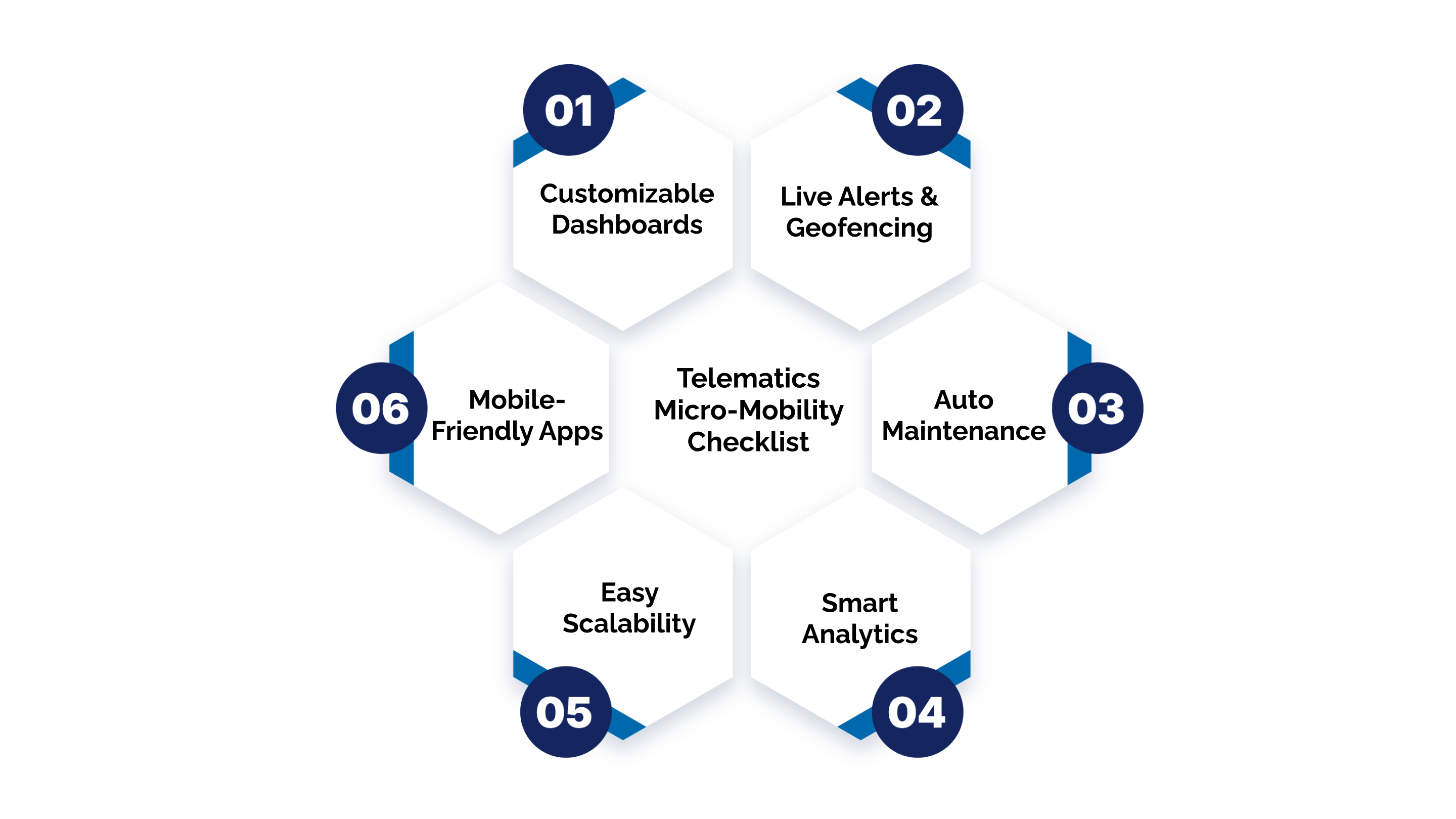
1. Customizable Dashboards
Look for platforms that offer intuitive, customizable dashboards, allowing you to monitor key metrics such as vehicle location, battery status, and usage patterns at a glance. This helps you make quick, informed decisions.
2. Real-Time Alerts and Geofencing
Ensure the system provides instant notifications for unauthorized use, low battery, or vehicles leaving designated zones. Geofencing is utilized by shared mobility operators to enhance compliance and minimize vehicle loss.
3. Automated Maintenance Tracking
Automated service alerts and predictive diagnostics help you address issues before they lead to costly breakdowns, keeping your fleet reliable and your riders happy.
4. Advanced Analytics and Reporting
Choose a solution with robust analytics that transforms raw data into actionable insights. This is essential for optimizing routes, understanding rider behavior, and forecasting demand as the market continues to expand rapidly.
5. Seamless Integration and Scalability
The best telematics platforms integrate smoothly with your existing business tools and can easily scale as your fleet grows. As urbanization and sustainability trends drive demand for shared mobility, scalability will be key to capturing new opportunities.
6. User-Friendly Mobile Apps
A user-friendly app for both operators and riders enhances the overall experience, making it easier to manage your fleet and engage customers.
Investing in a platform that offers these features will help your SME stay ahead of the curve and meet the evolving needs of modern urban transportation.
Once you’ve identified the right telematics solution for your needs, the next step is implementing it effectively in your operations.
Steps to Implement Telematics in Your SME Micro-Mobility Business
Getting started with telematics might seem daunting, but with the right approach, you can quickly set your business up for smarter, data-driven operations. Here’s a = process to help you implement telematics in your micro-mobility fleet:
Step 1: Assess Your Fleet Needs
Begin by identifying the size of your fleet, the types of vehicles you operate, and your primary operational challenges. This will help you select a telematics solution that aligns with your business objectives and budget.
Step 2: Research and Select a Solution
Look for a telematics platform that offers real-time tracking, automated maintenance, analytics, and seamless integration with your current systems.
Step 3: Plan for Installation and Training
Work with your provider to install telematics devices on your vehicles and set up your dashboard. Ensure your team receives hands-on training to utilize the system effectively, allowing you to maximize its benefits from the outset.
Step 4: Customize Alerts and Reporting
Set up geofences, maintenance alerts, and usage reports tailored to your operational needs. Customization ensures you get the most relevant insights and can act quickly on critical information.
Step 5: Monitor, Analyze, and Optimize
Regularly review your telematics data to spot trends, identify inefficiencies, and make informed decisions.
By following these steps, you’ll be well-positioned to transform your fleet operations, reduce costs, and deliver a better experience for your riders, all while maintaining a competitive edge in a rapidly growing market.
After understanding the steps to set up telematics in your business, let’s look at how one platform puts these features into action for SMEs.
EazyRide in Action: Telematics Features Tailored for SME Success
If you’re looking for a telematics solution designed specifically for small and medium-sized micro-mobility businesses, EazyRide stands out with its comprehensive, user-friendly platform. Here’s how EazyRide’s telematics-driven features directly address the everyday pain points of SME operators in shared mobility.

Real-Time Fleet Tracking and Control
EazyRide’s dashboard gives you instant visibility into your entire fleet: bikes, e-bikes, or scooters. So, you always know where your vehicles are and how they’re being used. This real-time tracking helps prevent theft, optimizes asset allocation, and enables a quick response to rider or vehicle issues.
Advanced Analytics and AI-Driven Insights
With EazyRide, you gain access to advanced analytics that transform raw usage data into actionable insights. You can monitor booking trends, revenue streams, and vehicle health, empowering you to make smarter business decisions and maximize fleet utilization.
Smart Geofencing and Compliance
EazyRide’s geofencing tools allow you to define ride zones, parking areas, and restricted regions. This not only ensures compliance with local regulations but also helps reduce incidents of improper parking and unauthorized use.
Automated Maintenance and Proactive Alerts
The platform’s telematics stack includes automated maintenance reminders and fault detection. By catching issues early, you can reduce downtime and extend the lifespan of your vehicles, key for SMEs that need to keep every asset working.
Customizable User and Operator Apps
EazyRide offers fully branded rider apps and a real-time control dashboard, making it easy for both customers and staff to interact with the system. This improves the rider experience and streamlines operations for your team.
Scalable for Growth
Whether you’re operating in one city or expanding across multiple franchises, EazyRide is built to scale. The platform supports seamless network expansion and flexible business models, so you can grow your business without worrying about technology bottlenecks.
EazyRide has reported over 150,000 rides completed and more than 1,000 electric vehicles deployed across 21 cities, helping over 14 clients scale their micro-mobility businesses efficiently and sustainably.
By integrating these telematics features, EazyRide enables SMEs to overcome operational challenges, reduce costs, and deliver a seamless, reliable experience to their riders, all while supporting sustainable urban mobility.
Conclusion
Telematics is a practical tool that helps you run your micro-mobility business better. With telematics, you can see where your vehicles are, track their condition, and address problems before they worsen. This means fewer lost bikes or scooters, less downtime, and happier riders.
As more cities strive for safer and cleaner transportation, incorporating telematics into your business is becoming necessary not just for large companies, but also for small and medium-sized ones like yours.
Platforms like EazyRide offer easy-to-use features, including real-time tracking, maintenance alerts, and intuitive dashboards. These tools help you solve common problems and focus on growing your business.
Ready to see how EazyRide can help your business?
Contact the EazyRide team today to get started and discover how their telematics features can simplify and enhance the efficiency of your micro-mobility operations.
FAQs
1. Can telematics help reduce operating costs?
Telematics helps you spot underused vehicles, schedule maintenance before breakdowns, and prevent theft all of which can lower your overall operating costs and improve your bottom line.
2. Can telematics improve the safety of my micro-mobility fleet?
Yes, telematics can monitor rider behavior, detect unsafe usage, and send instant alerts for issues like speeding or unauthorized movement. This helps reduce accidents and ensures vehicles are used responsibly.
3. How does telematics support regulatory compliance in cities?
Telematics systems generate detailed reports on vehicle usage, parking, and emissions. These reports help you meet city regulations and provide data when required by local authorities.
4. How do I get started with telematics for my micro-mobility business?
Begin by assessing your fleet’s needs, then select a telematics platform that aligns with your operations. Install the necessary devices, set up your dashboard, and train your team to use the system for daily management and decision-making.
5. Does telematics work for both bikes and scooters?
Yes, telematics systems are designed to work with a variety of micro-mobility vehicles, including bikes, e-bikes, and scooters. The same platform can often manage mixed fleets.


