
 AllMicro Mobility Model

 21 January, 2026
 How to Create a White Label E-Scooter Sharing App in 2026?
Most operators learn the hard truth about custom app development when the first quote arrives: $150,000 minimum and six months to reach beta, assuming nothing goes wrong. By then, permit windows are closing, competitors are live, and riders are already forming habits with someone else’s brand.
What’s changed is the maturity of white-label platforms. They now deliver what once required venture funding and a full engineering team, production-ready iOS and Android apps, fleet dashboards, payments, and geofencing, fully branded and deployed in weeks, not quarters.
This isn’t about cutting corners. It’s about recognizing that differentiation comes from operations, local partnerships, and service quality, not rebuilding software that already works. The operators winning permits and building profitable fleets aren’t writing custom code. They’re getting to market fast, learning from real riders, and iterating with real data.
This guide shows you exactly how to evaluate, customize, and launch a white-label e-scooter sharing app. You’ll learn which features actually matter for operations, what questions expose weak platforms during demos, and how to avoid the pitfalls that delay launches and drain budgets.
Key Insights
- Custom app development costs $100K–$300K and takes 4–8 months, delaying market entry and burning capital before you earn your first ride.
- White-label platforms deliver production-ready apps in weeks, allowing you to focus your budget on fleet operations rather than software engineering.
- Look for platforms offering native apps, real-time analytics, geofencing, operator tools, and flexible pricing models, not just a rider interface.
- Evaluate based on launch speed, customization depth, ongoing support, and total cost of ownership, not just upfront license fees.
- A white-label micromobility platform that provides branded rider apps, admin dashboards, and fleet operator tools, typically deployed within 14 days.
The Real Cost of Building From Scratch
Most operators exploring scooter sharing make the same initial assumption: hiring developers to build a custom app gives you more control and better long-term economics. The reality is far more complex.
Custom development typically requires:
- Frontend engineers for iOS and Android apps (2–3 developers)
- Backend engineers for API, database, and server infrastructure (2–3 developers)
- DevOps specialists for deployment, scaling, and security
- UI/UX designers for rider experience and branding
- QA testers to ensure stability across devices
- Ongoing maintenance for OS updates, bug fixes, and feature additions
For example, a mid-sized development team can easily cost $40,000–$60,000 per month. Even with aggressive timelines, you’re looking at 4–6 months for a minimum viable product. That’s $160,000–$360,000 before a single scooter hits the street.
Worse, this assumes everything goes smoothly. Scope creep, integration challenges with IoT hardware, payment gateway compliance, and regulatory feature requirements often push timelines to 8–12 months.
For most operators, this delay is fatal. Your competitor launches first, secures the best parking partnerships, and builds rider habits before you’ve finished beta testing.
Also read: How to Build a Successful Motorcycle Rental Business with an App
Why White Label Makes Business Sense in 2026?
The micromobility market has matured significantly. Three key shifts make white-label the smarter choice now:
1. Technology commoditization: Core features like GPS tracking, payment processing, and trip management are now table stakes. Building these from scratch wastes resources on problems that have already been solved.
2. Speed to market matters more than ever: Cities and campuses are actively issuing permits and exclusive partnerships. Being operational in Q1 versus Q4 can mean the difference between capturing a market or being locked out.
3. Capital efficiency: Investors and self-funded operators alike recognize that differentiation comes from operations, customer service, and local partnerships, not from having custom-coded software.
What Makes a White Label Platform Actually Useful?
Not all white-label solutions are created equal. Many providers offer basic rider apps but leave you scrambling to manage operations through spreadsheets and manual processes. A true white-label platform must handle three distinct user types:
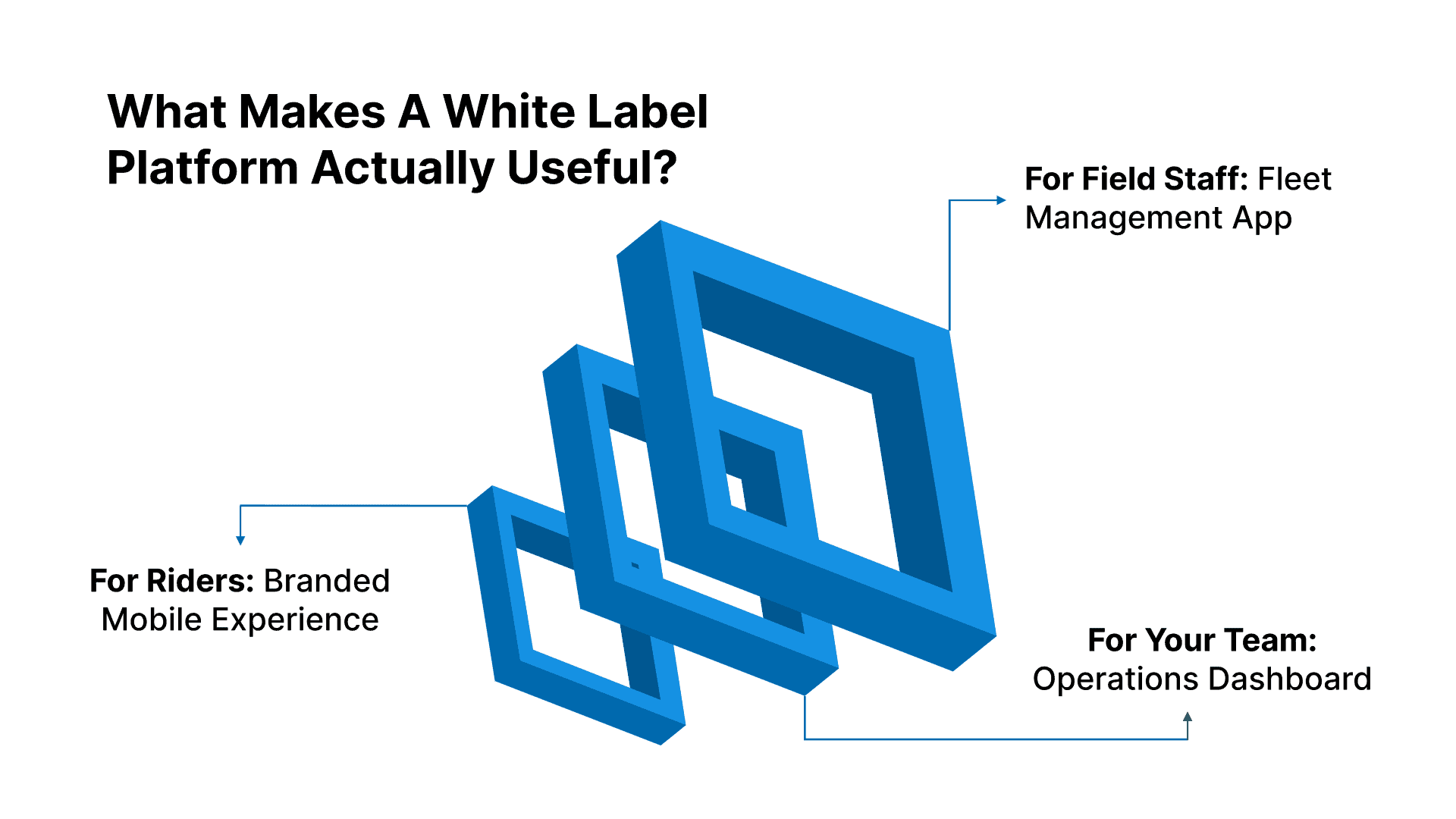
For Riders: Branded Mobile Experience
Your riders need native iOS and Android apps under your brand, no “Powered by [Vendor]” messaging that dilutes your identity. Essential features include:
- Account creation and identity verification
- Real-time vehicle availability maps
- QR code scanning to unlock vehicles
- In-app payment with saved methods
- Ride history and receipts
- Push notifications for promotions and service updates
For Your Team: Operations Dashboard
This is where most white-label platforms fail. Your admin dashboard must provide:
- Live fleet status (available, in-use, low battery, maintenance needed)
- Pricing controls (per-minute rates, unlock fees, subscription plans)
- Zone management and geofencing
- User management and support tools
- Revenue analytics and trip data
- Promotional campaign setup
You should be able to adjust pricing for peak hours, create campus-specific subscription plans, or geo-restrict riding zones, all without contacting vendor support.
For Field Staff: Fleet Management App
Your charging and maintenance teams need dedicated tools:
- Task assignment and routing
- Battery swap tracking
- Damage reporting with photos
- Rebalancing recommendations based on demand patterns
Also read: Top ScootAPI Alternative Apps for US Micromobility Operators 2026
Step-by-Step: How to Launch with White Label
Most operators approach platform evaluation backwards; they start with feature checklists instead of business requirements. The smarter path is to define your service model first, then find technology that supports it. Here’s how to structure your evaluation and deployment process to avoid the expensive mistakes that derail launches.
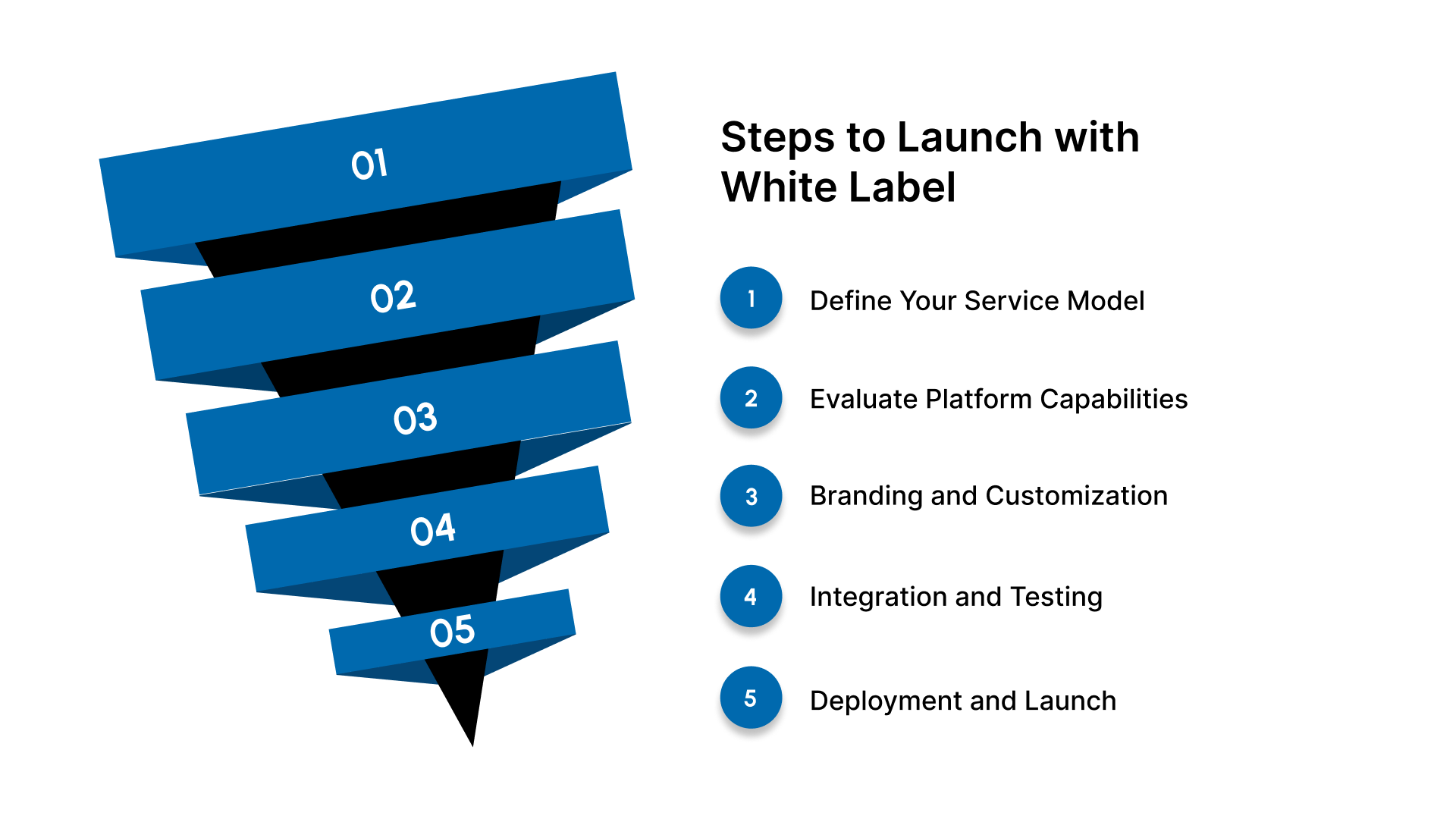
Step 1: Define Your Service Model
Before evaluating platforms, clarify your operational approach:
Station-based vs. dockless:
- Station-based requires less active rebalancing but limits rider flexibility
- Dockless offers a better rider experience but demands stronger geofencing and field operations
Vehicle types:
- Single vehicle type (e.g., only e-scooters)
- Multi-modal (e-scooters, e-bikes, e-mopeds in one platform)
Pricing structure:
- Pay-per-ride with unlock fee + per-minute rate
- Subscription plans (daily, weekly, monthly unlimited)
- Hybrid models with member discounts
Geographic scope:
- Single campus or downtown district
- Multi-location operator serving several cities
These decisions drive your platform requirements. A campus operator might prioritize subscription management, while a tourist-focused service needs seamless one-time payments.
Step 2: Evaluate Platform Capabilities
When reviewing white-label options, test for these non-negotiable features:
Geofencing precision: Can you create no-parking zones around building entrances, slow-speed zones near pedestrian areas, and service boundaries that prevent rides outside your operating area? Request a demo where you define custom zones and see real-time enforcement.
Pricing flexibility: Set up a test scenario: $1 unlock fee, $0.25/minute base rate, $15 monthly subscription with unlimited 30-minute rides, 20% discount for students. If the platform can’t configure this without custom development, keep looking.
Analytics depth: You need heatmaps showing pickup/drop-off concentration, utilization rates by vehicle and time of day, revenue per vehicle, average trip duration, and peak demand patterns. If the dashboard shows only “total trips” and “total revenue,” it’s not an operations tool; it’s a vanity metric display.
Hardware agnostic vs. proprietary: Some platforms require you to buy their IoT hardware. Others integrate with major scooter manufacturers (Segway, NIU, Okai) via open APIs. Hardware flexibility means you can negotiate better fleet pricing and switch suppliers if quality issues arise.
Explore how EazyRide’s admin dashboard handles pricing, zones, and fleet management without vendor dependencies.
Step 3: Branding and Customization
Understanding what “white label” actually means saves you from discovering limitations after you’ve signed contracts. The depth of customization varies dramatically between platforms, and the differences directly impact how riders perceive your brand.
White label means your brand, not theirs. Verify:
- App store presence: Apps published under your developer account with your company name, or generic accounts with your logo slapped on? True white label means you own the App Store and Google Play listings.
- UI customization: Can you adjust color schemes, fonts, button styles, and icon sets to match your brand guidelines? Or are you stuck with their predetermined design?
- Backend customization: Some platforms let you modify user flows (e.g., require helmet selfies before unlocking, add insurance waiver acceptance, or integrate campus ID verification). Understand what’s configurable versus what requires paid custom development.
Step 4: Integration and Testing
Before launch, conduct thorough testing:
- Payment processing: Test Stripe, PayPal, or regional payment gateways. Verify that refunds, failed payments, and subscription renewals work correctly.
- IoT communication: Place vehicles in areas with weak signal (e.g., parking garages, dense urban areas). Confirm that unlock commands, GPS tracking, and battery status updates remain reliable.
- Load testing: Simulate concurrent users trying to unlock vehicles. Many white-label platforms work fine with small user bases but struggle during peak demand.
- Support response: Submit a test support ticket at 8 PM on a Friday. How quickly do they respond? Your riders won’t only have issues during business hours.
Also read: ScootAPI vs EazyRide for E-Scooter Sharing: What Operators Should Know?
Step 5: Deployment and Launch
Most white-label platforms handle app deployment, but you should understand the process:
App submission: iOS review takes 1–3 days, Android is typically faster. Build submission buffer into your launch timeline.
Data migration: If you’re switching from another platform, clarify how user accounts, trip history, and payment methods transfer.
Staff training: Your team needs hands-on training with the admin and operator apps before launch day. Budget 1–2 days for comprehensive onboarding.
Soft launch: Consider a limited beta with invited users. Identify operational bottlenecks (rebalancing routes, charging logistics, customer support workflows) before full deployment.
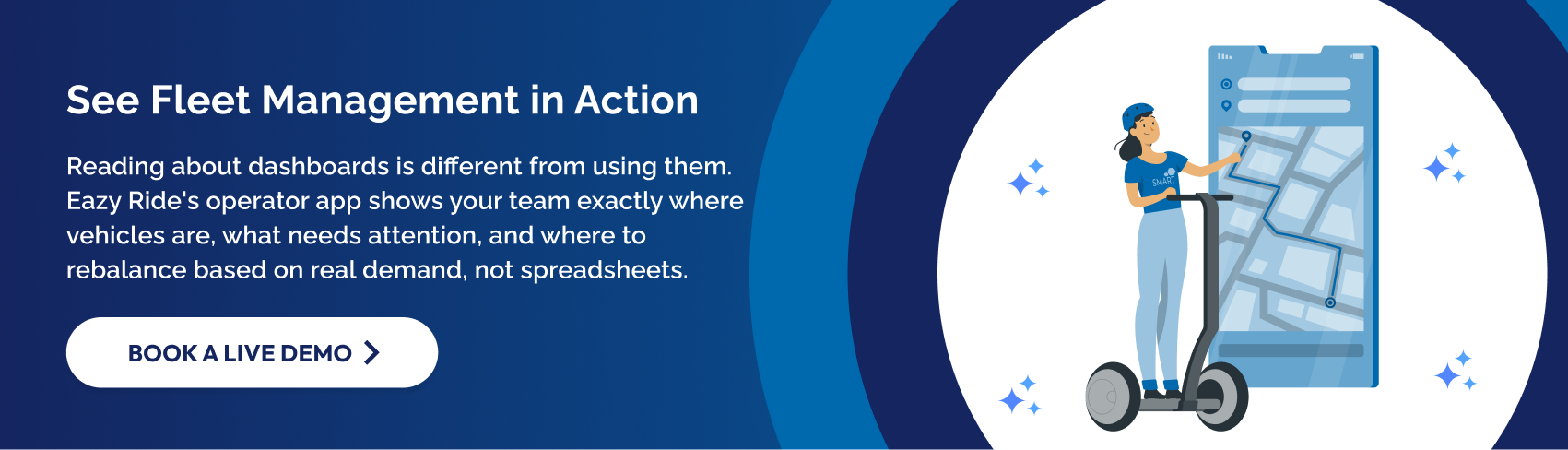
Book a live demo to see real-time fleet tracking, task management, and demand analytics in action.
Understanding White Label Scooter Sharing Source Code
A common question from technical operators: “Can I access the white-label scooter sharing source code?”
The answer depends on the platform. Most white-label providers offer three models:
Software-as-a-Service (SaaS)
You license the platform monthly or annually, but never access the source code. The vendor handles updates, security patches, and infrastructure. This suits operators who want to focus on service delivery rather than software maintenance.
Pros: Always up-to-date, vendor manages compliance and scaling
Cons: Limited deep customization, ongoing dependency
Licensed Source Code
You receive the white-label scooter sharing source code and deploy it on your own servers. You own the infrastructure and can modify anything.
Pros: Complete control, no ongoing license fees after initial purchase
Cons: You maintain servers, handle security, and implement updates manually
Hybrid Models
Core platform remains SaaS, but the vendor provides API access and SDK documentation for custom integrations and feature additions.
Pros: Balance of vendor support and extensibility
Cons: Complex integrations still require developer resources
For most operators, SaaS with strong API access offers the best balance. You get rapid deployment and maintenance-free operations while retaining integration flexibility for unique requirements (campus ID systems, corporate billing APIs, etc.).
If you’re evaluating source code access, ask:
- What language/framework is it built on? (React Native, Flutter, native iOS/Android?)
- Is the backend documented and modular?
- What’s included in support after source handoff?
- Do updates require manual merging, or is there a clean upgrade path?
See how white-label deployment works with EazyRide from contract to the app store in under 14 days.
Common Pitfalls and How to Avoid Them
Choosing fleet management software is often rushed under permit deadlines and launch pressure. That’s when small oversights turn into expensive mistakes. These are the issues operators most commonly encounter after signing, and how to avoid repeating them.
Pitfall 1: Choosing on Price Alone
A cheap platform with poor geofencing will cost you in lost vehicles, city fines, and damaged reputation. Total cost of ownership includes support quality, feature depth, and operational efficiency.
Pitfall 2: Ignoring Mobile App Performance
Riders delete apps that crash or drain battery. Test white-label apps thoroughly on older devices and weak networks before committing.
Pitfall 3: Underestimating Training Needs
Even intuitive platforms require staff training. Budget time for admin dashboard onboarding, operator app workflows, and customer support team preparation.
Pitfall 4: Neglecting Contract Terms
Understand minimum commitment periods, per-ride fees, overage charges, and termination clauses. Some providers lock you into multi-year contracts with substantial early exit penalties.
Pitfall 5: Skipping Reference Checks
Talk to current operators using the platform. Ask about hidden costs, support responsiveness, and roadmap delivery. Vendors provide glowing references; find operators independently.
How EazyRide Addresses Core Operational Challenges?
When operators evaluate white-label platforms, they’re solving operational constraints, not comparing feature depth. The focus is practical: pricing control, fleet visibility, vehicle complexity, and regulatory enforcement.
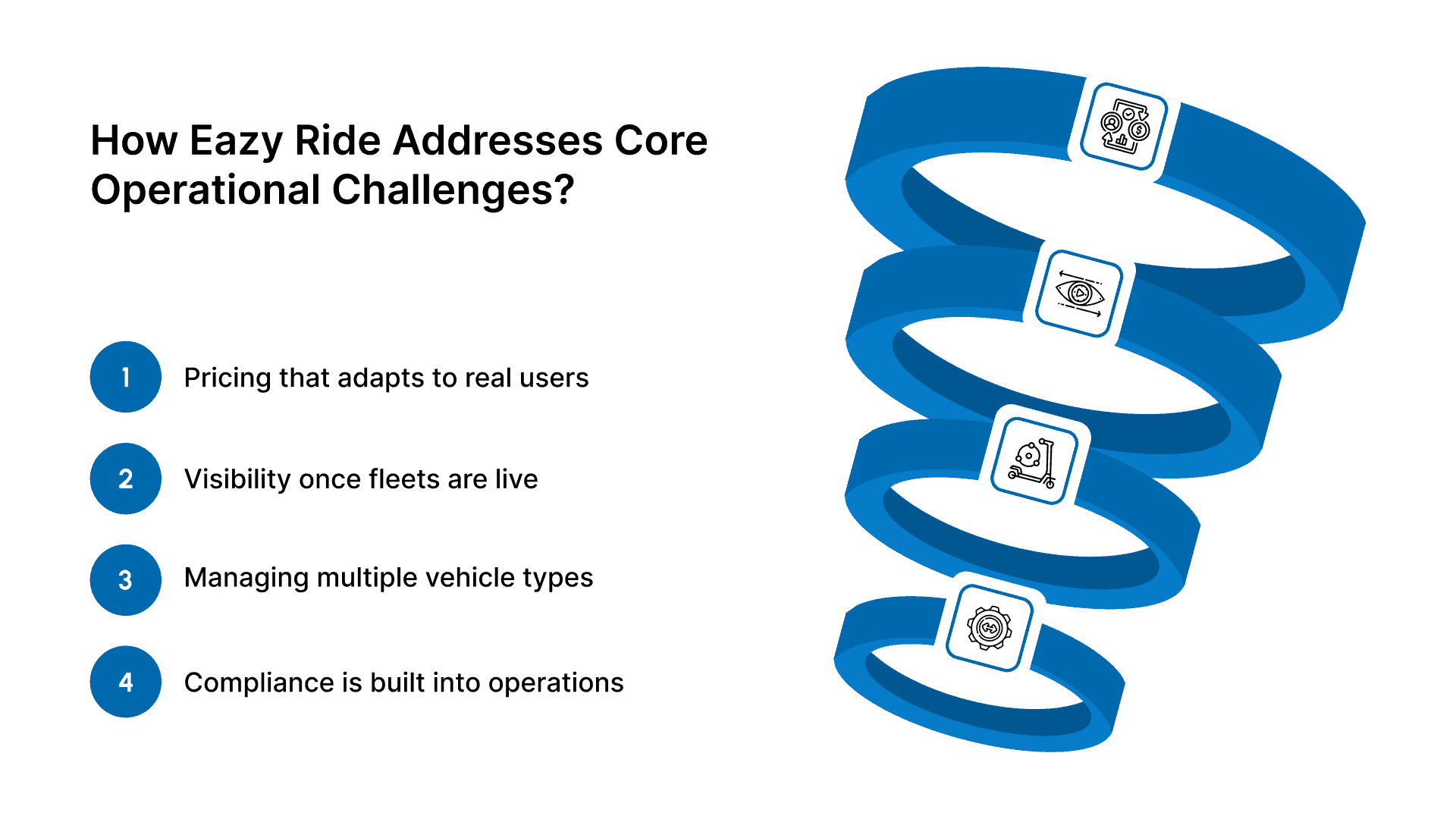
Pricing that adapts to real users
Per-minute pricing works briefly, then fails. Different rider groups need different models, and pricing changes must be immediate.
EazyRide’s admin dashboard supports:
- Multiple pricing tiers
- User-group and zone-based pricing
- Subscriptions and custom billing
Updates apply instantly, without app changes or vendor intervention.
Visibility once fleets are live
Vehicle distribution shifts constantly. Without live insight, rebalancing becomes manual and inefficient.
EazyRide provides:
- Real-time fleet visibility
- Demand heatmaps by time and location
- Operator task generation for rebalancing
Teams act on current data, not delayed reports.
Managing multiple vehicle types
Expanding beyond scooters introduces diverging rules and workflows.
The platform supports:
- E-scooters, e-bikes, and e-mopeds in one system
- Vehicle-specific pricing and maintenance logic
- Distinct operational rules per vehicle type
Fleet expansion doesn’t require parallel systems.
Compliance is built into operations
Permits depend on enforcement, not documentation.
EazyRide enables:
- No-parking zones
- Speed-restricted areas
- Defined service boundaries
Controls are enforced at the vehicle level and meet municipal review requirements.
Conclusion
Creating a white-label e-scooter sharing app in 2026 doesn’t require massive development budgets or half-year timelines. Modern platforms deliver production-ready solutions that let you launch branded services in weeks, not quarters.
The key is choosing a platform that goes beyond basic rider apps to provide true operational tools: analytics, geofencing, flexible pricing, fleet management, and multi-modal support. These features determine whether you achieve profitability quickly or struggle indefinitely with operational inefficiency.
EazyRide provides the technology foundation, branded apps, admin controls, and operator tools that let you focus resources on what matters: vehicle procurement, local partnerships, rider acquisition, and service quality. The platform handles the software complexity so you can focus on building the business.
Whether you’re launching a campus mobility program, a downtown scooter network, or a multi-city fleet, the technology should enable your strategy, not dictate it.
Schedule a platform demo to evaluate features, ask technical questions, and discuss your launch plan.
Frequently Asked Questions
1. How much does a white-label e-scooter app cost?
White label platforms typically charge monthly fees based on fleet size, feature set, and support level. Some use revenue-share models. The total cost is dramatically lower than custom development, which starts at around $150,000 and includes ongoing maintenance expenses.
2. Can I use my own vehicle hardware with white-label platforms?
Most modern white-label platforms integrate with major IoT hardware providers (Segway, NIU, Okai, INVERS) via API. This lets you source vehicles competitively and switch suppliers if needed. Some platforms require proprietary hardware; clarify this before committing.
3. How long does it take to launch with a white-label solution?
From contract signing to app store availability: typically 2–4 weeks. This includes branding customization, payment gateway setup, and initial configuration. Add time for thorough testing and staff training. Total timeline: 4–6 weeks for most operators.
4. Do I need developers on my team to run a white-label platform?
No. Quality white-label platforms are designed for non-technical operators. You’ll use admin dashboards and configuration tools, no coding required. You may want technical resources if you’re integrating with complex third-party systems (campus ID verification, corporate billing APIs).
5. What happens if my white-label provider shuts down or I want to switch?
This is why contract terms matter. Ensure your agreement includes data export provisions (user accounts, trip history, payment records) and reasonable notice periods. Ask about migration support if considering a switc


