
 AllMicro Mobility Model

 12 January, 2026
 Top ScootAPI Alternative Apps for US Micromobility Operators 2026
The micromobility software landscape shifted when ATOM Mobility acquired ScootAPI in mid-2025. If you’re running a scooter or e-bike sharing operation in the United States, this acquisition likely prompted questions about platform stability, roadmap continuity, and whether your current software still aligns with your growth plans.
Choosing the wrong platform costs months in delays, thousands in integration fees, and operational headaches that slow your path to profitability. The right platform gets you to market quickly with tools built for how Americans rent scooters and e-bikes, not adapted European solutions with compromises baked in.
This guide breaks down six proven alternatives that work for U.S. operators. You’ll see what each platform does best, where they fall short, and how to pick the one that matches your fleet size, operational model, and growth trajectory.
Key Takeaways
- ScootAPI was acquired by ATOM Mobility in June 2025, prompting operators to evaluate alternatives.
- U.S. operators need platforms with local payment integrations, GBFS/MDS compliance, and American English interfaces.
- The best alternatives offer 2-4 week launch timelines, white-label apps, and fleet management dashboards.
- Pricing models vary from subscription-based SaaS to custom enterprise agreements.
- Key decision factors: IoT hardware compatibility, multi-vehicle support, geofencing capabilities, and real-time analytics.
- EazyRide stands out to U.S.-focused operators seeking rapid deployment without compromising the European platform.
Why U.S. Operators Are Searching for ScootAPI Alternatives Right Now
The ATOM Mobility acquisition of ScootAPI created immediate uncertainty for operators who built their businesses on the platform. Integration timelines stretched. Support response times changed. Roadmaps shifted. These aren’t hypothetical problems; they’re forcing real operators to evaluate alternatives that deliver stability without disruption.
The U.S. Market Has Unique Requirements:
- Payment processing needs Stripe, Square, Apple Pay, and Google Pay, not just European gateways
- City regulations demand MDS compliance for data sharing with municipalities
- Operations teams need support during U.S. business hours, not European time zones
- Riders expect seamless checkout experiences that match American app standards
The global micromobility platform market is projected to grow from $7.9 billion in 2025 to $26.4 billion by 2035. The commercial segment accounts for 51.4% of market value, driven by last-mile delivery and corporate fleet solutions.
Explore how EazyRide helps scooter and e-bike operators launch compliant, revenue-ready fleets in as little as two weeks.
Why Platform Choice Matters Now:
The opportunity is massive, but timing matters. Operators who choose platforms built for U.S. requirements launch faster, scale more smoothly, and avoid the technical debt that comes from forcing European solutions into American markets. Your platform should accelerate growth, not create barriers to it.
Decision Framework: How to Evaluate Your Options?
Before comparing platforms, take a step back and examine your own operation. What you need depends heavily on scale, context, and direction.
Are you launching a small fleet of 25 scooters on a college campus, or managing 500 vehicles across multiple cities? Smaller operators usually benefit from simple tools and low fixed costs. As fleets grow, analytics, multi-location management, and operational controls become more important. Large, multi-city operations often need custom integrations and dedicated support.
It’s also important to be realistic about your technical capabilities. If you don’t have developers on hand, choose a platform that works immediately and has minimal setup complexity. Teams with technical resources can leverage APIs and customization, but that only adds value if they can actually maintain it.
Consider where your business will be in the next 18 months. You can add e-bikes, expand into new cities, or introduce new pricing models. The right platform should support these changes without forcing a painful migration or major rework later.
Finally, look beyond the monthly subscription price. Setup fees, transaction costs, support charges, custom development, and delayed launch timelines all affect the real cost. A platform that looks cheaper upfront can easily become more expensive over the next 12 to 24 months.
Also Read: Top Electric Scooter Apps for Operators in 2026
Top ScootAPI Alternative Platforms for U.S. Market Operations
Choosing the right platform determines how quickly you launch, how efficiently you operate, and whether you can scale profitably. Each platform below serves different operator needs, from rapid U.S.-focused deployment to enterprise-grade global solutions. Understand where each excels and where they compromise to find your best fit.
1. EazyRide
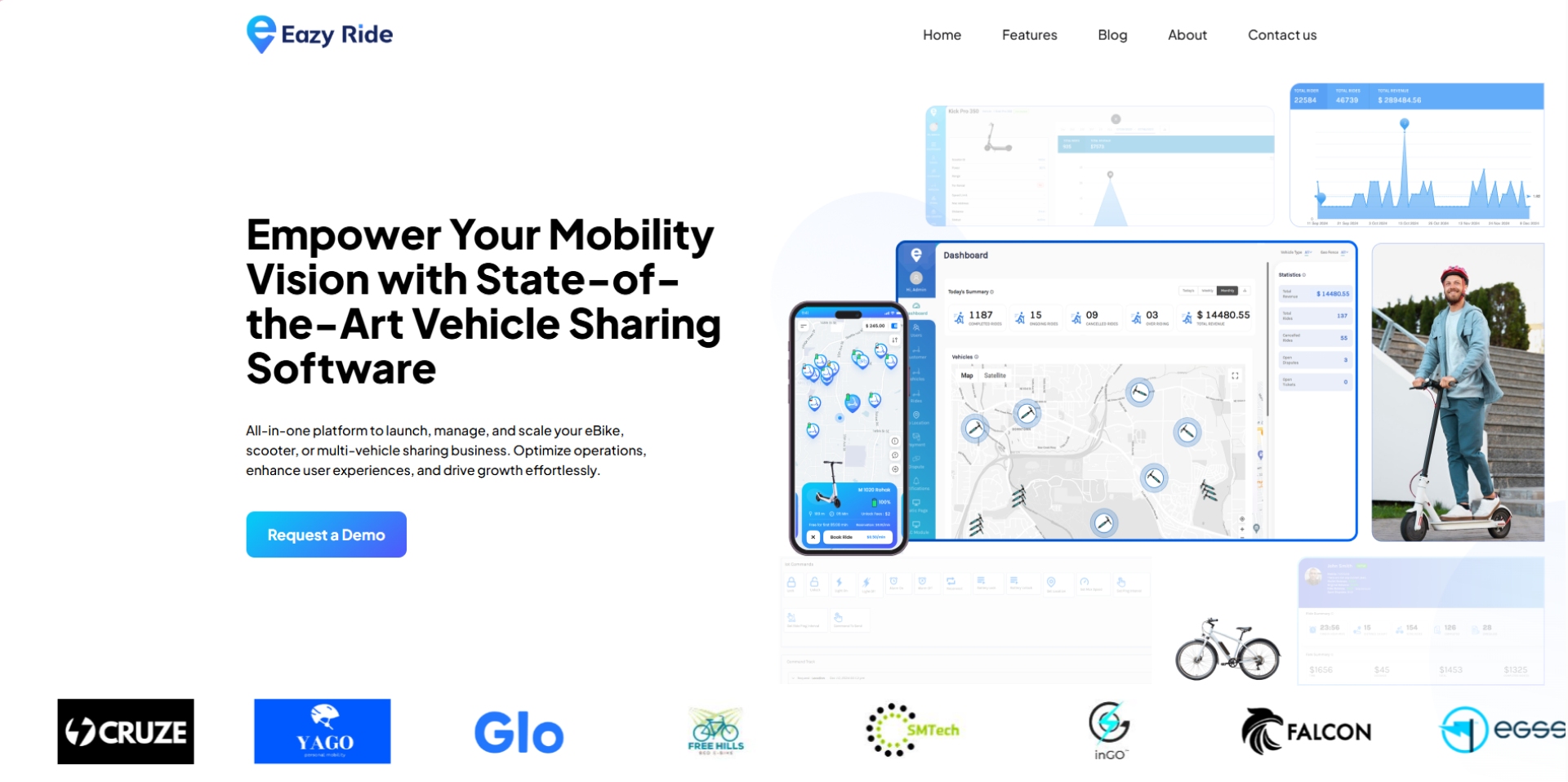
Best for: U.S. operators who need rapid deployment without compromising on features
EazyRide is a white-label micromobility platform designed specifically for businesses launching vehicle-sharing services in the U.S. market. Unlike European platforms adapted for American operators, EazyRide is built on U.S. requirements, from payment integrations to support availability.
Key Features:
- White-label iOS and Android apps with your branding
- Complete admin dashboard with real-time analytics and heatmaps
- Fleet operator app for maintenance, rebalancing, and charging
- Precise geofencing and zone controls for U.S. city requirements
- Flexible pricing models: time-based, subscriptions, promo codes, corporate accounts
- Multi-vehicle support: scooters, e-bikes, mopeds from day one
- Station-based, dockless, and hybrid operations
- 2-week launch timeline from contact to revenue generation
- U.S. payment integrations: Stripe, Apple Pay, Google Pay built in
- Support during U.S. business hours with staff who understand American regulations
What Sets Them Apart:
The 2-week launch timeline is real, not marketing fiction. You get fully configured white-label apps, an admin dashboard, and fleet operator tools ready for your brand. The platform handles the operational spectrum without complexity, geofencing works precisely, analytics show metrics that matter, and pricing flexibility supports experimentation.
Payment processing prioritizes American standards. Support operates in U.S. time zones, resolving issues during your business day instead of waiting for the European morning. The platform scales from 50 vehicles to 500+ without requiring migration or additional integration work.
Where They Focus:
EazyRide prioritizes depth in core mobility features for the U.S. market over breadth across global regions. They serve operators focused on American deployments who want platforms that understand local regulatory requirements, business practices, and market dynamics.
Ideal Use Case:
U.S. operators launching their first fleet who want to start generating revenue in weeks. Growing operators are adding cities or vehicle types that need scalability without complexity. Any operator frustrated with European platforms that require constant workarounds for American operational realities.
Request a tailored demo of EazyRide and explore real workflows for pricing, geofencing, payments, and fleet operations.
2. ATOM Mobility
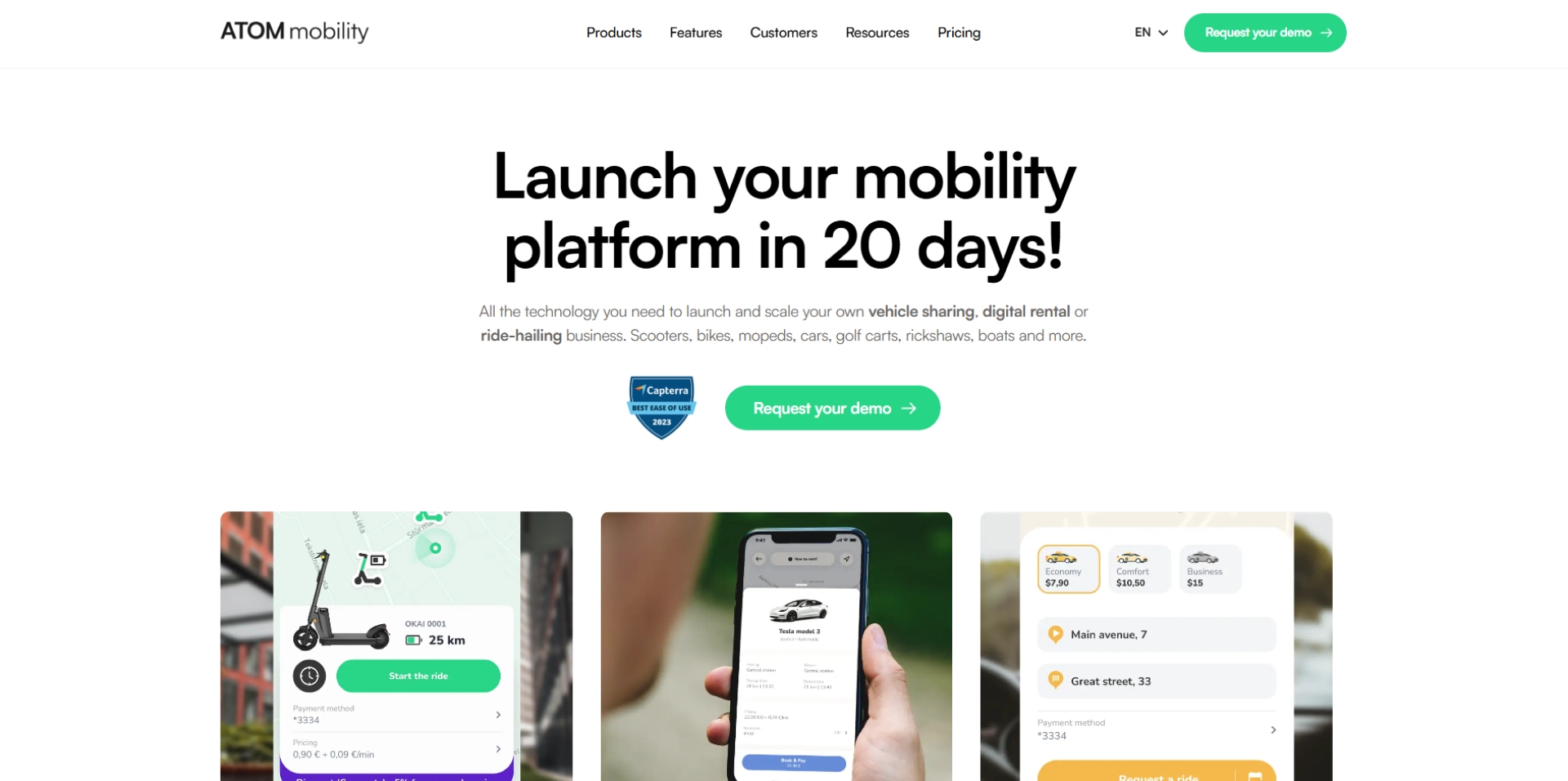
Best for: Multi-vehicle operators needing comprehensive global coverage
ATOM Mobility acquired ScootAPI in June 2025, positioning itself as one of the most comprehensive B2B platforms globally. Founded in Latvia, they support over 200 projects handling more than 1 million monthly rides across multiple continents.
Key Features:
- Multi-vehicle support: scooters, e-bikes, mopeds, cars, ride-hailing
- White-label iOS and Android apps with customization options
- IoT integration with Segway, Teltonika, OMNI, Okai, Comodule
- 20-day launch timeline advertised
- Geofencing, dynamic pricing, analytics dashboards
- City data feed integrations (MDS, GBFS)
- Operator apps for field team management
Strengths:
True multi-vehicle flexibility from a single platform. Extensive IoT provider integrations simplify hardware sourcing. Pre-built payment gateway and city compliance integrations reduce the need for custom development.
Ideal Use Case: Mid-to-large operators planning international expansion or those already operating in Europe, adding U.S. markets.
3. Joyride
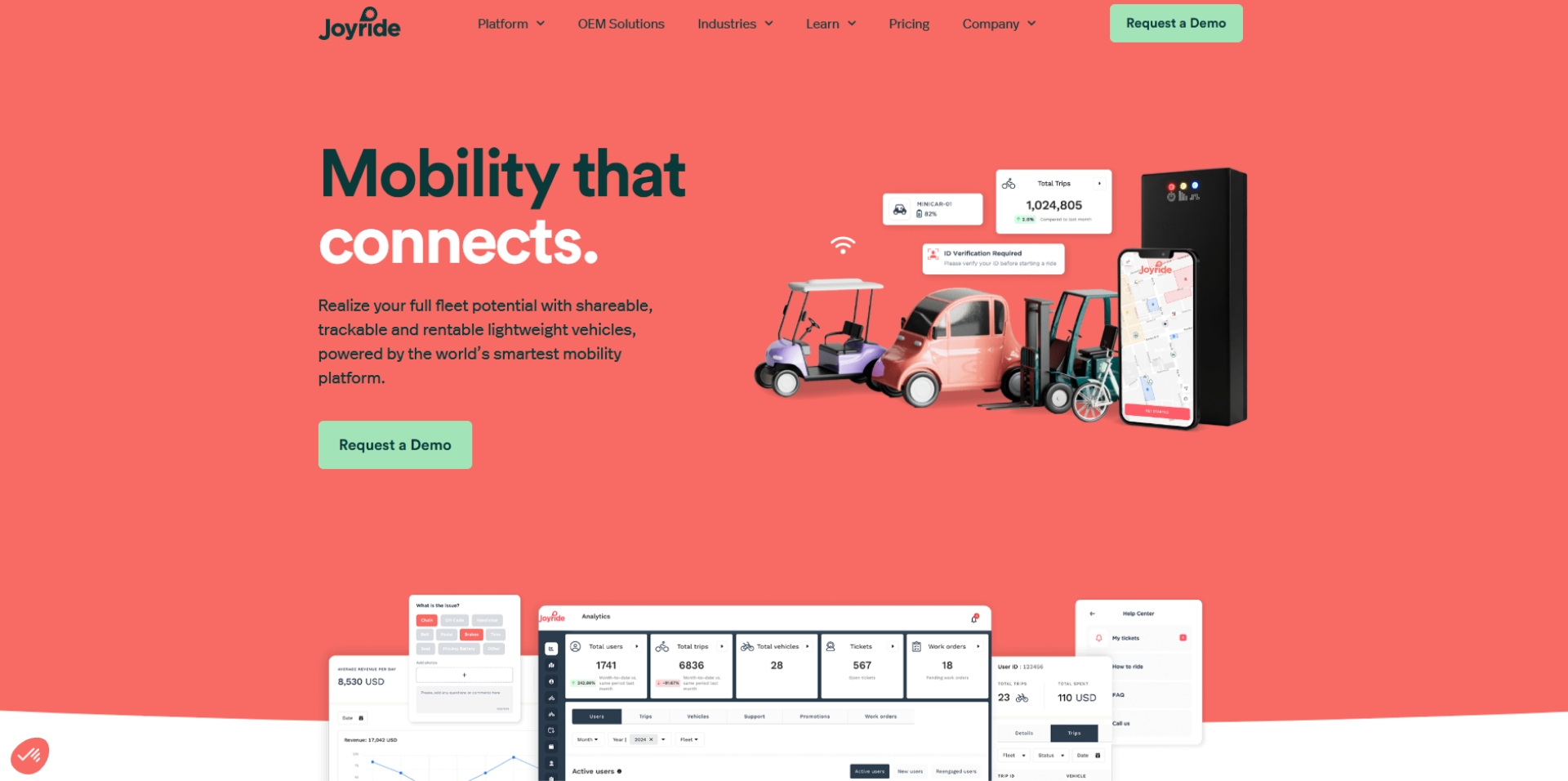
Best for: Established operators seeking deep customization and city integration
Joyride has powered thousands of electric vehicles across 250+ markets since 2014. They position themselves as a complete fleet management platform with strong city compliance tools and extensive customization capabilities.
Key Features:
- Native MDS and GBFS support for city compliance
- API-first architecture for custom integrations
- White-label user apps with gamification and loyalty programs
- Backend analytics dashboards with operational automation
- IoT integrations across multiple providers
- Predictable monthly pricing without hidden transaction fees
- Alliance program with bulk discounts on insurance and operational costs
Strengths:
Excellent city compliance tools make permit approvals easier. Deep customization allows you to build unique features that differentiate your service. Technical teams can extend functionality through robust APIs.
Ideal Use Case: Operators with technical teams building differentiated experiences. Multi-city deployments in which city data integrations provide a competitive advantage.
4. Wunder Mobility
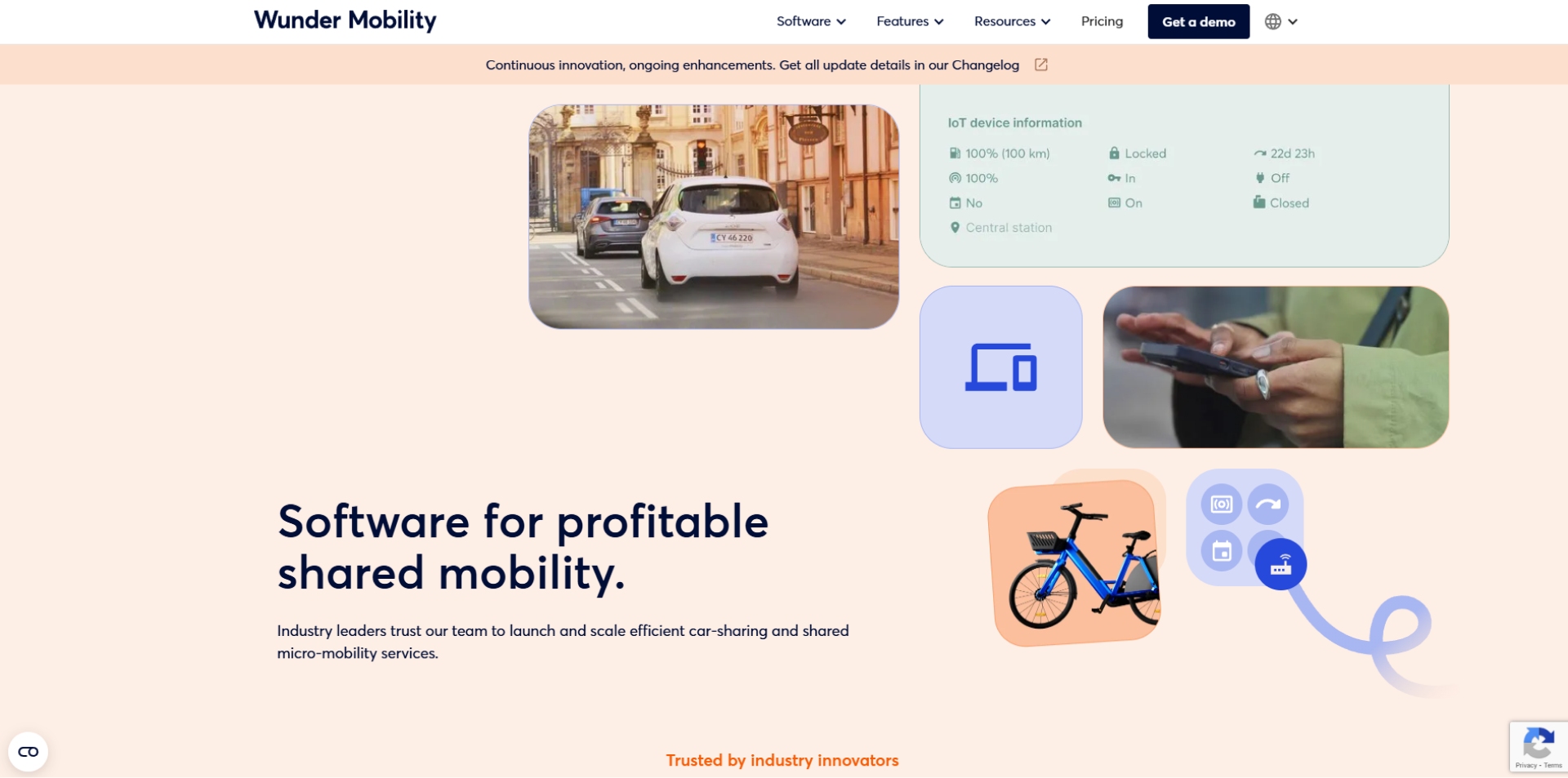
Best for: Large fleets requiring robust enterprise features
Wunder Mobility is a highly customizable SaaS platform for mobility operators worldwide. Founded in 2013 and headquartered in Hamburg, Germany, they support operations in over 200 cities across five continents.
Key Features:
- Enterprise-grade reliability and uptime
- Complex operational scenario support: corporate fleets, multi-city, franchise models
- API-first architecture for deep customization
- Vehicle support: cars, scooters, bikes, mopeds
- Manufacturer partnerships with Yadea, Okai, and Segway for sharing-ready vehicles
- Comprehensive analytics and reporting tools
Strengths:
Proven stability with enterprise-grade reliability. Seven operators migrated to their platform in 14 months, processing over 7.5 million datasets during transitions. Handles complex scenarios, such as corporate fleet management and franchise models, within a single system.
Ideal Use Case: Large operators managing 500+ vehicles across multiple cities. Corporate fleet programs. Operators expanding internationally need a single platform across regions.
5. Movatic
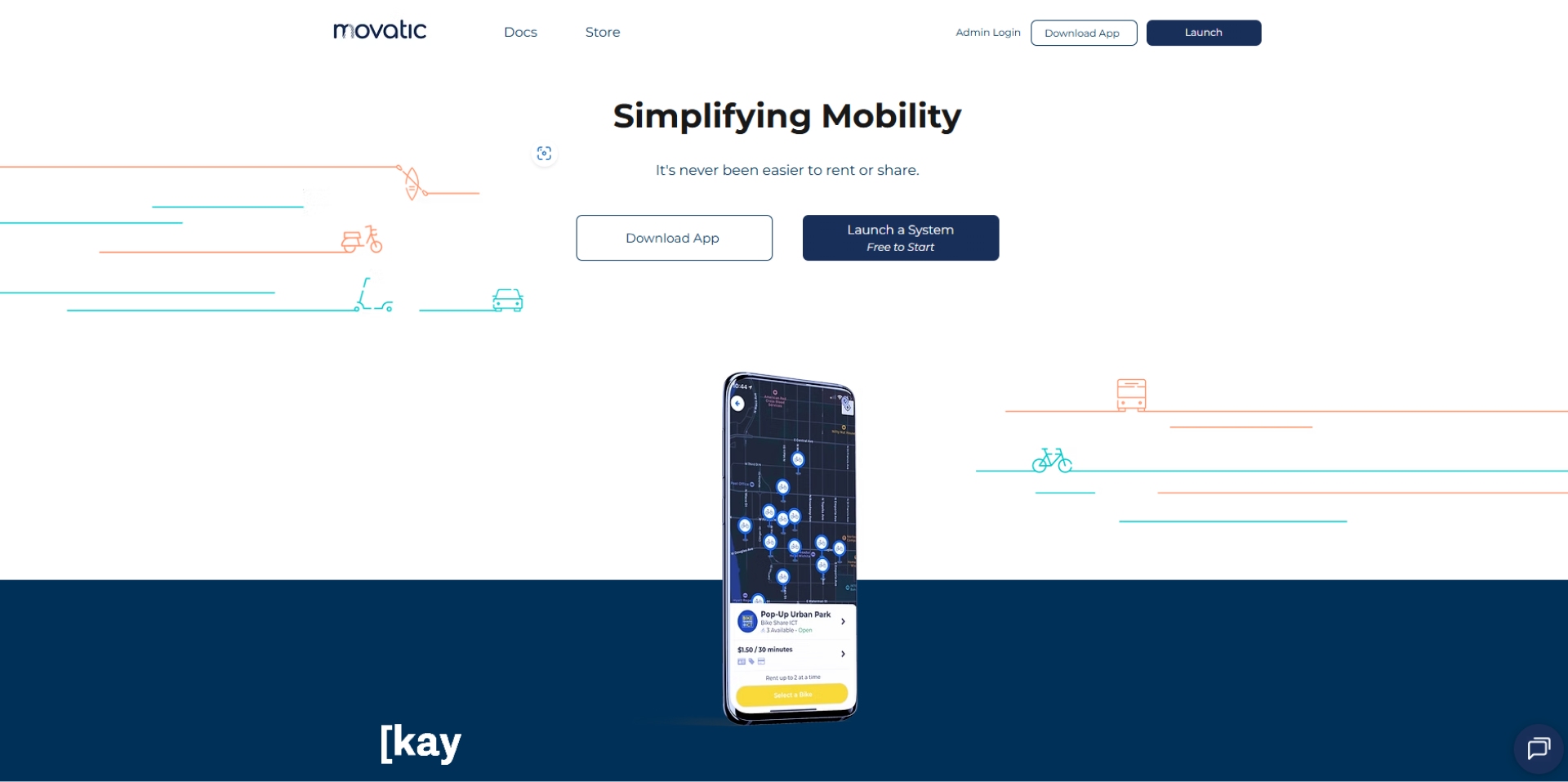
Best for: Community-focused programs and campus mobility solutions
Movatic powers shared micromobility at over 2,000 locations worldwide, with particular strength in smaller community deployments and campus-based systems.
Key Features:
- Streamlined rider experience: download, profile setup, QR code scan
- Diverse use case support: bike lockers, kayak rentals, equipment sharing
- Network effect: single account works across all Movatic-powered systems
- Extensive pricing customization and mixed rate models
- Integrated customer support tools
- Focus on Bluetooth lock technology
Strengths:
Simplicity and accessibility for occasional users and visitors. Network effect means riders registered on one system work seamlessly across all Movatic deployments. Flexibility across rental types makes them popular with parks, recreation departments, and resorts.
Ideal Use Case: Campus mobility programs. Parks and recreation departments. Resort and tourism operators. Community-based systems serving 50-200 vehicles, prioritizing rider simplicity.
6. Koloni
Best for: Local communities seeking turnkey bike-share solutions
Koloni provides integrated software and hardware specifically designed for local communities to own and operate bike-share or innovative parking programs.
Key Features:
- Turnkey solutions, including both software and hardware
- Transport metrics reporting and system performance management
- Innovative parking capabilities: bike parking, lockers, secure storage
- Station-based system focus
- Simplified procurement with an integrated vendor approach
Strengths:
An integrated software-and-hardware approach simplifies community deployments. Strong reporting makes systems manageable for non-technical municipal staff. Smart parking extends beyond traditional sharing to support growing e-bike adoption.
Ideal Use Case: Small municipalities launching first bike-share programs. Universities need both bike-share and secure parking. Communities prioritizing simple, integrated solutions over customization.
Also Read: Essential E Scooter App Features Every Rental Operator Needs in 2025
Making Your Final Decision
Once you’ve clarified your requirements, the next step is narrowing the field. Instead of evaluating every platform available, focus on a small set of options that realistically fit your operation and allow you to move forward without delay.
- Shortlist 2–3 platforms that match your fleet size, budget, and growth plans to avoid analysis paralysis.
- Prioritize platforms that fit your needs out of the box, not those that require heavy customization.
- Ask for targeted demos based on your fleet size, vehicle types, operating model, and launch location. Generic demos rarely show real-world fit.
- Speak with reference customers running similar fleets in similar markets. Ask about launch speed, support quality, hidden costs, and whether they’d choose the platform again.
- Test the operator experience. Spend 30 minutes using the operator app and admin dashboard for everyday tasks like adding vehicles, setting pricing, reviewing analytics, and managing geofences.
- Confirm support coverage, hours, response times, and escalation paths, primarily if you operate in the U.S.
- Set a clear decision deadline. No platform is perfect, and prolonged evaluation only delays revenue.
The ScootAPI Alternative That Gets You to Market Fastest
The micromobility opportunity in the U.S. market continues growing, but timing matters. The right platform accelerates your path to profitability while the wrong one creates months of frustration and technical debt.
After the ScootAPI acquisition, U.S. operators need platforms explicitly built for American market requirements, not European solutions adapted for occasional U.S. deployments. EazyRide delivers what U.S. operators actually need: rapid deployment, complete functionality, flexible pricing, multi-vehicle support, and responsive U.S.-based support that operates during your business day.
Your branded apps, admin dashboard, and operator tools deploy in 2 weeks, not 2 months. You don’t compromise features for speed, geofencing, real-time analytics, flexible pricing models, and comprehensive fleet management, all of which work out of the box. Scale from 50 vehicles to 500 without platform limitations.
If speed, flexibility, and U.S. market fit matter, the platform choice is clear. Get started with EazyRide and deploy your branded micromobility apps, admin dashboard, and operator tools without delays or heavy customization.
Also Read: The Ultimate Guide to E-Scooter App Development
Frequently Asked Questions
1. What happened to ScootAPI, and why do operators need alternatives?
ATOM Mobility acquired ScootAPI, consolidating two major mobility software providers. The acquisition created uncertainty for operators regarding roadmap direction, support structure, and pricing. Many operators are evaluating alternatives to ensure their platform choice aligns with long-term business needs and provides stable U.S. market support.
2. How long does it typically take to launch with a ScootAPI alternative platform?
Launch timelines range from 2 weeks to 8 weeks, depending on platform complexity. Platforms like EazyRide deliver 2-week deployments with white-label apps and complete integration included. More complex enterprise platforms may require 4-8 weeks for setup and configuration.
3. What’s the typical cost range for micromobility platform software?
Small operators with 25-100 vehicles typically pay $500-2,000 monthly. Mid-sized operators managing 100-500 cars pay $2,000-$8,000 monthly. Enterprise operators with 500+ vehicles often negotiate custom annual contracts starting in the low five figures. Always calculate the total cost of ownership, including setup fees and integration work, not just monthly subscriptions.
4. Can I switch platforms if my current solution isn’t working?
Yes, operators successfully migrate between platforms with proper planning. Most modern platforms offer migration support to import user data, vehicle inventory, and historical ride information. Expect 2-4 weeks for data migration and testing. Choose carefully to avoid repeated migrations; each switch creates operational disruption and costs.
5. What’s the most critical feature to prioritize when choosing a platform?
Your priority depends on your operational stage. New operators should prioritize rapid deployment, ease of use, and reliable support. Growing operators need robust analytics, multi-vehicle support, and operational efficiency tools. Enterprise operators require deep customization and dedicated account management.


