
 AllMicro Mobility Model

 23 June, 2025
 The Ultimate Guide to E-Scooter App Development
In 2024, shared micromobility in North America logged over 225 million trips, with e‑scooters accounting for about 38% of those journeys. Quite a good response, right?
If you’re planning to launch an e-scooter rental service, one reality becomes clear very quickly: your app will determine your business’s success far more than your scooters will. Operators who enter the market thinking fleets are the main investment often learn the hard way that it’s the technology layer that matters.
Your app needs to track vehicle locations to the meter, process payments instantly, trigger geofence rules, and synchronize with IoT hardware that lives inside each scooter.
A weak app leads to:
- inaccurate locations
- billing errors
- low fleet availability
- frustrated riders
- lost revenue
This guide breaks down everything you need to know before investing in e scooter app development, so you can build a platform that scales and supports reliable, profitable operations.
Key Takeaways:
- Build for Scale: Start with core features, but ensure your app can grow with more users and cities.
- Optimize Fleet: Use real-time data to maximize scooter usage and increase revenue by 20–30%.
- Focus on UX: Easy onboarding, intuitive navigation, and easy payment options are key to keeping users engaged and reducing churn.
- Quick ROI: Expect break-even within 6-12 months through higher revenue and lower costs.
- Partner Smartly: Work with an expert developer to speed up launch and ensure scalability.
Key Features to Implement in a Reliable E-Scooter App
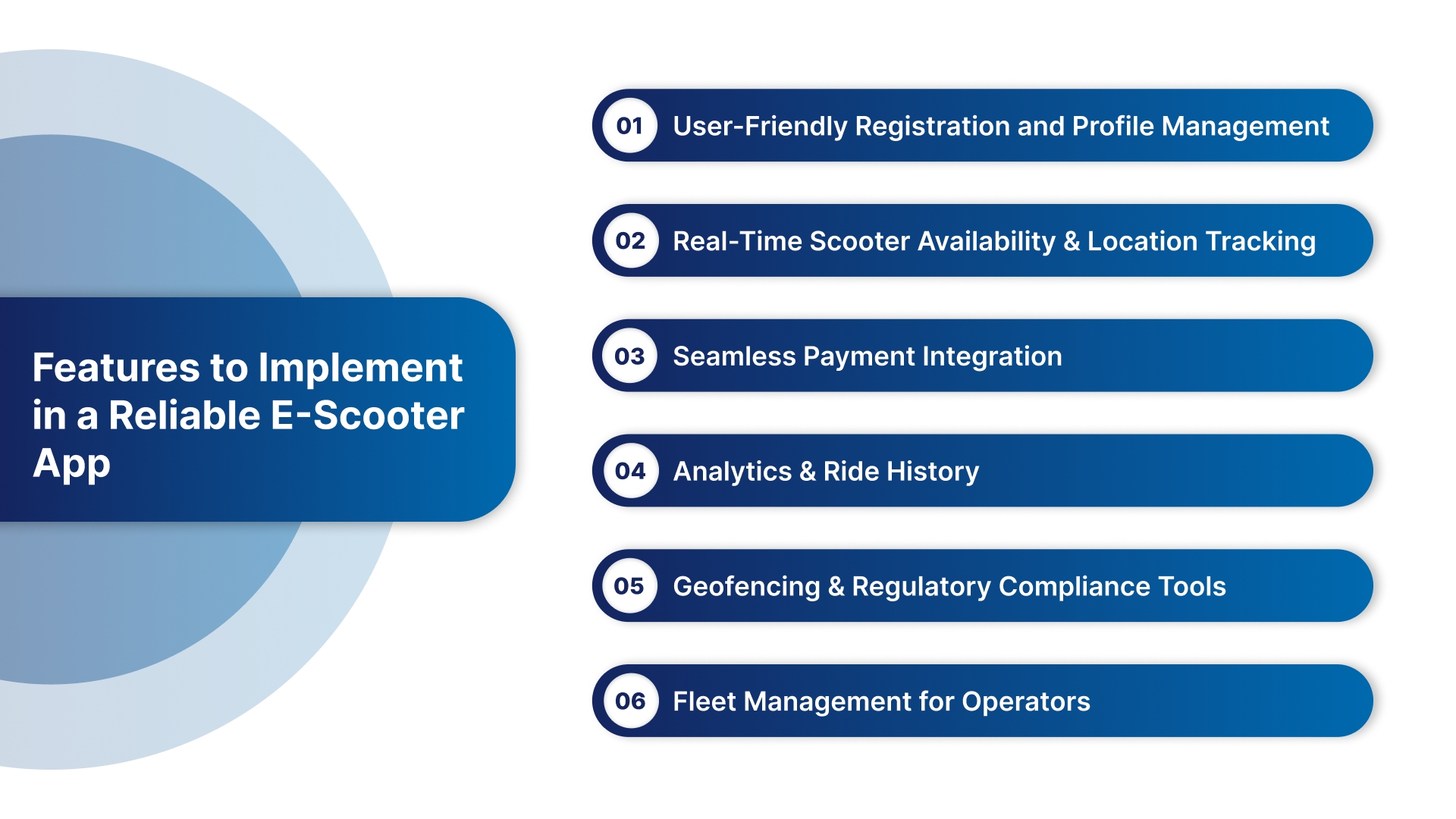
Building an e-scooter app isn’t just about making it functional; it’s about creating an experience that benefits both the user and the operator. To achieve this, your app needs to include a suite of features that go beyond just scooter rentals.
Here are the must-have features that will ensure your app stands out:
1. User-Friendly Registration and Profile Management
The first impression counts. A simple sign-up process and easy-to-manage profiles ensure that customers can quickly start using your service. If users face friction when signing up or managing their profiles, they’re more likely to abandon the app.
2. Real-Time Scooter Availability and Location Tracking
Real-time tracking is essential for both users and operators. Users need to locate available scooters easily, and operators must have complete visibility into fleet locations for efficient management.
3. Seamless Payment Integration
A structured, secure payment system is crucial for user retention. Offering multiple payment options, including wallets, credit cards, and even subscription models, makes it easier for users to access your service and uplift conversion rates.
4. Analytics & Ride History
Understanding how users interact with your app and their ride preferences is crucial for future business decisions. Providing detailed ride history helps users track their journeys, while operators gain valuable insights into user behavior and fleet utilization.
5. Geofencing & Regulatory Compliance Tools
Compliance with local laws and regulations is vital for any e-scooter business. Geofencing lets you define operational zones, restrict scooter access to restricted areas, and ensure safe, legal use.
6. Fleet Management for Operators
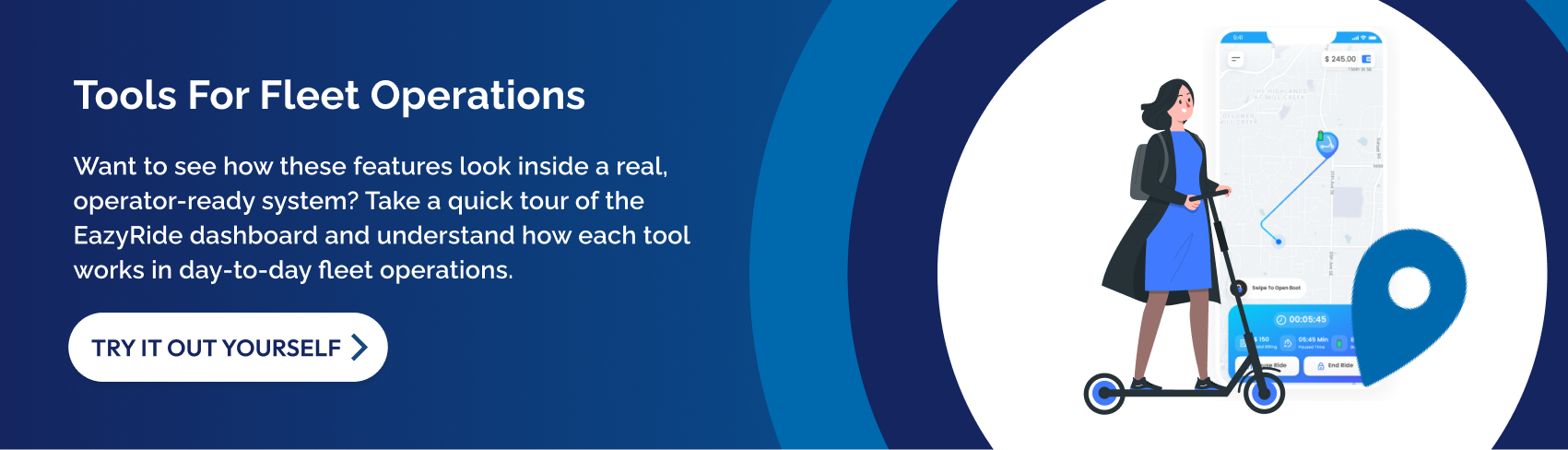
To scale, you need efficient fleet management tools. An admin dashboard with real-time updates on scooter usage, maintenance schedules, and battery status is essential for ensuring operational efficiency.
Well, great features are not enough. Let’s explore how partnering helps bring a vision to life.
Why Partner with an E‑Scooter App Development Company?
Building a high‑quality e‑scooter app in‑house sounds viable. Still, the scale, complexity, and speed required for success make partnering with an experienced development firm a more brilliant move.
Don’t take the words, take these figures for instance:
- Outsourcing app development can reduce launch time by 30–40% thanks to pre‑built frameworks and experienced teams. Speed is critical; delaying your app means delayed revenue and market share loss.
- Outsourcing can save up to 60% on development costs compared to building a full in-house team. Plus, a specialist brings sector‑specific knowledge like real‑time tracking, geofencing, fleet analytics – things generic developers might overlook.
- A professional development partner builds your app architecture with growth in mind – a vision of thousands of users, expanding fleets, and new locations.
When every day of delay or every missed feature can cost you customers, this kind of partnership transforms development from a risk into a business asset.
With those advantages in mind, let’s move on to the next step: how to choose the right e‑scooter app developer for your business.
How to Choose the Right E-Scooter App Developer?
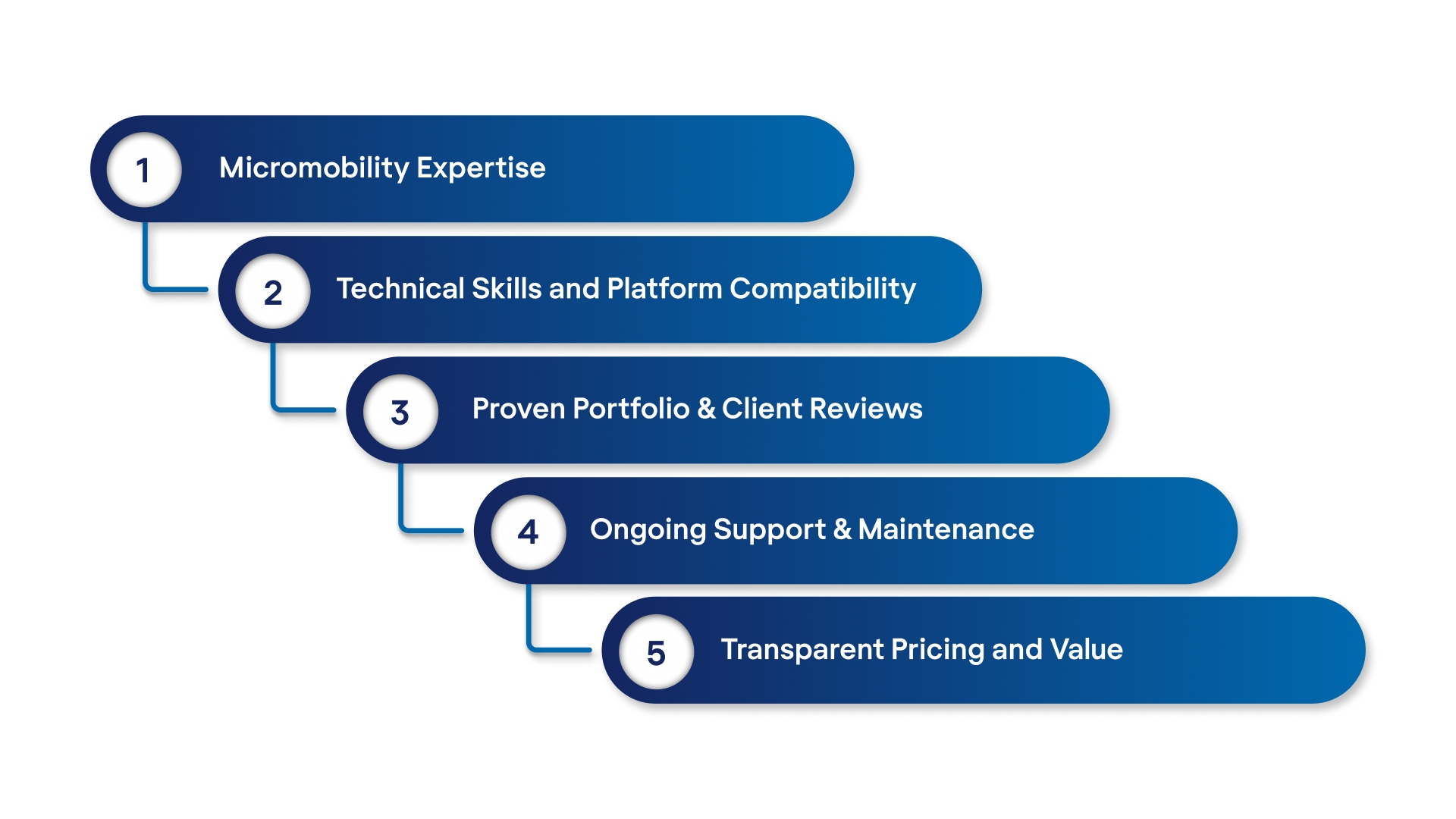
Choosing the right e-scooter app developer is critical for building an app that scales and meets market demands. Here’s how to pick a partner who will bring both expertise and efficiency to your project.
1. Micromobility Expertise
E-scooter apps require specialized knowledge in areas like real-time tracking and fleet management. A developer with industry experience can avoid common pitfalls and optimize app performance.
- What to look for: Previous work on micromobility or shared mobility platforms. Proven experience with GPS, payment systems, and real-time data.
2. Technical Skills and Platform Compatibility
Your app must work seamlessly across iOS and Android, support real-time capabilities, and enable secure transactions. Choose a developer familiar with native and cross-platform development.
- What to look for: Expertise in native (Swift/Java) and cross-platform frameworks (Flutter, React Native), depending on your goals.
3. Proven Portfolio & Client Reviews
A strong portfolio demonstrates a developer’s ability to design and deliver successful apps. Real-world reviews give insight into their reliability and expertise.
- What to look for: Previous projects in micromobility, case studies, and client feedback.
4. Ongoing Support & Maintenance
An e-scooter app isn’t static. Post-launch updates and maintenance typically require an annual investment of 15%–20% of your initial development cost, which covers regulatory changes, bug fixes, and new features.
- What to look for: Developers offering post-launch support, regular updates, and bug fixes.
5. Transparent Pricing and Value
Building an MVP (Minimum Viable Product) app may cost $20,000 – $60,000 for basic features. For medium-complexity or multi-platform apps, expect a budget of $60,000 – $140,000; for advanced, Lime-like solutions with full admin and fleet tools, costs can run $140,000 – $250,000 or more.
- What to look for: A clear breakdown of costs for design, development, testing, and support. Don’t compromise quality for a lower price.
All in all, focus on industry experience, technical expertise, and ongoing support to set your app up for long-term success.
With the right developer on board, it’s time to get into the structured e-scooter app development process.
E-Scooter App Development Process: From Idea to Launch
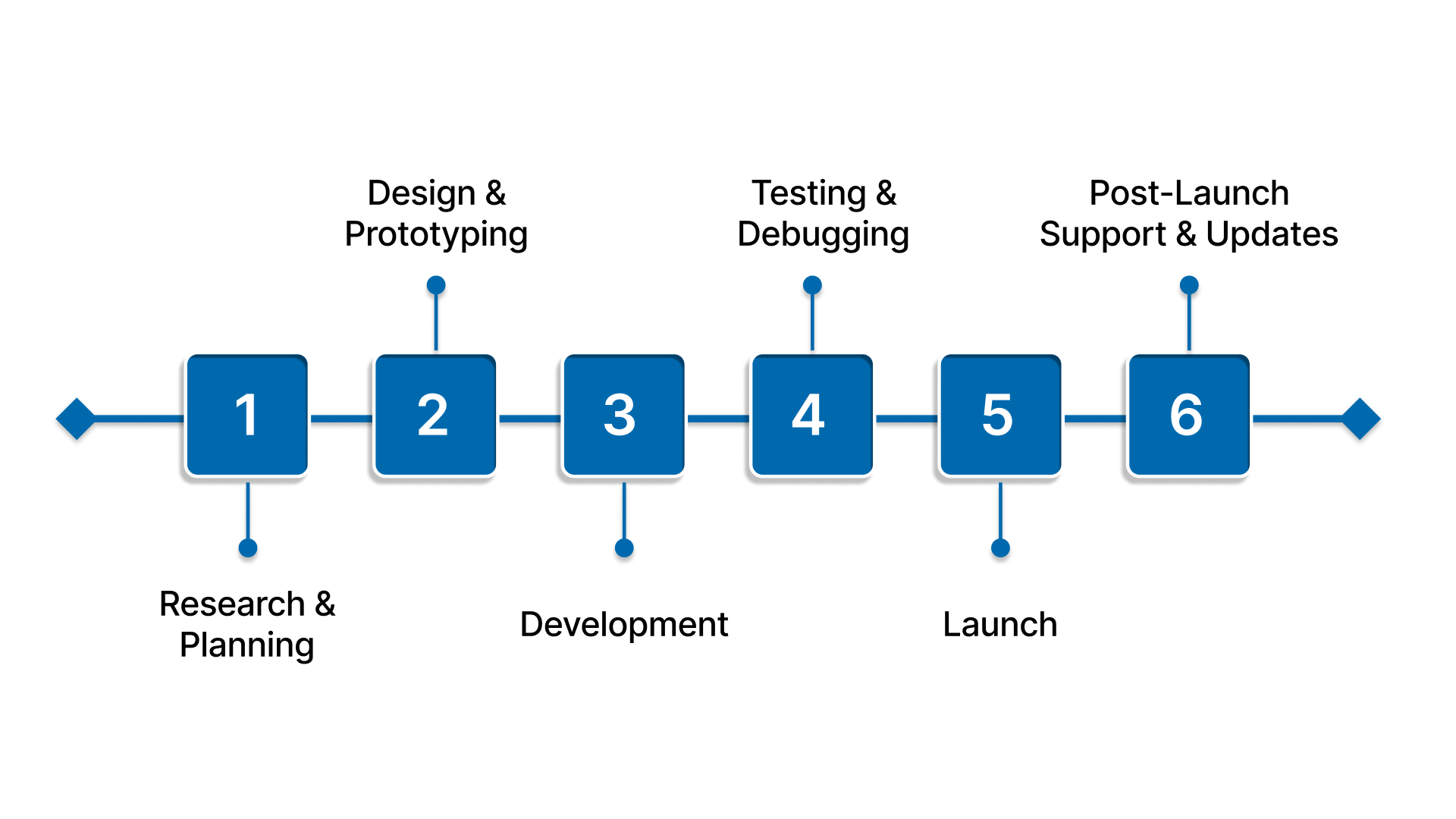
The journey from idea to launching a fully functional e-scooter app is complex and requires attention to detail at every step. The key is understanding not only the technical requirements but also how each phase impacts your business operations, customer experience, and scalability.
Let’s take an in-depth look at each stage of the process.
Step 1. Research & Planning
The foundation of any successful e-scooter app lies in understanding market needs and setting clear business objectives. This initial phase helps define the core features, functionality, and technology stack required to meet market demands and customer expectations.
- Market Research: Begin by conducting thorough research on your target market, competitors, and customer pain points. Is there a specific region or user demographic that requires a particular feature?
Understand trends like urban mobility, sustainability, and on-demand services.
- Defining App Requirements: Identify the core features for your app, such as:
-
- Real-time scooter tracking
-
- User authentication and payment systems
-
- Fleet management for operators
-
- Geofencing and dynamic pricing models
The business value here is that you’ll prioritize features that drive customer engagement and operational efficiency, which are key to success in such a competitive space.
Work with your developers to define the technology stack that supports real-time features. Standard stacks for e-scooter apps include Node.js for backend, React Native for cross-platform development, and Google Maps API for real-time location services.
Step 2. Design & Prototyping
An intuitive, easy-to-use interface ensures higher adoption rates and reduced friction in customer experience. At this stage, you’ll translate the user journey into wireframes, UI designs, and eventually interactive prototypes.
How to start with it?
- User Journey Mapping: Map the steps a user takes when interacting with the app – from sign-up to finding a scooter and completing the ride. The smoother the journey, the better the user experience.
- UI/UX Design: Design should focus on:
-
- Minimalist, easy-to-navigate interfaces
-
- Clear action buttons for unlocking, locating, and paying for rides
-
- Integration of maps and live tracking that doesn’t overwhelm the user interface
- Tech Aspect: Tools like Figma, Adobe XD, and Sketch are widely used for prototyping, while Axure can create interactive wireframes. The goal is to create a mobile-first design optimized for both iOS and Android.
- Non-Tech Aspect: Users care about how fast they can get going. A streamlined, easy-to-understand design reduces barriers to entry.
Step 3. Development
The development phase is the most technical, where you build the core infrastructure of your app. This phase must focus on scalability and robustness, as this directly impacts your ability to manage a growing user base and fleet.
Backend Development:
- Real-time Data Handling: The backend must support real-time data like scooter availability, location tracking, and ride history.
- Scalability: Your backend must be designed to scale as your fleet and customer base grow. Technologies like AWS or Google Cloud provide the elasticity needed to handle surges in demand, especially during peak hours.
For fleet management, integrate tools such as Firebase for real-time data syncing and Kafka or RabbitMQ for message queuing, ensuring smooth communication between users and the system.
Frontend Development:
- Develop a mobile app (iOS and Android) using native or cross-platform frameworks (e.g., React Native, Flutter).
- Ensure features such as geolocation services are seamlessly integrated to display scooter availability.
- Integrate secure, user-friendly payment solutions (e.g., Stripe, PayPal) to enable quick, hassle-free transactions.
Scalable backend solutions reduce operational costs by enabling better resource allocation and system optimization as their user base grows.
Step 4. Testing & Debugging
Testing ensures your app is bug-free and fully optimized. It’s not just about testing functionality; the app must deliver a flawless user experience in real-world conditions.
- Manual Testing: Simulate real user behavior to identify issues such as location inaccuracies, crashes, or slow response times.
- Automated Testing: Use tools like Selenium or JUnit to test app functionality, speed, and performance.
- Load Testing: Ensure the app can handle peak usage periods, such as during rush hour or special events.
Load testing tools like Apache JMeter and Gatling simulate multiple user interactions to stress-test your app and help anticipate potential bottlenecks.
Step 5. Launch
A successful launch sets the tone for user adoption and engagement. Timing, marketing, and post-launch support are crucial during this phase.
Here’s how to do it:
- Prepare marketing campaigns that leverage social media, partnerships, and local influencers to attract users.
- App Store Optimization: Focus on app store listing elements like title, description, keywords, and high-quality screenshots to improve visibility.
- Server Scaling: Ensure your servers can handle the expected traffic post-launch, especially if you anticipate high demand.
Successful launches are directly tied to early user reviews. Early positive reviews can help retain users in the long term.
Step 6. Post-Launch Support & Updates
Post-launch support is critical for app longevity. Regular updates and continuous monitoring ensure the app adapts to user feedback and market changes.
What to do?
- Collect and analyze user feedback to identify pain points and areas for improvement.
- Release regular bug fixes, security updates, and new features to address evolving customer needs.
- Use Google Analytics or Firebase Analytics to track app performance, user behavior, and identify areas for improvement.
Each stage has a direct impact on your app’s ability to attract users, scale effectively, and generate consistent revenue. By following these steps and focusing on quality, scalability, and user experience, you’re setting up your e-scooter business for long-term success.
Now, it’s time to understand the costs involved in building your e-scooter app, so you can plan your budget and allocate resources effectively.
What Costs to Expect from E-Scooter App Development?
Developing an e-scooter app requires a thoughtful approach to both budgeting and long-term investment. The costs can vary based on several factors, including app complexity and your development team’s location.
Here’s a breakdown to help you plan effectively:
| Cost Category | Cost Range | Notes |
|---|---|---|
| Initial Development (Basic App) | $20,000 – $60,000 | Basic features such as registration, payment integration, and real-time tracking. |
| Initial Development (Advanced App) | $140,000 – $250,000 | Advanced features such as fleet management, analytics, and geofencing. |
| Development Hourly Rate (Western Countries) | $100 – $250/hour | Common for top-tier developers in North America and Western Europe. |
| Development Hourly Rate (Eastern Countries) | $25 – $75/hour | Typically offered by developers in India, Eastern Europe, or Southeast Asia. |
| Ongoing Maintenance | $1,000 – $5,000/month | Includes bug fixes, security patches, and app updates. |
| Cloud Hosting & Storage | $500 – $3,000/month | Necessary for large-scale data storage and user management. |
| App Store Fees (Apple & Google Play) | 30% of in-app revenue | Apple & Google charge a 30% commission on in-app transactions. |
| Marketing & Advertising | $1,000 – $10,000/month | Required for marketing campaigns, ads, and social media promotions. |
The initial investment for developing a high-quality e-scooter app is substantial, but it’s a critical step in scaling your business.
By understanding the total costs, you can better plan your budget, set realistic expectations, and ensure that your app delivers value to both users and the business.
With a clearer picture of the costs involved, let’s look at how your investment can pay off in the long run.
The ROI of E-Scooter App Development
Investing in an e-scooter app brings clear long-term ROI. A McKinsey report titled “Shared mobility: Sustainable cities, shared destinies” states that shared mobility revenues could reach up to $1 trillion in consumer spending by 2030.
This reflects the growing demand for micromobility solutions. The right app enhances fleet utilization and operational efficiency, contributing directly to higher revenue per scooter.
- For instance, A cost‐estimate article for an e‑scooter app “like Lime” quotes a development cost range of $63,500‑$85,500 for specific app builds
- While the initial investment for app development may be high, businesses with scalable app architectures experience faster market penetration and expansion into new cities, thanks to their app’s ability to grow with demand.
Thus, with an estimated ROI period of 6–12 months, e-scooter apps can deliver measurable returns through enhanced user engagement, scalable growth, and reduced operational costs—making them a strategic long-term investment.
For example, if your total app build plus first-year maintenance comes to around $80,000, and your platform boosts revenue and operational savings by $8,000–$12,000 per month, you’d reach payback in roughly 8–10 months.
How EazyRide Can Help You Develop Your E-Scooter App?
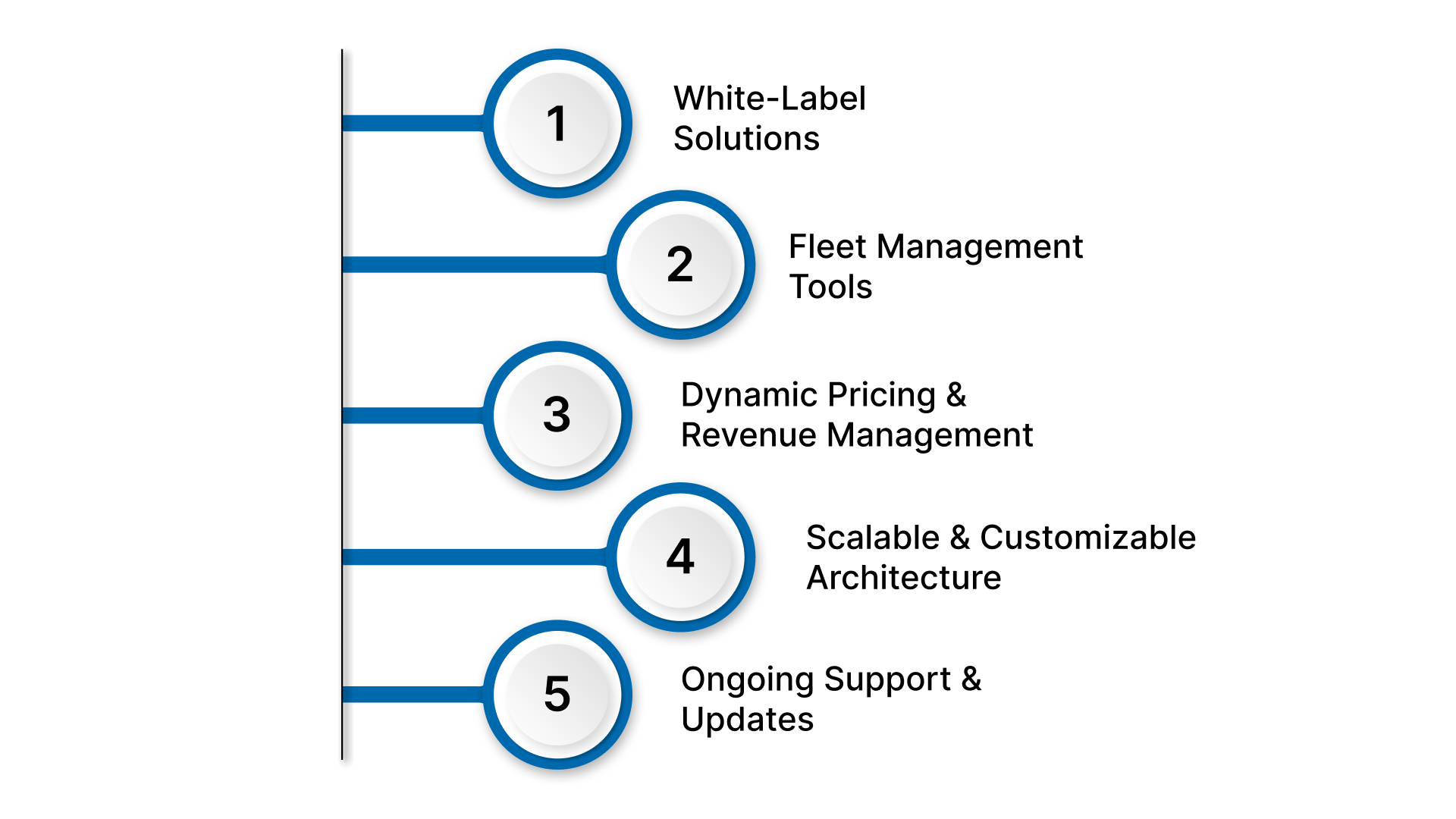
Developing an e-scooter app is a complex process that requires both technical expertise and industry knowledge. EazyRide offers a comprehensive solution for businesses looking to create a seamless, feature-rich e-scooter app that not only meets user expectations but also maximizes operational efficiency.
- White-Label Solutions: Fully customize the app to fit your brand’s unique identity. From logos to colors and user interface design, your app will reflect your company’s vision, providing a professional and consistent user experience.
- Fleet Management Tools: Full visibility into scooter location, battery life, and maintenance schedules. These insights help you make data-driven decisions to improve fleet utilization and ensure that your scooters are always available for users.
- Dynamic Pricing & Revenue Management: Adjust prices based on demand, time of day, and location. Whether it’s a busy weekend or a quiet weekday, you can optimize pricing to maximize revenue without compromising customer satisfaction.
- Scalable & Customizable Architecture: Handle large user volumes, more scooters, and evolving business needs. Adding new features, expanding service areas, or increasing your fleet size is simple and cost-effective.
- Ongoing Support & Updates: Offers continuous support and regular updates, ensuring your app is always running at peak performance and adapting to market trends.
Partnering with EazyRide for your e-scooter app development means you’re not just getting a software solution; you’re gaining a trusted partner committed to your long-term success.
Conclusion
Building an e-scooter app is all about creating a scalable experience that delivers value to both your customers and your business. The right app will not only manage your fleet but will also optimize revenue, improve user retention, and provide the data-driven insights needed to scale effectively.
EazyRide will transform your e-scooter rental business from concept to success. The platform ensures that your app is built for the future, ready to grow with your needs and stay competitive in an ever-changing market.
Ready to start? Contact us for a free demo of our e-scooter app platform and explore how we can help you build and scale your app with ease.
FAQs
1. What are the must‑have features of an e‑scooter rental app?
A strong app requires real‑time scooter tracking, secure payment integration, geofencing for ride zones and speeds, and a maintenance dashboard for fleet managers.
2. How much does it cost to develop an e‑scooter sharing app?
Typical development costs for a basic app start around $20,000 – $60,000, while more complex platforms with analytics, IoT integrations, and admin tools can go up to $250,000
3. How long does it take to launch an e‑scooter app?
With an experienced development partner using proven frameworks, a regional pilot app can go live in 8‑12 weeks; full multi‑platform rollouts may take 4- 6+ months, including testing and compliance checks.
4. What key operational advantages does a custom e‑scooter app provide?
A dedicated app increases fleet utilization by accurately positioning scooters in high-demand zones, reduces downtime with maintenance alerts, and enhances user adoption with a smooth UX. This helps businesses scale faster.
5. How do I ensure my app complies with local regulations?
Work with a developer who builds features like geofencing, ride‑zone enforcement, and automated speed/parking rules and pre‑loads modular compliance features for U.S. cities to reduce cancellations and regulatory penalties.


