
 AllMicro Mobility Model

 12 January, 2026
 How to Build a Successful Motorcycle Rental Business with an App
The US motorcycle rental market is expected to reach $192.7 million by 2030, growing at 9.6% growth, giving you room to expand with confidence. You may see this demand rising around you, yet daily issues with bookings and customer requests can slow your progress when you need clarity the most Owners often mention losing time to paperwork, late updates, and missed checks that add avoidable stress across the week. They want smoother days, predictable revenue, and a setup that reduces small errors before they grow into bigger problems. These needs become sharper as fleets expand or locations multiply.
In this blog, we’ll explore market demand, business setup, regulations, fleet selection, software features, pricing models, marketing steps, and growth methods that help rental operators build a business with a stronger structure and fewer daily setbacks.
Key Takeaways:
- Market Demand: Understand key customer segments like tourists, commuters, and subscription riders to tailor your fleet and pricing.
- Legal Setup: Secure the right business structure, licenses, and insurance to stay compliant and avoid disputes.
- Fleet Management: Select motorcycles based on customer needs, ensure maintenance, and track bikes effectively.
- Utilisztion target: rentals per bike per week (or per day in peak season).
- Downtime target: % of fleet “rent-ready” (availability).
- App Benefits: A rental app centralizes bookings, payments, and fleet management for smoother operations and customer interactions.
- Growth Strategies: Use data insights to expand your fleet, plan new locations, and retain customers through targeted marketing.
What “Successful” Looks Like For Motorcycle Rentals
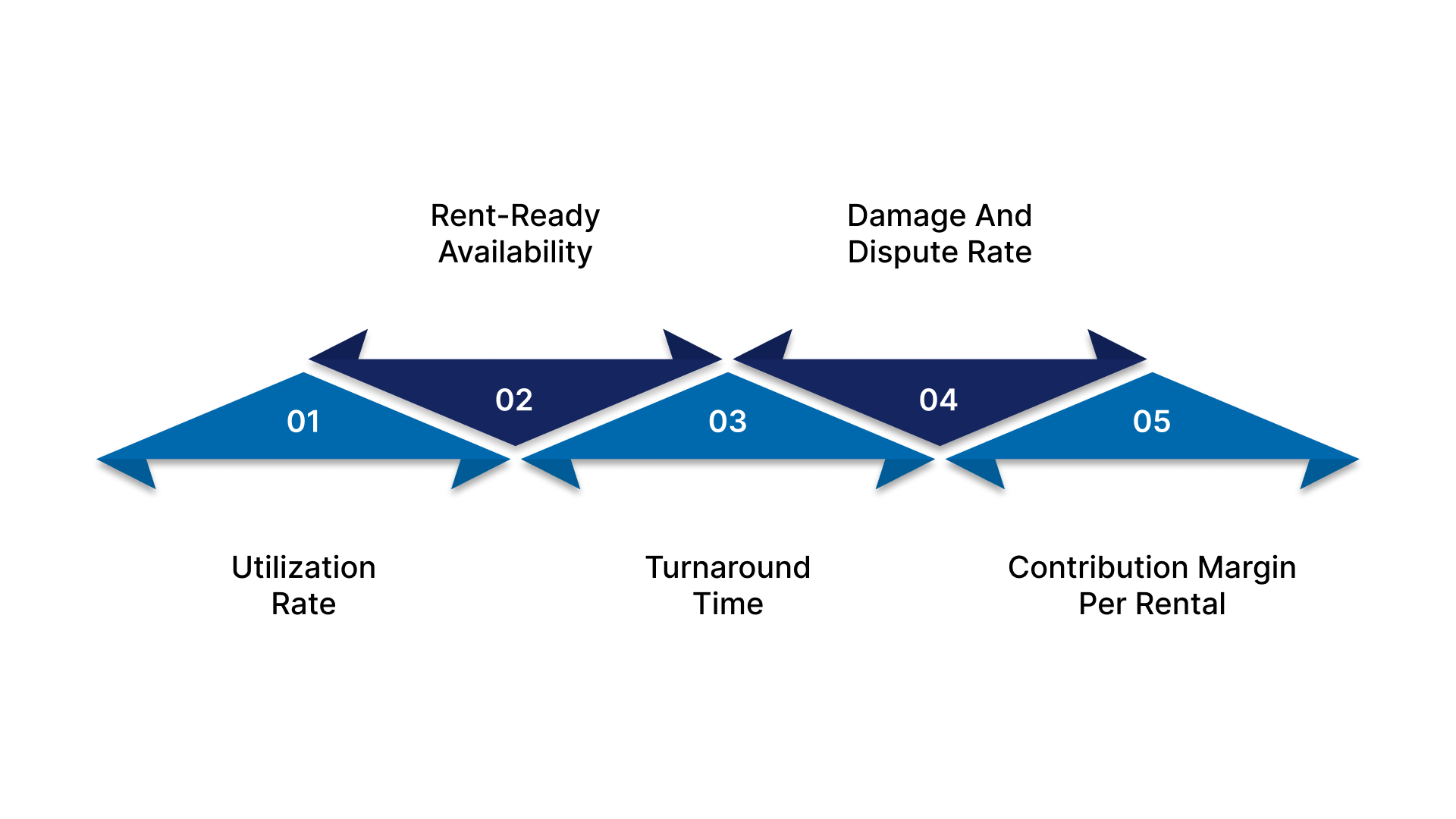
Success in motorcycle rentals is operational. If you can’t measure it, you can’t improve it. Track these metrics from day one:
- Utilization Rate: Rentals per bike per week. Split this into peak and off-peak periods to avoid misreading demand.
- Rent-Ready Availability: The percentage of your fleet that’s actually bookable (not blocked by maintenance, repairs, cleaning, or paperwork).
- Turnaround Time: How quickly a bike moves from “returned” to “available” again. This directly impacts capacity without buying more bikes.
- Damage And Dispute Rate: The percentage of rentals that trigger claims, plus how often claims are resolved cleanly (no chargebacks, no angry customers, no back-and-forth).
- Contribution Margin Per Rental: Revenue minus variable costs (fuel top-ups, cleaning, platform fees, pickup/drop labour, consumables). This keeps growth profitable, so scaling doesn’t scale chaos.
Understanding Local Demand: How to Position Your Motorcycle Rental Service
You need a clear view of who rents motorcycles in your area because each segment shapes your revenue differently. You also benefit from knowing that the US held 29% of global rental revenue in 2024 and is projected to lead again by 2030. This gives you a strong foundation, but you still need practical insights that guide your positioning.
For U.S. operators, the most reliable motorcycle rental segments usually look like this
- Tourists + weekend travellers: highest seasonal spikes, higher appetite for premium models, and strong add-on revenue (gear, routes, delivery).
- Local riders “trying before buying”: shorter rentals, repeat customers, and high sensitivity to trust (bike condition + clear policies).
- Event-based demand: rallies, festivals, race weekends, destination rides. Predictable surges if you plan inventory early.
- Business/production use cases: occasional but high-ticket (photoshoots, brand activations, film work).
Use your research to decide your “home base” positioning:
- If your market is tourism-heavy, build around daily pricing + gear bundles + simple pickup logistics.
- If your market is local-repeat heavy, build around membership/credits + fast turnaround + transparent deposits & damage checks.
Market Research Overview:
You need structured research because strong demand signals help you decide where to place your fleet and how to price your service. You also gain clarity when you understand how seasonality, tourism cycles, and local movement trends affect your bookings.
Use the points below to assess demand accurately in your service area:
-
Local Demand Signals
- Analyze high-traffic routes like tourist nodes, scenic routes, airport/hotel clusters, event calendars, “things to do” pages, and Google Maps queries like “motorcycle rental near me” to identify commuter patterns during peak hours.
- Monitor tourism platforms to gauge visitor activity, aligning with short-term rental interest.
- Track neighborhood growth, as new commercial areas often increase rental demand.
-
Seasonality Patterns
- Compare weather changes to understand how temperature shifts impact ride frequency.
- Keep an eye on local events like festivals, which can drive temporary rental surges.
- Study monthly booking trends to identify shifts in rider habits throughout the year.
-
Tourism and Travel Data
- Review tourism reports to uncover visitor spending patterns in your area.
- Analyze hotel occupancy to predict how tourist surges may impact rental demand.
- Track airport arrivals, as higher inbound travel typically signals greater interest in premium rentals.
Competitor Analysis Overview
You need a clear competitive picture because each operator influences customer expectations in your market. You benefit from comparing their pricing, fleet mix, and user experience before setting your position.
Use the categories below to understand how your service fits into the current market:
| Competitor Type | What to Review | Why It Helps You |
|---|---|---|
| Local Shops | Pricing, fleet mix, customer reviews | Helps you position your fleet with clearer value and stronger reliability. |
| App-Based Providers | Booking flow, app features, rider feedback | Shows you which features riders expect before choosing your service. |
| Sharing Services | Trip zones, rate structure, usage behavior | Helps you identify short-trip patterns influencing fleet placement. |
Now that you have a clearer idea of the market, it’s time to focus on the practical steps to set up your business.
Also Read: How to Start an Electric Bike Rental Business
Essential Steps to Legally Start Your Motorcycle Rental Business
You need a clear legal foundation before you start renting motorcycles because each requirement affects how safely and confidently you operate every day. You also protect yourself from disputes when your paperwork, insurance, and rider checks stay consistent.
Legal & Compliance
Before opening your rental operation, you must comply with legal standards to protect your business and avoid unexpected penalties. You also need clarity on vehicle registration, rental agreements, rider age, license checks, and state insurance minimums.
Here are key items to address:
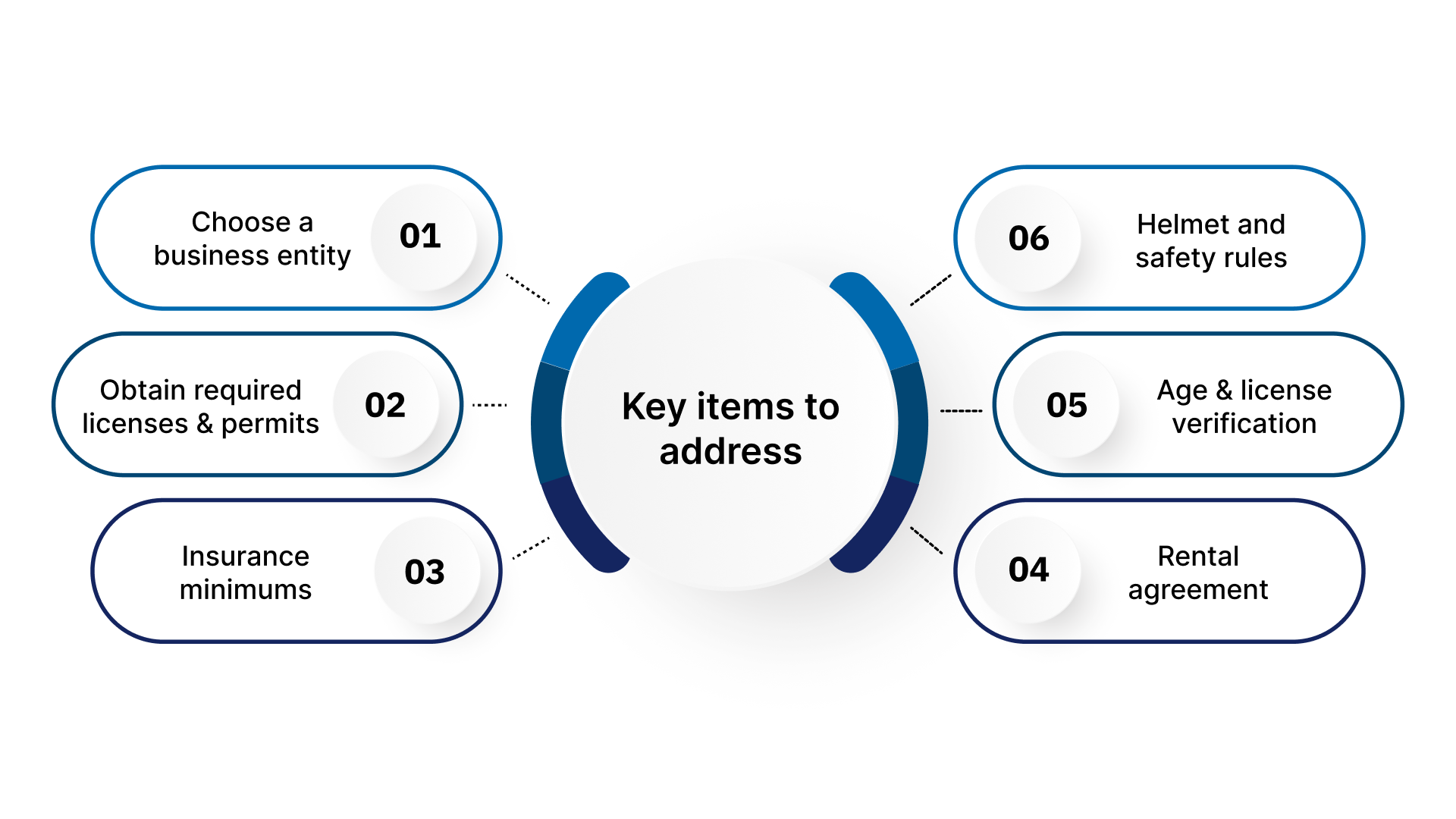
- Choose a business entity: Form an LLC or corporation so you separate your personal assets from business liability.
- Obtain required licenses and permits: Some states require a commercial vehicle rental license or special local permit for motorcycle fleets.
- Insurance minimums: Nearly every U.S. state requires motorcycle liability coverage at least for third-party injury or property damage.
- Rental agreement: Use a contract that clearly identifies the bike, rider eligibility, conditions, and liabilities for every rental.
- Age and license verification: Require renters to show a valid motorcycle endorsement and follow state laws for minimum rental age.
- Helmet and safety rules: Enforce helmet laws and local regulations for motorcycle operation within your rental terms.
Fleet Management
Your fleet forms the core of your operation because each motorcycle represents revenue potential and ongoing cost. You need a clear plan for selecting models, handling maintenance, and tracking each unit across its entire rental life cycle. You also benefit when your fleet choices match the riding habits and needs of your target customers.
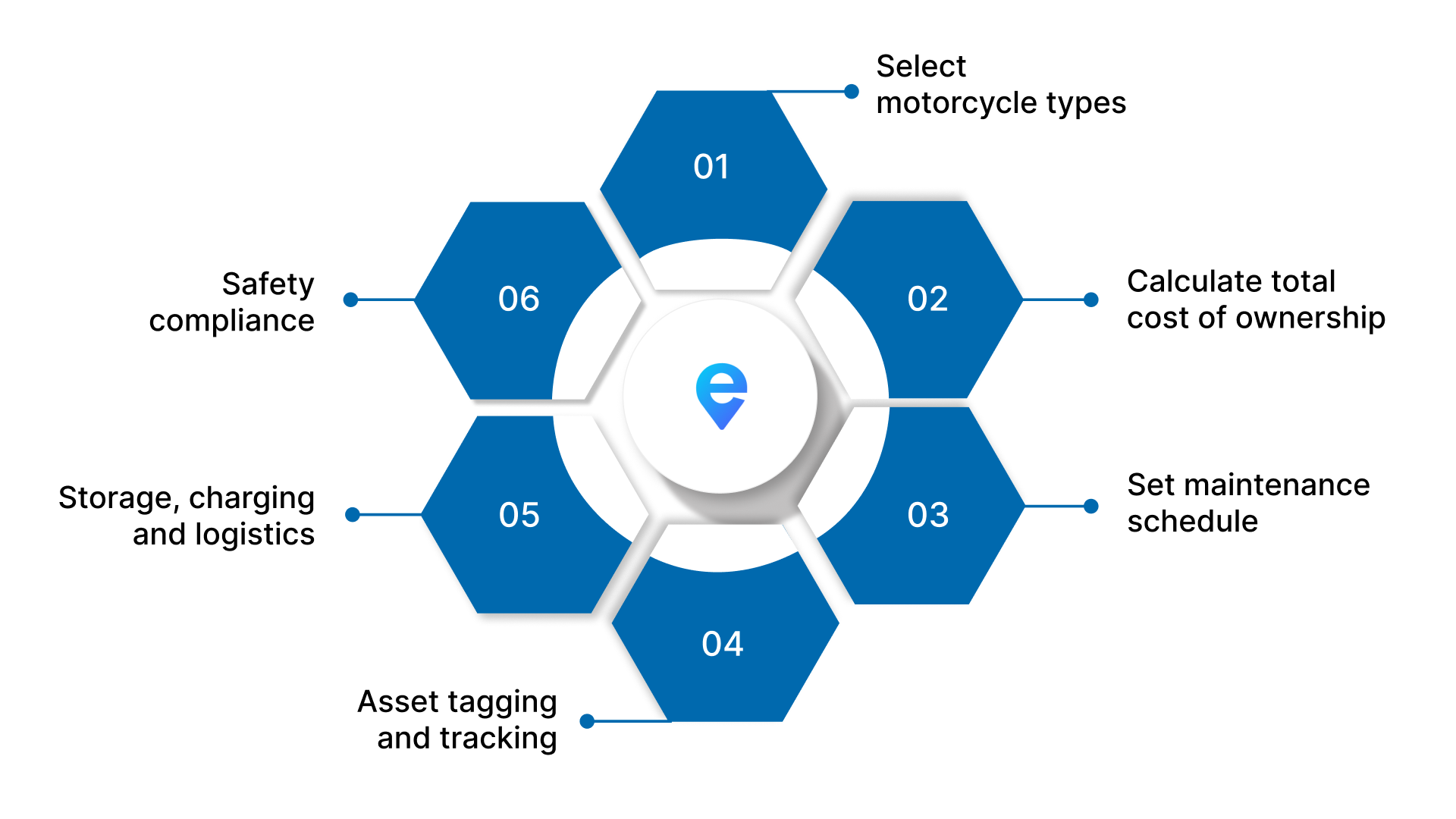
Here are core fleet management actions to take:
- Select motorcycle types: Mix commuter-friendly bikes with premium luxury models to serve different segments and capture higher-margin rentals.
- Calculate total cost of ownership: Estimate purchase price, depreciation, maintenance, insurance, and downtime to understand your operating costs.
- Set maintenance schedule: Create a checklist for inspections, service intervals, and ride history to keep each bike safe and rental-ready.
- Asset tagging and tracking: Assign each bike a unique ID, install GPS if needed, and log condition updates after each rental.
- Storage, charging and logistics: Plan storage capacity and charging points when using electric motorcycles or electric bikes.
- Safety compliance: Maintain detailed inspection and repair records so you can reduce risk and identify recurring issues early.
Now that your business is set up, it’s crucial to think about how technology can help you manage everything more effectively.
Why You Need a Motorcycle Rental App
You need a rental app because manual work slows your progress when bookings rise and customer expectations increase across each season. You gain clearer control over your fleet when your information stays in one place rather than scattered across different tools.
Here are the core reasons why an app supports your daily operation:
- Centralized bookings: Your app collects reservations, rider details, and schedules so you stop juggling multiple channels each day.
- Real-time fleet visibility: You see which motorcycles are active, available, or under maintenance, giving you clearer decision support.
- Faster payments: You process card payments, deposits, and refunds inside a single system that records each financial step accurately.
- Reduced manual errors: You cut repeated data entry and miscommunication because your team views the same information at the same time.
- Better rider experience: Your customers book faster, sign waivers digitally, and receive clear instructions before they arrive for pickup.
- Higher uptime: You catch maintenance needs earlier because the system shows usage patterns and upcoming service intervals clearly.
Now that you know why an app is essential, let’s dive into the features you should look for in a rental app.
Also Read: Top Features for E-Scooter Apps Development
Must-Have Features for Your Motorcycle Rental App
You need features that support your daily workflow because each step of your rental process depends on reliable information and timely actions. You gain clearer operations when your app covers both your internal needs and the expectations of riders who want fast access.
Admin Features
You need admin features that help you manage rentals, view fleet status, and track payments without switching between several tools. You also gain better oversight when your team works inside one system that keeps every operational detail consistent.
Here are key admin features to include:
- Rider identity and license verification: Verify government ID and motorcycle endorsement before confirming any booking. Store verification status so unverified riders cannot access the fleet.
- Rider risk controls and blocking rules: Maintain rider flags, strike counts, and blacklists to prevent repeat offenders or chargeback-prone users from booking again.
- Security deposits and card pre-authorization: Apply refundable deposits or pre-auth holds before pickup, with system rules tied to damage, late returns, or policy violations.
- Inspection and condition tracking: Capture timestamped photos and notes at checkout and return. Each motorcycle maintains a condition history that staff cannot edit retroactively.
- Non-skippable inspection workflow: Prevent rentals from starting or closing unless required inspection steps are completed by staff and acknowledged by riders.
- Damage, incident, and claims management: Record damage reports, accident details, repair estimates, and claim status inside the system, linked to the specific booking.
- Insurance data handling: Store insurer details, policy references, claim numbers, and notes so cases remain organized when escalation occurs.
- Fleet tracking and GPS monitoring: Track live location, last-known position, trip duration, and idle behavior to support recovery and misuse detection.
- Zone and usage alerts: Flag out-of-area usage, abnormal stop durations, or extended trips so staff can act before losses escalate.
- Maintenance and compliance logs: Track service intervals, inspections, recurring issues, and downtime so unsafe or non-compliant motorcycles never appear as available.
- Role-based staff access: Control who can approve bookings, release deposits, mark inspections, or close rentals to reduce internal errors.
- Audit logs and activity history: Maintain a complete record of actions taken by staff and riders, including timestamps and status changes, for dispute resolution.
Customer Features
You need customer features that reduce friction at booking, pickup, and return because riders expect convenience when choosing a rental provider. You also support better communication when important steps appear directly inside the app.
Here are key customer features to include:
- Eligibility-checked booking flow: Prevent bookings unless age, ID, and license requirements are met, reducing last-minute cancellations.
- Clear deposit visibility: Show deposit amounts, hold conditions, and release rules before payment confirmation.
- Digital agreements and waivers: Capture signed rental terms, safety acknowledgments, and local riding rules inside the app for every booking.
- Guided pickup and return steps: Provide clear instructions for locating the bike, completing inspections, and closing the rental properly.
- Incident and issue reporting: Enable riders to report accidents, breakdowns, or damage with photos and notes directly through the app.
- Booking status and completion confirmation: Show clear confirmation when a rental is closed so riders know deposits and payments are being processed.
With the right app in place, it’s time to explore how to set your pricing to capture the most revenue.
Smart Pricing Strategies to Maximize Revenue in Motorcycle Rentals
Pricing only works when it follows how demand and costs behave inside your operation. In a motorcycle rental business, your app is not just a booking interface; it acts as a financial control layer. It applies pricing rules consistently, reacts faster than manual decisions, and protects margins without relying on staff judgment.
The objective is simple: adjust rates quickly enough to protect contribution margins while keeping pricing rules clear and predictable for riders.
Here are core pricing methods and revenue ideas to consider:
Below is how pricing logic should be structured inside your motorcycle rental app.
Utilization-Triggered Rate Adjustments
Your app should monitor fleet utilization in real time and apply predefined rate bands to improve Revenue Per Available Unit (RevPAU). Pricing changes must be rule-based, not discretionary.
- Base rates apply when utilization is below a defined threshold, such as 40 to 50 percent, to ensure coverage of variable costs.
- Incremental increases activate as availability tightens, such as 60, 75, and 90 percent booked, capturing higher contribution as supply decreases.
- Rate increases apply only to unbooked units, protecting confirmed reservations and reducing cancellation risk.
- This allows revenue density to rise automatically as supply becomes constrained.
Time-Window Pricing Controls
Rates should vary by time block to reflect the opportunity cost of the asset. Morning pickups, weekend starts, and holiday eves typically carry higher demand pressure.
- The app assigns higher base rates to high-demand pickup windows to reflect a stronger willingness to pay.
- Off-peak hours retain lower pricing to reduce idle time costs and maintain steady cash flow.
- Late returns trigger automated overage charges without staff intervention, recovering revenue lost due to delayed availability.
- This limits idle inventory during slow hours while protecting peak booking capacity.
Asset-Based Pricing Rules
Each motorcycle should carry its own pricing profile based on age, mileage band, and replacement cost to match its depreciation schedule.
- Newer units are assigned higher minimum daily rates to support faster capital recovery.
- Older or fully depreciated bikes carry lower rate floors with tighter mileage limits to control maintenance exposure.
- Pricing rules update automatically when a bike crosses mileage or age thresholds, reflecting changes in remaining value.
- This keeps depreciation recovery tied to actual asset condition.
Duration Logic and Minimum Terms
The app should enforce length-based pricing to spread fixed transaction costs appropriately.
- One-day rentals carry the highest daily rate to cover the fixed labor of check-in and check-out procedures.
- Multi-day bookings receive lower per-day pricing as operational cost per revenue dollar declines.
- During peak periods, minimum rental durations are activated by rule, protecting Total Contract Value (TCV).
- This prevents short rentals from blocking higher-value booking windows.
Event and Date-Based Overrides
Your system should allow predefined calendar overrides tied to known high-revenue dates where demand shows low price sensitivity.
- Rally weekends, festivals, and holidays trigger minimum terms and higher base rates during supply pressure.
- Discounts are automatically disabled during these windows to prevent margin loss.
- Overrides expire automatically once the event window closes.
- This protects high-value inventory without ongoing manual intervention.
Add-On and Deposit Automation
Pricing logic should extend beyond the bike itself to increase Average Order Value (AOV) and reduce risk.
- Deposits scale based on bike class and rental duration to cover potential deductibles and liabilities.
- Damage waivers and gear bundles with very high gross margins are suggested based on trip length.
- Refund and hold releases follow rule-based timelines after return inspection.
- This supports predictable cash flow and lowers post-rental disputes.
When pricing logic is embedded directly into the app, financial discipline becomes systemic rather than procedural. Rates remain consistent, margins stay protected, and growth no longer depends on staff remembering when to adjust prices.
With a clear pricing plan, the next step is to put effective marketing strategies in place to drive bookings.
Also Read: How Much Does It Cost to Build an E-Scooter Sharing App in 2025?
Proven Marketing Strategies to Attract More Motorcycle Rental Customers
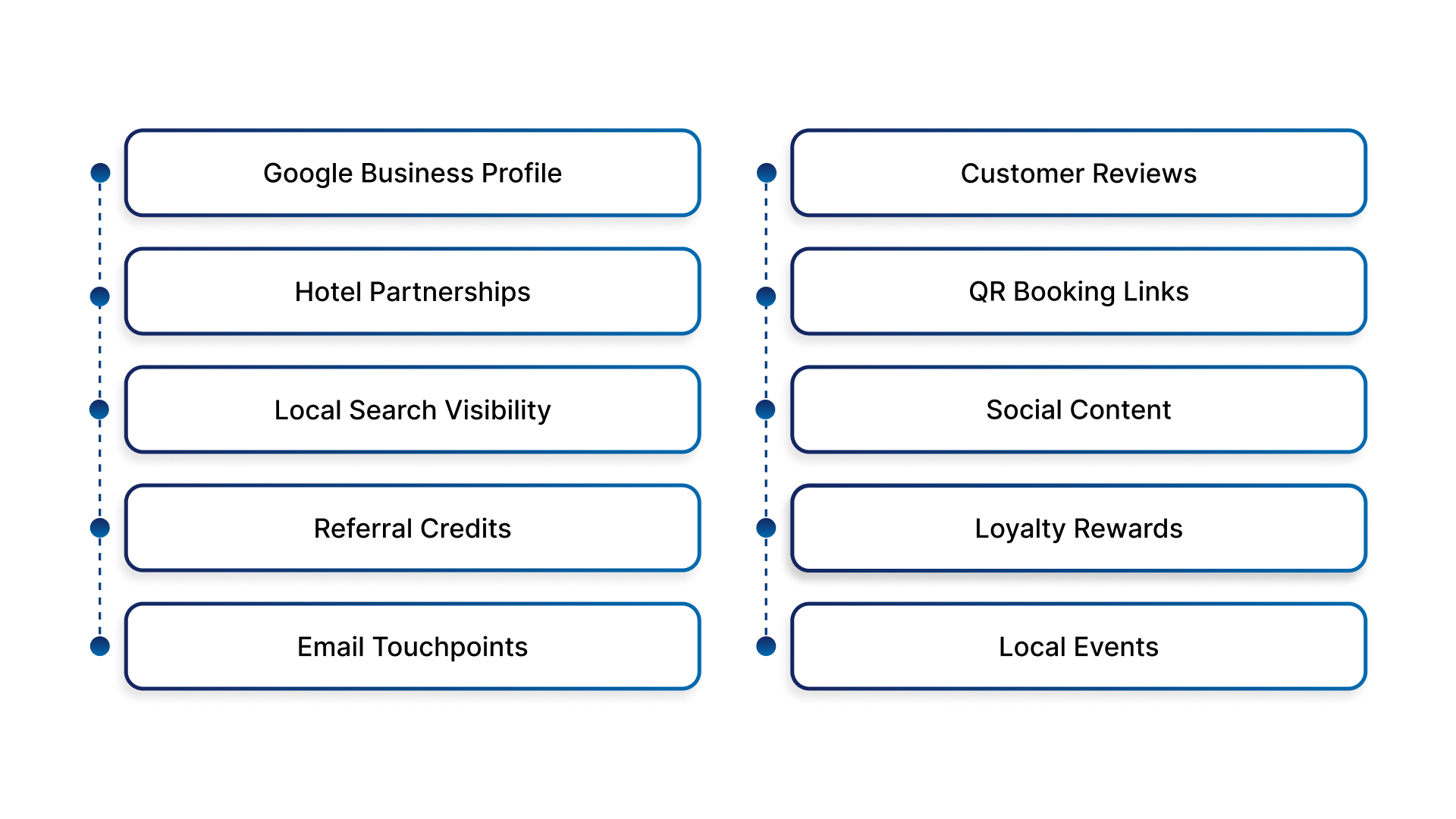
You need a steady customer flow because your revenue depends on how many riders discover your service and trust your rental process. You build stronger traction when your marketing matches the needs of tourists, commuters, and subscription riders across your region.
Here are practical marketing steps supported by your Motorcycle Rental App:
- Google Business Profile: Keep your profile accurate with locations, photos, hours, and pricing cues so “near me” searches convert into direct bookings through Maps.
- Customer Reviews: Prompt riders to leave reviews after each completed rental, since ratings strongly influence quick decisions during local and travel searches.
- Hotel Partnerships: Work with hotels, hostels, and resorts to place your service at reception desks where guests actively plan transport.
- QR Booking Links: Use QR codes linked to your booking flow so travelers can reserve instantly without searching or downloading extra material.
- Local Search Visibility: Target queries near airports, transit hubs, scenic routes, and tourist areas to match discovery with arrival timing.
- Social Content: Share short ride clips, route suggestions, and customer moments that reflect how riders actually use your motorcycles.
- Referral Credits: Offer app-based credits that reward riders who invite friends needing short-term or multi-day rentals.
- Loyalty Rewards: Use simple point systems to encourage repeat bookings from locals and returning visitors.
- Email Touchpoints: Send reminders, seasonal offers, and ride tips that keep your service top of mind between trips.
- Local Events: Attend rallies, festivals, and community gatherings with QR access that directs riders straight to available inventory.
After you’ve established your customer base, the next step is scaling your operations using the right tools.
Scaling Your Business Using the Motorcycle Rental App
Growth in motorcycle rentals should follow proof, not pressure. Expanding too early increases errors, delays, and staff fatigue. A motorcycle rental app helps you grow only after your current operation runs with consistency, clear visibility, and repeatable workflows.
The following scaling gates help you answer those questions before moving forward:
Fleet Expansion (Adding More Bikes)
Add motorcycles only after your existing fleet shows stable performance without creating daily friction. Before increasing fleet size, confirm the following for 4–6 continuous weeks:
- Stable utilization: Each motorcycle meets your target rentals per week, or per day during peak periods.
- High rent-ready availability: Most of the fleet remains bookable, with limited time lost to service, cleaning, or checks.
- Predictable turnaround: Returned bikes move back to available status through a fixed process without manual follow-ups.
- Low dispute load: Damage checks, deposits, and claims close cleanly without repeated conversations or delays.
Your app should clearly show these trends before new bikes enter the system.
Location Expansion (Adding a New Pickup Point)
A new location increases coordination needs across staff, inventory, and service flow. Open additional pickup points only when your current setup runs smoothly without constant correction. Proceed only when:
- Maintenance and turnaround stay on schedule: Inspections and servicing happen on time without last-minute fixes.
- Fleet status stays accurate: Availability and location data remain reliable throughout the day.
- Staff actions follow a set flow: Cleaning, charging, inspections, and redeployment follow the same steps each time.
- Demand is confirmed: Booking data shows repeated unmet or overflow demand in nearby areas.
The app turns location expansion into a data-backed decision rather than an assumption.
Operational Load (Team and Process Growth)
Expansion also affects people and processes. Higher booking volume should not create backlogs or confusion. Confirm that:
- Assigned tasks close on time inside the operator system.
- Maintenance records remain complete without piling up.
- Rider issues stay steady or reduce as bookings increase.
- Weekly revenue estimates remain accurate.
A motorcycle rental app converts growth into a gated process. By adding bikes, locations, and volume only when app data confirms stable utilization, availability, and workflows, you expand with clarity, protect margins, and keep rider experience consistent as your business grows.
As you look to scale, it’s essential to have a solution that supports your growth and keeps operations smooth.
How EazyRide Can Help You Manage and Scale Your Motorcycle Rental Business
If you don’t want to hire a full engineering team to build booking, deposits, inspections, fleet status, and ops workflows from scratch, a white-label platform can reduce build time and operational complexity.
EazyRide is designed to support shared mobility and rental operators with:
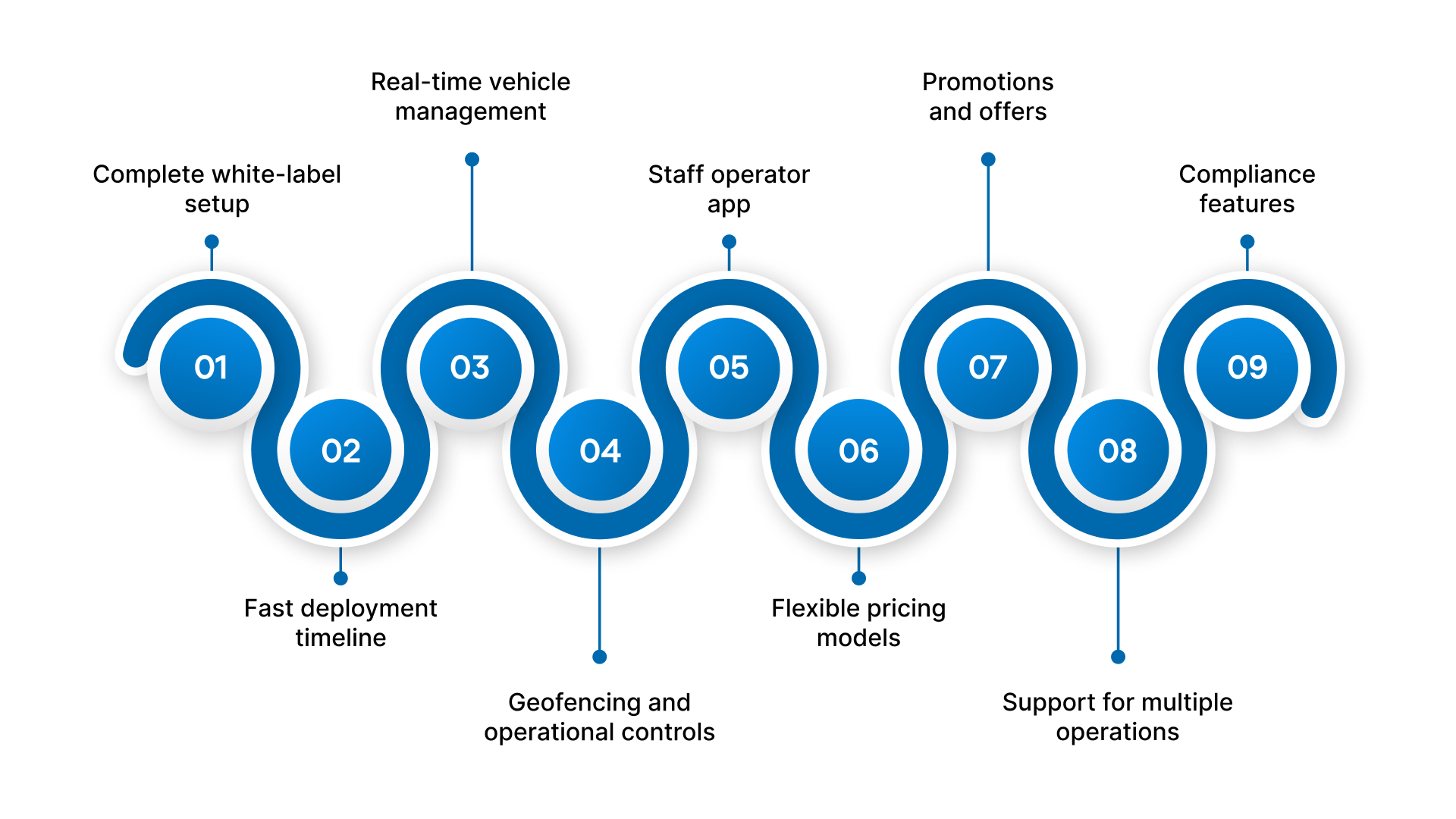
- Complete white-label setup: You receive rider apps, an admin dashboard, and an operator app that match your brand’s colors, logo, features, and pricing plans.
- Fast deployment timeline: Your platform can be active within two weeks, allowing you to begin rentals without long delays or costly custom development cycles.
- Real-time vehicle management: You track location, battery levels, usage patterns, and zone compliance through tools designed for multi-vehicle business models.
- Geofencing and operational controls: You assign zones, trip limits, speed settings, and parking rules that help you keep riders inside approved areas.
- Staff operator app: Your team handles charging, rebalancing, repairs, and deployment through a mobile tool with task assignment and step-by-step guidance.
- Flexible pricing models: You choose hourly rates, daily plans, subscriptions, corporate pricing, or resort packages tailored to your market.
- Promotions and offers: You create time-based discounts, geo-targeted offers, and referral incentives that help you attract and retain riders.
- Support for multiple operations: You run free-floating, station-based, or hybrid programs using a platform built to manage different service types simultaneously.
- Compliance features: You set permissions, manage rider rules, and maintain operational consistency that helps you meet local and regional mobility requirements.
FAQs
1. How much does it cost to start a motorcycle rental business?
Startup costs typically range from $30,000 to $150,000+, depending on fleet size, motorcycle type, insurance premiums, storage, licensing, and software setup. Location, insurance deductibles, and whether you build or license a rental app also significantly affect total cost.
2. What utilization should I target before scaling my fleet or locations?
A practical benchmark is 60–70% utilization per bike during peak weeks, with at least 50% sustained utilization across a full season. You should also confirm that turnaround times are stable and maintenance backlogs are under control. Scale only when demand remains consistent without relying on discounts or staff overtime.
3. What are the legal requirements for starting a motorcycle rental business?
To legally launch a motorcycle rental business, you must register your company and obtain a valid business license in your jurisdiction, secure appropriate fleet insurance to cover liability, accidents, and theft, and check local vehicle-rental permits that may be required by city or state authorities.
4. Can a motorcycle rental app help with fleet management?
Yes, a dedicated motorcycle rental app centralizes critical functions like bookings, real-time fleet availability, automated payments, and service tracking, reducing manual processes and improving operational oversight.
5. What are the benefits of offering subscription-based rentals?
Subscription-based rental models provide a predictable recurring revenue stream, encourage customer loyalty, and offer riders cost-effective access to motorcycles without ownership hassles. This business structure also allows rental operators to forecast demand and plan asset utilization more accurately.


