
 AllMicro Mobility Model

 24 July, 2025
 What You Should Know About Telematics in Micro Mobility?
Telematics combines GPS tracking with onboard sensors to send live vehicle data, location, speed, battery level and diagnostics, back to a central system. Fleet operators use it to monitor vehicles remotely and act on faults early.
Are you struggling to keep your fleet on track? Whether you’re running 10 or 1,000 scooters, your success depends on how well your platform adapts to live usage data, not just GPS dots on a map.
That’s why leading operators are upgrading to advanced telematics systems that help reduce downtime, spot risks early, and optimize every ride in real time.
Telematics systems give you the tools to monitor your fleet, gather valuable data, and make faster decisions based on data. It’s not just about GPS tracking; it’s about getting clear insights that help boost performance, cut operational costs, and improve the rider experience.
In a fast-moving market where efficiency, safety, and customer satisfaction matter more than ever, telematics has become essential for businesses that want to scale with confidence and stay ahead of the curve.
In this article, you’ll learn how telematics systems work, the benefits they bring to your business, and how they can help increase ride usage and minimize unnecessary costs over time.
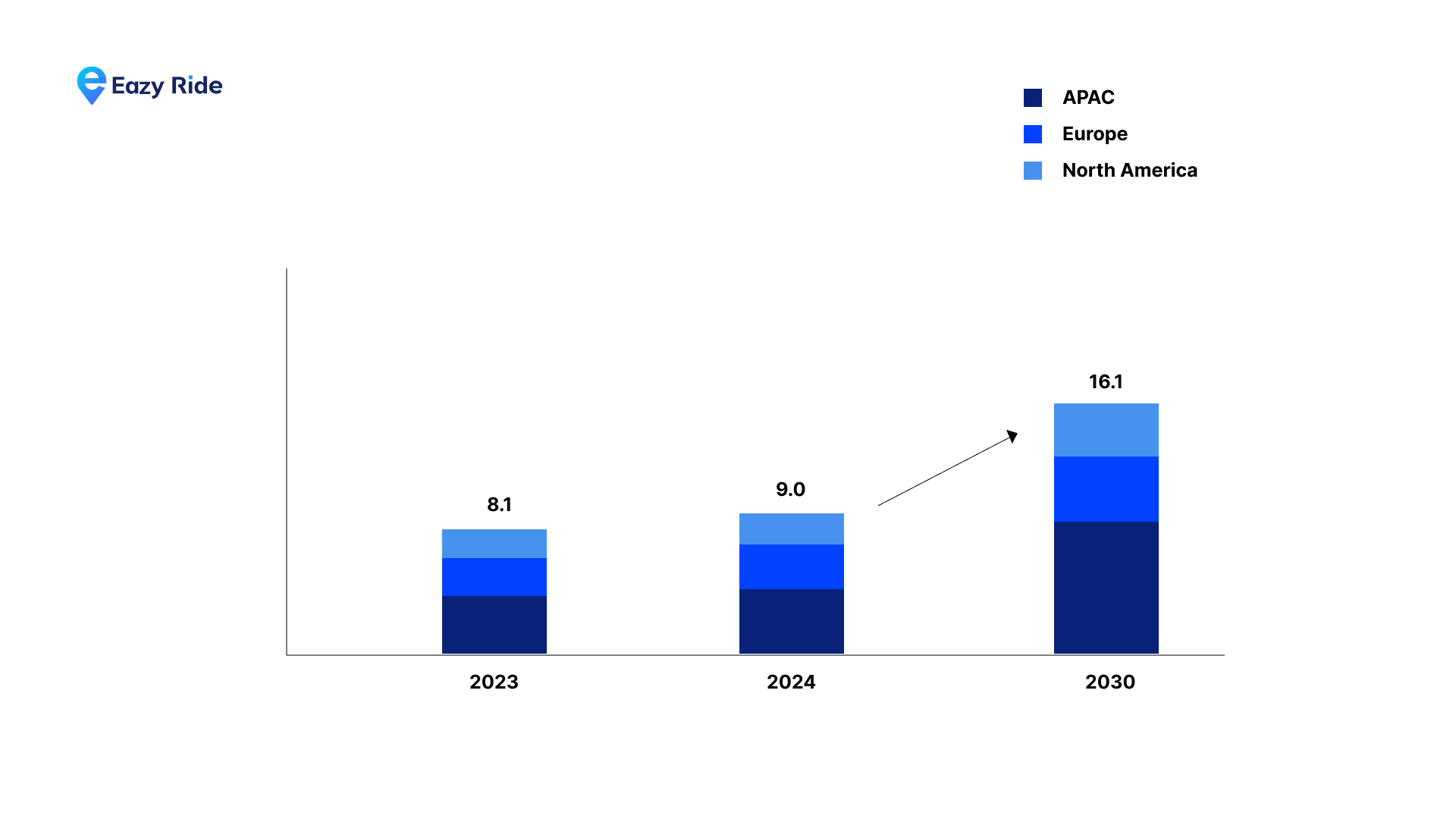
The automotive telematics market is projected to grow from USD 9.0 billion in 2024 to reach USD 16.1 billion by 2030, at a CAGR of 10.1%. This shows the rising demand for connected, data-driven tools that improve safety, efficiency, and sustainability in micro-mobility operations.
Source: MarketsandMarkets
Key Takeaways
- Telematics gives visibility into fleet activity, rider behavior, and vehicle health.
- It reduces downtime and operating costs through predictive maintenance, routing, and automated alerts.
- Actionable insights from telematics help optimize fleet usage, improve rider experience, and support smarter business decisions.
- AI-driven analytics and 5G connectivity are shaping the next wave of scalable, data-driven micro-mobility.
How does telematics work in daily operations?
Telematics works behind the scenes to keep your fleet running smoothly every day. It tracks vehicle location, battery levels, usage patterns, and maintenance needs. This gives operators visibility and control to help them respond faster, plan better, and scale smarter.
Here’s how telematics works to enhance your daily fleet management:
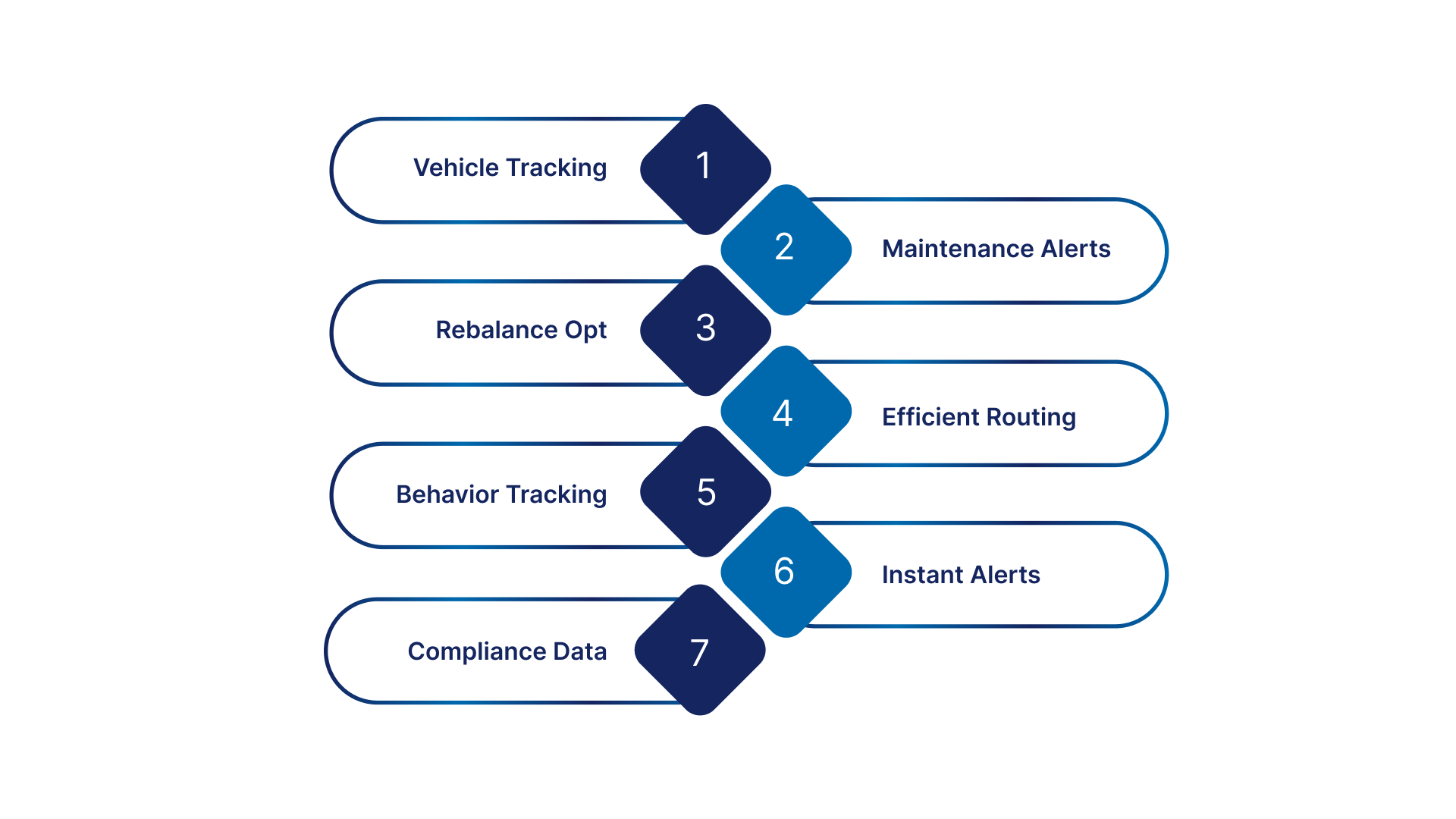
Real-Time Vehicle Tracking
GPS-powered telematics gives you a live map of your fleet’s exact locations, battery levels, and availability. This allows you to respond to demand instantly, reposition vehicles efficiently, and ensure your riders always have access when and where they need it.
Predictive Maintenance Alerts
Beyond tracking, telematics continuously monitors vehicle health, from tires and brakes to battery and motor performance. It alerts you before issues become breakdowns. This helps reduce costly repairs, extend asset life, and keep your fleet running smoothly with minimal downtime.
Vehicle Rebalancing Optimization
Knowing where vehicles are sitting idle or getting overused helps you redistribute them proactively. If a hotspot sees high demand during rush hour, you can shift inventory in advance. This reduces shortages, improves rider experience, and increases overall revenue from better utilization.
Optimized Routing for Efficiency
Data helps identify the most efficient routes for servicing, recharging, or relocating vehicles. It takes into account traffic, roadblocks, and demand clusters. This results in faster operations, lower energy or fuel costs, and a simpler fleet movement strategy.
Monitoring User Behavior and Trip Data
Trip-level insights, such as ride duration, distance, and rider behavior (e.g., harsh braking or speeding), provide a clearer picture of how your fleet is being utilized. These insights help refine pricing, adjust service zones, and improve safety and ride quality.
Alerts and Notifications
Instant alerts notify your team of critical events, such as unauthorized usage, low battery, or unsafe riding conditions. With this visibility, you can act quickly to resolve issues, prevent accidents, and maintain operational control without delays.
Data for Compliance and Reporting
Telematics helps enforce local rules, such as geo-fenced zones or speed limits, and logs everything for reporting purposes. Whether you’re working with city partners or avoiding regulatory penalties, this data ensures you’re operating transparently and within legal guidelines.
Once you understand how telematics supports your fleet’s daily operations, you’ll also need to know how the devices are installed and integrated into your operations.
Also Read: Understanding IoT Telematics for Smart Fleet Operations.
How are Telematics Devices Installed in Your Fleet?
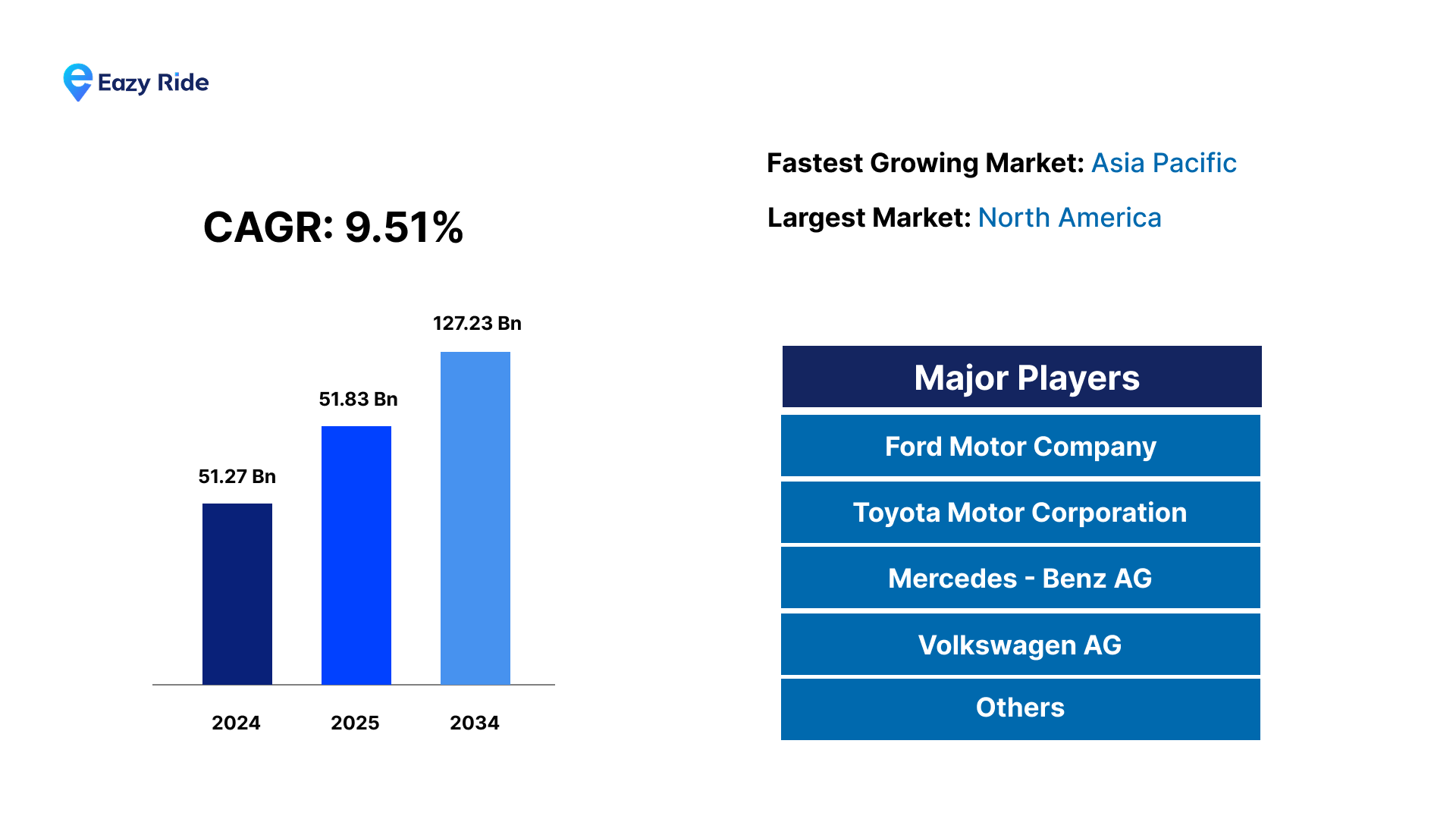
The global vehicle telematics market is expected to reach USD 127.23 billion by 2034, driven by the growing need for smarter, data-driven fleet management.
Source: CustomMarketInsights
This trend is especially relevant for entrepreneurs, fleet operators, and institutional partners in the micro-mobility space, where efficiency, safety, and insights are key to staying competitive.
Integrating telematics into your fleet is a strategic move that helps run operations more efficiently, reduce costs, and give riders a smoother experience. While installing telematics devices might sound technical, the process is quite manageable, especially with the right tools and support.
Here’s a look at how telematics devices are typically installed in shared mobility fleets, along with a few tips to help you get started smoothly:
1. Select the Right Telematics Devices
Start by choosing hardware that suits your fleet type, typically GPS modules, motion sensors, battery monitors, and communication units. Devices must be weather-resistant, compatible with your vehicle models, and should integrate smoothly with platforms. This ensures all data flows into one centralized dashboard without extra work.
2. Install the Telematics Hardware
Place GPS trackers and data modules in secure, weather-protected locations, such as under the footboard of a scooter or near the motor on an e-bike. You can install these devices in batches to minimize downtime, helping you scale operations without disrupting service.
3. Connect to Fleet Management Software
Once installed, devices connect to your management system via cellular or Wi-Fi. After that, a centralized platform (like EazyRide) enables you to monitor location, battery status, and overall vehicle health all in one place. This visibility manages your fleet efficiently and responds quickly to any issues.
4. Configuring and Testing the System
Before going live, you can configure settings like geo-zones, tracking intervals, and alerts. Test a few vehicles to ensure data accuracy, including location updates, ride logs, and battery readings. This allows you to catch and resolve any integration issues early.
5. Ongoing Monitoring and Maintenance
Telematics devices need occasional updates and diagnostics to stay reliable. You can use your platform to monitor performance, push firmware updates, and receive alerts if a device goes offline or shows abnormal behavior. This helps you act fast and avoid service interruptions.
6. Train and Support for Your Team
Equip your team to make the most of the system. Telematics providers typically offer training resources and support to help your staff become familiar with the system. A well-trained team can effectively interpret alerts, manage data, and make informed decisions. This improves response times and enhances operational efficiency.
Startup founders without in-house tech teams can still deploy telematics by using fleet management solutions. Platforms like EazyRide offer pre-configured dashboards, AI-driven reports, and easy onboarding. You don’t need to code or hire engineers; just plug in the devices and manage everything through a web-based console.
Once the devices are in place and running smoothly, the real value of telematics becomes apparent. From here, it’s all about using the data and insights to help you make faster decisions, improve efficiency, and generate more revenue through better pricing, fleet availability, and user targeting for your micro-mobility business.
Using Telematics to Boost Growth & Revenue in Micro Mobility
As an entrepreneur or fleet operator, you’re always looking for smart ways to improve efficiency, increase profitability, and deliver a better experience to your users. Telematics gives you the tools to do just that.
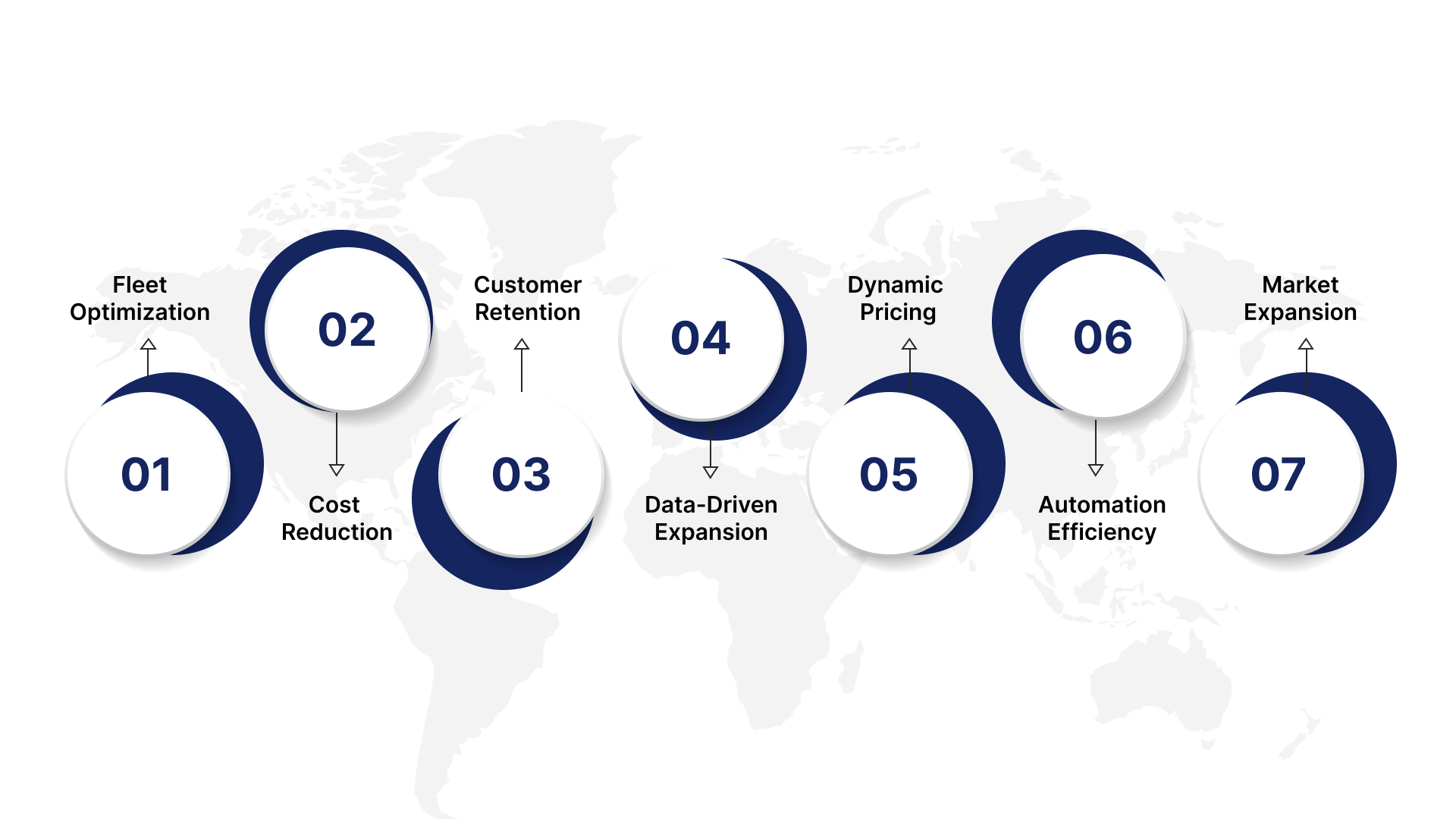
With data and actionable insights, you can scale your operations, reduce waste, and make decisions that directly impact your bottom line. Here’s how you can use telematics to fuel growth and boost revenue in your micro-mobility business:
Optimize Fleet Utilization
North America’s installed base of active video telematics systems hit 6.1 million units in 2024. This growth indicates a high demand for visibility tools that help monitor usage patterns and identify idle periods that are key for strategic fleet redeployment.
With telematics, you get data on vehicle activity across locations, making it easier to spot high-demand areas and underused zones. It ensures more of your vehicles are in use and not sitting idle.
This insight helps you reposition vehicles where they’re needed most, improving ride availability and reducing downtime. You can also adjust pricing or promotions to match local demand.
Reduce Operational Costs
Implementing advanced tracking systems, such as GPS location monitoring, battery diagnostics, and analytics, can lead to a reduction in operational costs by up to 20%.
These tools work together to minimize breakdowns, lower fuel or energy usage, and extend the life of each vehicle.
From smarter routing to predictive maintenance, telematics helps cut unnecessary expenses. It frees up capital that can be reinvested into scaling your fleet or improving service.
Improve Customer Experience and Retention
Research shows that 65% of users are more likely to choose a service that clearly communicates costs upfront. It highlights the importance of transparency and trust in the relationship between a business and its customers.
Real-time updates on vehicle availability, trip quality, and performance make the experience smoother. They also help you quickly resolve issues before they disrupt service. When riders know they can rely on your service, they are more likely to return.
For instance, when they are happy with your service, they leave positive reviews and refer others, helping grow your user base organically.
Make Data-Driven Expansion Decisions
In San Francisco, IoT-powered micromobility systems reduced average user wait times by 25% by using AI to forecast demand and redistribute vehicles mid-shift.
This kind of efficiency is possible when you have access to usage trends and rider behavior data. It provides clear insights into where demand is growing and how to respond.
Whether you’re launching in a new neighborhood or scaling fleet size, these insights ensure your resources go where they’ll generate the greatest return. This reduces risk and speeds up success.
Use Dynamic Pricing to Increase Ride Revenue
Telematics enables pricing adjustments based on demand, weather conditions, or the time of day. Bike-sharing systems in Amsterdam now use IoT data to adjust pricing dynamically, raising rates by 15–25% during peak commuting hours and offering 30% discounts in low-usage zones.
This kind of pricing flexibility helps operators respond to demand, allowing you to charge more when ridership is high or incentivize usage in quieter areas to balance the load. As a result, your revenue increases while keeping vehicles in circulation throughout the day.
Boost Efficiency Through Automation
Automated alerts, maintenance scheduling, and vehicle rebalancing reduce manual workload and response time. This enables you to expand your service without hiring additional staff, improve margins, and free up your team to focus on growth strategies, such as marketing or partnerships.
Expand Into New Markets with Confidence
Pre-launch insights from current usage data help you pinpoint high-potential areas. Telematics eliminates the guesswork from market selection and offers actual usage data to choose the best areas for launching your services. This leads to more successful launches, better ROI, and lower operational risk.
For tourism rental operators and university campuses, telematics enables route control, demand tracking, and smarter rebalancing, ensuring smooth internal mobility and fleet safety for tourists or students.
As telematics helps unfold new efficiencies and drive revenue, it’s equally important to recognize the practical hurdles that can arise during implementation.
You Might Also Like: Micromobility and Its Role in Shaping Urban Transport.
Common Telematics Challenges & How to Solve Them
Telematics systems offer huge benefits, but like any other technology, they come with their own set of challenges. These challenges aren’t deal-breakers. With the right approach, you can overcome them and even utilize them to refine your operations and grow more quickly.
Here’s a look at some of the most common telematics challenges and how to solve them effectively:
| Challenges | Solutions |
|---|---|
| Integration with Existing Fleet Management Systems | Choose a telematics system with integration options and APIs to ensure a smooth connection with existing platforms. |
| Data Overload and Management | Use AI-driven analytics dashboards to simplify data management by consolidating all insights into actionable reports. |
| High Initial Costs of Implementation | Begin with a small trial run and use flexible payment plans to keep costs low and see how well the solution works before expanding it fully. |
| Connectivity Issues | Use offline data storage or work with a network provider that ensures consistent coverage in your operational areas. |
| Vehicle Compatibility | Install universal telematics devices or retrofit existing vehicles with telematics kits for compatibility across different fleet types. |
| User Privacy and Data Security | Ensure compliance with data protection laws by using encryption and secure communication protocols to protect user data. |
| Scaling and Flexibility | Select scalable systems that grow with your fleet by choosing platforms that can easily accommodate more vehicles and service models. |
| Training and Adoption | Provide thorough training for your team on how to interpret telematics data and ensure ongoing support for system updates. |
While solving today’s challenges is crucial for smooth operations, staying ahead of what’s coming next helps you stay competitive.
What’s Ahead for Telematics in Fleet Management?
As the micro-mobility industry grows and technology advances, telematics systems will continue to evolve with smarter features, deeper insights, and greater automation.
For entrepreneurs, fleet operators, and institutional clients, these advancements will open new doors for efficient scaling, enhanced safety, and improved user experiences.
Here’s a look at the key trends and innovations that will define the future of telematics in fleet management:
- Smarter Insights with AI and Machine Learning: Telematics will move from just tracking data to predicting what’s next using artificial intelligence and machine learning. This means you can forecast demand, prevent breakdowns, and optimize operations automatically.
- Integration with Autonomous Vehicles: Telematics Control Units (TCUs) with 4G/5G are powering autonomous routing, secure Vehicle-to-Everything (V2X) communication, over-the-air updates, and fleet oversight from a single dashboard.
- Real-Time Performance with 5G Connectivity: 5G will enable telematics to be faster and more responsive, particularly in densely populated city areas. You’ll get instant updates on vehicle status, rerouting needs, and even live video for added security.
- Deeper, Business-Focused Fleet Analytics: Telematics will deliver more than just vehicle statistics; it will show where costs are rising, which areas see more usage, and how to plan better. These reports help you make faster business decisions and stay financially on track.
- Stronger Security and Theft Protection: New features like theft alerts, biometric access, and remote shutdown will enhance vehicle security. They instantly detect threats, limit access to authorized users, and let operators stop the vehicle remotely if needed.
- Integration with Smart City Infrastructure: Telematics will sync with city systems like traffic signals and weather sensors to optimize fleet movement. 5G Telco Cloud is helping drivers find parking faster, easing congestion, and making urban mobility smoother and more efficient.
- Sustainability Tracking and Carbon Monitoring: Tools enable you to measure emissions, track battery health, and reduce energy waste. This helps you stay compliant, reduce costs, and stand out as a greener, more responsible operator.
How does EazyRide use telematics?
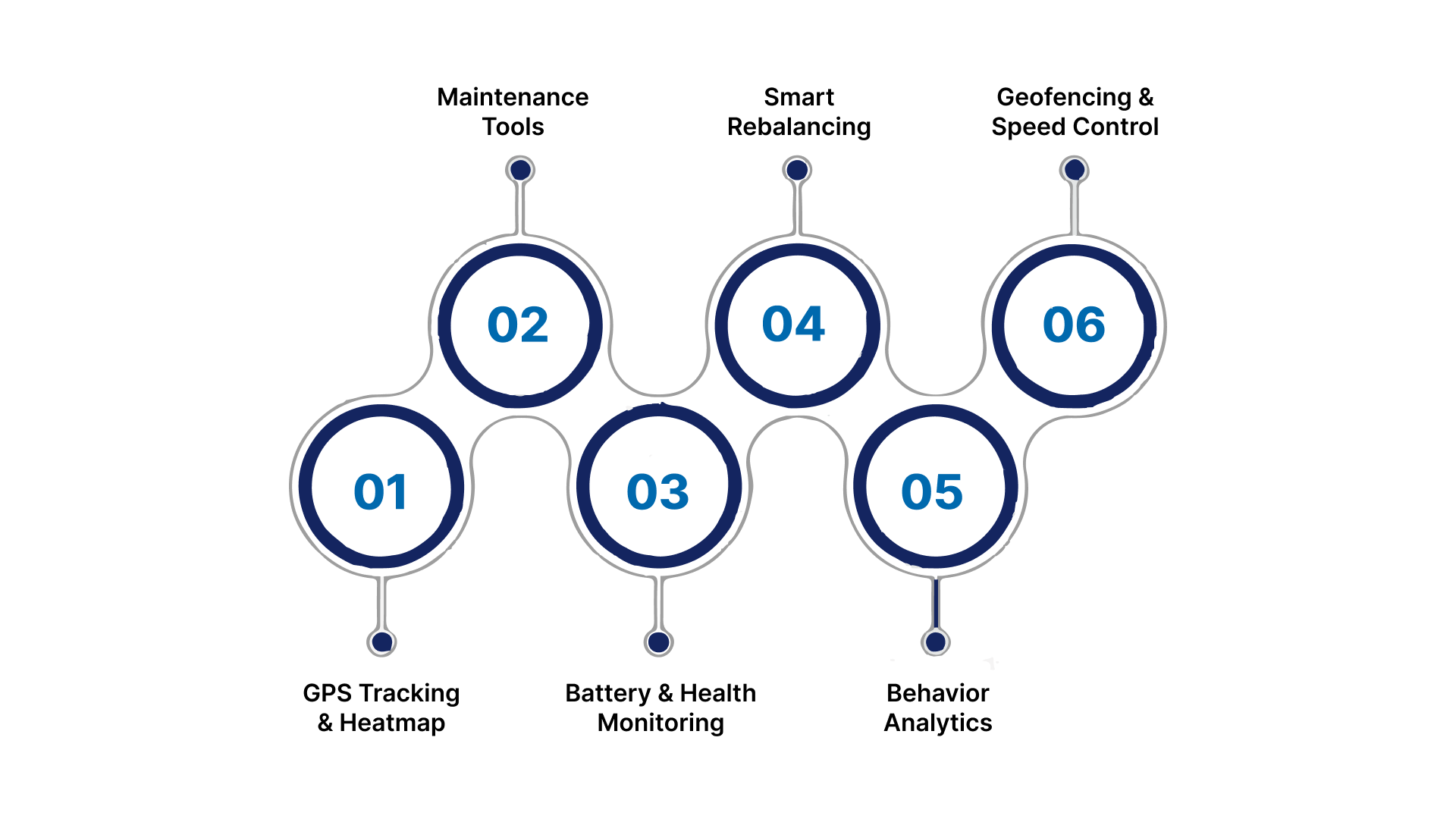
In micro-mobility, what you don’t see can cost you. Unused vehicles, delayed maintenance, and blind spots in fleet movement all cut your margins. That’s why EazyRide is built with integrated telematics, providing insights that keep your operations efficient, safe, and profitable.
Here’s how EazyRide’s telematics tools support your daily operations:
- Live GPS Tracking & Heatmaps: Know where every vehicle is and how it’s performing on one dashboard.
- Predictive Maintenance Tools: Get alerts before breakdowns happen, reduce downtime, and extend vehicle lifespan.
- Battery & Health Monitoring: Track charging needs, component wear, and service logs in real time.
- Smart Rebalancing: Use rider demand heatmaps to reposition vehicles where they’re needed most.
- Trip & Behavior Analytics: View usage patterns, braking habits, and idle times to optimize fleet performance.
- Geofencing & Speed Control: Set ride zones, no-go areas, and speed limits to ensure compliance and safety.
EazyRide turns vehicle data into action so you can scale confidently, reduce overhead, and improve the rider experience across every trip.
Conclusion
Whether you’re managing city-wide scooters, campus mobility, or guided tours, telematics is more than just a tracking tool; it’s your command center. You just need to know what’s moving, what’s idle, and what’s silently draining your resources.
In 2025, visibility is no longer optional. You need accurate data on trips, downtime, maintenance, and rider behavior to stay efficient and competitive. That’s where EazyRide comes in.
With live vehicle tracking, automated service logs, and dynamic heatmaps, EazyRide provides the insights you need to make faster decisions and run a smarter fleet every day.
Ready to take control? Book a free demo and see how EazyRide’s telematics platform can help you boost performance, cut costs, and scale with confidence.
Also Read: Understanding Micromobility Devices and Their Impact.
FAQs
Q1. How does telematics improve driver safety?
A1. Telematics tracks behaviors like harsh braking, speeding, and rapid acceleration. This helps you identify risky driving patterns and provide targeted coaching to your team, encouraging safer and more responsible driving across your fleet.
Q2. How does telematics support regulatory compliance?
A2. Telematics systems help you automatically track hours of service, vehicle inspections, and maintenance logs. This makes it easier to meet local regulations, prepare for audits, and remain compliant with industry requirements.
Q3. How secure is telematics data for fleet operators?
A3. Telematics data is secure for fleet operators. Most providers use end-to-end encryption and secure cloud storage to protect your data. You’ll also have control over who can access the system. This ensures that sensitive information is only available to authorized team members.
Q4. What types of data do telematics systems collect in mobility fleets?
A4. Telematics collects a wide range of data, including vehicle speed, GPS location, engine health, battery levels, idle time, and driver behavior. This information helps you make more informed decisions regarding maintenance, routing, and performance.
Q5. How expensive is it to implement telematics?
A5. The cost depends on the size of your fleet and the features you need. That said, many operators find that the investment pays off quickly through fuel savings, fewer breakdowns, and better fleet utilization.


