
 AllAnalytics and research

 23 December, 2025
 How to Start a Rental Car Business in the U.S.: A Proven 2026 Guide
If you’re thinking about how to start a rental car business, chances are you’re not asking the real question yet.
The real question is this:
How do you build a rental car business that actually breaks even, stays operational, and scales without turning into a daily headache?
In 2026, starting a car rental business in the U.S. is no longer just about buying a few vehicles and listing them online. Competition is tighter, customer expectations are higher, and margins depend heavily on how well you manage pricing, utilization, maintenance, and data from day one.
Many first-time founders focus on cars first and operations later. That’s usually where things go wrong. This guide is written for entrepreneurs and operators who want to start a rental car business the right way. Not just legally, but profitably. Not just fast, but with control.
We’ll break down what it really takes to launch, where most people underestimate the effort, and how modern operators are setting themselves up to succeed in the U.S. market.
Key Takeaways
- Break-even depends on utilization, not fleet size: Idle cars delay profitability faster than almost any other mistake.
- Local rentals drive real demand in the U.S.: Nearly half of rental revenue now comes from non-airport use cases.
- Your business model shapes everything: Rentals, car sharing, subscriptions, and closed-loop fleets all require different operations and cost structures.
- Vehicle sourcing is a cashflow decision: Buying, financing, or leasing should align with early utilization targets and risk tolerance.
- Systems matter more than cars: Without visibility into booking, fleet, and maintenance, scaling becomes expensive and chaotic.
What Starting a Rental Car Business Really Looks Like in 2026
The rental car sector isn’t static. It’s evolving rapidly, driven by changing travel patterns, digital bookings, and new rental models. The U.S. car rental market has become a significant commercial mobility channel and continues to grow.
In 2024, the U.S. car rental market was estimated at roughly $37.9 billion, with projections indicating continued growth through 2030 at a ~7.5 % CAGR. Another forecast suggests that, by 2034, the market could approach nearly $79 billion as digital booking and flexible access become dominant.
This growth may not rival ride-hailing or micromobility globally. Still, for a founder looking at real revenue opportunities in the U.S., the figures spell steady demand, primarily in tourism, airport travel, and urban rentals.
What Has Changed Since Traditional Models?
If you compare the market now to even 5 years ago, how customers access rental vehicles has shifted:
- Digital first: Online reservations and mobile check-in are now standard. About 70% of U.S. rentals are booked online, driven by consumer preference for convenience.
- Beyond airport counters: While airport rentals were once the dominant entry point, local and neighborhood rentals, especially for short-notice needs (e.g., weekend escapes, business trips), are rapidly expanding.
- Emerging hybrid models: Subscription services and flexible car sharing sit between ownership and traditional rentals, catering to consumers who want medium-term access without ownership.
This means that your business plan today must account for multiple customer paths, not just airport travelers.
Before You Start – How Long Does It Take to Break Even?
Before you dive into the how-to parts of setting up your rental car business, let’s tackle the question that should be top of mind for every founder and operator: “How long until this business stops costing me money and starts making me money?”
This isn’t academic; it’s core to your business plan, your financing strategy, and ultimately whether your venture is sustainable.
Your break-even date depends most on what you spend upfront. In the U.S., these key cost categories typically include:
- Fleet acquisition — vehicles are the biggest line item
- Insurance — commercial coverage is a must
- Location and operations — office/lot space, staff
- Technology and systems — booking, fleet tracking, maintenance tools
Total startup costs can range from ~$75,000 for a tiny local operation to over $2 million for a larger, franchise-style business once you include vehicles, location, licensing, and systems.
To be more specific,
- A modest fleet of 10 used economy cars typically costs between $150,000 and $250,000 in vehicle acquisition alone, assuming per-vehicle costs of $15,000–$25,000.
- Commercial insurance can cost $5,000–$12,000 per vehicle annually, depending on coverage level and state-specific risk factors.
That means even a small startup with 8–10 reliable cars could start with > $200,000 in combined upfront costs before fueling growth or marketing your service.
Revenue per vehicle is another core part of the equation. In the U.S. rental market:
- Average revenue per month per vehicle was about $1,387 in 2024 – a valuable baseline that accounts for daily rentals, business vs leisure demand, and seasonal variability.
- Another commonly used metric is Revenue Per Day per car, often ranging between ~$45 and $60 for many operators, excluding add-ons like insurance or extras.
You can think of these as your topline potential before expenses. It can vary based on location, pricing, seasonality, and customer segments, but they give you a realistic revenue range to model against costs.
Profitability in Real Terms: When Can You Break Even?
Based on standard margins in the rental industry, net profit margins for car rental businesses typically fall in the 5 % – 15 % range once the operation scales and stabilizes. This means that after expenses like insurance, maintenance, depreciation, staff costs, and location costs, only a fraction of your revenue becomes profit in the early years.
Using conservative math:
- If a vehicle generates $1,200/month → $14,400/year
- With a 10 % net profit margin, you’d net ~$1,440 per vehicle per year.
If your startup investment in vehicles and setup were $200,000, you’d need several years of consistent performance to recoup your initial investment, unless you strategically increase utilization and pricing.
Without strong utilization and optimized pricing, break-even can easily stretch beyond 18–24 months, especially in non-airport or suburban markets where customer flow is slower.
So, before you commit, build a realistic financial model using these benchmarks, consider lean launch strategies, and track profitability metrics from day one.
Common Challenges When Starting a Vehicle Rental Business
Once you understand the break-even math, the next reality hits fast: most rental car businesses don’t struggle because of demand. They struggle because of operations.
This is where many first-time founders underestimate the complexity of the business. On paper, renting cars sounds straightforward. In practice, small inefficiencies compound quickly and delay profitability.
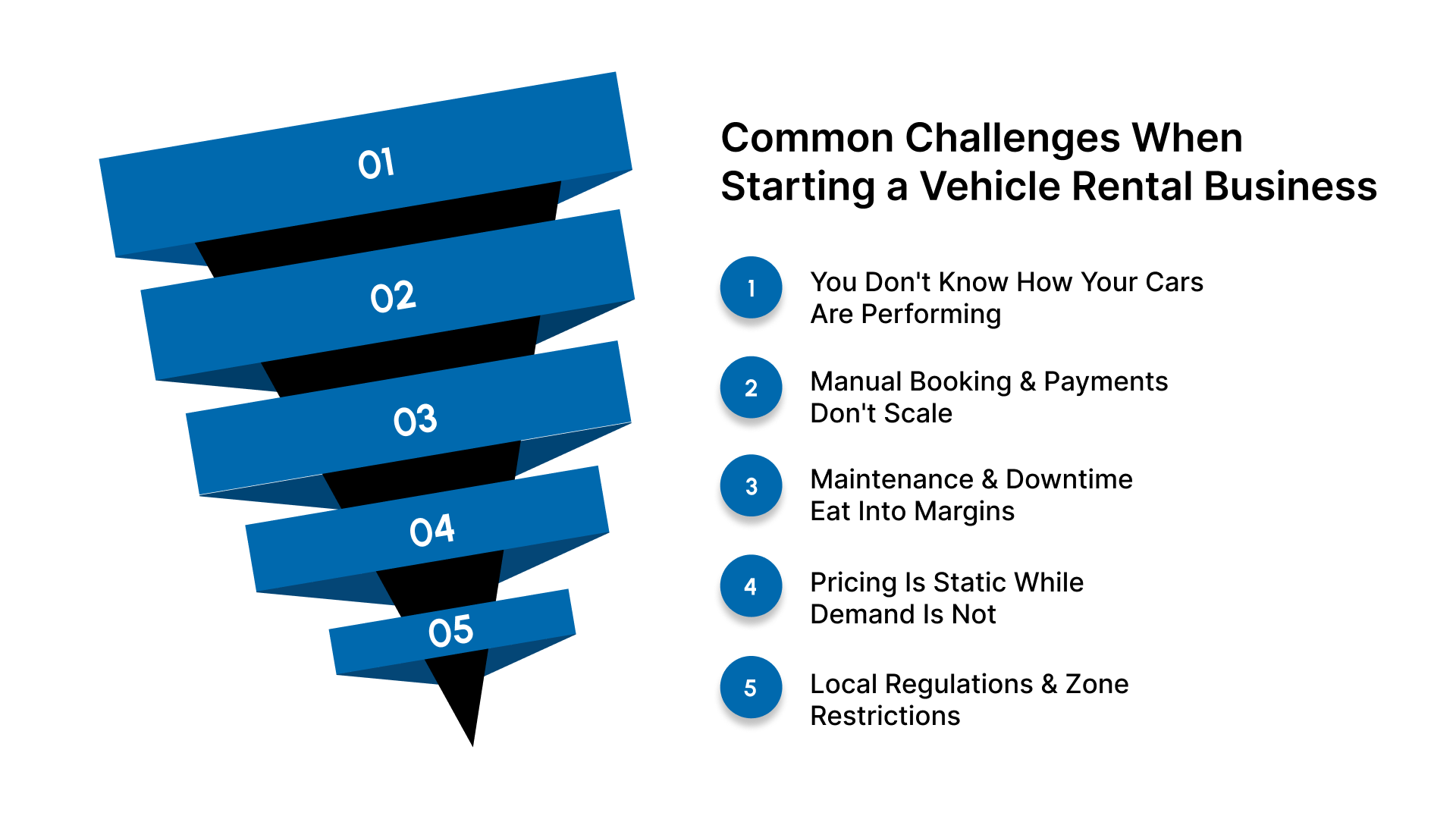
Below are the most common challenges U.S. operators face in the first few months:
1. You Don’t Know How Your Cars Are Performing
A typical early mistake is assuming that “cars rented = cars making money.” In reality, many new operators:
- Don’t track utilization per vehicle
- Can’t see which cars sit idle most of the week
- Rely on manual logs or spreadsheets that are updated too late to act on
The result? Some vehicles quietly underperform while others are overused, increasing wear and maintenance costs. Without visibility, you can’t fix what’s hurting your margins.
2. Manual Booking and Payments Don’t Scale
Early on, handling bookings via phone calls, WhatsApp, or emails may seem manageable. But once demand picks up, problems surface quickly:
- Double bookings
- Missed payments
- Time wasted confirming availability
- No clear audit trail for disputes
For founders trying to grow beyond a handful of vehicles, this becomes a daily bottleneck and one of the fastest ways to lose customer trust.
3. Maintenance & Downtime Eat Into Margins
Maintenance is often underestimated in early financial models. New operators commonly face:
- Vehicles off the road longer than planned
- No structured way to schedule servicing
- Reactive repairs instead of preventive maintenance
Every day a car sits idle for repairs is lost revenue, not just a cost line item. Over time, unplanned downtime can quietly derail your break-even targets.
4. Pricing Is Static While Demand Is Not
Many first-time rental businesses set prices once and rarely revisit them. But demand fluctuates constantly depending on weekends, peak travel seasons, and local events. Without dynamic pricing or precise data on which cars generate the most revenue, operators often:
- Underprice high-demand vehicles
- Overprice during slow periods
- Miss opportunities to increase average revenue per vehicle
Static pricing leaves money on the table, especially in competitive U.S. markets.
5. Local Regulations & Zone Restrictions
Regulatory complexity varies widely across U.S. cities and states. Challenges often include:
- Parking and zoning rules
- Airport access restrictions
- Insurance and liability requirements
- Local permits for commercial rentals
Founders who don’t plan for these early may face fines, forced operational changes, or limited areas where vehicles can legally operate. This is where a lack of location-based control and oversight becomes a real risk, not just an inconvenience.
Choosing the Right Business Model for Your Rental Car Business
If you’re serious about starting a vehicle rental business in the U.S., don’t copy what Hertz or Enterprise does and hope it works at a smaller scale. Your business model decides almost everything that follows.
And in 2026, the biggest shift is that local rentals are no longer a niche. They’re a major chunk of the market. In fact, local usage made up 46.7% of U.S. car rental revenue in 2024. That’s nearly half the market coming from non-airport, local use cases like errands, short trips, replacement vehicles, and weekend travel.
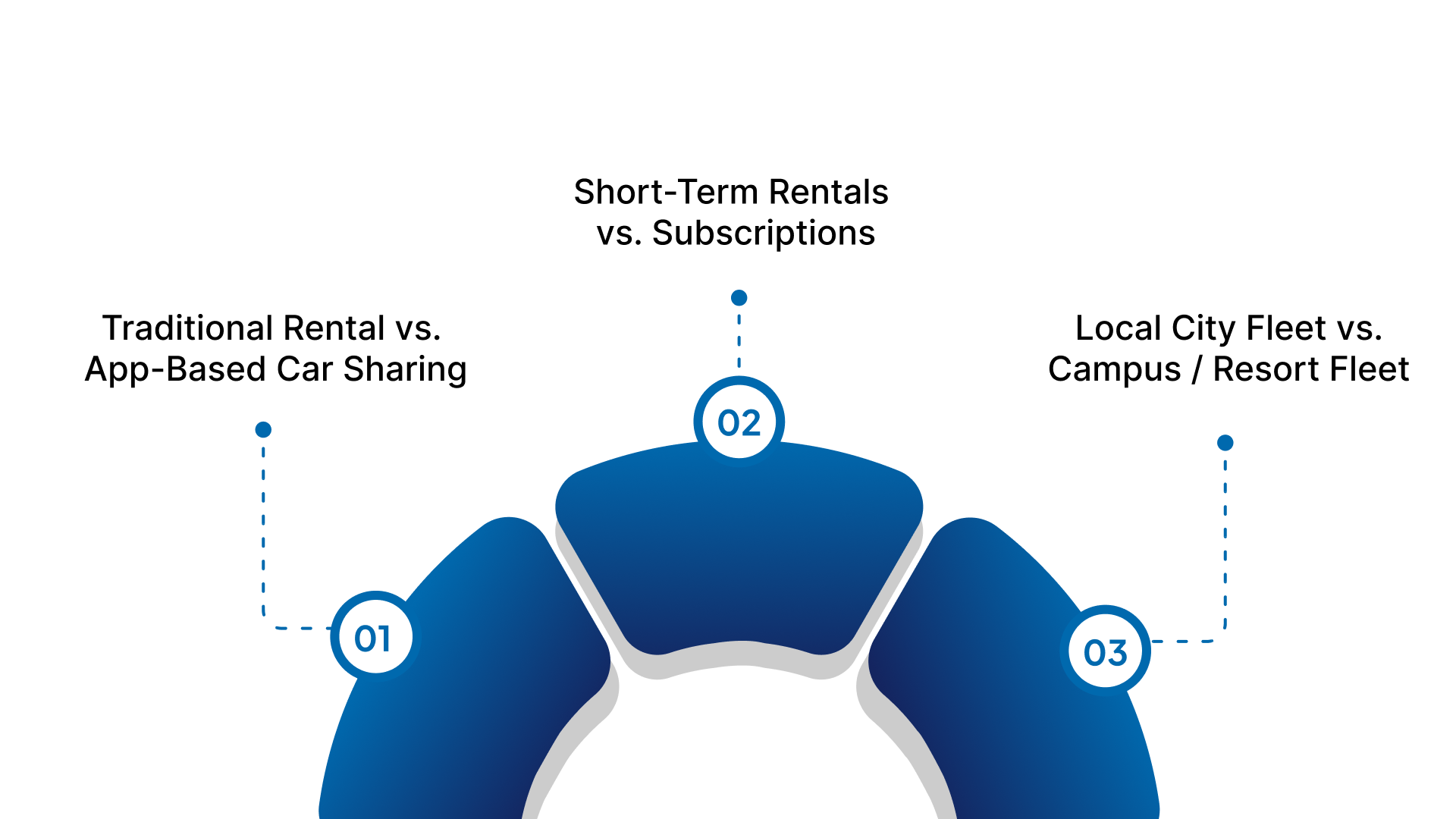
So when you’re building your rental car business plan, you’re choosing the model that matches your location, capital, and operations capacity.
1. Traditional Rental vs. App-Based Car Sharing
Traditional rental is what most people picture:
- Customers book online or by phone
- You hand off keys, verify documents, and manage deposits
- Operations are staff-heavy and manual unless you invest in systems
App-based car sharing is closer to “self-serve access”:
- Customers book and access vehicles digitally
- You rely more on fleet visibility, pricing controls, and automation
App-based access isn’t just a “tech trend.” It’s how you reduce staffing pressure, reduce booking mistakes, and scale beyond a small fleet without drowning in admin work.
If your goal is to start your own car rental business and keep it lean, app-based workflows often give you a cleaner path to profitability, especially for local rentals.
2. Short-Term Rentals vs. Subscriptions
This is one of the most important decisions you’ll make in setting up a car rental business.
Short-term rentals (hours to days) are great when:
- You’re in a tourism-heavy area
- You expect weekend spikes
- You want faster cash flow per vehicle (but more churn)
Subscriptions (weeks to months) can work when:
- You want steadier revenue per car
- Your market includes corporate users, campuses, or residents who don’t want ownership.
Subscriptions and flexible access models are growing overall. One industry estimate projects the global car subscription market to grow from ~$5B in 2025 to ~$14B by 2030.
Even if you don’t run a pure subscription model, this trend matters because it signals what customers increasingly want: flexibility without commitment.
3. Local City Fleet vs. Campus / Resort Fleet
This is where your ICP really shows up, because the “best” model depends on where your customers are and how you’ll control operations.
Local city fleet works when:
- You can win on convenience
- You have strong parking + pickup logistics
- You can manage variable demand and pricing
Campus, corporate, resort, or community fleets work when:
- Demand is predictable (commute hours, guest check-ins)
- Vehicles stay inside defined zones
- You can reduce theft and misuse with tighter controls
For many first-time founders, a closed-loop environment (like a campus or resort) can be easier to operate early on because utilization is easier to forecast
Now, if you’re considering a marketplace-style approach (peer-to-peer car sharing), the U.S. segment is real and growing. One estimate puts the U.S. peer-to-peer carsharing market at ~$800.5M in 2024, with strong growth expected.
But the tradeoff is control:
- You may scale listings faster
- But you don’t control vehicle condition, consistency, or customer experience the same way a fleet operator can
So if you plan to build a brand you can scale, owning or controlling the fleet usually wins in the long term.
Suggested Read: Vehicle Rental Industry Market Trends and Future Forecast
Now that you’ve chosen the right model, the next decision is how you source and structure your fleet.
How to Get Cars for a Rental Car Business (Without Overextending Capital)
Because in the U.S., fleet acquisition is where most first-time founders either lock themselves into payments they can’t outgrow or buy the wrong vehicles and get crushed by depreciation and downtime.
The goal is get the right cars, under the right terms, with enough breathing room to survive slow months. But before that, you have to start with the real cost driver.
- Depreciation is a silent expense in every rental car business plan.
- Even if your cars are rented every day, you’re still losing value in the asset over time. New automobiles can depreciate sharply early on.
- For example, the Bureau of Labor Statistics reports an annual depreciation rate for new automobiles at age 0 of ~23.9%.
That’s why many profitable small operators don’t start with brand-new vehicles unless the math works.
3 Realistic Ways to Source Vehicles
When founders ask how to get cars for a car rental business, they’re often looking for a single “best” option. In reality, there isn’t one. The right approach depends on how much capital you can deploy without stress and how much operational risk you’re willing to manage early on.
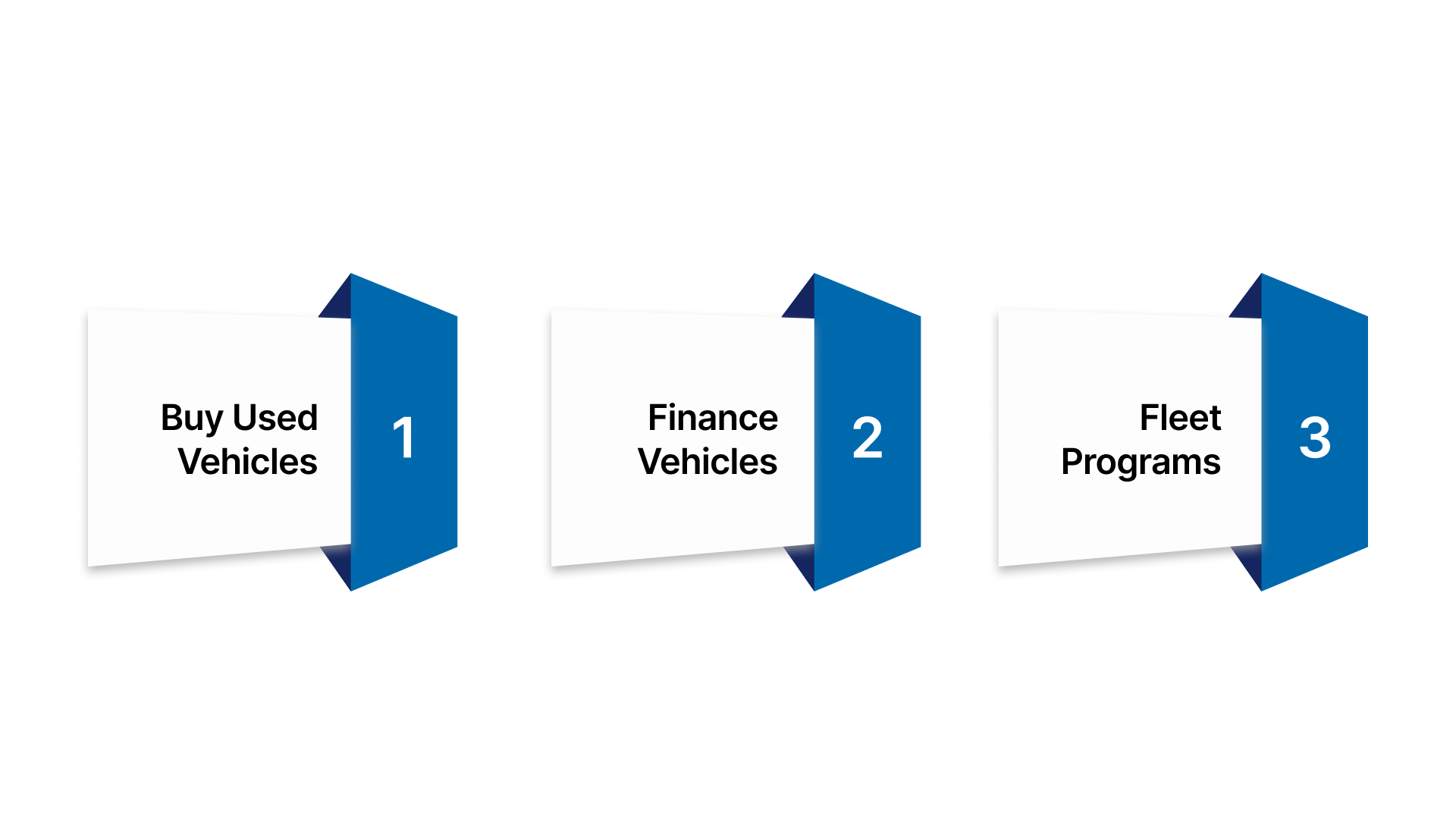
Start with one of the following three vehicle sourcing strategies, each with clear tradeoffs:
1) Buy Used Vehicles
This is the most common route for founders starting a vehicle rental business with limited capital. When this approach makes sense:
- You want a lower monthly burden (or no payment at all)
- You’re testing demand in one city before scaling
- You can manage maintenance proactively
What to watch:
- vehicle history and reliability (downtime kills utilization)
- maintenance processes (you need structure, not luck)
This is also the most realistic approach for people searching “how to start a car rental business from home,” because you can begin small with a controlled fleet and pickup/drop-off workflows.
2) Finance Vehicles
Financing can help you scale faster, but the U.S. interest-rate environment matters. In 2025 data, average auto loan rates were under ~7% for new cars and near ~12% for used cars (varies heavily by credit profile).
That spread is a big deal for rental economics. Higher borrowing costs mean:
- Higher break-even pressure
- Less flexibility in slow months
- More need for tight pricing and utilization control
3) Lease or Fleet Programs
Leasing can reduce upfront costs and make it easier to refresh vehicles on a predictable schedule, which can help if you’re targeting corporate or premium segments.
A practical comparison of fleet leasing vs buying comes down to cash available, mileage expectation, and replacement strategy.
Where leasing often fits best:
- Businesses prioritizing predictable monthly costs
- Operators planning to scale quickly
- Fleets that need newer vehicles for brand positioning
There you go, you have got the ideas from where and how to source your cars. Now, before you acquire your first vehicle, answer these two questions:
1. Who will rent it, and why?
Airport traveler, local weekend renter, corporate user, tourist, campus resident – each has different pricing tolerance and mileage patterns.
2. What’s your utilization target in months 1–3?
If you don’t have a realistic utilization plan, you’re gambling with depreciation.
This is where good operators act differently: they treat each vehicle like a mini business unit, tracked by performance.
Legal, Licensing, & Insurance Requirements in the U.S.
This is the part many founders rush through and later regret. You don’t need to become a legal expert to start a rental car business in the U.S., but you do need to get a few fundamentals right early. Cutting corners here can stall operations, invalidate insurance, or block you from scaling.
- Business Registration and Local ApprovalAt a minimum, you’ll need a registered business entity (most small operators choose an LLC) and any state or city-level permits required for vehicle rentals. Requirements vary widely by location. Some cities regulate rental operations more tightly than others, especially around parking, storage, and consumer disclosures.
- Commercial Insurance (Non-Negotiable)Personal auto insurance does not cover rental activity. You’ll need commercial fleet insurance that accounts for multiple drivers, short-term rentals, liability, and physical damage.
- Taxes, Fees, and Compliance
Rental businesses may be subject to state and local rental taxes, sales or use taxes on transactions, or additional airport or tourism-related fees (if applicable). Missing these doesn’t just affect bookkeeping. It can directly impact pricing and margins if not factored in upfront.
You don’t need everything perfect on day one, but you do need a clear legal standing and awareness of local operating rules.
Technology You Need to Run a Rental Car Business Efficiently
Today, technology isn’t an optional “upgrade.” It’s how you keep operations tight enough to hit break-even. Here’s the simplest way to think about it: “The more your business relies on manual coordination, the more your margins depend on you working around the clock.”
And customer behavior in the U.S. is already pushing the market toward digital. In 2024, online booking accounted for about 70.1% of U.S. car rental revenue. That’s not a “trend” anymore, it’s the standard customer expectation.
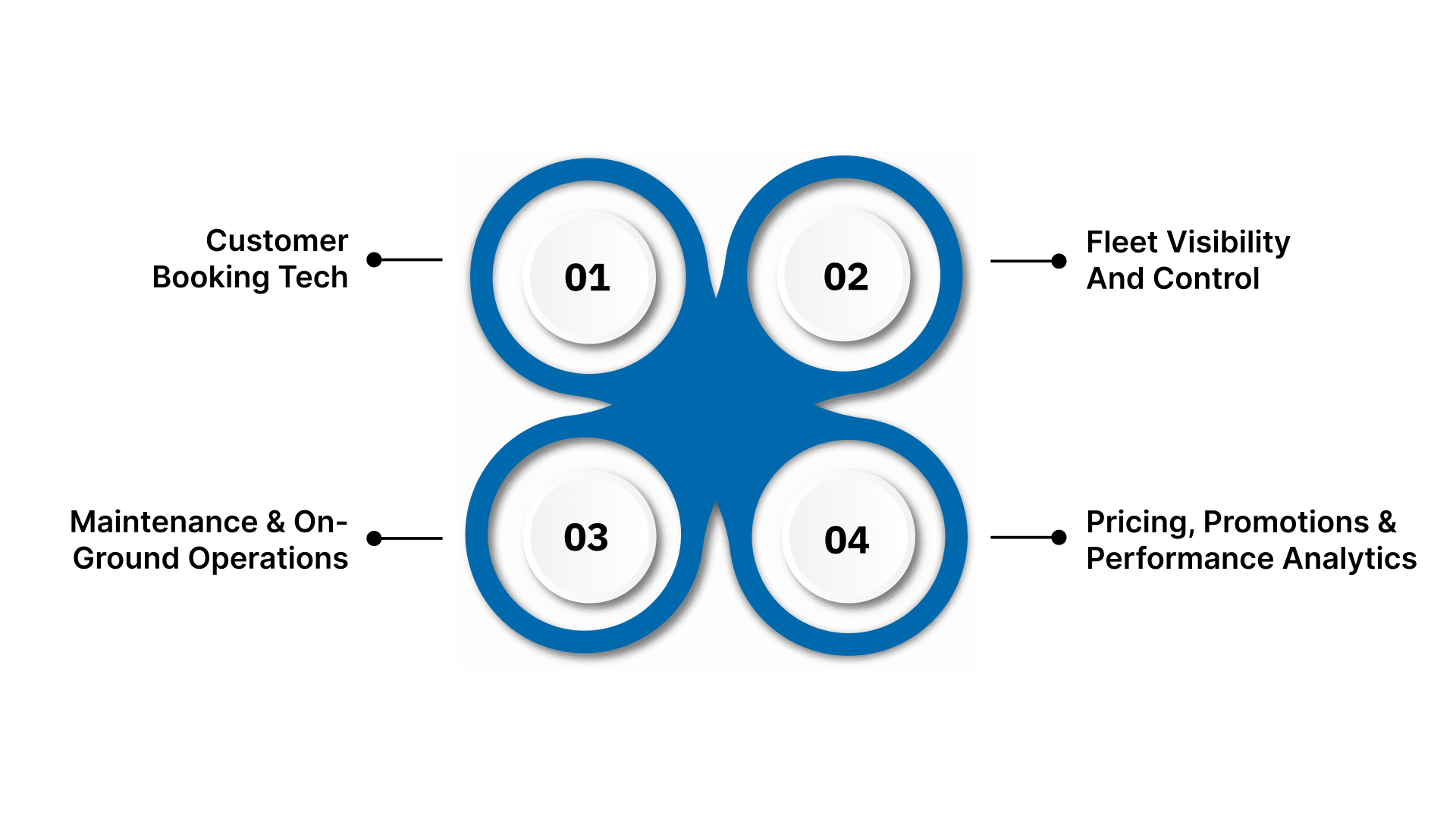
1. Customer Booking Tech
At a minimum, you need a system that can handle:
- real-time availability (so you don’t double-book)
- digital booking and payments
- customer verification workflows (ID, eligibility, deposits where needed)
This is the difference between “I can manage five cars” and “I can grow to 25 without chaos.”
2. Fleet Visibility and Control
This is where many first-time operators lose money without noticing. You need a way to answer basic questions instantly:
- Which vehicles are idle right now?
- Which cars are earning the most revenue per day?
- Which vehicles are overdue for maintenance?
- Where are vehicles most often picked up and dropped off?
In rental and leasing fleets, telematics adoption is rising fast. One industry report expects telematics penetration across rental fleets in North America and Europe to grow about 75% by 2028.
That matters because operators who can see their fleet in real time make faster pricing and deployment decisions.
3. Maintenance & On-Ground Operations
Maintenance isn’t just a cost. It’s a revenue lever. The tech you need here is simple:
- Scheduled maintenance tracking
- Task assignment for staff (cleaning, inspection, repairs)
- A clear log of vehicle issues so problems don’t repeat
When you don’t have this, vehicles stay offline longer than necessary, and your utilization drops, which pushes break-even out.
4. Pricing, Promotions & Performance Analytics
A rental car business plan that doesn’t include performance tracking is incomplete. You don’t need “advanced analytics” on day one, but you do need:
- Revenue per vehicle
- Utilization by vehicle and location
- Booking source performance (so you don’t overspend on the wrong channel)
- Promo tracking (so discounts don’t quietly eat profit)
This is what lets you raise revenue without adding more cars.
Tools alone aren’t enough if you don’t measure the right outcomes. That’s where tracking the right KPIs from day one becomes critical.
Suggested Read: Why Vehicle as a Service Is the Key to Sustainable Fleets in 2026
What Are the KPIs to Track From Day One
If you don’t define success early, you’ll end up guessing later. Revenue without context can hide inefficiencies that delay break-even and make scaling risky.
The KPIs below are the minimum set you should track from day one to get a clear view of profitability, utilization, and operational health.
| KPI | What It Measures | Why It Matters for Your Business |
|---|---|---|
| Fleet Utilization Rate | Percentage of time vehicles are rented | Directly impacts revenue and break-even speed. Low utilization means idle capital. |
| Revenue per Vehicle (Monthly) | Average monthly revenue generated by each car | Helps you identify underperforming vehicles and pricing gaps. |
| Revenue per Rental Day (RPD) | Average earnings per vehicle per rental day | Shows whether your pricing strategy matches demand and market conditions. |
| Vehicle Uptime | Percentage of time vehicles are operational | Downtime delays break-even and increases cost per active vehicle. |
| Maintenance Cost per Vehicle | Average monthly maintenance expense | Helps you decide when to repair, rotate, or replace vehicles. |
| Booking Conversion Rate | % of visitors who complete a booking | Indicates whether your booking flow and pricing are friction-free. |
| Customer Acquisition Cost (CAC) | Cost to acquire a new customer | Ensures marketing spend doesn’t erase rental margins. |
| Break-Even Timeline | Months to recover initial investment | Keeps growth decisions grounded in financial reality. |
Strong operators review these KPIs weekly or monthly, not once a quarter. That’s how small problems stay small.
How EazyRide Helps You Start a Rental Car Business
Starting a rental car business gets expensive when operations stay manual. Scaling it becomes risky when you lack visibility and control. This is where EazyRide fits in.
It’s an operational platform designed to help rental and car-sharing operators launch faster, control costs, and make data-driven decisions from day one. Below are some core capabilities:
- White-Label Rider App: You get a fully branded mobile app for your business. Customers can discover vehicles, book, unlock, and pay digitally, while everything reflects your brand, pricing, and rules.
- Admin Dashboard (Real-Time Fleet Control): The admin dashboard provides real-time visibility into your fleet. You can see vehicle location, availability, trip history, and usage patterns in one place.
- Analytics & Heatmaps: Know when, where, and how your vehicles are being used. Hourly and zone-based insights help you understand demand patterns, optimize pricing, and reposition vehicles to areas that generate higher revenue.
- Geofencing & Compliance Tools: Define operating zones, restricted areas, speed limits, and parking rules. This is especially important in U.S. cities with local regulations, as it helps you stay compliant while keeping vehicles most profitable.
- Fleet Operator App: Your on-ground team gets a dedicated app to manage daily operations. Tasks like cleaning, charging, inspections, repairs, and vehicle rebalancing are clearly assigned and tracked, reducing downtime and improving fleet uptime.
- Multi-Model Support: Whether you run traditional rentals, short-term car sharing, subscriptions, or a hybrid model, EazyRide supports docked, dockless, and mixed operations
In short, EazyRide helps you treat your rental car business like a controlled, measurable operation, not a collection of vehicles you hope will stay booked. That’s what makes scaling realistic instead of stressful.
Conclusion
Starting a rental car business in the U.S. in 2026 remains a real opportunity, but only if you treat it as an operating business, not a side project built around a few vehicles. If you’re serious, focus on creating a setup that can adapt to changing demand, stay compliant as you grow, and provide real-time performance insights.
That’s what allows you to grow with confidence instead of reacting to problems after they’ve already hurt margins. The difference between struggling operators and profitable ones isn’t ambition. Its structure.
EazyRide provides the operational foundation you need to manage bookings, pricing, fleet control, and compliance, all in one platform. Whether you’re launching with a small fleet or scaling, these tools give you the visibility and control to scale without the complexity.
Request a demo today and see how EazyRide helps rental car businesses launch faster, operate smarter, and scale with control.
FAQs
1. Is starting a rental car business still profitable in the U.S.?
Yes, but profitability depends heavily on utilization, pricing, and cost control. Operators who track fleet performance closely and keep vehicles rented 60–80% of the time reach break-even faster than those relying on manual operations or guesswork.
2. How many cars do I need to start a rental car business?
You don’t need a large fleet to start. Many U.S. operators begin with 2–10 vehicles to test demand, pricing, and operations before scaling. Starting small reduces risk and helps you validate utilization early.
3. Can I start a rental car business from home?
Yes, many founders start from home using appointment-based pickups or vehicle delivery. However, you still need proper business registration, commercial insurance, and clarity on your city’s local zoning or parking rules.
4. What’s the biggest mistake first-time rental car business owners make?
The most common mistake is to focus on acquiring cars before setting up systems to track utilization, maintenance, and pricing. Without operational visibility, revenue leaks and downtime quietly delay profitability.
5. How is a car rental business different from a car sharing business?
Traditional rentals focus on fixed booking periods and manual handovers, while car sharing emphasizes app-based access and flexible usage. Many modern operators run hybrid models to capture both short-term rentals and recurring demand.


