
 AllAnalytics and research

 26 December, 2025
 Top Mobility as a Service Companies: The 2026 Guide for B2B Operators
You’re evaluating platform providers to launch your mobility service, but the market has 157+ players claiming “comprehensive solutions.” Some integrate public transit. Others focus on micromobility. A few promise multimodal ecosystems. Which actually delivers?
The global Mobility-as-a-Service market reached $195 billion in 2024 and is projected to grow at 40% annually through 2033, according to Grand View Research. This explosive growth means more providers, more features, and more confusion.
For operators planning campus fleets, resort transportation, or urban mobility programs, choosing the wrong platform means delayed launches, limited scalability, and missed revenue opportunities.
This guide examines leading mobility-as-a-service companies, their core capabilities, and what differentiates enterprise-grade platforms from consumer-focused apps. You’ll understand which providers serve B2B operators, what infrastructure each model requires, and how to evaluate fit for your specific deployment scenario.
At A Glance
- The market split: Ride-hailing platforms (Uber, Lyft) dominate with 46% market share, but micromobility-focused providers are growing 20% faster.
- B2B vs B2C: Most prominent MaaS companies serve consumers directly; white-label platforms enable businesses to launch branded services.
- Key differentiators: Integration complexity, hardware independence, deployment speed, and operational control separate platform types.
- Cost structures: Consumer platforms take 20-30% transaction fees; enterprise platforms use subscription or white-label licensing models.
- 2025 reality: Micromobility services logged 10% annual growth in U.S. trips from 2018-2023, with 70% of global consumers willing to use these services.
Understanding the Mobility as a Service Landscape
Mobility as a Service integrates multiple transportation modes, public transit, ride-hailing, bike-sharing, scooters, and car-sharing into a single digital platform. Users plan, book, and pay for trips through unified interfaces rather than managing separate apps for each service.
The confusion for operators: most high-profile MaaS companies operate consumer-facing marketplaces, not B2B infrastructure platforms.
If you’re launching a branded mobility service rather than joining someone else’s marketplace, understanding this distinction determines whether you maintain customer relationships and pricing control or become a supplier in someone else’s ecosystem.
The Two Mobility-as-a-Service Models
Consumer MaaS Companies (Uber, Lyft, Moovit, Citymapper):
- Aggregate existing transportation services
- Focus on end-user experience.
- Control pricing and customer relationships
- Operators become suppliers within their ecosystem.
White-Label MaaS Platforms (EazyRide, similar infrastructure providers):
- Provide technology for operators to launch services.
- Operators maintain brand control and customer relationships.
- Flexible deployment models (station-based, dockless, hybrid)
- Direct access to operational data and pricing control
If you’re launching a branded mobility service rather than joining someone else’s marketplace, you need the second category.
Also Read: What MaaS Means & Why It’s Shaping the Future of Mobility?
Market Size and Growth Trajectory
The Mobility as a Service market’s explosive growth creates both opportunity and urgency for operators. Understanding where demand concentrates helps you allocate capital effectively and choose platforms that scale with proven market segments.
- Micromobility acceleration: Micro-mobility services are expanding at 19.58% CAGR from 2025 to 2030, making e-bikes and scooters the fastest-growing MaaS segment. For operators, this means demand is proven—the question becomes execution speed.
- U.S. opportunity: The U.S. micromobility market grew from $40 billion in 2024 to $91 billion in 2025, reflecting 14% growth. Around 50 million Americans regularly ride bicycles, creating a substantial addressable market for e-bike sharing programs.
- Infrastructure investment: The Bipartisan Infrastructure Law provided over $90 billion for public transportation modernization, creating favorable conditions for MaaS deployments that integrate with existing transit systems.
Leading Consumer Mobility-as-a-Service Companies
These platforms dominate market share but serve different needs than operators launching independent services. Most operate closed ecosystems where joining their network means surrendering control over brand, pricing decisions, and direct customer relationships. Understanding what each platform offers and the trade-offs of marketplace participation helps you determine whether a partnership makes strategic sense or if independent infrastructure better serves your business model.
Uber / Lyft
Market position: Combined control of the ride-hailing segment with established driver networks and consumer bases
B2B relevance: Limited. These platforms operate closed ecosystems where operators become service providers within Uber/Lyft’s brand rather than building independent businesses.
Integration capability: Uber launched Transit integration for multimodal travel in January 2024, contributing to a 15.4% revenue increase. However, this benefits Uber’s platform, not operators seeking branded solutions.
Cost structure: 25-30% commission on transactions makes this model expensive for sustained operations.
Use case: Consider these platforms for supplemental revenue (e.g., enabling Uber pickup at your resort) rather than core infrastructure.
Lime
Operations: Operates in 280+ cities across 30 countries, providing e-scooters, e-bikes, and electric mopeds. Industry reports in 2024 placed Lime among the top two global operators by fleet size.
Business model: Consumer-facing rental service with per-minute pricing. A partnership with Uber enables users to book Lime vehicles through the Uber app.
Technology focus: Swappable battery systems reduce operational costs by eliminating the need for gas-powered vehicle collection. Real-time fleet optimization through a mobile app.
Operator implication: Lime operates direct-to-consumer services. If you’re launching a branded mobility service, Lime competes for the same users rather than providing infrastructure.
Bird
Geographic reach: Operates in 10+ countries, with a significant presence in North America. Acquired Spin from TIER Mobility in 2023, strengthening U.S. market position.
Fleet technology: Introduced Beginner Mode, autonomous emergency braking, and skid detection on Bird Two scooters. Still implementing swappable battery technology as of late 2024.
Market positioning: Variable pricing across markets; $1-2 unlock fee plus $0.10-0.33 per minute in the U.S., with higher rates in Canada.
B2B offering: Bird offers white-label solutions for companies seeking branded fleets, differentiating it from pure consumer plays. However, their primary focus remains on consumer operations.
Spin
Current status: Subsidiary of Bird Rides Inc. after TIER Mobility acquisition. The combined entity operates in approximately 87% of the 50 most populous U.S. cities.
Market focus: Strong presence on university campuses and specific urban markets. Offers 30-day rentals ($59) with GPS lock, charging cable, and unlimited maintenance.
Competitive positioning: The Spin 6 model offers a differentiated riding experience. Subscription model (Spin+) offers predictable costs for frequent users.
Operator consideration: Primarily consumer-focused with campus partnerships, not white-label infrastructure for independent operators.
Veo
U.S. footprint: Operates in 20 states with a focus on affordable pricing for eco-conscious riders. Selected for NYC e-scooter pilot alongside Bird and Lime.
Technology differentiation: Waterproof, durable, swappable batteries that enable replacement via a cargo bike rather than gas-powered vans, reducing the operational carbon footprint.
Safety features: The Cosmo model is designed to enhance rider safety and comply with urban regulations.
Market approach: Targets mid-sized cities and underserved markets rather than competing directly in saturated major metros.
TIER Mobility / Dott
Market consolidation: TIER and Dott merged in March 2024 to create a unified entity under the Dott brand. TIER previously acquired Spin, then sold it to Bird in 2023.
European strength: Dominant force in the European micromobility market with operations across 400+ cities in Europe and the Middle East.
Strategic pivot: Consolidation reflects market maturation and the need for operational efficiency at scale.
U.S. relevance: Limited direct U.S. presence after Spin divestiture, primarily European-focused operations.
Moovit / Citymapper
Functionality: Trip planning and navigation across multiple transit modes with real-time public transportation data and route optimization.
Strength: Excellent integration with existing public transit systems, providing comprehensive multimodal routing.
Limitation: Focus on aggregating existing services rather than enabling new fleet operations. Doesn’t provide fleet management infrastructure.
Operator fit: Useful for integration if your service connects with public transit systems, but doesn’t solve the launch problem for new operators.
MaaS Global (Whim)
Approach: Subscription-based mobility bundles combining public transit, taxis, car rentals, and bike-sharing. Monthly subscriptions provide unlimited or bundled rides across providers.
Market focus: Primarily European cities with mature public transit infrastructure. Whim has facilitated over 16 million trips since launch.
Recent development: Dutch startup Umo acquired Mobility as a Service Global and the Whim app in June 2025, signaling ongoing market consolidation.
Operator implication: The subscription model works when dense provider networks are in place, but doesn’t solve the cold-start problem for operators launching new services.
Also Read: Understanding Mobility as a Service (MaaS) as a Fleet Manager
White-Label Platform Providers
These companies enable operators to launch branded mobility services rather than joining existing marketplaces. The critical distinction: you own the customer relationship, control pricing, and access operational data directly. White-label platforms handle technology infrastructure, rider apps, payment processing, and fleet management, so you focus on operations and market positioning. Deployment speed, operational flexibility, and scalability set platforms designed for serious operators apart from those that add B2B as an afterthought to consumer businesses.
Platform Categories
- Full-stack micromobility platforms: Provide rider apps, fleet management, and admin dashboards. Enable a complete branded launch in weeks. Support multiple vehicle types (bikes, scooters, mopeds). Offer station-based, dockless, or hybrid operations.
- Modular solutions: Focus on specific components (payment, navigation, fleet tracking). Require integration with other systems: more flexibility but longer deployment timelines.
- Public transit optimization: Designed for city transit authorities. Complex regulatory compliance is built in. Longer sales cycles and implementation periods.
KPIs for Measuring Platform Performance
Your MaaS platform should enable tracking of these operational metrics:
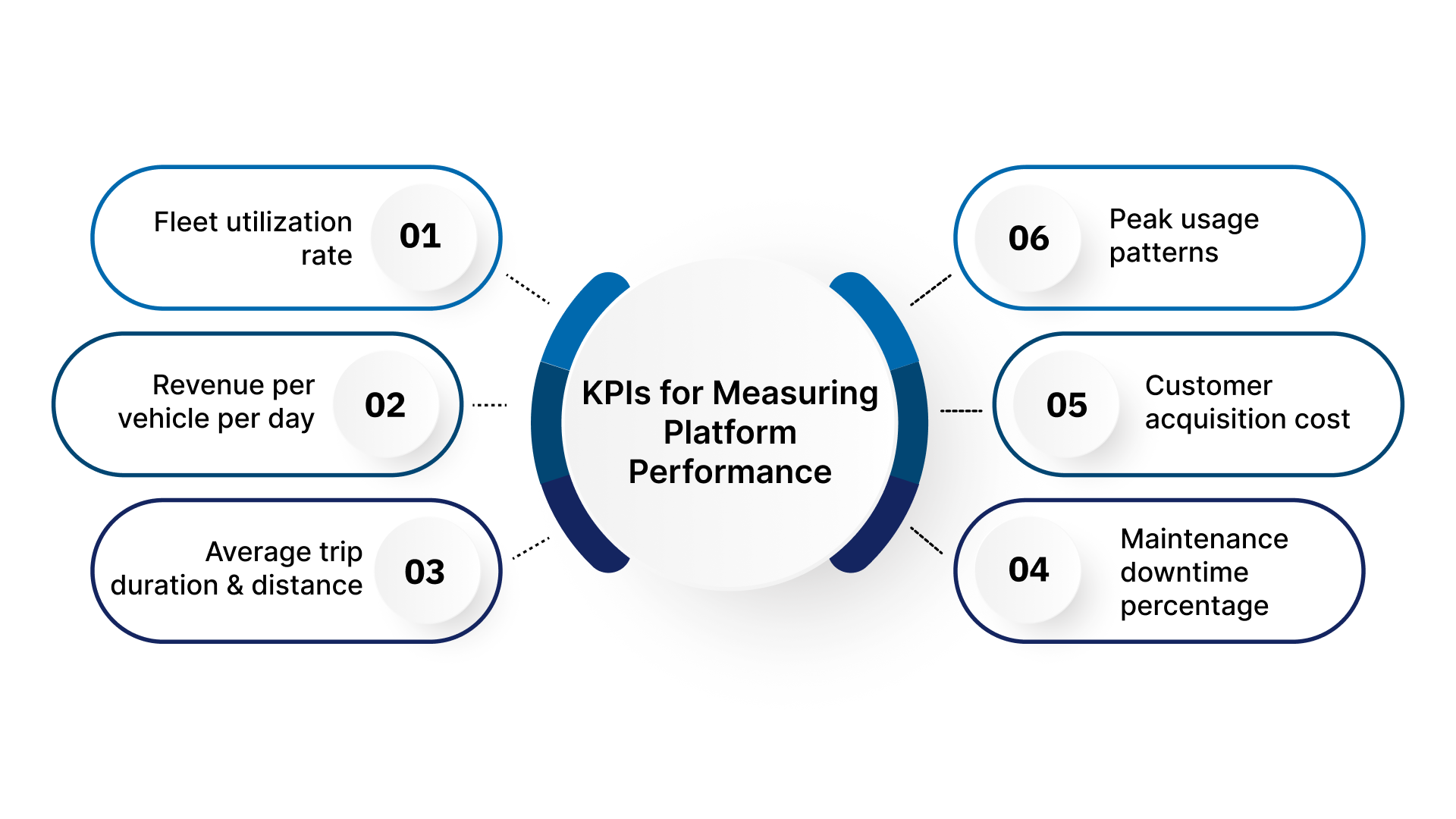
- Fleet utilization rate: Percentage of vehicles completing trips daily. Healthy programs achieve 40-60% daily utilization.
- Revenue per vehicle per day: Divide total daily revenue by fleet size. $20-40 per vehicle daily is common for urban micromobility.
- Average trip duration and distance: Longer trips generate more revenue but reduce vehicle availability. Benchmark against local expectations; resort trips differ from commuter patterns.
- Maintenance downtime percentage: Track the percentage of the fleet unavailable due to maintenance.
- Customer acquisition cost: Marketing spend divided by new signups. Compare against the average user lifetime value.
- Peak usage patterns: Identify demand spikes by time and location to inform vehicle positioning decisions and surge-pricing strategies.
Your platform should surface these metrics without custom report building. If extracting basic utilization data requires vendor support, operational decision-making slows proportionally.
Future-Proofing Your Platform Choice
MaaS technology is evolving fast. Platforms that feel “good enough” today can turn into growth bottlenecks within a year or two if they don’t adapt to emerging capabilities.
Several technologies are shaping the next phase of mobility platforms:
AI-driven demand prediction
AI models analyze travel patterns to anticipate demand spikes before they happen. This allows operators to proactively reposition vehicles, reduce idle time, and capture more revenue during peak hours.
Blockchain-based payment systems
Blockchain enables transparent, tamper-proof transaction records while lowering processing fees from 3–4% (credit cards) to around 1–2%. The result is stronger unit economics and clearer financial reconciliation.
Ultra-low latency 5G connectivity
5G supports instant vehicle unlocking and real-time fleet coordination. This improves rider experience and enables faster, more responsive customer support.
Multimodal route optimization
Intelligent routing recommends trip chains that combine your service with public transit and walking, based on live conditions. This positions your platform as part of an integrated mobility ecosystem rather than just another competing option.
Together, these capabilities transform MaaS platforms from basic fleet tools into intelligent, future-ready mobility systems.
Also Read: The Future of City Transportation: Smart Mobility Solutions
How EazyRide Addresses Core Operator Challenges?
Every B2B platform claims “comprehensive features,” but actual operator pain points reveal the true differentiators. The difference between launching in two weeks versus six months determines whether you capture market share or watch competitors establish positions. Here’s how white-label infrastructure solves real operational problems without forcing you into someone else’s marketplace.
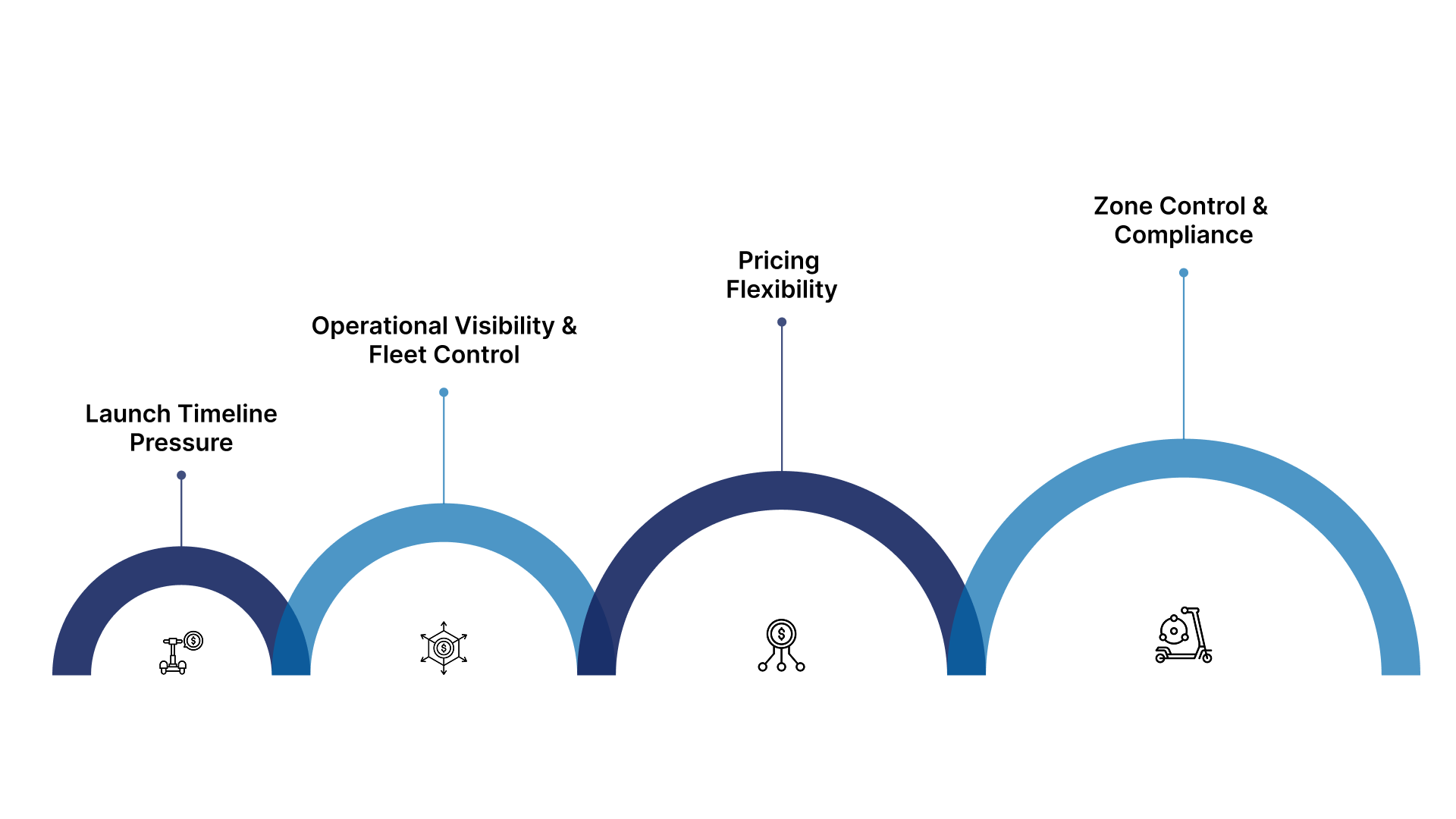
Challenge: Launch Timeline Pressure
You’ve secured permits, ordered vehicles, and signed property agreements. Your launch date is locked, but traditional platforms require 3-6 months of custom development.
How EazyRide solves this: Complete branded deployment in approximately two weeks. White-label iOS and Android apps launch with your branding. Admin dashboards and operator apps come preconfigured, no custom development required. You start generating revenue months earlier, recouping vehicle investments faster.
Challenge: Operational Visibility & Fleet Control
You’re managing 50-200 vehicles, but spreadsheets show yesterday’s locations rather than real-time status. Which scooters need charging? Where are demand hotspots?
How EazyRide solves this: A real-time analytics dashboard with heat mapping shows demand clusters. The fleet operator app enables charging crews to identify vehicles needing service and handle rebalancing efficiently. The admin dashboard centralizes trip data, revenue metrics, and vehicle health to support data-driven positioning decisions.
Challenge: Pricing Flexibility
Your campus has different user types; students need discounts, and visitors pay premium prices. Weekday patterns differ from weekend use, but your platform treats all users identically.
How EazyRide solves this: Flexible pricing engine supports time-based rates, subscriptions, and promotional codes. Create student tiers, corporate packages, or event-specific rates without vendor assistance. The difference between $0.15/minute and $0.20/minute is 33% revenue increase; pricing flexibility isn’t optional for profitability.
Challenge: Zone Control & Compliance
City regulations prohibit sidewalk riding, require designated parking zones, and limit speeds near schools. Manual enforcement is impossible, and violations threaten permits.
How EazyRide solves this: Advanced geofencing creates unlimited custom zones with specific rules. Set speed limits by area, define mandatory parking zones, and prevent ignition in prohibited areas. Compliance is enforced automatically with real-time reporting data for city officials.
Wondering how quickly you can move from planning to revenue generation? Operators using EazyRide eliminate months of custom development. See how fleet operators manage 500+ vehicles across multiple cities in real-time.
Conclusion
The MaaS market’s explosive growth creates opportunities for operators to launch profitable mobility services, but platform selection determines the trajectory of success. Consumer-focused aggregators like Uber, Lime, and Bird serve different needs than white-label platforms designed for independent operators.
The critical differentiators: deployment speed, operational control, pricing flexibility, multi-vehicle support, and analytics depth. Whether you’re launching campus transportation, resort mobility, or urban micromobility services, your platform choice establishes the foundation for scalability.
Choose infrastructure that grows with your ambitions rather than constraining them. EazyRide provides white-label platform infrastructure that enables businesses to launch branded mobility services in approximately 2 weeks, with complete operational control and multi-vehicle support.
Platform decisions made today determine competitive positioning for the next 3-5 years. Evaluate deployment timelines, control structures, and scalability before committing to infrastructure that may limit future growth.
Book a demo at EazyRide to evaluate which platform architecture fits your deployment scenario and growth roadmap.
Frequently Asked Questions
1. What is the difference between MaaS platforms and traditional fleet management software?
Traditional fleet management tracks vehicle locations and maintenance, but doesn’t include customer-facing booking, payment processing, or user apps. Mobility-as-a-Service platforms provide end-to-end infrastructure, from user discovery through payment, including rider apps, operator tools, and admin dashboards.
2. How long does it typically take to launch a micromobility service?
Launch timelines vary dramatically. Consumer marketplace integration happens in weeks but means operating under their brand. Custom platform development requires 6-12 months. White-label platforms like EazyRide enable launches in about 2 weeks because their core infrastructure is pre-built.
3. What are the main cost components of operating a MaaS service?
Significant costs include platform licensing or transaction fees (20-30% for marketplaces versus subscription models for white-label), vehicle capital costs, maintenance and rebalancing labor, charging infrastructure, insurance, customer support, and regulatory compliance. Platform choice significantly impacts unit economics.
4. Can I start with one vehicle type and expand to others later?
Platform capability varies significantly. Some white-label platforms, such as EazyRide, support multiple vehicle types within a single deployment. Others require separate implementations per vehicle type. Verify multi-vehicle support before launching to avoid rebuilding for each expansion.
5. How important is real-time data access for operators?
Real-time operational data determines profitability. Without live vehicle locations, utilization metrics, and demand patterns, you’re rebalancing fleets based on yesterday’s information. Successful operators use real-time dashboards to position vehicles strategically and adjust pricing based on actual demand.


