
 AllAnalytics and research

 14 August, 2025
 The Future of City Transportation: Smart Mobility Solutions
Urban streets are reaching a breaking point. Congestion, air pollution, and strained transit systems are making everyday movement slower, costlier, and less predictable. City infrastructure wasn’t built for today’s volume (or today’s expectations).
With 55 percent of the world’s population already living in cities, and nearly seven in ten people expected to do so by 2050, urban areas are growing at an unprecedented rate. This rapid shift is putting immense pressure on transportation systems to adapt fast.
Modern mobility demands flexibility, real-time control, and efficient use of public space. But many cities are still relying on outdated tools that offer little visibility or coordination. The result? Scattered systems and limited progress toward sustainability targets.
What’s needed isn’t just new ideas, but proven systems that work well together, grow as needed, and provide tangible benefits from the start.
Let’s explore the core mobility challenges cities must address to build smarter, more connected transportation systems.
Quick Summary
- Urban growth demands smarter systems: With cities swelling in size, traditional transport can’t keep up—mobility needs to be flexible, efficient, and tech-powered.
- Connected tech is key: IoT, AI, real-time data, and electrified vehicles enable better planning, smoother travel, and cleaner air.
- EVs fit the new model: Electric bikes and scooters reduce emissions, fill last-mile gaps, and work seamlessly in shared fleet systems.
- Challenges remain: Outdated infrastructure, fragmented platforms, and inconsistent policies still slow progress toward smarter mobility.
- EazyRide brings it together: A scalable platform for managing urban fleets with real-time tracking, predictive maintenance, and user-friendly rider tools.
What is Smart Urban Mobility?
Smart urban mobility is the use of connected and data-driven systems to improve how movement happens in cities. It focuses on optimizing traffic flow, reducing delays, and making transportation more predictable and efficient. The goal is to maximize the use of existing infrastructure while promoting long-term sustainability.
This means using digital platforms to manage fleets, tools that support real-time decision-making, and infrastructure that adjusts based on actual demand. When implemented well, smart mobility makes transportation faster, more reliable, and kinder to the planet, without relying on major construction or expansion.
What’s Fueling the Growth of Smart Mobility?
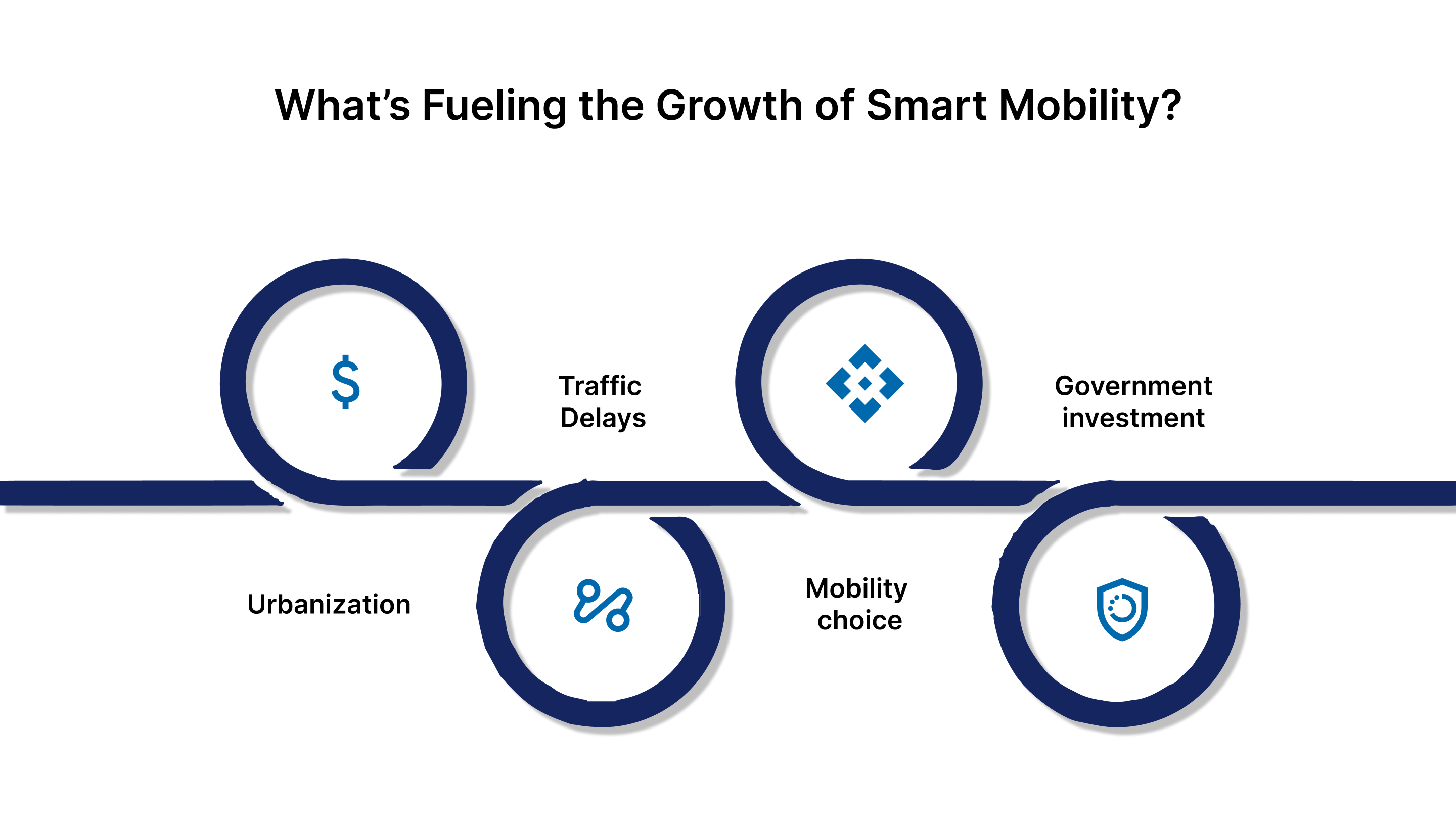
Smart mobility in the U.S. is being shaped by several key forces—economic, environmental, and behavioral. These trends are pushing cities to think beyond roads and cars, and to invest in systems that are efficient, flexible, and future-ready.
Here’s a closer look at these driving forces:
Urbanization
With a population of 300 million people, the United States has 11 cities with populations exceeding 1 million. Traditional transportation systems here struggle to meet the needs of larger populations. With more people on the move, smart mobility solutions are essential to reduce congestion and improve travel efficiency.
Traffic congestion and lost productivity
In 2024, the average U.S. driver lost 43 hours to traffic delays, which is more than a whole week of wasted time per person. Beyond frustration, it hits local economies with billions in lost productivity, fuel costs, and increased logistics expenses.
Cost and convenience over vehicle ownership
The cost of owning a vehicle, including insurance, maintenance, and parking, continues to climb. At the same time, younger urban dwellers are prioritizing convenience over ownership. That shift is opening space for shared, on-demand alternatives like electric scooters that make short trips easier and cheaper.
Infrastructure funding and federal support
The Infrastructure Investment and Jobs Act (IIJA) earmarked over $100 billion for modernizing transit, electric vehicle charging, and smart city technology. Cities now have both the funding and political backing to upgrade aging systems with connected, tech-enabled mobility solutions.
Read Also: Key Trends Shaping the Mobility Industry Future
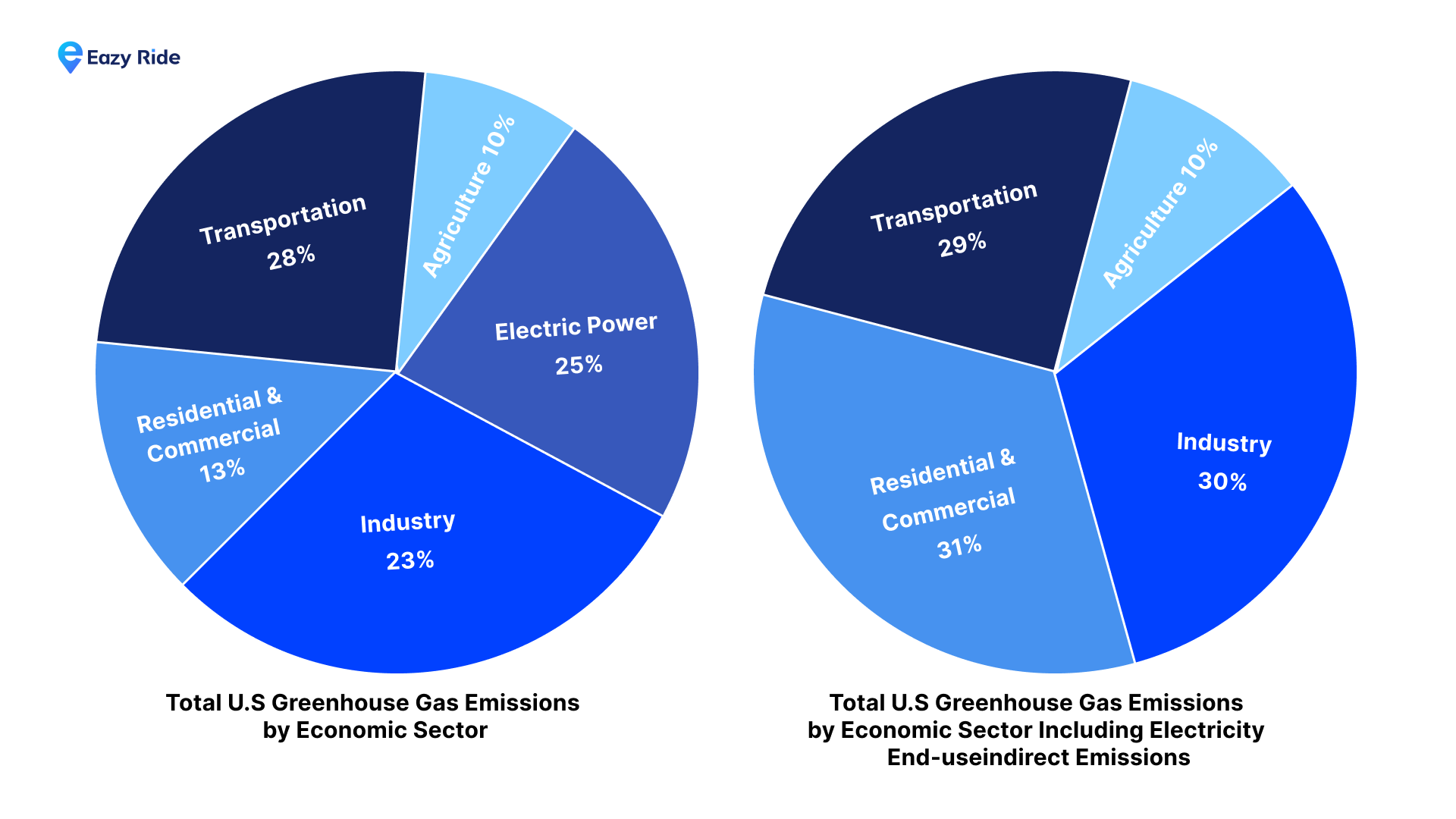
Source: United States Environmental Protection Agency
Popular Smart Mobility Solutions in Cities
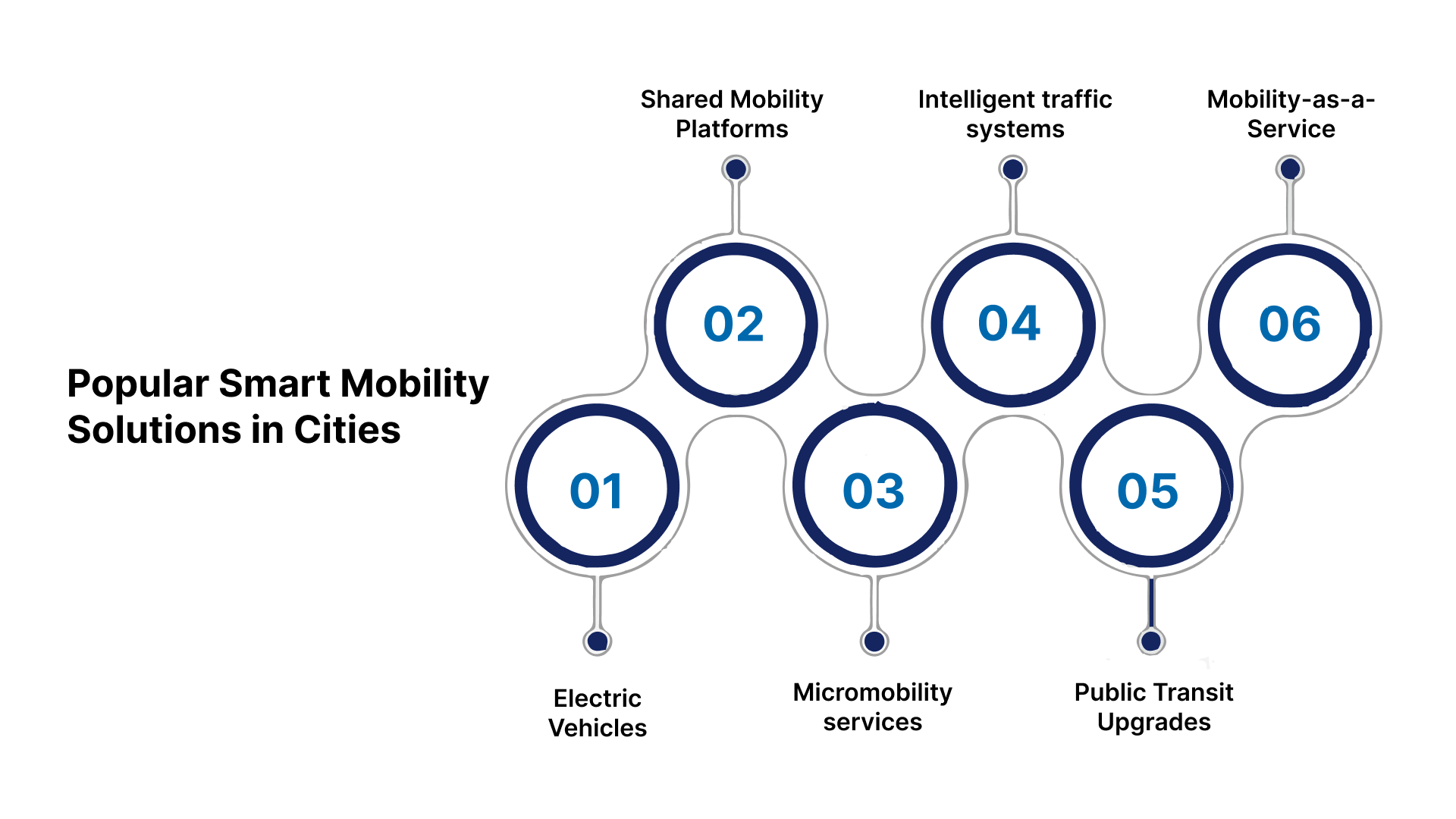
As urban populations grow and transportation demands increase, cities are turning to smart mobility solutions to enhance efficiency, reduce environmental impact, and improve the overall travel experience.
Here are the top smart mobility solutions being adopted in cities:
- Electric Vehicles (EVs): Electric vehicles are rapidly becoming a key part of urban mobility. With zero tailpipe emissions, EVs help cities reduce air pollution while providing an eco-friendly alternative to traditional gas-powered vehicles. As charging infrastructure grows, EVs are becoming increasingly accessible for daily use.
- Shared Mobility Platforms: On-demand ride-hailing services like Uber and Lyft provide flexible, cost-effective transportation without the need for private car ownership. These platforms help alleviate congestion, reduce the number of vehicles on the road, and offer convenience to users who prioritize efficiency over owning a car.
- Bike and Scooter Sharing Programs: Electric bike and scooter-sharing programs are ideal for short-distance travel. These services, available through apps, offer quick, affordable, and eco-friendly transportation solutions that complement public transit options and help reduce road congestion.
- Smart Traffic Management Systems: These systems use IoT sensors and AI to monitor and control traffic flow in real-time. By adjusting traffic signals based on current conditions, cities can reduce congestion, improve travel times, and enhance safety on the roads, making commutes smoother and more predictable.
- Public Transit Upgrades: Modernizing public transit with smart technologies like real-time tracking and mobile ticketing improves user experience and efficiency. By optimizing routes and schedules based on real-time data, cities can provide a more reliable and attractive alternative to driving.
- Mobility-as-a-Service (MaaS): MaaS integrates various transportation options into a single platform, allowing users to plan, book, and pay for multi-modal journeys. By simplifying access to different modes of transport, MaaS makes it easier for people to choose sustainable and efficient travel options, reducing dependence on private cars.
Why Are People Turning to Smart Mobility Solutions?
Smart mobility solutions are gaining traction due to their convenience, cost savings, and environmental benefits. With concerns over traffic, pollution, and high car ownership costs, people are opting for alternatives.
Here’s why people are adopting smart mobility:
- Eco-Friendly: EVs and shared services lower emissions and improve air quality.
- Flexible and Convenient: On-demand options eliminate the need for vehicle ownership.
- Cost-Effective: Reduces expenses on fuel, insurance, and maintenance.
With these benefits driving adoption, let’s explore the key features that form the foundation of smarter cities.
The Foundation of Smarter Cities: Key Mobility Features
Smart urban mobility solutions aren’t powered by a single innovation; they rely on a combination of systems working in sync. From real-time data to electrified vehicles, each part contributes to making city travel smoother, safer, and more sustainable.
Here are the key components driving these solutions:
- Better cities: When transport systems run well, cities feel less hectic and more livable. People spend less time in traffic and more time enjoying their surroundings.
- More accessible: A smart mobility network levels the playing field. It makes reliable, affordable options available to people across neighborhoods, not just those with easy access to traditional transport hubs.
- Built-in choice: Every day is different, and so are your travel needs. Smart mobility gives people options that match their schedule, weather, or mood. Whether it’s hailing a ride or using a personal electric ride, flexibility becomes part of the routine.
- Always connected: Data powers modern mobility. Live updates help reroute around congestion, apps predict arrival times, and platforms keep users informed. For vehicles that thrive on quick turns and short trips, staying connected keeps everything in motion.
- Safety everywhere: Technology is helping make streets safer for everyone. Smarter infrastructure, predictive analytics, and real-time feedback reduce collisions and improve awareness, especially important in dense city environments with lots of movement and mixed vehicle types.
- Cleaner travel: Transport doesn’t have to come at the planet’s expense. Electrified options, such as electric scooters, that support short-distance travel reduce emissions and ease the urban carbon footprint. This shift isn’t just smart—it’s necessary for greener cities.

From connected infrastructure to real-time insights, the components of smart mobility lay the groundwork for more efficient and responsive transport. But these pieces only come together through the power of technology.
Let’s explore how tech is actively shaping the future of urban mobility.
Read Also: Vehicle Rental Industry Market Trends and Future Forecast
What Role Does Technology Play in Shaping Urban Mobility?
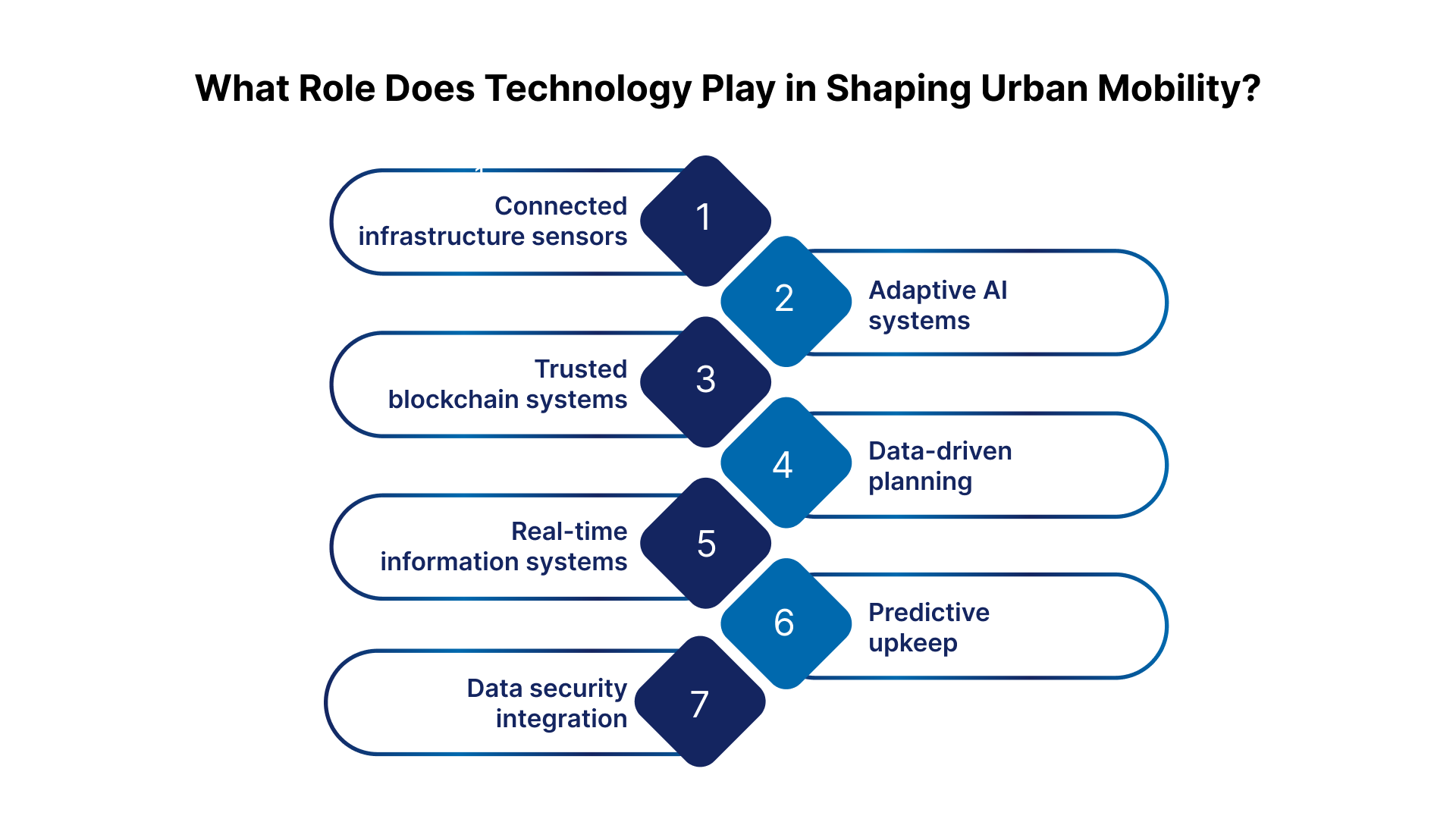
Technology is the engine driving the evolution of smart urban mobility solutions. From how data is collected to how it’s used to improve city transport, digital innovation is reshaping every turn and stop along the journey. It improves efficiency and helps urban systems stay resilient and responsive.
Let’s break down the key technologies making this shift possible:
- IoT sensors for smarter infrastructure
Sensors installed in vehicles, roads, and public spaces collect real-time data on traffic, weather, air quality, and system performance, helping reduce delays and improve safety.
- AI for predictive and adaptive systems
Artificial Intelligence helps anticipate demand, adjust traffic signals, and schedule vehicle maintenance, ensuring smoother and safer urban travel.
- Blockchain for secure and transparent operations
By enabling tamper-proof records and secure transactions, blockchain supports mobility systems in areas like ride payments, maintenance logs, and identity verification.
- Big data for strategic planning
Millions of daily data points are analyzed to reveal usage patterns, forecast demand, and guide decisions that shape more efficient transportation networks.
- Real-time information systems
From vehicle tracking to traffic alerts, these systems keep operators and users updated, making urban travel less stressful and more reliable.
- Predictive maintenance to reduce downtime
Smart diagnostics powered by AI and IoT alert operators about potential issues early, reducing disruptions and optimizing fleet uptime.
- Data integration and privacy safeguards
Connecting different platforms while protecting user privacy ensures data works smarter, not just harder, in delivering unified mobility experiences.
Example: Electric Scooters with Real-Time Tracking
Electric scooter businesses use IoT sensors and GPS technology to track the location and usage of each scooter in real-time. This allows for efficient fleet management, where scooters are moved to areas of high demand, reducing wait times for users.
Additionally, data collected from these scooters is used to predict demand patterns, ensuring availability during peak times and optimizing maintenance schedules to minimize downtime.
Technology quietly weaves itself into every part of urban mobility, from traffic signals that adapt in real-time to apps that make last-mile travel easier. As cities grow smarter, the modes of transport themselves must evolve, too.

How Can Electric Vehicles Contribute to Smart Urban Mobility?
Electric vehicles (EVs) are becoming a vital part of the modern urban transport mix. As cities evolve to meet sustainability goals and improve everyday travel, EVs offer a cleaner, quieter alternative to traditional fuel-based transport. Their growing presence supports a smarter and more efficient approach to mobility.
To understand how EVs help power this transformation, it’s worth looking at the specific ways they fit into and enhance smart mobility systems.
- Cleaner transport, cleaner air: EVs produce zero tailpipe emissions, helping reduce urban air pollution and making city environments healthier and more breathable.
- Better suited for short distances: Many EVs, especially scooters and bikes, are ideal for short daily trips. They fill the gap between public transport and walking, helping reduce dependence on cars.
- Low maintenance, low noise: With fewer moving parts and no engine noise, EVs are cheaper to maintain and contribute to quieter streets, improving overall city life.
- Supports smart infrastructure: EVs can interact with charging stations, fleet systems, and traffic platforms, feeding data back into the system for smarter planning and real-time management.
- Energy-efficient by design: Electric motors are far more efficient than combustion engines, helping cities cut energy use without sacrificing mobility.
- Fits shared-use models: Scooters and other EVs work well in shared fleets, offering flexible, on-demand transport that fits into broader multimodal systems.
Electric vehicles play a vital role in reimagining how cities move, but even the smartest solutions face real-world limitations. As infrastructure evolves and adoption increases, new roadblocks emerge. Let’s explore these in close detail next.
What Are the Key Challenges in Urban Mobility?
Smart urban mobility solutions may be gaining traction, but they’re still running up against old problems with new urgency. Cities are eager to move forward, but the road is filled with speed bumps, some physical and others digital.
And here’s where most of the wheels get stuck:
| Key Challenge | Description |
|---|---|
| Legacy Infrastructure | Cities still rely on outdated road systems with limited digital integration. Public transit, traffic signals, and vehicle networks operate in silos, hindering smart mobility. |
| Interoperability Issues | Effective coordination among data platforms, transportation operators, and local governments is needed. Fragmented tech systems and vendor lock-in make it hard to deliver unified experiences. |
| Inconsistent Policies | Policies vary widely across states, cities, and districts, leading to friction for operators and confusion for the public, slowing the adoption of smart mobility solutions. |
| Limited Real-Time Insights | Real-time data is often inaccurate or not actionable. Without timely insights on usage, demand, and congestion, cities and operators struggle to optimize mobility flow. |
| Public Trust and Accessibility | Smart mobility solutions must be intuitive, inclusive, and equitable. If access is uneven or perceived as exclusive, adoption slows and resistance builds. |
Urban mobility is becoming smarter. But without coordination, modern infrastructure, and inclusive design, the gaps between vision and execution remain wide.
The Role of EazyRide in Smart Urban Mobility Solutions
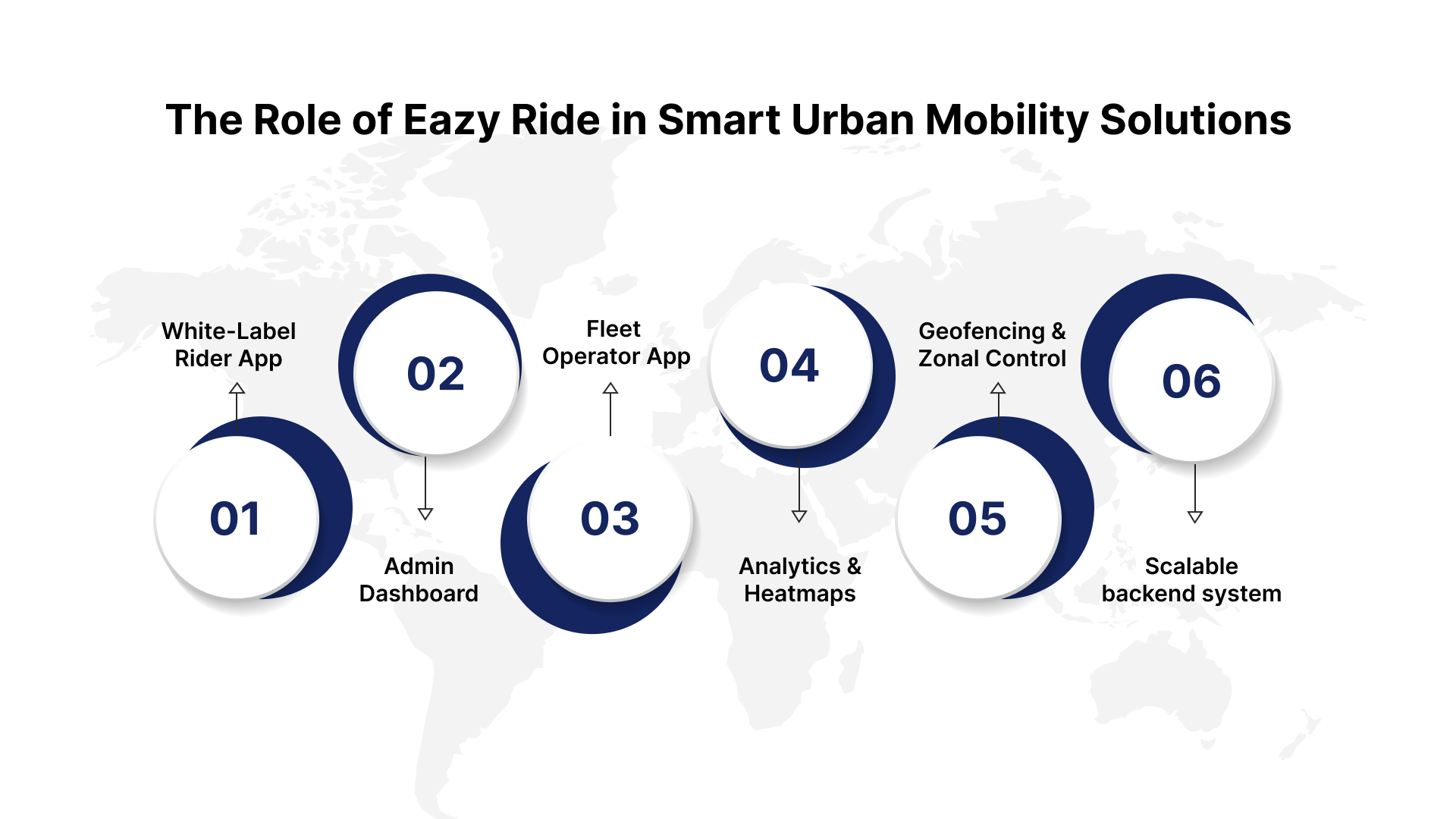
Smart urban mobility thrives on seamless operations, and that’s precisely where EazyRide steps in. It brings structure and Intelligence to smart electric mobility, making it easier to run and scale fleets in crowded city environments.
As urban mobility systems evolve, managing electric bikes and scooters goes far beyond tracking. EazyRide turns scattered assets into coordinated, high-performing networks built for modern transport demands.
Here’s what makes it worthwhile:
- White-Label Rider App: A customizable iOS and Android app where users can find, unlock, and ride vehicles. It includes an in-app wallet, map integration, ride history, and a help center, ready for your brand.
- Admin Dashboard: One central place to manage fleet size, pricing, geo-boundaries, user data, promotions, and real-time analytics. Built for better oversight and faster decisions.
- Fleet Operator App: For your ground team to rebalance, charge, and maintain vehicles. Agents can scan QR codes, check status, and log maintenance on the spot.
- Analytics & Heatmaps: Understand your business with AI-powered insights into trip frequency, idle zones, peak hours, and revenue patterns. These data points help you place the right vehicle in the right place at the right time.
- Geofencing & Zonal Control: Set ride zones, no-go areas, parking zones, and speed-limited regions to align with local rules and ensure smooth operations.
- Scalable backend system: A flexible platform that grows with your fleet, whether you’re managing dozens of vehicles or hundreds.
Conclusion
Urban transport is shifting fast. Cities now prioritize clean, connected, and space-efficient mobility over car-centric planning. This change opens real opportunities for those who can deploy and manage shared electric fleets with precision and purpose.
Operators who take control of uptime, distribution, and user experience will outperform those still relying on ad hoc tools. Running a modern fleet means more than vehicles on the street; it means tight system integration, real-time insights, and a reliable platform that scales with demand.
FAQs
1. What types of vehicles work best for smart urban mobility fleets?
Vehicle choice depends on your use case and geography. In dense urban cores, lightweight electric scooters and e-bikes excel due to their small footprint and low maintenance.
For mid-distance or cargo needs, compact electric mopeds or cargo e-bikes offer better utility. Focus on vehicles that support modular repairs, remote diagnostics, and quick charging.
2. Can smart mobility solutions be tailored for seasonal or event-based demand?
Yes. Modern fleet systems allow dynamic deployment and rebalancing. You can scale up vehicle density in tourist hotspots during peak seasons or near event venues on demand. Geo-fencing, real-time data, and flexible pricing help tailor services to temporary surges in demand.
3. What regulatory factors should operators monitor before launching in a new city?
Operators must review local requirements around device type, maximum speed, parking rules, insurance coverage, and data sharing. Many cities also mandate fleet caps, equity-based deployment zones, and performance benchmarks. Staying compliant early prevents future operational disruptions.
4. How can smart mobility platforms help reduce theft and vandalism?
Fleet platforms integrate GPS tracking, geofencing, tamper detection, and automatic alerts. Some also lock down devices remotely or alert nearby teams when unauthorized movement occurs. Strong user verification processes and incentive-driven rider behavior also help mitigate losses.
5. How does a white-label app benefit my business compared to building in-house?
A white-label solution lets you launch quickly with proven features, rider onboarding, payments, real-time tracking, support, and analytics while keeping your brand front and center. It reduces upfront development cost, minimizes bugs, and offers ongoing updates without requiring an internal dev team.


