
 AllMicro Mobility Model

 26 December, 2025
 Which Electric Scooter Model Does Lime Use?
Lime operates in 200+ cities with thousands of green scooters, now synonymous with urban micromobility. When exploring a Lime-style scooter rental service, one key question arises: what hardware powers these fleets? The answer highlights more than specs; it shows the difference between building a vertically-integrated empire and launching a flexible, branded service.
Lime mainly uses the Lime Gen4 scooter, custom-built through Segway-Ninebot and Okai. These scooters involve millions in R&D, proprietary batteries, and supply chain optimization for Lime’s scale. For smaller operators with fewer than 500 vehicles, replicating this approach isn’t necessary or practical.
The micromobility landscape has shifted since Lime’s early days. White-label platforms, commercial hardware, and mature regulations have made market entry easier. Knowing what Lime uses is helpful, but knowing what works for independent operators is what drives success.
Key Takeaways
- Lime primarily uses the Gen4 scooter, which features swappable batteries and IoT connectivity.
- Gen4 specs include 10-inch pneumatic tires, 350W motor, and reinforced frame for a 3+ year lifecycle.
- Lime’s vertically integrated model doesn’t translate to smaller operators that need flexibility.
- You can launch with commercial-grade scooters from established manufacturers in 2-4 weeks.
- White-label software like EazyRide lets you control branding, pricing, and operations without Lime’s capital requirements.
Understanding Lime’s Hardware Strategy
When operators research the type of scooter Lime uses, they often try to copy proven hardware. The logic seems sound: Lime scaled fast, so their scooter specs must be the reason.
But this approach confuses correlation with causation. Lime’s success came far more from timing, deep capital, regulatory strategy, and strong software systems than from motor wattage or tire size.
The real question isn’t about hardware specs. It’s about operational architecture.
Operators need to ask:
- Do you want custom-built vehicles with 12–18 month lead times, or off-the-shelf scooters you can deploy next month?
- Is vendor lock-in with a single manufacturer acceptable, or do you need the flexibility to switch suppliers based on cost and performance?
- Can your business absorb the capital intensity of vertical integration, or do you need an asset-light model that preserves cash for marketing and daily operations?
For most independent operators, software quickly becomes the deciding factor.
A few months into operations, the most significant problems aren’t mechanical. They’re operational:
- Inability to adjust pricing dynamically
- Limited real-time visibility into fleet performance
- No geofencing tools when city regulations change
- Weak rebalancing tools to move vehicles to high-demand zones
Hardware still matters. But long-term success is driven by platform infrastructure, not vehicle specifications.
The Micromobility Market in 2025: Why Your Timing Matters
The shared micromobility market has grown rapidly, with global market value rising and ridership hitting new highs. In 2024, at least 225 million shared micromobility trips were taken across North America, reflecting a 31 % increase over the prior year and showing strong demand for alternatives to cars. 415 cities now operate shared bike or scooter systems, underscoring broader geographic adoption.
What’s fundamentally changed since Lime and Bird’s early dominance is the dramatic reduction in barriers to entry. What once required custom app development, complex IoT work, and proprietary vehicles with six‑figure upfront costs can now be launched in 2–4 weeks using white‑label platforms and commercial‑grade scooters with software costs under $10 K.
Regulation has also matured: clear permit frameworks and standardized programs now exist in many more cities, making it easier for new operators to enter the market.
Most importantly, private operators are now thriving in niches where the largest brands don’t compete as strongly. College campuses, corporate parks, resort areas, and mid‑sized cities often deliver better utilization rates, fewer regulatory hurdles, and more favorable unit economics than dense urban cores, making micromobility a viable business in more places than ever before.
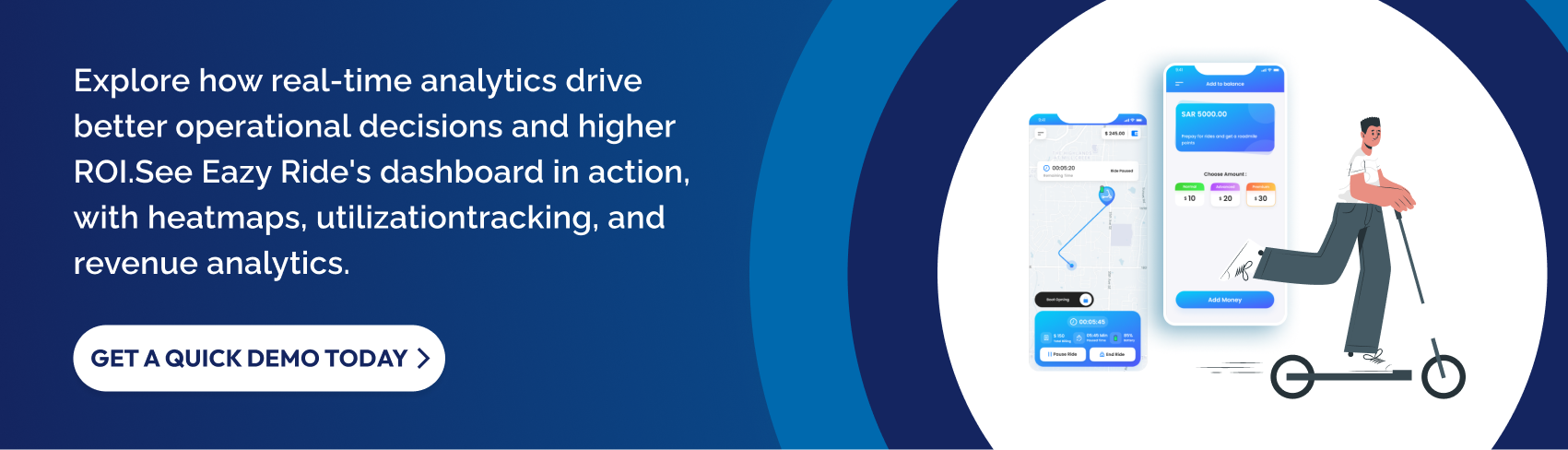
See how white-label platforms give you hardware flexibility without vendor lock-in. Explore how EazyRide supports multiple vehicle types and manufacturers from day one.
Also Read: Why E-Scooters Work Great for DoorDash Delivery?
What Scooters Does Lime Use? Breaking Down the Gen4
Now that we’ve established why platform infrastructure matters more than hardware replication, let’s cover the actual Lime scooter specifications that operators want to understand. Lime’s Gen4 represents their fourth major hardware iteration, incorporating lessons from millions of rides and operational data collected since 2017. The Gen4 isn’t just a scooter; it’s a mobile IoT device optimized for Lime’s specific operational model, regulatory environment, and maintenance infrastructure.
These specifications reflect Lime’s strategic priorities: durability over lightweight portability, swappable batteries to eliminate downtime from charging, integrated IoT for real-time tracking, and reinforced construction designed for 3+ year lifecycles in high-utilizationenvironments. Understanding these choices helps contextualize your own hardware decisions, even if you don’t replicate them directly.
Lime Gen4 Specifications
- Motor: 350W brushless rear hub motor
- Top Speed: 15.5 mph (25 km/h), software-limited based on local regulations
- Range: 40-50 miles on swappable battery
- Battery: Proprietary swappable battery system, charged off-vehicle
- Tires: 10-inch pneumatic tires (front and rear)
- Brakes: Electronic front brake, mechanical rear drum brake
- Weight: Approximately 58 lbs (26 kg)
- Max Load: 300 lbs (136 kg)
- Frame: Aluminum alloy with reinforced neck and stem
- Connectivity: Built-in IoT module with GPS, 4G, and accelerometer
- Expected Lifecycle: 3+ years in high-utilization fleet operations
How Lime’s Approach Differs: Vertical Integration?
Lime manufactures vehicles through exclusive partnerships rather than purchasing off-the-shelf models. This vertical integration strategy gives them control over the supply chain, exact specifications, component sourcing, and profit margins. It’s the same approach Tesla uses for electric vehicles: own the design, control the manufacturing relationship, and optimize every detail for your specific use case.
But vertical integration carries massive capital commitments and long production timelines. Lime can negotiate custom battery systems because they’re ordering 50,000 units. They can specify exact frame reinforcements because they have multi-year manufacturing contracts. They can demand specific IoT module configurations because they represent enormous volume for suppliers.
For a new operator launching with 50-200 vehicles, this approach rarely makes sense. You n
eed vehicles available in weeks, not quarters. You want flexibility to test different manufacturers without multi-year contracts.
You likely lack the leverage to negotiate custom specifications or the capital to pre-purchase large inventory. And critically, you need to preserve cash for marketing, operations, and the inevitable unexpected challenges that emerge during launch.
Also Read: Exploring the Unique Solar-Powered Electric Scooters
What Lime and Bird Comparisons Miss for Independent Operators?
Most online comparisons between Lime and Bird focus on rider-facing features. But for operators, the real difference lies in ownership, control, and access. The table below breaks this down from an independent operator’s perspective.
| Aspect | Lime & Bird | Independent Operator with White-Label Platform |
|---|---|---|
| Core focus | Consumer ride experience | Operator control and scalability |
| Hardware | Custom-built, proprietary scooters | Commercial-grade scooters from multiple manufacturers |
| Platform access | Closed ecosystem | Fully accessible, white-label software |
| Branding | Lime/Bird branding only | Your own brand and identity |
| Pricing control | Fixed by Lime/Bird | Fully controlled by the operator |
| Customer data | Owned by Lime/Bird | Owned by the operator |
| Expansion flexibility | Limited, centrally decided | Flexible, market-driven expansion |
| Vendor flexibility | Locked to one manufacturer | Ability to switch or test suppliers |
| Business role | End user or contractor | Platform owner and service operator |
| Long-term economics | Platform-dependent | Favors independence with the right software |
This is where the real opportunity lies, not in choosing between Lime or Bird, but in building your own branded service. By combining reliable commercial hardware with platform-agnostic, white-label software like EazyRide, operators gain control over pricing, data, branding, and growth without being locked into another ecosystem.
How to Choose Scooters for Your Fleet: A Decision Framework
Instead of asking “what scooter does Lime use,” successful operators ask strategic questions about their specific operational context, financial constraints, and market conditions. Hardware selection isn’t about copying industry leaders; it’s about matching vehicle characteristics to your unique requirements. The right scooter for a flat college campus differs dramatically from the right choice for a hilly resort town.
This decision framework helps you evaluate options systematically rather than defaulting to whatever hardware Lime happens to use. Each factor influences not just initial purchase decisions but long-term operational efficiency, maintenance costs, and customer satisfaction. Think through these dimensions before comparing specific models or manufacturers.
1. What’s Your Operating Environment?
- Urban density: High-traffic areas need more durable frames and theft-resistant features
- Terrain: Hilly cities require more powerful motors (500W vs 350W)
- Weather: Wet climates need better water resistance ratings (IP54 minimum)
- Infrastructure: Poor road conditions demand larger tires and better suspension
2. What’s Your Maintenance Model?
- In-house team: Prioritize serviceability and parts availability
- Third-party contractors: Choose models with strong local repair networks
- Hybrid approach: Select scooters with standard parts across multiple manufacturers
3. What’s Your Financial Model?
- Capital purchase: $400-$800 per commercial scooter, higher upfront cost but lower ongoing fees
- Lease/financing: $50-$150/month per vehicle, preserves capital but increases the total cost.
- Revenue share: Some suppliers offer vehicles with revenue-sharing arrangements
4. What’s Your Launch Timeline?
- Immediate (2-4 weeks): Choose in-stock commercial models from established manufacturers.
- Near-term (1-3 months): Custom branding on standard models
- Long-term (6+ months): Custom specifications or partnership manufacturing (rarely worthwhile for fleets under 1,000 vehicles)
Also Read: Scooter Fleet Business Guide for U.S. Operators Scaling in 2026
How EazyRide Addresses the Hardware-Platform Gap?
Finding scooters isn’t the hard part. Commercial-grade vehicles from brands like Segway, NIU, and Apollo are easy to source with short delivery timelines. The real challenge is operations. Most operators struggle to connect this hardware to a scalable system without:
- Building custom software
- Paying high enterprise SaaS fees
- Getting locked into a single vendor
EazyRide solves this by giving independent operators access to enterprise-grade fleet infrastructure, without the cost, complexity, or loss of control.
Key Challenges EazyRide Solves
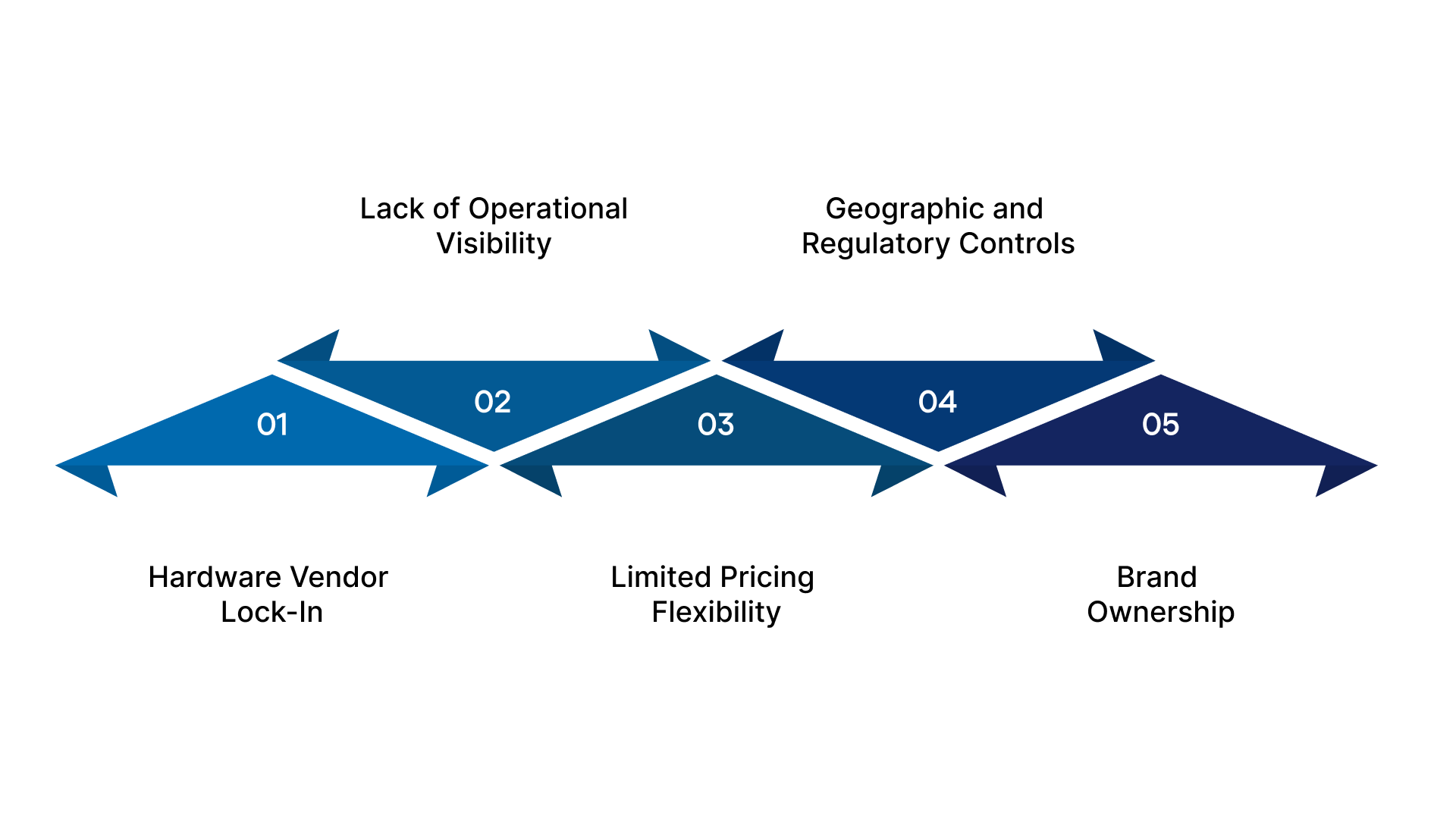
1. Hardware Vendor Lock-In
Many platforms only support one manufacturer, limiting flexibility and bargaining power.
EazyRide supports multiple vehicle brands through standardized IoT integration:
- Use scooters from different manufacturers on one platform.
- Switch or test suppliers without changing software.
- Keep the same rider app and brand experience across all vehicles.
You stay flexible, not dependent.
2. Lack of Operational Visibility
Without real-time data, operators rely on guesswork.
EazyRide provides:
- Live fleet tracking with map views
- utilizationheatmaps by time and location
- Automated alerts for charging and maintenance
- Operator apps that guide field teams to exact vehicles
You manage with clarity, not spreadsheets.
3. Limited Pricing Flexibility
Static pricing limits growth and profitability.
With EazyRide, you can:
- Set time-based and zone-based pricing.
- Run promotions, discounts, and subscriptions.
- Update prices instantly from the dashboard
You adapt to market changes in real time.
4. Geographic and Regulatory Controls
Manual enforcement of city rules doesn’t scale.
EazyRide enables:
- Custom geofenced zones
- Speed limits in pedestrian areas
- Approved parking and no-ride zones
- Automatic enforcement through the app
Compliance is built in, not reactive.
5. Brand Ownership
Using third-party platforms builds someone else’s brand.
EazyRide offers:
- Fully white-labelled iOS and Android rider apps
- Your logo, colours, and company name
- Direct ownership of customer relationships and data
You build long-term brand equity and independence.
The Bottom Line
Lime uses custom Gen4 scooters built through manufacturing partnerships with Segway-Ninebot and Okai. These vehicles feature swappable batteries, reinforced frames, and integrated IoT designed for their specific operational scale. But replicating their vertically-integrated model isn’t your path forward.
Your opportunity lies in leveraging commercial-grade hardware from established manufacturers, paired with white-label software that gives you operational control without requiring massive capital. You don’t need to replicate Lime’s approach. You need flexibility, speed to market, and systems that scale with your growth while preserving strategic independence.
Frequently Asked Questions
1. What scooter does Lime use in 2025?
Lime primarily uses the Lime Gen4 scooter, manufactured in partnership with Segway-Ninebot and Okai. The Gen4 features swappable batteries, improved durability, and enhanced safety, designed for high-utilizationshared fleet operations.
2. Can you buy a Lime scooter for personal use?
Lime occasionally sells refurbished Gen 3 and older models through liquidation sales and partner retailers. The Gen4 models are primarily reserved for fleet operations and aren’t widely available for individual purchase.
3. How much does it cost to rent a Lime scooter?
Lime scooter rental prices vary by city. Typical costs range from a $1 unlock fee to $0.15- $0.45 per minute. Major cities like San Francisco average $1 + $0.39/min, while Atlanta costs around $1 + $0.25/min.
4. What’s the difference between Lime and Bird scooters?
Both use custom-built scooters designed for sharing operations. Lime focuses on the Gen4 with swappable batteries, while Bird uses Bird Three and Bird Flex models. From a fleet operator’s perspective, both represent vertically integrated, closed ecosystems.
5. Who makes Lime scooters?
Lime collaborates with manufacturers, including Segway-Ninebot and Okai, to produce custom-designed scooters. These are purpose-built for shared fleet durability, featuring reinforced frames, IoT connectivity, and swappable battery systems optimized for daily charging cycles.


