
 AllAnalytics and research

 8 August, 2025
 Fleet Maintenance and Management Guide 2025
Managing a fleet can be challenging with ongoing maintenance needs and unexpected breakdowns that require immediate attention, making it difficult to focus on long-term planning. The pressure to keep everything running smoothly, all while staying on top of regulations and customer expectations, is no small feat.
We get it. You’re already stretched thin. It’s hard enough to keep up with day-to-day operations, let alone predict when something will go wrong. And when it does, it’s never at a good time, right? Downtime, whether from unexpected breakdowns or extended repairs relying on third-party services, leads to lost revenue, frustrated customers, and added stress on your team.
But what if it didn’t have to be this way? What if you could minimize those surprises and have a clearer sense of your fleet’s health at any given moment? We’re here to help you get to that point with simple, actionable steps that don’t require you to be a fleet expert. Let’s dive into how you can make that happen.
Quick Summary
- What fleet maintenance management is and why it’s critical for fleet reliability.
- The key elements of an effective fleet maintenance strategy.
- The difference between fleet management and fleet maintenance management.
- How technology helps streamline fleet monitoring and predictive maintenance.
- The benefits of proper fleet maintenance in reducing downtime and repair costs.
- Practical strategies to improve fleet management without needing dedicated staff.
What is Fleet Maintenance Management?
Fleet maintenance management is crucial for keeping your vehicles running smoothly and ready for use by encompassing regular maintenance, timely repairs, real-time tracking, and monitoring. By proactively utilizing the right technology, you can minimize downtime and maintain reliable service for your customers
The fleet management market is growing rapidly, expected to expand from USD 29.30 billion in 2025 to approximately USD 70.24 billion by 2034, representing a CAGR of 10.20%. This growth is driven by increasing adoption of technology and the need for more efficient fleet operations, which makes effective fleet maintenance management more critical than ever.
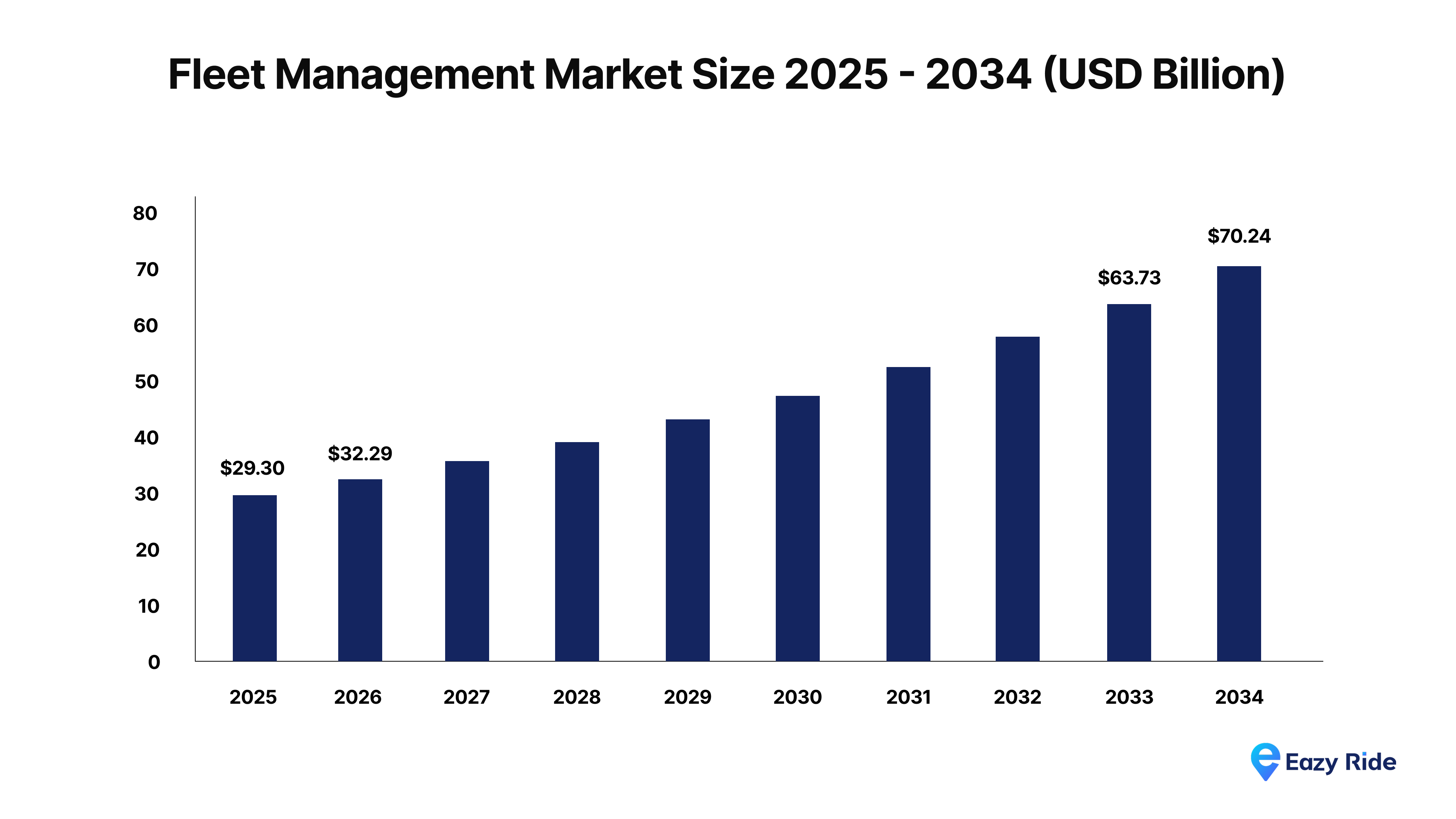
Source: Precedence Research
What is the Difference Between Fleet Maintenance and Fleet Maintenance Management?
Fleet maintenance is the hands-on process of keeping your vehicles in good condition. It includes routine tasks like checking battery health, tire wear, and performing necessary repairs to address any issues that arise. The focus here is on ensuring each vehicle is functional and ready to operate without interruption.
Fleet maintenance management, however, takes a broader, more strategic approach. It’s about organizing and optimizing all aspects of fleet maintenance from scheduling regular inspections and tracking performance to managing repair costs and minimizing downtime. It’s the system that ensures maintenance is done efficiently and at the right time, reducing surprises and improving overall fleet reliability.
In essence, fleet maintenance is the action of fixing and servicing the vehicles, while fleet maintenance management is about creating an optimized, data-driven process to keep the entire fleet operating smoothly.
Alright, you’ve got the big picture. Vehicles need care, attention, and a bit of foresight. But what actually makes a maintenance strategy tick? Let’s zoom in on the nuts and bolts. These are the pieces that, when working together, keep your fleet running perfectly and your business out of the repair shop.
Key Elements of Fleet Maintenance Management
Running a fleet is a bit like managing a delivery schedule. Every vehicle, task, and timing must align. When one thing slips, such as a missed oil check or delayed repair, the rest of the system begins to feel the impact. And it’s disruptive. That’s why having clear systems in place matters.
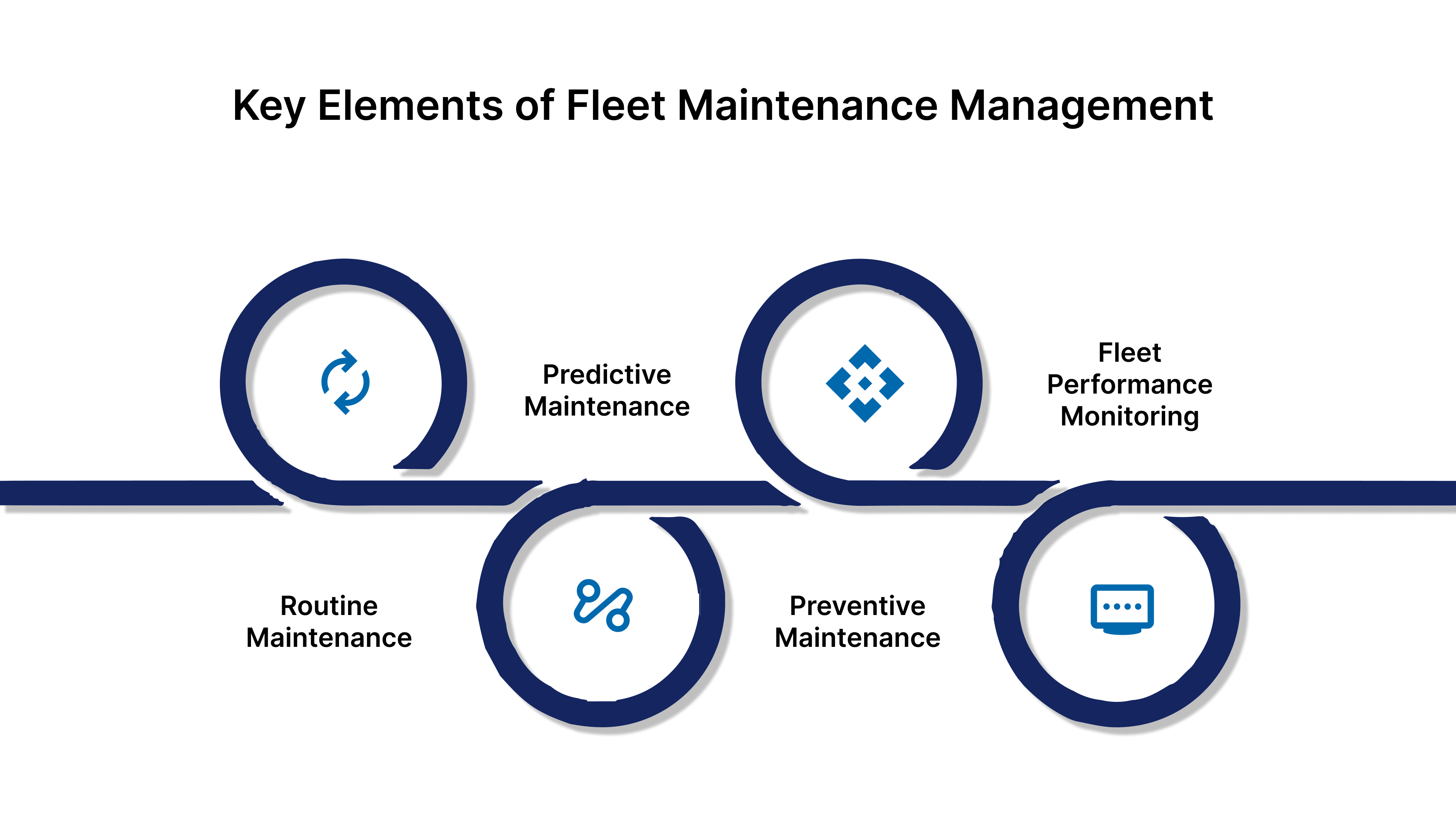
Here are the key elements that should be in place:
- Routine Maintenance: Regular inspections and service schedules for things like tire rotations, battery checks, and fluid changes. Staying on top of these tasks reduces the risk of unexpected breakdowns and extends the lifespan of your vehicles.
- Predictive Maintenance: Using data and analytics to identify potential issues before they cause problems. By analyzing usage patterns, you can schedule repairs proactively, minimizing downtime and costly emergency fixes.
- Preventive Maintenance: Replacing worn-out parts before they fail is a simple but effective way to avoid more costly repairs. Preventive maintenance ensures your scooters are always in good shape, reducing the chance of sudden problems.
- Fleet Performance Monitoring: Keeping track of key metrics like fuel consumption, tire wear, and vehicle health. Real-time data allows you to adjust operations on the fly, ensuring your vehicles perform at their best.
Good fleet management involves using technology and data to stay one step ahead. By monitoring your vehicles and addressing maintenance issues promptly, you can save money and deliver a more reliable service to your customers.
Role of Technology in Fleet Management
How do you keep track of 300 scooters scattered across a busy city, figuring out which ones are in use, which are running low on charge, and which might be due for maintenance?
You already know it sounds simple on paper, but it quickly turns into a full-time scramble once you’re actually doing it. Breakdowns pop up unannounced, a few scooters disappear from the system, and suddenly you’re out late recovering units you didn’t know had issues.
Technology helps manage complex tasks by using tools like GPS and sensors that collect data, allowing you to track each scooter’s location, battery status, and usage easily. This allows you to act quickly when something goes wrong and to optimize how and where your fleet operates throughout the day.
It also helps you stay ahead of maintenance. Predictive diagnostics flag issues before they become breakdowns, allowing you to schedule servicing proactively. Fewer surprises mean better customer satisfaction and a healthier bottom line, all of which result from smarter fleet management.
Once technology takes care of tracking and monitoring, maintenance becomes easier to plan. This makes the whole operation run better. Next, let’s look at the key benefits effective fleet maintenance management brings.
Benefits of Effective Fleet Maintenance Management
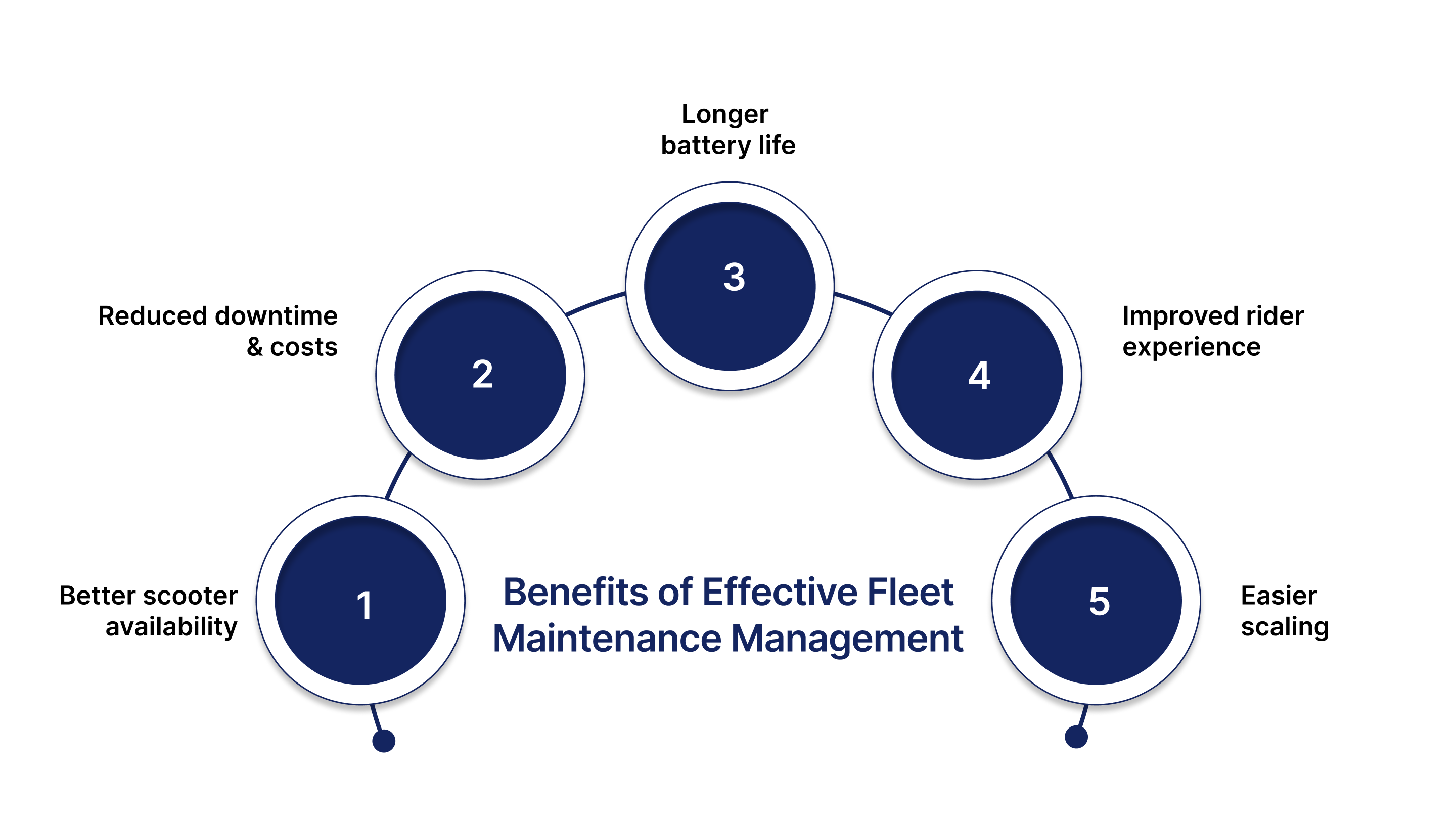
A well-managed fleet brings structure to the everyday chaos and creates space for growth. With systems that track performance, highlight issues before they escalate, and help your team stay focused, operations become smoother and more predictable.
Here are some of the practical benefits that come from managing your fleet effectively:
- Better scooter availability: When scooters are regularly maintained and battery levels are monitored in real time, more of your fleet stays active throughout the day. This means you can serve more riders without needing more scooters.
- Less downtime and lower repair costs: By identifying issues before they escalate into breakdowns, you can avoid expensive last-minute repairs. Management becomes scheduled and predictable, which keeps more scooters on the road and your costs in check.
- Longer battery and vehicle life: Effective fleet maintenance management includes tracking battery usage and wear analysis, which helps extend the lifespan of both scooters and their key components. That means fewer replacements and better long-term savings.
- Improved rider experience: When scooters are in good condition and easily accessible, riders trust your service. This leads to better reviews and increased repeat usage, especially during high-demand periods.
- Easier scaling: A smooth-running fleet gives you the confidence to grow into new areas or take on larger volumes without losing control. With systems in place, adding more scooters or locations becomes a lot more manageable.
Knowing the perks of effective fleet management is great, but scooters don’t stay on the road with plans alone. To turn insight into impact, you need a few smart moves. Let’s discuss that next.
5 Practical Strategies to Improve Fleet Maintenance Management
A garden requires consistent care and attention to thrive, and the same goes for your scooters. They need regular check-ups and maintenance to stay in top condition. When you give them the right care, your fleet will thrive. Neglect it, though, and you’ll end up with a patch of weeds instead of a healthy, thriving operation.
Here are five practical strategies to keep your maintenance sharp and your fleet rolling without drama.
1. Set Up a Preventive Maintenance Schedule
Preventive maintenance is essential for avoiding unexpected breakdowns and keeping your bikes in good working condition. Regular checks help identify minor issues before they escalate into major problems.
What You Should Do:
- Create a maintenance calendar with tasks divided by frequency (weekly, monthly, quarterly).
- Weekly checks: Inspect tire pressure, clean bikes, and look for any visible damage.
- Monthly checks: Examine chain, gears, and brake systems for wear.
- Quarterly checks: Perform a full inspection of the bike’s frame, motor (for e-bikes), and battery health.
2. Invest in Fleet Management Software
Fleet management software is essential for tracking bike performance, scheduling maintenance, and keeping tabs on repairs. By centralizing your data, you can manage your fleet without needing staff on hand.
What You Should Do:
- Choose software that offers real-time GPS tracking and maintenance reminders.
- Use the software to automate and manage maintenance schedules and track bike usage.
- Leverage data to identify patterns and optimize the timing of repairs.

3. Enable User-Reported Maintenance Issues
Allowing users to report issues directly ensures that you’re aware of problems as soon as they arise. This will help you stay ahead of potential repairs and minimize downtime for your bikes.
What You Should Do:
- Add a maintenance reporting feature to your app or website, where users can easily report issues (e.g., flat tires, broken brakes).
- Include clear checkboxes for common issues, making it easy for users to specify what’s wrong.
- Act promptly on reports by scheduling repairs or replacements based on the urgency.
4. Partner with Local Repair Shops for Quick Turnaround
Forming partnerships with local repair shops ensures that you can get your bikes fixed quickly and efficiently when they need attention.
What You Should Do:
- Establish relationships with reliable repair shops familiar with e-bike systems.
- Set clear service level agreements (SLAs) for fast turnarounds, especially for common repairs.
- Make sure repair shops have spare parts ready for fast fixes (brake pads, batteries, etc.).
5. Manage Bike Parking to Prevent Damage
Proper bike parking ensures your fleet remains in good condition and easily accessible to customers. It’s essential for preventing unnecessary wear and tear, as well as providing a seamless rental experience.
What You Should Do:
- Create designated bike parking zones with proper bike racks to prevent damage to bikes when users return them.
- Implement user-friendly drop-off points that minimize risk (e.g., keeping bikes upright, safe from environmental elements).
You’ve got the strategies in place, but let’s be real. Managing a fleet of e-bikes isn’t always smooth sailing. There are a few bumps in the road you’ll likely hit along the way.
Challenges in Fleet Maintenance Management
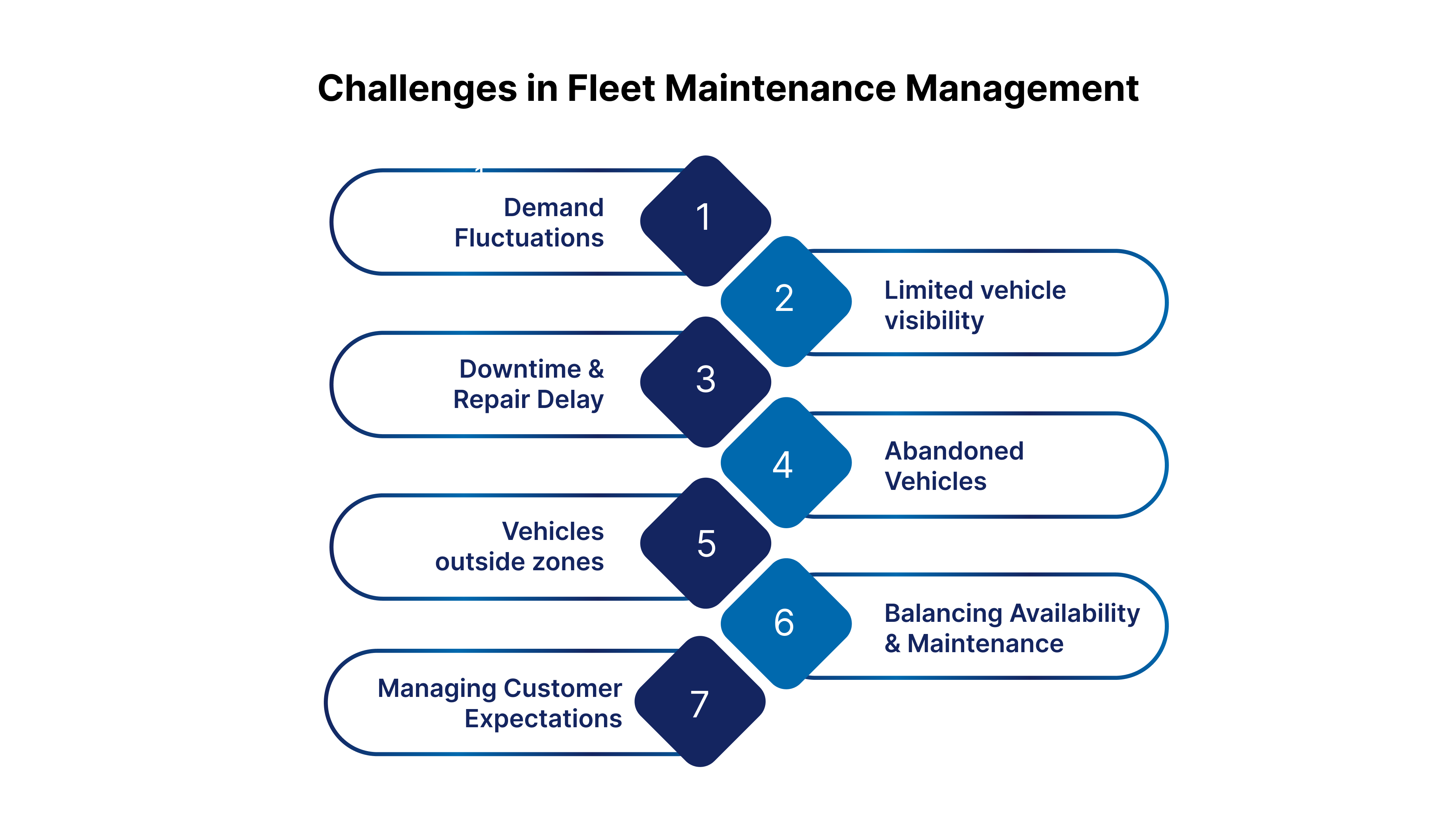
Even with a solid maintenance plan, managing an e-bike fleet comes with unique hurdles that require constant attention. The challenges you face may involve balancing customer needs, unpredictable demand, and ensuring your fleet remains reliable without draining your resources.
Let’s take a look at some of the key issues that often pop up when managing your scooter fleet.
- Unpredictable Demand Fluctuations: Usage patterns for scooters can vary widely due to weather, local events, or time of year, which can catch you off guard and make maintenance planning difficult.
- Limited Visibility on Vehicle Conditions: Without dedicated staff on the ground, it’s hard to keep track of the condition of every vehicle. Problems often go unnoticed until it’s too late.
- Downtime and Repair Delays: When a vehicle needs repair, relying on third-party services or self-service stations can result in extended downtime, leaving you short on available units.
- Abandoned Vehicles: Users leaving vehicles in random locations make it harder to keep track of them. This adds unnecessary delays and operational strain when it’s time to collect and redeploy them.
- Vehicles Taken Out of Designated Zones: When bikes or scooters are ridden outside of the approved zones, it creates significant logistical challenges. These vehicles might need to be retrieved from distant locations, often disrupting service during peak demand periods and affecting fleet availability.
- Balancing Availability and Maintenance: Keeping your fleet of vehicles available for customers while staying on top of maintenance schedules is a delicate balancing act and may spiral out of control as demand hits.
- Managing Customer Expectations: Whether it’s a scooter or e-bike, customers expect a hassle-free, ready-to-ride experience. Maintenance issues, broken-down vehicles, or long delays in getting bikes back into service can lead to unhappy customers and lost revenue.
Addressing these issues head-on is essential to keeping your fleet in top condition and ensuring a consistent, reliable service for your customers.
How EazyRide Supports Better Fleet Maintenance Management
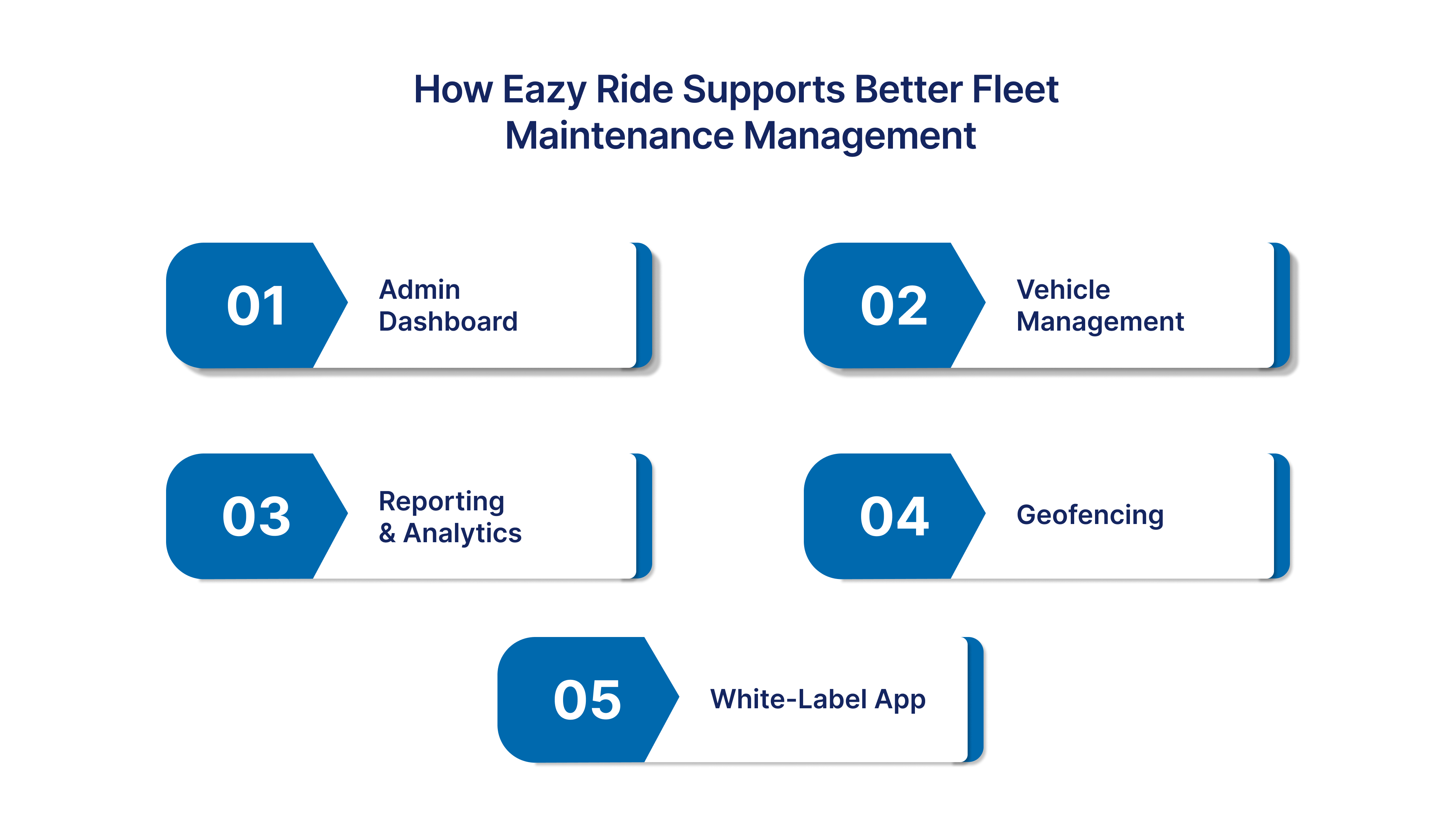
EazyRide offers a comprehensive suite of tools designed to simplify and optimize fleet maintenance management. By providing real-time tracking, insightful analytics, and proactive maintenance features, EazyRide ensures you can maintain your fleet’s health and maximize its uptime, all while providing a seamless experience for your riders.
Here’s how EazyRide helps you maintain a smooth-running fleet:
- Admin Dashboard: Manage your entire fleet from a single, user-friendly dashboard. Set pricing, track user activity, and adjust services in real time. You also have the flexibility to launch promotions and fine-tune operations without leaving the dashboard.
- Vehicle Management: Keep track of every vehicle in your fleet, from allocation to maintenance status. This feature allows you to easily manage vehicle health, ensuring that every bike is ready for use.
- Advanced Reporting & Analytics: Dive into real-time data with performance metrics, vehicle utilization statistics, and demand forecasting. This powerful tool helps you make data-driven decisions to optimize fleet operations and predict maintenance needs before they arise.
- Geofencing: Set up geofencing to control where your vehicles can be used and parked. This helps you prevent vehicles from going outside of designated areas, improving security and keeping your fleet within operational boundaries.
- White-Label App: Customize the rider experience with your own branded app. Riders can easily find and pay for bikes and access support, all within an app that reflects your business’s branding and enhances user satisfaction.
EazyRide makes it easier to manage day-to-day operations. With these tools, you can maintain control and minimize downtime, ensuring a smoother experience for both you and your riders.
Conclusion
Managing a fleet of e-bikes or scooters requires a shift from handling emergencies to creating systems that run smoothly day in and day out. It involves regular maintenance, monitoring vehicle performance, and ensuring you have the right tools in place to address issues before they escalate. When these elements are in place, you can avoid unexpected issues and keep your vehicles in good working order, helping your business stay on track.
With these practices, you can focus on improving the overall experience for your riders instead of constantly putting out fires. A well-maintained fleet means fewer surprises, which makes it easier to keep things running consistently and efficiently. This approach also provides a solid foundation for growth, allowing you to scale your business without the usual challenges.

FAQs
Q: What are the signs that a fleet maintenance plan needs improvement?
A: If you’re noticing frequent breakdowns, increasing repair costs, or a drop in fleet availability, it might be time to reassess your maintenance strategy. Poor vehicle performance or delayed repairs often indicate a need for a more structured plan.
Q: How do I determine the right maintenance schedule for my fleet?
A: The best schedule is based on your fleet’s usage patterns and the manufacturer’s recommendations. Regular inspections, combined with data on vehicle performance, will help you identify the optimal intervals for maintenance tasks like tire checks, battery health, and component replacements.
Q: What role does predictive maintenance play in reducing downtime?
A: Predictive maintenance uses real-time data to identify potential issues before they become major problems. By analyzing usage trends and vehicle performance, you can address problems proactively, significantly reducing unexpected breakdowns and downtime.
Q: How can I handle fleet maintenance without a dedicated team?
A: Fleet management software can streamline the process by automating maintenance schedules and tracking vehicle health. Leveraging technology to monitor and manage your fleet remotely can reduce the need for a full-time team on the ground.
Q: What should I do if a vehicle in my fleet is frequently out of service?
A: A vehicle that’s often out of service could be due to poor maintenance practices, overuse, or a fundamental issue with the vehicle. Review its maintenance history, usage patterns, and consider a more frequent inspection schedule or retiring the vehicle from active service if necessary.


