
 AllSharing business

 29 May, 2026
 How to Start a Bike Rental Business in the U.S.
The 415 U.S. cities running shared micromobility programs in 2024 didn’t all build their own software. Most picked white-label platforms, signed permit deals with local DOTs, and went live with 50 to 200 bikes. The barrier to entry isn’t the bikes anymore. It’s planning around demand, permits, and operational discipline.
If you’re scoping a bike rental launch in 2026, whether that’s a staffed shop near a waterfront, a shared fleet across a downtown grid, or a hybrid setup on a resort property, this guide walks through the actual planning, fleet, tech, and permit work. We’ve found that most first-time founders overspend on fleet and underspend on demand validation. Flip those two priorities and the unit economics get a lot easier.
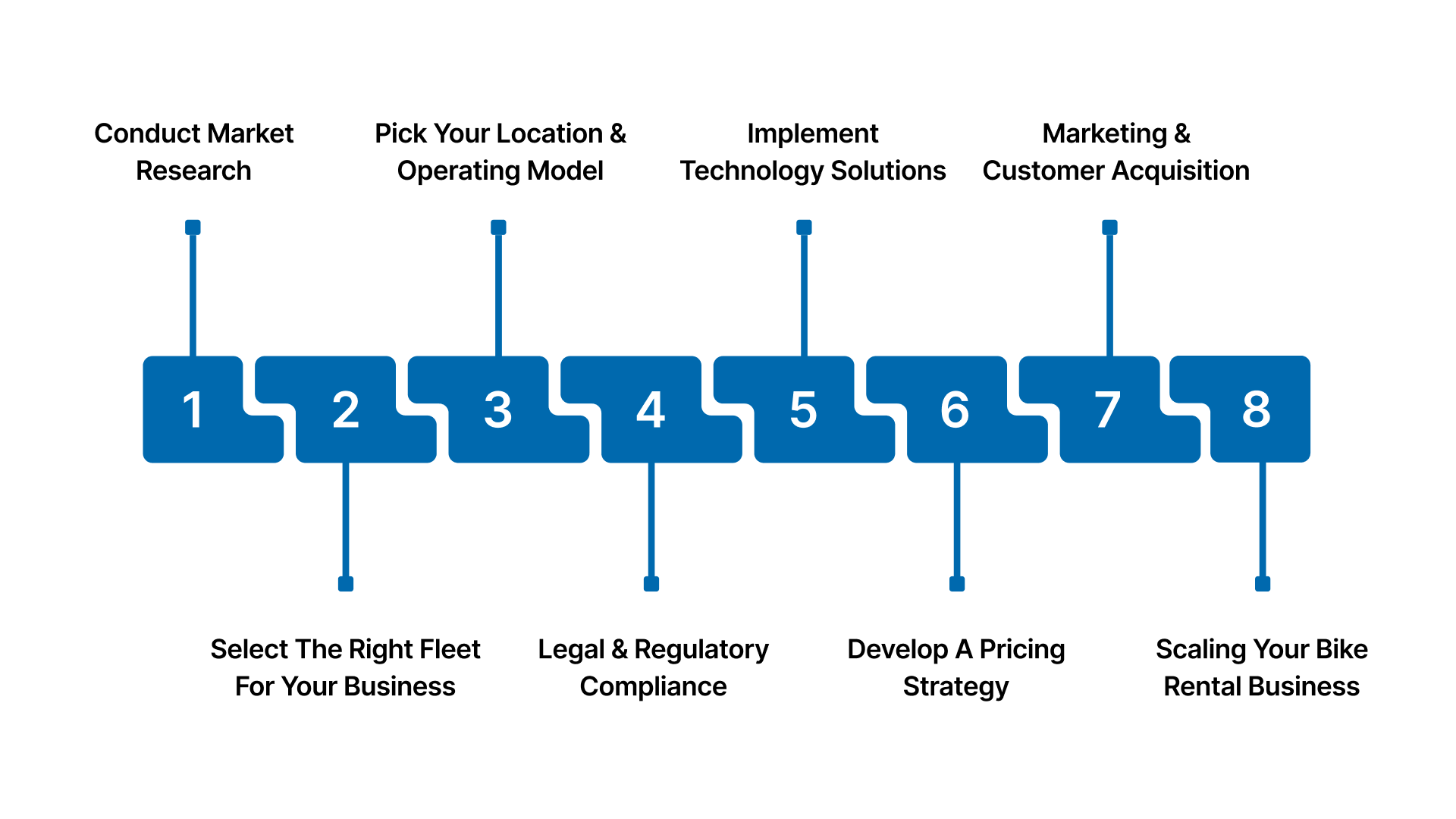
Here’s the order of operations.
Key Takeaways
- Validate your demand before buying a single bike.
- Match your fleet to terrain and rider intent.
- Go live in 14 days using white-label fleet tech.
- Track weekly utilization before adding more bikes.
- Get permits before you sign a fleet contract.
What makes a bike rental business profitable
A bike rental business hits profitability when revenue per bike reliably beats true cost per bike, and you can repeat that without your operation collapsing into chaos. The five drivers below decide whether you get there in year one or year three.
1. Utilization (your #1 lever)
How often each bike actually gets rented. For staffed shops, count rentals per bike per day. For shared fleets, count rides per bike per day. Most operators look at total revenue when they should be staring at this single number.
2. Availability (downtime kills revenue silently)
The percentage of your fleet that is actually rentable right now. Not broken. Not missing. Not waiting on a brake pad. A 100-bike fleet at 70% availability is functionally a 70-bike fleet that you’re still paying full ownership cost on.
3. Turnaround time
How quickly a bike returns to service after an issue: flat tire, brake fix, battery swap, vandalism cleanup. Operators with 24-hour turnaround run circles around operators with 5-day turnaround. Your maintenance workflow is a profit center, not a cost line.
4. Theft and damage rate
This is the line item that destroys margin if you don’t design for it from day one. GPS tracking, smart locks, geofenced parking, and clear rider penalties keep this number manageable. Without them, you’re underwriting other people’s joyrides.
5. Simple unit economics
Run this weekly before you buy more bikes:
Weekly Profit Per Bike = Weekly Revenue Per Bike – Weekly Ops Cost Per Bike
Weekly ops cost typically includes maintenance, labour, payment processing fees, software, storage and charging, and a depreciation reserve. If one bike generates $120 a week and costs $70 a week to run all-in, you’re at $50 weekly profit per bike. Scale only when availability stays high and turnaround stays stable. Add bikes to a broken process and you just multiply the brokenness.
Step 1: Validate demand before you buy a bike
Before you commit to bikes or software, validate demand in a way that maps to revenue. Most operators we talk to skip this step and regret it within 90 days. They end up with 50 bikes sitting in storage and no rider funnel to feed them.
Define your model first (it changes the demand test)
- Staffed rentals live or die on tourists, foot traffic, and seasonal peaks.
- Shared fleets live or die on repeat short trips and predictable commuter patterns.
A great location for one is often a mediocre location for the other.
Validate with real-world proxies
- Foot traffic near trails, parks, waterfronts, and downtown loops.
- Hotel density and tourist attractions for staffed rentals.
- Transit hubs, campuses, and business districts for shared fleets.
- Event calendars (weekend spikes can make or break a season).
Test price tolerance before buying inventory
Run a simple landing page with a “Reserve Now” button at two or three different price points. If nobody reserves at your target price, fix the offer before you buy bikes. Spending $80,000 on a fleet that you then have to discount 40% to move is a much more painful lesson than spending $200 on a test landing page.
Confirm operational constraints early
Storage, charging access for e-bikes, staff routes, and where bikes actually get serviced. If these aren’t solved on paper before launch, demand won’t matter. Your bikes will be stuck in a garage you can’t access on a Sunday morning when tourists are showing up.
Cities like San Francisco, Portland, and Minneapolis have strong cycling infrastructure and clear permit pathways, which makes them realistic starter markets. Tools like Google Trends, local tourism data, and foot traffic data from Placer.ai help you size the opportunity before you spend a dollar.
Also Read: Bike Rental Business Plan Template You Can Put to Work
Step 2: Choose your fleet
Your fleet choice decides demand, maintenance load, theft risk, and pricing power. It is the single most expensive decision you make in year one. Get it right and your ops team has an easier life every day after.
Pick the fleet mix that matches location and rider intent
- Standard bikes: best for flat zones, short rides, and price-sensitive customers.
- E-bikes: best for hills, longer rides, tourists, campuses, and premium pricing.
- Specialty bikes (cargo, tandem, child seats): best when family demand or guided tours dominate.
Budget for true fleet cost, not bike cost
The sticker on the bike is the easy number. The real bill includes locks, GPS trackers, spare parts, tools, storage racks, charging infrastructure for e-bikes, helmets if you provide them, and a maintenance buffer. First-time founders routinely underestimate this line item by 30% or more.
A practical decision rule
- Hilly area, 15-minute-plus rides, or tourist-heavy zone? E-bikes usually win because you can charge more per ride.
- High theft risk, thin margins? Start smaller, invest in locking and tracking discipline before you expand.
A diverse fleet that balances traditional and electric bikes serves a wider audience and supports higher overall rental rates. Just don’t add complexity until your ops team can handle it.
Step 3: Pick your location and operating model
Your location decides demand. Your operating model decides how hard the business is to run. These two interact, and getting one without the other is how operators get stuck.
Staffed rentals (tourism, parks, resorts)
Pick locations where renting a bike is the obvious next action: trail entrances, waterfronts, parks, hotel clusters, and tourist loops. Plan early for storage capacity, daily turnaround workflow (clean, inspect, re-rack), partnerships with hotels and tour operators, and pricing packages built around 2-hour, half-day, and full-day blocks.
Shared fleets (docked, dockless, hybrid)
Your “location” is your zone design. Where bikes should live, and just as importantly, where they shouldn’t.
- Docked: tightest control and parking discipline, requires physical stations.
- Dockless: faster rollout, requires strong geofencing and rebalancing ops.
- Hybrid: stations in high-demand hubs plus dockless flexibility elsewhere.
Plan zone design, rebalancing routes, parking compliance rules (how you avoid sidewalk clutter and city complaints), and a maintenance workflow that catches issues before riders do. Each model has its place. Pick the one your local infrastructure actually supports.
Step 4: Handle legal and regulatory compliance
Legal setup is where new operators trip themselves up at the slowest possible speed. State and city rules vary, so do the work before you sign a fleet purchase order.
Pick a legal structure
- LLC: the go-to for small and mid-sized rental businesses. Personal liability protection and flexible tax treatment.
- Corporation (C-corp or S-corp): a better fit if you plan to raise outside capital or scale aggressively.
- Sole proprietorship: easy to set up but offers no personal asset protection. Skip it unless your bike count is single digits.
Register the business and pull an EIN through the IRS site. Loop in a local business attorney or CPA if you’re choosing between LLC and S-corp.
Permits and licenses
If you’re operating on public space (sidewalks, streets, public parks), expect a permit conversation with your city. In San Francisco, for example, a permit from the San Francisco Municipal Transportation Agency (SFMTA) is required for bike-sharing operations using public docking space. Chicago bike-sharing operators must carry both liability insurance and fleet coverage. Pull your specific city’s Department of Transportation guidance early. Surprises here cost weeks, not days.
Insurance
You’ll need general liability insurance covering accidents and damage, vehicle insurance for your fleet (especially e-bikes), and workers’ compensation if you hire staff. Quotes vary widely. Get at least three.
Liability waivers
Every rider signs a waiver before they touch a bike. The waiver protects you against rider injury claims and establishes that both sides understand the risk. Don’t let anyone roll out without one. A bad weekend incident with no signed waiver is the kind of moment that ends a small business.
Step 5: Build your tech stack
Your tech stack decides three things: how fast a rider can rent, how fast your ops team finds a broken bike, and how fast you can change pricing when demand shifts. Get this wrong and the rest of the business stays slow.
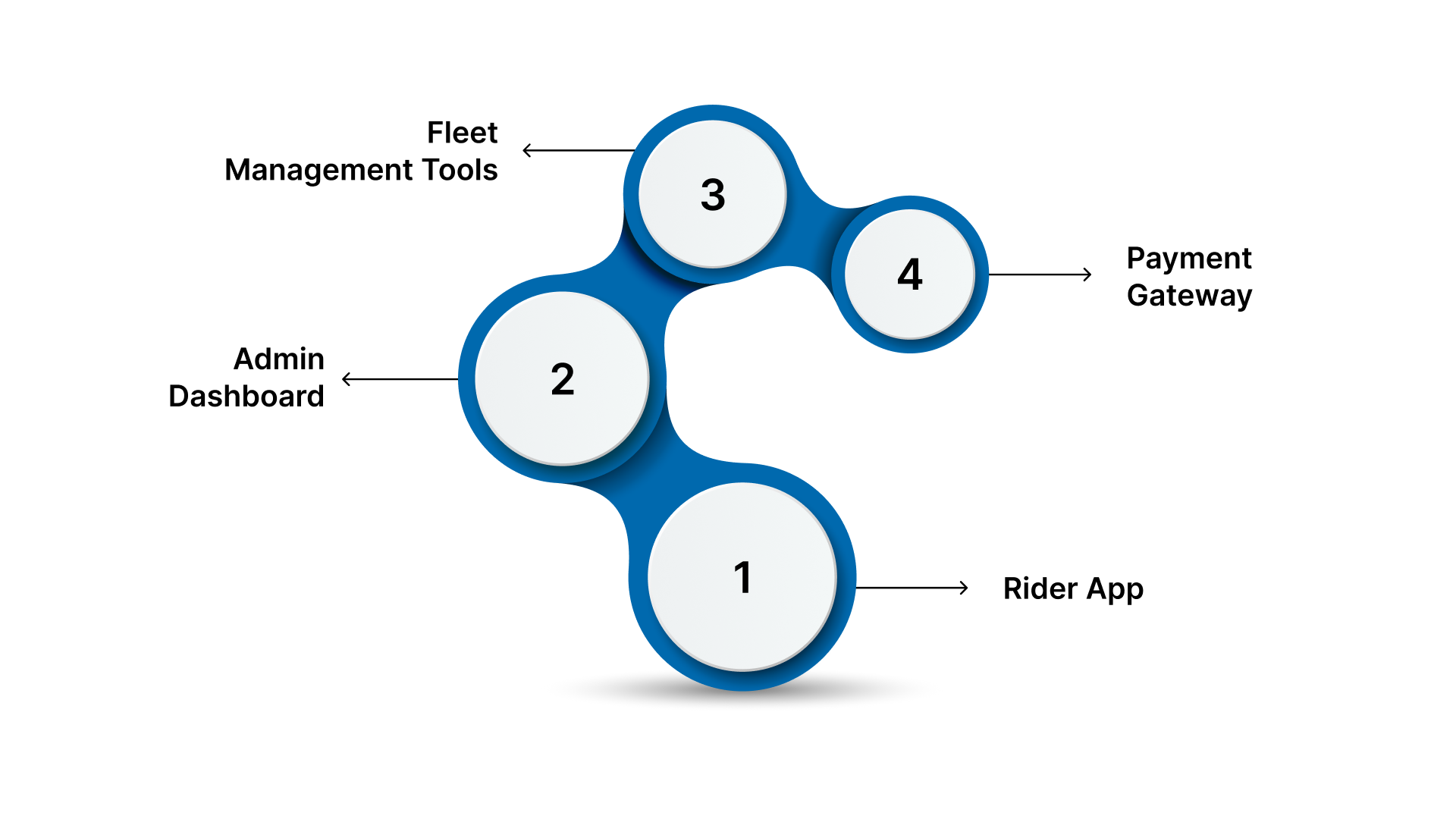
What the stack actually needs to do
- Rider app (iOS and Android): find nearby bikes, unlock via QR or Bluetooth, pay, view ride history. If your app doesn’t load in under 3 seconds on a tourist’s phone, you’ve lost the rental.
- Admin dashboard: live map of every bike, utilization reports by zone, on-the-fly pricing changes, promo code engine. This is where your business actually runs.
- Fleet management: battery levels, maintenance alerts, repair tickets, swap history. Hidden costs live here.
- Payment processing: cards, mobile wallets, deposits, refunds, damage charges. U.S., U.K., and E.U. operators all need different gateway support.
Two ways to get there
Build from scratch. Hire a mobile team, design the rider app, build the admin dashboard, integrate IoT hardware, handle PCI compliance, write the geofencing logic. Realistic timeline: 6 to 9 months. Realistic cost: $250,000 and up. The trouble isn’t usually launch. It’s year two, when you want to add a new vehicle type or open a new city and your engineers are already booked solid.
White-label. A pre-built platform branded under your business name, configured to your zones and pricing. The rider app ships under your brand on the App Store. The admin dashboard is yours. The IoT integrations are already done.
In deployments we’ve supported, operators using EazyRide typically go live in 14 days from contract signing. The admin dashboard handles e-scooters, e-bikes, and mopeds in one account, so if you launch with bikes and add scooters in year two, you don’t re-platform. Geofencing rule changes push to every vehicle in real time, no firmware update required. Fleets running real-time geofencing see up to 40% fewer parking violations versus manual enforcement.
Book a free EazyRide demo. A 30-minute fleet review will tell you faster than a week of vendor calls.
Step 6: Set your pricing
Pricing has to reflect local demand, your operating costs, and the value you’re delivering. Most new operators copy a competitor’s price and hope. Don’t.
What to factor in
- Maintenance and ops cost: bake regular maintenance, repairs, and staff time into your per-ride math.
- Market competitiveness: research what local operators charge, then position above or below based on fleet quality.
- Seasonality: raise prices in peak season, lower them in shoulder months to keep utilization steady.
Common pricing models
- Hourly: good for tourists with a 2-hour window. U.S. urban rentals commonly sit between $8 and $15 per hour for standard bikes, higher for e-bikes.
- Daily: works for visitors wanting full-day exploration. Typical U.S. urban range is $25 to $75 per day depending on bike type and location.
- Subscription: best for commuters and campus deployments. Monthly memberships give you predictable revenue and stickier riders.
Whatever model you pick, run the weekly profit-per-bike math from earlier against your pricing. If a $12 hourly rate at 3 rides a day doesn’t clear your ops cost, you don’t have a pricing problem. You have a unit economics problem.
Also Read: Scooter Investments: A Smart Mobility Opportunity for Entrepreneurs
Step 7: Market and acquire customers
Fleet, tech, and pricing are the easy part. Filling those bikes every day is the work. Build a marketing motion before you have inventory sitting idle.
Local SEO
Rank for “bike rentals near me” and “e-bike rental in [your city].” Claim and fully optimize your Google Business Profile, get photos in there, ask early customers for reviews, and write at least one local content page per service area.
Social media
Instagram and Facebook are where tourists discover rentals. Photos of bikes against your city’s most photographed views drive bookings. Paid social ads work especially well in summer tourist seasons.
Partnerships
Hotels, resorts, tour operators, and universities have your audience already gathered. Build referral and discount agreements with the ones that match your fleet profile. A single hotel partnership in a tourist city can deliver 30 to 50 rentals a week in peak season.
Referral programs
Free rides or discount codes for riders who refer friends. Word of mouth is still the cheapest customer acquisition channel for local businesses, especially in walking-distance neighborhoods.
Google Ads and Facebook Ads layered on top of organic and partnership channels round out the funnel. Target by demographic, intent, and zip code.
Step 8: Scale without breaking ops
Scaling is the most expensive way to expose a weak operation. Don’t add bikes, cities, or vehicle types until your numbers say you can absorb them.
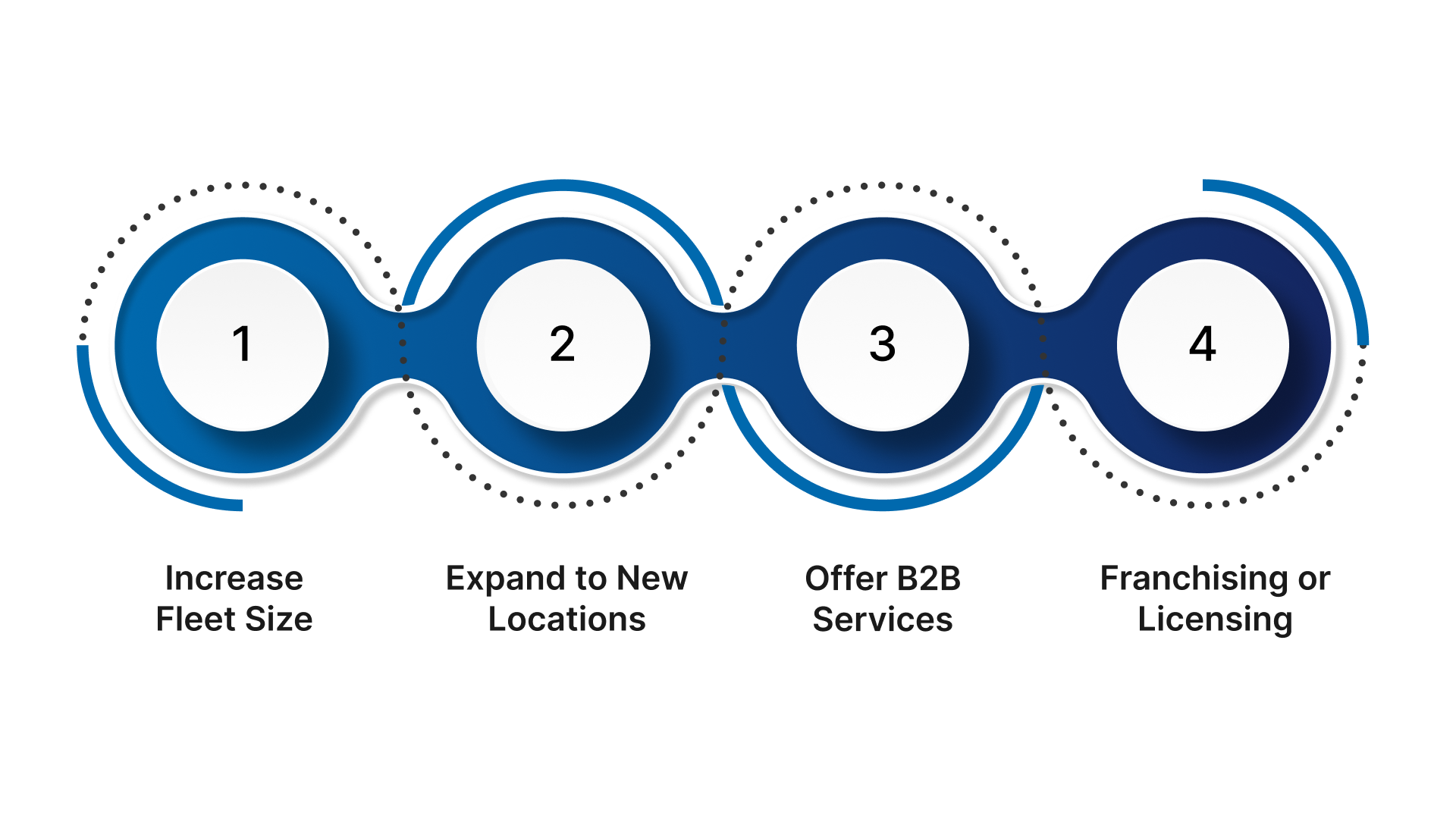
Increase fleet size
Add bikes only after you’ve hit your utilization target consistently for several weeks. From what we’ve seen working with operator clients, fleets that scale before hitting that target end up with idle bikes and rising ops cost in the same quarter.
Expand to new locations
A second city is not just another fleet. It’s another permit process, another insurance market, another ops team, and another set of local partnerships. Pick city number two carefully and treat it like a second launch.
Offer B2B services
Corporate campuses, universities, and gated communities are predictable, contract-backed revenue. A 50-bike campus deployment with a 12-month agreement is worth more than 100 retail bikes scattered across a city.
Franchise or license
Once your model is repeatable, franchising or licensing lets you grow without putting up the capital yourself. Wait until you’ve put one full year of profitable operation behind you before going this route. Earlier and you’re shipping mistakes faster.
Bringing it all together
Launching a bike rental business in the U.S. comes down to honest demand validation, a fleet that fits your city, a tech stack that doesn’t slow you down, and the discipline to track unit economics every single week. Skip any of those and you’ll be patching problems instead of growing.
The 415 cities running shared micromobility in 2024 didn’t build their platforms from scratch. If your permit window is open and your demand validation checks out, the question isn’t whether to go white-label. It’s whether you move before someone else takes the corridor you wanted.
FAQs
How much does it cost to launch?
Staffed rentals need more physical storefront and storage. Shared fleets need software, GPS, and ongoing ops workflows. Fleet size, bike type, and automation level drive most of your startup costs.
What’s the best bike rental location?
High-traffic tourist zones, parks, waterfronts, hotel clusters, and transit hubs near major campuses or downtown loops. Local cycling infrastructure, bike lanes, and weekend event calendars usually make or break demand.
How long does platform setup take?
EazyRide white-label fleets typically launch in 14 days from contract signing. Building a custom rider app and admin from scratch takes 6 to 9 months and a higher upfront budget.
What utilization target should I aim for?
Set a target where weekly revenue per bike reliably clears your all-in weekly cost (maintenance, labour, payment fees, ops, storage). Only scale after hitting that target consistently for several weeks.
Do I need permits in every U.S. city?
Permit rules vary by city and state. Public-right-of-way deployments almost always need a city Department of Transportation permit. Private property like resorts, hotel grounds, or campuses generally doesn’t require one.
Bike rentals are still a great small-business bet in 2026, but only when the planning matches the city. Eight steps, sequenced in order, with the cheap decisions made before the expensive ones. The operators who win this cycle aren’t the ones with the prettiest brand. They’re the ones who can tell a city what their utilization, availability, and turnaround numbers look like, and back it up with data their own team trusts.
If your demand validation checks out and your permit window is open, the next move is platform selection.
Book a free 30-minute EazyRide demo. Bring your target city, your fleet size, and your launch date. We’ll walk through which two steps to start with this week.


