
 AllMicro Mobility Model

 25 July, 2025
 E Scooter App Features Rental Operators Need in 2026
If you’re exploring the e-scooter business, the first question you should ask isn’t “How many scooters do I need?” It’s “What must my app do on day one for this business to actually work?”
Because in a shared mobility market, revenue doesn’t start with hardware. It begins with the rider app. Every unlock, every trip, every rebalancing task, every compliance requirement, and every customer interaction flows through that one interface.
Most operators underestimate this. They focus on fleet size and pricing, when the real difference between a profitable fleet and a struggling one is the feature set powering the rider experience and the operator workflow behind it.
Is just a great-looking app enough? Not really!
What matters is whether it can help you reduce idle time, prevent parking violations, predict charging needs, and keep riders moving without friction.
This guide breaks down the essential e scooter app features that actually impact revenue, safety, compliance, and daily operations, so you know exactly what to prioritize before launching or scaling your fleet.
Key Takeaways:
- Your app, not your fleet size, determines utilization, compliance, and profitability in an e-scooter business.
- Fast onboarding, reliable GPS, smooth unlocks, and accurate battery data directly increase rides per scooter per day.
- U.S. cities expect app-level enforcement of zones, parking, and reporting, making strong compliance features essential.
- Real-time dashboards, heatmaps, and operator tools reduce downtime and cut operating costs from day one.
- Multi-vehicle support prepares your business to scale into e-bikes or mopeds without rebuilding your entire system.
The Business Case Behind E-Scooter App Features
Every dollar you earn and every dollar you lose can be traced back to how well your app handles the basics: onboarding, unlocking, tracking, payments, routing, and compliance.
In city models of micromobility substitution, e-scooters have been shown to replace up to 32% of carpool trips and over 7% of taxi trips in dense U.S. markets. So your app’s ability to facilitate those substitutions efficiently becomes a competitive advantage.
Most operators learn this the hard way. Here are more arguments on why the right app features matter:
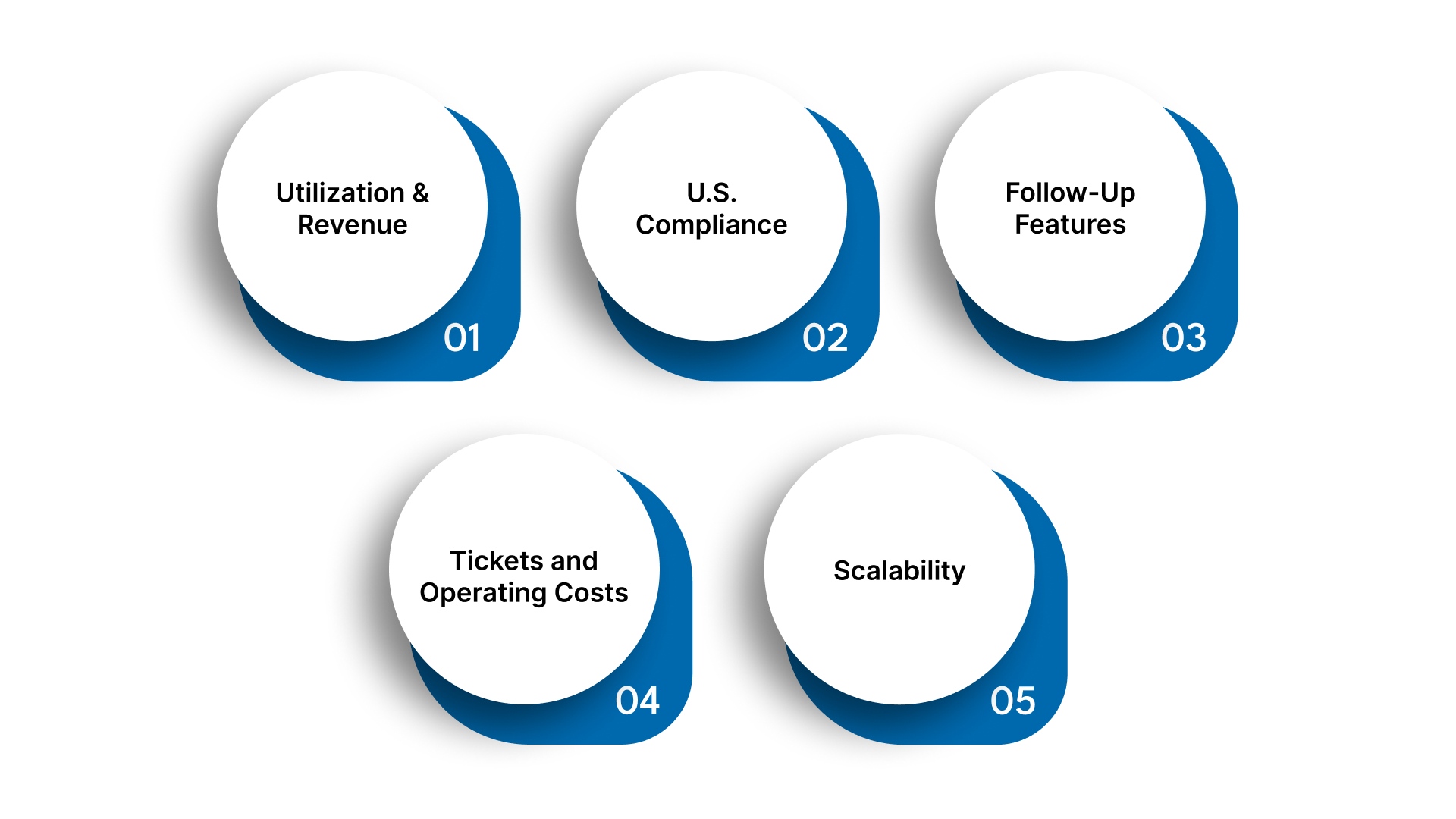
1. Utilization & Revenue
Scooters don’t earn money when they sit idle. And idle time usually comes from three issues:
- Riders can’t find a scooter
- The unlock fails
- The app can’t show accurate battery or location data
Every one of those problems traces back to missing or weak app functionality. Strong app features fix this by:
- Reducing unlock failures
- showing precise scooter locations
- preventing battery-related trip cancellations
- guiding riders to approved parking zones
The smoother the rider flow, the higher your rides per scooter per day and the healthier your break-even timeline.
Suggested Read: Scooter Investments: A Smart Mobility Opportunity for Entrepreneurs
2. U.S. Compliance
Unlike many global markets, U.S. cities expect operators to enforce rules inside the app, such as:
- slow-speed zones
- no-ride areas
- mandatory parking zones
- trip data reporting
- safety prompts
- identity or age verification
If your app can’t enforce these rules cleanly, the city will push back, or worse, you’ll face penalties, warnings, or permit delays.
Good app features keep you compliant without adding operational headaches.
3. Follow-Up Features
Operators sometimes assume they only need an app that unlocks scooters. But once your fleet is in the field, you’ll immediately need:
- battery tracking
- live diagnostics
- maintenance alerts
- pricing controls
- rebalancing routes
- in-app parking photo validation
Without these, operators end up drowning in manual work, texting their team locations, chasing dead scooters, and handling angry customers who couldn’t complete rides.
A well-built app reduces this workload dramatically.
4. Tickets and Operating Costs
Many support issues stem from a poor app experience:
- “I couldn’t unlock.”
- “The scooter wasn’t where the app said.”
- “The battery died mid-ride.”
- “The parking zone wasn’t clear.”
Smart app features cut these issues at the source. That means fewer refunds, fewer interruptions, and fewer staff hours spent resolving preventable problems.
5. Scalability
Most operators plan to start with one fleet, one zone, one vehicle type. But within the first year, many expand into:
- new neighborhoods
- seasonal tourist areas
- e-bikes or e-mopeds
- subscription passes
- multiple vehicle brands
Your app must be ready for that growth. If it wasn’t built with multi-vehicle support or advanced pricing tools, you’ll hit a ceiling fast.
Now that you see why strong app features matter, let’s break down the must-have features your e-scooter app needs from day one.
The Most Important E-Scooter App Features You Need in 2025
When operators talk about “e scooter app features,” the conversation often drifts into surface-level basics like “map,” “unlock,” or “payment.” Those matters, but they’re not what keep your fleet running profitably in a U.S. city where regulation, rider expectations, and operational costs are high.
Below are the must-have features, explained through an operator lens – not just a developer’s checklist:
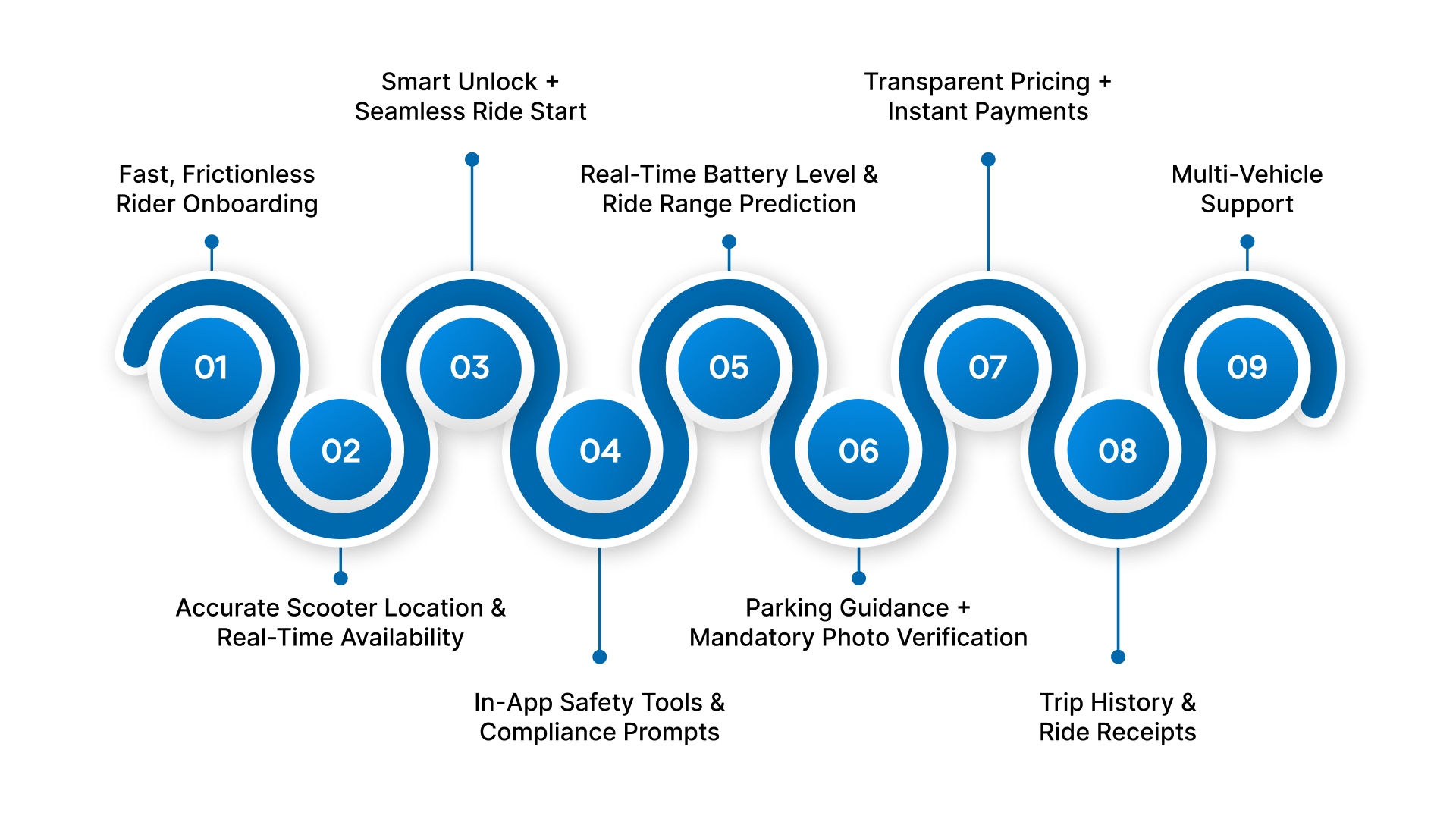
1. Fast, Frictionless Rider Onboarding
Onboarding shouldn’t take more than a minute. App drop-off rates exceed 40% when identity verification or payment setup is slow or confusing.
What your app must include:
- One-tap login (Apple, Google, email)
- fast ID verification (only when required by the city)
- auto-saving user details for future rides
Faster onboarding = more completed unlocks = higher utilization from day one.
2. Accurate Scooter Location & Real-Time Availability
Nothing frustrates riders more than walking to a scooter that isn’t there. Dockless micromobility vehicles at stations might be appropriately locked, but users can still encounter missing or misplaced vehicles.
What your app must include:
- high-accuracy GPS with multi-satellite support
- real-time location refresh
- “last known position” logging for retrieval
Precise location = fewer failed pick-ups, fewer refunds, cleaner deployment planning.
3. Smart Unlock + Seamless Ride Start
A failed unlock kills trust instantly. Research into shared mobility barriers in the U.S. found that technical or app-access issues ranked among the top three user complaints.
What your app must include:
- Instant unlock via Bluetooth fallback (when cellular is weak)
- error detection for lock jams or connection failures
- automated retry logic
More successful unlocks = more paid rides during peak demand windows.
4. In-App Safety Tools & Compliance Prompts
Cities expect operators to enforce rules through the app, not just signage or manual checks. In U.S. micromobility programs, 70 % now include at least one equity or compliance requirement (such as fleet deployment, smartphone alternatives, or data reporting).
What your app must consist of:
- slow-zone notifications
- no-ride zone alerts
- parking restrictions with map guidance
- mandatory safety prompt before riding
Reduces accidents, prevents fines, and keeps your compliance record clean.
5. Real-Time Battery Level & Ride Range Prediction
Battery uncertainty is one of the top reasons riders cancel or abandon trips. Software review platforms highlight battery tracking and range as core functionality for scooter-rental apps.
Read more about scooter rental software challenges
What your app must include:
- Precise battery percentage
- predicted range based on route/distance
- warnings for low-battery scooters
Riders choose scooters they trust. Accurate battery info boosts trip completions and reduces mid-ride issues.
Also Read: Electric Scooter Mileage: What Fleets Need to Know
6. Parking Guidance + Mandatory Photo Verification
Misplaced scooters continue to be a high operational cost and regulatory risk. Inappropriate parking of these bikes can not only increase the company’s management costs but also inconvenience other users.
What your app must include:
- Mapped parking guidance
- parking boundaries and approved hubs
- Required parking photo before the trip ends
- AI-based photo checks (if available)
Less clutter → fewer complaints → better chance of maintaining your permit.
7. Transparent Pricing + Instant Payments
Hidden fees or unclear pricing lead to disputes and refunds. Competition between e-scooter companies varies across user segments: trips for travel are less price-sensitive, while joy rides are more price-sensitive.
What your app must include:
- Real-time fare estimate
- Clear unlock fees, per-minute rates, and zones
- instant receipt at ride end
- multiple payment options
Clarity reduces churn and limits customer-support overhead.
8. Trip History & Ride Receipts
Riders expect proof of every transaction. Without a complete ride history, support issues and disputes escalate, especially in regulated U.S. markets where municipalities may request trip data.
What your app must include:
- Full ride summary
- exact route map
- final cost breakdown
- easy dispute submission
Fewer “why was I charged?” requests and faster resolution = lower operational cost.
9. Multi-Vehicle Support (Scooters + E-Bikes + Mopeds)
Most operators don’t stay “scooter-only.” They eventually add e-bikes or low-speed mopeds to capture different trip lengths. This can only expand if their tech is ready.
What your app must include:
- Unified interface for multiple vehicle types
- separate pricing rules per vehicle
- distinct icons and ride flows
You can scale your fleet without rebuilding your tech stack.
Must Read: The Ultimate Guide to E-Scooter App Development
Now that you know the must-have rider-facing features, let’s look at the operational tools your app needs behind the scenes to manage your fleet efficiently.
Must-Have Back-End Features for E-Scooter Operators
A clean rider app gets people on scooters. But it’s the back-end tools that keep your fleet running, your costs controlled, and your city permit intact. Most operational failures in shared mobility stem from a single problem: operators can’t see what’s happening in real time.
Below are the core back-end features every operator needs:
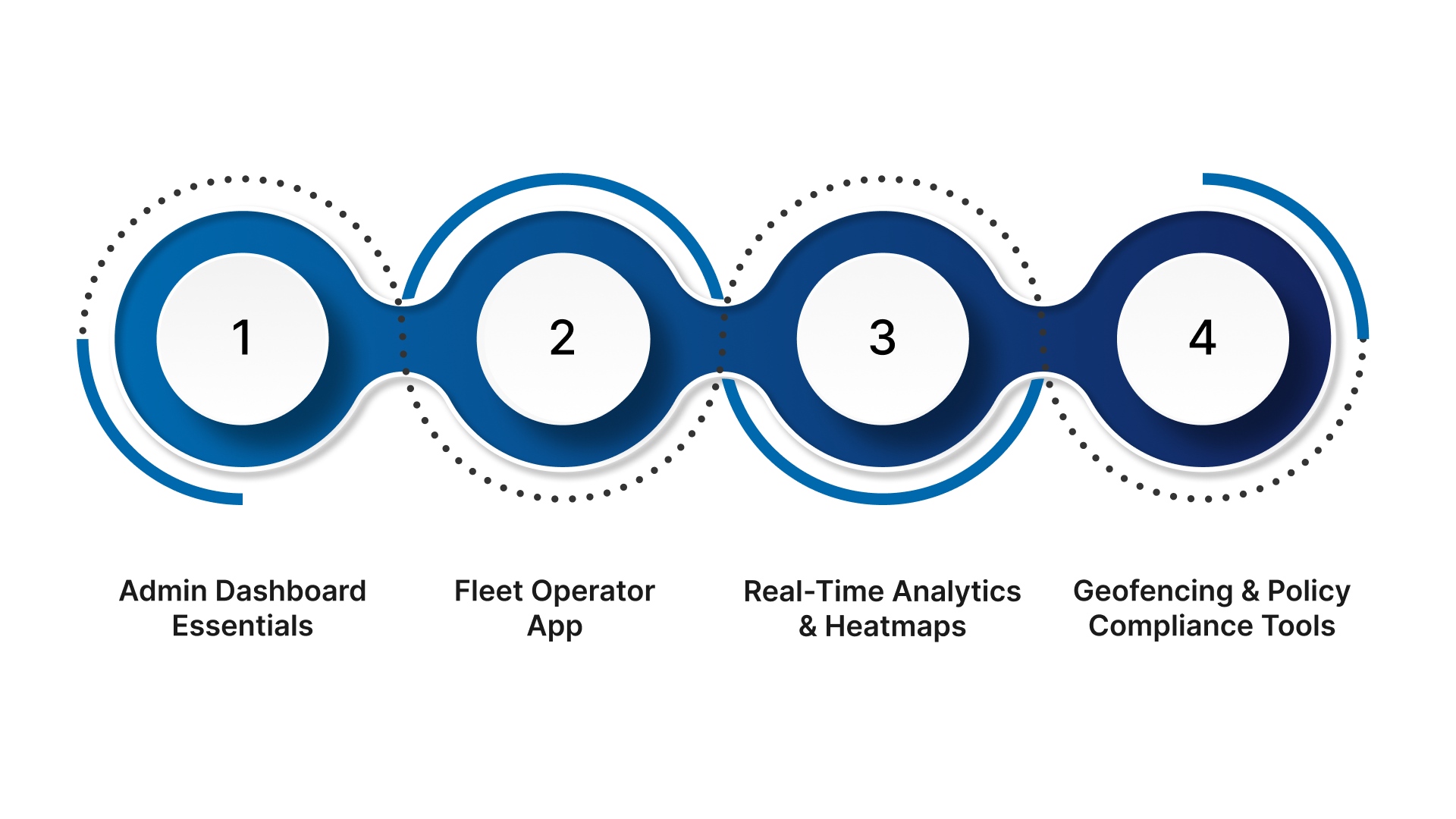
1. Admin Dashboard Essentials
Your admin dashboard is where you run your business hour by hour. Without strong dashboard tools, you end up relying on manual tracking, spreadsheets, or field staff to report issues.
Key capabilities your dashboard should include:
- Live fleet map: real-time status for every scooter.
- Battery intelligence: alerts, predicted range, and charging priorities.
- Utilization tracking: rides per scooter per day, idle zones, peak times.
- Zone management: edit no-ride, slow, and parking zones on the fly.
- Pricing controls: dynamic pricing for zones, passes, and peak hours.
2. Fleet Operator App (For Ground Teams)
Your on-ground staff is your most expensive resource and the hardest to scale. A fleet operator app ensures that every charging run, repair job, and redeployment task is efficient and trackable.
Must-have features:
- task assignments
- QR-scan diagnostics
- battery and charging routes
- maintenance ticketing
- navigation to scooters
- photo uploads for repairs or parking issues
3. Real-Time Analytics & Heatmaps
Analytics are the difference between a fleet that grows and a fleet that only survives. Rider demand has become increasingly predictable, but only when operators use heatmaps and trip clustering to strategically deploy vehicles.
Your analytics should cover:
- zone-by-zone performance
- top pick-up/drop-off hotspots
- time-based demand patterns
- low-demand or “dead” zones
- Maintenance frequency per scooter
- ride distance and trip types
4. Geofencing & Policy Compliance Tools
U.S. cities expect operators to enforce compliance through software, not manual checks. This includes speed-reduction zones, sidewalk protection zones, data reporting via MDS (Mobility Data Specification), and more.
Your back-end must allow you to:
- Create new zones quickly
- Adjust boundaries without redeploying hardware
- View violations and rider behavior
- auto-lock or slow scooters in restricted areas
Feature Checklist for Launching Your E-Scooter App
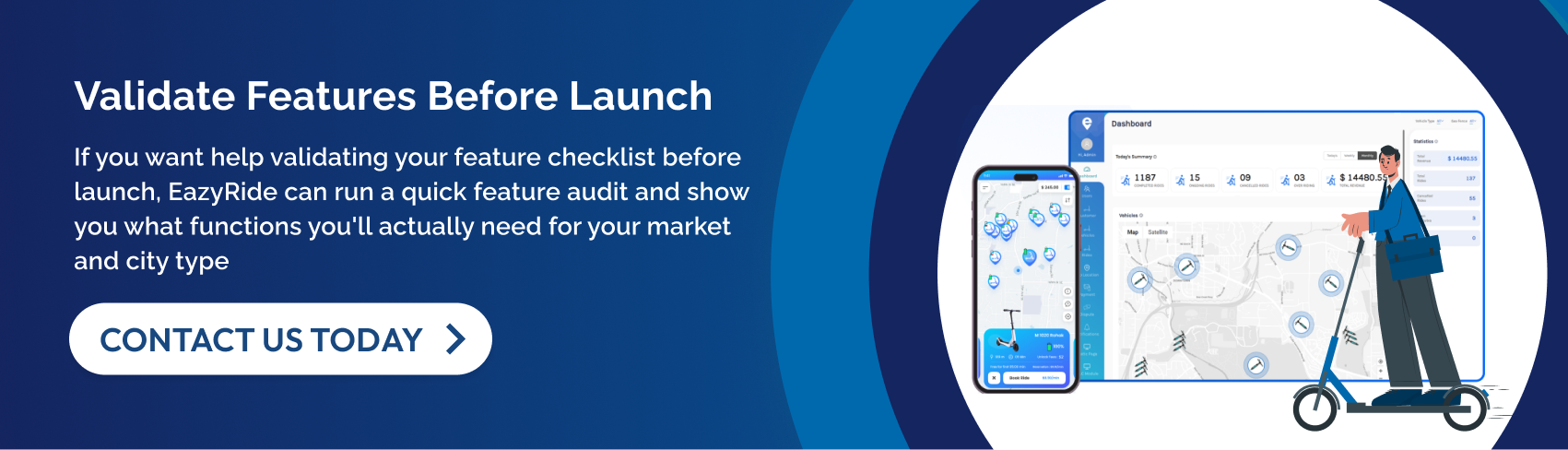
Before you commit to a fleet or sign with a software provider, use this checklist to ensure your app can support a functional, compliant, and revenue-ready operation. Your failed pilot launches will trace back to missing capabilities in this list, either on the rider side or the operator side.
Below is the essential, non-negotiable feature set your app must have on day one:
| Category | Features |
|---|---|
| Rider-Facing Features (Must-Haves) | ✔ Fast onboarding (1-minute setup, no friction)
✔ High-accuracy GPS for reliable scooter location ✔ Instant unlock with Bluetooth fallback ✔ Clear zone rules (slow, no-ride, parking) ✔ Real-time battery status and range estimate ✔ Parking guidance + mandatory photo verification ✔ Transparent pricing before every ride ✔ Instant digital receipts ✔ Trip history with map and cost breakdown ✔ Support and issue reporting built into the app ✔ Multi-vehicle support in case you expand later |
| Operator-Facing Must-Haves | ✔ Unified admin dashboard with real-time fleet visibility
✔ Heatmaps for demand zones and idle hotspots ✔ Battery intelligence for charge scheduling ✔ Geofencing controls for compliance ✔ Dynamic pricing tools for zones and passes ✔ Maintenance alerts and ticketing ✔ Fleet operator app for field staff ✔ Automated reports for city compliance (MDS, KPIs) ✔ Multi-zone deployment tools for future expansion ✔ Hardware-agnostic support (so you’re not locked to one scooter brand) |
There you go. If your current app or shortlisted vendor cannot check 90% of these boxes, you will face:
- lower utilization
- higher costs
- rider churn
- rebalancing inefficiencies
- compliance risk
- slower route to profitability
And all of those problems show up in the first 60–90 days of launch.
Also Read: How Much Does It Cost to Build an E-Scooter Sharing App in 2025?
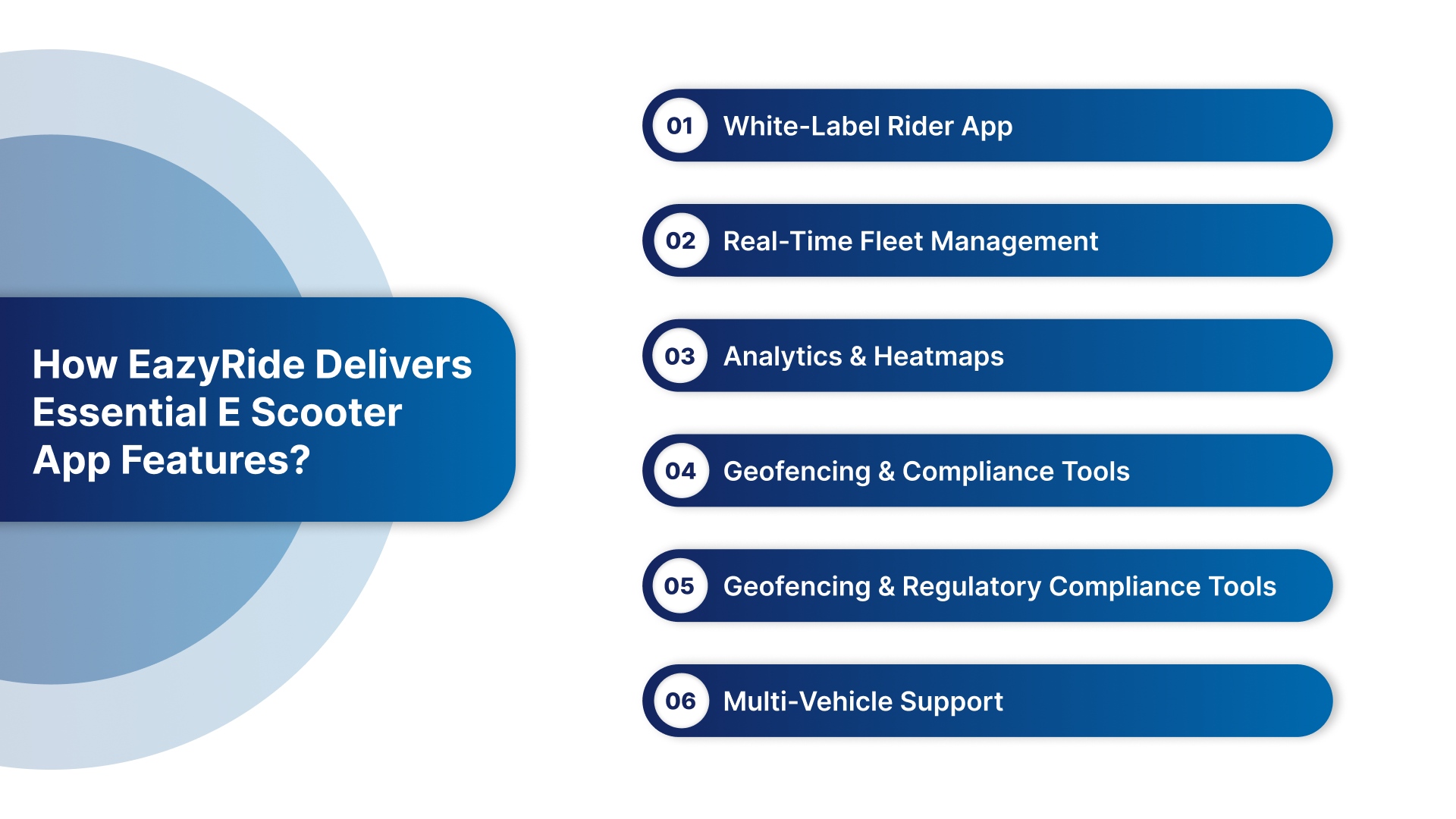
How EazyRide Delivers Essential E Scooter App Features?
By now, you know your app must do a lot. It needs to manage compliance, automate operations, guide riders, support your field team, and give you the data to run a profitable fleet.
Many operators try to stitch these tools together using multiple providers, but that leads to delays, mismatched systems, and rising costs. EazyRide consolidates everything into one platform explicitly built for e-scooters, e-bikes, and multi-vehicle fleets in the U.S.
Here’s how:
- White-Label Rider App: Fully customizable with your branding, pricing, colors, and user flow. Deliver a clean, easy experience that feels professional and trustworthy.
- Real-Time Fleet Management: The admin dashboard provides live data on every scooter. Spot underperforming zones, identify scooters stuck in low-demand areas, and deploy your fleet exactly where rides are happening.
- Analytics & Heatmaps: Shows rider behavior, trip clusters, peak demand hours, and the zones where scooters sit idle. Predict which areas will spike, adjust pricing or deployment, and plan smarter field operations.
- Geofencing & Compliance Tools: Define and enforce slow-speed zones, no-ride areas, required parking hubs, and city-specific restrictions automatically in minutes.
- Fleet Operator App: Centralize daily tasks: rebalancing, charging, vehicle retrieval, maintenance tickets, and navigation. Scan scooters for diagnostics, upload repair photos, and close tasks in real time.
- Multi-Vehicle Support: Vehicle types can have unique pricing, zones, and rules, but all live inside the same rider app and dashboard.
If you want to see how these tools work together in a real deployment, EazyRide can walk you through a live demo that shows rider flows, compliance controls, and on-the-ground operations tailored for U.S. operators.
Conclusion
The success of an e-scooter rental business comes from the quality of the app that runs it. Every ride, every compliance rule, every charging cycle, and every customer interaction depends on the features your app delivers.
If your app has all of the critical features, you get a business that scales cleanly and hits utilization targets. If it can’t, your costs rise, your scooters sit idle, and growth becomes difficult.
EazyRide brings all the essential features together in one platform, giving new and growing operators the infrastructure they need to run safely, stay compliant, and maximize daily revenue.
If you’re ready to launch or upgrade your e-scooter fleet, get in touch with us and we will help you build a system that’s fast to deploy and built to scale!
FAQs
1. What features should an e-scooter rental app have to stay compliant with U.S. city rules?
Your app must support geofencing, no-ride zones, slow zones, parking hubs, and accurate trip data reporting (MDS format in many cities). These tools help enforce city policies automatically and reduce the risk of fines or permit issues.
2. How accurate does e-scooter GPS need to be for rental operations?
Operators should aim for GPS accuracy within 3–5 meters. Anything weaker causes false parking violations, incorrect scooter locations, and rider frustration, problems that directly increase support costs and reduce utilization.
3. Why do most operators need a separate fleet operator app?
Because rider apps don’t handle field tasks. A fleet operator app coordinates charging runs, repairs, station refills, and scooter retrieval. Without it, on-ground teams waste time, and scooters stay offline longer.
4. How does the app influence rides per scooter per day?
Unlock failures, unclear parking rules, inaccurate GPS, or battery misreads all reduce trip completions. A strong app improves successful unlock rates, increases ride confidence, and guides riders correctly, boosting utilization without adding more vehicles.
5. Can one app manage both e-scooters and e-bikes?
Yes, but only if it supports multi-vehicle logic: different pricing, different zones, different speed rules, and distinct rider instructions. This is essential for operators planning to expand beyond scooters.


