
 AllSharing business

 15 July, 2025
 Global Bike Sharing Market Statistics and Trends
The bike-sharing market is not just growing, it’s transforming the way we navigate cities. From bustling urban streets to scenic tourist spots, shared bikes are quickly becoming the go-to solution for eco-friendly and convenient transportation. As the market races toward a projected value of $18.8 billion by 2034, it’s clear that this shift is more than just a trend, it’s a movement.
In this blog, we’ll dive into the exciting growth of bike-sharing, uncover the latest trends fueling its rise, and explore how you can seize the opportunities in this rapidly expanding market.
Key Takeaways:
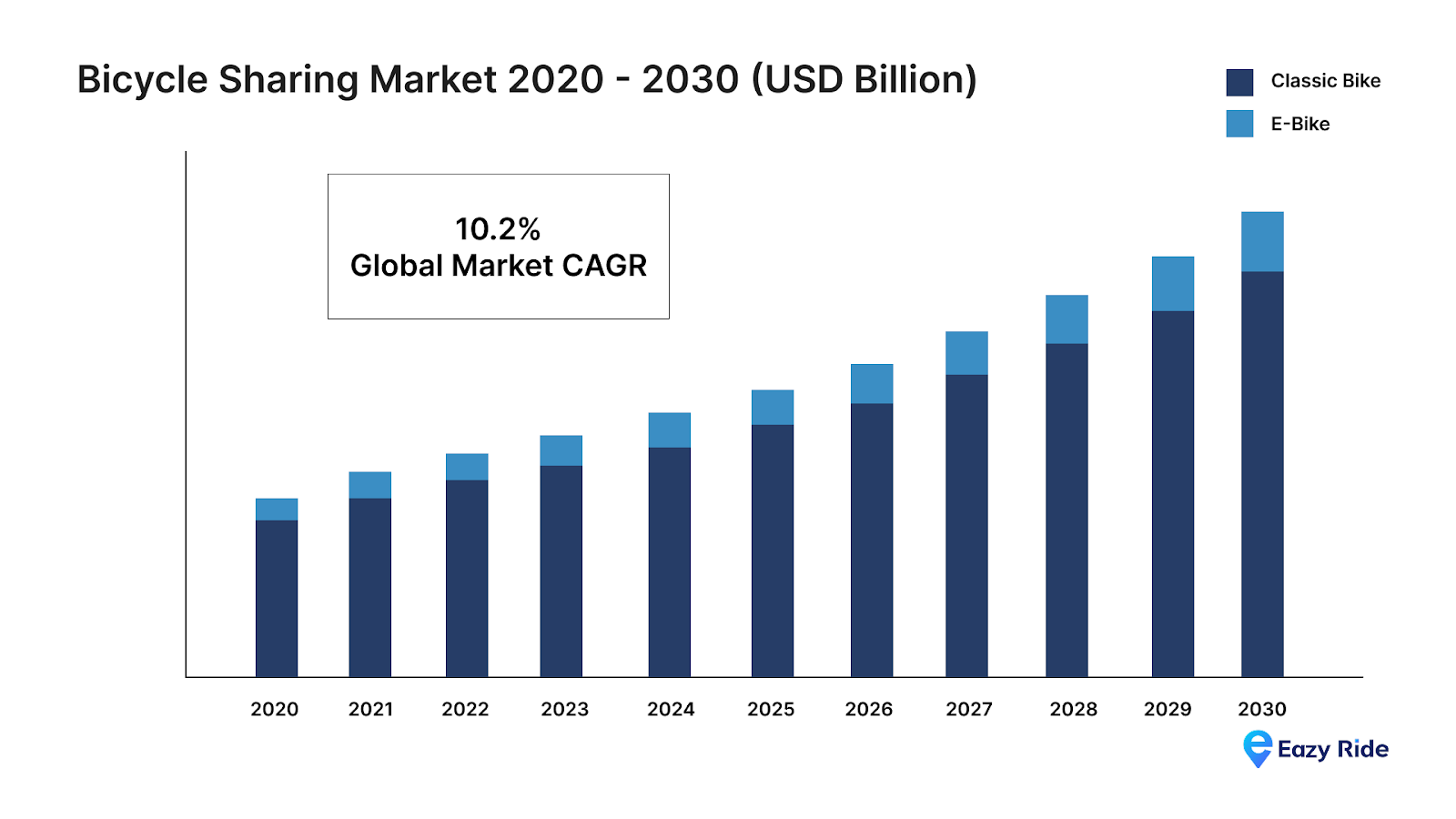
- The global bike sharing market is expected to grow at a CAGR of 7.6%, reaching $18.8 billion by 2034, driven by urbanization, environmental awareness, and demand for affordable mobility.
- Key bike sharing models include docked, dockless, hybrid, peer-to-peer, and public/private partnerships, with electric bikes dominating the market.
- Asia-Pacific, led by China, is the largest market, followed by Europe and North America, with increasing investments in cycling infrastructure and public transport integration.
- Emerging trends in the industry include the rise of e-bikes, technology-driven user experiences, and sustainability-driven urban mobility solutions.
- Despite challenges like operational costs, theft, and regulatory issues, opportunities for entrepreneurs and businesses to enter the market are growing, with platforms like EazyRide offering scalable, customizable solutions.
Understanding the Bike Sharing Market
Bike sharing is rapidly becoming an essential part of urban mobility, offering businesses, city planners, and entrepreneurs an innovative way to enhance transportation options. Through easy-to-use mobile apps or automated kiosks, bike-sharing systems let users rent bikes for short trips, making it a perfect solution for urban residents, commuters, and tourists. By filling the gap between public transport and final destinations, bike-sharing provides an affordable, efficient, and eco-friendly option that improves overall mobility within cities, campuses, or business hubs.
Main Bike Sharing Models
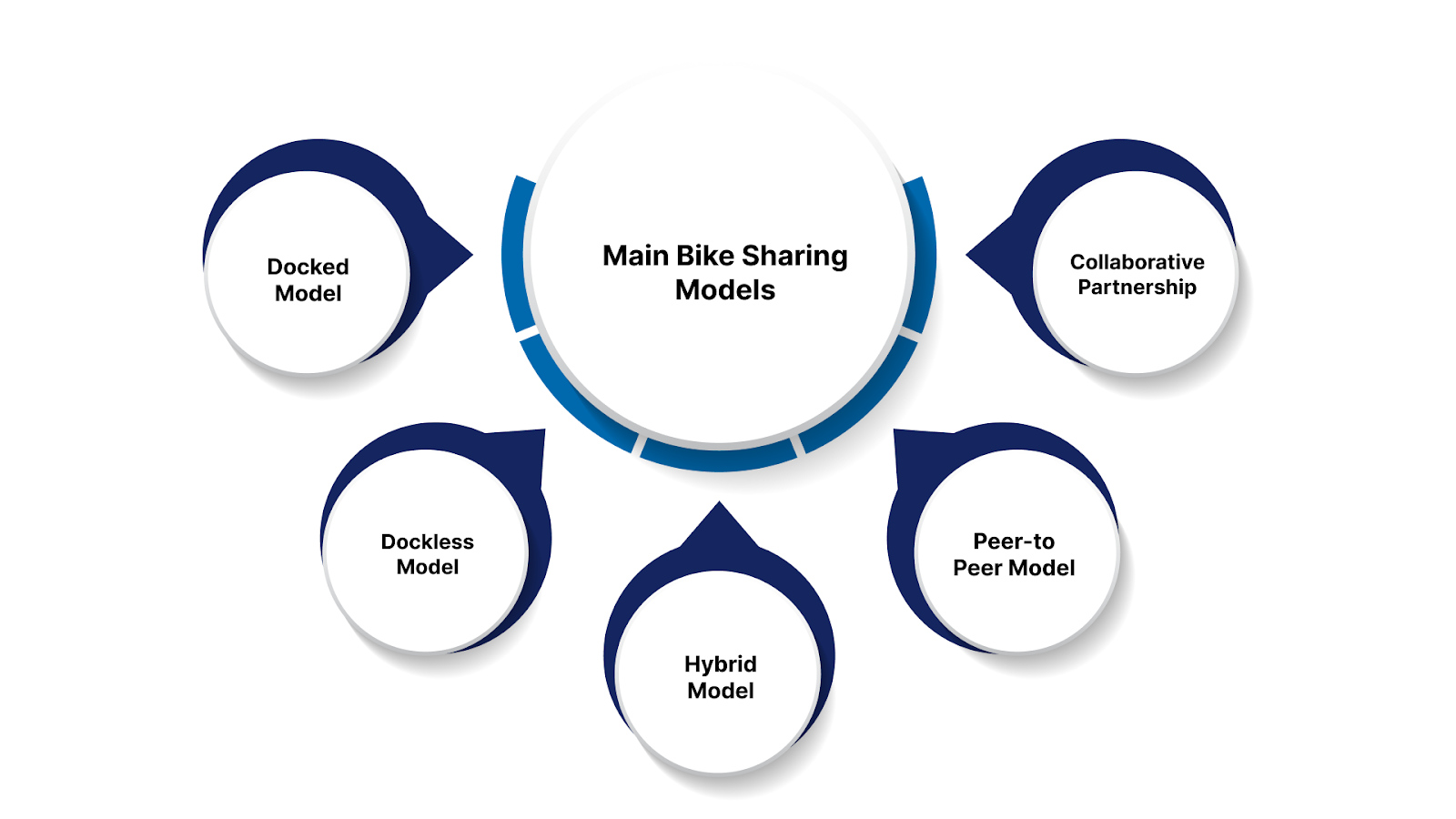
1. Docked (Station-Based) Model
In this traditional model, users rent and return bikes at fixed docking stations located throughout a city. Docked systems are reliable, reduce the risk of theft and vandalism, and are often operated through public-private partnerships with city governments.
2. Dockless (Free-Floating) Model
Dockless bike sharing allows users to find, unlock, and park bikes anywhere within a designated service area using GPS and a mobile app. This model is highly scalable and convenient, but it can face challenges with bike misplacement and sidewalk clutter. Companies like Mobike and Lime have popularized this approach.
3. Hybrid Model
Hybrid systems combine features of both docked and dockless models, allowing users to park bikes at stations or within defined geo-fenced areas. This approach aims to strike a balance between operational efficiency and user flexibility.
4. Peer-to-Peer (P2P) Model
In P2P bike sharing, individual bike owners list their bikes on a platform, making them available for rent by others. This model requires minimal investment from the operator but introduces challenges related to trust, insurance, and asset management.
5. Public/Private Partnership Model
Many large-scale bike sharing systems are operated as public-private partnerships, where a private company manages the service in collaboration with city authorities. This model helps integrate bike sharing into public transport networks and ensures regulatory compliance.
Types of Bikes in Bike Sharing
- Conventional Bicycles: Standard pedal-powered bikes form the backbone of many bike-sharing fleets, offering a simple and affordable mobility solution.
- Electric Bicycles (E-Bikes): E-bikes provide pedal-assist, making longer or hillier journeys easier and expanding the user base to those who may not regularly cycle. E-bikes are increasingly integrated into both docked and dockless systems, especially in cities aiming to boost ridership and accessibility.
- Specialty Bikes: Some systems offer cargo bikes or adaptive bikes to accommodate families, deliveries, or users with specific mobility needs.
With a clear picture of the various bike sharing models and types, let’s explore how the market has evolved in terms of size and what the future holds for this dynamic industry.
Market Size of Bike Sharing
The bike sharing market has experienced remarkable growth in recent years, driven by rising urbanization, environmental awareness, and the demand for convenient mobility solutions. Let’s take a closer look at the latest figures.
Global Overview
The bike sharing market has grown rapidly in recent years, becoming an essential part of urban transportation in many countries. In 2024, the global bike sharing market reached a value of $9.26 billion. This growth is expected to continue, as more cities and commuters turn to shared bikes for convenient, eco-friendly travel.
Regional Highlights
- Asia-Pacific: This region leads the global market, with China as the largest contributor. China alone accounts for more than half of the world’s shared bikes, thanks to widespread adoption in cities and strong government support
- Europe: European cities are embracing bike sharing, supported by excellent cycling infrastructure and policies that encourage sustainable transport. In Europe, the bike sharing market is anticipated to witness a significant rise in revenue, with an expected revenue of $555.38 million by 2025.
- North America: The United States and Canada are also seeing growth, with a record 157 million bike and scooter share trips in 2023. Major cities are expanding their networks and integrating bike sharing with public transit.
What’s Driving This Growth?
The surge in bike sharing can be attributed to a combination of powerful trends that are reshaping urban mobility. Some of the key factors include:
- Urbanization: Cities are getting bigger and denser, making flexible, last-mile transport like bike sharing more important.
- Environmental Concerns: More people and governments are choosing bike sharing to reduce traffic and cut emissions.
- Government Support: Many cities are investing in cycling infrastructure and offering incentives for bike sharing.
- Technology: Easy-to-use apps, GPS tracking, and smart locks make renting and returning bikes simple and secure.
- E-Bikes: The rise of electric bikes is attracting new users and making longer trips possible.
The continued integration of e-bikes, better technology, and partnerships with public transport are expected to drive even more growth in the coming years.

As the market continues to expand, several key trends are emerging that are shaping the future of bike sharing around the world.
Key Trends Shaping the Bike Sharing Market
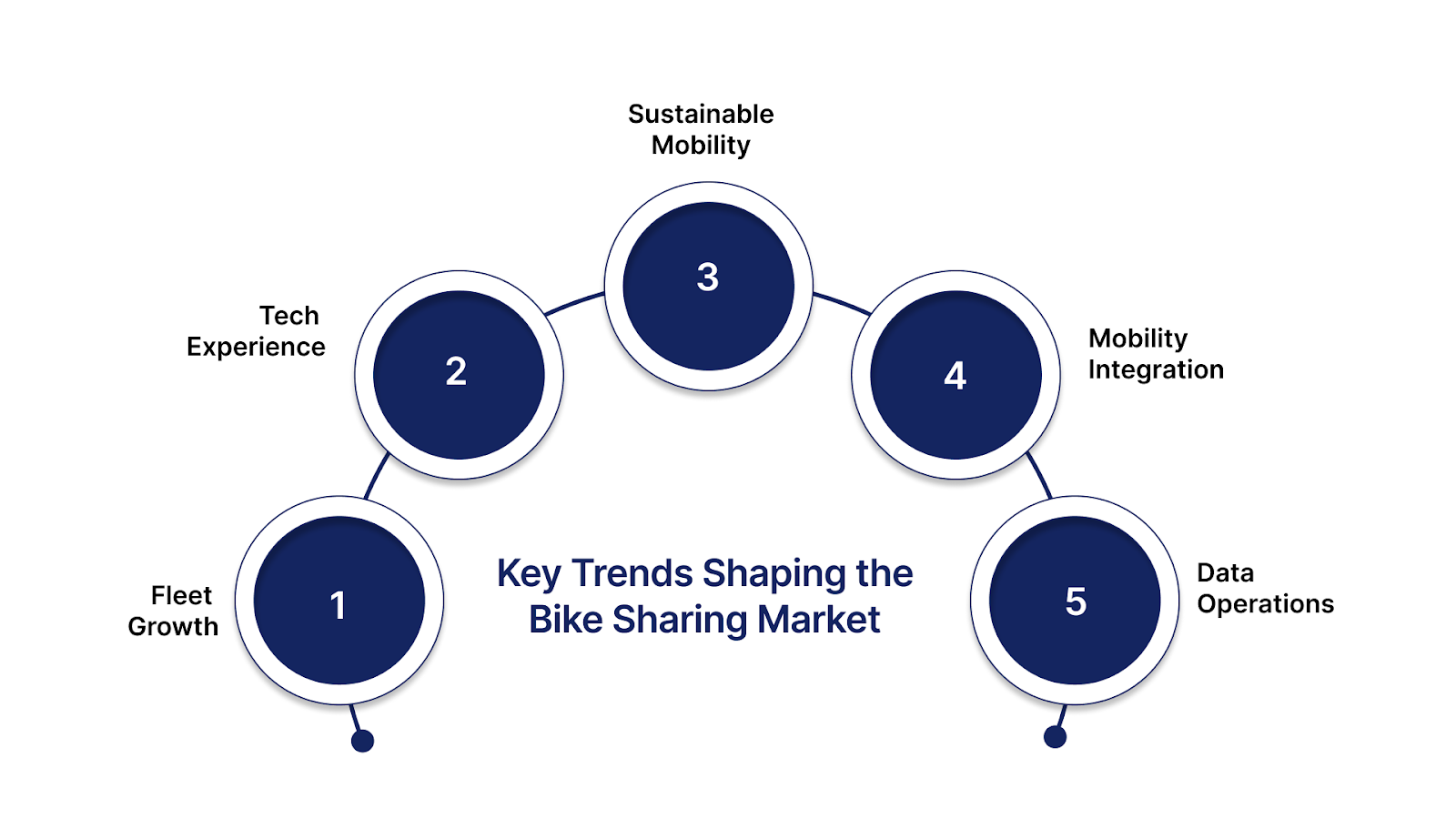
As the bike sharing market evolves, several key trends are emerging that are redefining how these services operate and grow.
1. E-Bike Integration and Fleet Expansion
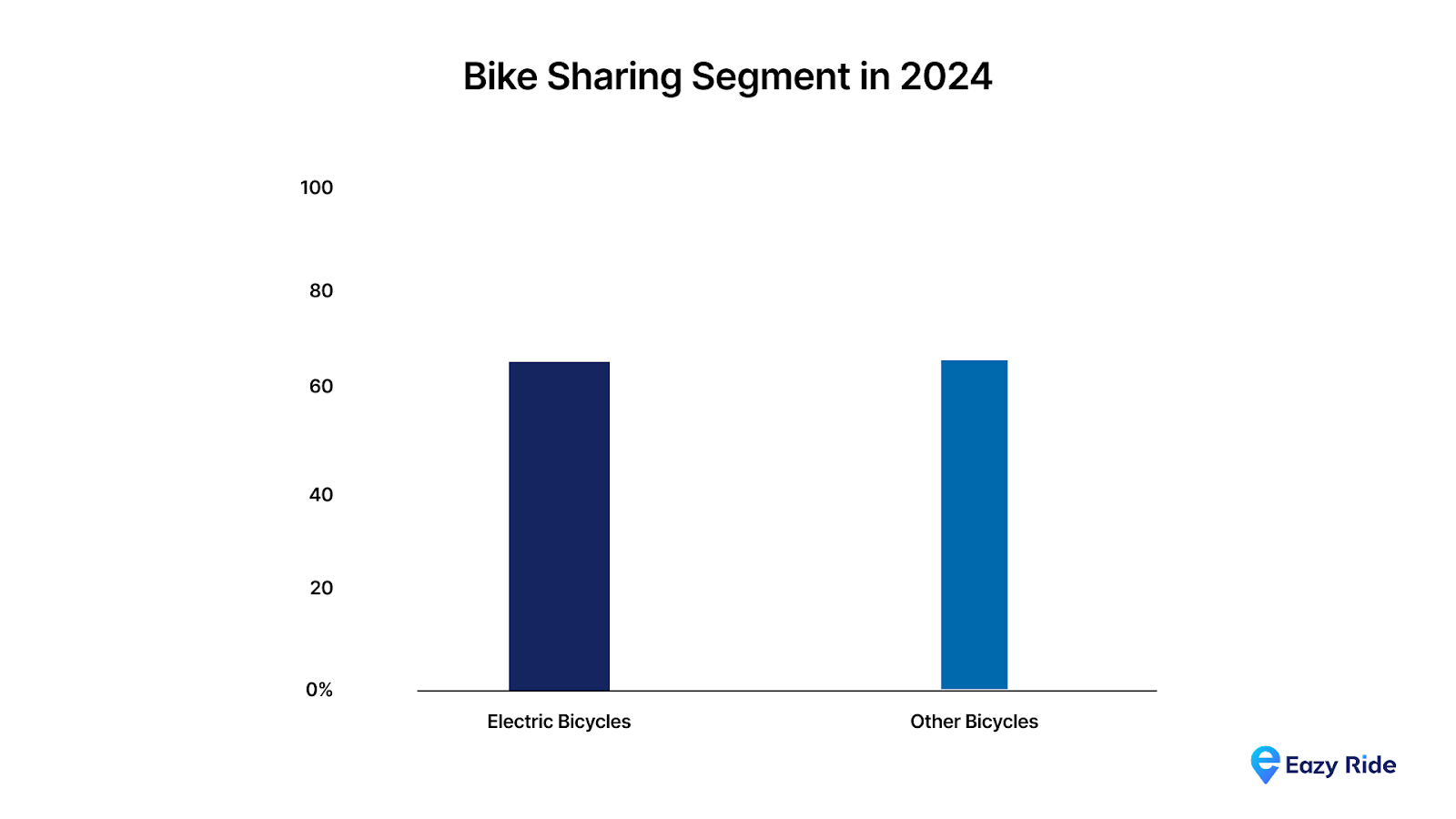
The addition of electric-assist bikes (e-bikes) is making bike sharing accessible to a broader demographic, including older adults and commuters tackling longer distances or hilly terrains. In 2024, electric bicycles dominated this segment with 65.5% due to their growing popularity and environmental benefits.
2. Technology-Driven User Experience
Mobile apps, GPS tracking, and digital payment systems have become standard in bike sharing, making it easier for riders to locate and unlock bikes, plan routes, and pay seamlessly. The introduction of smart features, particularly IoT-based locks, has increased convenience and improved user retention and engagement rates.
3. Sustainability and Urban Mobility
Bike sharing programs are recognized for reducing traffic congestion, lowering greenhouse gas emissions, and promoting healthier lifestyles. In the Asia-Pacific region, where the bike sharing market is dominant, it is driven by environmental concerns and government support that have fueled demand for eco-friendly transportation.
4. Integration with Public and Corporate Mobility
Bike sharing is increasingly integrated with public transport systems and corporate wellness programs, making it a key part of first- and last-mile connectivity and sustainability strategies for both cities and businesses.
5. Data-Driven Operations
Operators are using data analytics for fleet management, demand prediction, and service optimization, which helps ensure bikes are available where needed and supports efficient city planning.
While these trends signal exciting progress, the industry also faces a unique set of challenges that influence its growth.
Challenges and Solutions in the Bike Sharing Market
While the bike sharing market continues to expand, it faces several operational and regulatory challenges. Addressing these issues with effective solutions is essential for ensuring sustainable growth and long-term success in the industry
| Challenges | Solutions |
|---|---|
| Operational & Maintenance Costs | Adopt predictive maintenance using IoT and data analytics to reduce downtime and costs. |
| Vandalism & Theft | Implement GPS-enabled smart locks, real-time tracking, and community engagement to deter misuse. |
| Improper Parking & Urban Clutter | Use geo-fencing, designated parking zones, and user incentives for proper parking behavior. |
| Regulatory & Policy Barriers | Collaborate with local authorities, participate in pilot programs, and adapt to city-specific regulations. |
| Financial Sustainability | Diversify revenue streams through subscriptions, advertising, and partnerships. |
| Fleet Management & Redistribution | Leverage AI and real-time demand data to optimize bike placement and fleet redistribution. |
| Infrastructure Gaps | Work with governments to invest in cycling lanes, docking stations, and charging infrastructure for e-bikes. |
| User Safety & E-Bike Concerns | Enhance safety features, provide user education, and regularly update safety standards for bikes and e-bikes. |
Despite these obstacles, innovative entrepreneurs and businesses are finding new ways to capitalize on the growing demand for shared mobility solutions.
Opportunities for Entrepreneurs and Businesses
The rising demand for innovative, flexible bike-sharing solutions is creating new opportunities for entrepreneurs and organizations worldwide. Moreover, cities, campuses, resorts, and tourist destinations increasingly seek sustainable, convenient mobility options.
Technology platforms like EazyRide are making it easier to launch, manage, and scale bike-sharing services. Removing traditional barriers to entry and enabling businesses to adapt quickly to market needs.
Spotlight: How EazyRide Empowers Businesses
EazyrRide offers a comprehensive, all-in-one platform for launching and scaling micro-mobility services, including bikes, e-bikes, and scooters. Businesses can get started in as little as two weeks, with a fully branded solution that adapts to their unique needs.
Key Features:
- White-Label Customization: Complete control over branding, features, and user experience, ensuring your service stands out in the market.
- Multi-Vehicle Support: Operate bikes, e-bikes, and scooters from one dashboard, with real-time fleet monitoring and management.
- Geofencing & Zone Management: Define parking, no-ride, slow-speed, and bonus zones to optimize rider behavior and compliance.
- Advanced Analytics: Access heat maps, rider behavior insights, and performance reports to make data-driven decisions and optimize fleet distribution.
- Flexible Pricing & Business Models: Offer short-term, long-term, or subscription rentals; set dynamic pricing; and run promotions easily.
- Group Rides & Social Integration: Enable group bookings and seamless social media logins for a frictionless user experience.
- Fleet Rebalancing & Maintenance: Use AI-driven tools to redistribute vehicles based on demand and streamline maintenance workflows.
- Third-Party Integrations: Integrate payment gateways, mapping services, and local apps to enhance service and reach.
- 24/7 Support & Training: Access comprehensive support, documentation, and training to ensure smooth operations.
Real-World Applications
Bike sharing is being adopted in various settings to solve unique mobility challenges. Here’s how different sectors are using it to enhance convenience, sustainability, and efficiency.
- Cities: Expand urban mobility, reduce congestion, and support sustainability goals with a scalable, city-wide bike sharing network.
- Campuses: Offer students and staff a convenient, healthy way to move between buildings and facilities.
- Resorts & Tourism: Provide guests with easy access to local attractions, improving their experience and supporting eco-friendly travel.
- Business Parks & Corporates: Enhance employee wellness and reduce parking demand with on-site shared mobility solutions.
Conclusion
The bike sharing market is evolving rapidly, fueled by urbanization, sustainability goals, and technological innovation. From expanding e-bike fleets to seamless integration with public transit and data-driven operations, the industry is transforming how people move within cities, campuses, and tourist destinations. While challenges remain, opportunities for entrepreneurs and businesses have never been greater.
With EazyRide, launching and scaling a customized bike sharing service is now accessible, efficient, and cost-effective. Whether you’re a city planner, campus administrator, resort manager, or an entrepreneur with a vision for smarter mobility, Eazyride’s white-label solution equips you with the tools, technology, and support needed to succeed in this dynamic market.
Contact us for a demo, and discover how easy it is to build a thriving bike sharing business tailored to your community or organization.
FAQS
1. What is the role of e-bikes in bike sharing?
E-bikes are expanding the reach of bike sharing by making it easier to travel longer distances or tackle hilly terrain, attracting a broader range of users.
2. What are the benefits of bike sharing for cities and communities?
Bike sharing reduces traffic congestion, lowers carbon emissions, encourages active lifestyles, and offers affordable, flexible mobility options for residents and visitors.
3. How is technology changing the bike sharing industry?
Advancements in GPS, IoT, mobile apps, and data analytics have made bike sharing more efficient, user-friendly, and scalable. Technology also helps operators optimize fleet management and improve safety.
4. How does Eazyride help with fleet maintenance and rebalancing?
The platform uses real-time data and AI-driven analytics to help you monitor vehicle health, schedule maintenance, and optimize fleet distribution based on demand.
5. How quickly can I launch my own bike sharing service?
With Eazyride’s white-label platform, you can launch a fully branded, operational service in as little as two weeks, depending on your specific requirements and fleet size.


