
 AllSharing business

 15 July, 2025
 Best Telematics Companies for Fleet Management
Managing a fleet sounds straightforward until you try doing it without reliable data. One vehicle is overdue for service. Another has been idle all day in a high-demand zone. A third is showing mileage that doesn’t quite match the trip logs. None of it is catastrophic, but it slows everything down.
These minor problems don’t show up all at once. They creep in, take up space, and quietly strain your operations. Over time, what should be a smooth system starts to feel unpredictable.
That’s where telematics steps in. It turns scattered data into a clear picture of how your fleet is performing and surfaces the patterns that help you make smarter, faster decisions.
In this guide, we will break down what to look for in a telematics provider and highlight some of the top platforms helping fleets run with more clarity, control, and confidence.
Key Takeaways:
- A clear understanding of telematics, what it is, how it works, and why it’s foundational for modern fleet management.
- Key benefits of using telematics, including lower costs, improved maintenance, better compliance, and safer driving behavior.
- Must-have features to look for when evaluating the best telematics providers, beyond just tracking.
- Comparison of top providers, including EazyRide, Verizon Connect, Samsara, Azuga, and GPS Trackit.
- How to choose the right platform for your fleet size, vehicle type, and operational model without overcomplicating your stack.
What is Telematics for Fleet Management?
Telematics is the system that connects your vehicles to a central dashboard. It tracks the location of each vehicle, its usage, and when it requires attention.
You get a live view of your fleet every trip, every stop, and every issue that needs fixing. Whether it’s a vehicle idling too long or a service check coming up, the system keeps you informed in real time.
Instead of chasing updates or relying on manual logs, you have a steady stream of data that helps you stay ahead of problems and make faster decisions.
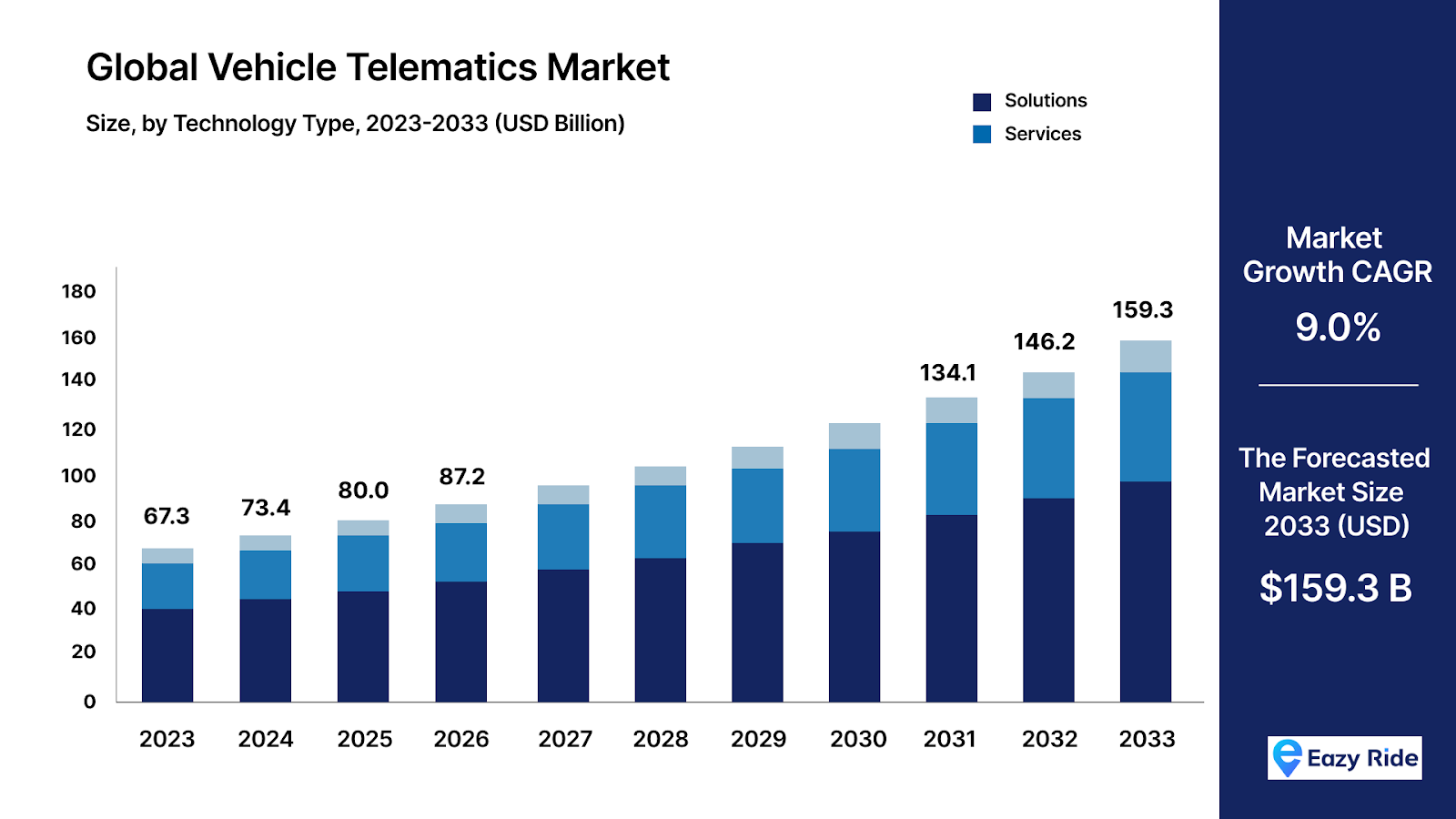
Source: Market.us
This graph shows how fast the vehicle telematics market is growing. By 2033, it’s expected to reach $159.3 billion, with steady annual growth. All types of telematics—embedded, tethered, and integrated—are being utilized more frequently as fleets seek smarter and safer ways to operate.
The numbers tell a clear story. Telematics is becoming a core part of how fleets run smarter and safer. But beyond market growth, what does it actually do for you on the ground? Let’s explore that next.
Read Also: How Telematics Empowers SMEs in Micro-Mobility
Benefits of Telematics in Fleet Management
Managing a fleet means keeping track of more than the location of vehicles. There’s maintenance to plan, fuel costs to monitor, routes to adjust, and delays to avoid. When these pieces sit in separate places, inefficiencies pile up quietly.
Telematics brings them together, making it easier to spot what needs attention and take action before problems grow.
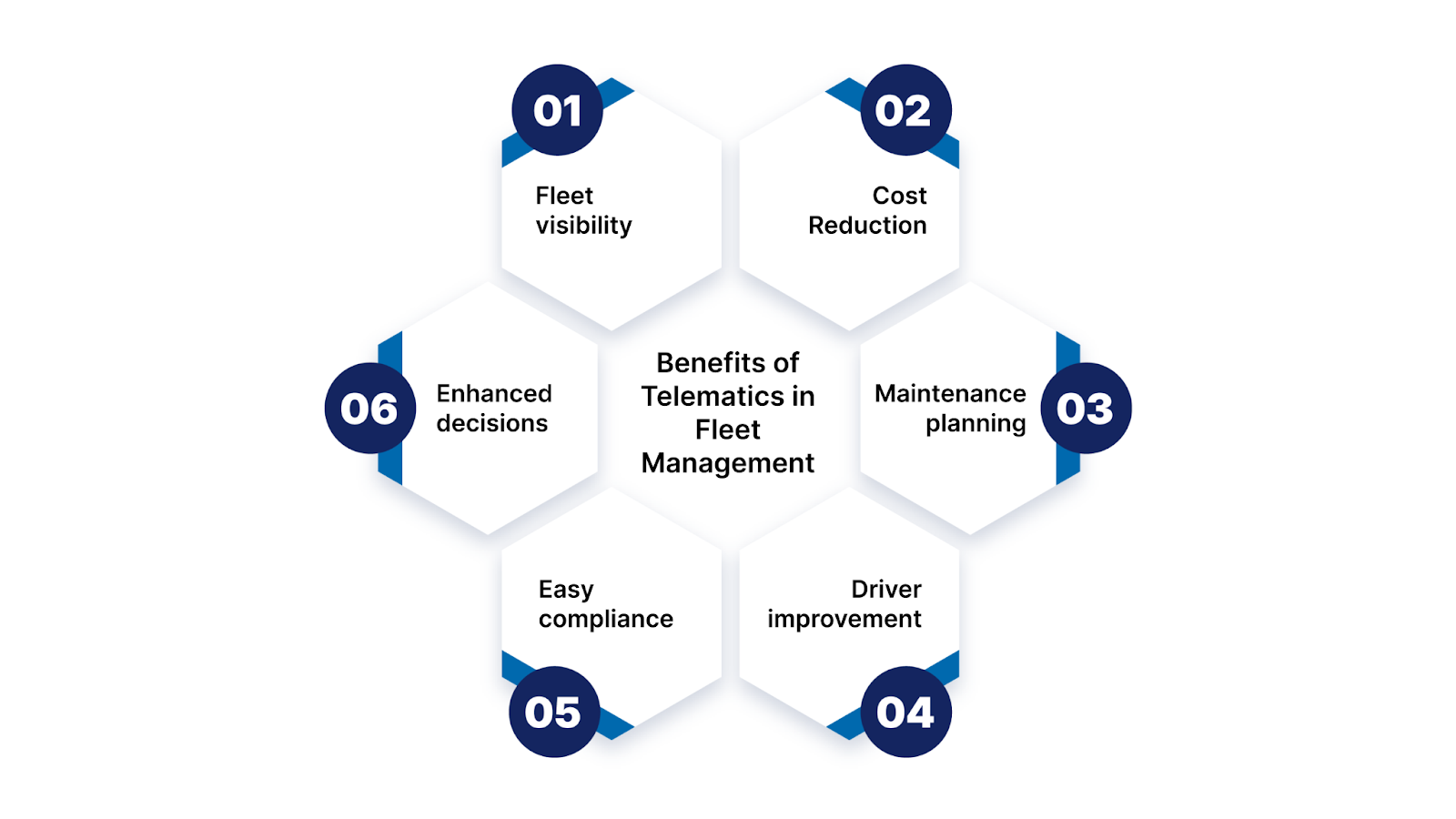
Here are the benefits it brings to your fleet operation:
- Real-time visibility of your fleet: Know where your vehicles are at any moment. Whether it’s one scooter or a hundred vans, real-time tracking helps reduce delays, improve dispatching, and give you peace of mind.
- Lower operational costs: Telematics helps you spot inefficiencies, like idling, route detours, or overuse. Over time, these insights result in fewer wasted miles, lower fuel bills, and reduced wear and tear.
- Better maintenance planning: Instead of waiting for something to break, get alerts when a vehicle needs servicing. Scheduled upkeep means fewer breakdowns and longer vehicle life.
- Improved driver behavior: Speeding, harsh braking, sharp turns—telematics can monitor it all. That means you can coach better habits, reduce accidents, and even lower your insurance premiums.
- Compliance and reporting made easy: From driver hours to route logs, telematics automates reports that help you stay compliant with local regulations without drowning in paperwork.
- Stronger decision-making: With data on how your fleet moves, you can make smarter calls, like where to expand, which routes to improve, or which vehicles to retire.
Telematics makes a real difference when it helps you cut delays, improve routes, reduce costs, and keep vehicles running safely. But not every system will get you there. The tools you start with determine what kind of results you’ll see.
If the platform is missing key features, you’ll end up guessing instead of knowing. That’s why it’s worth slowing down before choosing a provider to ensure it has what your operation actually needs.
Key Features to Look for in the Best Telematics Providers
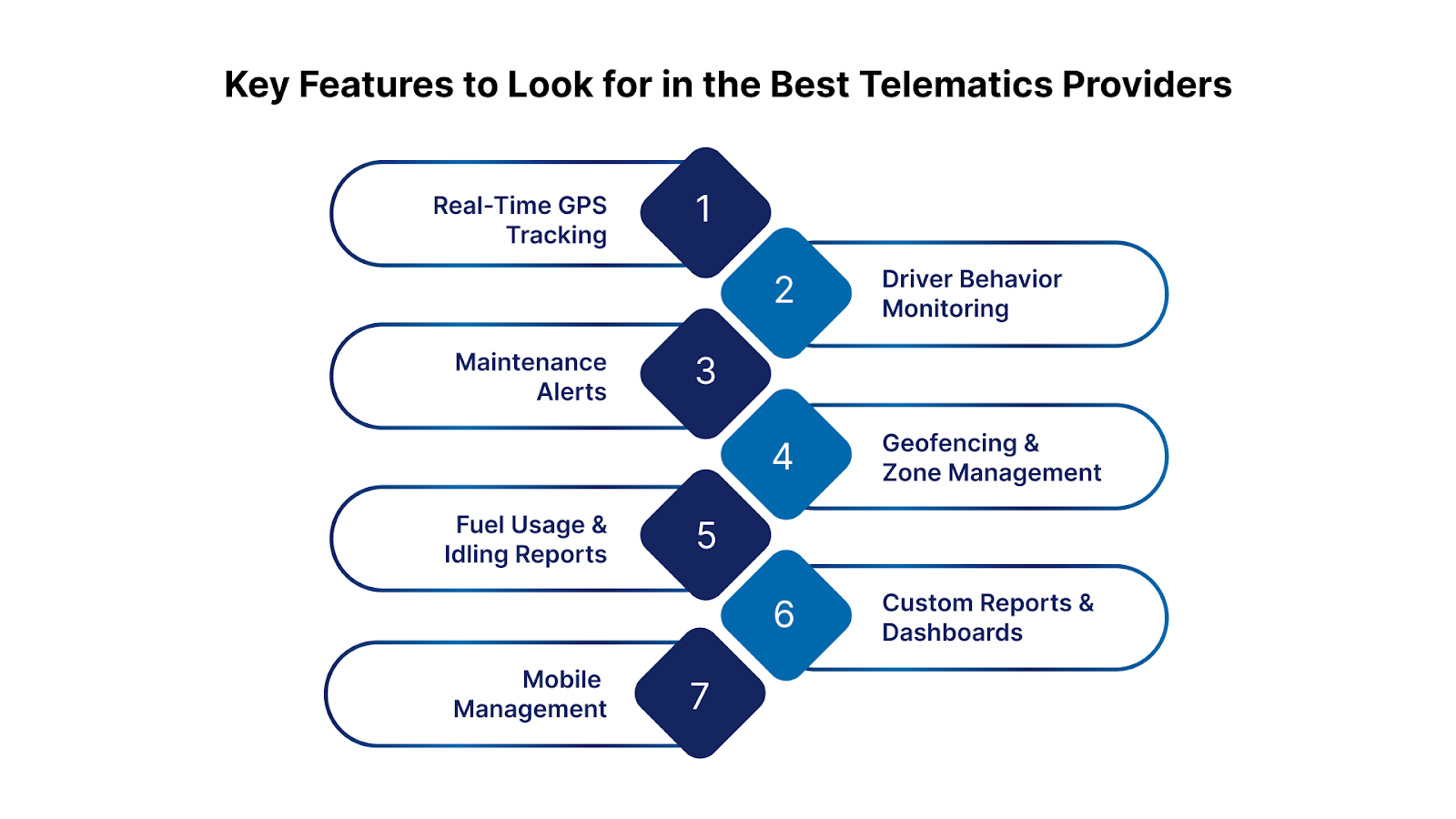
Every platform claims to offer visibility, control, and insight. But those promises fall flat without the right tools built into the system. What really matters is whether the data you get is practical, clear, actionable, and built for scale.
A strong telematics system doesn’t stop at showing you where your vehicles are. It helps you understand why they are idle, how they are being driven, and where performance gaps are quietly draining resources.
Here’s what the best telematics provider should offer by default:
- Real-Time GPS Tracking
This is the foundation. Live vehicle tracking gives you accurate location updates, so you can manage routes, respond faster to issues, and monitor movement across your entire fleet. - Driver Behavior Monitoring
Speeding, harsh braking, and rapid acceleration all add up. Sound systems flag risky driving habits that can lead to wear and tear or compliance issues, helping you improve safety and reduce maintenance costs. - Maintenance Alerts
Preventive maintenance gets easier when your system tracks engine hours, mileage, and error codes. Automated alerts reduce the likelihood of unexpected breakdowns and extend the vehicle’s lifespan. - Geofencing and Zone Management
Set up virtual boundaries around neighborhoods, facilities, or no-go zones. Get alerts when vehicles enter or exit predefined areas. This is useful for theft prevention, regulatory compliance, or zone-based pricing. - Fuel Usage and Idling Reports
Keep tabs on fuel consumption trends and idling time. These reports help identify patterns that may be driving up costs without adding value. - Custom Reports and Dashboards
Whether you’re tracking utilization or delivery delays, customizable dashboards give you the flexibility to track what matters most to your operations. - Mobile Access for On-the-Go Management
A good system doesn’t keep you tied to a desk. Mobile-friendly dashboards and alerts enable you to manage tasks remotely, whether you are in the office or out in the field.
A system with all the right features turns telematics from a tracking tool into a real management asset. But getting that value depends entirely on who’s building the platform behind the scenes. Next, let’s look at the best telematics providers that stand out.
Read Also: Understanding IoT Telematics for Smart Fleet Operations
Top 5 Best Telematics Providers for Fleet Management
The market is full of bold claims and glossy promises. But when it comes down to day-to-day operations, tracking downtime, flagging unsafe driving, and planning smarter routes, only a few actually pull their weight.
What separates the best from the rest is how well they turn raw data into practical action that helps you stay ahead without adding more complexity.
Here are the five top providers, sorted from the most reliable and feature-rich to those that are decent:
1. EazyRide
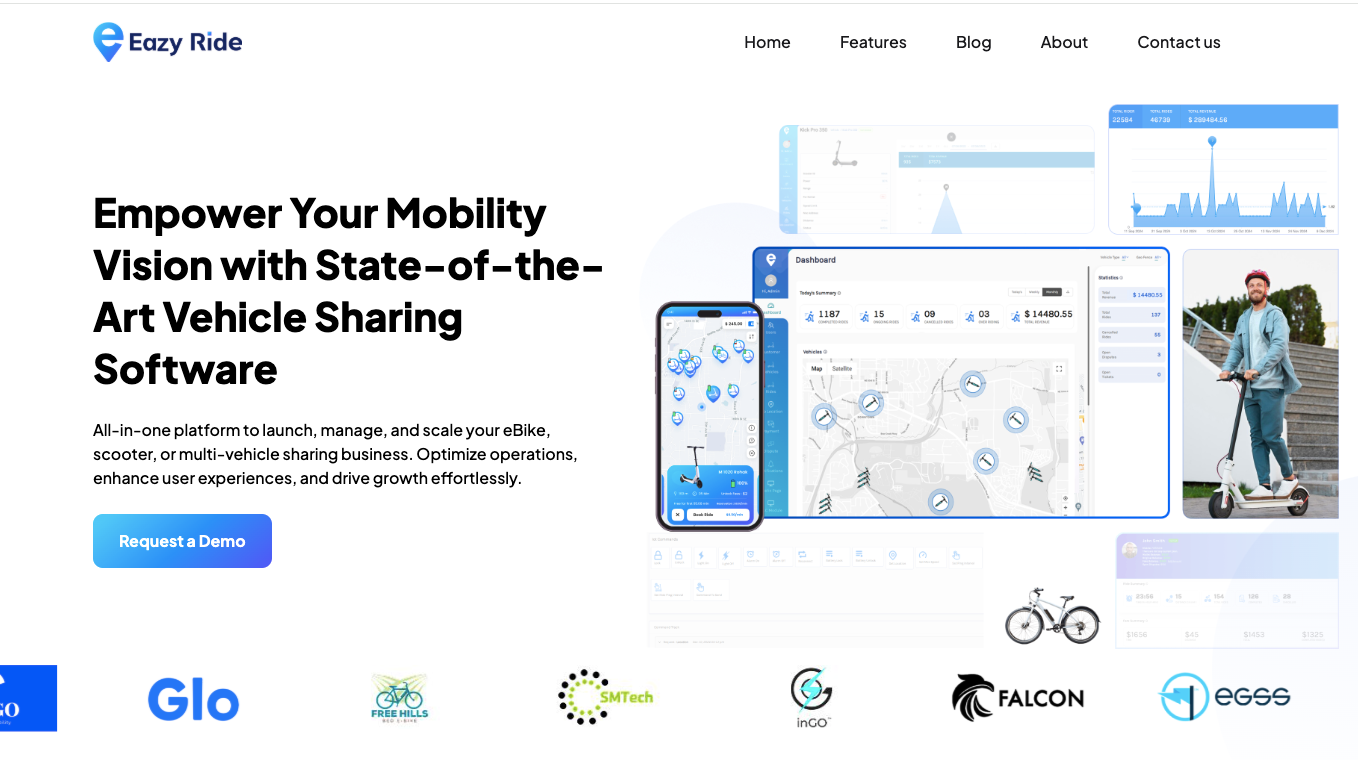
EazyRide provides a dedicated platform for managing shared micromobility fleets, including bikes, e-bikes, and scooters. It’s built to support businesses looking to streamline rentals, monitor operations in real time, and scale across multiple locations.
Whether you are starting small or managing a wider franchise network, the platform is structured to reduce operational overhead while improving visibility and control.
Key Features:
- Fast Setup: The platform is built for quick rollout, with systems ready to go in 2 weeks.
- White-Label Customization: You can tailor the rider app and admin dashboard to match your brand—from visuals to operational preferences.
- Operational Tools: Includes AI-powered insights, geofencing, live vehicle tracking, and options like group rides to support diverse use cases.
- Flexible Models: Works across different service types, whether you’re running a dockless system, time-based rentals, or franchise-style operations.
- Supports Various Vehicle Types: Compatible with bikes, e-bikes, scooters, and similar vehicles, allowing mixed-fleet management in one place.
- Scales With You: The infrastructure is designed to handle business expansion, new territories, and shifting operational needs as you grow.
Who it is for: Ideal for operators and entrepreneurs in micro-mobility—campuses, resorts, tourist zones—who need a turnkey platform with complete control of branding and operations.
Pricing: Custom pricing based on fleet size and use
2. Verizon Connect
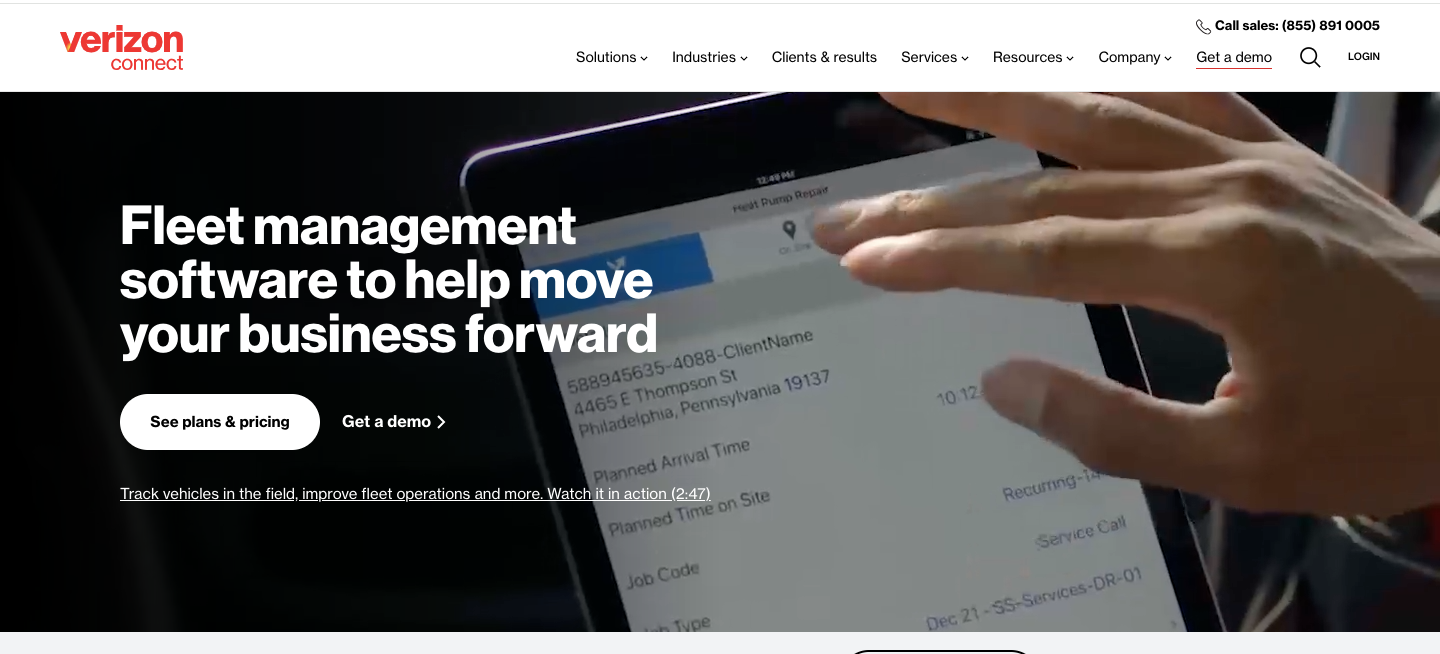
Verizon Connect is a fleet management solution developed from a series of acquisitions, including Fleetmatics, Telogis, and Movildata. Headquartered in the U.S., it offers a comprehensive platform known for its strong data analytics, advanced driver monitoring tools, and compliance features.
Key Features
- Interactive Mapping and Geofencing: Get real-time map views and zone alerts with Google Maps-based tracking.
- 30-Second Live Tracking: Vehicles refresh location every half minute, improving oversight and responsiveness.
- Driver Behavior Insights: Track harsh driving, idling, and late starts with daily summaries and alerts.
- Scheduling and Dispatch Tools: View active jobs and plan routes using a built-in scheduler with availability filters.
Best For: Large-scale fleets or safety-critical operations that require frequent updates, detailed driver accountability, and ELD compliance.
Pricing: Starts at approximately $20 per vehicle per month. Typically requires a long-term contract, often up to three years.
3. Samsara
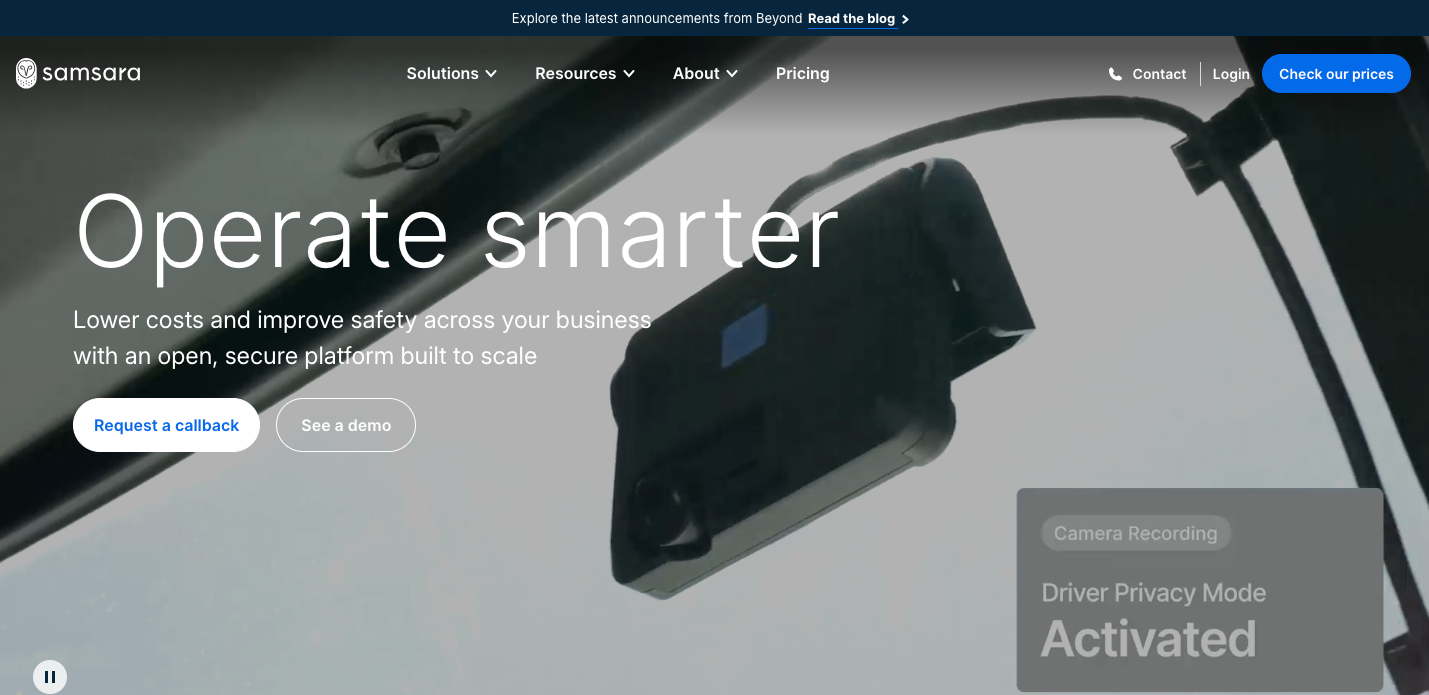
Based in San Francisco, Samsara delivers IoT-powered fleet solutions with a strong emphasis on dispatch optimization and real-time analytics. It’s designed for fleets needing responsive routing and predictive job scheduling based on live traffic and past trip data.
Key Features
- Real-Time Dispatch Intelligence: Assign jobs using automated departure and travel time predictions.
- Route Optimization (Up to 20 Stops): Generate fuel-efficient routes using trip history and stop estimates.
- Custom Safety Alerts: Configure thresholds for harsh events like braking or sudden acceleration.
- Weather & Hazard Mapping: Live weather overlays and road condition data help enhance routing and safety.
Best For: Logistics firms and dispatch-heavy fleets managing high volumes of daily assignments, where efficiency and real-time adaptability are key.
Pricing: Starts around $27 per vehicle per month, with upfront hardware fees. A three-year software license is common.
4. Azuga
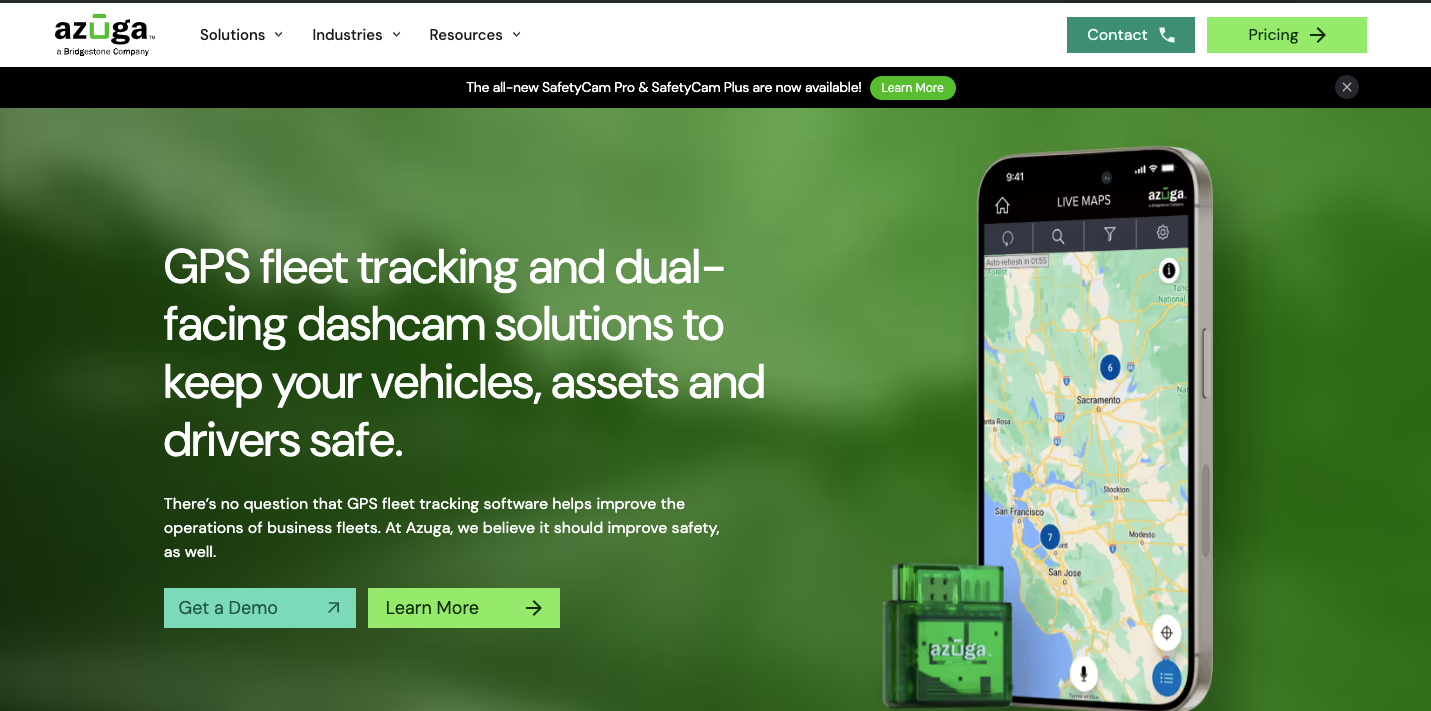
Azuga, headquartered in the U.S., focuses on intelligent route planning and fuel efficiency. The platform uses algorithm-driven route optimization to minimize cost and time across complex multi-stop itineraries, making it ideal for delivery operations.
Key Features
- Dynamic Route Optimization: Customize routes using constraints like distance, revenue, and vehicle load.
- Live Tracking: Track vehicle trails in real time with adjustable refresh rates (30 sec to 59 min).
- Driver Scorecards and Rewards: Monitor behavior and incentivize safety via a driver leaderboard system.
- Maintenance Monitoring: Get alerts based on engine diagnostics to prevent breakdowns and reduce downtime.
Best For: Last-mile delivery and long-haul fleets with a focus on fuel savings, route complexity, and vehicle health.
Pricing: Ranges from $25 to $35 per vehicle per month, depending on feature sets. Hardware is plug-and-play; no hardwired install needed.
5. GPS Trackit
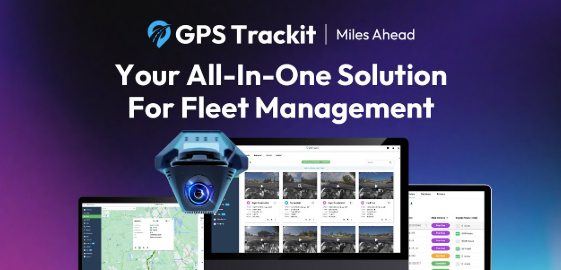
Operating out of Roswell, Georgia, GPS Trackit is designed with affordability and simplicity in mind. It offers solid theft prevention and basic tracking capabilities, making it especially appealing to smaller fleets and seasonal operators.
Key Features
- 24/7 Theft Prevention: Detect off-hours movement and remotely disable vehicle power.
- Customizable Driver Reports: Generate scorecards and safety summaries tailored to fleet needs.
- Two-Way Messaging: Communicate with drivers using in-platform text messages and canned replies.
- Cargo and Temperature Monitoring: Ensure perishable or sensitive goods are transported safely.
Best For: Smaller, budget-conscious fleets looking for reliable theft protection and simplified tracking without the cost of advanced route planning.
Pricing: Starts at $23.95 per vehicle per month. Contract terms are more flexible than competitors.
While these providers lead the industry, their strengths vary depending on the specific goals and challenges of your fleet operations. A clear understanding of your needs is key before making a decision.
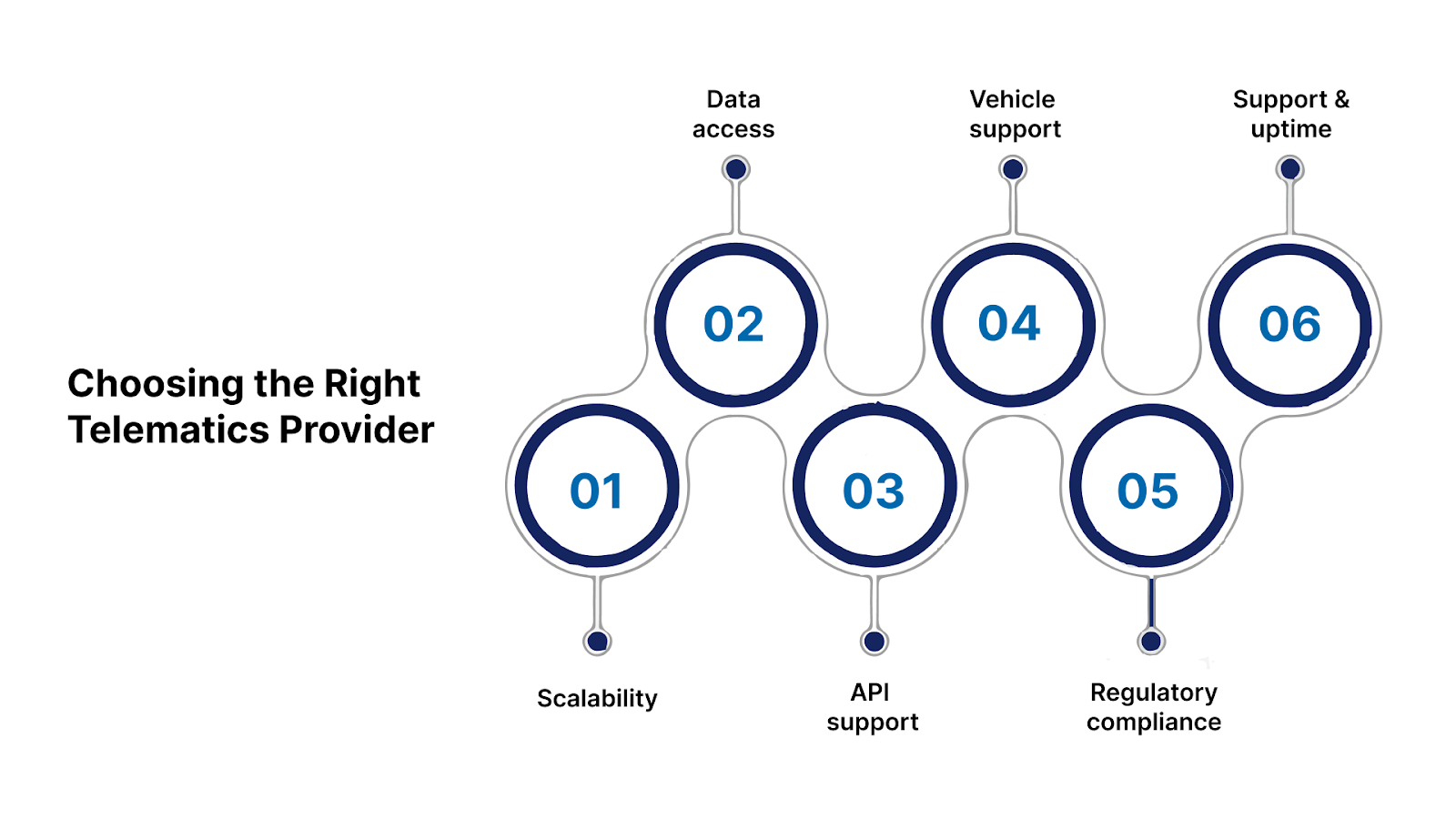
Choosing the Right Telematics Provider
Selecting the right telematics partner starts with understanding what you need. Are you optimizing for real-time tracking, predictive maintenance, or advanced geofencing? Perhaps you require a system that integrates seamlessly with your white-label rider app or accommodates mixed vehicle fleets.
Here’s what to evaluate when choosing a provider:
- Scalability: Ensure the system can scale with your business. Whether you’re managing 20 or 2,000 vehicles, the platform should handle expansion without service drops or technical overhauls.
- Data Ownership and Access: Clarify who owns the data and how easy it is to access raw or aggregated insights. You will want complete control over your fleet’s movement, usage patterns, and operational metrics—especially if you’re feeding this data into your own dashboards or reporting tools.
- APIs and Integration Support: Your telematics system should seamlessly integrate with your existing tech stack, including apps, CRMs, and payment gateways. Strong documentation and responsive developer support can make or break this integration.
- Support for Your Vehicle Types: Whether you operate scooters, e-bikes, or mopeds, the telematics unit should be tailored to those specs. That means accurate data, stable connectivity, and reliable firmware updates over time.
- Compliance and Local Regulations: Many U.S. cities have unique rules around speed limits, no-ride zones, and vehicle parking. Your provider should support dynamic geofencing and compliance reporting out of the box.
- Customer Support & Uptime Guarantees: Lastly, this is your infrastructure. You need a provider with a solid SLA, responsive customer service, and a reputation for keeping systems running smoothly during peak usage.
Conclusion
If you are managing a fleet today, telematics is the foundation of staying organized, efficient, and ahead of unexpected issues. From tracking and diagnostics to driver safety and compliance, it gives you the kind of visibility that keeps your operations smooth and your decisions informed.
But don’t rush into picking a system just because it looks popular or promises every feature under the sun. Start by thinking about your day-to-day: What slows you down? What information do you wish you had sooner?
Then look for a platform that fits around those needs without adding complexity. The right telematics provider should make your job easier, not harder—and that’s how you will know it is the right one.
After looking through the best in the business, you now know what great telematics should look like.
EazyRide stands out not just in features, but in how easily it fits into your daily fleet operations.
Try it for yourself—schedule a demo and see the difference.


