
 AllMicro Mobility Model

 15 July, 2025
 Benefits of Sustainable Transportation: How Micro-Mobility Drives Urban Success
What if you could cut your business’s carbon footprint while improving profitability? Sustainable transportation offers just that, becoming increasingly important as cities worldwide push for cleaner, smarter mobility solutions.
Did you know transportation accounts for nearly 30% of global energy demand and is the largest source of greenhouse gas emissions in the United States? Choosing sustainable options isn’t just good for the planet; it’s a strategic move that can set your business apart and drive growth.
Let’s explore how making the shift to sustainable mobility can drive real benefits for you, your business, and your community.
Key Takeaways:
- Sustainable transportation reduces costs, emissions, and operational inefficiencies.
- Micro-mobility options like e-bikes and scooters ease urban congestion and promote health.
- Businesses adopting sustainable transport can boost brand loyalty and access financial incentives.
- Embracing these trends supports cleaner, more livable cities and profitable business growth.
What Is Sustainable Transportation?
Sustainable transportation is all about moving people and goods in ways that minimize environmental impact, reduce congestion, and support healthier, more livable communities.
For you, as a mobility entrepreneur or business leader, it means adopting systems such as electric vehicles, shared bikes, e-scooters, and efficient public transit that help reduce emissions and reliance on fossil fuels.
Sustainable transportation isn’t just a trend; it’s a fast-growing global movement. The market for sustainable transportation systems was valued at $120.67 billion in 2023 and is projected to reach $311.20 billion by 2030, growing at a remarkable CAGR of 14.7%.
This explosive growth is driven by rising urbanization, stricter environmental regulations, and a shift in consumer preferences toward greener, more cost-effective mobility options.

By integrating sustainable transportation into your business, you’re not only helping the planet, you’re also tapping into a booming market with massive potential for innovation and profit.
Whether you operate a bike-share fleet, manage e-scooters, or provide EV rentals, you’re part of a movement that’s reshaping how cities move and thrive.
Understanding the basics sets the stage for exploring the real-world advantages. Here’s how adopting sustainable transportation can make a difference for both businesses and urban communities
Top Benefits of Sustainable Transportation for Businesses & Cities
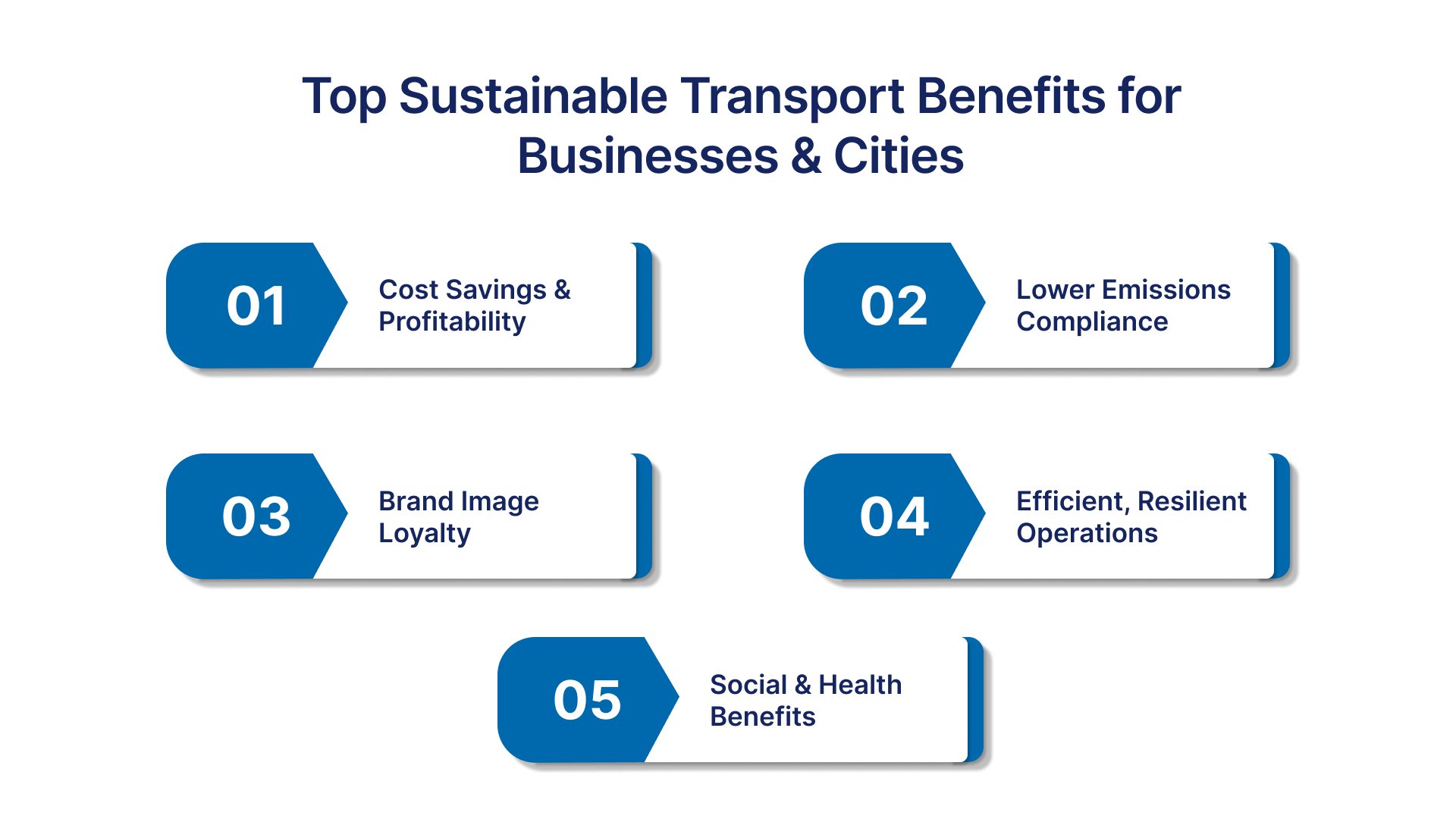
When you choose sustainable transportation, you’re not just helping the environment—you’re unlocking real, measurable advantages for your business and your community. Here’s how making the switch delivers value on multiple fronts:
1. Cost Savings and Profitability
Adopting sustainable transport solutions like electric vehicles, route optimization, and alternative fuels reduces fuel consumption and maintenance needs, thereby lowering your operational expenses.
Electric vehicles, for example, require less servicing and have fewer parts to replace, resulting in lower maintenance costs throughout their lifespan.
2. Reduced Carbon Footprint and Regulatory Compliance
Switching to greener vehicles and logistics methods helps you lower your company’s carbon emissions, aligning with stricter global regulations. Greenhouse gas (GHG) emissions from transportation account for about 28 percent of total U.S. greenhouse gas emissions.
Governments are increasingly offering tax breaks, rebates, and incentives for businesses that invest in sustainable transport, making compliance both easier and more rewarding.
3. Stronger Brand Image and Customer Loyalty
Demonstrating your commitment to sustainability can boost your reputation and attract eco-conscious customers, partners, and investors. In a survey, More than 80% of consumers say they are willing to pay more for sustainable produced or sourced goods. Businesses that lead in green initiatives often gain recognition and new market opportunities as a result.
4. Operational Efficiency and Supply Chain Resilience
Sustainable practices like route optimization, load management, and advanced scheduling streamline your supply chain, minimize waste, and reduce delays. This not only makes your operations more efficient but also builds resilience against disruptions and fluctuating fuel prices.
5. Social and Health Benefits
Sustainable transportation reduces air pollution by decreasing vehicle emissions, which in turn improves air quality and public health, particularly in densely populated urban areas.
For example, doubling the market share of public transport worldwide by 2025 could avoid the emission of around 550 million tons of CO₂ and reduce urban traffic fatalities by 15%.
It also encourages more active lifestyles, with daily mobility offering the 30 minutes of exercise recommended by the World Health Organization and reducing the risk of obesity and heart disease by 50%.
By embracing sustainable transportation, you’re not just future-proofing your business—you’re making a positive impact on your bottom line, your brand, and the world around you.
One of the most exciting parts of this shift is the rise of micro-mobility. Let’s see how these small vehicles are making a big difference.
Micro-mobility: The Future of Sustainable Transportation
Have you noticed an increase in bikes, e-scooters, and shared vehicles in your city? That’s no coincidence; micro-mobility is quickly becoming a cornerstone of sustainable urban transportation, offering unique advantages for both businesses like yours and the cities you operate in.
What Is Micro-mobility?
Micro-mobility refers to lightweight, typically electric vehicles such as bikes, e-bikes, and e-scooters designed for short-distance travel. These solutions are ideal for first- and last-mile journeys, connecting people to public transit or helping them navigate dense urban areas efficiently.
Why Is Micro-mobility Transforming Cities and Businesses?
How Micro-Mobility Benefits Businesses and Cities
- Reduces Congestion: Shared bikes and scooters mean fewer cars on the road, which helps ease traffic congestion and frees up parking spaces.
- Cuts Emissions: Replacing short car trips with micro-mobility options leads to cleaner air and healthier communities.
- Boosts Local Economies: Riders are more likely to shop locally and visit businesses along their routes.
- Promotes Healthier Lifestyles: Providing more opportunities to bike or use e-scooters encourages daily physical activity.
- Integrates with Public Transit: Micro-mobility fills the “last-mile” gap, making public transport more accessible and appealing.
Micro-mobility Is Growing Fast
The global micro-mobility market is projected to reach $166.8 billion by 2029, reflecting the rapid adoption of both city and private operators. This growth is fueled by increasing urbanization, consumer preferences, demand for flexible mobility, and the push for cleaner, quieter streets.

To show how these ideas work in practice, here’s a look at how a smart platform can help you put sustainable transportation into action.
How EazyRide Empowers Sustainable Transportation
When you’re ready to make a difference in urban mobility, you need more than just vehicles; you need a platform that turns sustainable transportation into a competitive advantage.
EazyRide is designed to help you do exactly that, combining technology, flexibility, and user experience in one powerful solution.
Here’s how EazyRide drives real impact:
- Seamless Launch and Rapid Scaling: EazyRide enables you to launch your micro-mobility service in as little as two weeks, whether you’re starting with a handful of e-bikes or rolling out a city-wide scooter fleet.The platform grows with you, supporting expansion into new neighborhoods or markets without technical headaches.
- Effortless Fleet Optimization: With real-time tracking and intelligent fleet management, you can keep your vehicles where they’re needed most, reduce downtime, and ensure every ride is efficient.This not only lowers your operational costs but also means fewer empty trips and less congestion on city streets.
- User Experience That Drives Adoption: EazyRide’s customizable rider app offers a seamless booking and payment process, live vehicle availability, and instant customer support.This convenience encourages more people to choose sustainable options over private cars, helping shift urban travel habits.
- Smart Data for Smarter Decisions: The platform’s analytics dashboard gives you actionable insights into rider demand, peak usage times, and popular routes. You can use this data to optimize pricing, plan promotions, and work with city officials to improve local infrastructure.
- Built-In Compliance and Community Benefits: EazyRide’s geofencing and zonal controls help you operate within city regulations, designate safe parking areas, and prevent clutter.This keeps public spaces orderly and ensures your service is a welcome addition to the community.
- Flexible Business Models: Whether you’re targeting tourists, commuters, corporate campuses, or residential communities, EazyRide adapts to your business goals.You can offer pay-per-ride, subscriptions, or even group ride options to match your market’s needs.
The result?
With EazyRide, you’re not just running a micro-mobility business, you’re helping your city become cleaner, quieter, and more connected. You gain the operational efficiency, customer loyalty, and community goodwill that come from leading the way in sustainable transportation.
Conclusion
By embracing sustainable transportation, you position your business to reduce costs, boost efficiency, and contribute to healthier, more vibrant cities. From reducing emissions and alleviating congestion to unlocking new economic opportunities and promoting social equity, the benefits extend far beyond your bottom line. Micro-mobility solutions like e-bikes and scooters are at the forefront of this transformation, offering practical and scalable ways to meet modern mobility needs.
If you’re ready to lead the way in sustainable urban transport, EazyRide provides the technology and support to help you launch, manage, and grow your micro-mobility business with confidence.
Schedule a demo with EazyRide, to move towards a cleaner, smarter and sustainable mobility business today.
FAQs
1. How can micro-mobility solutions help reduce a city’s carbon footprint?
Micro-mobility options replace short car trips, which are often the least fuel-efficient mode of transportation. By encouraging the use of bikes and scooters for short journeys, cities can significantly reduce CO₂ emissions and improve overall air quality.
2. What challenges do cities face when implementing sustainable transportation?
Cities may encounter challenges such as infrastructure upgrades, regulatory hurdles, and the need for public awareness campaigns. Addressing these issues requires collaboration between local governments, businesses, and the community.
3. How does sustainable transportation improve public health?
By reducing vehicle emissions and promoting active travel modes, such as cycling and walking, sustainable transportation leads to cleaner air and encourages healthier lifestyles, which can lower rates of chronic diseases.
4. How can businesses get started with micro-mobility solutions?
Businesses can start by assessing local demand, partnering with technology providers, and aligning with city regulations. Launching a pilot program with a small fleet and expanding based on data insights is a practical approach.
5. Are there financial incentives for adopting sustainable transportation?
Many governments offer tax credits, grants, and rebates to support the adoption of electric vehicles and other sustainable mobility solutions, helping offset initial investment costs.


