
 AllMicro Mobility Model

 6 January, 2026
 Vehicle Remote Health Monitoring and Prognostic Maintenance Explained
If you run an urban mobility business or manage a fleet, uptime is everything. Every hour a vehicle is offline costs you trips, revenue, and customer trust.
The problem is scale: once vehicles spread across zones and usage becomes unpredictable, breakdowns and reactive maintenance start eating margins. That’s where vehicle remote health monitoring and prognostic maintenance help. They turn live vehicle signals (battery health, fault codes, temperature, vibration, brake wear, and more) into actionable alerts, so you can fix issues before they become downtime.
This guide explains what these systems are, how the architecture works, where predictive maintenance fits in, and what you need to implement it without creating messy integrations.
Key Takeaways
- Vehicle remote health monitoring captures real-time performance data via sensors and onboard controllers (ECU/BMS/motor controller) and sends it to a monitoring platform.
- Prognostic maintenance uses predictive models to detect early degradation and estimate remaining useful life (RUL) for key components.
- Core components include sensors, onboard controllers (ECU/BMS), a telematics/communication module, cloud analytics, and an alerting dashboard.
- Benefits include reduced downtime, lower maintenance cost, improved safety, and longer asset life.
- Common challenges include data quality, integration effort, cybersecurity/privacy, and vendor lock-in risk.
What is Vehicle Remote Health Monitoring & Prognostic Maintenance
A vehicle remote health monitoring system continuously collects and transmits live data about vehicle health (for example: battery voltage, controller temperature, brake wear signals, vibration patterns, fault codes, and sensor anomalies). Think of it as a fleet-wide health check you can run without bringing vehicles back to the shop.
Prognostic maintenance builds on this stream by using predictive analytics to forecast when a component is likely to degrade or fail, so maintenance becomes condition-based rather than calendar-based.
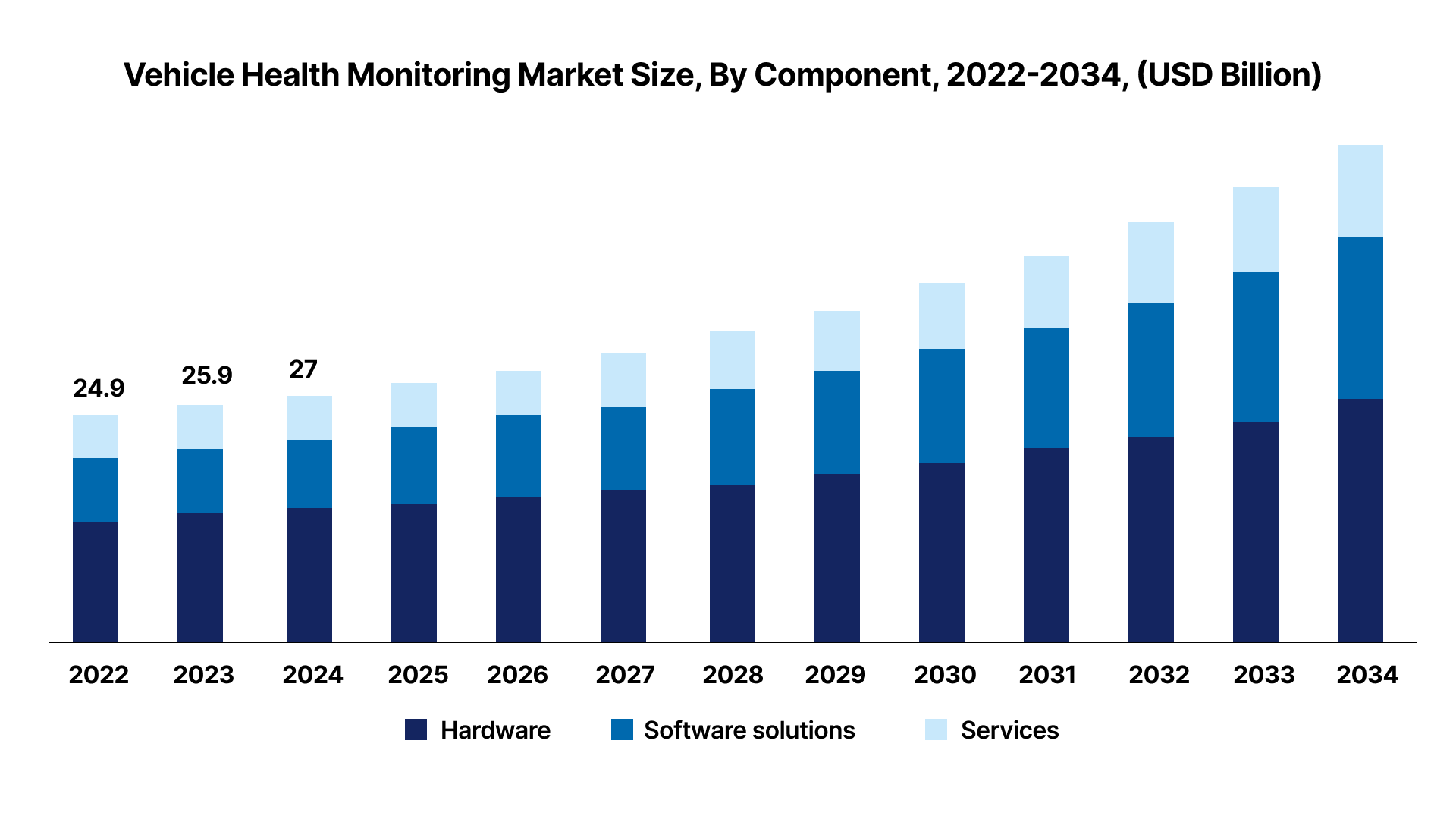
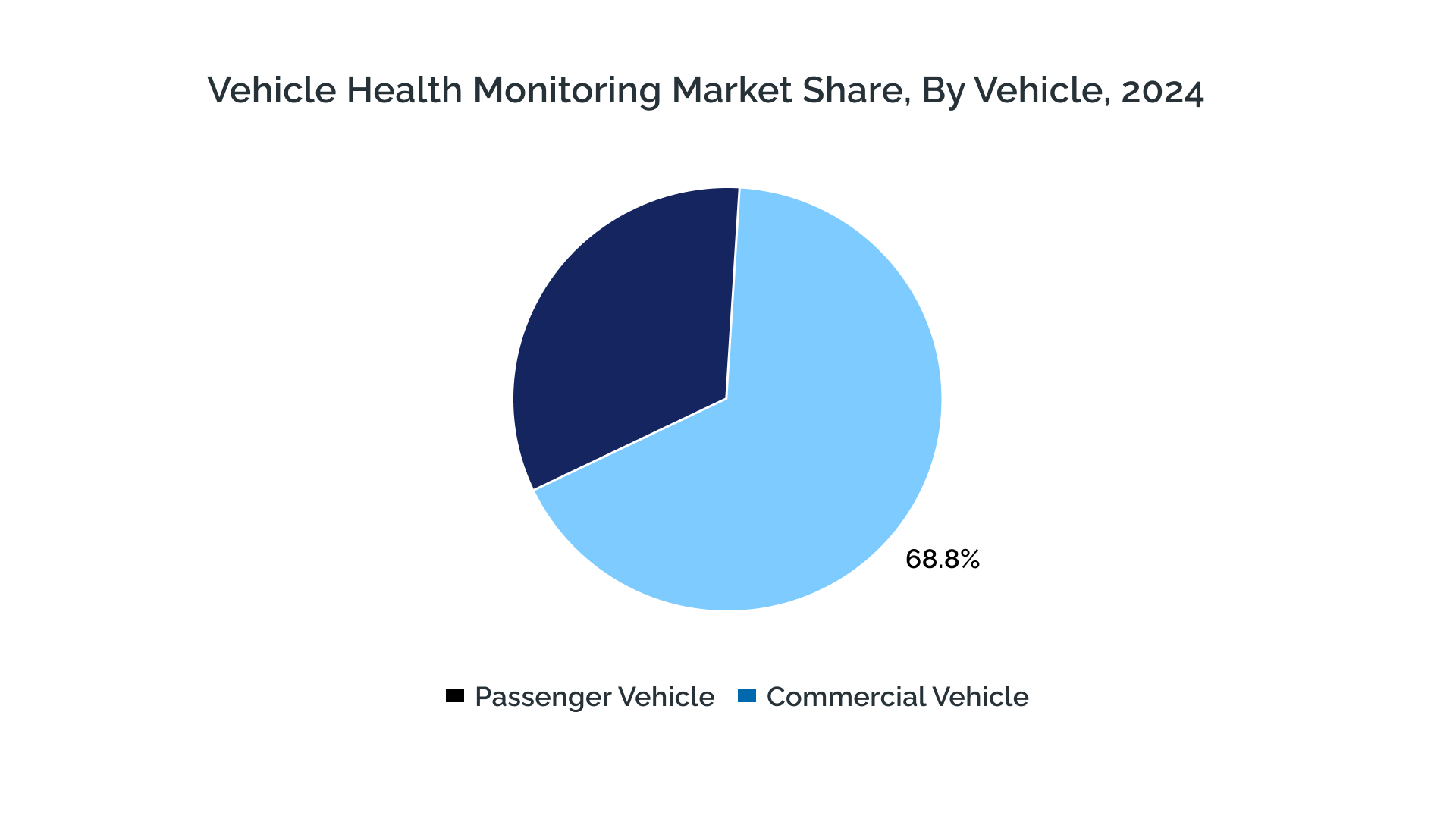
This shift is accelerating across the industry. One market synopsis estimates the Vehicle Health Monitoring market at $27B in 2024, reaching $54.7B by 2034, and notes that passenger vehicles held a 68.8% share in 2024.
To understand how vehicle remote health monitoring works, let’s first break down its key components and how they interact to keep your fleet running smoothly.
Components of a Vehicle Remote Health Monitoring System
A reliable vehicle health monitoring system consists of tightly integrated components that continuously collect, transmit, and analyze real-time data from your fleet. Together, they enable proactive monitoring and predictive maintenance, improving uptime and reducing costs.
1. Sensors and Data Acquisition Units
High-precision sensors are embedded in critical vehicle systems, including the engine, transmission, brakes, battery, tires, and exhaust. They continuously capture metrics like temperature, pressure, voltage, wear levels, and vibration, generating raw diagnostic data essential for monitoring system integrity and performance.
2. Telematics and Communication Gateways
Telematics control units (TCUs) act as the vehicle’s data bridge, aggregating sensor data from various systems. They transmit this data securely via wireless networks such as 4G/5G, LTE-M, or satellite. This real-time vehicle-to-cloud communication ensures continuous monitoring, regardless of fleet location, from urban areas to remote regions.
3. Cloud-Based Monitoring and Diagnostic Platforms
Incoming data is processed on centralized cloud platforms equipped with analytics engines and rule-based diagnostic algorithms. These platforms interpret sensor data, detect anomalies, and generate actionable insights, including fault alerts, component degradation timelines, and maintenance recommendations.
4. Real-Time Alerts and Dashboards
You get intuitive dashboards that show live vehicle health summaries and instant alerts when key parameters, such as engine temperature or battery voltage, cross safe limits. This enables you to make data-driven decisions quickly, keeping your fleet running smoothly.
Together, these components form a real-time ecosystem that moves fleet operations from reactive maintenance toward predictive, condition-based servicing. This transition reduces downtime, prevents failures, and maximizes vehicle availability across your fleet.
Now that we’ve covered the key components, let’s see how these parts connect and interact within the overall VMMS (Vehicle Monitoring and Maintenance System) architecture to deliver seamless, real-time insights.
Vehicle Monitoring and Maintenance System Architecture
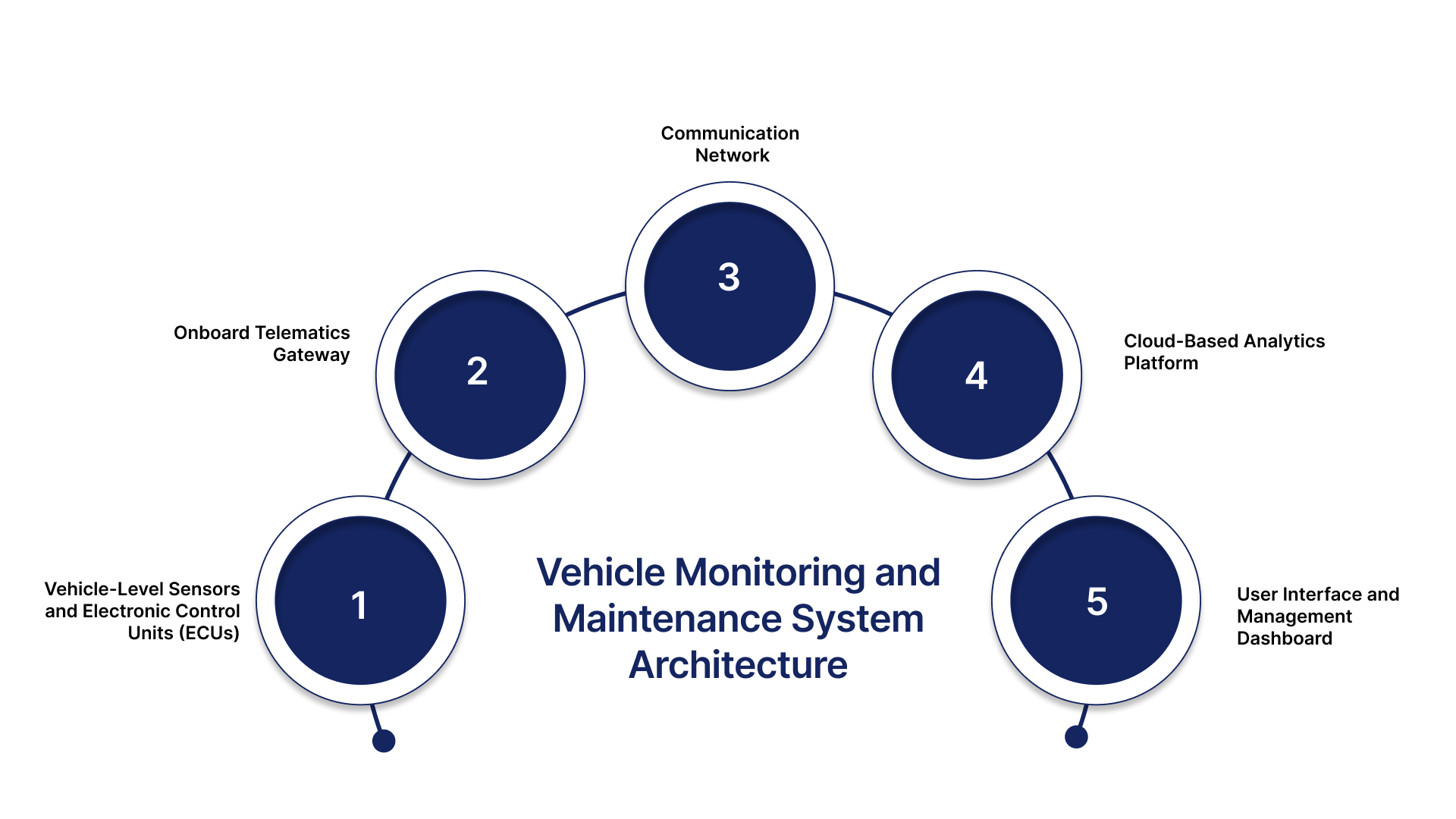
To truly understand how remote health monitoring and prognostic maintenance work, you need to see the system’s architecture and how its components fit together. This setup provides real-time insights and full control over your fleet’s health and operations.
- Vehicle-Level Sensors and Electronic Control Units (ECUs): Your vehicle is equipped with multiple sensors and onboard ECUs that continuously track vital parameters, such as engine status, battery health, brake conditions, and more. These components collect raw data from every critical system in real-time.
Example: A temperature sensor in the engine bay can detect overheating and trigger a warning before engine failure occurs.
- Onboard Telematics Gateway: This device acts as the vehicle’s communication hub, securely collecting data from sensors and ECUs, then transmitting it through cellular or satellite networks. It ensures data flows seamlessly from moving vehicles to your monitoring platform.
Example: If a brake pad sensor detects excessive wear, the gateway sends this data to the server within seconds.
- Communication Network: Vehicle data is transmitted instantly to centralized servers using reliable wireless technologies such as 4G/5G, LTE, or satellite. This ensures uninterrupted connectivity across all locations, whether your fleet operates in densely urbanized areas or remote regions.
Example: Even in remote delivery routes, a satellite-enabled gateway ensures that alerts (such as battery drain) reach the fleet dashboard without delay.
- Cloud-Based Analytics Platform: Data arrives at the cloud, where powerful analytics engines process and interpret it using AI and machine learning models. This platform detects abnormalities, predicts component failures, and generates actionable insights tailored for your fleet.
Example: Based on vibration patterns from the drivetrain, the system predicts potential axle misalignment a week in advance.
- User Interface and Management Dashboard: As the fleet manager or business operator, you access these insights through intuitive dashboards. Real-time alerts, detailed reports, and maintenance recommendations enable you to make informed, proactive decisions, minimize downtime, and optimize costs.
Example: A dashboard alert flags a truck with rising fuel consumption and recommends a fuel system inspection to prevent further loss.
This modular yet integrated architecture ensures that your fleet’s health is continuously monitored, enabling smarter, data-driven maintenance strategies that align perfectly with your business goals.
Now that you understand the system’s components and architecture, let’s explore how predictive analytics enables prognostic maintenance to prevent vehicle failures before they occur.
The Process Behind Predictive Vehicle Maintenance
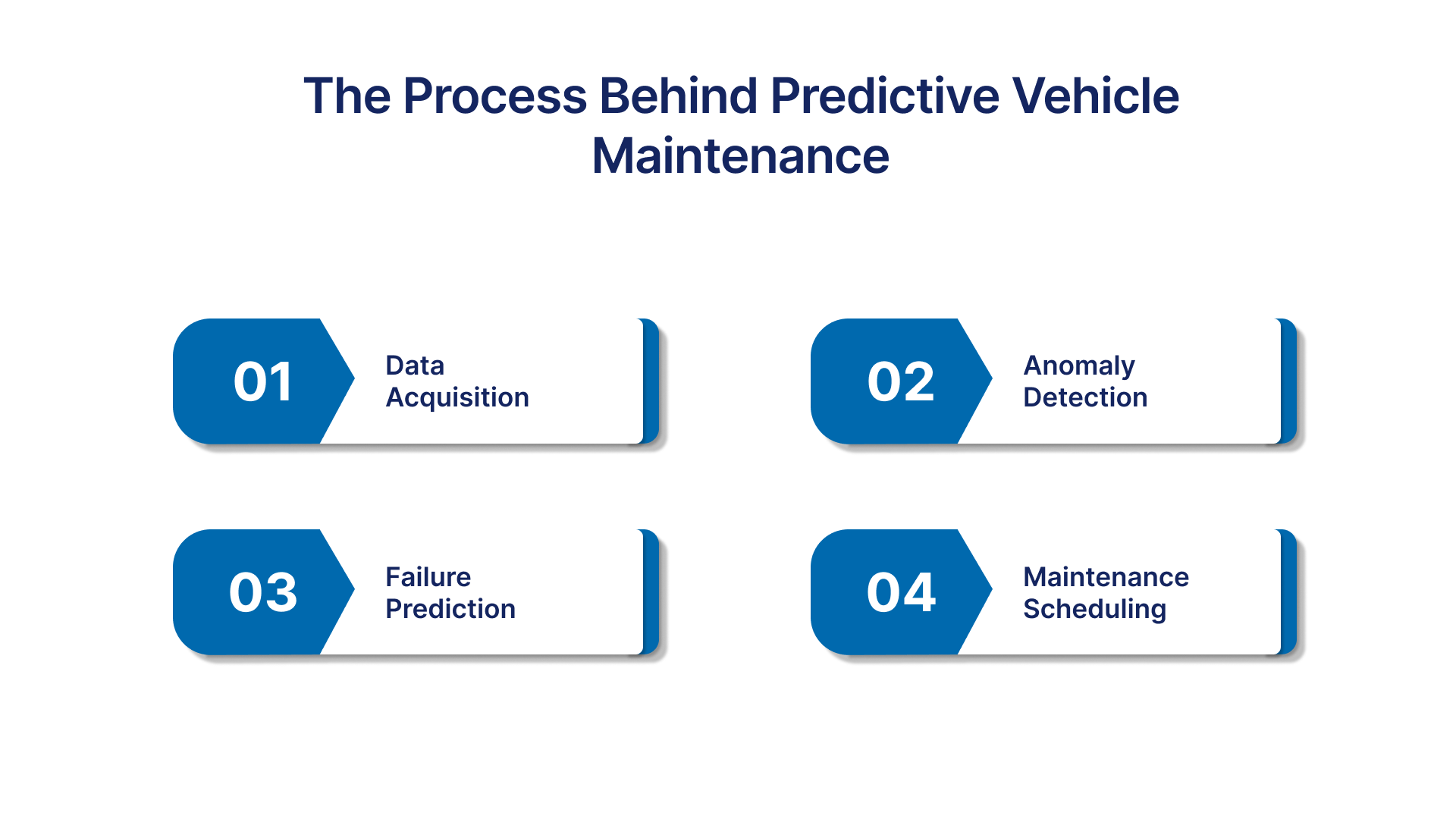
Prognostic maintenance applies advanced predictive analytics to vehicle data, enabling precise forecasting of component wear and potential failures. This approach improves maintenance efficiency by addressing issues only when necessary. The following are the key steps involved in the predictive maintenance workflow:
- Data Acquisition: Continuous collection of sensor data, such as engine RPM, brake pressure, coolant temperature, and battery voltage, along with past maintenance logs from each vehicle.
- Anomaly Detection: Analytics software analyzes this data to identify deviations from normal ranges. Examples include abnormal engine vibrations indicating misalignment or sudden temperature spikes hinting at cooling system failures.
- Failure Prediction: Machine learning models analyze wear rates and degradation patterns to estimate the remaining useful life (RUL) of key components, such as brakes, tires, or the alternator.
- Maintenance Scheduling: Based on these predictions, the system recommends specific service actions and optimal timing to fix issues before they escalate into critical failures.
Traditional preventive maintenance follows fixed schedules without considering the vehicle’s real condition. In contrast, prognostic maintenance customizes service timing and tasks based on actual health, reducing costs and preventing unexpected downtime.
Now that we understand how these systems work, let’s explore the key benefits they bring to your fleet operations.
Benefits of Remote Health Monitoring & Prognostic Maintenance
Implementing remote health monitoring and prognostic maintenance transforms how you manage your fleet. By using real-time data and predictive insights, you move from reactive fixes to proactive care. This shift protects your assets and enhances overall business performance.
- Improved Safety and Reliability: Real-time fault detection enables you to address issues before they lead to breakdowns or accidents, thereby reducing the risk to drivers and passengers.
- Lower Maintenance Costs: By identifying emerging problems early, you avoid costly repairs, reduce unnecessary scheduled maintenance, and optimize inventory for spare parts.
- Longer Vehicle Lifespan: Condition-based maintenance enables vehicles to operate at peak performance, delaying expensive replacements and maximizing asset value.
- Enhanced Fleet Performance: Continuous monitoring and data-driven insights enable smarter scheduling and resource allocation, resulting in reduced downtime and improved fleet productivity.
While vehicle health monitoring systems offer significant benefits, implementing them effectively presents several challenges. Understanding these common challenges helps you prepare and ensures successful deployment.
Challenges in Development and Implementation
Although vehicle health monitoring technology has advanced rapidly, current solutions primarily target passenger vehicles. In 2024, passenger vehicles accounted for 68.8% of the market, leaving commercial fleets, such as buses, utility vehicles, and specialized tourism transport, less supported.
This imbalance presents significant challenges for operators managing diverse vehicle types, who frequently encounter gaps in accurate data and predictive insights.
Below are a few key challenges, along with practical solutions to overcome them:
1. Technical Complexity
Integrating sensors and telematics systems across diverse vehicle types requires specialized calibration and compatibility checks. This is especially challenging when dealing with different OEM architectures and legacy systems.
Solution: Work with vendors experienced in multi-vehicle integrations and conduct thorough pilot testing to customize setups before full deployment.
2. Data Privacy and Cybersecurity
Safeguarding sensitive vehicle and operational data against cyber threats is crucial to maintaining trust and complying with regulations. Encryption scrambles data during transmission to prevent unauthorized access, while secure protocols ensure that only authorized systems can exchange information, protecting sensitive fleet data.
Solution: Implement strong encryption, secure communication protocols, and regular security audits to protect data integrity.
3. System Integration
Connecting new monitoring systems with existing fleet management software, ERP platforms, and operational workflows often demands significant planning and coordination.
Solution: Choose platforms with open APIs and flexible integration options; involve IT and operations teams early for smooth alignment.
4. Data Quality and Accuracy
Unreliable or inconsistent sensor data can lead to missed faults or false warnings, thereby reducing the system’s overall effectiveness. Factors like sensor drift, noise interference, or latency in data transmission can compromise diagnostic accuracy.
Solution: Utilize monitoring platforms like EazyRide that automatically check incoming data for errors or inconsistencies. These platforms alert you if something appears incorrect, eliminating the need for manual data sifting.
By anticipating and addressing these challenges early, you can ensure smoother implementation, maximize system reliability, and achieve the best return on your technology investment.
Simplify Monitoring and Maintenance with EazyRide
If you’re a fleet manager, staying on top of maintenance and minimizing downtime is key to enabling predictive, data-driven operations. EazyRide’s white-label platform gives you real-time visibility into vehicle status, battery health, and fault diagnostics. With automated alerts and centralized monitoring, you can catch issues early, schedule proactive servicing, and manage your fleet reliably.
Here’s where EazyRide fits best for fleet operators:
- Centralized fleet visibility: Track availability, usage, and downtime from one dashboard, so maintenance impact is measurable.
- Operator workflows: Assign and track on-the-ground tasks (inspections, retrievals, servicing) so alerts don’t get lost in a spreadsheet.
- Maintenance record discipline: Keep service notes and issue history tied to each vehicle to support repeatable servicing decisions.
- Performance insight: Use utilisation and zone insights to connect vehicle health and downtime to revenue impact.
EazyRide minimizes downtime and puts full operational control at your fingertips. Its versatile tools support industries like urban commuting, corporate campuses, universities, residential communities, tourism, resorts, and golf courses.
Conclusion
Vehicle remote health monitoring and prognostic maintenance reduce downtime, lower repair costs, and improve safety, especially when your fleet is distributed and utilization is high. The winners aren’t the teams with the most dashboards, but the teams that turn signals into fast operational action.
If you’re implementing this in 2026, start with a pilot: pick one vehicle type, define your top failure modes, validate data quality for 2–4 weeks, and only then automate maintenance workflows and scheduling. Once the loop works, scale by zone and vehicle category.
Ready to take your fleet’s maintenance strategy to the next level? EazyRide provides real-time insights into trips and revenue, helping you reduce downtime and lower costs. Contact us to see how EazyRide enhances fleet uptime and simplifies maintenance.
FAQs
1. How does prognostic maintenance differ from preventive maintenance?
Prognostic maintenance uses real-time sensor data and advanced predictive algorithms to determine the optimal timing for maintenance, reducing unnecessary servicing. Preventive maintenance relies on fixed schedules (e.g., mileage or time intervals) without considering actual vehicle condition, potentially leading to over- or under-maintenance.
2. How frequently is vehicle data collected and analyzed?
Collection frequency depends on the sensor and system design. Some signals are sampled many times per second (e.g., vibration), while others are periodic (e.g., battery state, location). Data is typically processed in near real time once transmitted, with buffering during connectivity gaps.
3. Can prognostic maintenance predict all types of vehicle failures?
Prognostic systems accurately forecast degradation and failure in mechanical and electronic components with known failure patterns. However, unpredictable failures caused by accidents, external damage, or rare defects remain difficult to predict.
4. How secure do these systems transmit the data?
Most systems use encrypted transport (commonly TLS) and authenticated APIs. Security maturity varies by vendor, so confirm encryption standards, access controls, audit logs, and incident response practices before deployment.
5. Is specialized training required to use these monitoring systems?
While the interfaces are designed for ease of use, practical interpretation of predictive analytics and maintenance alerts typically requires training for fleet managers and technicians to make informed, timely decisions.


