
 AllSharing business

 15 July, 2025
 Shared Mobility Trends and Forecast Insights for 2026
As congestion and pollution continue to challenge cities worldwide, shared mobility solutions are becoming the preferred mode of transportation for short trips.
The shared mobility market is valued at over $414 billion in 2025 and is set to more than double by 2034, reaching nearly $886 billion. This growth reflects a steady CAGR of 8.8%, pointing to sustained global demand.
With consumers seeking flexible, eco-friendly options, businesses in the shared mobility sector have a unique opportunity to capitalize on this demand. As we look ahead to 2025 and beyond, shared mobility will play a crucial role in shaping the future of urban transportation.
If you’re looking to enter or expand in the shared mobility space, now is the time to understand where the market is headed and how to position yourself effectively for long-term success.
Key Takeaways:
- The shared mobility market is expected to double by 2034, indicating sustained long-term global demand.
- Sustainability, flexible access, and public investment are reshaping how cities move.
- Technology is the differentiator. Real-time fleet management, predictive analytics, and geofencing are crucial for enhancing operational efficiency and ensuring regulatory compliance.
- As the market matures, success will depend on smart platforms, regulatory alignment, and the ability to adapt quickly, not just fleet size.
What are the Shared Mobility Market Trends?
Shared mobility market trends refer to the evolving behaviors, preferences, and technological advancements that drive the growth of shared transportation services, such as e-scooters and bikes.
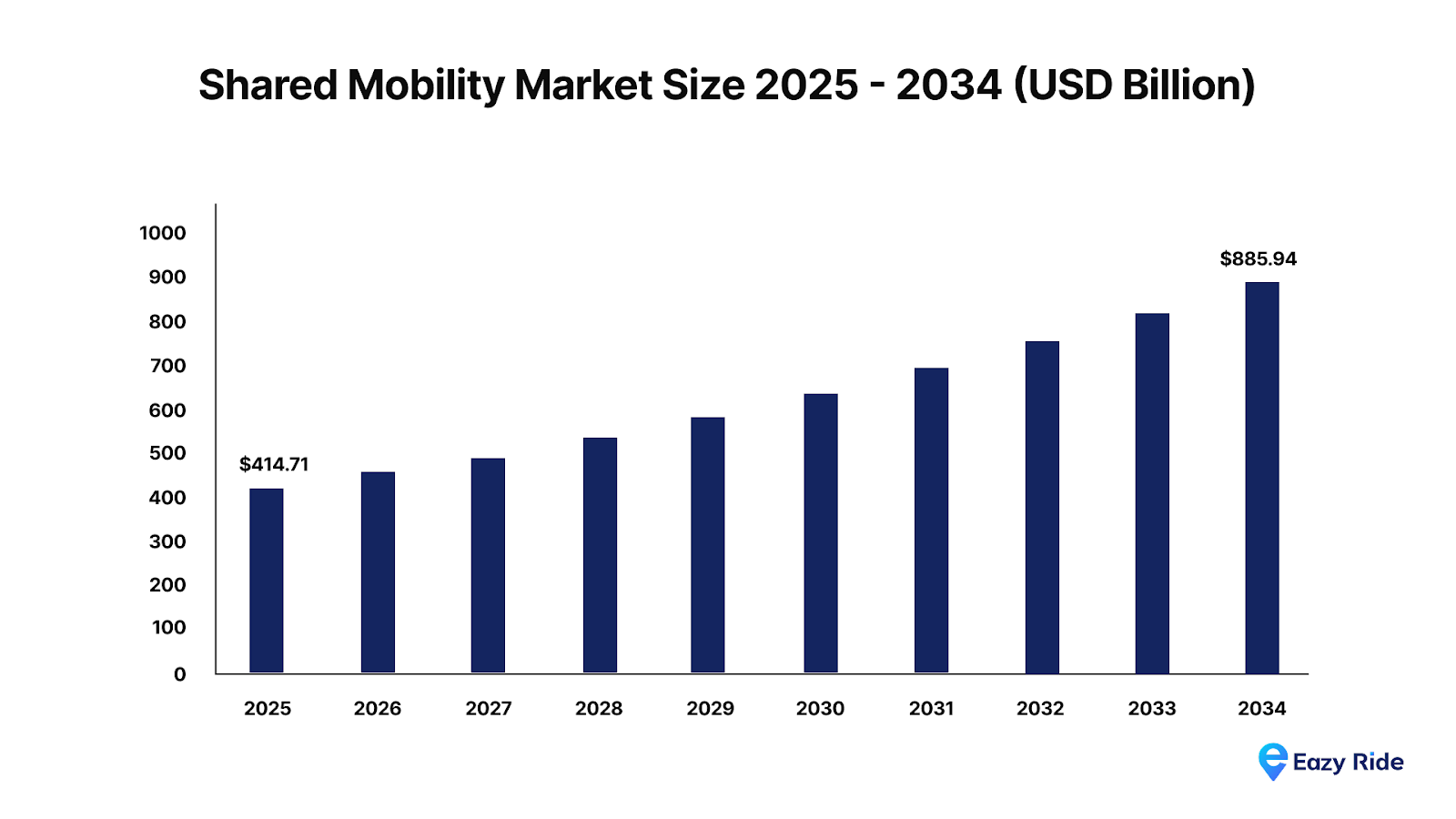
Source: Shared Mobility Market Size: 2025 to 2034
The market is growing steadily year-over-year, showing strong long-term demand for shared, tech-enabled transport.
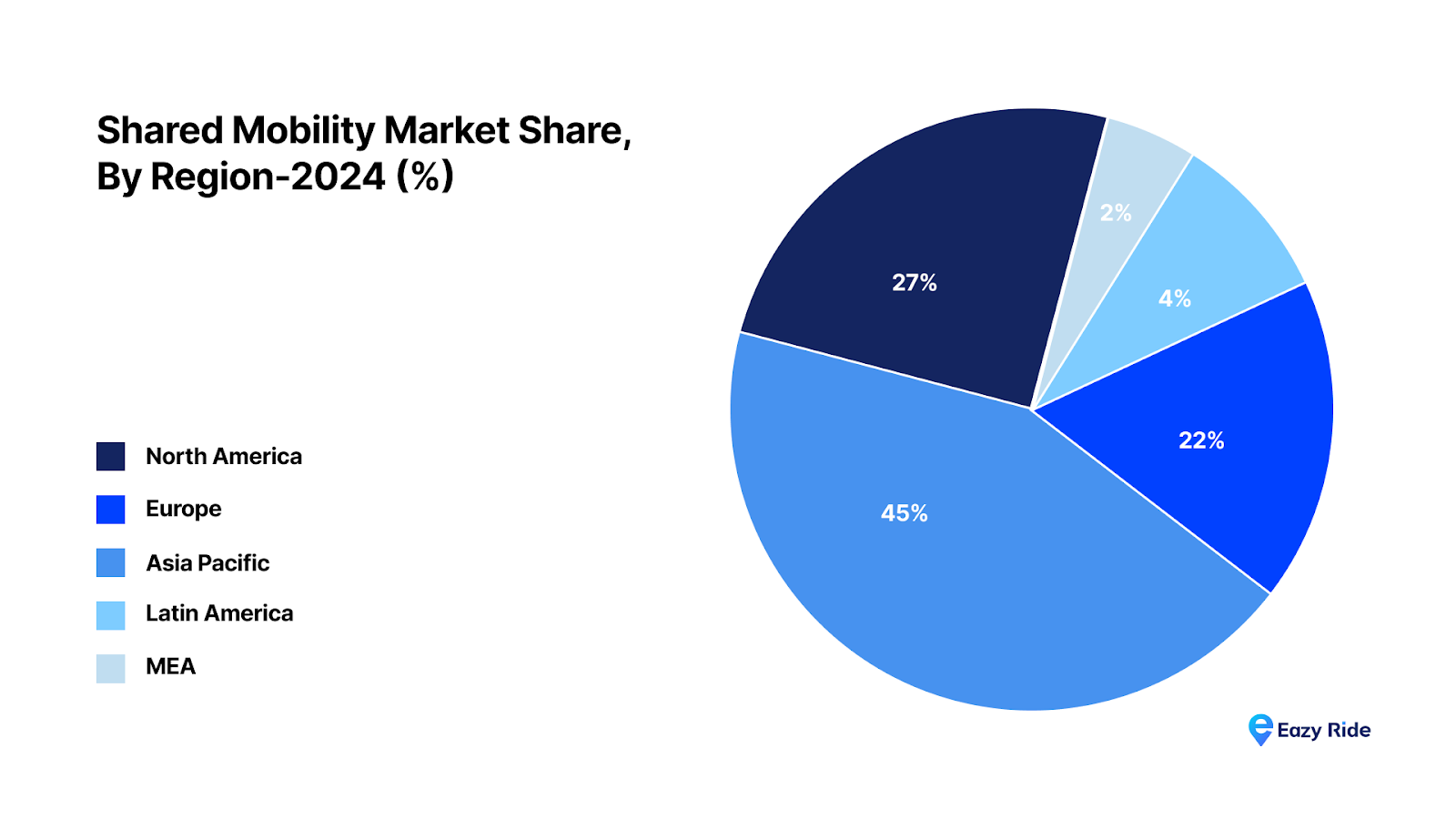
Source: Shared Mobility Market Share by Region, 2024
Asia Pacific leads the market, followed by Europe, with North America in third place, reflecting where shared mobility is scaling fastest.
Here are the key trends shaping the shared mobility market:
Consumer Demand for Convenience
Consumers are increasingly valuing convenience and flexibility in their transportation choices. The rise of on-demand mobility services, which allow users to rent vehicles for short periods without the commitments of ownership, is reshaping how people move around cities.
This trend is particularly relevant for younger, tech-savvy users who prioritize seamless experiences facilitated by mobile apps.
Focus on Sustainability
Sustainability sits at the heart of shared mobility growth. As environmental awareness rises, more people are turning to electric and shared transportation to cut down on carbon emissions.
Electric scooters and bikes are leading the charge, so much so that the global e-scooter sharing market is projected to hit $2,142.5 million in 2025. As climate concerns become more urgent, the demand for greener, low-emission mobility options continues to accelerate.
Regulatory Changes and Infrastructure Development
Local governments are tightening regulations to better manage the rise of shared mobility, addressing safety, parking, and operating zones to ensure services blend into existing urban infrastructure. At the same time, they’re stepping up investment.
The Infrastructure Investment and Jobs Act (IIJA) has allocated over $100 billion annually to modernize public transit, expand electric vehicle charging networks, and develop smart city technology. These investments directly support the growth of shared mobility, making it easier for operators to scale efficiently.
Market Fragmentation and Increased Competition
The shared mobility market is becoming more fragmented as more players enter the space. Established companies are expanding their service offerings to include a wider range of vehicles, while new entrants bring innovative solutions to market.

As competition intensifies, businesses need to differentiate through technology, service quality, and fleet diversity. Let’s now explore how the right technology can enhance your business operations.
How Technology Is Reshaping Shared Mobility
With rising demands and climbing user expectations, technology is changing how efficiently operators can scale and compete. As business models evolve and cities introduce tighter regulations, tech becomes the differentiator that separates sustainable operations from short-lived ventures.
Here’s how specific technologies are actively shaping today’s scooter-sharing businesses:
Smart Fleet Management Systems
Operators now rely on software platforms that provide real-time GPS tracking, battery health monitoring, and automated dispatch. These tools cut down manual labor, reduce downtime, and help redistribute scooters based on actual usage data.
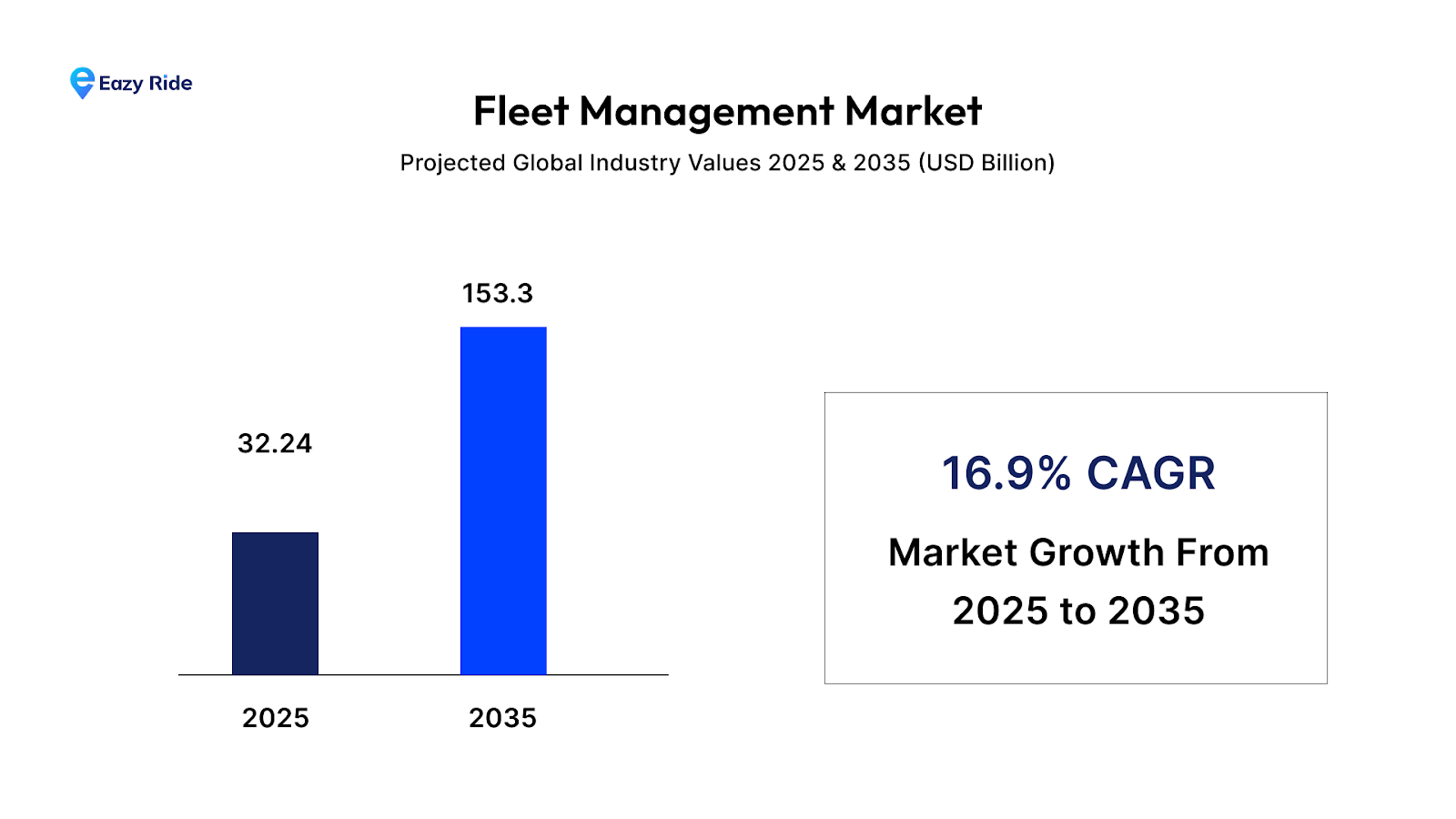
Source: Fleet Management Market from 2025 to 2035.
Predictive Analytics and Demand Forecasting
AI-powered tools analyze usage history, weather patterns, and traffic data to predict demand spikes. This enables more effective deployment planning, resulting in increased trip volume and fewer idle units.
IoT-Enabled Vehicle Monitoring
Every vehicle now acts as a data node. Sensors provide operators with information on speed, braking, falls, and location. These insights allow for proactive maintenance and safe operations, reducing complaints and liability.
User-Centric App Features
Fast unlock times, map-based availability, one-tap payments, and rider feedback loops are all standard expectations. A glitchy or unintuitive interface can tank repeat usage.
Geofencing and Local Compliance
Local regulations often require strict controls, including no-ride zones, speed limits, and proper parking. Geofencing tech ensures scooters follow those rules automatically, improving public trust and operational legitimacy.
Success in shared mobility will depend less on fleet size and more on how intelligently businesses utilize technology to optimize uptime, enhance user experience, and comply with local regulations.
Also Read: Top Mobility Technology Trends Shaping the Future in 2025

Leading Names in Shared Mobility and What They’re Doing Right
The shared mobility sector is competitive, but a few operators are setting themselves apart by combining smart operations with local relevance. Their approaches offer practical lessons for anyone entering or scaling in this space.
Here’s what some of the key players are doing right:
- Eazyride offers an all-in-one solution purpose-built for e-scooter rental businesses. With tools like real-time tracking, rider analytics, geofencing, and maintenance alerts, operators simplify their tech stack and stay compliant.
It’s especially well-suited for local entrepreneurs and growing fleets who want to launch quickly and manage efficiently.
- Lime and Tier continue to lead in scale and operations, expanding across multiple continents while fine-tuning local compliance and rider experience. Their success comes from disciplined fleet management and tight integration with city infrastructure.
- Bird, though, faced financial hurdles in 2023, still holds ground in dense urban areas. Its focus on flexible pricing and app simplicity keeps it relevant in markets where user convenience wins.
- Dott and Spin are carving out regional strength by investing in local partnerships, city-aligned services, and community-friendly design choices, prioritizing sustainability and long-term city cooperation over speed of expansion.
These operators show that growth in shared mobility depends on how well services align with user habits and operational efficiency. Their strategies highlight the value of combining strong infrastructure with responsive, city-aware execution.
Micro-Mobility: The Rising Segment of Shared Mobility
Micro-mobility refers to shared or rented scooters, bikes, and e-bikes built for short-distance trips, typically under five kilometers. As cities push for cleaner, more efficient transportation, micro-mobility is emerging as a practical solution that fills the gap between walking and public transit. Its rise within the broader shared mobility market is both rapid and impactful.
The chart below illustrates steady and consistent growth in the global micro-mobility market, projected to triple in size from 2025 to 2034.
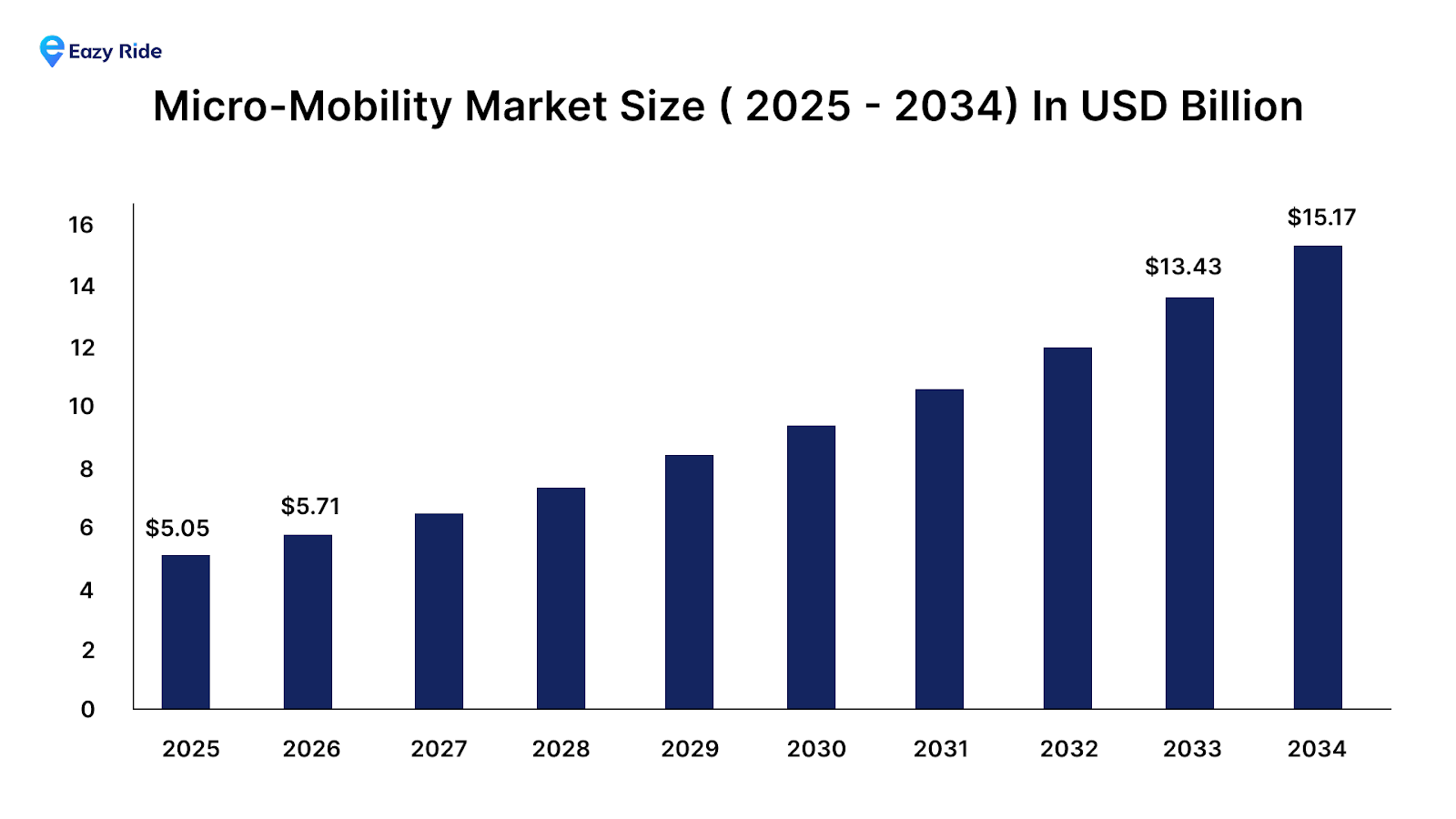
Source: Micro-mobility market size from 2025 to 2034
Here’s why micro-mobility is gaining serious traction:
- In 2023, users in the United States and Canada took 157 million trips using shared micro-mobility options, marking a strong rebound and sustained interest following the pandemic.
- Globally, the micro-mobility market was valued at $4.47 billion in 2024. It’s projected to grow at a 13% CAGR, reaching approximately $15.17 billion by 2034.
Shared Micro-mobility is quietly becoming a dominant mode for urban travel, especially for short trips. As usage grows year over year, it’s moving from a niche option to a staple in city transport systems.
Also Read: Shared Micromobility Solutions for Urban Mobility

What Comes Next in Shared Mobility
Shared mobility is moving into a more mature phase. What started as an experiment in convenience is now facing pressure to become smarter, more profitable, and city-friendly. The next chapter will be defined by how operators adapt to a changing urban and regulatory landscape.
Here’s what to prepare for next:
- City-Controlled Zones and Caps: Expect more cities to define where, when, and how many vehicles can operate. Operators will need to negotiate space, not just deploy at scale.
- Tech as Core Infrastructure: Platforms will need to evolve from booking tools to operational brains, integrating demand forecasting, AI-powered dispatch, and real-time diagnostics.
- Cross-Modal Integrations: Shared mobility will blend with public transit and parking apps. Players who connect their services with city infrastructure and transit systems will unlock better stickiness.
- Policy-Driven Incentives and Penalties: Carbon taxes, congestion pricing, and green incentives are on the horizon. Operators that align with policy goals will get priority access and funding support.
Shared mobility is moving toward more intelligent systems that work with city infrastructure. The next phase will reward operators who prioritize seamless access and efficient service over scale alone.
Top Challenges Slowing Down Shared Mobility Operators
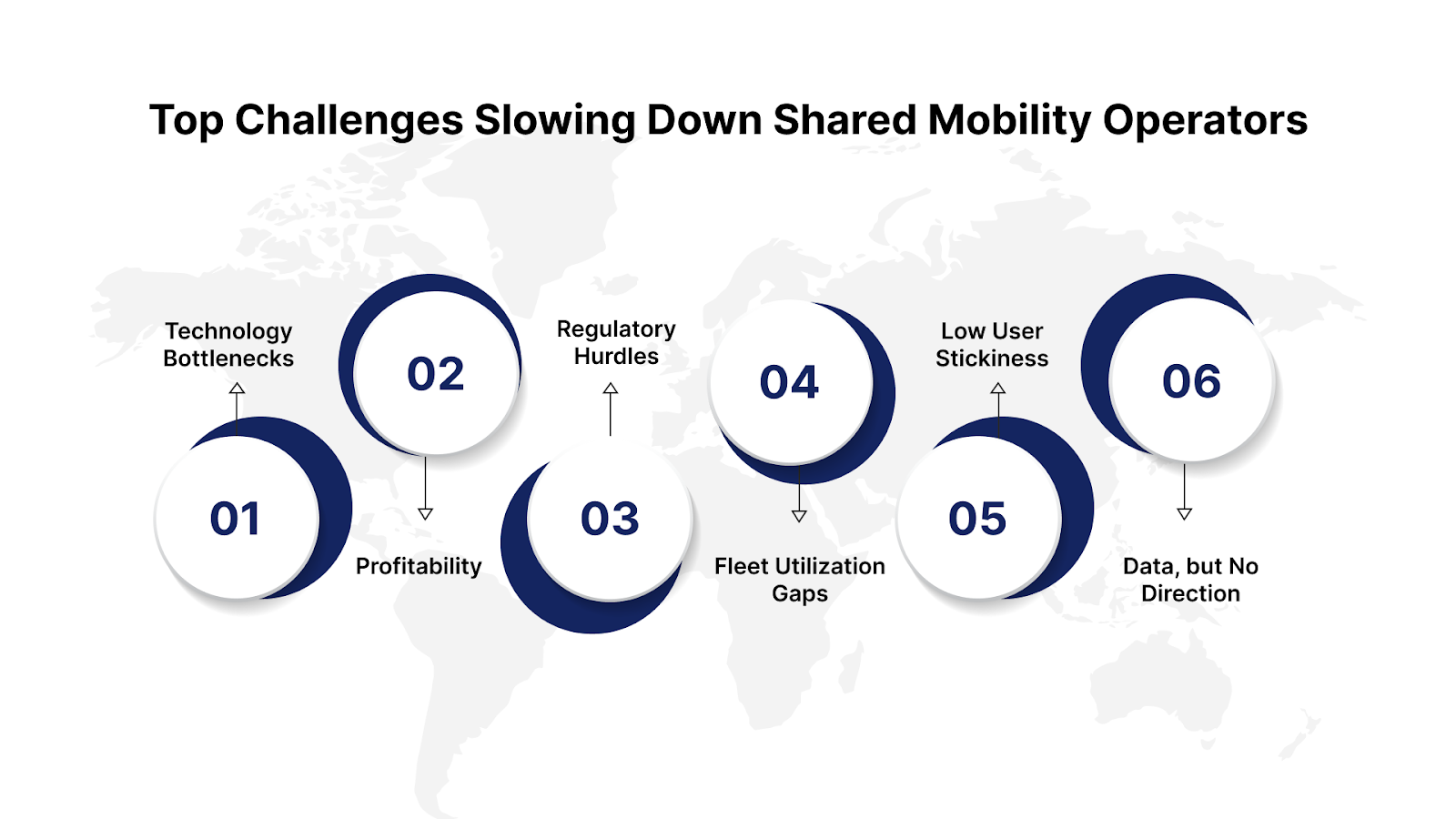
Running a shared mobility service in 2025 means managing more than fleets and apps; it means solving for complexity at scale. Operators face rising costs, tighter regulations, and increasing pressure to deliver seamless user experiences while maintaining profitability.
As the market matures, here’s what continues to challenge even the most seasoned mobility players:
- Technology Bottlenecks: Building and maintaining a reliable rider app and tracking system requires a serious tech investment. For many, going to market means choosing between expensive in-house development or relying on generic, inflexible tools.
- Profitability: Vehicle maintenance and infrastructure costs often outpace revenue, particularly in densely populated urban areas where margins are thin.
- Regulatory Hurdles: Operators must constantly adapt to city-specific rules on parking, fleet caps, and data reporting, some of which change mid-contract.
- Fleet Utilization Gaps: Mismanaged distribution, battery downtime, or lack of predictive maintenance can leave scooters idle when demand peaks.
- Low User Stickiness: Riders frequently switch between platforms due to price or convenience. Without consistent service quality, long-term retention remains tough.
- Data, but No Direction: Businesses collect trip, usage, and maintenance data, but lack tools to turn it into meaningful strategy or operational decisions.
Each challenge slows momentum in a different way. What matters now is whether operators can fix the fundamentals before growth turns into strain.
EazyRide: Built for the Realities of Shared Mobility
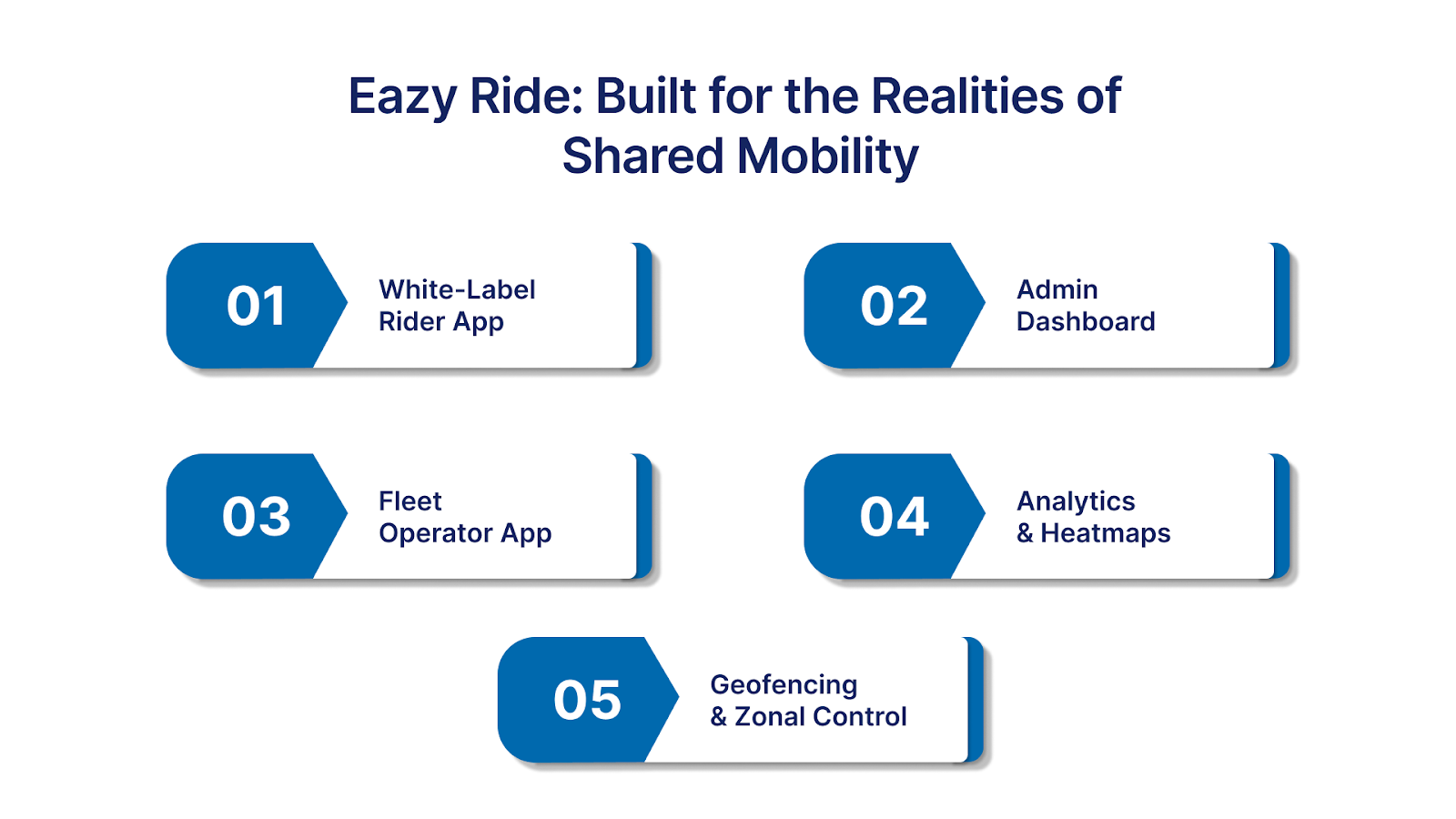
Managing a shared mobility business is more than getting riders on the road. It’s about controlling what happens behind the scenes. EazyRide simplifies that complexity with a suite of tools built specifically for operators who need control, visibility, and flexibility.
Here’s what makes EazyRide a practical choice:
- White-Label Rider App: A customizable iOS and Android app where users can find, unlock, and ride vehicles. It includes an in-app wallet, map integration, ride history, and a help center, ready for your brand.
- Admin Dashboard: One central place to manage fleet size, pricing, geo-boundaries, user data, promotions, and real-time analytics. Built for better oversight and faster decisions.
- Fleet Operator App: For your ground team to rebalance, charge, and maintain vehicles. Agents can scan QR codes, check status, and log maintenance on the spot.
- Analytics & Heatmaps: Understand your business with AI-powered insights into trip frequency, idle zones, peak hours, and revenue patterns. These data points help you place the right vehicle in the right place at the right time.
- Geofencing & Zonal Control: Set ride zones, no-go areas, parking zones, and speed-limited regions to align with local rules and ensure smooth operations.
Eazyride gives you the tools to launch, manage, and grow your shared mobility business without getting lost in technical or operational complexity. Its built-in flexibility helps you adapt to city rules, user expectations, and market shifts with ease.
As micromobility continues to expand into new use cases and regions, a platform like Eazyride turns the challenge of scaling into a structured, manageable path forward.
Conclusion
Shared mobility is steadily becoming a core part of urban transportation. As more people seek convenient and flexible ways to move around cities, services like scooter rentals, bike-sharing, and other micro-mobility options are filling that need.
This growth is also shaped by infrastructure investment, policy shifts, and environmental concerns. The market is changing fast, but the direction is clear: smarter, more accessible ways to travel are here to stay.
Operators and new entrants will need more than just vehicles to succeed. Clear visibility into operations, the ability to respond to regulations, and a focus on rider experience will distinguish sustainable businesses from those that are short-lived.
If you’ve ever thought, “There’s got to be a better way to manage all this,” you’re not alone. When your shared mobility tools feel scattered, it’s a sign to bring everything under one roof.
EazyRide’s all-in-one dashboard lets you monitor, plan, and adjust from a single, intuitive view.
Schedule a demo to see the difference it makes!
FAQs
1. What role will AI play in the future of shared mobility operations?
AI is expected to streamline key operations such as predictive maintenance, demand forecasting, and dynamic pricing. It enables operators to proactively manage fleets, reduce downtime, and optimize vehicle placement based on real-time and historical usage patterns.
2. How are investment patterns changing in the shared mobility space?
Investors are moving from high-growth, high-burn startups toward stable, sustainable operators. There’s increased interest in companies with clear paths to profitability, city partnerships, and integrated tech ecosystems that support long-term scalability.
3. What does market maturity look like for shared mobility in 2025?
The market is shifting from rapid expansion to strategic consolidation. Mature regions are seeing fewer new launches and more emphasis on service quality, compliance, and operational efficiency. This phase favors companies that can manage cost, tech, and local alignment.
4. How are consumer expectations evolving in shared mobility?
Consumers now expect reliability, ease of access, and safety features as standard. App responsiveness, transparent pricing, and availability in underserved areas are becoming key differentiators as users grow less tolerant of friction or service gaps.
5. What’s the future of vehicle types in shared mobility?
Beyond scooters and bikes, new formats like seated e-scooters and cargo e-bikes are entering the mix. Operators are exploring diverse fleets to match different use cases while staying compliant with local zoning and speed limits.


