
 AllAnalytics and research

 29 August, 2025
 How IoT-Enabled Devices Power Smarter Mobility?
Today, the pressure to scale efficiently while maintaining a high-quality service is intense. Perhaps you’re struggling with the complexities of fleet maintenance, managing multiple vehicles across different zones, or seeking to gather actionable insights to inform your business decisions.
With IoT-enabled devices, you can transform your operations, simplify your processes, and create a smooth experience for your customers. Let’s explore how IoT-enabled devices are revolutionizing the mobility sector and why this is the perfect moment for your business to jump on board.
As connected IoT devices are expected to reach 40 billion by 2030, the groundwork for smarter mobility is growing fast.
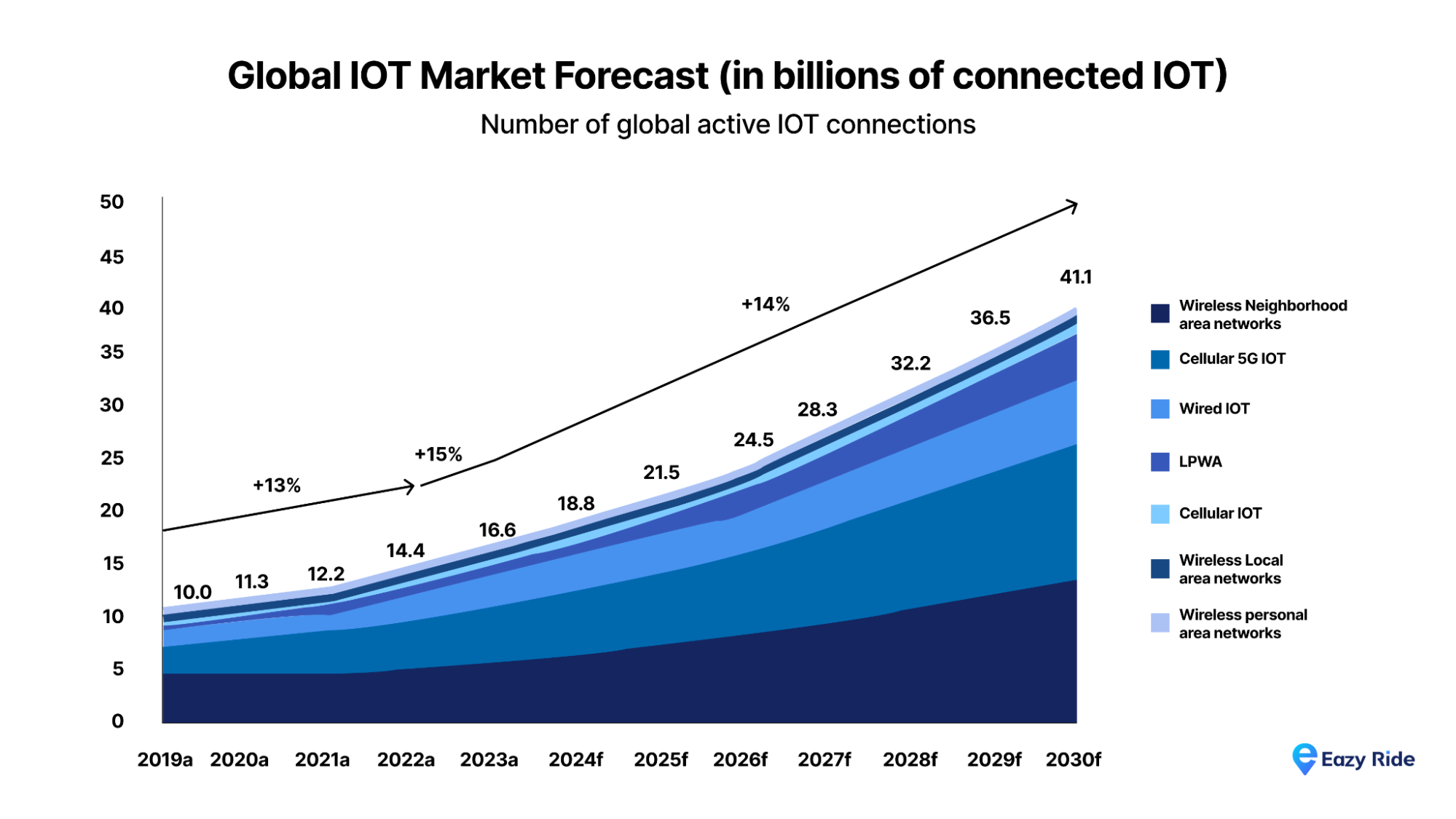
Source: IoTAnalytics
Key Takeaways
- IoT-enabled devices help you track location, usage, and vehicle health in real time, improving uptime, customer satisfaction, and operational control.
- With predictive maintenance, route optimization, and usage insights, IoT transforms guesswork into strategic, cost-effective decisions.
- From cloud dashboards to geofencing and 5G integration, IoT infrastructure supports compliance, growth, and safer fleet operations.
- IoT is paving the way for autonomous vehicles, sustainable fleet models, and seamless smart city integration, making now the best time to invest.
What are IoT-enabled Devices?
IoT-enabled devices are smart, connected tools built into vehicles that collect and share real-time data about performance, location, and overall condition. They offer much more than basic tracking. You can monitor battery levels, optimize routes, and stay aligned with local regulations, all while keeping your fleet running smoothly.
Think of these devices as the control center of your operations, helping you reduce downtime, lower costs, and improve service quality. In shared mobility, IoT does more than show where a scooter or bike is.
It provides insights you can act on. From checking battery health to managing rebalancing and tracking usage trends, real-time data helps you make better decisions faster.
Now that you know what IoT-enabled devices are, the big question is, how do they actually benefit mobility businesses on the ground?
You Might Also Like: The Future of Mobility: How IoT is Transforming Vehicles
How IoT Powers Smarter Mobility?
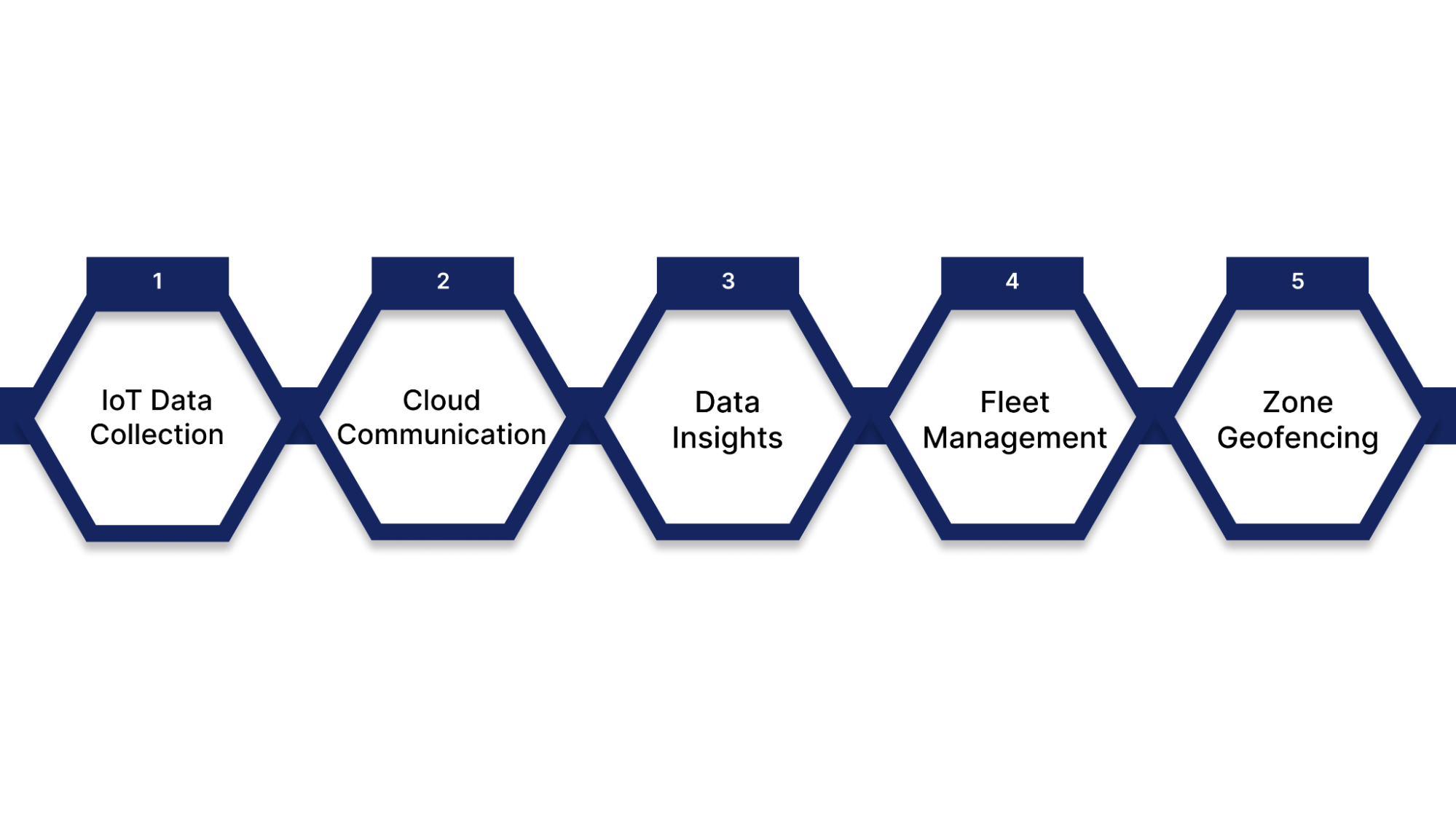
IoT in mobility connects bikes, scooters, e-scooters, or cars to a central system that collects and analyzes data in real-time. Using sensors, GPS, cloud platforms, and communication networks, these vehicles become intelligent data sources.
They constantly send updates on location, usage, battery levels, and more, giving fleet operators the visibility they need to manage and grow their business effectively.
Here’s a closer look at how IoT works in mobility and why it’s a game-changer for businesses in this space:
Data Collection with IoT Sensors
The vehicle health monitoring market is projected to reach nearly USD 54.7 billion by 2034, as more fleets adopt smarter maintenance solutions.
Today, every IoT-enabled vehicle comes equipped with sensors that keep an eye on critical performance metrics. This helps businesses spot issues early, reduce downtime, and extend vehicle life.
IoT sensors collect real-time data, including:
- Location Tracking: GPS tracks each vehicle’s position, ensuring operators always know its exact location.
- Battery Status: For electric vehicles, sensors monitor battery levels to ensure they’re charged and ready for the next ride.
- Vehicle Health: Mechanical data, such as tire pressure, brake function, and wear-and-tear, are tracked to support timely maintenance.
- Usage Insights: Sensors track the frequency of vehicle usage, the duration of rides, speed, and routes taken. It helps businesses understand rider behavior and trends in demand.
For example, Lime’s scooters are fitted with onboard IoT sensors that monitor battery levels and overall hardware condition. When a scooter is running low on charge, the system automatically flags it for pickup and recharging, keeping the fleet ready for riders.
Real-Time Communication with the Cloud
Once data is collected, it’s sent securely over wireless networks, such as 4G, 5G, or Wi-Fi, to a cloud-based platform. The cloud serves as the central hub for storing, processing, and analyzing data.
Through cloud access, operators can:
- Monitor the entire fleet from any device, anywhere
- Get up-to-date status reports on vehicle availability and performance
- Identify and resolve inefficiencies quickly
For instance, Bird uses a cloud-based dashboard to keep track of live vehicle status in your city. Real-time alerts allow them to quickly send out maintenance crews, helping boost fleet uptime and keep rides running smoothly.
Turning Data into Actionable Insights
Utilizing real-time IoT platforms can help reduce operating costs by up to 25% within 18 months. This is a game-changer for mobility businesses looking to scale efficiently. However, the real power of IoT extends beyond savings; it lies in the insights it provides, enabling businesses to make smarter, faster decisions every day with the data they need.
Once the data is analyzed, it helps mobility businesses make smarter, faster decisions. Key benefits include:
- Predictive Maintenance: Identify mechanical issues before they lead to breakdowns. This reduces costs and keeps vehicles in top shape.
- Route and Fleet Optimization: Use demand data to reposition vehicles in high-traffic areas and simplify service routes.
- Idle Time Tracking: Identify underutilized vehicles and relocate them to where they’re needed most.
- Revenue Analysis: Understand which areas or vehicles generate the most income, and adjust pricing or promotions accordingly.
For example, a scooter fleet operator reviews usage data and identifies areas with high demand. The system automatically recommends reallocating more scooters to those zones, thereby improving availability and operational efficiency.
Smarter Fleet Monitoring and Management
IoT dashboards give fleet operators real-time visibility into every vehicle. This makes it easier to:
- See which vehicles are active, idle, or in need of maintenance
- Check if vehicles are following local rules and staying within geofenced zones
- Rebalance the fleet quickly by sending vehicles to areas with high demand
For instance, a fleet operator uses a live dashboard to see which bikes are in use, idle, or due for servicing. Idle bikes can be quickly relocated to busy areas, reducing downtime and meeting rider demand.
Geofencing and Zone Control
Geofencing utilizes GPS and sensor data to establish virtual boundaries that dictate the operational parameters of vehicles. It allows businesses to:
- Define Pickup and Drop-off Zones: Ensure riders use designated areas, which improves fleet availability and order.
- Set Speed Limits: Enforce lower speeds in sensitive areas, such as schools or pedestrian-heavy zones.
- Restrict Access to No-Go Zones: Prevent vehicles from entering areas like private property or construction sites.
For example, Voi uses effective geofencing in busy city centers during rush hour. When riders approach no-ride zones, the system automatically slows down the scooters and sends alerts, helping ensure safety and compliance in crowded areas.
Once you see how IoT helps make mobility smarter, it’s natural to wonder what’s working behind the scenes.
Key IoT Technologies Behind Smart Mobility
As the mobility industry continues to grow and evolve, the technology powering it, especially IoT, is moving fast. In fact, the global IoT market is projected to reach USD 153.2 billion by 2029, highlighting its growing role in supporting smarter, more efficient systems.
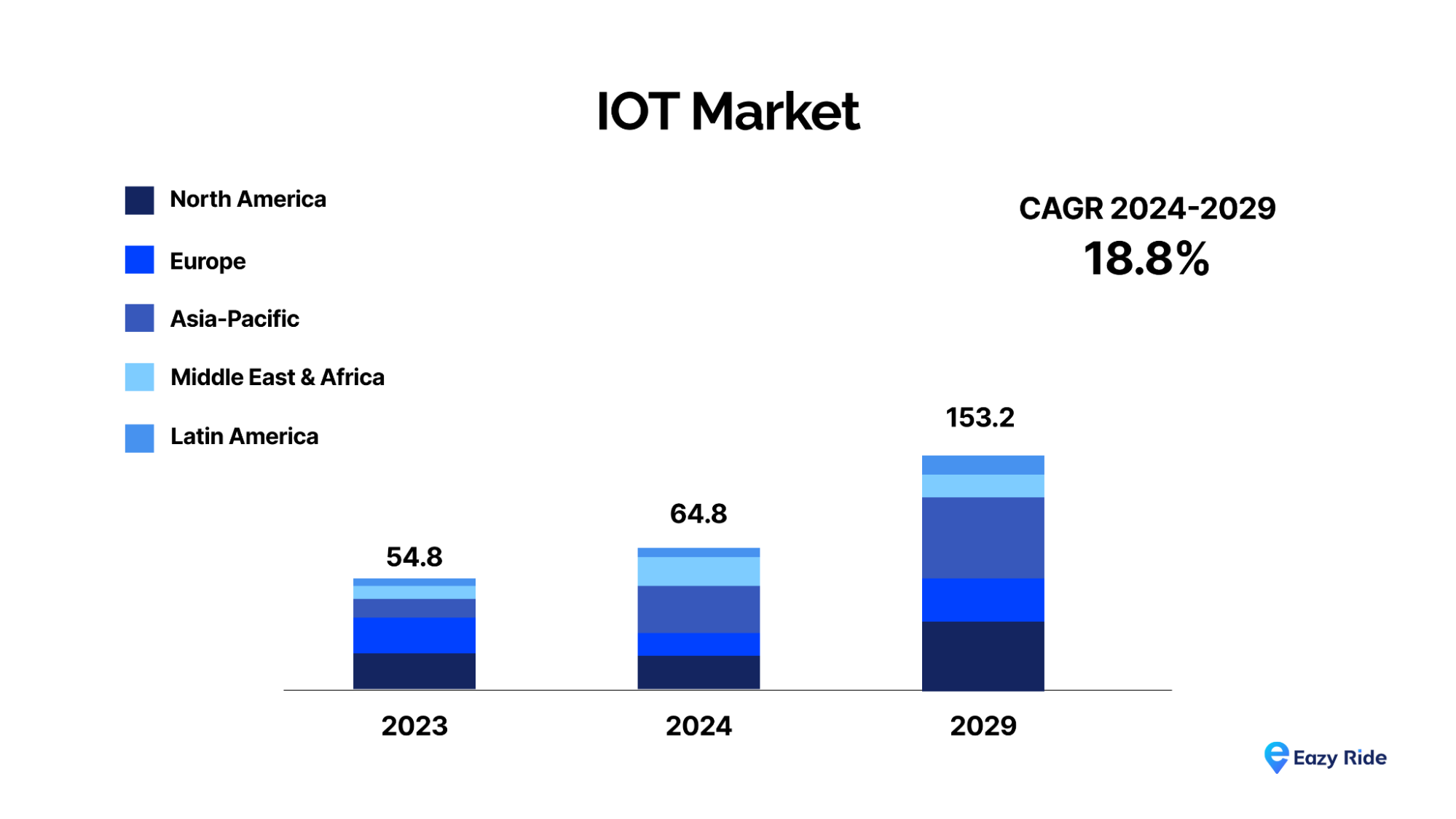
Source: MarketsandMarkets
IoT-enabled devices are reshaping how we think about mobility, not just in how vehicles operate, but in how entire systems are managed. So, what’s driving this transformation?
Let’s take a look at the key IoT technologies powering smarter, more connected mobility today.
GPS and Location-Based Services
The global vehicle tracking device market is projected to reach approximately USD 78.27 billion by 2032, as demand for smarter, more connected fleets continues to increase. At the heart of it all is GPS, the foundation of IoT in mobility. It powers everything from real-time location tracking to route optimization and safety monitoring.
Sensors embedded in each vehicle track real-time location, giving operators visibility and control over their fleets. Key benefits include:
- Fleet Monitoring: Know where each vehicle is at all times for better management and planning
- Demand Forecasting: Analyze traffic and usage trends to position vehicles where they’re needed most
- Geofencing: Set boundaries to keep vehicles in allowed zones and comply with local regulations
Edge Computing
The global edge computing for autonomous vehicles is expected to hit USD 39.0 billion by 2032. Edge computing enables faster decision-making in the field by processing data closer to where it’s collected, on or near the vehicle, rather than waiting for it to reach the cloud. Benefits for mobility businesses include:
- Real-Time Response: Immediate actions like speed control or rerouting based on current conditions
- Lower Latency: Quicker data processing helps with fleet rebalancing and maintenance alerts
- Efficient Data Use: Reduces the load on cloud systems and lowers data transfer costs
Edge computing reduces bandwidth use by transmitting only essential data, cutting fuel costs by 10–15% and insurance premiums by up to $81492.30 annually.
Advanced Sensors
Modern mobility vehicles are equipped with smart sensors that monitor various aspects, including battery levels and external conditions. These sensors help reduce breakdowns, improve safety, and keep fleets running smoothly with minimal downtime.
Types of sensors commonly used include:
- Proximity Sensors: Detect nearby objects to help avoid collisions
- Battery Sensors: Monitor charge level, temperature, and battery health in electric vehicles
- Environmental Sensors: Track weather and air quality to enhance safety and performance
Cloud Computing and Big Data Analytics
The cloud is where all your fleet data comes together. It offers the infrastructure to store, process, and analyze large volumes of data from vehicles and users. With cloud-based systems, operators can:
- Access Data Anywhere: Monitor vehicles from any device, at any time
- View the Full Picture: Aggregate data from sensors, apps, and systems for deeper insights
- Run Smart Analytics: Identify trends, track performance, and make data-driven decisions
5G Connectivity
The rise of 5G is a major leap forward for IoT-enabled mobility. With ultra-low latency and high-speed data transfer, 5G networks improve real-time communication across your entire fleet. Benefits include:
- Instant Updates: Faster communication between vehicles and back-end systems
- Support for More Devices: Handle more connected vehicles and sensors simultaneously
- Smarter V2X (Vehicle-to-Everything): Enable vehicles to communicate with infrastructure, pedestrians, and each other more efficiently
Artificial Intelligence and Machine Learning
The AI in mobility market is expected to reach USD 424.62 billion by 2034, showing how fast intelligent tech is becoming a core part of transportation.
AI and machine learning enable smart decision-making in fleet operations, helping businesses predict demand, optimize routes, and automate tasks ranging from maintenance to customer support.
These tools analyze data from your IoT system to help automate tasks and improve decision-making. Here’s how AI supports smarter mobility:
- Predictive Maintenance: Flag issues before they turn into breakdowns, reducing costs and downtime
- Smart Routing: Recommend optimal routes by analyzing traffic, weather, and rider demand
- Demand Forecasting: Anticipate peak times and busy locations so you can place vehicles accordingly
Blockchain for Secure Transactions
While still emerging, blockchain has the potential to enhance security and transparency in IoT-enabled mobility systems. Key applications include:
- Secure Payments: Enable safe, fraud-resistant transactions between users and providers
- Data Integrity: Protect sensitive data from tampering or cyber threats
- Decentralized Control: Improve how data is shared and accessed across multiple systems
As mobility networks become more complex, blockchain could play a key role in safeguarding operations and building trust.
Understanding the key IoT technologies provides a good sense of how smart mobility systems are constructed. But along with all the benefits, there are also some common challenges.
Also Read: Understanding IoT Telematics for Smart Fleet Operations
Common IoT Challenges in Mobility & How to Solve Them
While IoT-enabled devices bring major benefits to the mobility industry, their implementation also comes with challenges. Entrepreneurs and fleet operators often face issues like data security, system integration, and the complexities of scaling up.
Understanding these challenges and how to solve them is key to building a reliable and efficient IoT-powered mobility business. Let’s look at some common obstacles and practical solutions to overcome them.
| Challenges | Solutions |
|---|---|
| Data Security and Privacy | Use end-to-end encryption, cover personal information, and perform regular security audits. |
| Scalability and System Complexity | Implement cloud-based infrastructure, use edge computing, and modular IoT systems. |
| Device Maintenance and Reliability | Apply predictive maintenance, choose durable devices, and schedule regular testing. |
| Regulatory Compliance | Use geofencing to enforce rules, implement compliance automation, and seek legal advice. |
| Cost and Investment | Opt for cloud-based SaaS solutions and adopt incremental implementation to reduce costs |
Once you’re aware of the common challenges and how to address them, the next step is determining how to get started.
Getting Started with IoT for Your Mobility Business
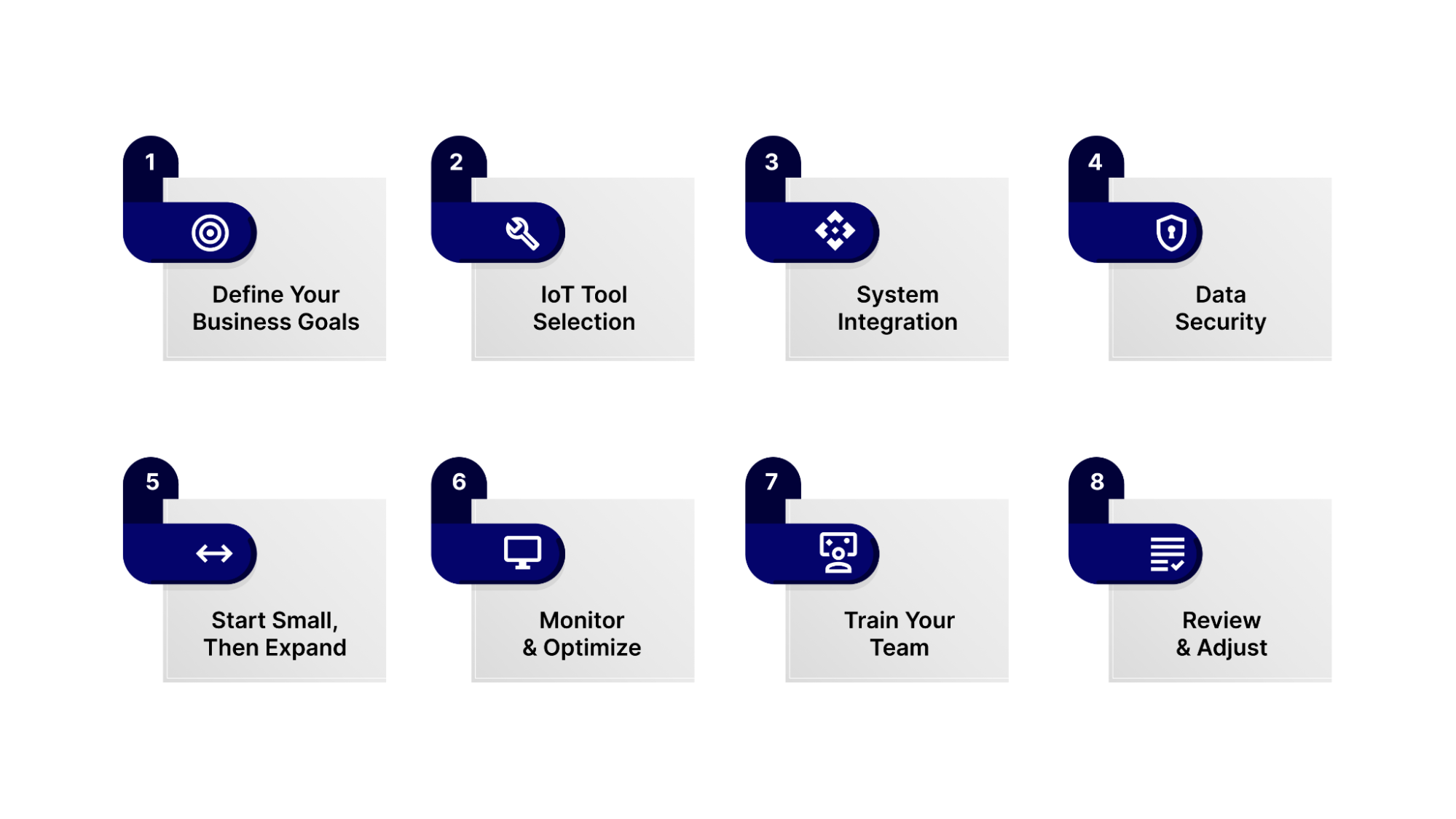
Bringing IoT-enabled technology into your mobility business can lead to big gains in fleet performance, customer satisfaction, and overall efficiency. However, to get the most out of it, you need a clear plan, the right tools, and the flexibility to adapt and grow.
Here’s a step-by-step guide to help you successfully integrate IoT into your operations.
Define Your Business Goals
Before jumping into IoT integration, clarify what you want to achieve. Are you aiming to improve fleet visibility, cut maintenance costs, enhance customer experience, or optimize routes? Knowing your goals will help you choose the right technology and strategy.
For example, if your main challenge is reducing vehicle downtime, focus on predictive maintenance with sensors that monitor vehicle health in real time.
Choose the Right IoT Tools
Once your goals are clear, select the devices and software that meet your needs. Common IoT tools for mobility businesses include:
- GPS trackers for real-time location updates
- Battery management systems for EVs
- Sensors to track tire pressure, brakes, and other components
- Cloud platforms for storing and analyzing data
For instance, Spin uses IoT-enabled sensors to keep an eye on tire condition and track how quickly they wear out. This data is fed into a cloud-based dashboard, which sends real-time alerts when maintenance is needed, helping keep scooters safe and road-ready.
Integrate with Your Existing Systems
Your IoT setup should work smoothly with your current software, apps, and processes. Compatibility is key to avoiding data silos and ensuring a smooth workflow. For example, if you already use fleet management software, ensure that your IoT devices can send data, such as location and maintenance alerts, directly to that platform.
Prioritize Data Security and Privacy
IoT devices generate a significant amount of data, much of which is sensitive. Protect it with proper security protocols, such as encrypting data in transit, anonymizing user information, and following local privacy laws.
For instance, in a scooter-sharing setup, ensure that rider data is anonymized and communications between devices and the cloud are securely encrypted.
Start Small, Then Expand
If you’re new to IoT, begin with a small pilot program. Test it in one area or with a limited number of vehicles, gather insights, and refine the system before scaling across your fleet.
For example, start by adding sensors to 20 scooters, tracking their performance, resolving any issues, and then rolling out the solution across the rest of your fleet.
Monitor and Optimize
Once your system is live, don’t set it and forget it. Regularly review the data to identify trends, implement improvements, and stay proactive in maintenance and operations.
For instance, if data shows certain vehicles are sitting idle too long, consider moving them to busier areas to boost usage and availability.
Train Your Team
Your technology is only as effective as the people using it. Train your staff, whether they manage fleets, handle maintenance, or support customers on how to use IoT tools and dashboards.
For example, teach your maintenance crew how to respond to alerts from the system so they can address issues before they become costly problems.
Review and Adjust
Track performance over time to see how IoT is impacting your business. Look at metrics like downtime, maintenance costs, fleet availability, and customer satisfaction. Use those insights to fine-tune your approach.
For instance, after six months of using predictive maintenance tools, evaluate the drop in repair costs and downtime. Use that feedback to improve scheduling and fleet readiness.
Once you know how to get started with IoT in your mobility business, it’s worth looking ahead.
You Might Also Like: The Role of IoT-Based Mobile Apps in Micro-Mobility
The Future of IoT in Mobility
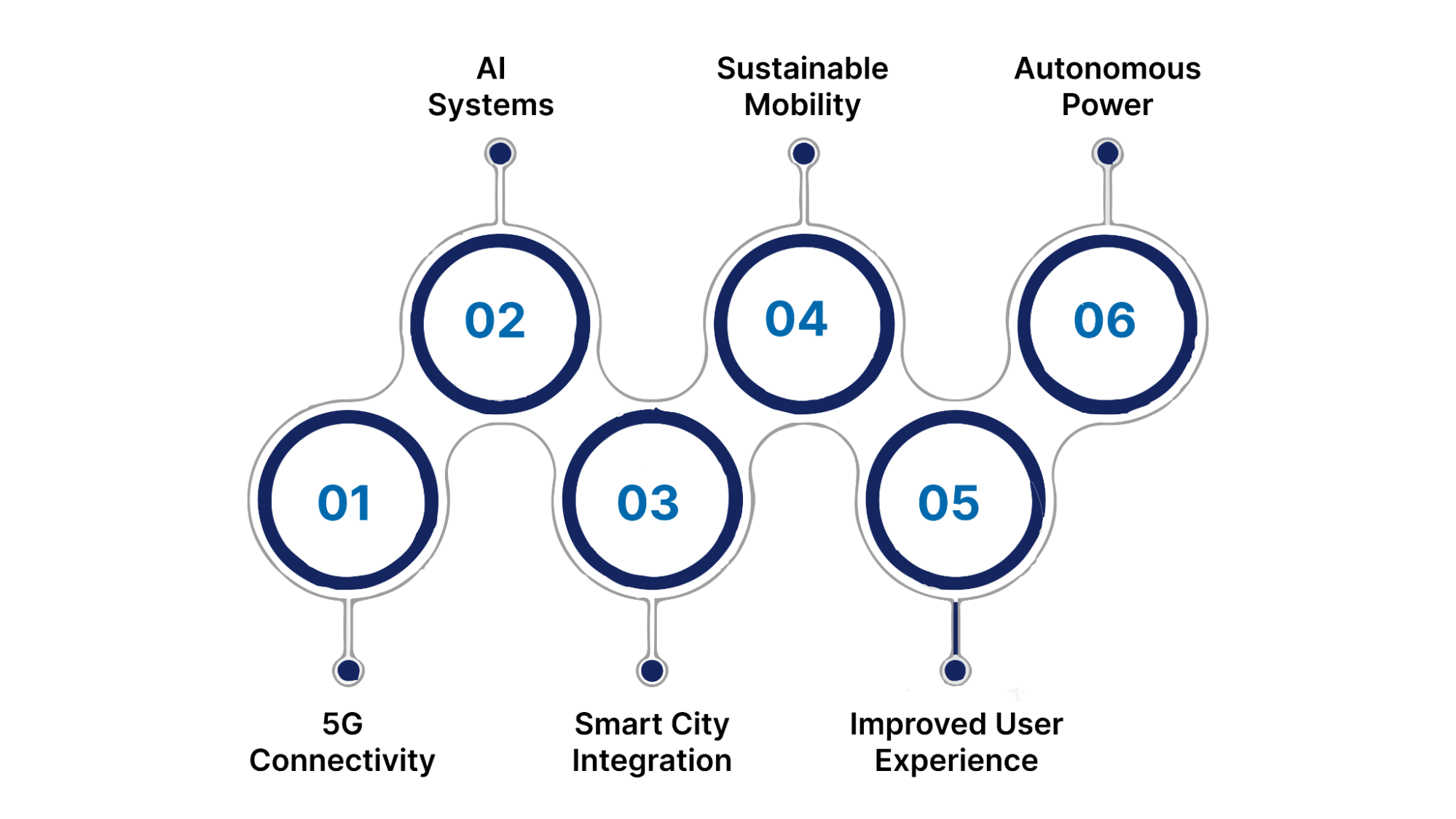
As IoT-enabled technology advances, its role in the mobility sector continues to grow. The future of IoT in mobility holds greater potential, from smarter automation to deeper integration with city infrastructure. Here’s a look at what’s coming next and how mobility businesses can stay ahead of the curve.
5G and Real-Time Connectivity:
With the rollout of 5G networks, mobility businesses can expect ultra-fast, low-latency communication between IoT-enabled devices. This means real-time updates, quicker responses, and smoother fleet operations, especially important for route adjustments, traffic alerts, and vehicle coordination.
Cellular IoT connections are expected to surpass 7 billion by the end of 2030. This expansion is driven by the adoption of 5G RedCap, which enhances connectivity for low-complexity devices, and the deployment of Massive IoT technologies like NB-IoT and Cat-M.
Smarter Systems with AI and Machine Learning
AI and machine learning are already helping mobility businesses make data-driven decisions. As these technologies mature, they’ll automate maintenance schedules, predict demand patterns, and offer dynamic route optimization for better efficiency and service.
Smooth Integration with Smart Cities
As urban areas adopt smart infrastructure, IoT-enabled mobility solutions will become increasingly integrated with city systems, including traffic lights, public transit, and energy grids. This integration will support more efficient fleet coordination and contribute to smarter, more sustainable cities.
In the future, greater integration of advanced IoT technology into urban infrastructure is expected, aiming to design cities that are more environmentally friendly and equipped with advanced tools.
Greener, More Sustainable Mobility
Sustainability is no longer optional; it’s a priority. IoT will help reduce emissions and energy consumption by optimizing vehicle usage, supporting EV fleets, and promoting shared transport. These technologies will play a central role in making urban mobility greener.
IoT-powered smart grids, energy-efficient sensors, and AI-driven automation are helping to cut energy waste, boost efficiency, and lower carbon footprints. Technologies like low-power wide-area networks (LPWAN) and battery-efficient devices support long-term sustainable connectivity.
Improved User Experience
As IoT continues to evolve, so will the rider experience. Expect more personalized services, smarter ride suggestions, real-time availability updates, and smooth interactions across apps and devices. This allows meeting growing customer expectations for convenience and reliability.
Powering Autonomous Vehicles
Autonomous vehicles will rely heavily on IoT sensors to function safely and effectively. From real-time navigation and obstacle detection to V2X (vehicle-to-everything) communication, IoT will be the nervous system that supports the rise of driverless mobility.
Power Smarter Mobility with Connected IoT Devices
Whether you’re tracking vehicles in real time or enhancing rider experiences, EazyRide fully integrates with your IoT devices to give you total control. See what IoT integration looks like with EazyRide:
- Flexible Device Integration: Use your preferred hardware without getting locked into one vendor.
- Live Vehicle Insights: View key data like location, speed, battery status, and overall health instantly.
- Remote Controls: Lock or unlock vehicles, trigger alerts, or update settings from your dashboard.
- Data Security: All data is encrypted and aligned with privacy regulations to protect your operations.
Every connected device becomes a valuable asset with EazyRide at the core.
Conclusion
As an entrepreneur, fleet operator, or institutional player in the mobility space, it’s clear that IoT isn’t just a buzzword; it’s essential for sustainable growth.
The ability to collect real-time data, optimize fleet performance, and enhance the rider experience is what sets forward-thinking businesses apart. The future of mobility is connected, and now is the time to tap into the full potential of IoT.
At EazyRide, we understand the real-world challenges of managing and scaling mobility operations. Our IoT-driven platform is designed to simplify fleet management, enhance vehicle utilization, and deliver actionable insights within a single, integrated solution.
If you’re ready to future-proof your business and lead in the next era of mobility, we’re here to help you make it happen.
Also Read: The Role of IoT-Based Mobile Apps in Micro-Mobility
FAQs
Q1. How do IoT-enabled systems benefit daily life?
A1. They simplify everyday tasks like controlling appliances, tracking health, or managing energy. This adds comfort, convenience, and cost savings.
Q2. Are IoT-enabled devices secure?
A2. Security depends on how well devices are set up and maintained. Using strong passwords, keeping software updated, and encrypting data are key steps.
Q3. What is the role of the cloud in IoT-enabled systems?
A3. Cloud platforms store and process large volumes of data from IoT devices. They also offer real-time insights and dashboards for users and businesses.
Q4. How do IoT-enabled devices work together?
A4. These devices use wireless connections like Wi-Fi or Bluetooth to communicate. They can share data and coordinate actions automatically.


