
 AllSharing business

 15 July, 2025
 Electric Vehicles Business Opportunities: Markets, Models, and ROI
As the world moves toward cleaner and more sustainable transport, the EV industry is growing faster than ever. This shift is opening up exciting opportunities for fleet operators, entrepreneurs, and businesses in sectors like tourism and hospitality.
But in a market that’s evolving so quickly, how do you stay ahead and make the most of it? Yes, there are challenges, from changing regulations to the complexities of managing electric fleets. Still, the potential for growth is huge. Research predicts that the electric vehicles business market will reach USD 1,891.08 billion by 2032, driven by increasing demand for eco-friendly options.
For urban mobility players, fleet managers, and institutional buyers, now is the perfect time to tap into new revenue streams and explore innovative business models.
See the graph below for projected U.S. EV market growth, from $95.9 billion in 2025 to $154.2 billion by 2029.
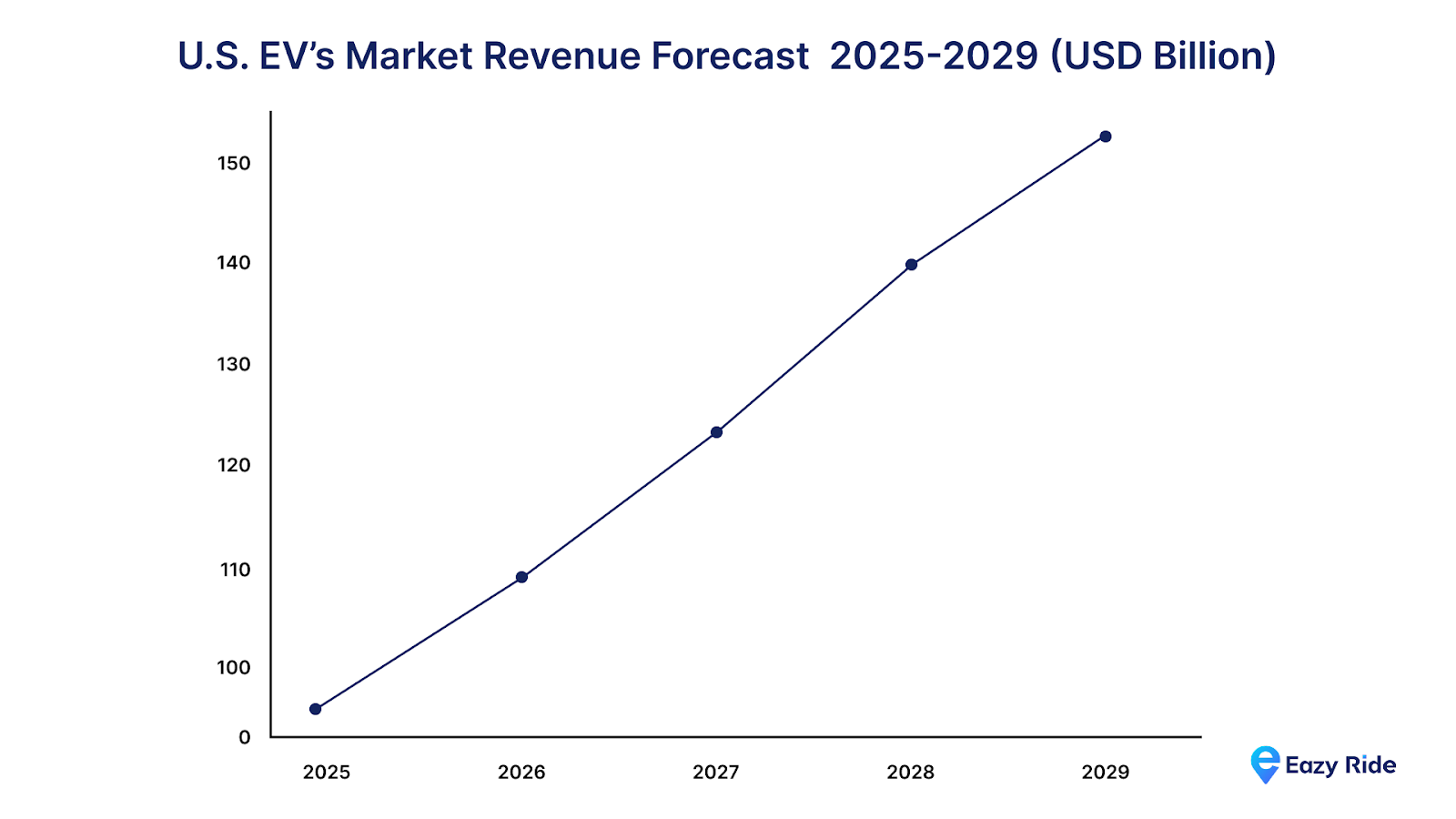
Between 2025 and 2029, EVs will open new doors for entrepreneurs, fleet operators, and businesses in tourism, hospitality, and institutional sectors.
To tap into this growth, you must address cost barriers, operational complexity, and the need for smart, data-driven solutions. Let’s break down what lies ahead.
Key Takeaways:
- Charging stations, battery recycling, EV servicing, fleet software, and ride/subscription models offer strong revenue potential.
- Fleets, campuses, and tourism operators are adopting EVs to cut costs and meet sustainability goals.
- Fast chargers, battery-swapping, and incentives are removing adoption barriers and boosting uptime.
- Early adopters can secure key locations, build loyalty, and lead in the fast-growing electric vehicles business.
- AI and telematics improve fleet performance, reduce maintenance costs, and support scale.
The Rise of the EV Market
The electric vehicle (EV) market is expanding fast, but making the shift to electric isn’t just about cutting emissions. It’s also a smart move to stay competitive and meet the growing expectations of today’s eco-conscious consumers.
Electric mobility is more cost-effective and scalable. With lower running costs and flexible business models, it’s clear that the future of transportation lies in electric vehicles. Let’s take a closer look at the growth and trends of the EV market:
Growth Trends and Statistics
The U.S. electric vehicle (EV) market is experiencing unprecedented growth, marked by a significant rise in both sales volume and market share.
As of Q1 2025, 750,698 electrified vehicles were sold, capturing a 24.4% market share of the total automotive industry. Year-over-year (YoY) EV sales volume grew by 29.6%, and EV market share increased by 4.5 percentage points compared to the same period in 2024.
This growth is driven by several factors, including:
- Government Incentives: Policies like the Inflation Reduction Act are supporting clean energy investments and EV infrastructure, fueling the market’s growth.
- Corporate Commitments: Automakers, such as General Motors, are increasing their investments in EV production, with GM’s $4 billion investment.
- Consumer Demand: The shift towards sustainable and cost-effective transportation is accelerating the adoption of electric vehicles.
These statistics represent a massive, scalable opportunity for entrepreneurs and businesses, offering a vibrant market to enter, expand, and innovate in the electric mobility sector.
Increased Consumer Demand and Driving Factors
The surge in EV demand is no longer limited to individual consumers but is increasingly driven by large institutions and corporations. Campuses, corporate fleets, and tourism operators are adopting EVs for cost efficiency and to meet sustainability goals and enhance internal mobility systems.
Several key factors are fueling this broader adoption:
- Rising fuel prices are making traditional vehicles less economical.
- Climate awareness is pushing both businesses and consumers toward greener solutions.
- Incentives, such as tax credits and the growing availability of free charging infrastructure, accelerate adoption across B2B and institutional segments.
The increased focus on sustainability, combined with supportive policies, is making EVs more attractive across various sectors, opening up significant avenues for business growth and innovation.
Expected Market Growth and Projections
The future of the electric vehicles business market looks even brighter as key developments continue to unfold. Improvements in charging infrastructure and battery technology will further accelerate the adoption of EVs. This makes them more accessible to a wider range of consumers and businesses. Here are some future predictions:
- Price Reductions: The average price of an EV in 2025 is expected to hover around $67,300, but competition and technological advancements are likely to drive prices down over time.
- Charging Infrastructure Expansion: More investment in charging stations will make it easier for fleet operators to offer EVs in urban environments, addressing a key adoption barrier.
- Battery Advancements: Improvements in battery technology will boost EV range, reduce charging times, and improve overall performance, making them more attractive for businesses and consumers.
- Rising Adoption Rates: Growing demand for sustainable transport, especially in urban areas, will drive EV adoption, offering businesses lower fuel costs and reduced emissions.
For entrepreneurs and fleet managers, the growing EV market offers a golden opportunity to expand services, from rentals to internal mobility solutions. This high-growth environment signals scalable opportunities for those ready to seize them.

Having explored the growth and projections for the EV market, let’s now turn our attention to the key trends shaping the future of the electric vehicle sector.
Also Read: How to Build an Electric Scooter Rental App for Mobility Success
Key Trends That Will Shape EV Business Success
The electric vehicles business industry is undergoing rapid transformation, with several key trends emerging that will determine the success of businesses in 2025 and 2026. For fleet operators, entrepreneurs, and businesses in urban mobility, understanding and adapting to these trends is critical to maintaining a competitive edge.
Let’s explore the key trends shaping the future of the EV business:
Smarter, More Powerful Batteries
Battery technology is evolving fast. We’re seeing major improvements in capacity, charging speed, and affordability, making electric vehicles (EVs) go farther and charge faster.
For businesses that rely on quick turnarounds and high vehicle usage, this is a huge win. It’s especially valuable for scaling up fleets while maintaining smooth and efficient operations.
Better Charging Infrastructure
Fast-charging stations and smart charging solutions are changing the game for fleet operators. With quicker charge times, vehicles spend less time out of service.
That means fewer delays, more trips, and happier customers. As charging networks continue to grow, your fleet stays ready to roll, anytime, anywhere.
Smarter Fleet Management with Data
Using telematics and AI to monitor your fleet in real-time helps you stay ahead of problems. Predictive maintenance tools can spot issues before they become breakdowns, cutting downtime and repair costs. It’s not just about saving money; it’s about keeping your EVs reliable and on the road longer.
Greener Goals and Government Support
With more countries rolling out emissions regulations and offering EV incentives, switching to electric makes both environmental and business sense. Complying with these rules doesn’t just help the planet; it can also open up financial perks and give your business a competitive edge.
To stay ahead in the evolving EV landscape, leveraging integrated technology is crucial. EazyRide provides a fleet management platform designed to scale your EV operations.

With these key trends shaping the future of the EV sector, let’s now explore the top business opportunities that you can capitalize on to drive success in this rapidly growing market.
Also Read: Exploring the Unique Solar-Powered Electric Scooters
Top 5 Business Opportunities in the Electric Vehicle (EV) Sector
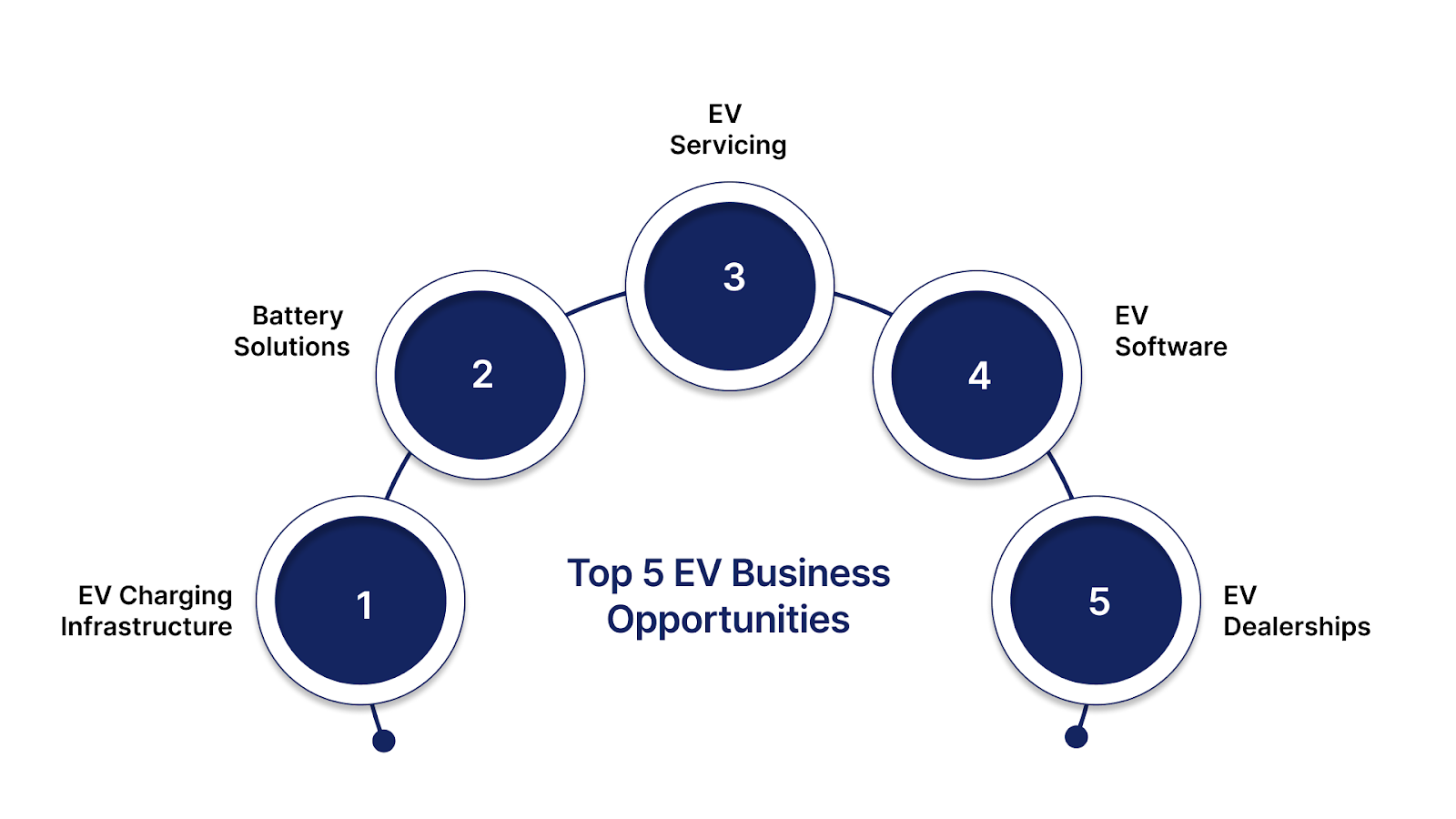
The electric vehicle (EV) revolution is reshaping transportation and business. From charging infrastructure to smart fleet software, the EV sector offers significant opportunities.
Here are the top 5 business opportunities in the EV sector, each with strong growth potential and revenue streams.
1. EV Charging Infrastructure
As more people switch to electric vehicles, the need for charging stations is growing fast. This creates a big opportunity for businesses to build and manage both public and private charging networks.
Placing chargers in high-traffic spots, like shopping malls, office complexes, and residential areas, can help you reach more users and generate steady revenue.
How You Can Earn:
- Charge users per session or offer subscription-based plans
- Partner with hotels, parking lot owners, and retailers for charger placement
- White-label charging stations for real estate projects
Why It’s a Smart Move:
Getting in early means you can lock in great locations and form valuable long-term partnerships. It’s a strong way to become a leader in the growing EV charging market.
2. Battery Manufacturing & Recycling
With EV demand rising, the need for reliable battery production and sustainable recycling is becoming urgent. By 2040, battery recycling alone could be worth $6 billion, with overall battery revenues projected to cross $40 billion.
Businesses that invest now in smarter battery solutions and eco-friendly recycling can gain a big edge.
How You Can Earn:
- Manufacture batteries for automakers (OEMs)
- Offer battery lifecycle services and second-life applications
- Partner with EV brands for recycling solutions
Why It’s a Smart Move:
Sustainability is no longer optional; it’s expected. Businesses that help power EVs and reduce battery waste will play a key role in the EV ecosystem and benefit from long-term growth.
3. EV Maintenance & Repair Services:
EVs don’t need the same kind of maintenance as petrol vehicles but they do need specialized care. From battery diagnostics to software updates, trained EV service providers will be in high demand.
This is a great space for businesses that want to support both individual EV owners and large fleet operators.
How You Can Earn:
- Offer regular maintenance and health checks
- Provide expert repairs for batteries, charging systems, and onboard software
- Set up service contracts for commercial fleets
Why It’s a Smart Move:
As the EV population grows, so does the need for reliable service centers. Becoming a trusted name in EV care means recurring business and long-term customer relationships.
4. EV Technology & Software Solutions
Behind every EV fleet is a need for smarter management. Whether it’s tracking vehicle performance, managing charging schedules, or planning efficient routes, software is a huge part of the EV equation. This creates a space for startups and tech companies to develop tools that make EV operations smoother and more cost-effective.
How You Can Earn:
- Offer fleet management and route optimization tools (SaaS)
- Create apps to manage charging stations and payments
- Build AI-driven systems for predictive maintenance
Why It’s a Smart Move:
As EV adoption rises, so does the need for smart, scalable tech solutions. If you can make life easier for fleet operators, logistics providers, and mobility platforms, you’ll be in high demand.
5. EV Ride-Sharing & Subscription Models
Urban mobility is changing fast, and flexible access to EVs is at the heart of it. More people now prefer subscribing to vehicles or using them on-demand rather than owning them. This trend is opening up exciting new opportunities for businesses in ride-sharing, delivery, and short-term rentals.
How You Can Earn:
- Offer monthly or flexible subscriptions to EVs
- Lease EV fleets to ride-share or delivery operators
- Provide short-term EV rentals for tourists or city commuters
Why It’s a Smart Move:
People want convenient, affordable, and sustainable ways to get around. By offering EVs through flexible models, you can tap into this demand and build a business around the future of transportation.
With these opportunities in mind, let’s explore how the evolving EV infrastructure will directly influence your business operations and growth
How EV Infrastructure Is Reshaping Business Operations?
As demand grows, fuel costs rise, and emission rules tighten, moving to electric vehicles (EVs) isn’t just a smart choice; it’s quickly becoming a business necessity. It’s the roadblocks in infrastructure.
Charging delays, unclear policies, and unexpected downtime are holding back growth. But here’s the good news: the EV space is changing rapidly. New infrastructure trends are emerging that can help you overcome these hurdles and move your growth plans forward.
Here are three key infrastructure trends that can drive your electric vehicles business growth strategy and how to take action now.
The Role and Importance of Public Charging Stations
Public charging stations play a critical role in making electric vehicles more practical and appealing, especially for businesses managing EV fleets or offering rentals. One of the biggest concerns for EV users is range anxiety, and a well-placed network of public chargers helps ease that worry.
By installing stations in busy areas like tourist spots, office parks, and city hubs, you improve fleet usage and create a better customer experience.
Why this matters for your business:
- Less range anxiety means smoother, more predictable fleet operations
- Strategic locations offer more flexibility during peak demand
- More public charging options make EV adoption easier and more attractive
Government Incentives and Simplified Permitting
With the rising government support, especially through programs like the Bipartisan Infrastructure Law, businesses now have better access to funding and support for EV infrastructure. From tax credits and rebates to easier permitting processes, the path to building your charging network is becoming faster and more affordable.
Why this matters for your business:
- Financial incentives lower the cost of installing charging stations
- Simplified permits help you set up quicker and avoid red tape
- You can scale your EV services without stretching your budget
Battery-Swapping Technology Solutions
Battery-swapping is quickly gaining traction as a smart solution for businesses that rely on high-usage EV fleets. Instead of waiting for a charge, operators can simply swap out a drained battery for a charged one, keeping vehicles on the move with minimal downtime.
This is especially useful for short-route operations like campus shuttles, delivery fleets, or resort transport.
Why this matters for your business:
- Swap batteries in minutes, keeping your fleet active and available
- Perfect for operations that need fast turnaround times
- Reduces maintenance efforts and costs, boosting overall efficiency and profitability
As these infrastructure elements evolve and become more widespread, they set the stage for significant electric vehicles business opportunities.
Also Read: Top 10 Most Affordable Electric Scooters For Micro-Mobility Businesses in 2025
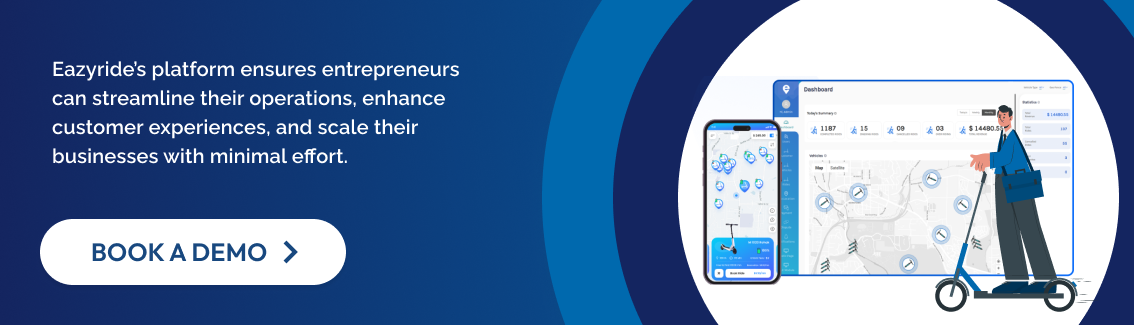
Optimize Your EV Fleet Operations with EazyRide
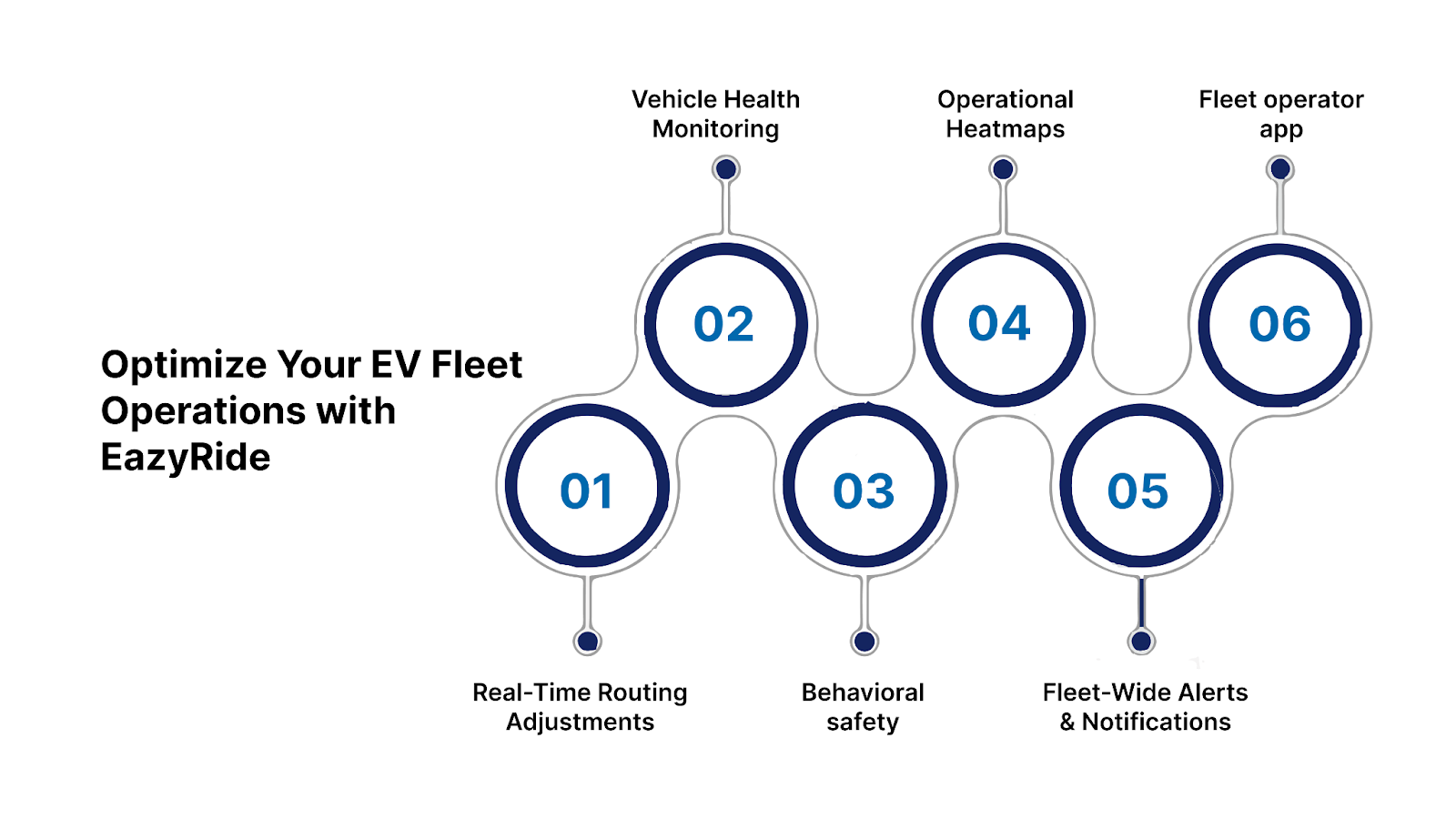
As the electric vehicle market rapidly expands in 2025-2026, fleet operators need real-time insights and smart solutions to stay competitive. EazyRide provides you with the tools to optimize fleet management, reduce operational costs, and improve the rider experience.
Here’s how EazyRide helps streamline your fleet operations:
- Real-Time Routing Adjustments: Avoid delays with traffic-aware, weather-sensitive route recommendations.
- Vehicle Health Monitoring: Remotely track vehicle diagnostics, from tire pressure to motor performance, and act quickly.
- Behavior-Based Safety Insights: Identify harsh braking or speeding, and proactively coach your team for safer driving.
- Operational Heatmaps: Identify demand zones and optimize fleet distribution to maximize efficiency.
- Fleet-Wide Alerts & Notifications: Stay updated on safety issues, service needs, and battery levels.
- Simplified Fleet Operator App: Empower your team with tools for diagnostics and service directly from their mobile devices.
EazyRide’s data-driven platform ensures that your fleet operations are predictable, efficient, and scalable, positioning your business for success in the growing EV market.
Conclusion
The electric vehicle (EV) market is full of opportunity, but to succeed, businesses need to stay in step with key trends like improved charging infrastructure, better battery tech, and smarter fleet management. Adapting to these shifts puts you in the best position to meet the rising demand for cleaner, more efficient transport.
That’s where EazyRide comes in. From real-time vehicle tracking to predictive maintenance and smooth integration with charging networks, EazyRide helps you manage your EV fleet with ease. It’s designed to boost efficiency, cut downtime, and make scaling your operations simpler than ever.
As the EV space evolves, the electric vehicles business that moves with it will lead the way. Partner with EazyRide to stay ahead of the curve and build a future-ready fleet.
FAQs
1. What is an EV app?
An EV app is a mobile application that helps electric vehicle owners manage their EVs by locating nearby charging stations, tracking battery levels, scheduling charging, and optimizing routes. It simplifies fleet management and provides real-time updates for users.
2. Can I make money by installing an EV charging station?
Yes, you can earn money by installing an EV charging station. Revenue is generated through pay-per-use charges, subscription services, and partnerships with businesses like shopping centers or parking garages. As the number of EVs grows, charging stations offer a profitable business opportunity.
3. Can I start my own EV charging business?
Yes, starting your own EV charging business is possible. It involves setting up charging stations, offering services to EV owners, and charging fees for usage or subscriptions. With increasing EV adoption, this business has significant growth potential, though initial investment and proper permits are required.
4. Why is now a good time to invest in EV-related businesses?
With EV adoption accelerating globally, 2025–2026 will be a tipping point as more countries push for cleaner transportation. Falling battery costs, improved range, and supportive policies are creating a fertile ground for investment. Businesses that act early can position themselves as leaders in this fast-growing, innovation-driven market.


