
 AllAnalytics and research

 29 January, 2026
 Electric Scooter Laws South Carolina 2026: Compliance Playbook
In 2026, South Carolina’s micromobility rules are becoming more enforceable at the local level. As ridership grows, cities are writing clearer language around speed and where devices can operate. Mount Pleasant, for example, has moved to cap e-bike speed on sidewalks/shared paths at 12 mph and updated its ordinance to strengthen enforcement authority.
That is the core issue with electric scooter laws in South Carolina. The state baseline relies heavily on EPAMD-style rules and related traffic code, while explicitly allowing local authorities to add constraints by ordinance. The result is predictable: what is workable in one city can trigger citations, impound risk, or program pushback in another.
This guide is built for operators and decision-makers. It focuses on what you need to verify before launch, what tends to vary city by city, and how to convert those constraints into operating controls and measurable compliance.
Key Takeaways
- South Carolina’s clearest statewide rules are written for EPAMDs/self-balancing devices, not typical stand-up scooters. Treat classification as a launch risk.
- City ordinances and permit terms decide what is actually allowed for riding, parking, and rentals.
- Turn rules into controls: geofenced zones, speed caps, no-ride areas, and parking corrals.
- Track city-facing KPIs: complaints, mis-parking rate, response time, repeat violators.
- Verify the latest ordinance text + permit conditions before launch. Avoid relying on secondary summaries.
What does South Carolina law clearly cover, and where does it get ambiguous for e-scooters?
South Carolina’s statewide text is clearer for EPAMDs (self-balancing devices) and mopeds than it is for the way most people use the term “electric scooter” (stand-up kick scooters). That mismatch is the main reason online summaries conflict.
What the State Text Clearly Covers
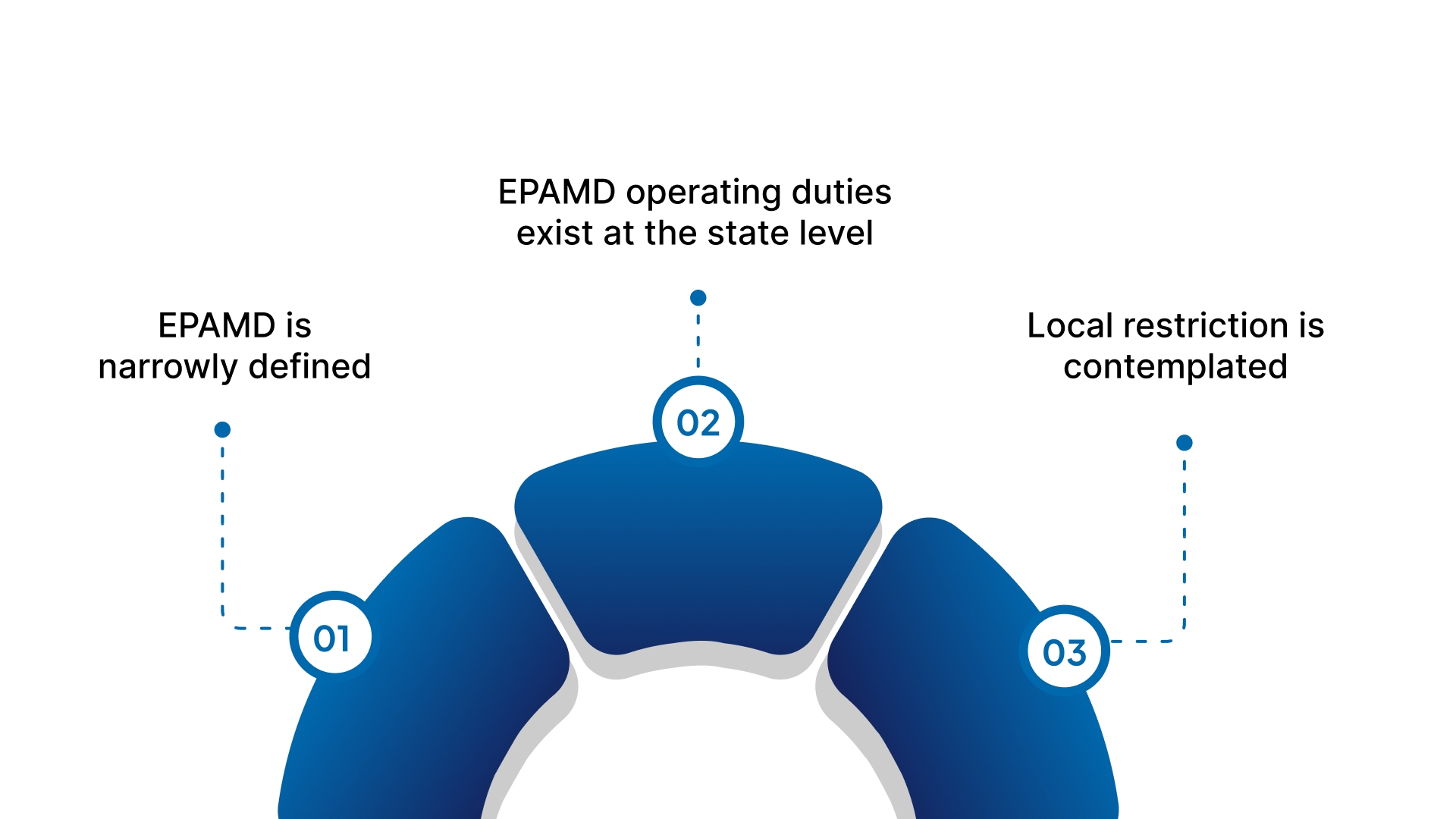
- EPAMD is narrowly defined. It is written around self-balancing devices with specific power/speed characteristics.
- EPAMD operating duties exist at the state level. The statute sets baseline conduct expectations (pedestrian priority, safe passing behavior) and includes a statewide operating-speed posture for EPAMDs.
- Local restriction is contemplated. The state framework explicitly allows local authorities to add constraints by ordinance in defined areas.
Where Ambiguity Starts For Stand-up E-Scooters
- Most stand-up scooters are not self-balancing. That alone can place them outside the cleanest statewide category the public assumes applies.
- Fallback categories are imperfect. If a device is not treated as EPAMD, operators often end up assessing whether it aligns more closely to moped-related definitions (and what obligations flow from that).
- Result: inconsistent interpretations. Secondary sources simplify by labeling all e-scooters as EPAMDs or mopeds, even when device design and local posture differ.
Classification Risk
Treat classification as a launch artifact, not a marketing label. Document:
- Device specs that matter: whether self-balancing, wheel configuration, governed top speed, and motor power rating.
- Your classification rationale: why you are treating the device as EPAMD vs not, and what alternate category you are using if not.
- A local override note: state baseline is not the final control layer when cities regulate, or permit programs add conditions.
After accepting that statewide text does not cleanly map to stand-up scooters, the operating reality becomes city-driven; ordinances and permit terms are what determine what is actually allowed.
Which city rules in South Carolina change what riders can do?
South Carolina’s statewide baseline is not the operating reality for shared scooters. Cities can set their own constraints by ordinance and, in many cases, by permit terms.
That is why a program can look “compliant” on paper and still fail in the field once sidewalk, parking, and right-of-way rules tighten.
The City-Level Rule Categories That Typically Change
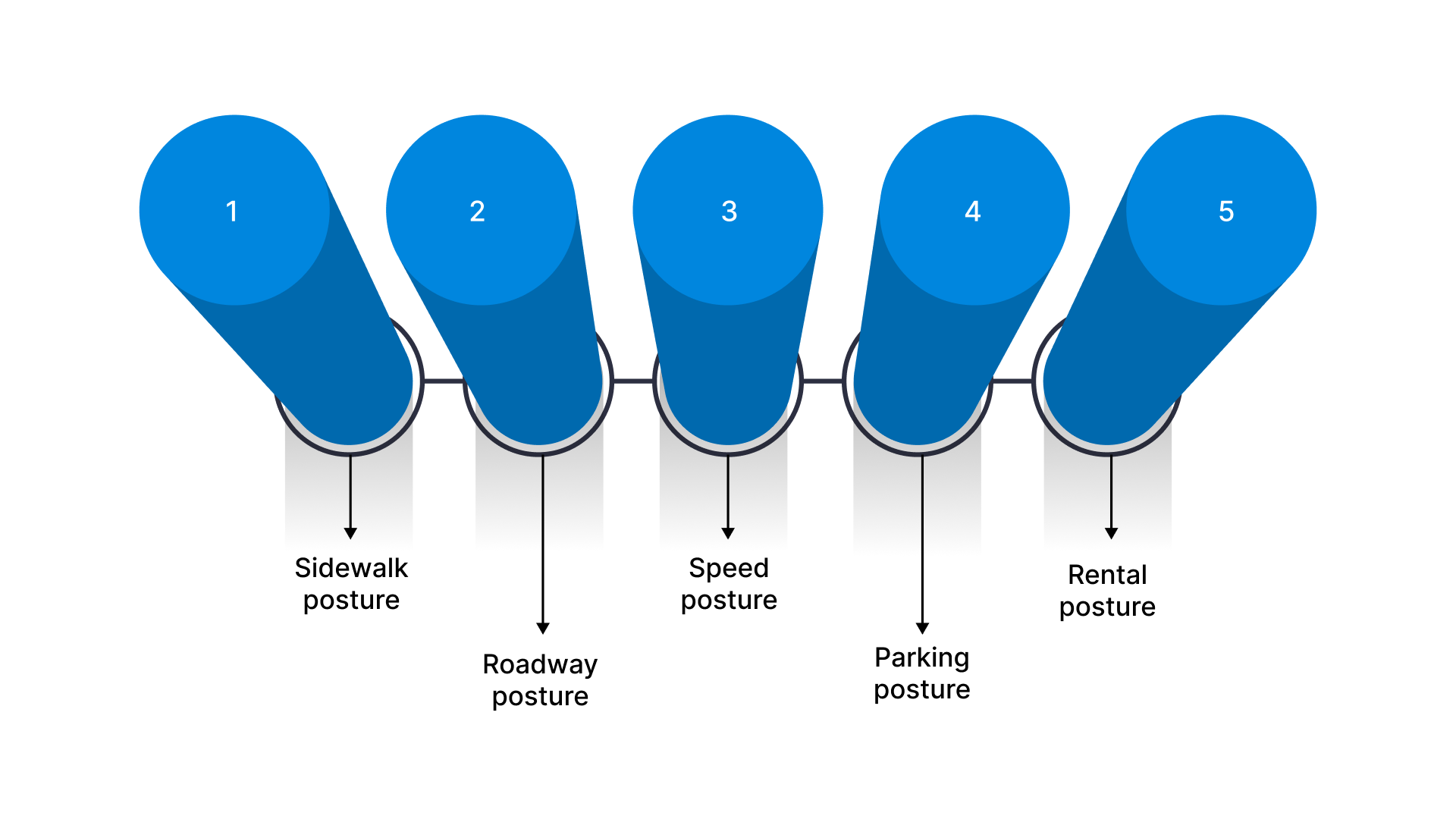
- Sidewalk posture: allowed, prohibited, or restricted in specific districts/areas.
- Roadway posture: allowed only on roads under a posted speed threshold, or restricted in certain zones.
- Speed posture: city-set limits in sensitive environments (downtown cores, shared paths, sidewalks).
- Parking posture: designated parking areas, obstruction rules, and removal/impound authority.
- Rental posture: whether shared/rental programs are permitted, restricted, or prohibited on public property or right-of-way.
City Examples That Matter for Shared Fleets
Charleston: rental posture can be the constraint, not riding behavior
Charleston is a high-signal example because the ordinance posture extends beyond “where to ride” to whether scooters can be offered for rental on public infrastructure at all. The ordinance text includes prohibitions tied to motor scooters in the public right-of-way and gives the city authority to remove unattended devices left on public property.
Columbia: operating boundaries and enforcement tools can be explicit
Columbia’s ordinance language is an example of cities defining “motor scooter” rules with clear operating constraints, including roadway posture tied to posted speed limits. This is the pattern operators should expect: city rules that define where scooters may operate and how the city can respond to noncompliant parking or unattended devices.
Myrtle Beach: treat rulemaking and ordinance updates as launch risk signals
In some cities, rules evolve quickly in response to collisions, complaints, and public right-of-way congestion. Myrtle Beach materials show the city’s attention on motor scooters/shared mobility posture in the right-of-way. Use this as a trigger to verify the latest adopted ordinance text and its effective date before you rely on older summaries.
Hilton Head Island: Pathway’s posture can remove your “default” riding surface
Some jurisdictions publish direct guidance stating that e-scooters and related e-equipment are not allowed on public pathways. In tourism-heavy markets, this single constraint can change the entire feasible operating footprint.
Treat every city example as a trigger to pull the current ordinance and any active permit terms before you finalize your launch footprint
Once you have a city-by-city map of what is allowed, the next step is to convert those constraints into controls that can be consistently enforced in the field.
How Do You Translate South Carolina Rules Into Fleet Controls That Reduce Violations?
City rules scale when constraints become enforceable system behavior.
The objective is to make compliant riding and parking the default outcome, then constrain edge cases without constant manual intervention.
South Carolina Scooter Compliance: Rule Type → Operator Control Map
| Constraint Type | Common Trigger | Control to Apply | Enforcement Signal | KPI to Monitor |
|---|---|---|---|---|
| Sidewalk Posture | Pedestrian conflict, downtown complaints | No-ride boundary or slow-zone boundary (severity depends on local posture) | Zone-entry events + complaint tickets | Sidewalk-incident rate; complaints per 1,000 rides |
| Downtown Speed Management | High density, near-miss reports, and enforcement pressure | Downtown slow zone + zone-based speed caps | Speed-cap breach events | Speed-cap breach rate; incident rate |
| Tourist Corridor Controls | Peak foot traffic, weekend surges | Corridor no-ride strip or slow-zone ring | Zone-entry events | Complaint rate by corridor; incident clusters |
| Campus Boundary Controls | Shared paths, high pedestrian volume, and institutional rules | Campus boundary zones with stricter speed/parking rules | Zone-entry + end-ride validation failures | Incidents near campus; improper end-ride rate |
| Parking Clutter Prevention | Sidewalk obstructions, ADA access complaints | Parking corrals + end-ride validation | Mis-park reports + end-ride validation failures | Mis-parking rate; obstruction response time |
| Night Riding Limits (If Used Locally) | Visibility risk, late-night complaints | Time-based operating restriction or stricter night caps | Trips started/ended in restricted hours | After-hours trip rate; night incidents |
Control Architecture Operators Can Maintain
- Build controls as layers, not a single city-wide boundary. This reduces the blast radius of changes and lets enforcement tighten only where needed.
- Standardize four building blocks across every market:
- Ride zones for where trips can operate.
- No-ride corridors for exclusion areas.
- Slow zones for conflict-prone environments.
- Parking corrals for end-ride control.
- Keep control definitions consistent across cities so your ops team can deploy, monitor, and adjust without reinventing workflows each launch.
Speed Governance That Does Not Require Constant Human Intervention
- Use a zone-based speed policy rather than a fleet-wide cap. It matches how cities regulate in practice.
- Treat dense downtown blocks, waterfronts, and mixed-use cores as high-friction areas that require tighter governance from day one.
- Document a simple internal standard for when speed policy changes are permitted (what evidence triggers a change and who approves it).
Sidewalk Risk Mitigation That Holds Up Under Complaints
- Avoid “please don’t ride on sidewalks” as the primary control. Complaint-driven enforcement will force a harder approach.
- Use boundary design discipline: tighter geometry where pedestrian risk is highest; fewer exceptions and fewer ambiguous edges.
- Maintain a single internal rule: any zone design change must be tied to an observed pattern.
Parking Compliance Workflow That Reduces City Friction
- Treat parking as a managed outcome.
- Define an end-ride standard that your ops team can enforce consistently:
- What qualifies as an acceptable placement?
- What triggers removal?
- How repeat violations are handled.
- Ensure escalation is operationally realistic. Cities measure response more than intent.
Change Management Loop That Keeps Controls Current Without Thrash
- Controls drift unless changes are governed. Use a tight loop:
- Capture incidents consistently.
- Confirm hotspots through clustering, not anecdotes.
- Make small boundary/severity edits.
- Update rider-facing rules only when the control changes.
- Avoid large-scale remaps unless KPIs show a structural problem.
Governance is not credible without measurement; Lets look at the KPIs that show whether controls are reducing violations and complaints over time.
What Compliance KPIs Should Operators Track in South Carolina to Prove Control?
A city judges a program by outcomes it can see: fewer sidewalk conflicts, fewer blocked walkways, and faster response when something goes wrong.
KPIs are the proof layer that turns “we’re managing it” into a defensible operating position.
Violation KPIs
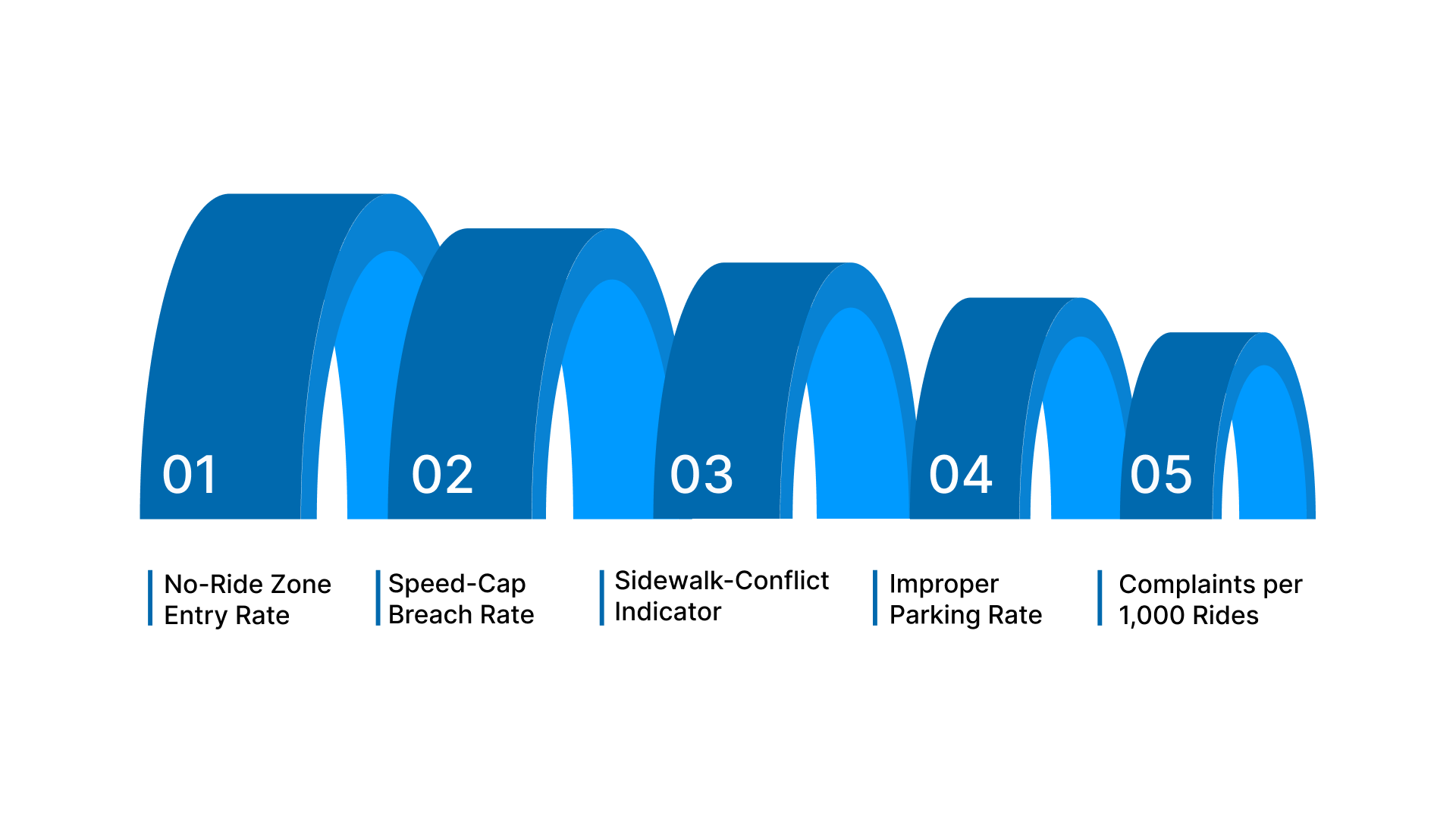
1. No-Ride Zone Entry Rate
Track entries per 1,000 rides and by hotspot. This is your cleanest signal that boundaries are being respected.
2. Speed-Cap Breach Rate
Log cap breaches per 1,000 rides and isolate repeat devices/riders if your system supports it.
3. Sidewalk-Conflict Indicator (If You Track It)
Use a consistent proxy, such as complaint-tagged incidents or flagged segments, rather than informal anecdotes.
4. Improper Parking Rate
Measure mis-parks per 1,000 ends, and separate “minor” vs “obstruction/ADA impact” if your intake supports categorization.
5. Complaints per 1,000 Rides
Track total complaints and complaint types (parking, speed, riding location). Complaint mix often matters more than raw count.
Operations KPIs
1. Time to Acknowledge a Complaint
The time from intake to assignment. Cities care about responsiveness, not internal intent.
2. Obstruction Removal Time
Time to clear devices blocking walkways, curb cuts, entrances, or ramps. Treat this as a priority metric.
3. Mis-Park Resolution Time
Time from report to correction. Segment by zone if you operate multiple areas.
4. Repeat Offender Rate
Track the share of incidents tied to repeat users/devices/locations. This is a program health signal, not just enforcement.
5. Hotspot Concentration
Percent of incidents originating from the top 5–10 locations. Concentration helps you prioritize stakeholder conversations.
Thresholds That Trigger Action
- Define “red lines” per KPI based on city tolerance and operating density. Avoid claiming one threshold fits every city.
- Use a simple internal rule:
- A sustained KPI breach over a defined period triggers corrective action.
- A single severe obstruction event triggers immediate escalation.
- Separate triggers by severity: “high-impact public access issues” should have tighter thresholds than minor placement issues.
Reporting Cadence and City-Ready Artifacts
Monthly summary for stakeholders:
KPI trends, top incident categories, hotspot list, and response-time performance.
Quarterly deep dive (or permit renewal package):
What changed, why it changed, and what outcomes improved. Include before/after KPI deltas.
Audit-friendly incident log:
Complaint intake, timestamps, resolution status, and categorical tagging. This is often the most persuasive artifact in enforcement conversations.
Metrics become actionable when the launch plan defines what must be verified, who owns escalation, and how local requirements are documented before operations begin.
What Must Be Verified Before Launching a Shared Scooter Program in South Carolina?
South Carolina launches fail for repeatable reasons: outdated ordinance reliance, permit terms stricter than the ordinance, unclear enforcement ownership, and slow field response for obstructions.
This checklist is the readiness gate.
- Pull the current ordinance text and record the effective date, last amendment date, and any district overlays (downtown, parks, pathways).
- Confirm whether constraints come from ordinance, permit program, or pilot terms (often the true operating contract).
- Flag time-bound clauses (sunset/extension language) that can change enforceability.
- Verify whether a permit is required and capture conditions that often sit outside ordinance text:
- Fleet/device caps and deployment limits
- Operating hours and expansion conditions
- Parking requirements and designated areas
- Reporting obligations (frequency and format)
- Response expectations for obstructions/removals
- Identify the approving authority and renewal owner.
- Document which agency enforces what (police, parking, transportation/public works).
- Confirm removal/impound authority and the practical retrieval process.
- Establish one escalation path for obstruction complaints, safety incidents, and high-visibility events.
- Verify minimum insurance requirements and documentation format (COI, additional insured language, certificate holder).
- Confirm incident reporting timelines and required submission elements, if specified.
- Ensure rider-facing rules reflect each city’s posture at a high level: restricted riding areas, parking expectations, and repeat-violation consequences (if used).
- Confirm what must be visible in-app for that jurisdiction (policy link, local rules notice, safety prompts).
- Confirm staffing coverage for mis-parks/obstructions and incident intake.
- Set internal service levels for acknowledgment time and clearance time, and validate that they hold during peak demand windows.
- Start with a footprint that can be controlled (bounded geography + manageable device count).
- Set expansion gates tied to outcomes cities care about (complaint rate, mis-parking rate, obstruction response time, repeat-issue concentration).
- Assign a decision owner and review cadence for expansion approvals.
Tooling becomes a risk decision when compliance depends on enforceable controls and stakeholder-ready reporting without manual workarounds.
What Changes When You Run Compliance Through EazyRide Instead of Manual Ops?
If your program must enforce city-by-city riding and parking rules at scale, success depends on execution, not intent.
The question becomes whether your tooling can apply local constraints consistently, then produce defensible outputs when cities review performance.
EazyRide fits this operating reality because it is built as a white-label shared mobility stack: a branded rider app, an operator app for field teams, and an admin dashboard for control and reporting.
Used correctly, that stack helps decision-makers turn a South Carolina rule map into day-to-day operating discipline without relying on manual policing.
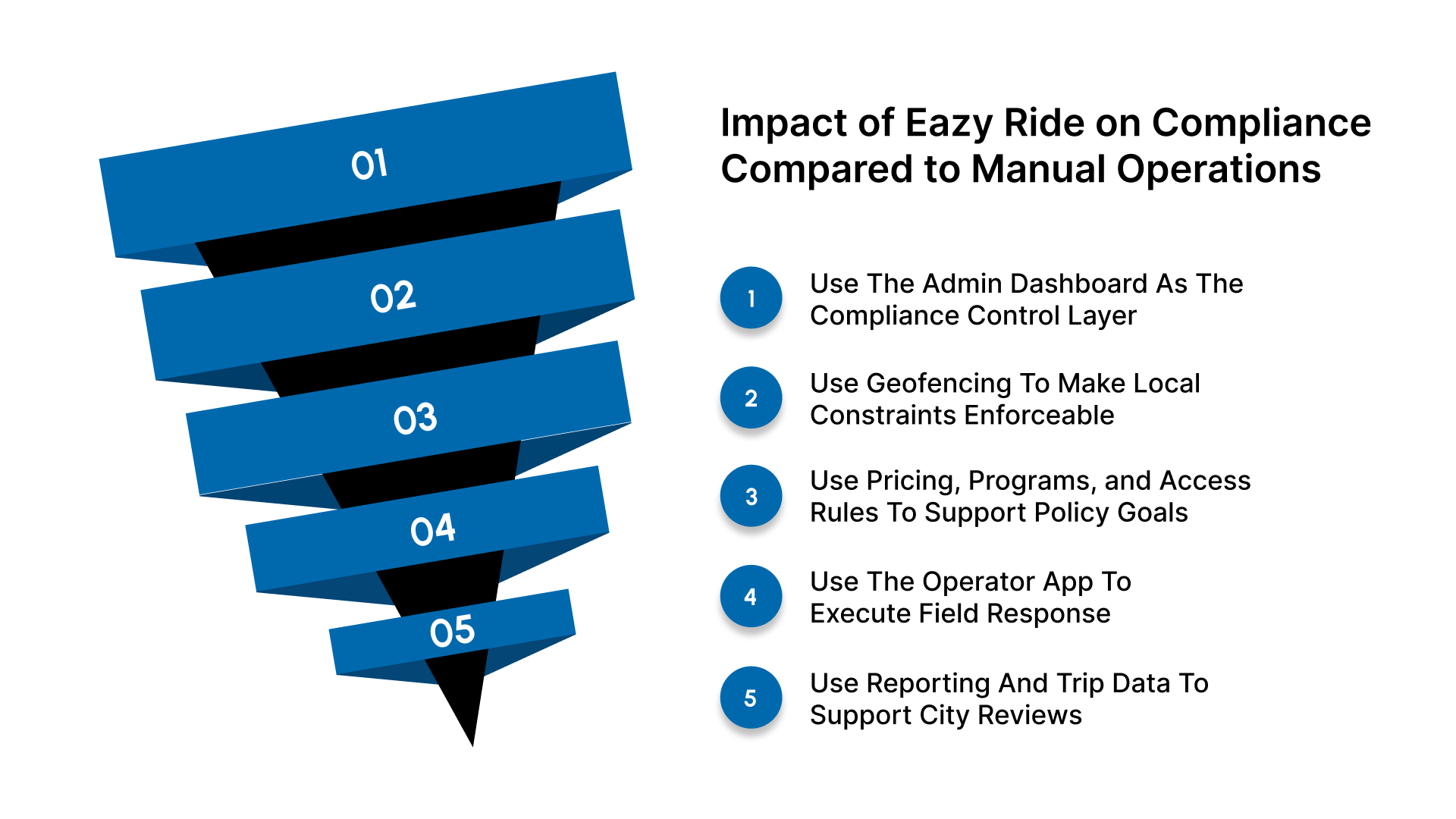
Use The Admin Dashboard As The Compliance Control Layer
- Configure city-specific operating areas and restrictions so “where the scooter can go” is enforced by the system, not left to rider judgment.
- Apply local operating policies through centralized settings, then push updates without rebuilding the entire deployment.
Use Geofencing To Make Local Constraints Enforceable
- Translate sensitive districts, no-go areas, and city-specific boundaries into map-based controls that the rider app can enforce in real time.
- Reduce “gray area” riding by using consistent boundary logic across cities, even when rules differ.
Use Pricing, Programs, and Access Rules To Support Policy Goals
If a city requires tighter behavior in certain zones or hours, configure program rules that support compliance outcomes (for example, limiting incentives that increase clustering in high-friction areas).
Use The Operator App To Execute Field Response
- Route on-ground teams for rebalancing, parking correction, charging, and maintenance with task assignment and operational visibility.
- Create a reliable response motion for mis-parks and obstructions, which is often the fastest route to city trust.
Use Reporting And Trip Data To Support City Reviews
- Pull performance outputs that support stakeholder conversations: where issues cluster, how fast they were resolved, and whether corrective actions reduced repeat problems.
- Package reporting for regular check-ins and permit conversations without building manual spreadsheets from raw logs.
If you are planning a South Carolina launch and need to operationalize city-by-city constraints, book a demo of EazyRide to map one target city into enforceable zones, speed policies, and parking rules, and review the reporting outputs you can use in stakeholder meetings.
Conclusion
South Carolina is a patchwork market. The fastest way to create friction is to treat compliance as a one-time legal check instead of an operating discipline that changes by jurisdiction.
Operators who succeed treat local documents as living requirements, keep ownership clear across teams, and maintain a paper trail that holds up in permit reviews and incident follow-ups.
When compliance is managed as a system, stakeholders see fewer repeat issues and faster resolution when problems occur. That is the difference between a pilot that gets extended and a program that gets paused.
Platforms like EazyRide support that approach by giving operators a centralized way to run city-specific configurations and produce stakeholder-ready reporting without rebuilding processes for every launch.
FAQs
1. Are electric scooters legal in South Carolina?
Often, yes, but statewide coverage maps more cleanly to EPAMD-style devices than to typical stand-up scooters. City ordinances and permit terms usually determine what is actually allowed for rentals.
2. Are electric scooters allowed on sidewalks in South Carolina?
Sidewalk posture varies by city and can change by district. Treat sidewalks as a city-by-city verification item and design operations to reduce sidewalk conflicts.
3. Do you need a license or registration for an electric scooter in South Carolina?
It depends on how the device is classified under state definitions and how the launch city regulates scooters. Verify requirements for your specific device type before publishing the rider policy.
4. What is the speed limit for electric scooters in South Carolina?
There is rarely one statewide “scooter speed limit” that covers shared fleets cleanly. Cities often set practical limits through local rules and sensitive-area posture, which fleets operationalize through zone-based speed policies.
5. Are rental scooters allowed in Charleston or Columbia?
It depends on the city’s ordinance posture and any active permit or pilot terms. Confirm the latest local documents and operating conditions before you assume rentals are allowed.
6. Can South Carolina cities ban scooter rentals even if state law allows certain devices?
Yes. Cities can restrict operations through ordinances, permits, and pilot program terms. Treat municipal requirements as binding launch conditions.


