
 AllSharing business

 26 December, 2025
 Scooter Sharing System Design Guide 2026: Launch & Scale
The scooter-sharing market has reached a critical inflection point. With the U.S. market valued at $1.81 billion in 2025 and growing at 18.56% annually, operators face a stark reality: system architecture now determines competitive advantage more than fleet size or marketing spend.
We understand that launching and scaling a scooter-sharing operation can feel overwhelming given the complexity of managing fleets, pricing, compliance, and technology integration all at once.
Most operators fail not from lack of capital or market demand, but from architectural decisions made in week one. Managing 200 scooters across three campuses using spreadsheets and manual pricing adjustments while competitors deploy white-label platforms with real-time analytics represents an unbridgeable operational gap. The difference between profitable operations achieving 3.4+ rides per scooter daily and struggling fleets with 40% underutilization comes down to infrastructure.
This guide provides the complete framework for designing scooter-sharing systems that scale. We cover technical architecture, operational workflows, pricing engines, and deployment strategies for systems managing 50 to 50,000 vehicles. Whether launching a campus pilot or expanding to multi-city operations, these principles determine long-term viability.
Key Takeaways
- The Problem: Most operators launch with fragmented systems that can’t scale, resulting in 6-7% fleet unavailability and missed revenue opportunities.
- Market Opportunity: The U.S. scooter-snharing market is projected to reach $1.9 billion by 2025, with North America accounting for over 40% of the global market share.
- System Requirements: Modern scooter-sharing systems require three integrated platforms (rider app, admin dashboard, operator app) plus real-time telematics and geofencing.
- Launch Timeline: White-label platforms enable 2-week deployments vs. 6-12 months for custom builds.
- EazyRide Solution: Complete white-label platform handling station-based, dockless, and hybrid operations with real-time analytics from day one.
Why Most Scooter Sharing Systems Fail?
Securing funding and buying scooters is the easy part of launching a scooter-sharing business. The real test begins once operations go live. That’s when architectural gaps start to show.
Many operators spend most of their time on manual tasks that should be automated. Pricing is updated in spreadsheets. Demand is analyzed by downloading CSV files. Rebalancing decisions are made without real-time visibility.
Compliance reports are stitched together through repeated data exports. This operational friction directly impacts fleet availability and revenue.
Research from Gothenburg, Sweden, found that fleets experience an average 6.71% unavailability when battery state-of-charge isn’t factored into real-time availability calculations. That’s almost double the expected benchmark.
For a 200-scooter fleet, this translates to:
- 13–14 scooters are unavailable every day
- $260 in lost daily revenue (at $20 per scooter per day)
- $94,900 in annual revenue loss from avoidable downtime
The difference between launching a scooter service and running a profitable scooter-sharing operation comes down to one thing: architecture.
Your platform must support core operational capabilities such as:
- Real-time vehicle tracking across 50+ concurrent rides
- Dynamic pricing based on live demand patterns
- AI-driven fleet rebalancing to reduce idle time.
- Automated regulatory compliance reporting with geofenced zones
- Multi-modal operations managed from a single platform.
Why 2026 Marks a Turning Point for Scooter-Sharing Operators?
The scooter-sharing industry has changed dramatically in the past two years. What was once an experimental market is now defined by mature demand, clearer regulations, and widely available technology. As a result, system architecture now determines who scales profitably.
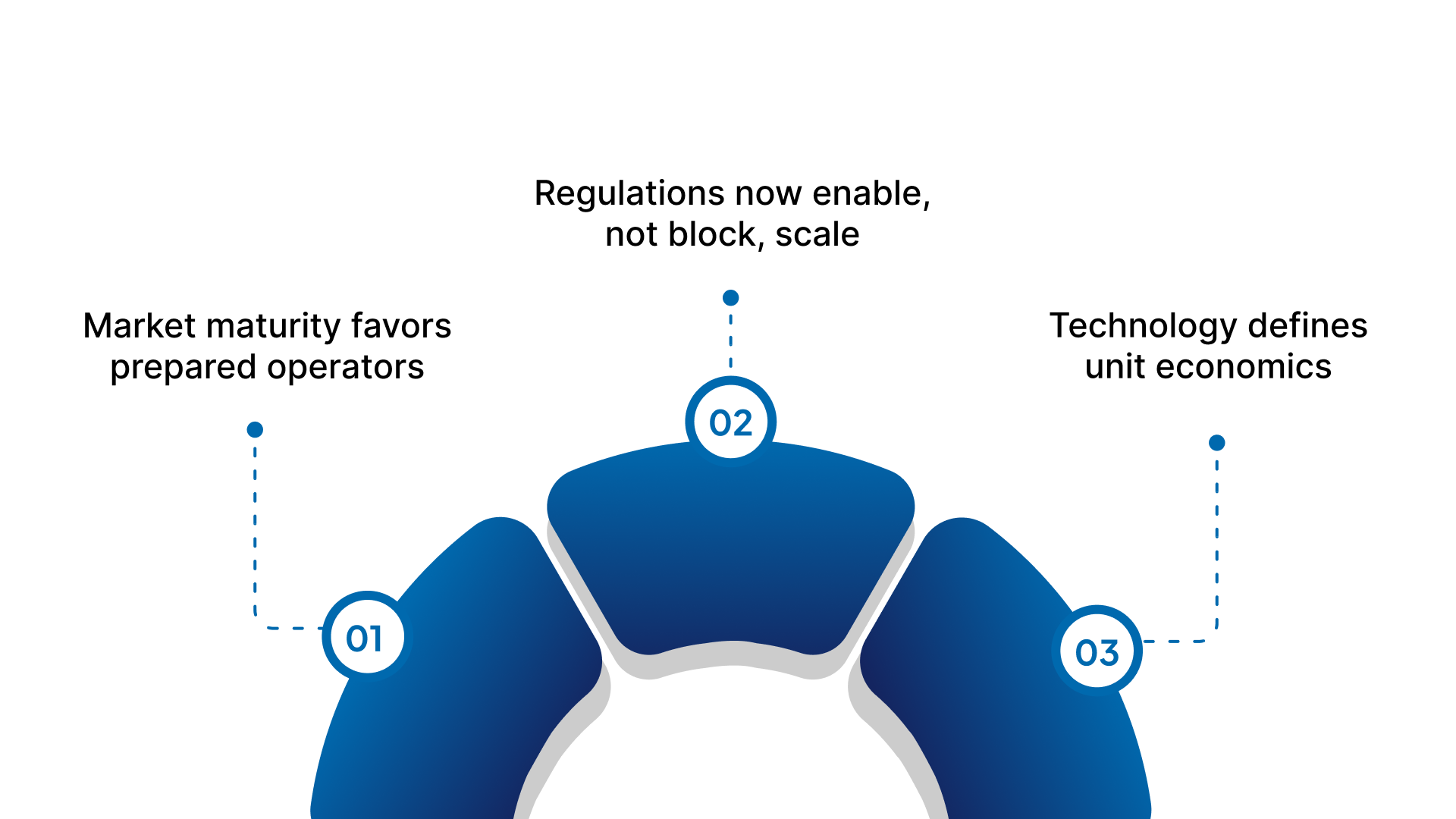
Market maturity favors prepared operators.
The global e-scooter-sharing market is growing rapidly, driven by real usage rather than speculation. North America leads adoption, accounting for over 40% of global market share. This growth is powered by sustained infrastructure investment and repeat user behavior.
Regulations now enable, not block, scale.
Cities have moved beyond pilot programs to long-term micromobility frameworks. Most U.S. programs now include formal equity and safety requirements, creating predictable operating conditions. While compliance standards have increased, they reduce uncertainty and reward operators with robust systems.
Technology defines unit economics.
Advances in telematics and AI have made sophisticated fleet management accessible at scale. Operators using dynamic pricing, real-time tracking, and automated rebalancing consistently outperform those relying on basic tools. With average utilization at 3.4 rides per scooter per day and peak demand surging in significant cities, data-driven operations are no longer optional.
By 2026, the window for launching on lightweight platforms will close. The operators that win will be those who treat data, automation, and system design as their core competitive advantage.
Also Read: Scooter Sharing Market Trends and Growth Forecast
Scooter Sharing System Design: The Five-Layer Framework
Modern scooter-sharing systems require five interconnected architectural layers, each addressing specific operational requirements. This framework ensures your system handles current operations while supporting future scaling. Understanding how these layers interact helps prevent the fragmentation that cripples most early-stage operators.
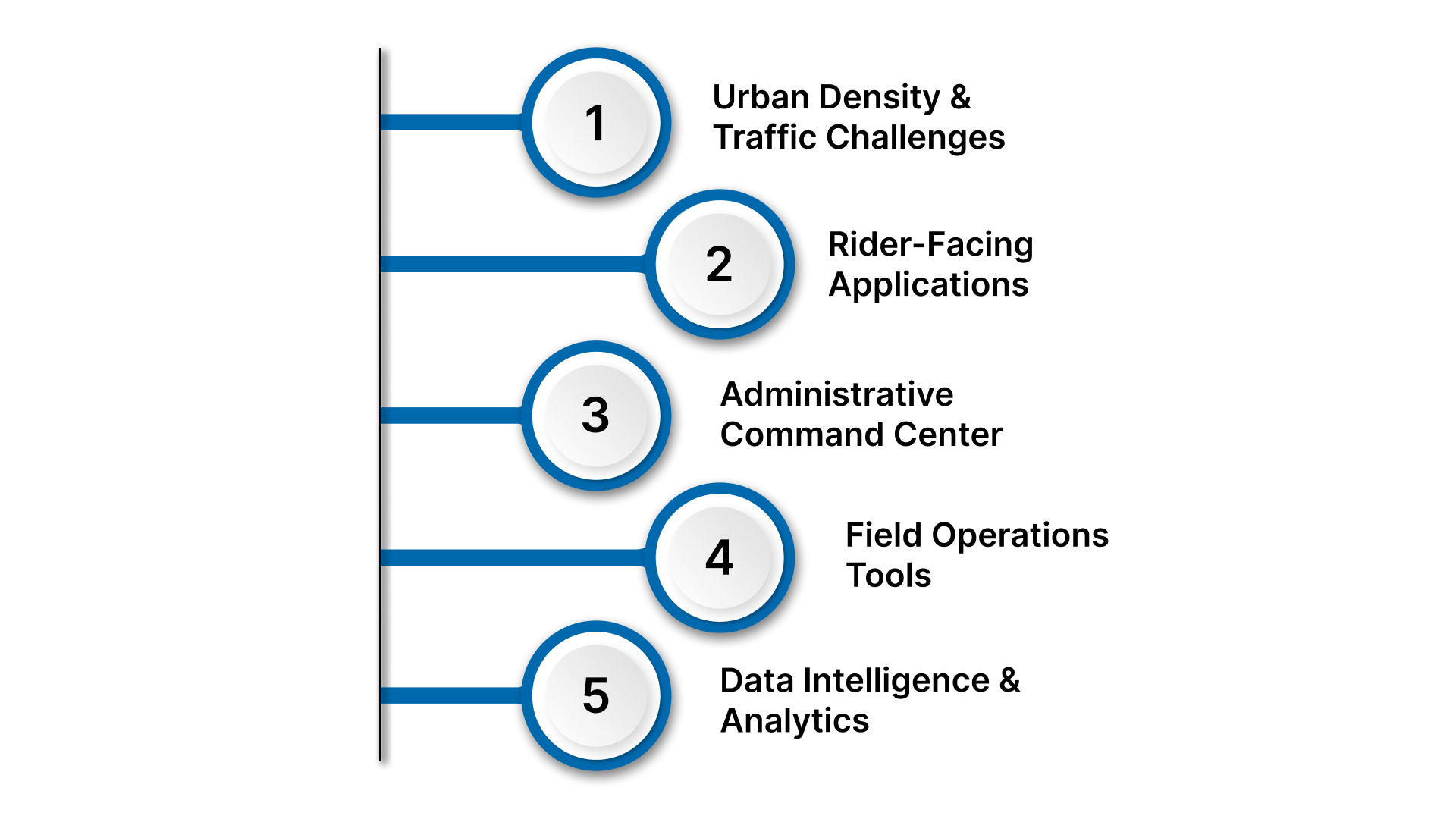
Layer 1: Vehicle Hardware & IoT Infrastructure
Each scooter functions as a mobile data collection device. It requires GPS tracking with at least ±3-meter accuracy and 4G/LTE connectivity for real-time data transmission. The system must also support battery management with state-of-charge reporting, an IoT lock for mobile unlocking, and an accelerometer for theft detection.
Layer 2: Rider-Facing Applications
Native iOS and Android apps provide zero-friction access for riders. They offer real-time vehicle maps with battery levels, walk-to-vehicle navigation, and QR code unlocking. The apps support in-app payments, active ride tracking with live cost display, and post-ride history with automatic receipt generation. Most platforms fail by treating the rider app as a booking interface rather than as your primary customer service channel and data-collection tool.
Layer 3: Administrative Command Center
The admin dashboard turns operational data into actionable insights. It provides live vehicle monitoring with battery alerts, diagnostic-based maintenance scheduling, and heat map–driven rebalancing recommendations. The system also supports flexible pricing for time-based and subscription models, user management with behavior analytics, and geofence controls for regulatory compliance with automated reporting.
Layer 4: Field Operations Tools
Field teams manage on-ground operations through operator apps designed for efficiency. These apps support task assignment with optimized routing, battery swap workflows with scan-to-confirm, and damage reporting with photo documentation. They also enable zone-to-zone rebalancing, preventive maintenance checklists, and quality checks before vehicles are returned to service. Operator efficiency often determines whether an operation is profitable or unprofitable.
Layer 5: Data Intelligence & Analytics
This layer turns raw operational data into a competitive advantage. It delivers performance analytics that track fleet utilization and revenue per vehicle, along with predictive insights for demand forecasting and maintenance planning. It also supports customer lifecycle analysis by measuring acquisition cost and lifetime value, and enables data-backed market expansion modeling.
Critical System Design Decisions
Three architectural choices made before launch determine your operational flexibility and scaling potential. These decisions prove difficult and expensive to reverse once operations begin, making upfront analysis essential. Each choice involves tradeoffs between convenience, cost, regulatory compliance, and technical complexity.
Decision 1: Station-Based vs. Dockless vs. Hybrid
Station-Based Systems offer predictable inventory management and easier permitting, but come with higher infrastructure costs and reduced rider convenience. Best suited for university campuses, corporate parks, and resort properties with defined boundaries.
Dockless Systems maximize rider convenience and lower infrastructure investment but face parking compliance challenges and higher rebalancing costs. The free-floating segment accounted for 95% of revenue share in 2023, demonstrating market preference despite operational complexity.
Hybrid Systems combine convenience with controlled parking zones, offering flexibility for different neighborhoods. More complex software requirements, but ideal for mid-sized cities, balancing growth and order. Your system must support your chosen model from day one; retrofitting capabilities requires rebuilding core functionality.
Decision 2: Progressive Web App vs. Native Mobile Applications
Progressive Web Apps offer no app store approval delays and a single codebase, but suffer from reduced GPS tracking accuracy, limited push notifications, no offline functionality, and inconsistent QR scanning performance. For scooter sharing system design specifically, GPS accuracy and real-time location requirements make native applications the industry standard.
Launch with native iOS and Android applications, reserving the PWA as a secondary access option for occasional users.
Decision 3: Build Custom vs. White-Label Platform
Custom development requires 6-12 months minimum, with initial costs of $150,000-$500,000+, and dedicated engineering teams, offering complete control but introducing technical debt and security vulnerabilities. White-label platforms enable 2-week launches with monthly SaaS fees, handling updates and security while limiting customization flexibility.
Most startups underestimate custom development timelines by 200-300%. Unless funded specifically to build technology IP, white-label platforms accelerate market validation while your core competency remains operating the mobility service.
Explore EazyRide’s complete infrastructure designed for operators who want to focus on growth, not debugging software.
Geofencing & Zone Management: Regulatory Compliance Through Design
Geofencing capabilities determine whether you maintain operating permits or face regulatory shutdowns. Modern compliance requires real-time zone creation, automated enforcement, and comprehensive reporting that integrates directly into your operational workflow. This isn’t a feature you add later; it’s foundational architecture that protects your license to operate.
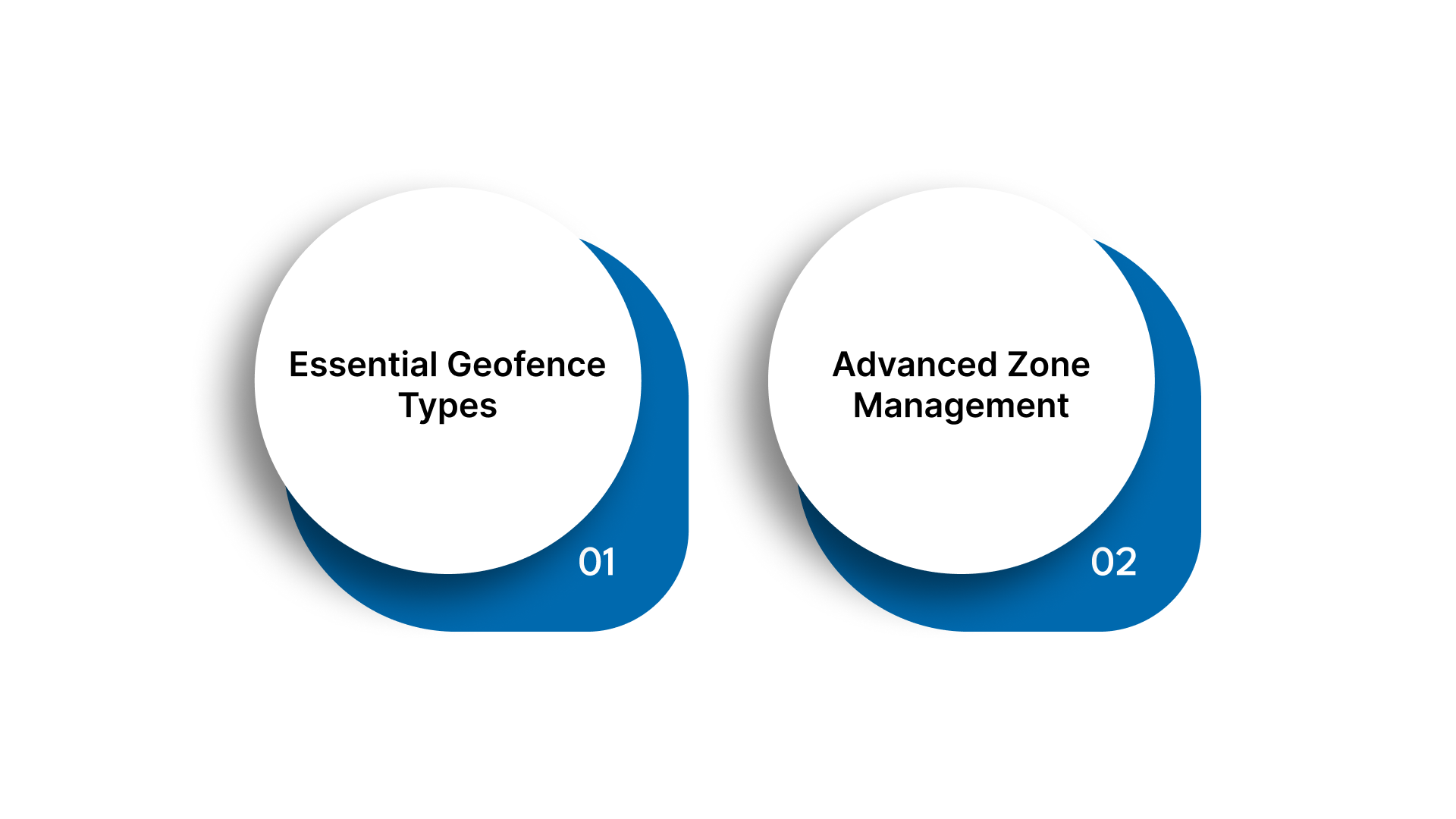
Essential Geofence Types
Speed Restriction Zones reduce speeds to 5-10 mph in pedestrian-heavy areas through automated IoT controller commands. Many cities impose 15-20 mph limits with sidewalk riding bans, and New York City implemented a 15 mph speed limit for all electric bikes and e-scooters effective October 2025.
- No-Parking Zones prevent blocking of ADA accessibility zones, private property boundaries, high-traffic intersections, and historical preservation areas.
- No-Ride Zones restrict highways, sensitive areas near schools and government buildings, and temporary event zones.
- Preferred Parking Zones incentivize proper parking at designated corrals, transit hubs, and connection points through ride credits.
Advanced Zone Management
Your system needs real-time geofence creation and modification—municipal partners often require overnight activation of event zones, weather emergencies trigger city-wide shutdowns, and construction creates temporary restrictions.
Seventy percent of U.S. micromobility programs include equity requirements that demand automated reporting on vehicle distribution and deployment in underserved neighborhoods. Your system must automatically generate compliance reports, not through manual data manipulation.
Also Read: Understanding Scooter Sharing Systems in Major Cities
Multi-Vehicle Fleet Management: Beyond Scooters
Multi-modal operations represent the future of micromobility, requiring a system architecture that supports diverse vehicle types from day one. Most operators start with scooters and add e-bikes within 6-12 months as demand patterns emerge. If your initial system doesn’t support multi-modal at the architecture level, you’ll face expensive migrations that disrupt operations.
Vehicle Type Considerations
- E-Scooters include stand-up electric (Class 2) and seated electric (moped-style) with speed governors and age restrictions.
- E-Bikes encompass pedal-assist (Class 1) and throttle-controlled (Class 2) with different battery management requirements.
- E-Mopeds operate at 25-30 mph and require registration, insurance, and helmet compliance enforcement in most jurisdictions.
System Requirements for Multi-Modal Operations
Your platform needs unified inventory management across all vehicle types with type-specific maintenance schedules, differentiated pricing structures per category, rider app filtering by type and availability, separate ride history and analytics, vehicle-specific geofencing rules (e-bikes on bike paths, mopeds on roadways only), license verification workflows, and age gating with parental controls.
Also Read: Electric Sharing Scooter Software Development Cost in 2026
How EazyRide Solves Scooter-Sharing System Design Challenges
Most scooter-sharing challenges don’t come from demand, they come from systems that weren’t built for daily operations. EazyRide removes this friction with a purpose-built white-label platform that launches in weeks, not months.
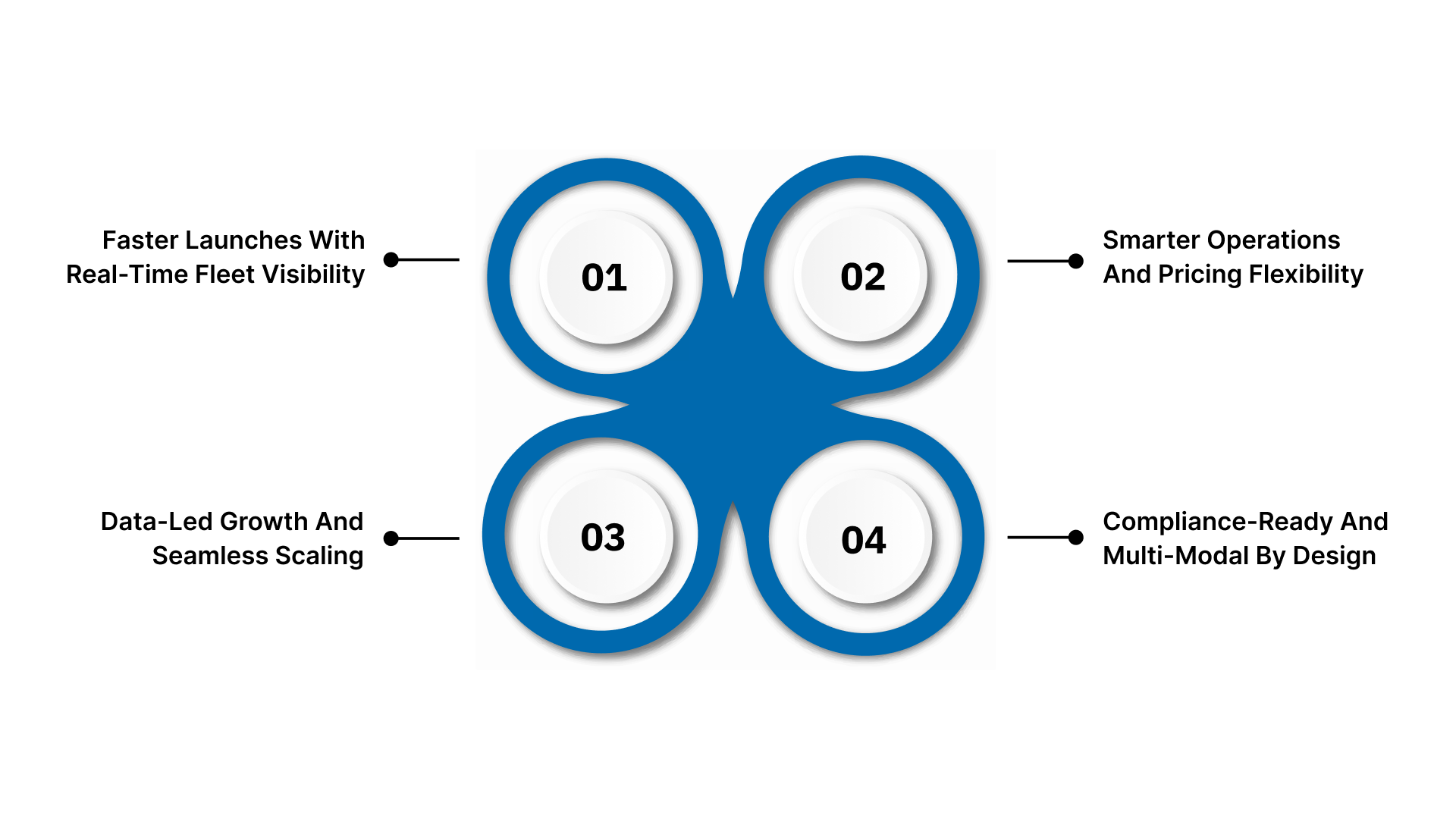
Faster launches with real-time fleet visibility
Custom builds can take 6–12 months. EazyRide delivers fully branded rider apps, an admin dashboard, and operator tools in about two weeks.
Operators gain:
- Live vehicle tracking with battery and maintenance status
- Utilization heat maps for demand visibility
- No-code geofencing to manage zones quickly
Smarter operations and pricing flexibility
Manual rebalancing and fragmented tools slow teams down. EazyRide centralizes field operations and pricing in one system.
Key features include:
- AI-driven rebalancing and optimized task routing
- QR-based maintenance and battery swap logging
- Flexible pricing for time, distance, subscriptions, and promotions
- Zone-based pricing managed directly from the dashboard.
Data-led growth and seamless scaling
Expansion decisions are powered by built-in analytics, not spreadsheets.
The platform tracks:
- Utilization, revenue per vehicle, and operating efficiency
- High-demand zones through visual heat maps
Its cloud-native architecture scales from small pilots to city-wide fleets without performance issues.
Compliance-ready and multi-modal by design
EazyRide adapts to city-specific rules with configurable geofencing and automated reports. Operators can also add new vehicle types, such as e-bikes or mopeds, without rebuilding systems, enabling faster multi-modal expansion.
Conclusion
Scooter sharing system design determines whether operators build profitable businesses or struggle against self-imposed technical limitations. The infrastructure decisions you make before launching your first vehicle create either operational leverage or operational friction that compounds daily.
The operators succeeding in 2025 understand that system architecture precedes strategy; you need real-time fleet visibility, automated compliance tools, data-driven rebalancing, and flexible pricing engines before you can compete effectively. Whether managing 50 scooters on a college campus or planning a multi-city deployment, your system determines your ceiling.
Platforms like EazyRide eliminate the 6-12 month development cycle and $150,000-$500,000+ capital requirement, enabling launches in weeks with complete white-label infrastructure that scales from pilot to enterprise. The micromobility market is growing at 18.56% annually and is projected to reach $7.08 billion by 2033, but only operators with mature system architectures capture that opportunity.
Schedule a demo to see how EazyRide’s white-label platform handles everything from fleet management to regulatory compliance, letting you focus on growth instead of fighting your technology.
Frequently Asked Questions
1: How long does it take to launch a scooter-sharing system design?
Custom development requires 6-12 months from requirements through production deployment. White-label platforms like EazyRide enable launches in approximately 2 weeks, including branding, vehicle registration, geofence setup, and training. The timeline difference represents reaching market validation before burning operational runway.
2: What’s the minimum fleet size needed to operate profitably?
Most operators achieve unit economics profitability with 75-150 vehicles in focused geographic areas. With fewer than 50 vehicles, density suffers and service reliability drops. The key metric is rides per vehicle per day: at 3.4+ rides, generating $15-$30 in revenue per vehicle daily, you cover operational costs, including rebalancing, maintenance, and platform fees.
3: Can one platform support both scooters and e-bikes?
Modern white-label platforms support multi-modal operations natively, managing different vehicle types through the same admin dashboard with type-specific pricing, maintenance schedules, and regulatory controls. Verify that your platform supports this architecture rather than bolting it on later, as retrofitting multimodal capabilities requires significant changes.
4: How do I handle regulatory compliance across different cities?
Each municipality has unique speed limits, parking rules, and reporting requirements. Your system needs flexible geofencing tools to create city-specific zones without affecting other markets. Automated compliance reporting generates the required documentation for vehicle distribution and equity metrics, which are essential for maintaining operating permits.
5: What happens if my white-label platform provider goes out of business?
Evaluate platforms based on financial stability, customer portfolio size, data export capabilities, source code escrow agreements for enterprise customers, and migration tools. Established providers serving hundreds of operators across multiple countries represent lower risk than early-stage startups with limited customer bases.


