
 AllAnalytics and research

 22 May, 2026
 How Long Do Shared Scooters Last in Fleet Service?
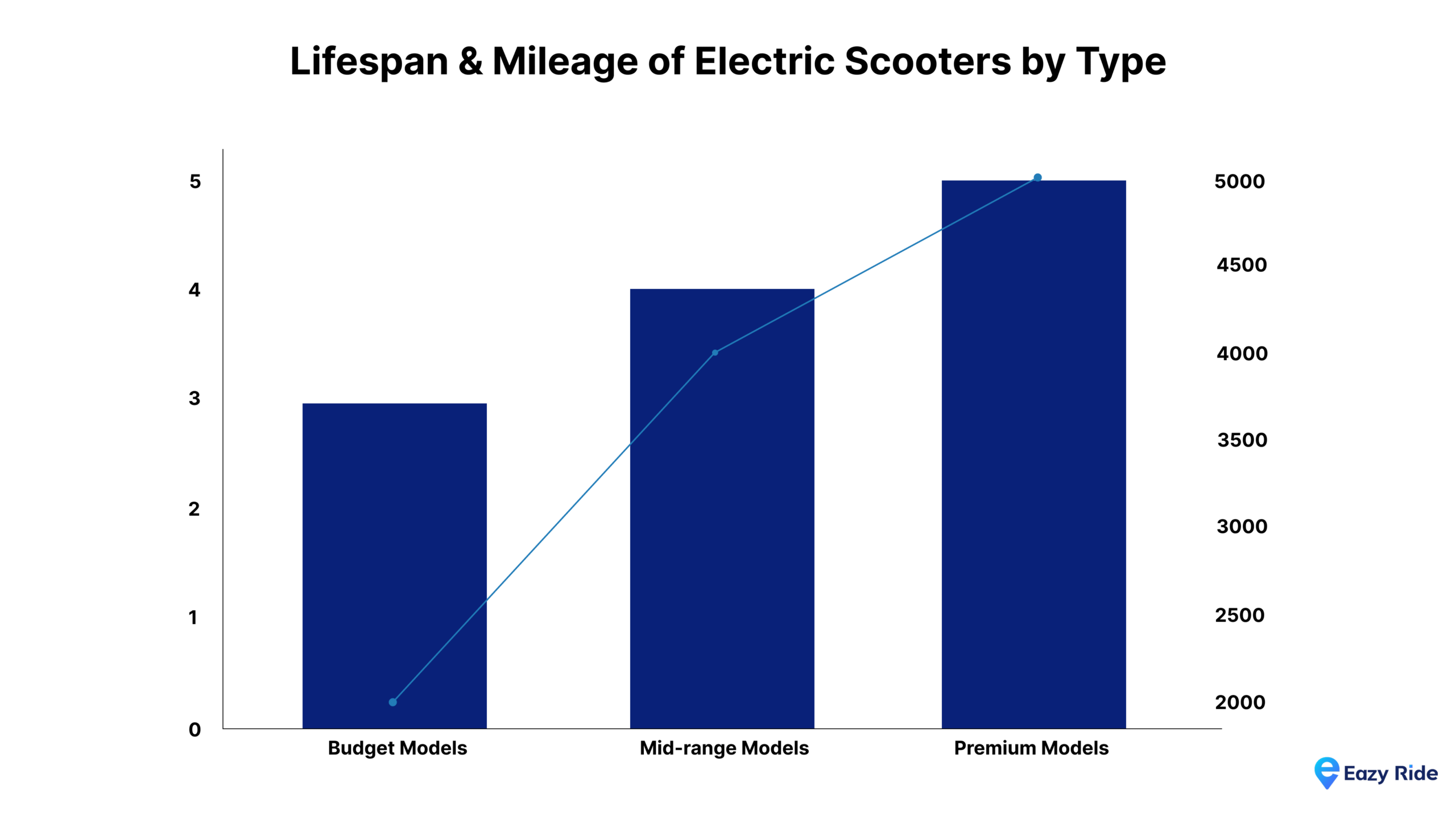
Consumer-scooter review sites quote big mileage numbers: 3,000 to 5,000 miles, sometimes more. Those numbers come from owner-operated scooters that get washed, garaged, and ridden by one careful adult. They don’t apply to your fleet. A shared scooter ridden by 4 different riders a day, parked outside in all weather, and impounded twice a quarter lives a very different life.
This guide covers what shared scooter lifespan actually looks like in fleet service: how many miles fleet units realistically deliver, what kills them first, when to refurbish versus retire, and the per-vehicle math that decides each call. Operator numbers, not consumer marketing.
Key Takeaways
- Shared scooters typically last 18 to 30 months in fleet service.
- Lithium packs lose ~20% capacity after 500 to 1,000 cycles.
- Theft and vandalism usually retire vehicles before mileage does.
- EazyRide flags underperforming vehicles for refurb or retire.
- Retire when cost-per-ride exceeds revenue-per-ride for 60+ days.
The real numbers: how long shared scooters actually last
Consumer scooters and shared-fleet scooters live different lives. The mileage figures you’ll see on a review blog don’t translate. Here’s what fleet operators we talk to actually see in service:
- Active service window: 18 to 30 months from deployment to retirement for most shared e-scooter models. Premium chassis hit the high end of that band, budget chassis the low end.
- Lifetime miles in service: Roughly 3,000 to 6,000 miles before retirement on most shared models. Real-world per-vehicle ride count varies wildly with city, weather, and rider behavior.
- Rides per vehicle per day: NACTO 2025 data shows shared e-scooters averaging around 2.9 trips per vehicle per day across member cities. Above 4 per day means you’re at the upper end of usage.
- Battery cycles before noticeable degradation: Standard lithium-ion packs drop about 20% of original capacity after 500 to 1,000 full charge cycles, per industry-standard lithium chemistry. LFP chemistries hit roughly 2x that.
The honest range: a well-maintained shared e-scooter in a temperate climate lasts about 30 months. A neglected one in a heavy-weather city retires at 14 to 18 months. Operators rarely see the 5,000-mile consumer-marketing numbers.
What kills shared scooters first (and why mileage rarely tops the list)
Most shared scooters never reach their theoretical mileage limit. Other failures retire them first. The top five killers, ranked by how often they end an individual vehicle’s service:
- Theft and unrecoverable impound: Stolen vehicles, repeatedly impounded vehicles, and units lost to vandalism account for a meaningful share of fleet attrition. Each loss is roughly 60 to 90 kg of embodied carbon and the entire acquisition cost written off.
- Battery degradation: After 500 to 1,000 charge cycles, capacity drops below half the original range. Riders feel it as shorter trips, slower acceleration, more trip abandonment. The pack is replaceable on some chemistries and bonded into the frame on others. Acquisition decisions decide which.
- Frame and mechanical wear: Cracked decks from curb impact, loose handlebar stems, brake wear, water-damaged controllers. Frame damage is the only failure where refurbishment usually costs more than replacement.
- Compliance gaps that force early retirement: Cities update rules. New speed caps, mandatory geofencing zones, mandatory turn signals, or helmet-detection requirements can retire otherwise-fine vehicles if your platform can’t push the new rules without firmware updates.
- IoT firmware end-of-life: When the modem vendor drops support for an older IoT module, you lose security patches, telemetry, and platform integration. The hardware still moves but stops being part of a modern operation.
Mileage shows up nowhere on this list. Operators who retire vehicles on a calendar are usually leaving life on the table. Operators who retire on cost-per-ride and reliability are getting the math right.
Scoping which vehicles in your fleet are due for retire versus refurb? A 30-minute fleet review will walk through the math on your specific units. Book a free EazyRide demo.
How to extend shared scooter service life economically
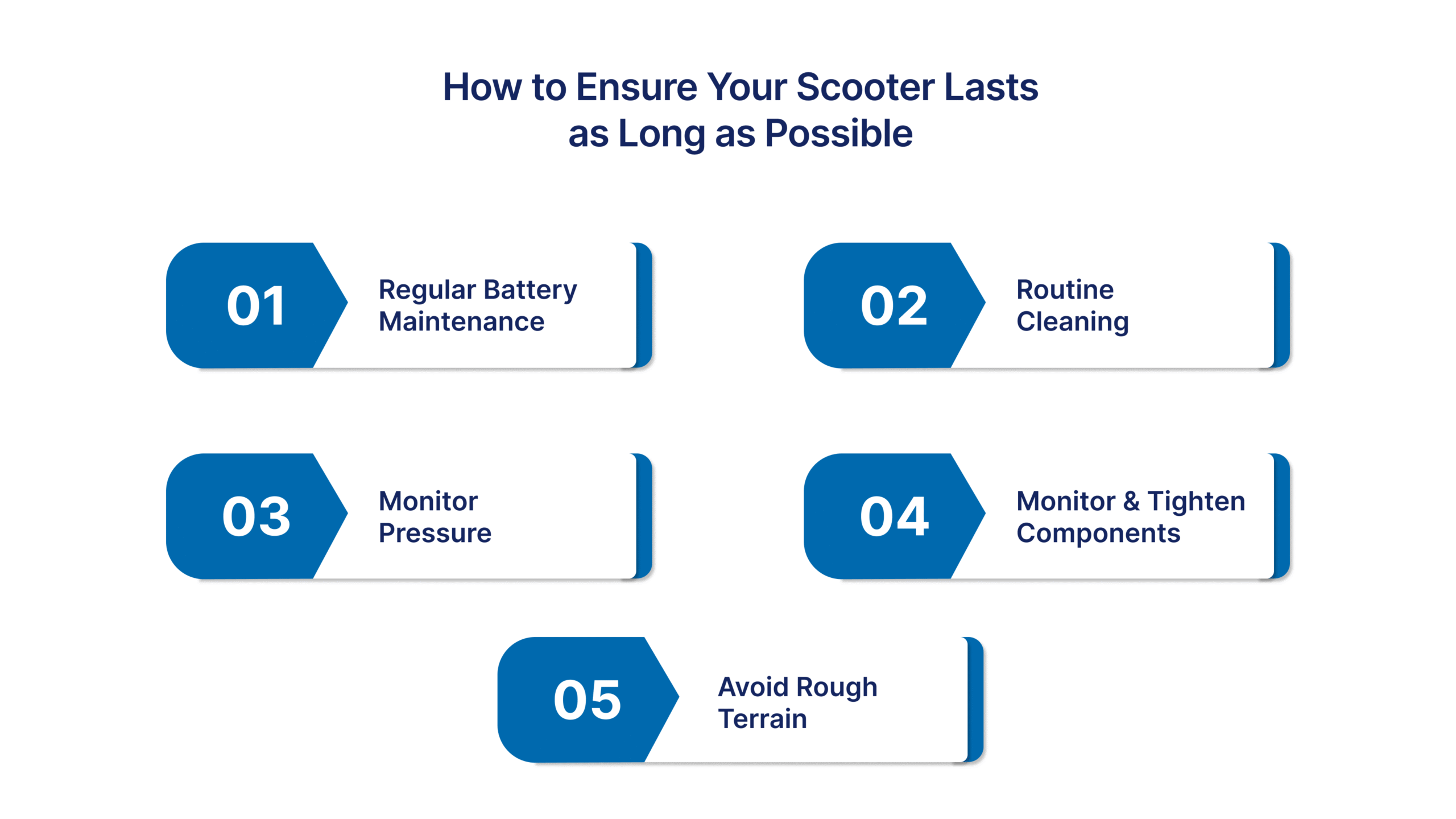
Operators who consistently push past 24 months in fleet service share a few habits. None of them are exotic. All of them require the platform to surface the right per-vehicle data.
- Spec for refurbishment at acquisition: Modular handlebars, swappable IoT modules, and replaceable battery packs cost 5 to 15 percent more upfront and roughly double service life. Frame-bonded components are the wrong economic bet for shared service.
- Schedule preventive maintenance per vehicle: Brake checks, tire inspection, controller seal checks every 60 days for actively ridden units. Tracked per-vehicle, not by fleet average.
- Manage charge cycles, not just battery state: Avoid full discharges. Top up partially when possible. Standard lithium-ion chemistry favors shallow cycles, which can meaningfully extend pack lifespan in fleet service.
- Rotate parking locations: Vehicles parked in the same problem zones get impounded, vandalized, and damaged more often. Rebalancing isn’t just about utilization. It’s also about spreading risk across your fleet.
- Track per-vehicle KPIs religiously: Cost-per-ride, daily utilization, repair tickets per quarter, battery range vs original spec. If your platform only shows fleet-level summaries, you can’t run any of these levers at the unit level.
Most of these levers depend on per-vehicle data. Our guide to replacing fleet vehicles walks through the dashboards and decision math operators use.
When to retire versus refurbish: the cost-per-ride math
The honest signal isn’t months in service or miles on the odometer. It’s whether the unit still earns more than it costs. Run this per vehicle, monthly.
- Healthy: Revenue-per-ride exceeds cost-per-ride by 30% or more. Keep operating, no action needed.
- Watchlist: Margin under 15% for two consecutive months. Flag for refurbishment review or relocation to a better-utilized zone.
- Retire: Cost-per-ride at or above revenue-per-ride for 60+ days. Pull the unit, refurbish the recoverable components, scrap the rest.
Worked example: a $400 scooter generating $7 net per day pays back in roughly 57 operating days. Anything past 12 months of useful service is margin. A unit that drops to $2 net per day while a replacement would generate $7 has a five-dollar-per-day improvement available, which pays back the new $400 vehicle in about 80 days. That’s the math that justifies pulling a working unit off the street.
How EazyRide handles per-vehicle replacement decisions
We build the white-label management platform shared mobility operators use to run e-scooter, e-bike, and moped fleets. We don’t manufacture the hardware. We surface the data that decides when each vehicle stops earning.
- Per-vehicle KPI dashboard: Cost-per-ride, revenue-per-ride, daily utilization, repair ticket history, and battery health at the individual unit level. Not just fleet-level averages.
- Configurable retirement thresholds: Define your own cost-per-ride cutoff. The dashboard automatically flags vehicles crossing the line.
- Real-time geofencing: Push compliance updates to every vehicle instantly. Operators using EazyRide’s geofencing report up to 40% fewer parking violations versus manual enforcement, which directly reduces impound-driven retirements.
- 10+ IoT hardware brands: Supported out of the box, so refurbishment cycles aren’t hostage to one supplier’s roadmap.
- Multi-vehicle in one account: Mix e-scooters, e-bikes, and mopeds across generations in a single admin dashboard.
See the EazyRide features page for the full capability list, or our platform comparison guide for how this lines up against other shared mobility vendors.
FAQs
How many miles does a shared scooter last in fleet service?
Roughly 3,000 to 6,000 miles before retirement on most shared models, though theft, battery degradation, or compliance gaps usually retire individual units before mileage limits do.
Can shared scooter batteries be replaced?
On modular chassis yes, on frame-bonded chassis no. Acquisition decisions decide this. Modular battery packs cost 5 to 15 percent more upfront and roughly double the unit’s useful service life.
What kills shared scooters first?
Theft, vandalism, and unrecoverable impound, followed by battery degradation, frame damage, compliance changes, and IoT firmware end-of-life. Mileage limits are rarely the cause.
When should I retire a scooter from my fleet?
When cost-per-ride exceeds revenue-per-ride for 60+ consecutive days, when battery range drops below half the original spec, or when repair tickets exceed three per month. Calendar age is secondary.
How does EazyRide track per-vehicle lifespan?
EazyRide surfaces per-vehicle cost-per-ride, revenue, battery health, and repair tickets on a configurable dashboard. Operators set retirement thresholds and the platform flags vehicles automatically.
A final thought
Consumer scooter mileage numbers don’t apply to fleet service. The real number is cost-per-ride, tracked per vehicle, decided monthly. Operators who run that math beat the operators who refresh on calendar.
Scoping a fleet refresh or trying to figure out which units to pull next quarter? Book a free EazyRide demo and we’ll walk through the per-vehicle math on your specific fleet.
Related reading


