
 AllSharing business

 15 July, 2025
 The Future of Mobility: How IoT is Transforming Vehicles
Feeling overwhelmed by the growing complexity of fleet management? Whether you’re running a city-based business, managing a vehicle fleet, or serving tourists, staying on top of operations without real-time insights can be a real challenge.
As expectations around efficiency, sustainability, and customer experience continue to rise, relying on outdated systems often leads to delays, higher costs, and missed opportunities.
That’s where the Internet of Things (IoT) steps in to change the game. By connecting your vehicles to the cloud, IoT enables real-time tracking, predictive maintenance, and smarter fleet decisions. It gives you deeper insights into how your fleet is performing, helps you optimize routes, and enhances the overall user experience, all while keeping operational costs in check.
In today’s fast-moving mobility space, IoT is a must if you want to stay competitive and scale with confidence. As fleets grow and cities get smarter, the demand for real-time data, predictive maintenance, and connected systems is only rising.
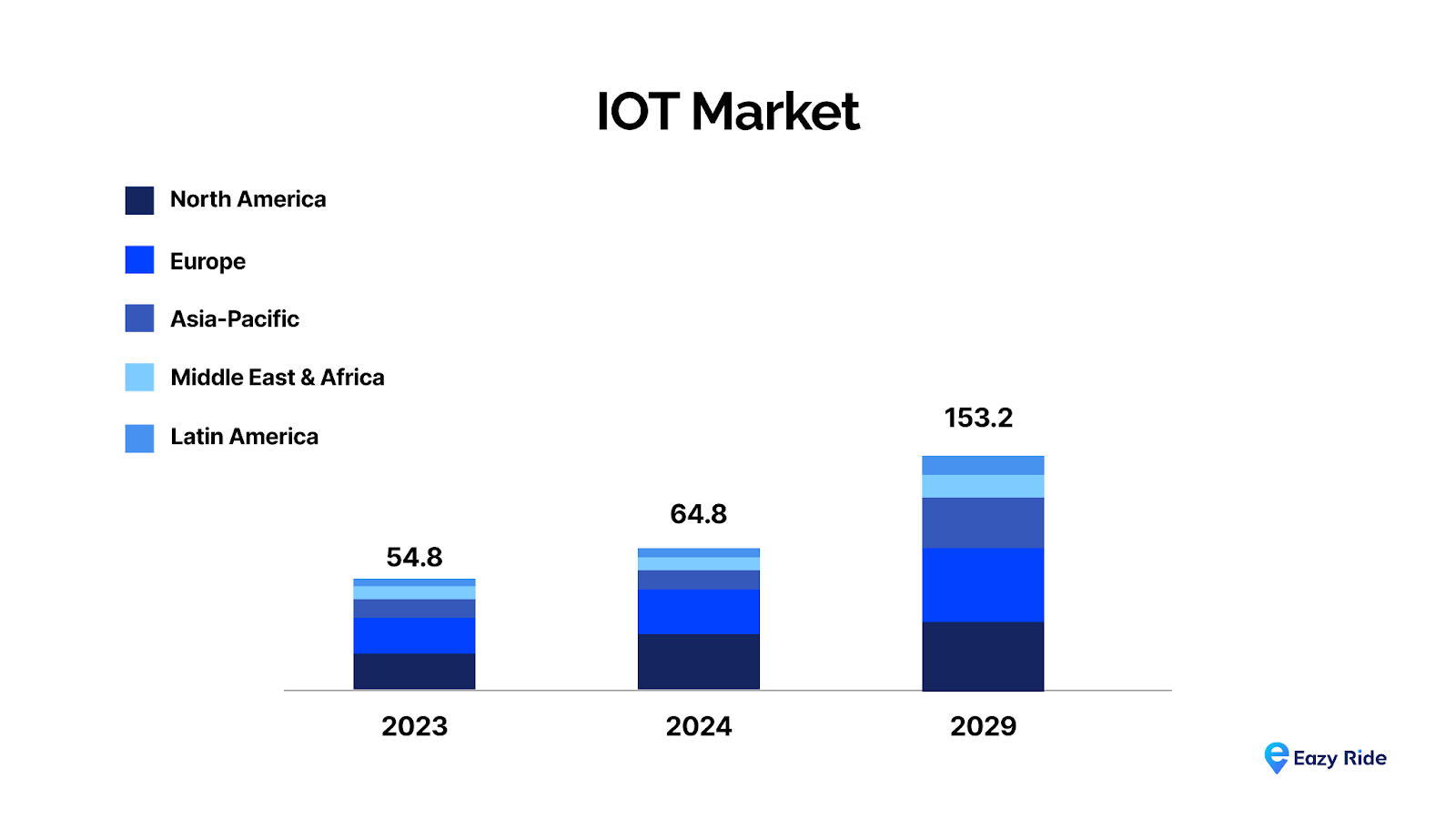
It’s no surprise that the global IoT market size is projected to reach USD 153.2 billion by 2029, reflecting how essential IoT has become to industries like shared mobility.
Let’s take a closer look at how IoT vehicle technology is transforming transportation and what that could mean for your business.
Key Takeaways:
- IoT makes fleets smarter, enabling real-time tracking, diagnostics, geofencing, and predictive maintenance.
- Operators cut costs, boost uptime, and enhance rider experience through data-driven decisions and automation.
- Sensors, GPS, and cloud connectivity give operators real-time insights into vehicle health, location, and usage.
- Riders get a smoother, app-driven experience, with features like live battery alerts and seamless trip histories.
What Is IoT in Micromobility?
For fleet operators and urban mobility entrepreneurs, getting a grip on IoT (Internet of Things) is essential to running smoother operations and keeping customers happy. In simple terms, IoT is the network of smart sensors and devices built into vehicles that send and receive real-time data via the cloud.
This connected setup gives operators full visibility and control over their fleet, helping them monitor performance, track usage, and make smarter decisions on the go.
Core Features That Make Vehicles ‘Smart’:
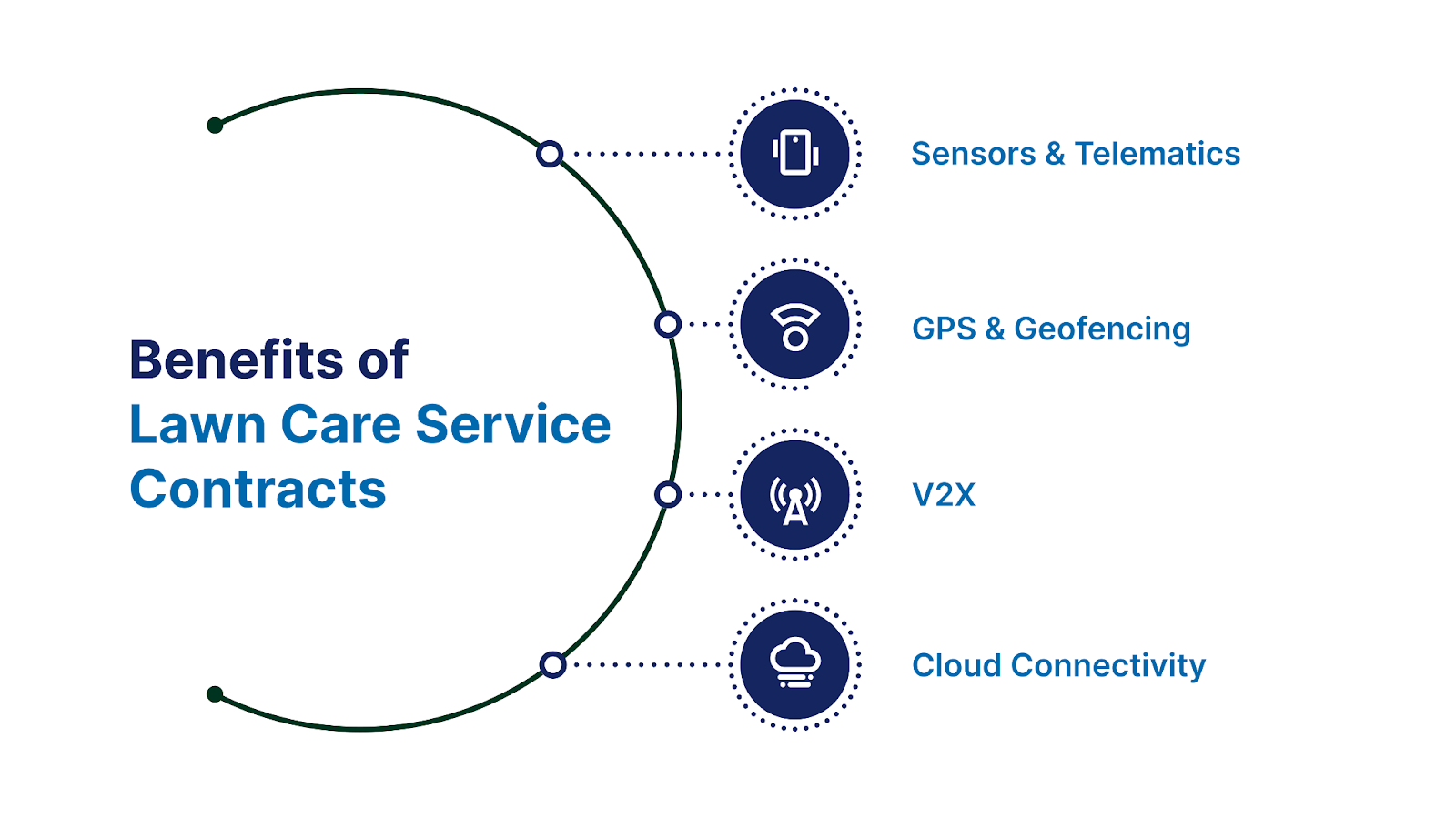
- Sensors & Telematics: Monitor speed, battery levels, temperature, and vehicle health, allowing for real-time diagnostics.
- GPS & Geofencing: Enables precise location tracking, defines usage zones, and enhances security with anti-theft features.
- V2X (Vehicle-to-Everything): Facilitates seamless communication between vehicles, infrastructure, and mobile apps to improve fleet coordination.
- Cloud Connectivity: Centralized data storage that powers real-time dashboards, providing operators with instant visibility into fleet performance and status.
Why It Matters for Mobility Operators
IoT vehicle technology isn’t just a tech upgrade; it’s what makes modern micromobility systems scalable and efficient. For mobility operators, it unfolds several key benefits:
- Lower Operating Costs: Automated diagnostics and real-time maintenance alerts help cut down on downtime and expensive repairs.
- Smarter Fleet Use: Live tracking and data analytics make it easier to get the most out of every vehicle, reducing idle time.
- Better Customer Experience: App-based controls and responsive systems give users a smoother, more convenient ride.
As urban mobility becomes part of daily life, operators who adopt IoT early will gain a real edge, boosting efficiency and earning customer trust. This shift to connected vehicles isn’t just a step forward; it’s a game-changer that’s reshaping how mobility services work and connect with people.
Let’s take a deeper look at how IoT is driving this transformation across the mobility space.
Also Read: How IoT Enhances Fleet Management Efficiency
How IoT Is Transforming the Mobility Ecosystem?
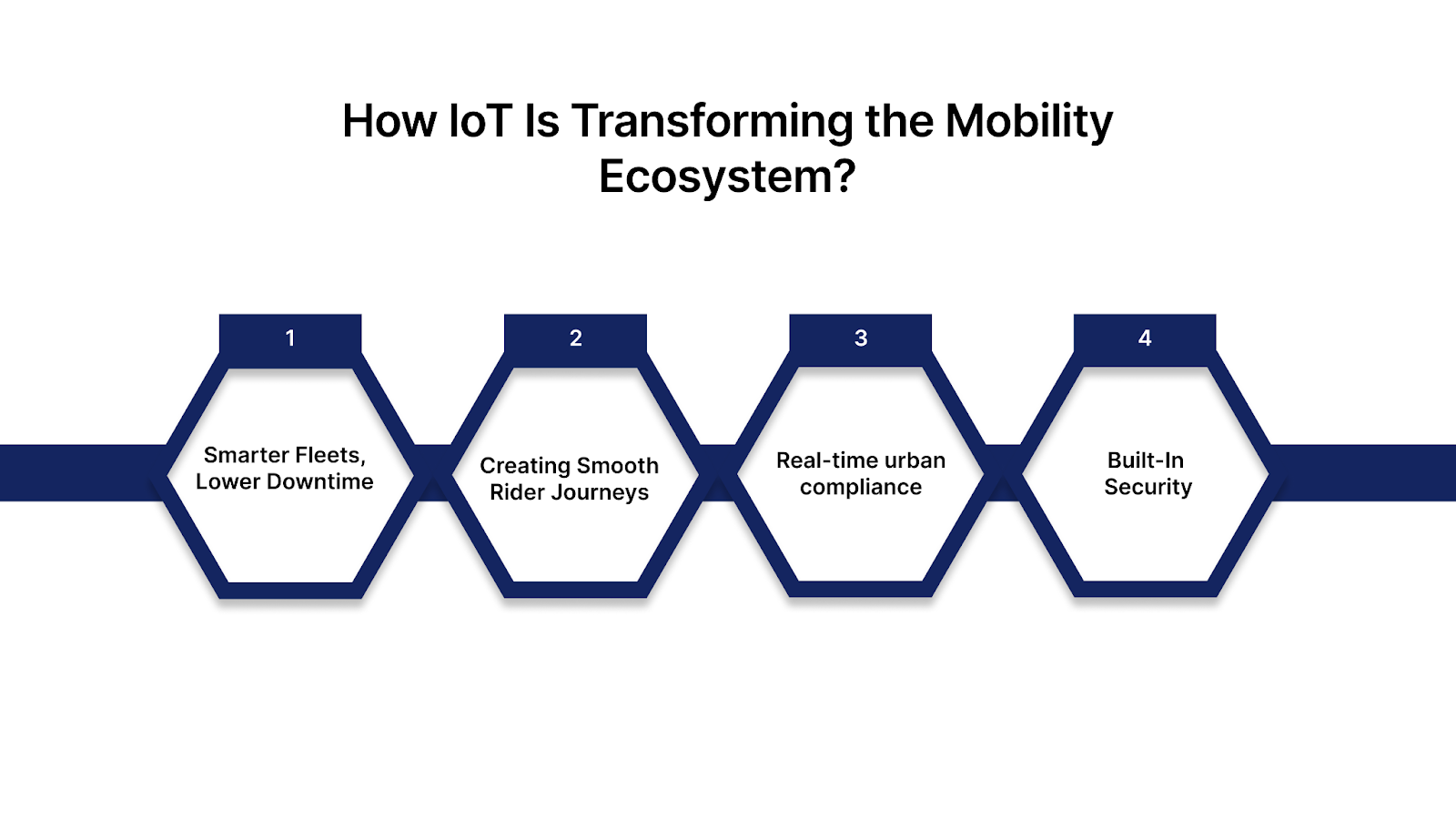
IoT is the backbone of smart, scalable mobility. For fleet operators, urban entrepreneurs, and institutional partners, IoT brings better efficiency, smoother operations, and a more rewarding user experience. Here’s how it’s reshaping the mobility space.
Smarter Fleets, Lower Downtime
Fleet operators know that unexpected breakdowns and emergency repairs are expensive. IoT changes that enable predictive maintenance. Built-in sensors track everything from battery health to wear and tear, helping you fix issues before they cause problems.
Take, for example, a scooter rental startup in Austin. By using IoT-driven data to identify underused vehicles, they relocated them to high-demand zones. This resulted in more daily rides, lower costs, and a more efficient team.
Predictive maintenance doesn’t just save money; it extends vehicle life and keeps fleets running smoothly.
Creating Smooth Rider Journeys
Today’s riders expect more than just a ride; they want a tech-savvy, personalized experience. IoT vehicle technology makes that possible. Think app-based alerts for low battery, ride history synced across devices, or even smart ride suggestions based on user behavior.
For example, Companies like Lime and Bird already use IoT to send live updates and automate diagnostics right inside their apps.
This leads to fewer service disruptions, better ratings, and higher rider loyalty for success in crowded urban markets.
Real-Time Compliance with Urban Regulations
City regulations are constantly evolving, and operators need to keep up. With IoT, staying compliant is easier and faster. Vehicles can automatically respond to geofencing rules, adjusting speed, enforcing parking zones, or shutting down in restricted areas.
This real-time compliance not only cuts down on penalties but also builds trust with local authorities. It can even speed up permit approvals and expansion plans. The ability to prove compliance instantly gives operators a real edge in highly regulated environments.
Built-In Security for Every Vehicle
Security is a major concern, both for your bottom line and your customers’ peace of mind. Thanks to IoT, every vehicle in your fleet can come with built-in protection. Features like motion sensors, GPS tracking, remote locking, and tamper alerts help deter theft and reduce risk.
In fact, several U.S. operators have seen noticeable drops in theft just by enabling IoT-based security features. It’s a win-win: you protect assets, lower insurance costs, and keep operations running without unexpected losses.
At its core, IoT is more than just connected hardware; it’s a strategic asset. Operators that embrace IoT gain measurable benefits like lower downtime, stronger performance, real-time compliance, and a better rider experience.
But to get the full value, both your hardware (scooters, bikes, vehicles) and your software (fleet management platforms) need to be IoT-ready. When those systems work in sync, you unlock a fleet that runs smarter, scales faster, and stays secure, no matter the city or use case.
That’s why choosing the right IoT-ready vehicles is just as critical as the platform powering them.
Choosing the Right IoT-Ready Vehicles for U.S. Fleets
As IoT becomes central to fleet operations, choosing vehicles built for connected use right from the start is key. Whether you’re scaling campus transport, tourist rentals, or last-mile delivery, working with manufacturers who specialize in IoT-enabled electric vehicles (EVs) ensures your fleet is ready to integrate and operate efficiently from day one.
Here are some trusted OEMs and platforms to consider for building an IoT-capable fleet:
- Okai: Popular across North America, Okai scooters come with built-in telematics and modular IoT dashboards, perfect for seamless fleet management and real-time control.
- Segway Commercial: Known for their durability and enterprise-level IoT features, Segway models are a solid choice for high-volume urban operations that demand minimal downtime.
- Acton: A go-to for data-driven operators, Acton offers customizable EV hardware with integrated IoT APIs, ideal if analytics and connectivity are a top priority.
- Yulu (expanding globally): Based in India but gaining global attention, Yulu’s vehicles offer real-time battery swapping and strong IoT integration, making them a smart option for dense urban environments.
Choosing IoT-enabled vehicles from the start helps you avoid costly upgrades later and keeps your fleet future-ready. Beyond connectivity, IoT delivers real-time insights, predictive maintenance, and better performance, making your operations smarter and more efficient.
Key Benefits for Mobility Businesses
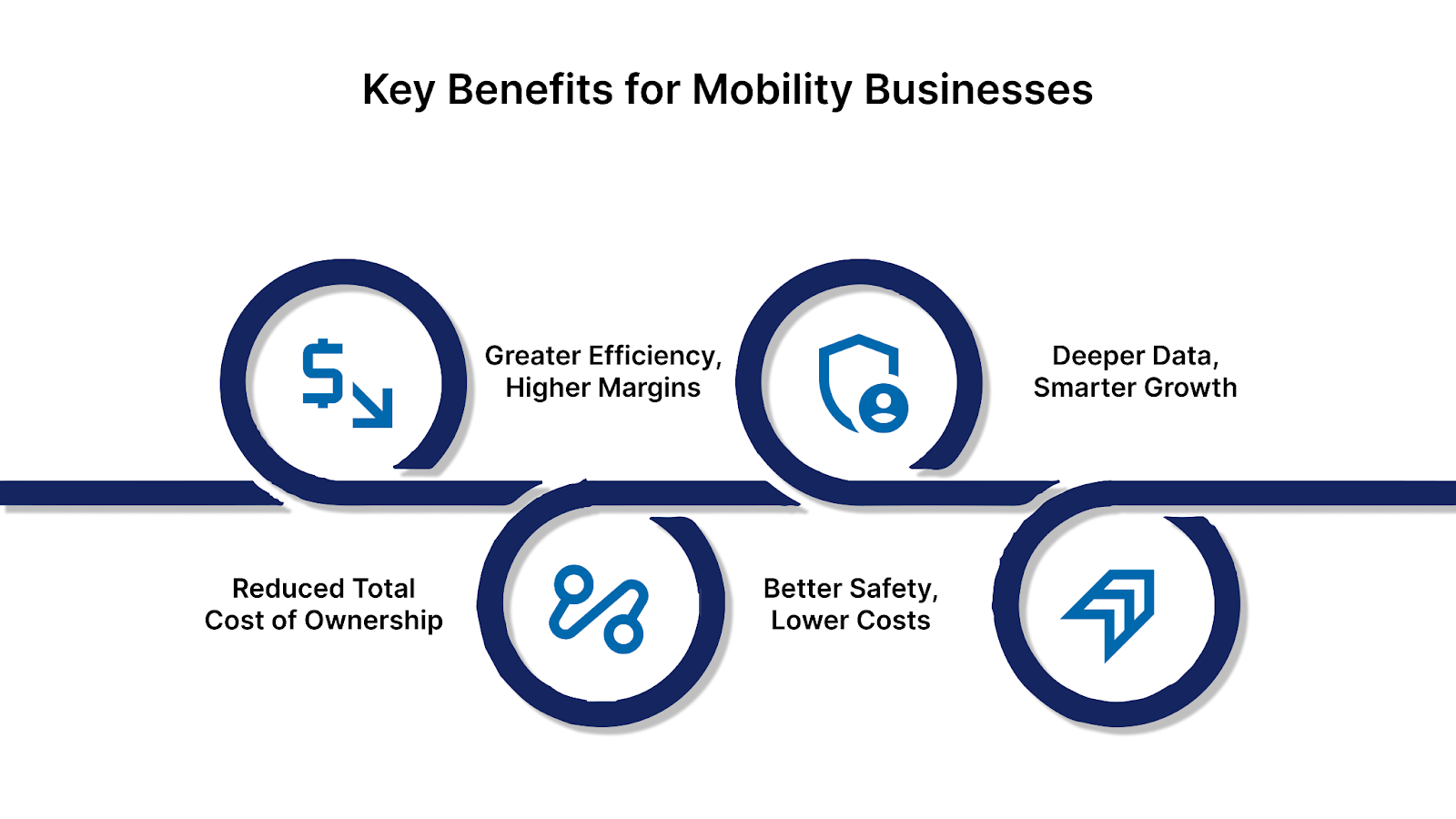
In today’s fast-moving mobility market, where efficiency and safety are everything, IoT-enabled solutions give operators a real edge. Here’s how they can directly improve your operations and bottom line:
Lower Total Cost of Ownership (TCO)
IoT helps you stay ahead of costly repairs and downtime by optimizing maintenance, fuel use, and vehicle utilization. With smarter systems in place, your fleet runs more efficiently and at a lower cost over its lifetime. That means more room to reinvest in growth.
Smoother Operations, Better Margins
With real-time tracking, predictive alerts, and automated route planning, IoT makes your fleet run smarter. It reduces delays, cuts down operating costs, and increases service capacity. The result? Higher profit margins and a fleet that works harder without extra effort.
Safer Rides, Fewer Surprises
IoT sensors constantly monitor vehicle health and driver behavior, helping you spot risks before they turn into accidents. Safer operations lead to fewer insurance claims and lower repair bills, plus they build trust with riders and regulators alike.
Smarter Decisions, Scalable Growth
From rider habits to maintenance trends, IoT gives you access to detailed data that helps you make better decisions. Use these insights to fine-tune your operations, launch in new areas, or expand faster with less guesswork.
Integrating IoT into your fleet isn’t just a tech upgrade; it’s a smarter way to grow, stay profitable, and future-proof your business. But as with any powerful shift, the benefits of IoT come with their own set of complexities.
Also Read: Understanding IoT Telematics for Smart Fleet Operations
Challenges Mobility Entrepreneurs Face & How to Tackle Them Smartly
While IoT vehicle technology has huge potential to transform fleet management, it’s not without its challenges. For mobility entrepreneurs, being aware of these hurdles early on can make all the difference in achieving smooth implementation and sustainable growth.
| Challenges | Solutions |
|---|---|
| Cybersecurity Risks | Use strong security measures like password protection, data encryption, and regular security checks to keep data safe and avoid cyberattacks. |
| Infrastructure Dependency | Ensure your system works even in areas with weak internet by using backup internet options and local data storage when needed. |
| Integration Costs | Plan for both setup and maintenance costs upfront. Choose providers with ready-made solutions to reduce extra costs and look for pay-as-you-go models. |
| Data Overload | Use data management tools to focus on important information. Store data in the cloud and use AI tools to understand large amounts of data. |
| Scalability Challenges | Choose systems that can grow with your business. Pick flexible solutions that can handle more vehicles as your fleet expands. |
| Regulatory Compliance | Keep track of local laws and ensure your vehicles comply with them. Use geo-fencing to control where vehicles can go and work closely with local authorities. |
These challenges are part of the journey, but they can be managed with the right planning. So, what does the future look like for IoT in mobility, and how can your business get ready for it?
The Road Ahead for IoT in Mobility
From connected scooters and shared e-bikes to autonomous delivery bots, IoT is reshaping how cities move. When paired with AI and predictive analytics, IoT helps mobility businesses forecast demand, rebalance fleets automatically, and manage maintenance with little to no manual intervention.
In fact, a McKinsey report shows that predictive maintenance powered by IoT can reduce vehicle downtime by up to 30%. Governments are playing a big role in accelerating this shift. Through smart mobility grants, public-private partnerships, and open data policies, they’re helping fast-track innovation and adoption, creating an effective environment for growth.
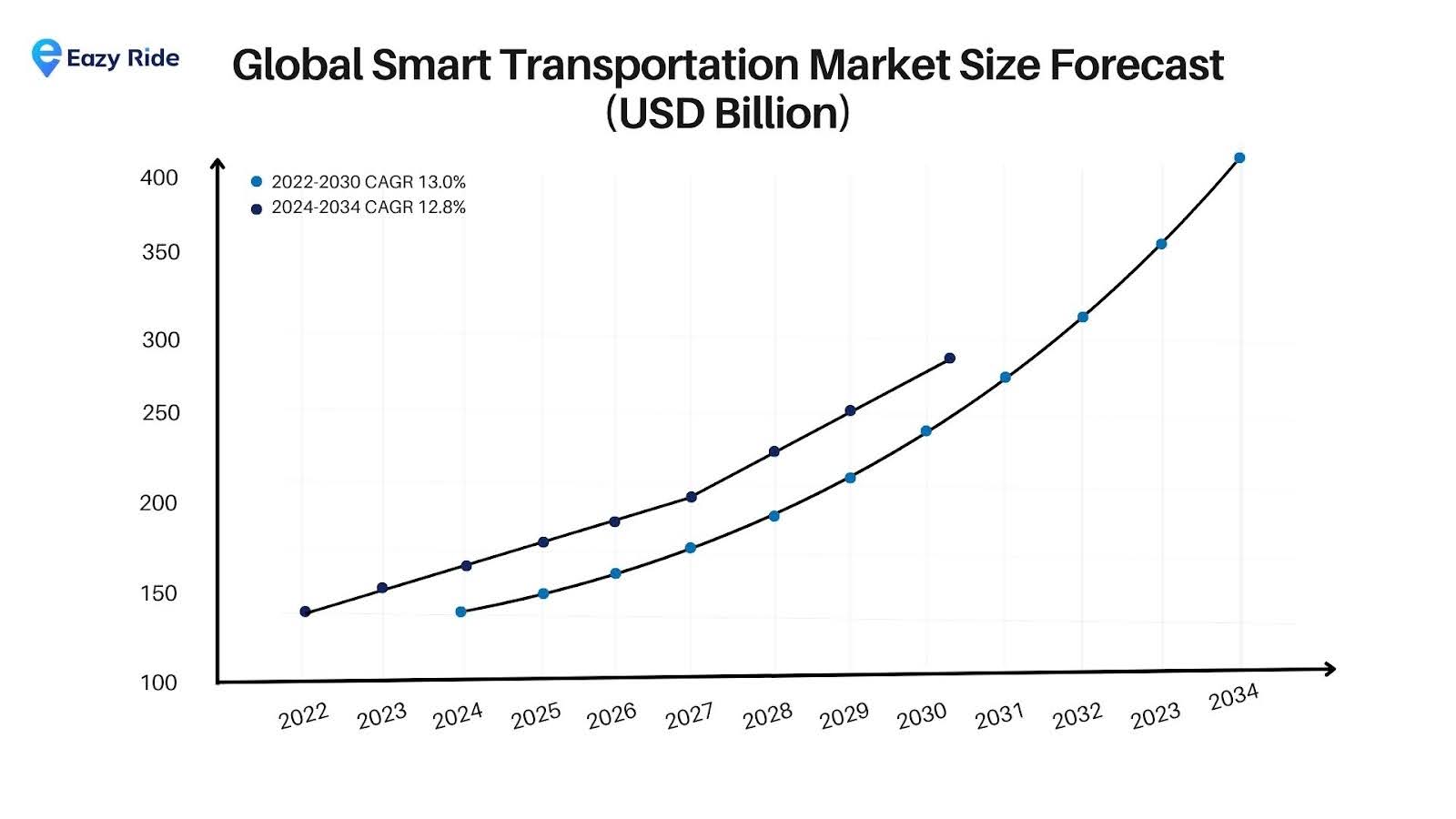
As the mobility space continues to evolve, let’s take a closer look at what’s driving change and what roadblocks lie ahead.
- Real-Time Fleet Monitoring: IoT gives operators live visibility into vehicle location, status, and performance, reducing downtime and improving operational efficiency.
- Smarter Demand Forecasting: With the help of AI, businesses can accurately predict usage patterns and dynamically allocate vehicles where they’re needed most.
- Autonomous Vehicles & Delivery Bots: IoT is enabling the rise of autonomous solutions, especially for last-mile delivery, helping reduce costs and speed up service.
- Enhanced Vehicle Safety: Smart sensors can detect potential hazards and trigger alerts, reducing accidents and improving rider safety.
- 5G & Edge Computing: As 5G networks and edge computing advance, communication between connected devices becomes faster and more reliable, making real-time decision-making even more seamless.
Of course, challenges remain. Data security and user privacy are critical concerns that businesses must actively manage to maintain trust. But overall, IoT is helping cities reduce congestion, lower emissions, and support more sustainable transportation systems.
The road ahead is filled with opportunity. For mobility businesses, embracing IoT today means building smarter, safer, and more sustainable operations for tomorrow.
Also Read: IoT’s Contribution to Environmental Sustainability
Drive the Future of Mobility with IoT-Enabled Fleet Technology
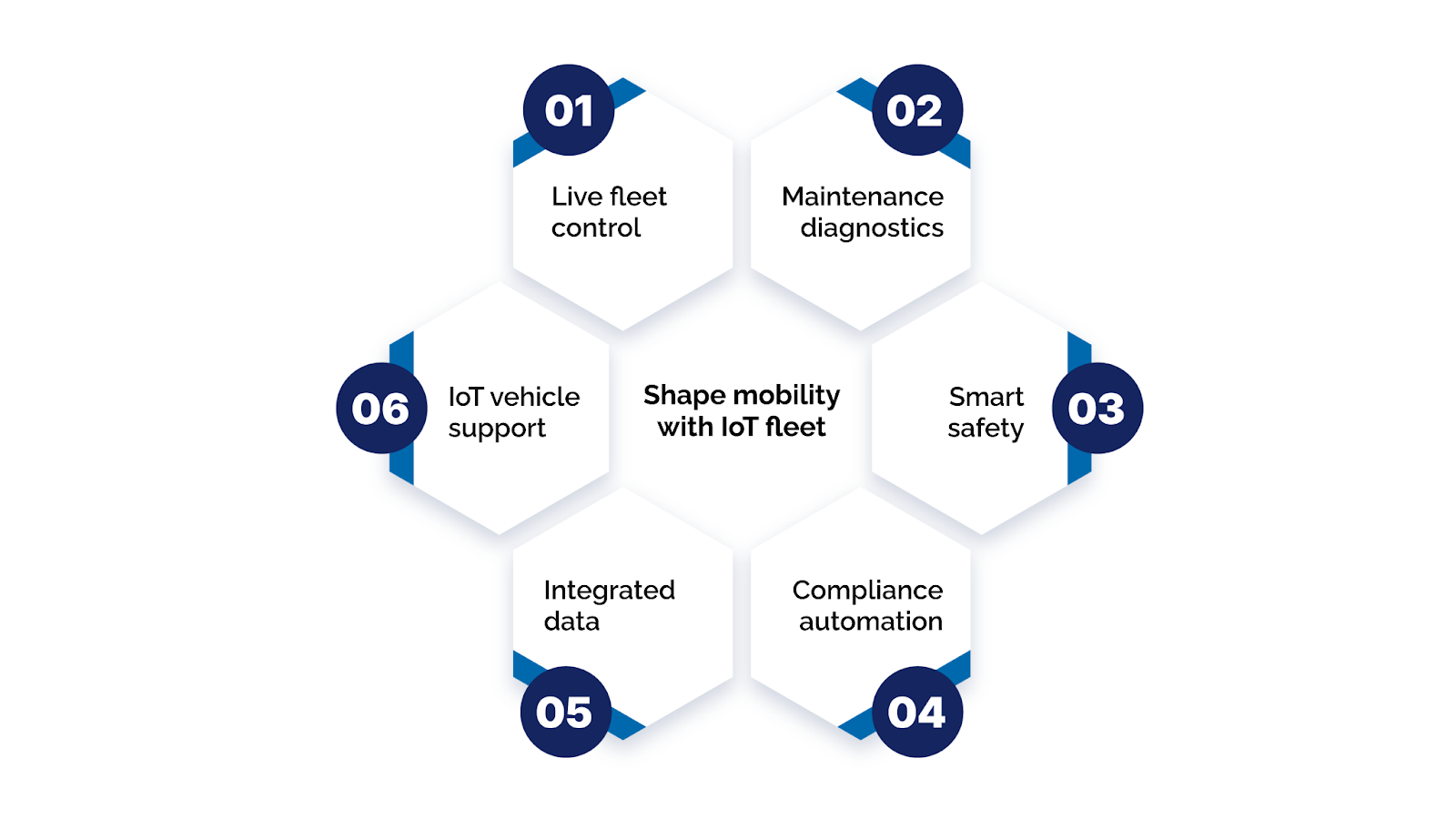
As cities grow smarter and riders expect more, IoT is redefining how vehicles operate, connect, and scale. From real-time tracking to predictive maintenance and automated compliance, the future of mobility is being built on a foundation of intelligent, connected systems.
EazyRide helps forward-thinking operators harness this shift, powering fleets that are smarter, safer, and ready to scale.
Here’s how EazyRide puts IoT to work for your mobility business:
- Live Fleet Monitoring & Control: Track every vehicle in real time, location, usage, battery levels, and more. EazyRide’s dashboard gives you full operational visibility and smarter control over your entire fleet, right from day one.
- Predictive Maintenance & Diagnostics: Say goodbye to surprise breakdowns. Built-in IoT sensors enable automatic alerts and real-time diagnostics, helping you reduce downtime, lower repair costs, and extend vehicle life effortlessly.
- Smart Safety & Theft Prevention: Keep your assets secure with motion sensors, GPS tracking, remote locking, and tamper alerts, all powered by IoT. Protect your vehicles while giving riders a safer, more reliable experience.
- Automated Compliance & Geofencing: Stay ahead of city rules with automated geofencing, no-ride zones, speed controls, and parking enforcement. EazyRide helps ensure compliance in real time, reducing fines and building trust with local regulators.
- Integrated Data for Smarter Decisions: From demand forecasting to rider behavior insights, EazyRide combines IoT with AI to help you make data-driven decisions, so you can grow faster, optimize fleet performance, and adapt on the fly.
- Scalable, IoT-Ready Vehicle Support: EazyRide collaborates with leading OEMs, including Okai, Segway, Acton, and Yulu, offering seamless IoT integration from launch. Whether you operate 50 vehicles or 5,000, your tech stack scales with you.
The future of mobility is connected, intelligent, and fast-moving. With EazyRide’s IoT-powered platform, you’re not just keeping up; you’re leading the transformation.
Conclusion
IoT vehicle technology isn’t some distant innovation; it is already transforming the mobility business. Whether you are launching a micro-mobility venture or scaling an existing scooter fleet, connected technology gives you an edge.
It improves rider experiences, reduces operational waste, ensures regulatory compliance, and protects your assets. In a market that is evolving fast, the smartest businesses will be those who adopt IoT early, not just to keep up but to lead.
Built for scalability and flexibility, Eazyride helps you reduce operational complexity, cut costs, and accelerate growth without the usual tech headaches. Our platform empowers you to focus on what matters most, delivering great rider experiences and expanding your business with confidence.
FAQs
1. Is IoT integration only useful for large fleets?
No, IoT integration is also useful for small and mid-sized fleets. Better tracking, smarter vehicle allocation, and fewer operational hiccups help businesses of all sizes improve efficiency. And as IoT solutions become more affordable, they’re increasingly accessible to newer and smaller operators.
2. What role does IoT play in vehicle safety and theft prevention?
IoT adds an extra layer of protection. Features like GPS tracking, motion sensors, remote locking, and tamper alerts help prevent theft and misuse. These tools also monitor driver behavior and detect safety hazards in real time, reducing risks for both operators and riders.
3. How does IoT improve the rider experience?
IoT enables a smoother, more connected ride. Riders benefit from real-time ride tracking, battery status alerts, personalized suggestions, and faster onboarding. Fewer service disruptions and better visibility into the ride build trust and satisfaction.
4. What technologies work alongside IoT in modern fleets?
IoT often works hand-in-hand with AI, machine learning, and cloud computing. Together, they power features like demand forecasting, automatic fleet rebalancing, and predictive maintenance, leading to smarter, data-driven operations.
5. What should operators look for in IoT-ready vehicles?
Choose vehicles with built-in telematics, GPS, secure data modules, and seamless compatibility with your fleet management platform. Vehicles designed with IoT in mind are easier to scale, more efficient to manage, and don’t require costly modifications down the line.


