
 AllMicro Mobility Model

 15 July, 2025
 E-Bike Revolution: Transforming Urban Mobility
What if the key player in urban transportation doesn’t run on gasoline, or even look like a car? With global e-bike revenue projected to hit $33.34 billion in 2025, the electric bike is no longer a fringe novelty. It’s an international movement. As fuel prices climb, city traffic worsens, and climate concerns intensify, the e-bike shift is quietly taking over city streets, offering commuters a faster, cleaner, and more affordable way to move.
For many vehicle rental companies, micro-mobility startups, and fleet operators, adapting to these rapid changes can feel overwhelming and costly. Balancing operational efficiency with sustainability goals while meeting customer expectations is no small feat.
This blog explores how e-bikes have evolved from niche alternatives to central players in urban transport. It highlights the key shifts, from rising adoption rates and smart integrations to government backing and infrastructure development, that are accelerating their role in reshaping the future of sustainable, innovative, and resilient city travel.
Key Takeaways
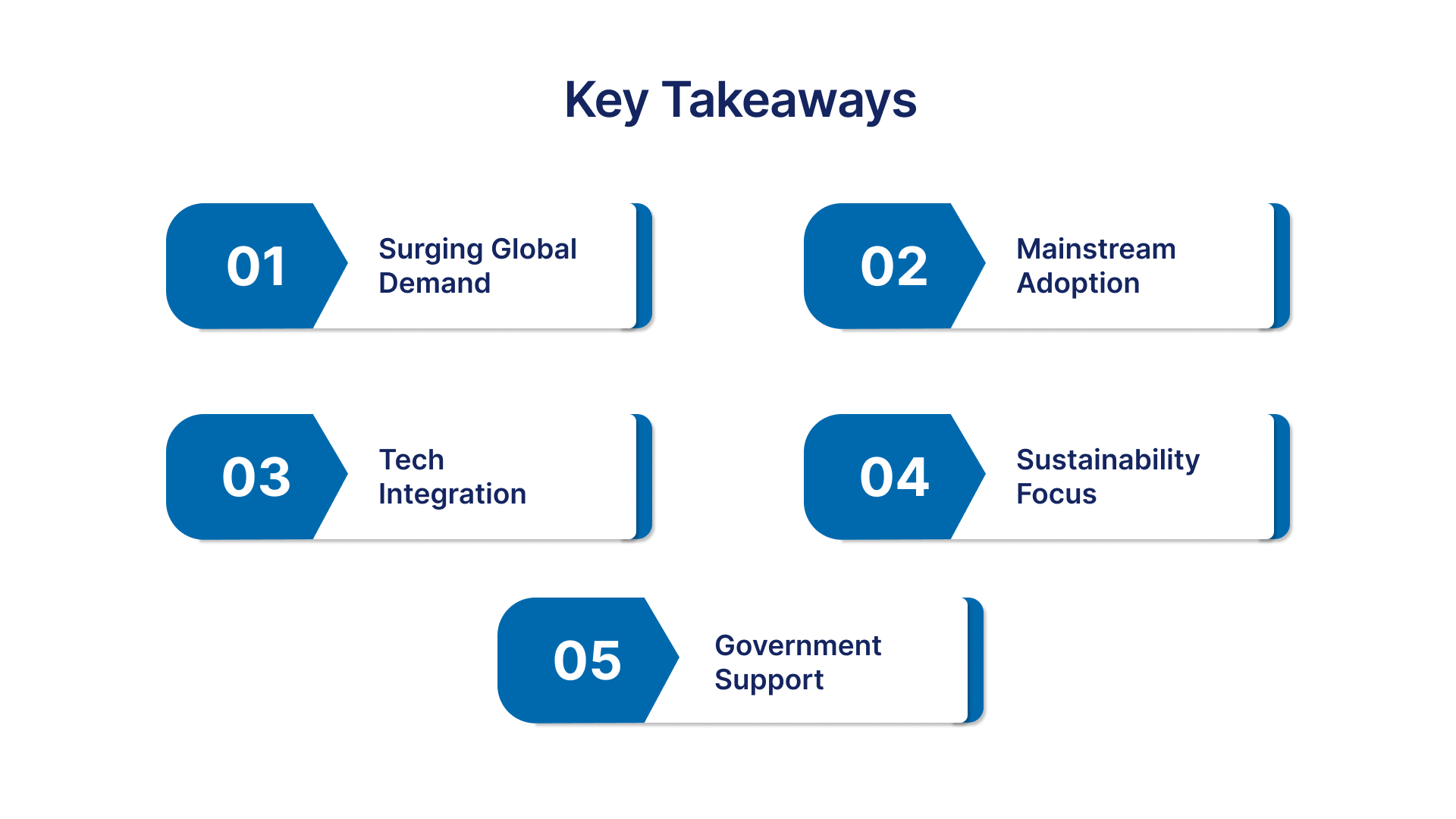
- Surging Global Demand: Urban populations are increasingly turning to e-bikes as a clean, fast, and cost-effective means of commuting.
- Mainstream Adoption: E-bikes have transitioned from a niche mode of transport to a staple of city mobility, thanks to their affordability and accessibility.
- Tech Integration: Features such as GPS, app control, and analytics are enhancing the rider experience and operational efficiency.
- Sustainability Focus: Zero-emission travel and energy efficiency make e-bikes a critical component of climate-friendly transportation strategies.
- Government Support: Public incentives and infrastructure development are key drivers behind the growing accessibility and safety of e-bikes.
Surging E-Bike Adoption and Market Growth
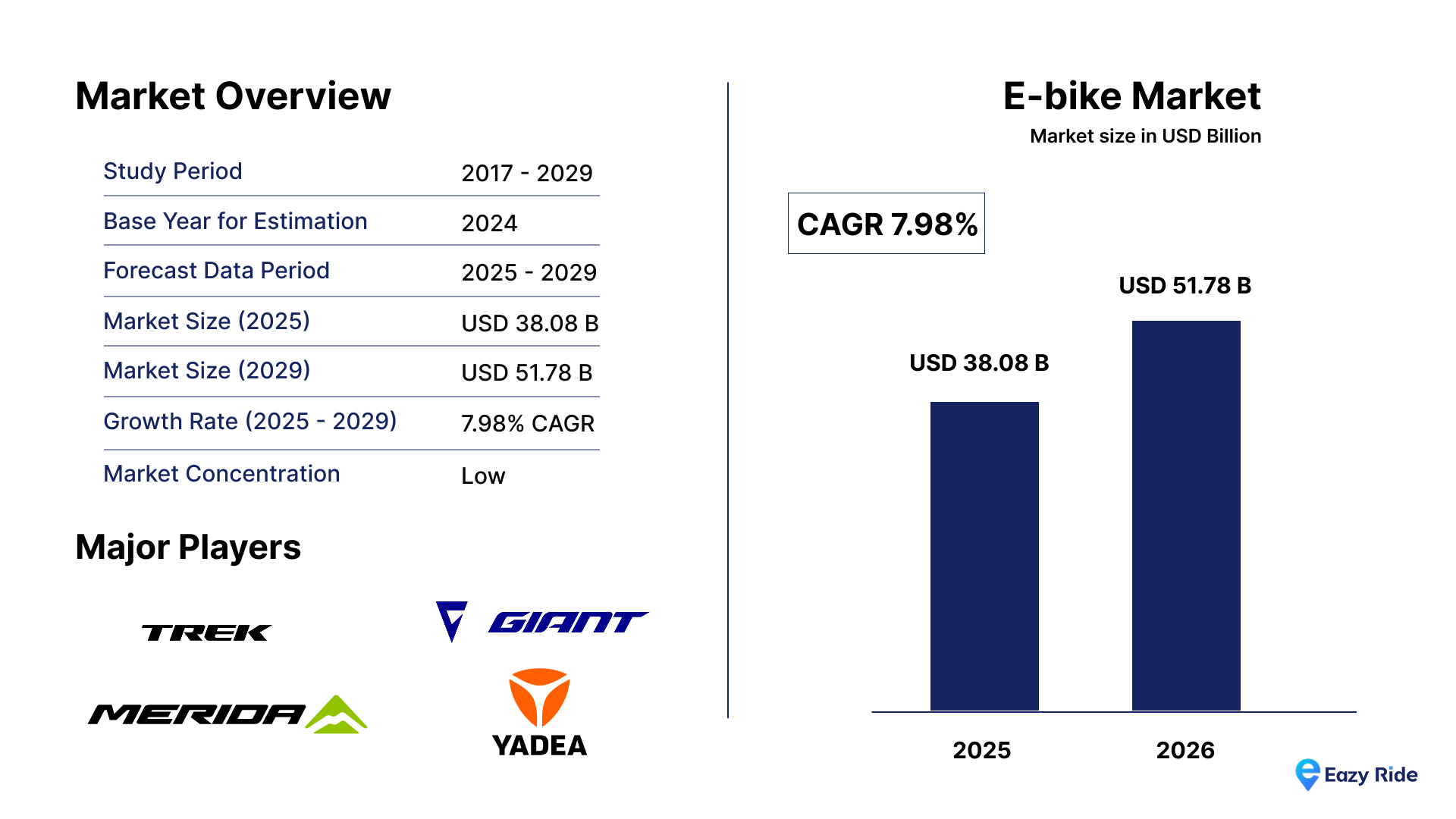
Source: The graph shows the global e-bike market size projection in USD billions with a CAGR of 7.89%, indicating steady annual growth driven by increasing adoption and technological improvements.
The popularity of e-bikes has accelerated in recent years, signaling a shift in how people perceive urban transport. Cities worldwide are witnessing record-breaking sales and increased usage.
The following trends explain the market shift:
- Rising Usage Rates: E-bike use in urban areas has grown significantly in the last five years, particularly among daily commuters and delivery workers. This rapid adoption reflects a fundamental shift in mobility habits. As cities become increasingly dense, e-bikes provide an efficient solution for short-distance travel.
- Growing Market Value: The global e-bike market is projected to reach over $71.48 billion by 2030, with a compound annual growth rate (CAGR) of 6.6%. This growth is driven by technological innovation, shifting consumer preferences, and a growing emphasis on sustainability across various sectors. Increased R&D in battery technology is also playing a pivotal role.
- From Niche to Mainstream: Once a specialized product for cycling enthusiasts, e-bikes have become an everyday commuting solution for students, professionals, and families alike. They’re now seen on university campuses, business parks, and suburban neighborhoods.
E-bikes are no longer a trend. They are a transportation movement. As we explore the innovative features powering this surge, the following section breaks down how technology is making these bikes even more irresistible.
Smarter, More Connected E-Bikes
E-bikes are evolving beyond motors and pedals. Today, they double as connected mobility tools equipped with tech designed to enhance safety, control, and customization.
The features below are leading the shift:
- Integrated GPS and App Sync: Riders can track their bike, check battery health, and map routes directly from a mobile app. This integration helps reduce theft and enables real-time troubleshooting and resolution. It also allows users to log their ride history for better planning.
- Real-Time Analytics: Smart sensors collect data on speed, distance, terrain, and usage patterns to help riders improve efficiency and plan better. Fleet owners can analyze this data for better service deployment. It’s a win-win for both operators and users. Real-time data enables predictive maintenance and smarter rebalancing.
- Enhanced Safety Controls: Features such as anti-theft locking systems, automatic brake lights, and diagnostic alerts enhance rider security and visibility. These innovative systems can alert both riders and operators about potential malfunctions. They create safer environments for both solo riders and shared fleets. Manufacturers continue to improve safety sensors and fail-safe systems.
These smart upgrades aren’t just tech gimmicks. They redefine convenience and confidence on every ride.

Traditional Rentals vs App-Based Sharing: A Quick Comparison
The shift from traditional rentals to app-based e-bike sharing highlights why more cities and users are opting for digital-first solutions. The table below outlines the core differences that shape this transformation:
| Feature | Traditional Rentals | App-Based Sharing |
|---|---|---|
| Booking Method | Physical presence at the rental station | Mobile app booking with real-time availability |
| Availability | Limited to working hours and locations | 24/7 access across multiple zones |
| Pricing | Fixed rates, often by day or hour | Dynamic pricing by time or distance, with subscription options |
| User Experience | Manual paperwork, physical keys | Digital onboarding, QR unlock, and ride tracking |
| Maintenance & Monitoring | Periodic checks by rental staff | Real-time diagnostics and alerts via integrated systems |
| Scalability | Requires physical expansion of rental shops | Easily scalable across cities through cloud platforms |
| Fleet Management Tools | Manual tracking and limited data | Centralized dashboards, analytics, and operator tools |
App-based e-bike sharing offers greater flexibility, transparency, and scalability, which explains its growing preference among urban commuters and businesses alike.
This shift in usage patterns has impacted not only how people access bikes but also how efficiently they navigate city traffic. Let’s explore how e-bikes are directly addressing urban congestion and improving daily commuting experiences.
Addressing Urban Congestion and Commuting Efficiency
For city dwellers navigating traffic-clogged streets, e-bikes offer a surprising edge over traditional vehicles. Their speed, maneuverability, and small footprint make them ideal for the last-mile commute.
Here’s why e-bikes stand out:
- Compact and Flexible: E-bikes can weave through traffic, use bike lanes, and require far less parking space than cars. Their size and agility allow for quicker response in urban conditions. Riders spend less time stuck and more time moving. These advantages translate into real-time savings for businesses and individuals alike.
- Time-Efficient Travel: In dense urban cores, e-bikes often cut commute times in half compared to buses or ride-hailing services. They avoid congestion and run on direct paths. This makes them ideal for both short errands and professional travel. Their independence from public schedules adds a layer of reliability.
- Ideal for Short Trips: For journeys under 10 km, e-bikes eliminate wait times, traffic stress, and fuel stops. These trips account for a significant portion of urban travel needs. With e-bikes, these short distances become faster and more pleasant. This has led to their growing popularity among gig workers and delivery riders.
As more cities look to reduce congestion, e-bikes are proving they can do more with less. But beyond convenience lies an even stronger reason to ride: the environment.

A Step Forward in Sustainable Transportation
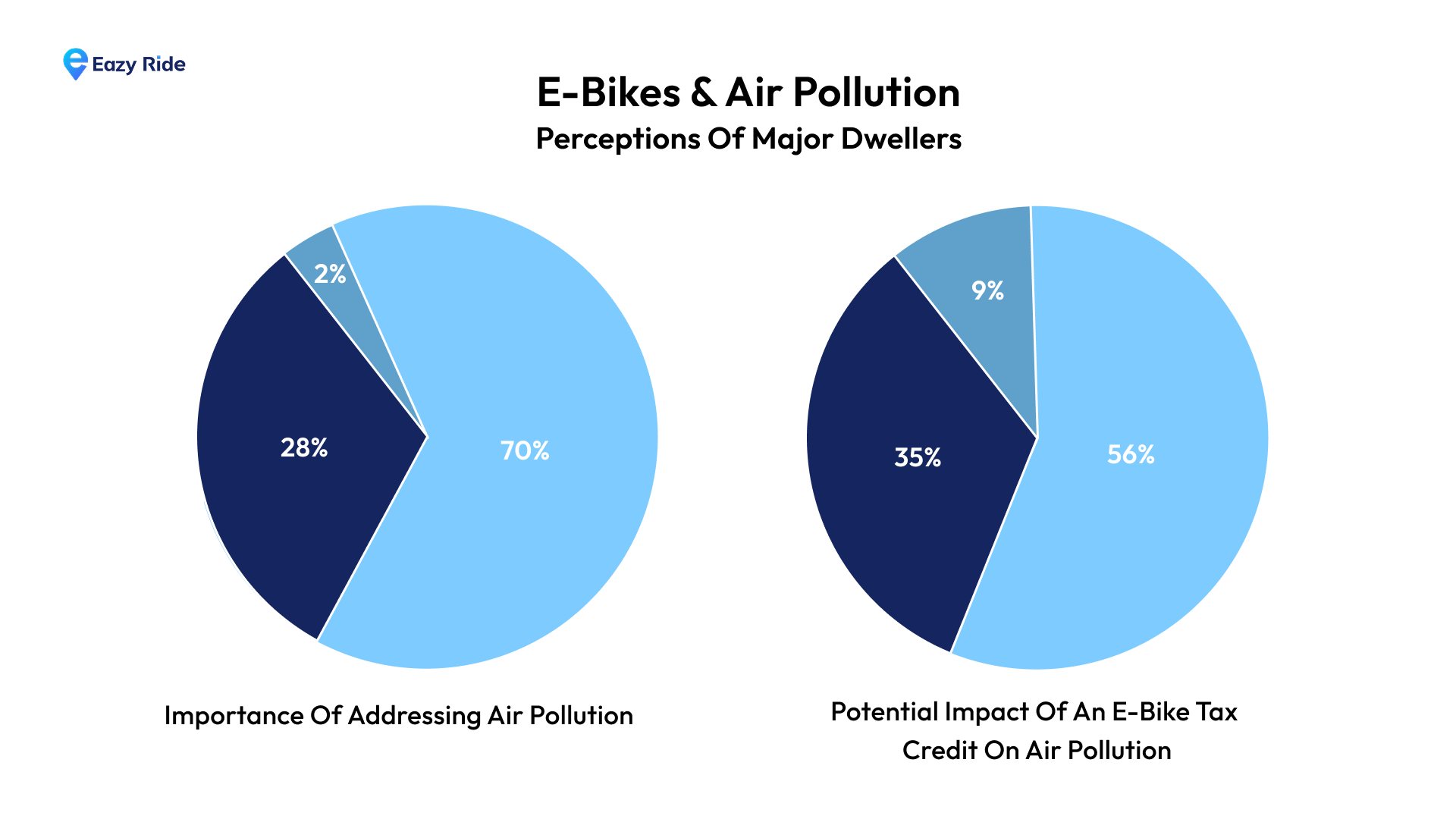
Source: The graph presents survey data indicating that residents of major cities generally perceive e-bikes as significantly reducing air pollution, thereby supporting their environmental benefits.
E-bikes aren’t just about moving faster. They’re about moving cleaner. As governments and individuals focus on sustainable practices, the environmental case for e-bikes continues to strengthen.
The reasons behind their sustainable appeal include:
- Lower Emissions: E-bikes produce zero tailpipe emissions and use electricity more efficiently than electric cars. They significantly reduce air pollution in densely populated urban areas. Over time, widespread adoption could meaningfully cut urban carbon footprints.
- Energy Efficiency: With rechargeable batteries and minimal power requirements, e-bikes are among the most energy-efficient modes of transport. They typically require just a few cents’ worth of electricity per charge. When powered by renewable energy, their environmental impact decreases even further.
- Climate Change Mitigation: As cities strive for net-zero goals, e-bikes provide a practical means to reduce transport-related emissions. Their scalable nature makes them suitable for integration into broader green mobility plans. E-bikes help mitigate the urban heat island effect by reducing reliance on motor vehicles that emit heat and pollutants, thereby lowering overall city temperatures and improving air quality.
These environmental wins make e-bikes a key player in building greener, more livable cities. The impact goes beyond emissions. Public policy is also shifting gears to accelerate this transition.
Government Incentives and Policy Support
As the e-bike revolution gains momentum, governments worldwide are introducing policies and incentives to make e-bikes more accessible and appealing to the public. These measures are not just about promoting adoption. They also support broader goals related to sustainability, congestion reduction, and healthier communities.
Here’s what that support looks like:
- Purchase Subsidies: Countries like Germany, France, and the U.S. offer rebates of up to 30% on new e-bike purchases. These subsidies lower the financial barrier for first-time buyers and increase affordability across different income groups. Some local governments also provide additional bonuses for trading in gas-powered vehicles.
- Infrastructure Investment: Cities are expanding protected bike lanes, creating bike-share programs, and adding secure parking spaces for e-bikes. Investments in connected routes and signal prioritization help ensure safer and more efficient rides. Infrastructure improvements also encourage people to replace short car trips with e-bike commutes.
- Tax Breaks and Credits: In several regions, e-bike commuting is eligible for tax deductions, making it easier for people to integrate e-bikes into their daily routines. Businesses also receive tax benefits for offering e-bike incentives to employees. These financial perks make sustainable commuting more practical for everyone.
With these supportive policies, governments are helping to push e-bikes from a niche innovation to a mainstream urban necessity. But while incentives matter, consumer behavior has also shifted, especially in response to the pandemic.

Post-Pandemic Shift Toward Personal Mobility
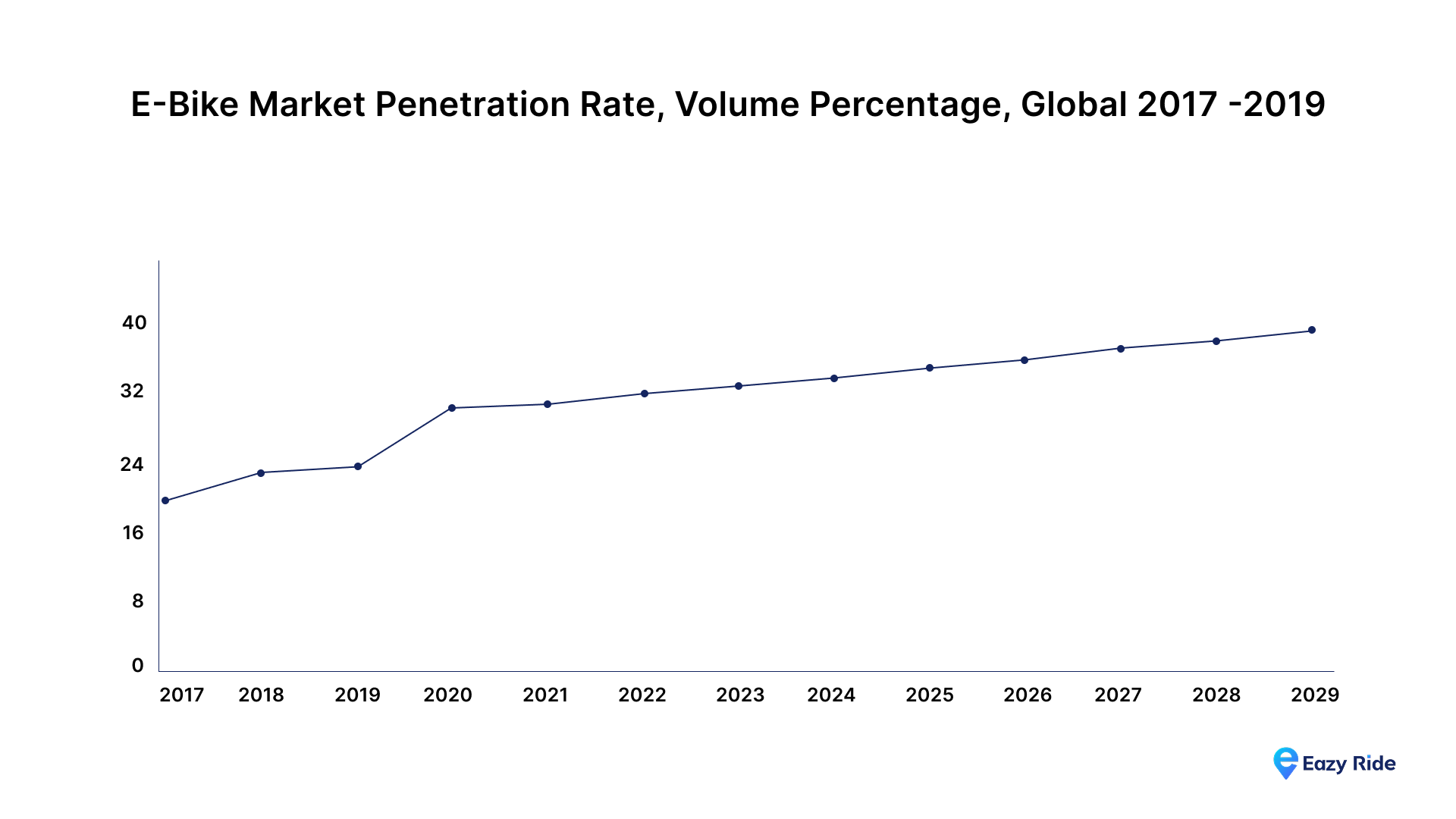
Source: The graph illustrates the increasing global market penetration rate of e-bikes from 2017 to 2029, reflecting growing consumer acceptance and market expansion.
COVID-19 changed how we move. With public transportation perceived as risky, e-bikes have emerged as a safe and personal alternative for everyday travel. People were seeking ways to navigate their surroundings while minimizing contact with shared spaces, and e-bikes stepped in to fill that gap with minimal contact and maximum convenience.
Key reasons behind the surge:
- Sales Boom: E-bike sales surged globally in 2020 and have remained strong through 2025. This surge reflects a global reassessment of daily travel needs and a heightened interest in personal mobility solutions.
- Social Distancing: E-bikes provided a way to commute without relying on shared vehicles or crowded spaces. Their ability to support individual travel while maintaining physical distance made them a popular alternative for work, errands, and leisure.
- Faster Adoption: More people tried e-bikes for the first time and continued using them after the pandemic. The ease of use, improved infrastructure, and flexible ownership models encouraged sustained usage well beyond the crisis period.
The pandemic accelerated trends that were already in motion. It opened the door to a new era of mobility where independence, health, and flexibility matter more than ever. As people discovered the physical benefits, health and wellness became a bonus.
Health and Wellness Advantages

E-bikes offer the perfect balance between effort and ease. With pedal-assist features, they make active travel possible for a broader range of people, supporting health goals without requiring the same level of exertion as traditional cycling.
Here’s why they support better health:
- More Inclusive Exercise: Pedal assistance allows older adults or people with mobility concerns to ride comfortably. It opens the door for people recovering from injury or those with lower fitness levels to engage in regular outdoor activity. By reducing intimidation, e-bikes encourage more users to engage in active commuting.
- Promotes Active Lifestyles: E-bike riders are more likely to meet daily movement goals than car commuters. Even moderate physical activity, such as riding a bike, contributes to cardiovascular health and mental well-being. Many riders report improved mood and reduced stress after switching from cars to e-bikes.
- Less Fatigue: Compared to traditional bikes, e-bikes reduce physical strain without removing the workout. This helps users travel longer distances without exhaustion. The ability to adjust assistance levels ensures customizable effort depending on the rider’s energy or needs for the day.
Active transportation doesn’t have to be exhausting. And it doesn’t have to be expensive either, especially when you compare it to owning a car.
Cost-Effective Commuting Solutions

Source: The chart details top e-bike use cases among current and potential users, showing trends in commuting, delivery, and leisure activities.
E-bikes offer significant savings over cars, taxis, and even public transportation over time. Whether you’re looking at initial investment or day-to-day expenses, the numbers reveal a clear winner for urban dwellers.
Consider these financial perks:
- Lower Upfront Costs: High-quality e-bikes cost a fraction of what you’d pay for a new car. For instance, an average commuter e-bike typically ranges between $400 and $2,000, whereas even the most affordable new vehicles often exceed $20,000. This makes e-bikes more accessible for students, freelancers, and small business owners.
- Minimal Operating Expenses: Electricity is less expensive than gas, and maintenance is significantly simpler. Most e-bikes cost just a few cents per charge and have fewer moving parts, reducing the need for frequent repairs. No oil changes or engine diagnostics means fewer trips to the mechanic.
- Reduced Long-Term Costs: No insurance premiums, parking fees, or registration costs. With fewer hidden fees and lower annual costs, e-bikes appeal to those looking for budget-friendly transportation. For many, the ability to skip car ownership entirely is a game-changer.
Smart commuters are calculating the actual cost of ownership, and e-bikes are emerging as the winner. Their affordability, combined with long-term value, makes them a wise investment for city living. As adoption grows, cities are evolving to meet the demand.
Expanding Urban Infrastructure
Cities are redesigning public spaces to welcome and prioritize the use of e-bikes. These changes are enhancing safety, promoting ridership, and adapting city layouts to new mobility standards. As more commuters turn to e-bikes, urban planners are responding with real, tangible upgrades.
Here’s how infrastructure is adapting:
- Bike Lane Expansion: New protected lanes are being constructed in major metropolitan areas, from New York to Tokyo. These dedicated spaces reduce conflicts with car traffic and make e-bike commuting safer. More cities are planning interconnected bike networks to improve overall travel flow.
- Safety Improvements: More traffic-calming zones and rider education campaigns are underway. Crosswalk visibility, curb bump-outs, and pedestrian-first signal timings are being added to reduce accidents. Some cities are also deploying smart traffic sensors to monitor bike flow and optimize signals accordingly.
- Policy Shifts: Local governments are revising zoning laws and parking regulations to support bike commuting. These include requirements for new developments to include bike parking and shower facilities. Public transit hubs are also adding secure bike storage options to encourage multimodal commuting.
As infrastructure catches up with demand, the e-bike movement is gaining momentum. However, it’s not just individuals who benefit. Businesses are also getting in on the action.

E-Bikes for Diverse Uses: From Commuting to Deliveries
E-bikes are being adopted for use beyond personal transportation. Businesses are investing in fleets to handle logistics and reduce costs. This trend is transforming how companies think about urban delivery, mobility programs, and municipal operations. Their low operational costs and flexibility make them a wise choice across industries.
Here are a few standout applications:
- Delivery and Courier Services: Restaurants and retailers utilize e-bikes for last-mile delivery, reducing fuel costs and minimizing delays. Their small size and agility enable quicker navigation through traffic, allowing for faster deliveries. E-bikes also reduce parking issues and provide better access to high-density areas where vans struggle.
- Corporate Mobility Programs: Companies offer e-bike incentives to employees to reduce their carbon footprints. These programs promote green commuting, improve employee wellness, and support ESG (Environmental, Social, and Governance) goals. Many firms now integrate e-bikes into their corporate travel solutions to minimize the use of cars.
- City Logistics: Municipal services use e-bikes for patrols, maintenance, and on-demand errands. Their ability to bypass traffic and access narrow alleys makes them useful for sanitation workers, parking officers, and first responders. This mobility enables cities to respond to needs more quickly while remaining sustainable.
Whether you’re delivering pizza or commuting across town for a meeting, e-bikes are proving their utility across various use cases. Their adoption demonstrates how a simple vehicle can significantly enhance productivity and sustainability in urban logistics. One company making it easier to manage and scale e-bike fleets is EazyRide.
EazyRide: Simplifying E-Bike Fleet Management
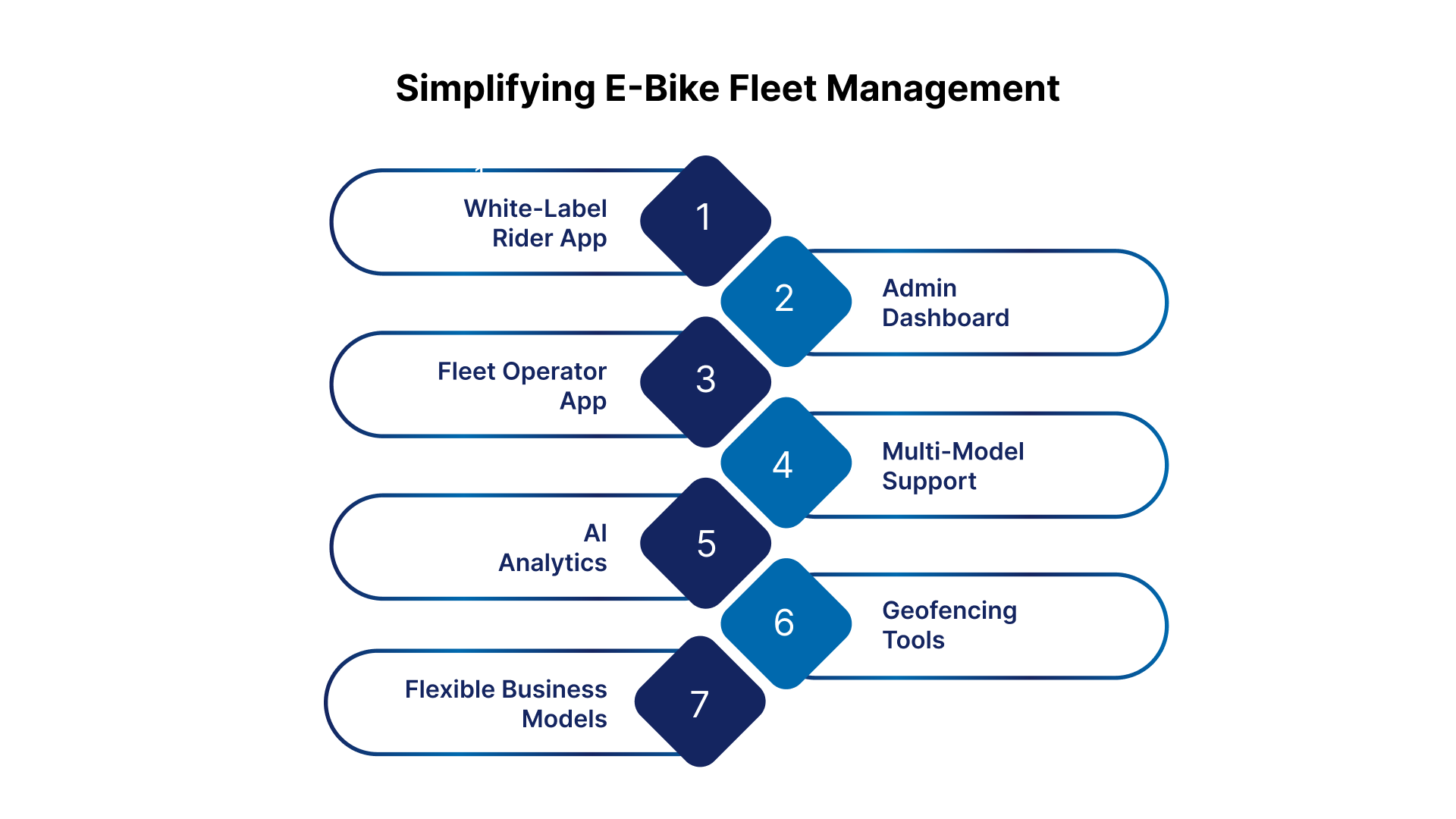
Managing a fleet of smart bikes requires more innovative tools. That’s where EazyRide steps in, offering solutions built for the e-bike revolution. The platform is purpose-built to help businesses and municipalities streamline operations, reduce downtime, and deliver an exceptional rider experience.
With the increasing demand for e-bike fleets in cities and campuses, having a centralized and reliable solution is more critical than ever. Here are EazyRide’s key features that support fleet owners:
- White-Label Rider App: Let users find, unlock, and ride e-bikes through a fully branded, user-friendly mobile app. The app also features a wallet, ride history, and support, providing a seamless experience from start to finish. As part of the white-label platform, it integrates effortlessly with the fleet operator app to ensure real-time syncing of rider activity and vehicle status for end-to-end coordination.
- Admin Dashboard: Control pricing, zones, campaigns, and analytics from a central hub. Fleet managers can adjust operations in real time, view performance metrics, and manage user access all in one place.
- Fleet Operator App: Enable ground teams to monitor, charge, and service bikes with QR-based tracking. This reduces manual errors and improves maintenance efficiency, ensuring bikes are always in top condition.
- Multi-Model Support: Easily accommodate a variety of two-wheeler types, from pedal-assist e-bikes to cargo and fat-tire models. EazyRide’s platform is designed to efficiently manage diverse fleets, enabling operators to meet the needs and achieve the goals of various users without complications.
- AI-Powered Analytics & Heatmaps: Identify peak usage times, idle bikes, and revenue hotspots to fine-tune operations. Heatmaps visually represent high-demand areas, enabling more intelligent fleet allocation. The insights help operators balance supply and demand, anticipate rider behavior, and predict maintenance needs with greater accuracy.
- Geofencing Tools: Easily set speed limits, no-go zones, and drop-off points. These controls ensure compliance with local regulations and create safer riding environments for users. Operators can also implement geo-targeted pricing strategies to offer discounts or premium rates in specific areas, maximizing both rider engagement and revenue optimization.
- Flexible Business Models: Serve cities, campuses, resorts, or gated communities with docked or dockless options. This versatility enables operators to scale their services according to demand and geography.
EazyRide enables the operation of an efficient, scalable, and sustainable e-bike service. Whether you’re managing ten bikes or a thousand, it’s end-to-end platform helps keep everything under control while boosting profitability and rider satisfaction. So, what does the road ahead look like?
Conclusion: Riding Toward the Future
The e-bike revolution is transforming how cities move and how we perceive everyday travel. From eco-friendliness to cost savings, the benefits are undeniable. Governments and people focus on sustainability. This makes e-bikes more environmentally friendly.
From health and environmental wins to convenience and cost-effectiveness, e-bikes are becoming a cornerstone of smart urban mobility. If you’re looking to tap into this growing market, EazyRide has the tools and tech to help you succeed. Their platform provides everything you need to deploy and manage an efficient, scalable, and user-friendly e-bike service.
Ready to build your e-bike business for the future? Contact us or schedule a demo with EazyRide today and make your fleet launch smoother, brighter, and scalable from the start.
FAQs
1. What is the average range of an e-bike on a single charge?
A: Most e-bikes offer a range between 40 and 100 kilometers per charge, depending on battery capacity, terrain, and riding conditions.
2. Can e-bikes be used in the rain?
A: Yes, e-bikes are generally water-resistant and safe to ride in the rain. However, it’s best to avoid deep puddles and regularly maintain the electrical components.
3. Are e-bikes allowed on regular bike lanes?
A: In most regions, e-bikes with pedal assist are permitted on bike lanes. However, regulations can vary, so it is essential to review local laws.
4. Are there age restrictions for riding an e-bike?
A: Age limits vary by country and e-bike class, but most places allow riders 14 or older to operate a low-speed e-bike without a license.
5. Can businesses track the usage of shared e-bikes?
A: Yes, with platforms like EazyRide, operators can monitor trip data, usage patterns, and service needs through integrated dashboards and mobile apps.
6. How long does an e-bike battery last?
A: E-bike batteries typically last between 3 and 5 years, depending on usage and care. Proper charging habits and storage can extend battery life, ensuring consistent performance.


