
 AllAnalytics and research

 27 June, 2025
 How AI Is Reshaping Fleet Operations for Efficiency & Safety?
What if your fleet could think ahead, spot issues before they happen, and adjust on the fly? That’s not science fiction anymore. It’s what AI fleet management is starting to deliver today.
Across mobility operations, AI is no longer just a buzzword. It’s quietly becoming the operating system for smarter, safer, and more efficient fleets. Whether it’s predicting battery failures, adjusting routes based on real-time traffic and weather, or identifying risky rider behavior, AI is taking the guesswork out of day-to-day decisions.
For fleet operators juggling growth, rider satisfaction, and uptime, this shift is more than helpful; it’s necessary.
So, how does it actually work? And what impact can it have on your operations? Let’s take a closer look at how AI is reshaping fleet management behind the scenes and why now is the time to pay attention.
As the global AI in marketing market heads toward USD 214 billion by 2033, now is a smart time to bring AI into your fleet management. It can help your mobility business run more efficiently, lower costs, and stay ahead of the competition.
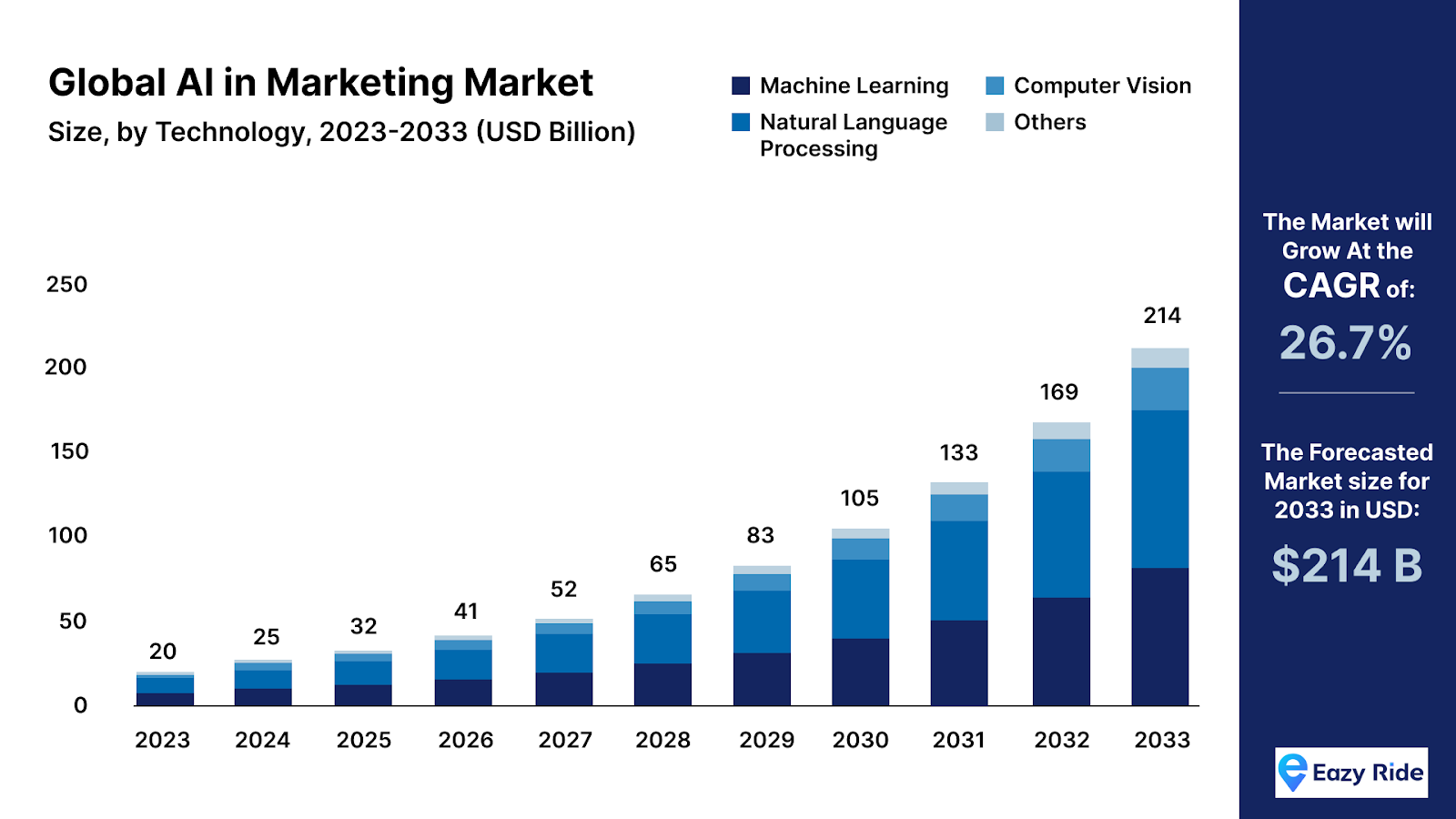
Source: Market.us
Let’s start!
What AI Means for Mobility Operations Today?
AI isn’t just a buzzword; it’s quickly becoming a core operating layer for modern mobility businesses. With the global artificial intelligence market projected to reach USD 1,811.75 billion by 2030, its role in real-world fleet operations is no longer optional. It’s essential. This shows just how rapidly AI is becoming a core driver of innovation across industries.
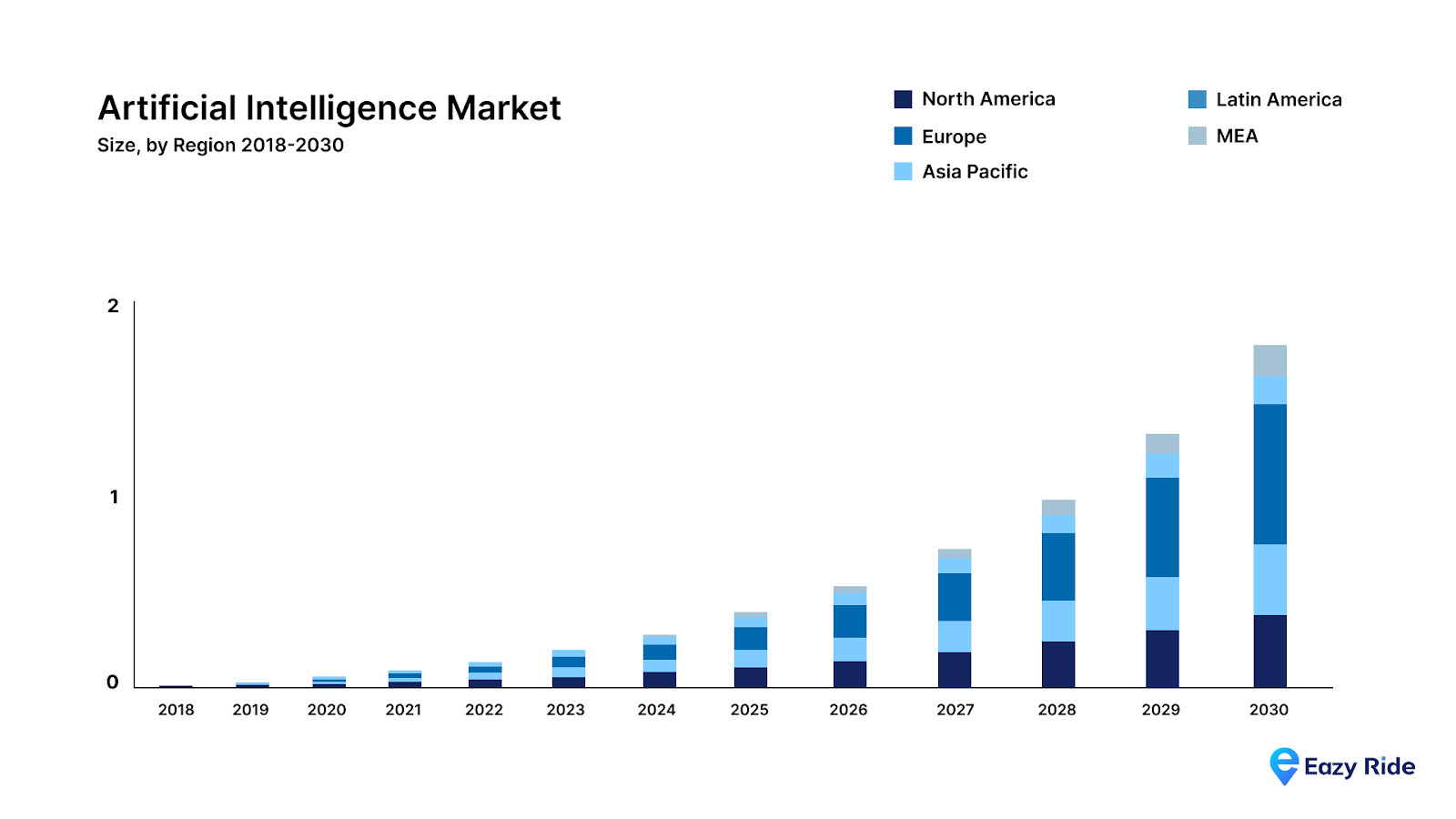
Source: GrandViewResearch
In mobility, AI means more than just smart tech. It’s the engine that processes real-time fleet data, predicts failures before they happen, adjusts services based on usage patterns, and keeps your operations a step ahead. It’s how operators are starting to solve practical problems, like minimizing idle vehicles, reducing fuel and battery waste, and preventing on-road breakdowns, without growing overhead.
You’re already seeing AI in places like:
- Predictive maintenance systems that reduce unexpected downtime
- Effective routing tools that adjust to traffic, weather, or rider demand
- Smart pricing engines that balance supply and revenue
- Safety monitors that flag risky riding behavior
For shared mobility operators, AI isn’t about future planning; it’s about staying competitive today. If your platform isn’t making smarter decisions on its own, you’re leaving efficiency (and revenue) on the table.
Now that we have a basic idea of what AI means in mobility operations, it’s helpful to see it in action. One area where AI is making a big difference is fleet management.
You Might Also Like: Why All Fleets Should Embrace Automation: Key Benefits Explained.
Why AI Is a Game-Changer in Fleet Management?
The U.S. artificial intelligence (AI) market is predicted to reach USD 851.46 billion by 2034. This shows how quickly AI is being adopted across industries. In fleet operations, AI is driving this change by turning traditional systems into smart, data-driven solutions. It helps reduce costs, improve efficiency, and increase profits for mobility entrepreneurs.
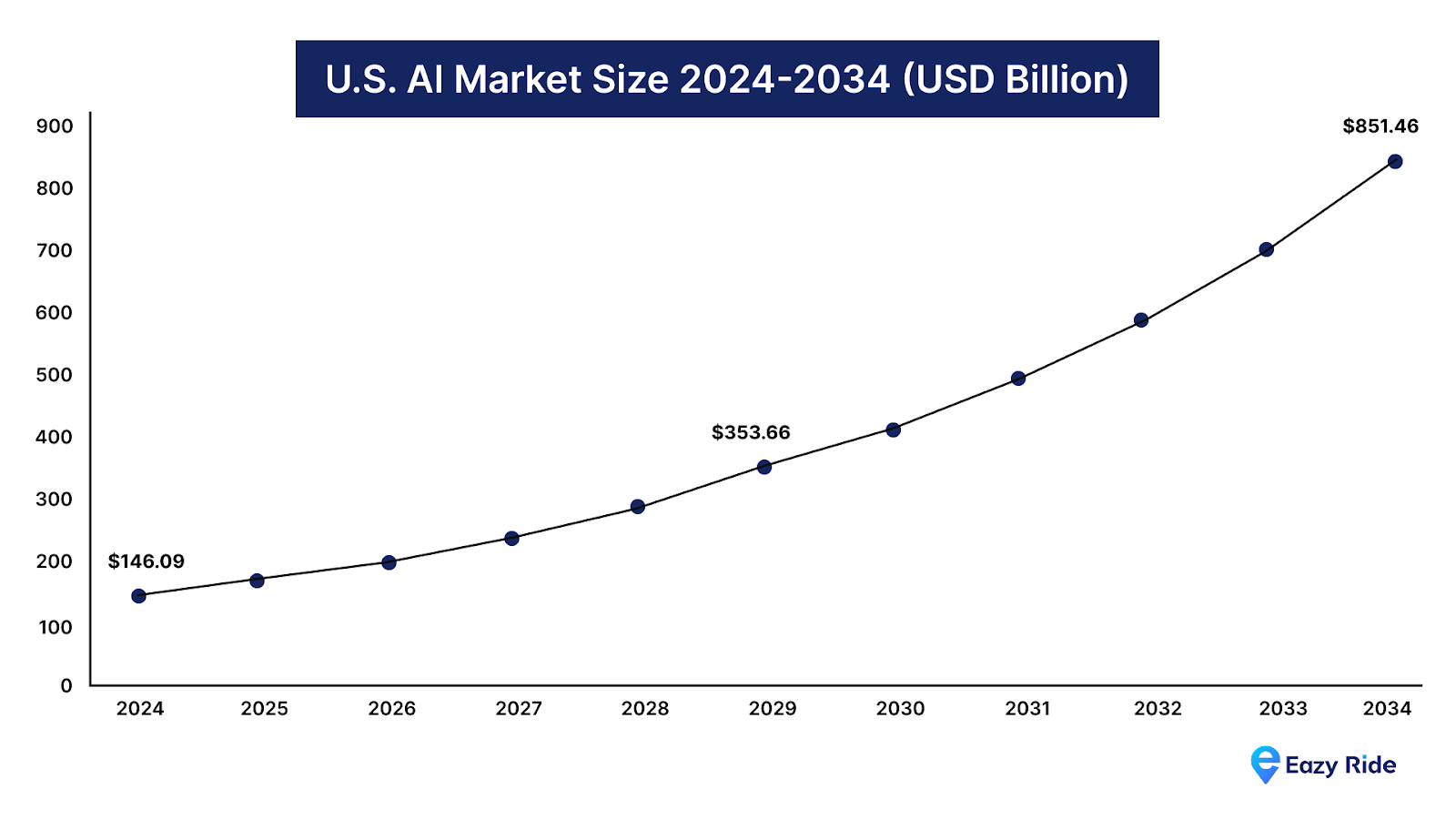
Source: Precedence Research
For mobility businesses, AI means real-time decisions backed by live data, not guesswork. It transforms disconnected fleet systems into smart, responsive networks that help you cut downtime, reduce costs, and grow faster.
Here’s how AI delivers real operational value:
Smarter Fleet Optimization
AI tracks rider behavior, trip frequency, and vehicle use patterns to position vehicles where they’re needed most. It predicts rider demand with high accuracy, ensuring vehicles are positioned where needed. It also adjusts fleet size based on real-time trends, improving efficiency and guiding smart expansion.
Reduced Operational Costs
AI enables predictive maintenance using real-time sensor data, cutting breakdowns and extending vehicle lifespan. It simplifies rebalancing and lowers related costs. For EV fleets, it optimizes charging schedules to reduce energy costs and maximize uptime.
Data-Driven Growth
AI identifies high-potential service areas by analyzing local demand and competition. It also spots locations ideal for your business partnerships and recommends the optimal mix of vehicle types based on your user behavior. AI spots strategic areas for business partnerships, such as tourist hubs and campuses.
Real-Time Insights
Live dashboards, powered by AI, track key metrics such as utilization, revenue, and maintenance. This enables faster, data-driven business decisions.
As AI continues to transform fleet operations, its impact is evident in several key areas that directly influence performance and efficiency.
Key Fleet Areas Where AI Brings Real Impact
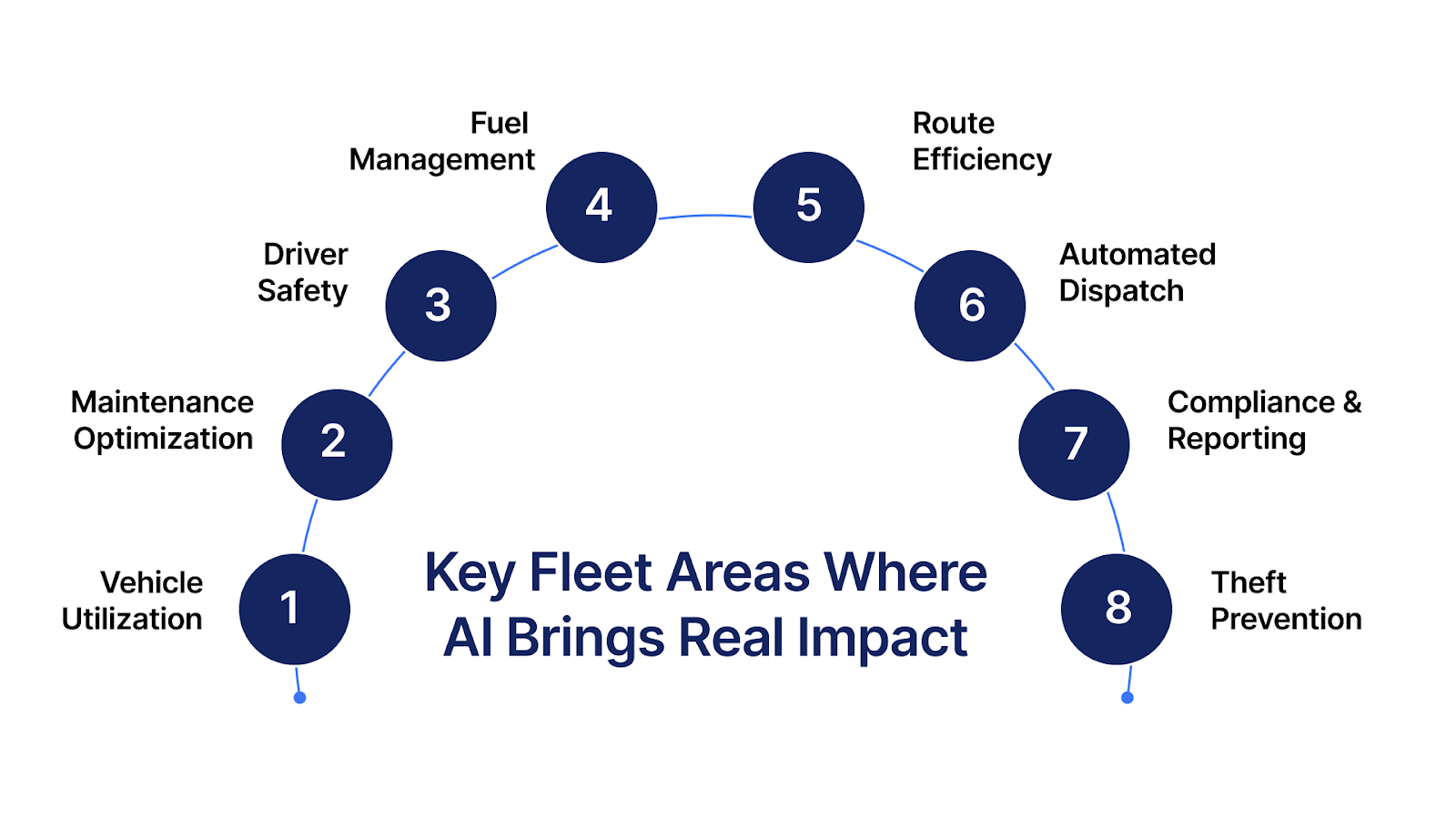
The fleet management market is projected to reach USD 55.6 billion by 2028. That growth is fueled by a common need to make fleet operations faster, safer, and more efficient, without expanding teams or increasing overhead.
AI delivers exactly that. By adding automation and intelligence to everyday fleet tasks, it turns operational chaos into coordinated control. Here’s where AI makes the biggest difference:
Vehicle Tracking and Utilization
AI doesn’t just show where your vehicles are—it learns how they’re used. It identifies underused vehicles, highlights peak zones, and helps redeploy assets more effectively. This results in higher vehicle utilisation, reduced idle time, and improved route coverage.
Maintenance Planning and Downtime Reduction
Instead of waiting for breakdowns, AI uses sensor data and engine diagnostics to predict when maintenance is due, so you can schedule service before things go wrong. This leads to lower repair costs, fewer disruptions, and longer vehicle lifespan.
Driver Performance and Safety
AI monitors ride behavior in real time, flagging speeding, sharp turns, fatigue, or unsafe patterns. Insights feed into training, incentives, and safety programs. This supports driver training and incentive programs. It leads to safer driving, fewer accidents, and lower insurance premiums.
Fuel Efficiency and Cost Control
AI learns from driving patterns, vehicle load, and idle time to recommend efficiency improvements. It can also time refueling based on price data and route plans. This results in reduced fuel costs and improved environmental performance.
Route Optimization and Delivery Efficiency
AI adapts to real-world conditions, such as traffic, weather, and rider demand, to find the most efficient routes in real-time. It leads to faster deliveries, fewer delays, and improved customer satisfaction.
Dispatch and Scheduling Automation
Instead of manual coordination, AI automatically assigns vehicles and drivers based on real-time availability and trip priority, even if last-minute changes come in. This results in simplified scheduling, reduced manual labor, and faster response times.
Compliance and Reporting
AI simplifies required logs like Hours of Service (HOS), emissions tracking, and audit-ready reports. It leads to easier compliance, fewer penalties, and accurate records.
Theft Detection and Security
Through geofencing and behavioral monitoring, AI detects unusual activity, like unauthorized use, off-hours trips, or route deviations. This results in better security, faster asset recovery, and reduced losses.
Understanding which parts of fleet management AI can optimize gives us a clearer picture of its potential. But seeing it in action makes the impact even more real.
Also Read: How IoT Enhances Fleet Management Efficiency.
Smart Use Cases of AI in Fleet Management
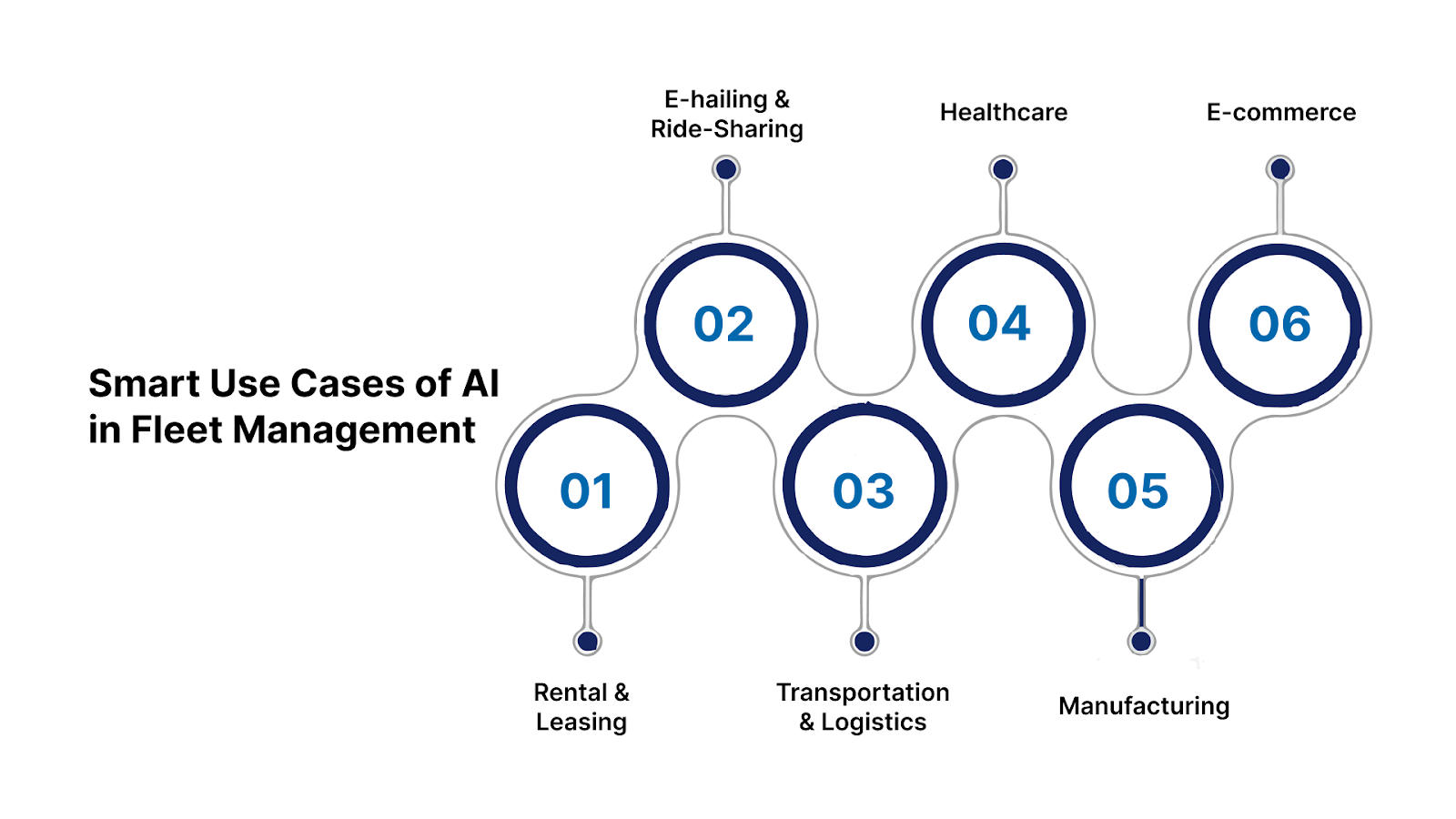
AI is already driving results for fleet operators across sectors. Whether you’re running an e-hailing service, managing a tourism fleet, or coordinating logistics on a large campus, AI turns real-time data into faster decisions, lower costs, and safer rides.
Here’s how different industries are using AI to solve specific fleet problems:
Rental and Leasing
AI helps rental and leasing companies track vehicle usage, detect unusual wear and tear, and predict demand. With built-in maintenance alerts, fleets stay in top condition, reducing downtime and earning customer trust.
AI also makes pricing smarter by factoring in usage trends, seasonal demand, and vehicle availability. This results in better fleet condition, higher customer satisfaction, and optimized revenue per vehicle.
E-hailing and Ride-Sharing
Ride-hailing platforms use AI to match drivers and riders in real time, optimize routes, and forecast high-demand areas. It also monitors driver behavior and vehicle performance, ensuring safer rides and more efficient service. This leads to faster pickups, safer trips, and more efficient driver utilization.
Transportation and Logistics
AI simplifies logistics by forecasting delivery times, optimizing routes, and managing loads effectively. It also automates dispatch and improves last-mile delivery, making operations smoother and more reliable. This results in fewer delivery failures, smoother last-mile performance, and leaner ops.
Healthcare
In emergency and medical transport, AI ensures ambulances and other critical vehicles are deployed quickly and efficiently. Real-time tracking and predictive dispatch based on traffic and incident data support faster response times. It also helps maintain vehicles that carry sensitive medical equipment, reducing the risk of breakdowns. This results in faster response, fewer breakdowns, and safer patient transport.
Manufacturing
AI helps manufacturers coordinate the movement of raw materials and finished goods. It can sync fleet operations with production schedules and enable inventory-aware dispatching to support just-in-time delivery. This leads to lower inventory costs, reduced delays, and leaner supply chains.
E-commerce
In e-commerce, where delivery speed matters, AI manages large-scale fleets by analyzing customer locations, purchase behavior, and stock levels. It automates route planning, groups nearby orders, and optimizes delivery resources during peak seasons to ensure faster and more efficient service. This results in faster shipping, happier customers, and improved operational margins.
Real-world use cases show how AI is already adding value to fleet management. While AI integration is simplifying many areas of fleet management, it also brings new challenges.
Challenges & Solutions for Generative AI In Fleet Management
Generative AI is gaining traction in fleet operations, from helping you plan smarter routes to automating customer communication and predicting maintenance needs. But while the potential is clear, adoption still comes with a learning curve.
Disconnected systems, high upfront costs, and data reliability issues are common hurdles, especially for small to mid-size fleet operators or entrepreneurs working without a tech team.
Here’s a look at key implementation challenges and what practical, business-ready solutions look like.
| Challenges | Solutions |
|---|---|
| Disconnected or inconsistent data across systems | Use integrated platforms, clean and standardize data before feeding it into generative AI models. |
| High initial costs for AI tools and setup | Start with small-scale pilots and adopt cloud-based AI to reduce capital investment. |
| Risks to sensitive fleet and customer data | Apply encryption, anonymization, and ensure compliance with data protection laws. |
| Outdated or inaccurate AI insights | Continuously retrain models with real-time data and use human-in-the-loop validation methods. |
| Staff pushback due to unfamiliarity with AI | Offer training, involve users in implementation, and show how AI enhances and does not replace their work. |
| Potential bias or compliance issues in AI decisions | Implement ethical AI policies, monitor for bias, and use explainable AI for transparent decisions. |
You Might Also Like: Understanding Mobility as a Service (MaaS) as a Fleet Manager.
Ready to Make Your Fleet Smarter with AI?
Take control of your mobility operations with EazyRide’s AI-powered platform. Its platform is built for modern fleet operators and micromobility businesses looking to scale safely, efficiently, and intelligently.
Here are some of the key features that make EazyRide the smart choice for your business:
- Smarter Decision-Making with Fleet Intelligence: Use predictive analytics, demand forecasting, and rider behavior insights to reduce downtime, optimize resource use, and improve day-to-day decision-making.
- Intelligent Dispatch & Routing: Let machine learning optimize vehicle deployment in real time—cut idle time, shorten wait periods, and respond faster to rider demand or operational needs.
- Predictive Maintenance & Diagnostics: Detect issues before they disrupt your service with automated maintenance alerts, battery health monitoring, and real-time diagnostics.
- Effective Operations, Powered by Data: Adapt pricing, availability, and resource allocation on the go with AI-driven recommendations based on live conditions and usage trends.
- Geofencing Meets AI: Automate zone management, adaptive speed limits, and rider compliance by syncing geofencing with AI behavior tracking and local regulation logic.
- Enhanced Rider Experience: Personalize app journeys, automate dispute resolution, and boost engagement with AI that understands your users, making every ride smoother.
- All-in-One AI Control Panel: Oversee your fleet through a unified dashboard that surfaces real-time insights, alerts, and performance tips, giving you the clarity to act quickly and confidently.
EazyRide provides an AI-powered platform to launch, manage, and scale your fleet, offering real-time insights and smart automation.
Conclusion
AI is no longer a future concept; it’s the foundation for running safer, leaner, and more profitable fleets today. From real-time decisions to predictive maintenance and smarter dispatch, AI empowers you to operate with confidence and speed. But to make it work, you need a platform built for it.
EazyRide brings AI into your hands with real-time analytics, intelligent routing, rider apps, and fleet tools. Whether you’re scaling a city fleet or managing internal mobility, EazyRide helps you cut complexity, boost margins, and stay future-ready.
Request a demo today and learn more about our solutions.
FAQs
How is AI improving fleet safety?
AI enhances safety by monitoring driver behavior, detecting fatigue or risky driving in real time, and triggering alerts or corrective actions. It also helps in predictive maintenance, preventing accidents caused by vehicle failures.
Can AI reduce fleet operating costs?
Yes, AI can help reduce costs by optimizing fuel usage, minimising idle time, and preventing unplanned maintenance through predictive analytics. It also helps streamline route planning and workforce efficiency.
What role does AI play in route optimization?
AI analyzes real-time traffic, weather, and delivery schedules to determine the most efficient routes. This reduces delays, fuel consumption, and vehicle wear and tear.
How does AI help in predictive maintenance?
AI utilizes data from sensors to predict potential mechanical issues before they occur. This allows fleet managers to schedule maintenance proactively, avoiding breakdowns and costly repairs.
Is AI helpful for monitoring driver performance?
Yes, AI helps monitor driver performance. AI tracks behaviors such as speeding, harsh braking, and distracted driving. It provides insights and coaching to enhance driver safety and performance.


