
 AllAnalytics and research

 26 June, 2025
 Scooter Sharing Market Trends and Growth Forecast
Is the scooter-sharing system market finally reaching its tipping point? With millions of riders embracing short-distance electric mobility and cities investing in cleaner transportation options, the answer might be closer than we think. Cognitive Market Research projects that the global electric scooter-sharing market will reach $2,142.5 million in 2025, growing at a compound annual rate of 17.00% through 2033.
In this blog, we’ll walk you through the most critical developments in the scooter-sharing system market. From citywide expansions and technological innovations to environmental impact and upcoming regulations, this guide provides a detailed overview of where the industry stands and where it’s headed. Whether you’re a fleet operator, urban planner, investor, or mobility startup, you’ll find insights that can sharpen your strategy.
What’s Fueling the Scooter Sharing Surge?
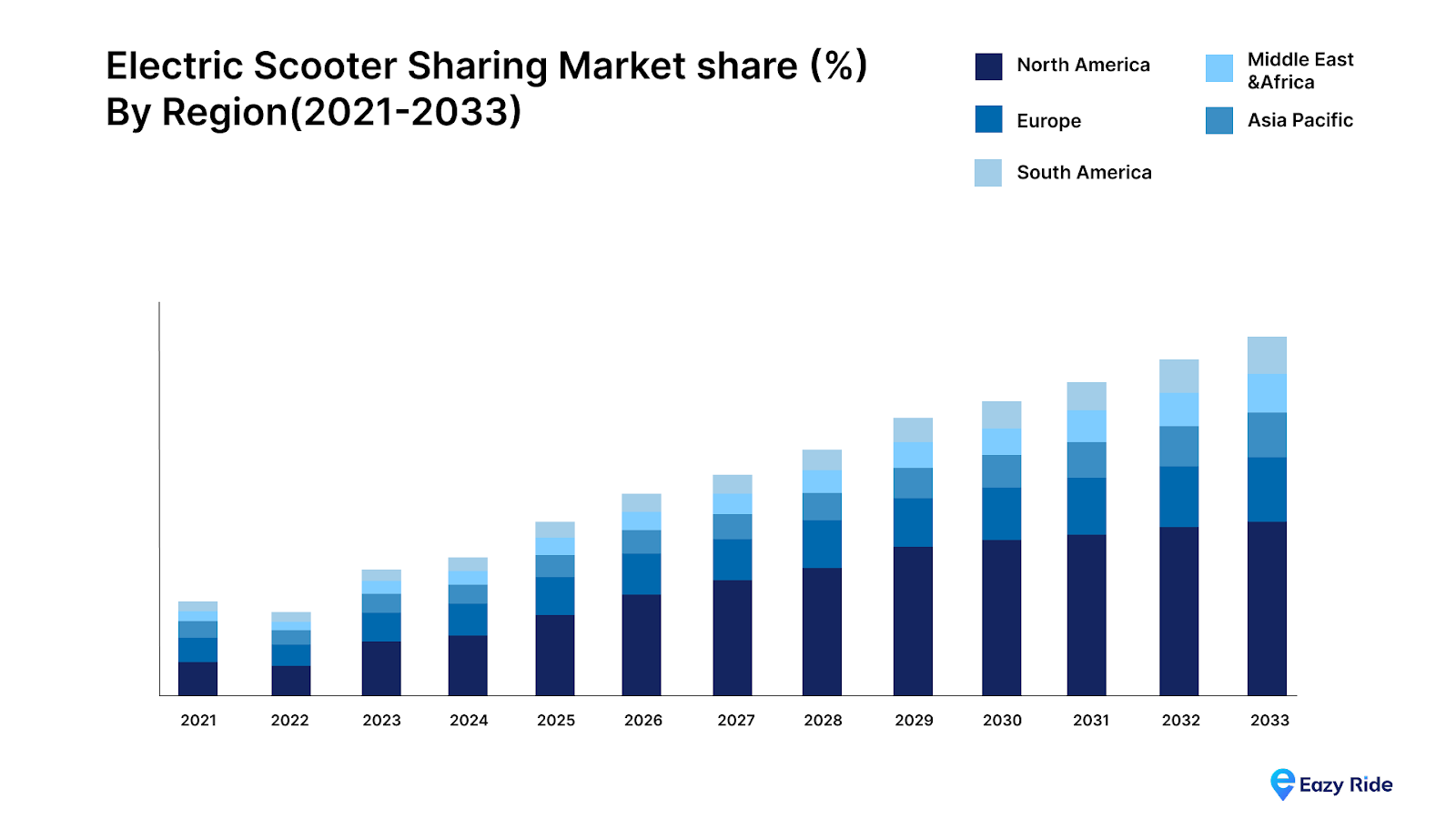
Source: The graph illustrates the regional market share (%) for electric scooter sharing from 2021 to 2033.
The scooter-sharing system market has matured rapidly over the past few years, driven by increasing urban populations and a global push for sustainable mobility. The shift from car ownership to shared, flexible transport has redefined how commuters travel short distances.
The following market trends reveal what’s shaping the scooter-sharing space:
- Expansion to New Cities and Countries: Operators are scaling globally, launching services in smaller cities and developing nations where scooter sharing was previously absent. This geographical spread is unlocking untapped demand and alleviating urban congestion. It’s also allowing providers to experiment with different models based on local infrastructure.
- Integration with Public Transportation: Services now connect with metro systems, buses, and bike-sharing networks to create smoother, multi-modal travel options. This makes commuting more seamless and efficient for users. It also helps cities manage transportation flow better.
- Customer Demand for Convenience and Eco-Friendliness: Riders prefer app-based scooters for quick commutes and support brands with sustainability values. They are increasingly seeking alternatives that reduce their carbon footprint. This shift has focused on experience-driven services and the adoption of clean energy.
- Affordable and Flexible Commuting Options: Compared to cabs or car rentals, scooter sharing offers low-cost, pay-as-you-go transport that suits daily routines and short trips. It reduces the need for car ownership in urban areas. Additionally, flexible pricing models appeal to a diverse range of users.
As these factors continue to accelerate adoption, the scooter-sharing ecosystem is transforming into a robust urban mobility solution. The demand for convenience, affordability, and sustainability is shaping both user behavior and operator priorities.
With these trends as the backdrop, let’s now examine how leading players are capitalizing on this momentum to scale, differentiate themselves, and dominate regional markets.
Who’s Winning the Scooter Sharing Race and How?
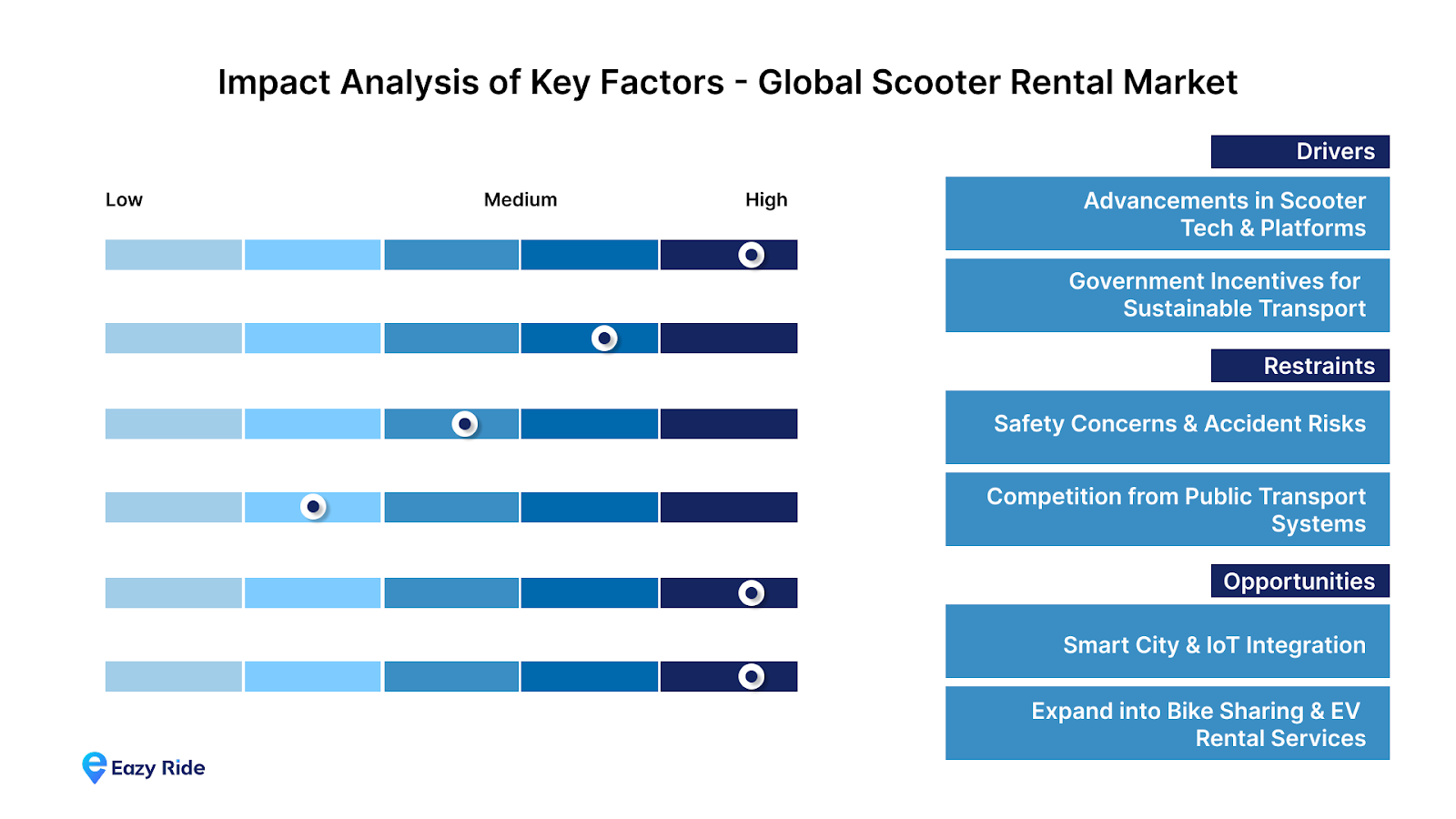
Source: The graph above illustrates how key factors are influencing the global scooter rental market.
With several operators competing for dominance, market leaders have been quick to differentiate through partnerships, expansion, and tailored services. Their success stories provide a window into what works and what doesn’t when it comes to scaling scooter operations.
Here’s how some key players are driving growth:
- All-in-One Solutions from EazyRide: EazyRide empowers both new entrants and established players to scale faster by offering a comprehensive platform that combines white-label software, rider apps, fleet management, and compliance tools. Their modular approach enables businesses to adapt across various regions. The company’s turnkey model is beautiful to local entrepreneurs and resorts.
- Success Stories of Companies Like Bird and Lime: These U.S.-based firms rapidly expanded by securing city permits, offering sleek vehicles, and maintaining strong user apps. Both companies have continued investing in tech upgrades and community programs. Their early entry gave them valuable data and brand recognition.
- Expansion Efforts by Grab and Neuron Mobility in Asia: These operators are capitalizing on Southeast Asia’s high mobile penetration and dense urban centers to roll out localized scooter networks. They’re also working with governments to align services with smart city goals. This localized approach helps simplify complex urban dynamics.
- Operations of Bolt in Europe and International Strategies: Bolt has integrated its scooter offerings with ride-hailing and food delivery platforms, increasing user engagement across services. This ecosystem strategy maximizes app usage and builds brand loyalty. Their pricing advantage also helps expand into budget-conscious markets.
These strategies show how local context and partnerships shape each company’s footprint. As competition intensifies, innovation and adaptability will become increasingly crucial.

Can Technology Solve Scooter Sharing’s Toughest Problems?
The scooter-sharing system market is no longer about having the most vehicles. It’s about who provides the most brilliant service. Technology has become the bedrock of both convenience and safety, reshaping how people interact with micro-mobility.
These advancements are changing the rider and operator experience:
- Functionalities of Smartphone Apps for Rentals: Riders can now locate, unlock, pay for, and report issues via intuitive mobile apps synced with real-time data. These features simplify the rental process and encourage frequent use. Operators also get insights into rider behavior and peak usage times.
- Innovations in Scooter Design and Software: Newer models feature swappable batteries, enhanced suspension, IoT integrations, and firmware that adapts to city rules. These upgrades improve rider comfort and operational efficiency. They also reduce downtime and maintenance costs.
- Security Measures Against Theft and Hacking: Operators deploy GPS tracking, remote immobilization, encrypted data channels, and geofencing to prevent misuse and cyber threats. These safeguards protect both the fleet and customer data. They also reduce liability risks and improve compliance.
Smart tech is no longer a competitive edge. It’s a market expectation. As scooters become more advanced, so do the conversations around sustainability and social impact, which we examine next.
Is Scooter Sharing Really Greener and Safer?
Scooter-sharing systems have emerged as tools for reducing traffic congestion and cutting down CO2 emissions. But environmental gains come with challenges and scrutiny from communities and regulators.
Here’s how the market is addressing sustainability and safety:
- Reduction in Carbon Footprint: Electric scooters produce significantly lower emissions than cars, contributing to cleaner urban air. Replacing short car trips with scooters lowers overall emissions. It also aligns with climate goals set by many cities.
- Efforts by Companies to Enhance Sustainability: Operators are adopting recyclable materials, electric service vehicles, and solar charging hubs to make operations greener. Some are even integrating life-cycle analysis into their strategies. These actions help meet ESG benchmarks and attract eco-conscious investors.
- Safety Concerns and Regulatory Measures: With a rise in accidents, cities are implementing stricter speed limits, enforcing helmet rules, and designating parking areas to protect pedestrians and riders. Companies are also offering rider education through apps. These initiatives build public trust and reduce friction with regulators.
While the positive environmental impact is clear, ensuring long-term success requires solving structural and logistical challenges. The following section examines how the industry is addressing these challenges.

What’s Holding the Scooter Sharing Market Back?
No market scales without friction. The scooter-sharing system market must contend with regulatory hurdles, urban infrastructure limitations, and cost concerns. Tackling these issues is what separates sustainable operations from short-lived pilots.
Here are some persistent challenges and industry responses:
- Municipal Regulations and Safety Guidelines: Operators must adapt to different city policies on fleet size, parking zones, and usage hours to gain approvals. Failure to comply can result in fines or bans. Navigating these policies requires local partnerships and adaptive platforms.
- Solutions to the Last-Mile Transportation Problem: Scooters fill critical mobility gaps between transit stops and destinations, reducing car dependency for short routes. They also reduce the need for large-scale infrastructure changes. This boosts urban efficiency and convenience.
- Economic Implications and Benefits: Scooter sharing boosts local economies by supporting logistics, tech jobs, and tourism while offering affordable transport to residents. It also provides low-barrier employment opportunities. In some regions, it complements gig-based livelihoods.
Strategic problem-solving continues to steer the market’s growth. But what does the data indicate about the direction this market is headed? Let’s break down the forecasting methodology next.

How Are Growth Forecasts for Scooter Sharing Built?
Accurate forecasting is central to market investment, planning, and strategy. Understanding how these projections are built can help stakeholders assess where to place bets.
The market forecast is based on a combination of the following techniques:
- Market Size Estimation Using a Bottom-Up Approach: Analysts gather data from individual vendors and cities to model the total addressable market and forecast its growth. This approach builds a more realistic market picture. It also identifies regional trends often missed by top-down models.
- Data Sources Including Financial Reports and Statistical Analysis: Historical performance and macro trends are drawn from public filings, surveys, and mobility usage statistics. These sources provide empirical evidence to support the projections. They also reflect shifts in consumer behavior and urban development.
- Utilization of Forecasting Techniques: Techniques, such as ARIMA and Regression, take into account seasonality, urban density, and policy shifts to accurately predict future demand. They offer adaptable tools for long-term planning. Decision-makers can simulate various scenarios to inform their strategy.
This data-driven approach provides a sturdy foundation for anticipating market trajectories. However, strong forecasts are only as good as the regulatory environments that allow them to play out, which brings us to the next topic.
What Are the Privacy and Policy Pitfalls in Scooter Sharing?
As user data becomes central to service optimization, concerns around privacy and government oversight are intensifying. Operators must walk a fine line between personalization and data responsibility.
Key regulatory issues include:
- Data Collection Practices and Privacy Concerns: Apps must obtain user consent, anonymize data, and follow GDPR or local equivalents to avoid penalties. Missteps can erode user trust and draw regulatory fines. Building privacy into app architecture is now a competitive edge.
- Examples of Government Regulations in Key Cities: Places like San Francisco and Berlin enforce strict data sharing, helmet rules, and safety checks before approving licenses. These cities set benchmarks others often follow. Operators that comply early usually secure longer-term contracts.
- Data Sharing Requirements for Monitoring and Safety: Many cities require access to real-time ride data to monitor safety and traffic patterns while also ensuring anonymity. These requirements demand robust backend systems. They also create opportunities for policy-driven service optimization.
Managing regulatory complexity and data stewardship is crucial for achieving scalability and maintaining trust. And as the market matures, we circle back to evaluate its full growth potential and what it means for the road ahead.
With a clearer picture of the challenges and responsibilities, it’s time to spotlight the solutions powering the next wave of scooter-sharing innovations. Let’s explore how platforms like EazyRide are helping businesses overcome market friction and scale seamlessly.
Why EazyRide Is the Missing Link in Smarter Scooter Sharing
In the evolving scooter-sharing system market, choosing the right technology partner can make or break scalability. EazyRide offers a comprehensive white-label micro-mobility platform built for fast-growing fleet operators. It’s tailored for entrepreneurs, university campuses, resorts, and smart cities.
- White-Label Rider App: A fully customizable mobile app for iOS and Android. Riders can easily locate, unlock, and ride vehicles. Features include an in-app wallet, ride history, help center, and map integration.
- Admin Dashboard: A centralized web dashboard to manage fleet operations, pricing, geo-boundaries, user data, and system analytics. It also enables promotional campaigns, service-level controls, and real-time decision-making.
- Fleet Operator App: Designed for ground teams to manage vehicle rebalancing, charging, servicing, and maintenance. Field agents can scan QR codes to check vehicle status and update service logs efficiently.
- Analytics & Heatmaps: Provides AI-powered insights into trip frequency, revenue trends, idle time, and peak usage zones. These insights help optimize fleet distribution and overall business performance.
- Geofencing & Zonal Control: Enables precise control over ride zones, parking spots, no-go areas, and speed-restricted regions using integrated GPS tools. These features ensure compliance with municipal regulations and enhance safety and security.
- Multiple Business Models: Supports docked, dockless, and hybrid rental systems. EazyRide is ideal for a variety of use cases, including citywide sharing, tourism rentals, university transit, and gated community mobility.
EazyRide‘s plug-and-play infrastructure allows mobility startups and enterprise operators to scale operations quickly and effectively. By combining technology, compliance, and customization, it simplifies entry into complex urban markets.
As micro-mobility continues to evolve, choosing an adaptive and proven platform like EazyRide can offer a significant strategic advantage.
Conclusion
The scooter-sharing system market is moving toward a more connected, sustainable, and regulated future. From robust expansions to refined safety systems and eco-conscious tech, each development indicates a maturing sector with global momentum.
As consumer demand grows and urban centers evolve, fleet operators and mobility entrepreneurs must align with these trends or risk falling behind. Future innovations in software, policy, and hardware will play a pivotal role in shaping the next phase of this market.
If you’re a business planning to enter or expand in this space, EazyRide’s all-in-one micro-mobility platform can give you a competitive edge. From rider apps to regulatory compliance and analytics dashboards, we help turn ideas into operations.
Are you curious how your scooter-sharing service can scale without complexity? Contact us or schedule a demo with EazyRide today to see how we help mobility brands launch fast, run lean, and stay compliant across markets.
FAQs
How do scooter-sharing apps prevent misuse or theft?
A: Modern apps use GPS tracking, geofencing, encrypted data, and remote disablement features to prevent theft and ensure safe usage within designated zones.
Are scooter-sharing services profitable for small towns or resorts?
A: Yes. With the right pricing model, fleet size, and localized geofencing, scooter sharing can be both convenient for users and financially viable for operators.
How do companies address regulatory differences across cities?
A: Operators must customize their features, such as speed limits, operating zones, and rider verification, to comply with local regulations. Scalable platforms make this easier.
What role does data privacy play in scooter-sharing operations?
A: Data privacy is crucial for compliance and user trust. Companies must comply with regulations such as GDPR and implement robust data anonymization and consent protocols.
Can scooter-sharing systems be integrated with other transportation services?
A: Yes. Many providers are partnering with public transport systems and ride-hailing apps to offer multi-modal commuting options through a single platform.


