
 AllAnalytics and research

 26 May, 2026
 U.S. E-Bike Rental Market: Size, Costs, and Startup Insights (2026)
The question every would-be e-bike rental operator actually asks is not “is the market big.” It’s “will my 50 bikes hit 3 rides each per day by month four, and what does my P&L look like if they don’t.” Market reports do not answer that. This guide is built to.
If you’re scoping a launch in a US mid-sized city, a college town, a resort, or a campus in 2026, you’re entering a market that’s growing fast enough to absorb new operators but still demands operational discipline from day one. Cities are issuing more e-bike permits than scooter permits, the federal infrastructure money is real, and rider behavior has shifted to short trips that e-bikes serve better than any other mode. The opening exists. The question is whether your launch plan matches it.
Key Takeaways
- US shared e-scooter rides grew 29% in 2025.
- 35% of all US car trips are under 2 miles.
- 50-bike launch costs $80,000 to $200,000 typical.
- Target 3 rides per bike per day for breakeven.
- Lock platform first; hardware order signing later.
The business case for entering now
The numbers that matter for an operator are not the $4B aggregate market size that paid research firms quote. They’re the rider behavior numbers that tell you whether your 50 bikes get used.
Shared e-scooter trips in NACTO member cities rose 29% year-over-year, from 45 million in 2024 to 58 million in 2025 (NACTO 2025 Trends). Dockless e-bikes in those same cities hit 3 trips per bike per day in September 2025, and shared e-scooters averaged 2.9 trips per vehicle per day. Those two numbers are your operator benchmarks. If your fleet sits well below 2.5-3 rides per day after the first quarter, the problem is usually placement or pricing, not demand.
The opening for new operators is geographic. Large metros (NYC, Chicago, LA, SF) are saturated with national operators. Mid-sized cities, college towns, resort markets, and campus deployments are not. From what we’ve seen working with operator clients, the cleanest paths into the US market in 2026 are exactly those underserved markets, where city permit windows are open, established competitors have not deployed, and rider demand is strong but unmet.
What’s actually fueling US e-bike rental growth
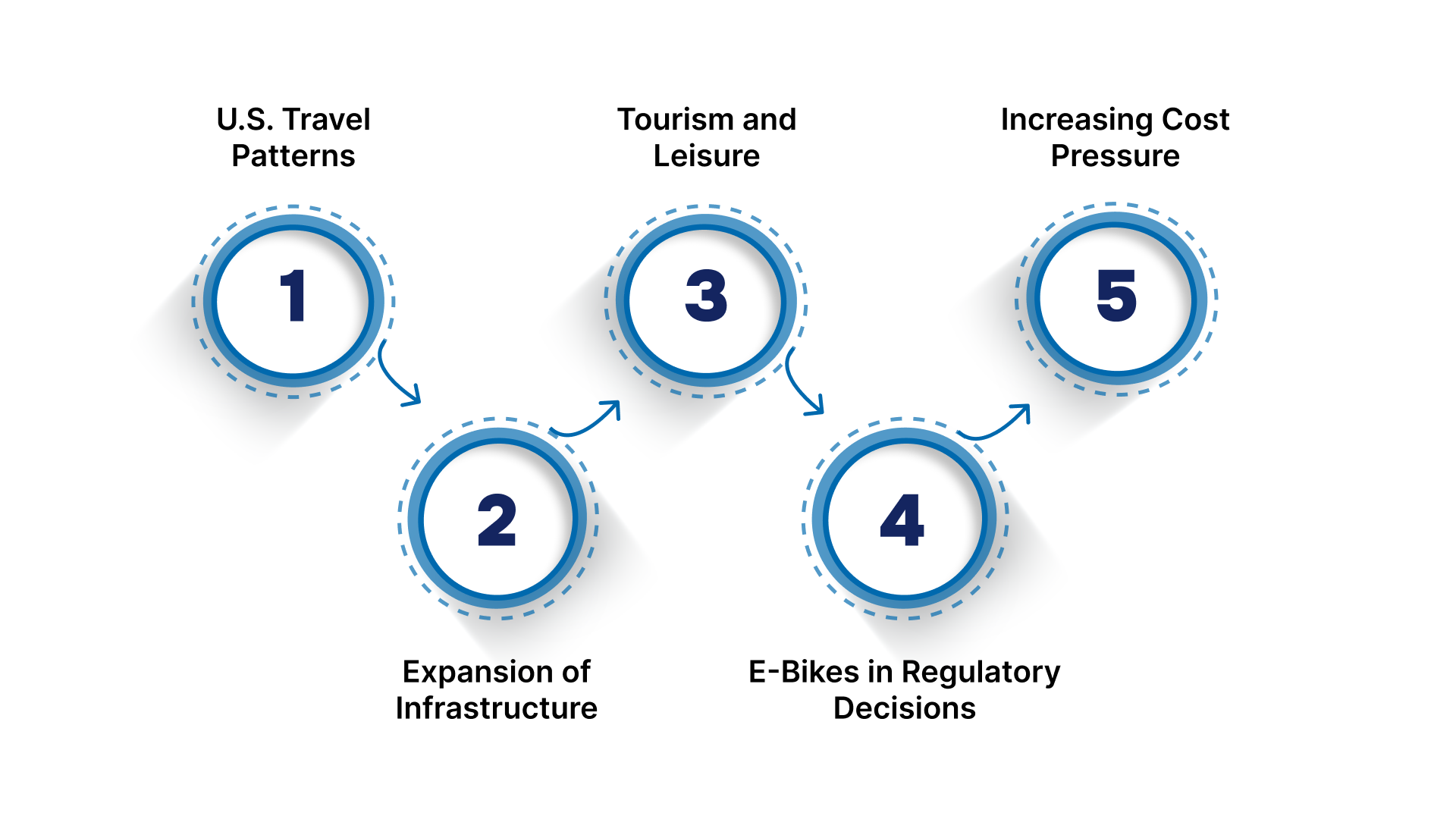
These are the five forces that matter for an operator’s go-to-market plan, in order of how much they actually affect your day-one revenue.
1. US trip-distance patterns favor e-bikes
35% of all US car trips are under 2 miles, a distance that’s too short for driving efficiency, too long for walking, and almost perfect for an e-bike (NACTO short-trip data). That’s not a global trend point or a market-size projection. It’s a structural demand floor that means your fleet has a real reason to exist in any reasonable-density US market.
2. Bike-lane and parking infrastructure is expanding
More than 200 US cities now host shared micromobility systems, and e-bike fleets in those cities have grown more than 71% in the last few years (League of American Bicyclists). Protected bike lanes, designated shared-mobility parking zones, and clearer regulatory frameworks make new operator entry cheaper and faster. If your target market has any of these in place, your launch friction is meaningfully lower.
3. Tourism and resort spending favors e-bikes over scooters
US travel behavior tilts toward outdoor exploration in tourist markets. Shared-mobility trips in those markets average 2-5 miles, which is the exact range e-bikes serve better than scooters. Resort properties, gateway towns to national parks, and beachfront destinations consistently report e-bike utilization above their scooter utilization when both are available.
4. Cities prefer e-bikes for permit allocation
Many US cities are capping scooter fleet sizes while expanding e-bike permits. The pattern is simple: lower-speed, bike-lane-compatible vehicles produce fewer pedestrian conflicts, which means fewer city-council complaints and faster permit cycles. For new entrants, an e-bike-first fleet faces meaningfully less permit-window friction than a scooter-first fleet.
5. Battery economics finally favor electrification
Lithium-ion battery packs hit $99/kWh in 2025, the second consecutive year below the $100 threshold widely treated as the EV total-cost crossover point (BloombergNEF, December 2025). For an e-bike fleet, the battery is the single largest hardware cost line. The 2025 price floor changes the unit economics on a 50-bike launch by enough to matter for break-even calculations.
Book a free 30-minute fleet review. Bring your target market data and rider mix; we’ll walk through whether a 50-bike or 100-bike launch makes more sense for your geography. 30 minutes, no slides.
A 50-bike US launch: what it actually costs
The single most useful question to answer before scoping a launch is what the all-in capital and first-year operating cost looks like. The table below is the working estimate for a typical 50-bike US fleet at midrange spec (commuter-grade hardware, urban or college-town deployment, no premium features).
| Line item | Range for a 50-bike launch | Notes |
|---|---|---|
| Bikes (50 units) | $40,000 – $100,000 | $800-$2,000 per fleet-grade e-bike at midrange spec |
| Charging hardware + spare batteries | $5,000 – $15,000 | Depot rack + 15-20 swap batteries |
| Platform license (year 1) | $9,000 – $24,000 | Flat per-vehicle license, or 8-12% revenue share |
| Insurance (year 1) | $8,000 – $20,000 | State-dependent; CA, NY, MA higher |
| Permits + city application fees | $2,000 – $15,000 | One-time application + annual renewal |
| Field service van + tools | $8,000 – $20,000 | Used cargo van or sprinter, basic tool kit |
| Contingency (15%) | $11,000 – $30,000 | Mandatory; first-quarter surprises always cost more than you plan |
| All-in total (year 1) | $83,000 – $224,000 | Most US launches land $110K-$160K |
Two things to flag on this table. First, the platform license line is where most first-time operators overspend by choosing a revenue-share contract that looks cheap on the brochure and becomes expensive once your ride volume scales. A fleet of 50 e-bikes hitting 3 rides per day at $5 average fare on a 10% revenue share pays the platform about $27,000 a year. The same fleet on a $15/vehicle/month flat license pays $9,000. The revenue-share math gets worse as you grow. Second, the bike line is where most first-time operators underspend, ordering $400 consumer e-bikes that fail at month nine and force an unbudgeted replacement cycle.
A third pattern worth naming: most operators we talk to underestimate insurance and overestimate marketing. US e-bike shared-use liability insurance has hardened over the last two years; budget the high end of the range above for any deployment in CA, NY, MA, or coastal Florida. Marketing, on the other hand, is largely a function of permit-mandated signage plus rider-app polish; very few launches need a paid acquisition budget in year one.
The five challenges that derail US e-bike launches
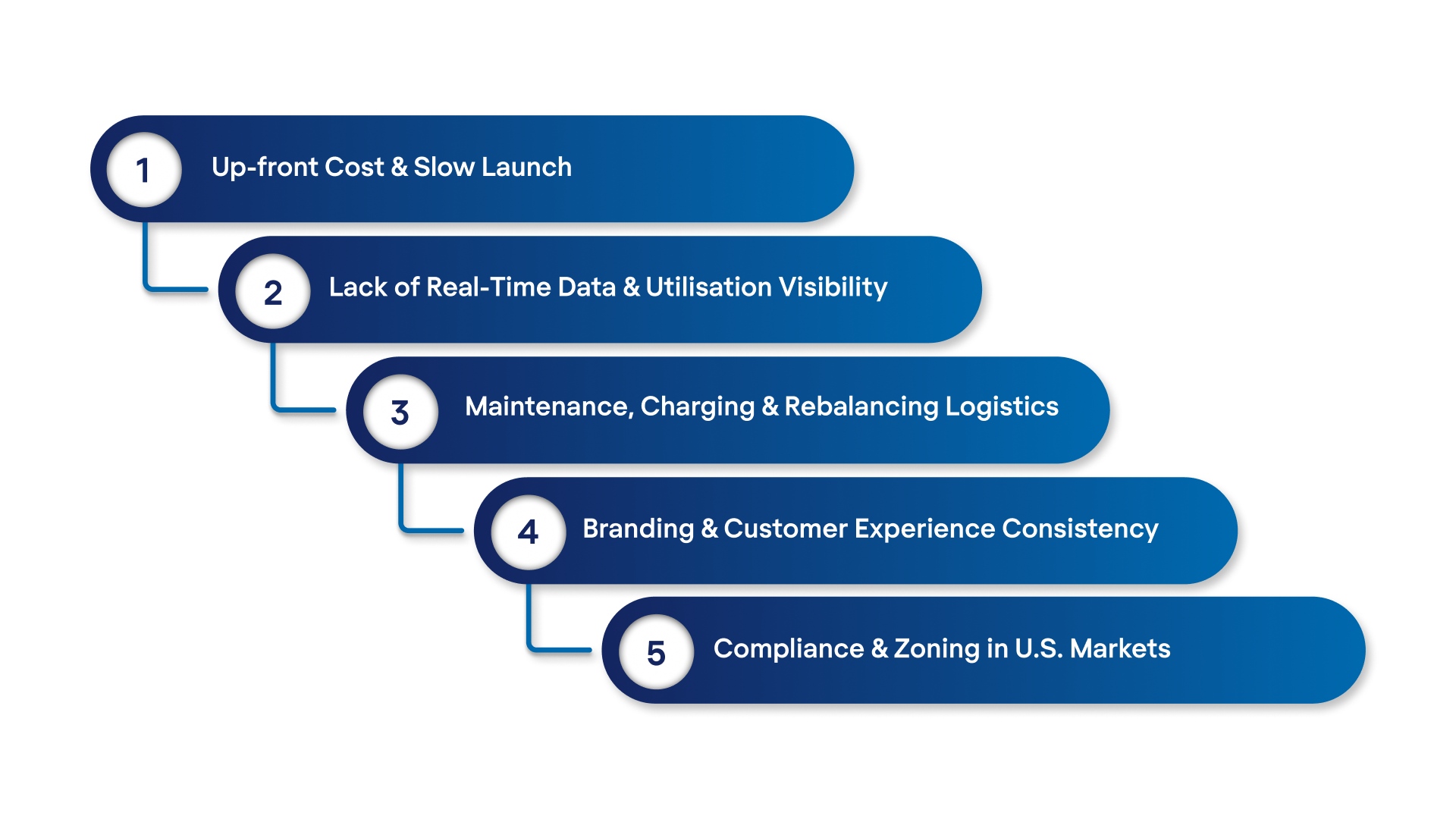
These are the issues we see most often when operators in the US miss their year-one targets. Each one is preventable with the right preparation.
1. Upfront cost, slow launch
If your platform takes 3-4 months to configure, you’re burning cash before you collect a single fare. EazyRide deployments go live within 14 days of contract signing, which means most US operators we work with hit fare-collection inside their first month of operation. Permits, not the platform, are usually the longer pole.
How to avoid it: pre-select your platform vendor before you order hardware; pre-select your hardware vendor in week one of city permit application; build the rider app branding and pricing strategy while permits are being processed.
2. No real-time data, no fleet visibility
If you only see usage data weekly or rely on manual trip logs, you cannot optimize rebalancing, you cannot route maintenance, and you cannot tell which bikes are earning their depreciation. The National Transportation Safety Board has flagged inconsistent data collection as a structural issue in US shared-vehicle programs (NTSB SRR-22/01).
How to avoid it: insist on a platform that provides per-vehicle hex-grid utilization, real-time GPS, and battery state-of-health out of the box. Set up your five core KPIs before deployment day: rides per bike per day, idle hours, maintenance turnaround time, parking violations, and rider drop-off rate.
3. Maintenance, charging, and rebalancing logistics
E-bike operations are fundamentally different from manual bike rentals. Batteries cycle, firmware updates push, and a one-hour charging delay means a full lost ride per vehicle per day. Multiplied across 50 bikes, that’s 50 lost rides, which is real revenue.
How to avoid it: design a daily depot workflow (charge map, repair queue, redeployment plan); use geofencing to keep bikes in your service zone (cuts deadhead retrieval trips meaningfully); target 90%+ fleet uptime in year one.
4. Branding and rider experience consistency
A scooter rental in 2018 could win on novelty. In 2026 you’re competing on the rider’s third or fourth attempt at trying shared mobility, and the brand experience is what makes them open your app instead of a competitor’s. Generic-looking rider apps lose to operators with consistent brand identity.
How to avoid it: white-label rider app published under your own brand on iOS and Android; consistent visual identity across vehicle livery, app, and any in-station signage; a one-screen pricing model that does not require math.
5. Compliance and zoning friction
US city rules around speed caps, no-ride zones, parking, and insurance change quarterly. A fleet that cannot push a city-mandated zone change to every vehicle inside 48 hours is a fleet that will eventually be fined or impounded. Operators using EazyRide’s geofencing module report up to 40% fewer parking violations versus manual enforcement, almost entirely from real-time zone pushes that take effect inside an hour.
How to avoid it: map every operating, parking, and speed-restricted zone before you order vehicles; build geofencing into the rider app from day one (auto-lock when leaving service zone); confirm your fleet insurance covers e-bike shared-use liability in every state you operate.
Why 2026 is a better year to launch than 2025
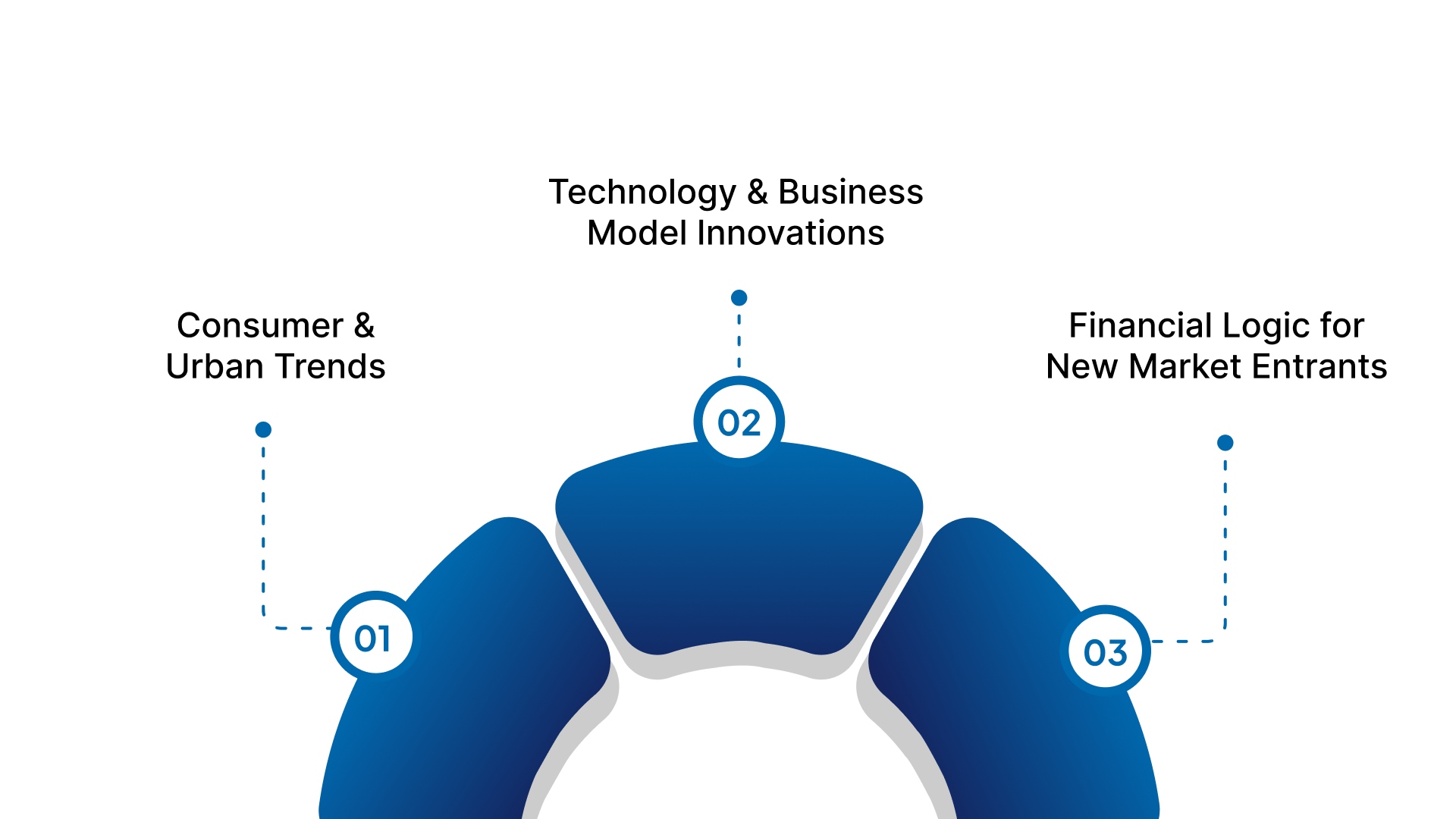
Markets do not reward the operator with the best idea. They reward the one who enters while demand is rising and competition is still thin. The US e-bike rental market sits in that exact window right now.
Consumer and urban trends
Mid-sized US cities and resort markets are adding bike lanes faster than they’re issuing scooter permits. Rider behavior has shifted toward 1-5 mile trips for commuting and errands, which is the exact distance band e-bikes serve best. Cities that built scooter-only programs in 2018-2020 are now expanding to mixed-vehicle permits, which opens the door for e-bike-first operators in markets that were previously closed.
Technology and business model innovations
Subscription and membership pricing models have moved from experimental to standard. Operators offering a monthly pass or campus subscription typically see 30-40% higher rider retention than per-ride-only models, because the friction of paying per trip drops away after the first month. Telematics, real-time utilization analytics, and predictive maintenance routing are now table-stakes for any fleet operator targeting profitability inside 18 months.
Multi-vehicle expansion
The most successful new operators in 2026 are launching e-bike-first but planning to add e-scooters or e-mopeds in year two as the brand and operations mature. A platform that handles all three vehicle types under one account, one billing engine, and one rider app makes that expansion meaningfully cheaper than running parallel vendor contracts.
Book a free 30-minute launch review. Bring your draft city list and budget and we’ll show you which markets are open and which have permit windows closing this quarter.
How EazyRide supports your US launch
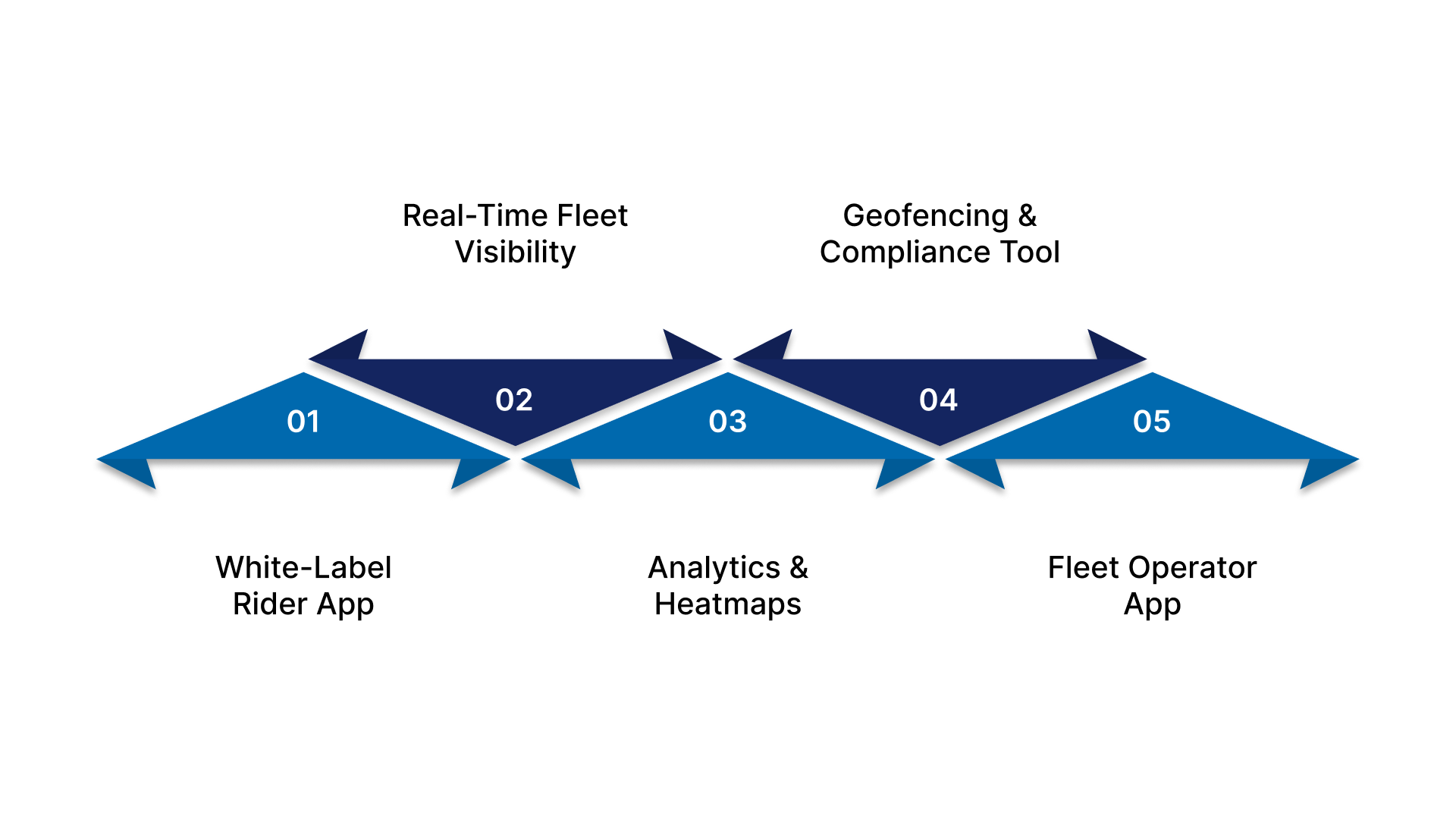
The platform features that matter for a US e-bike rental launch are the ones that compress launch time, reduce city compliance friction, and produce the per-vehicle data that actually drives unit economics. Specifically:
- 14-day go-live from contract signing. Most US operators hit fare collection inside their first month. Permits, not the platform, are the longer pole.
- 10+ IoT hardware brand integrations out of the box. Pick the e-bike hardware that fits your geography (coastal versus inland weather, hilly versus flat terrain) without committing to a single OEM.
- Real-time geofencing without firmware updates. Zone rule changes, including no-park areas, speed-restricted zones, and service boundaries, push to every vehicle in real time. Operators using EazyRide’s geofencing module report up to 40% fewer parking violations versus manual enforcement.
- Multi-vehicle in one account. E-scooters, e-bikes, and mopeds run under one set of billing, compliance, and rider-app credentials. Add a second vehicle type in year two without rebuilding the integration.
- White-label rider app on iOS and Android. Published under your brand, not the platform vendor’s. Riders never see your platform vendor.
- Payment processing across US, UK, EU, and Middle East. No second payment integration when you expand to a second city or a second market.
FAQs
How much does a US e-bike rental launch cost?
Most 25-50 bike US launches require $80,000-$200,000 in year-one capital, covering hardware, software, insurance, and charging. The biggest variables are bike model and platform license structure.
What permits do US e-bike operators need?
Most US cities require operator application, proof of insurance, defined operating zones, and safety documentation. Some mid-sized cities cap fleet size and require monthly data reporting.
How many daily rides per bike are needed?
Target 3 rides per bike per day for healthy breakeven. NACTO data shows dockless e-bikes hit 3 trips per bike per day across member cities in 2025.
Are e-bikes more profitable than scooters?
Often yes. E-bikes attract broader rider age groups, sustain longer trips, and suffer less mechanical stress. Most operators see lower maintenance cost and higher daily ride durations on e-bikes.
What’s the typical e-bike fleet vehicle lifespan?
Quality fleet-grade e-bikes last 24-36 months with regular maintenance. Most ongoing cost is consumables (brake pads, tires, batteries), which run lower than scooter component swaps.
The US e-bike rental market in 2026 is open in exactly the cities and campuses where national operators have not yet reached. The window for a 50-vehicle launch in a mid-sized market, college town, or resort property is real, but it is not unlimited. Cities issue permits on cycles, and the operator who enters before the next permit window closes captures a multi-year head start on the operator who waits.
If your launch math depends on hitting 3 rides per bike per day inside the first quarter, the platform you choose decides whether that math holds. Pick the one that gets you to deployment fast, gives you the data to operate from week one, and does not lock you into a single hardware OEM.
Book a free 30-minute fleet review with EazyRide. Bring your target market, hardware budget, and rider mix, and we’ll walk through which two operational decisions will most affect your year-one P&L.
Related reading


